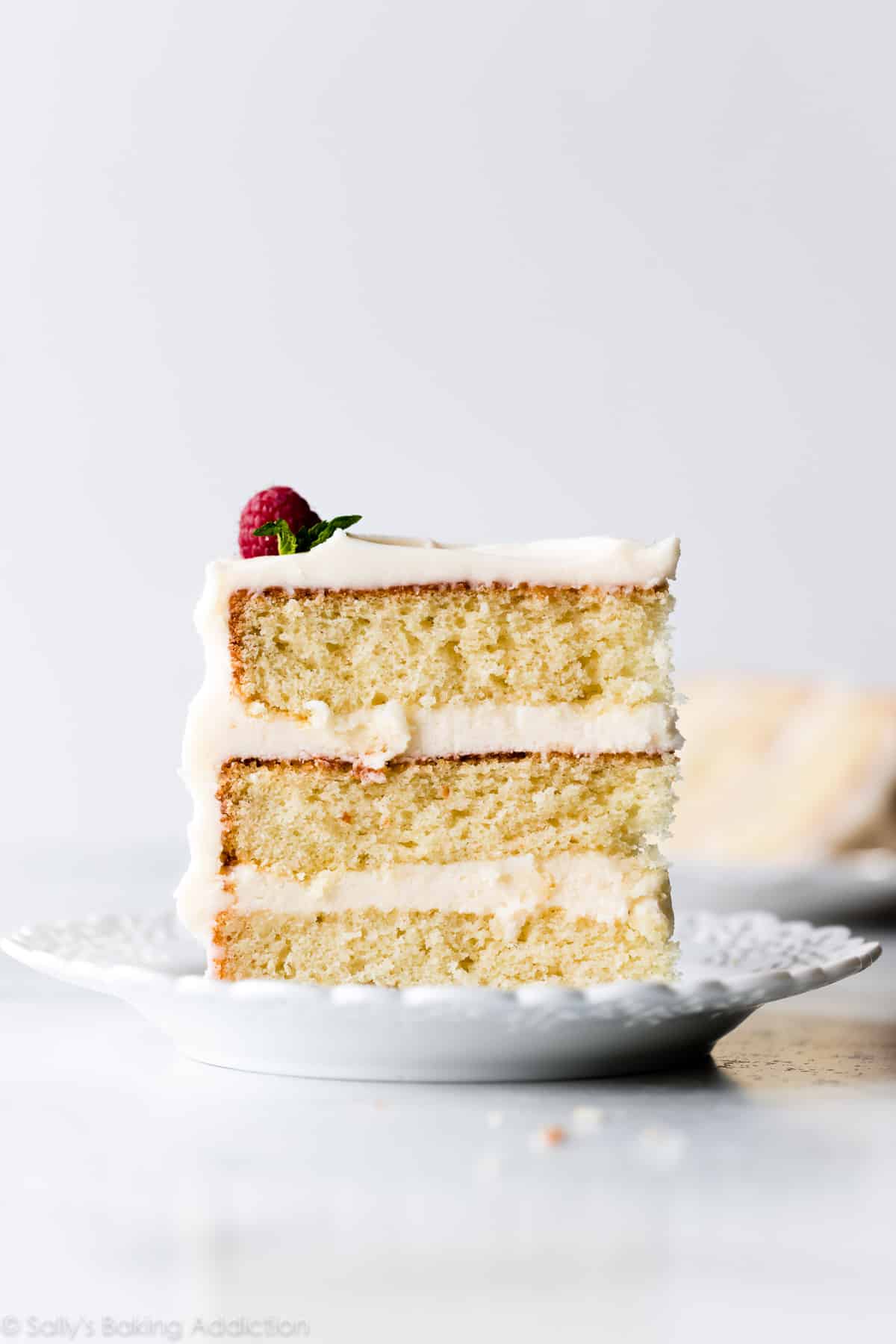
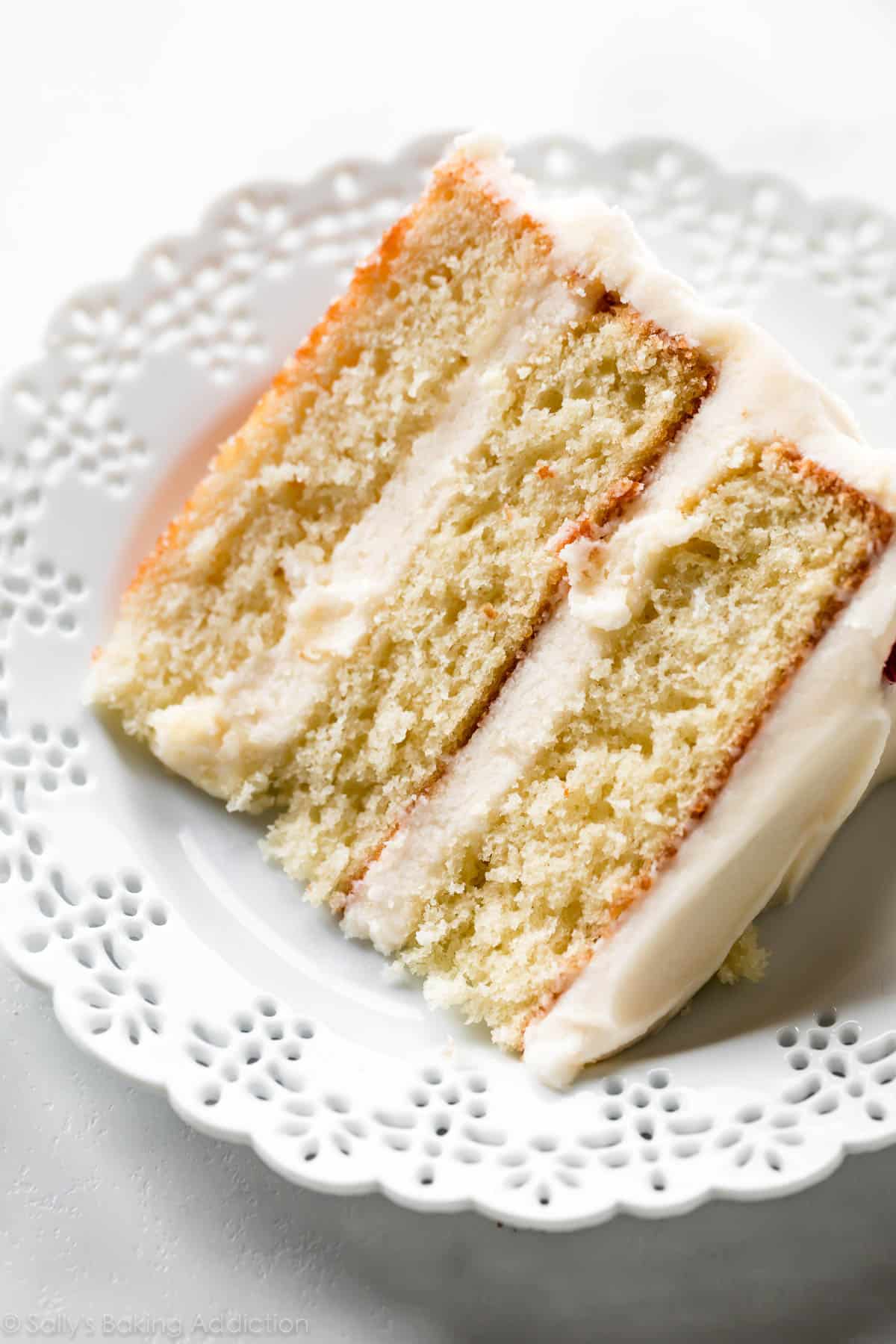
With its outstanding vanilla flavor, pillowy soft crumb, and creamy vanilla buttercream, this is truly the best vanilla cake I’ve ever had. And after 1 bite, I guarantee you’ll agree.
One reader, Sarah, commented: “This cake is elite. Texture, flavor, sturdiness for frosting and decorating, freezes well… It was a beautiful centerpiece and dessert for a baby shower. Thank you! ★★★★★“
One reader, Candice, commented: “This is truly the best vanilla cake I have ever tasted! It is among the best cakes I have made in my 20+ years of baking… ★★★★★“
One reader, Rary, commented: “Off. The. Charts. Absolutely scrumptious! ★★★★★“
Out of all the cake recipes on my website, there’s a glaring absence. There’s white cake with a pristine soft crumb, vanilla naked cake with a flavorful tight crumb, and checkerboard cake with a whimsical design.
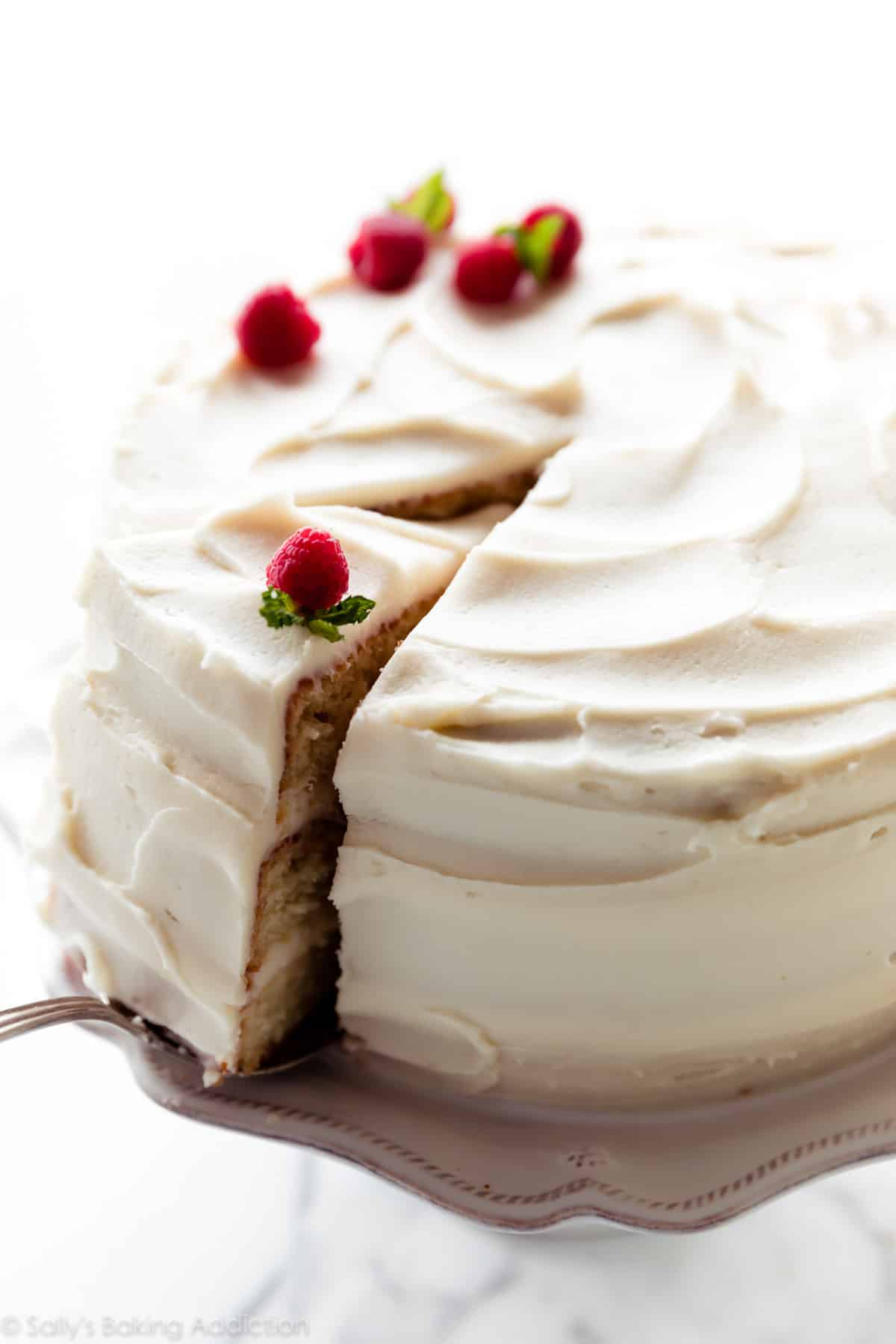
What about a classic vanilla layer cake draped in vanilla buttercream? I already have homemade vanilla cupcakes and a vanilla 6 inch cake covered and now in all its crowning glory (and after plenty recipe testing catastrophes), I present you with cake perfection:
This is the best vanilla cake I’ve ever had.
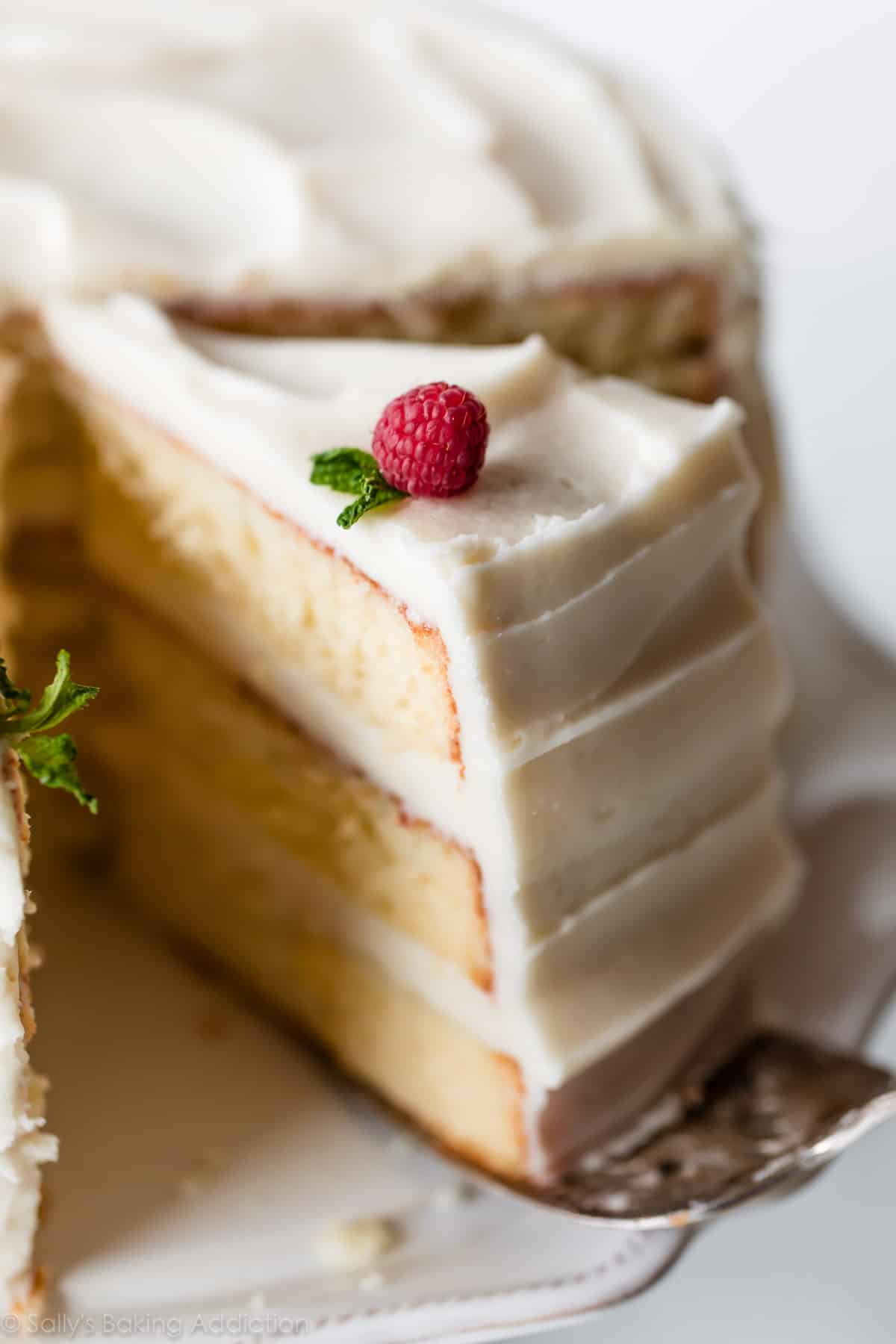
What Makes it the Best Vanilla Cake?
Let’s count the ways!
- Soft, light crumb from cake flour
- Fluffy from extra egg whites
- Buttery and cakey from creamed butter
- Stick-to-your-fork moist from eggs & buttermilk
- Extra flavor from pure vanilla extract
Not to mention its versatility: This vanilla cake batter is strong enough for shaped cakes, tiered cakes (see the slight variation in my homemade wedding cake recipe), and holds up beautifully under fondant. Use this batter for vanilla cupcakes, Bundt cake, or even piñata cake. It’s classy enough for a wedding celebration, but unassuming enough for a big family dinner.
Behind the Vanilla Cake Recipe
After years of cake successes and flops, I’m confident in this homemade vanilla cake. During my recipe testing, I combined my white cake recipe and naked cake recipe. These are two reader favorites and I knew they’d be the best starting point. At first there were too many eggs and I quickly learned sifting cake flour was NOT doing any favors.
You need the following power ingredients:
- Cake Flour: If you want a fluffy and soft bakery-style vanilla cake, cake flour is the secret. The cake will be denser and heavier using all-purpose flour.
- Eggs & 2 additional egg whites: 3 whole eggs provide structure, moisture, and richness. 2 extra egg whites keep the cake light and airy. I don’t recommend using 4 whole eggs; stick to the 3 egg & 2 egg white combination.
- Baking Powder & Baking Soda: Remember the differences in baking powder vs baking soda and why we use both in some recipes? Using enough baking powder to give these layers height gave the cake a bitter aftertaste. Baking soda allows us to use less baking powder.
- Buttermilk: Buttermilk is an acidic ingredient and baking soda requires an acid to work. Plus buttermilk yields an EXTRA moist cake crumb. See recipe note about using a DIY buttermilk substitute.
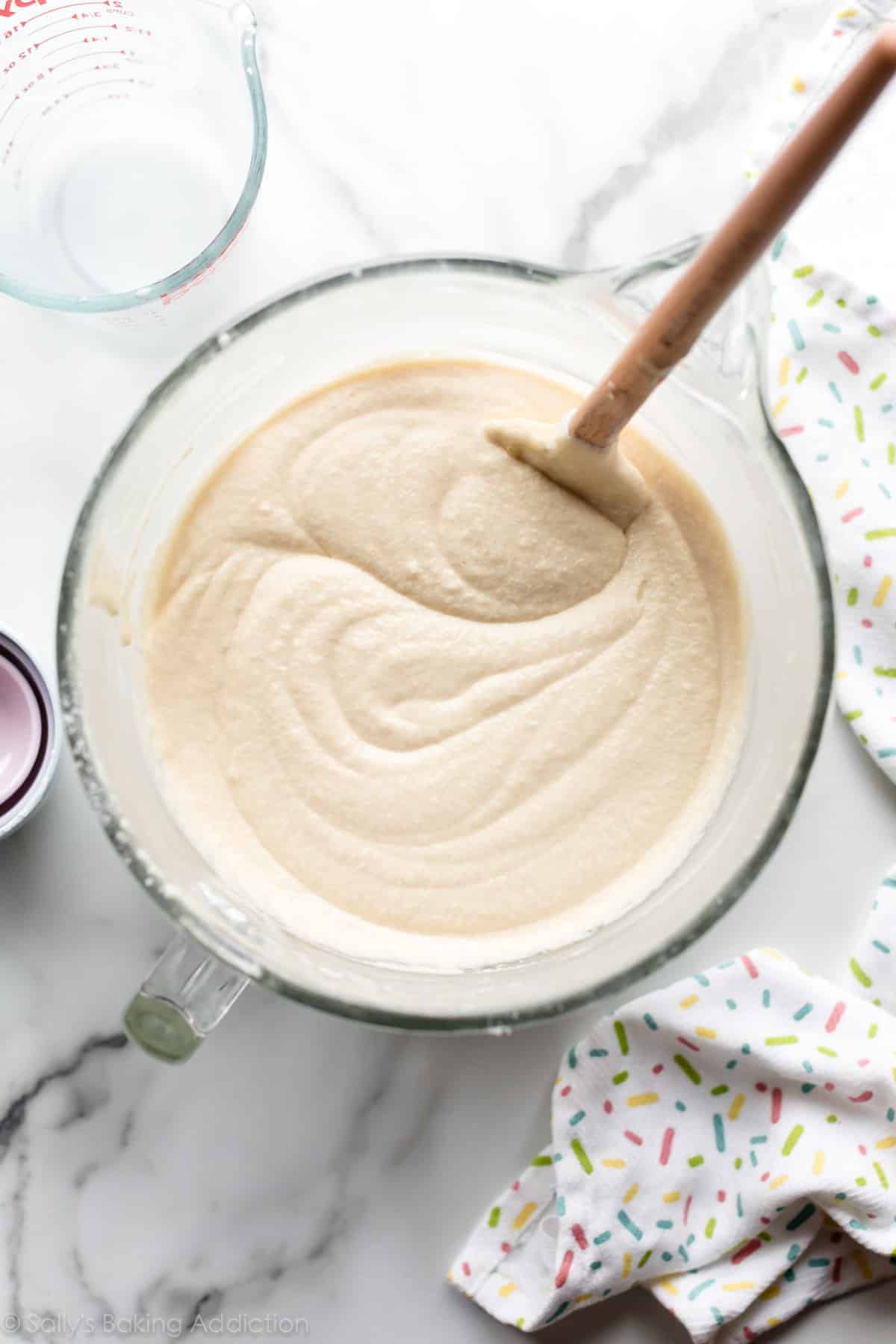
For more prominent vanilla flavor, use homemade vanilla extract. (What a fun DIY gift!) This vanilla cake batter is moderately thick and fits perfectly in 3 9-inch cake pans. We actually use the same exact batter to make snickerdoodle cake.
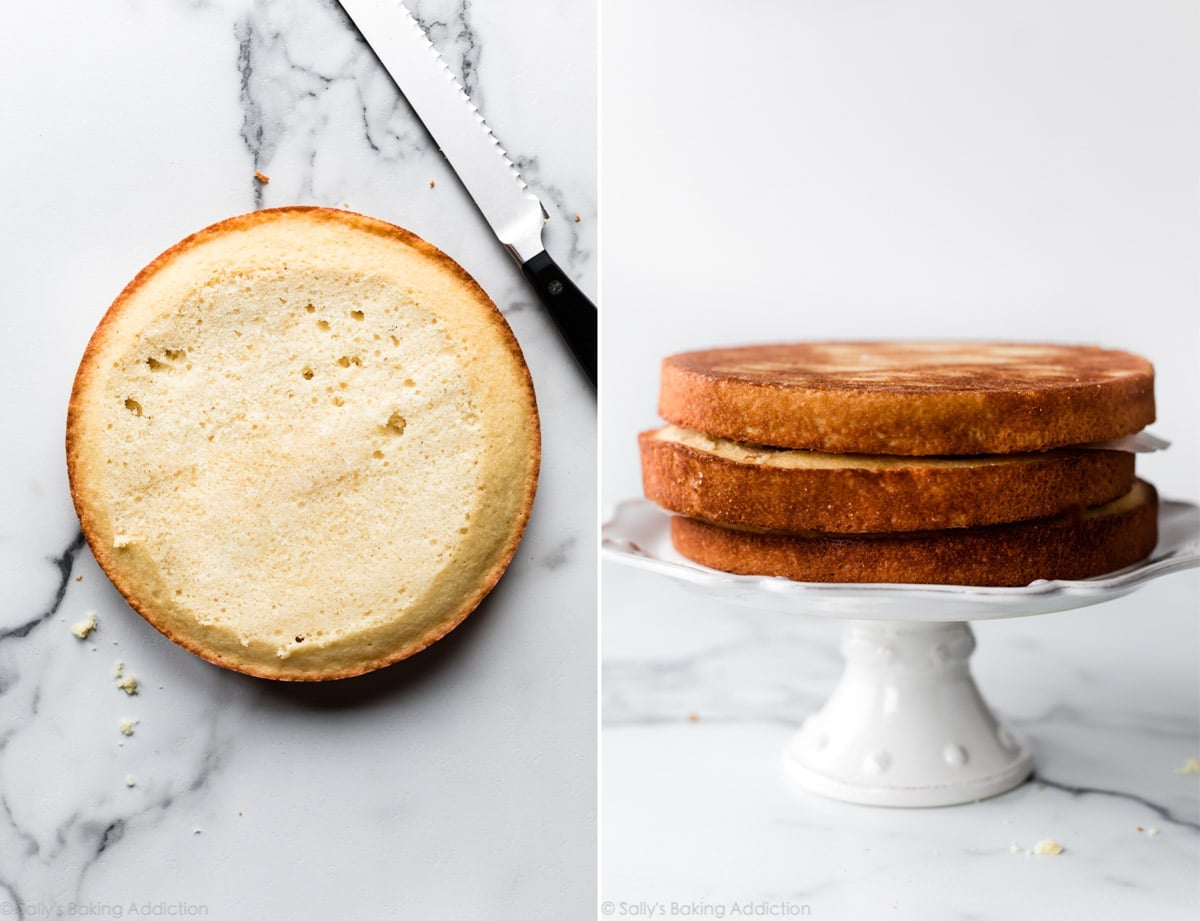
Do you know how to level a cake? Let me help. It’s really easy. You can use a fancy cake leveler, but I use a serrated knife. Carefully slice off the tippy top of the cooled cake layers, creating a flat surface. Leveling cakes doesn’t require a ruler, talent, or any mathematical equations. Instead, just use your eyes, hands, and a knife.
Leveling the cake layers promises a straight and sturdy layer cake.
How Much Frosting Between Cake Layers?
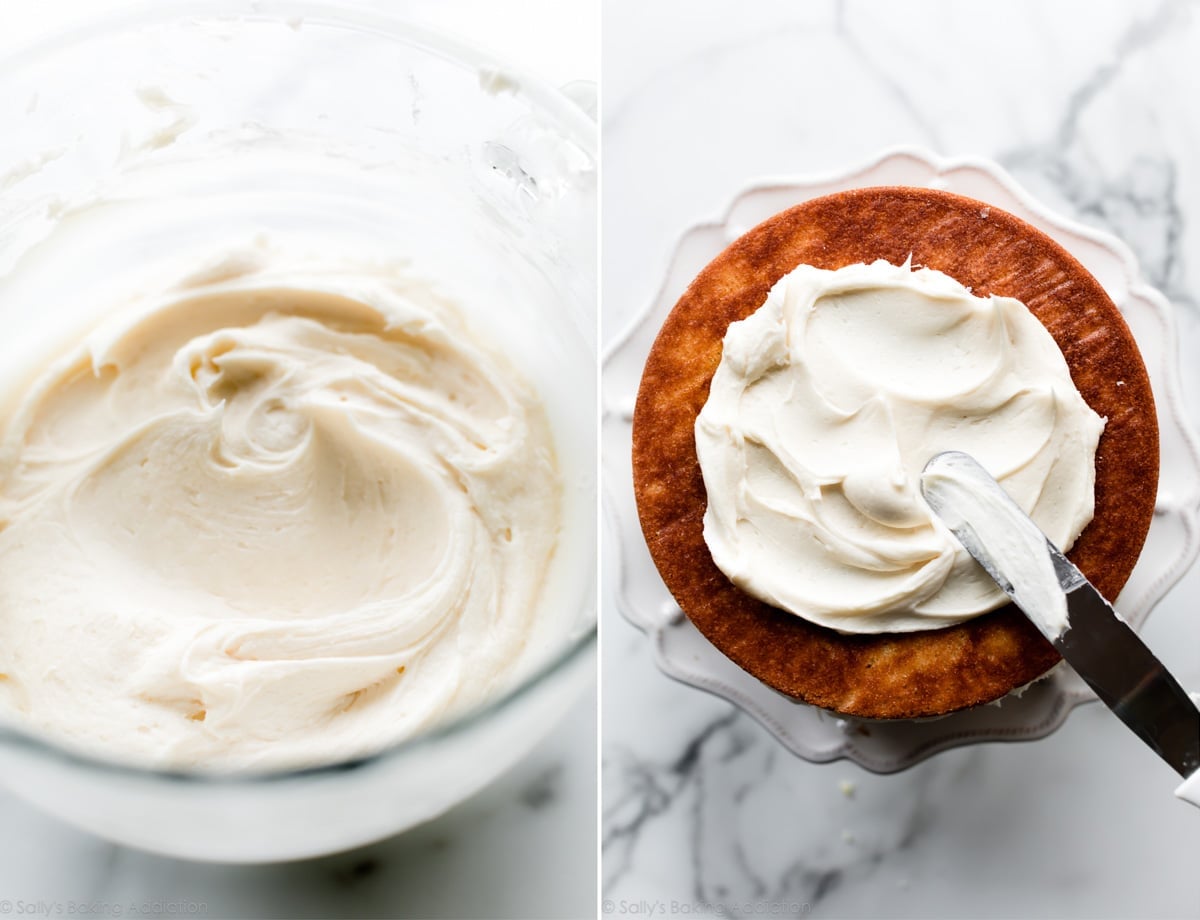
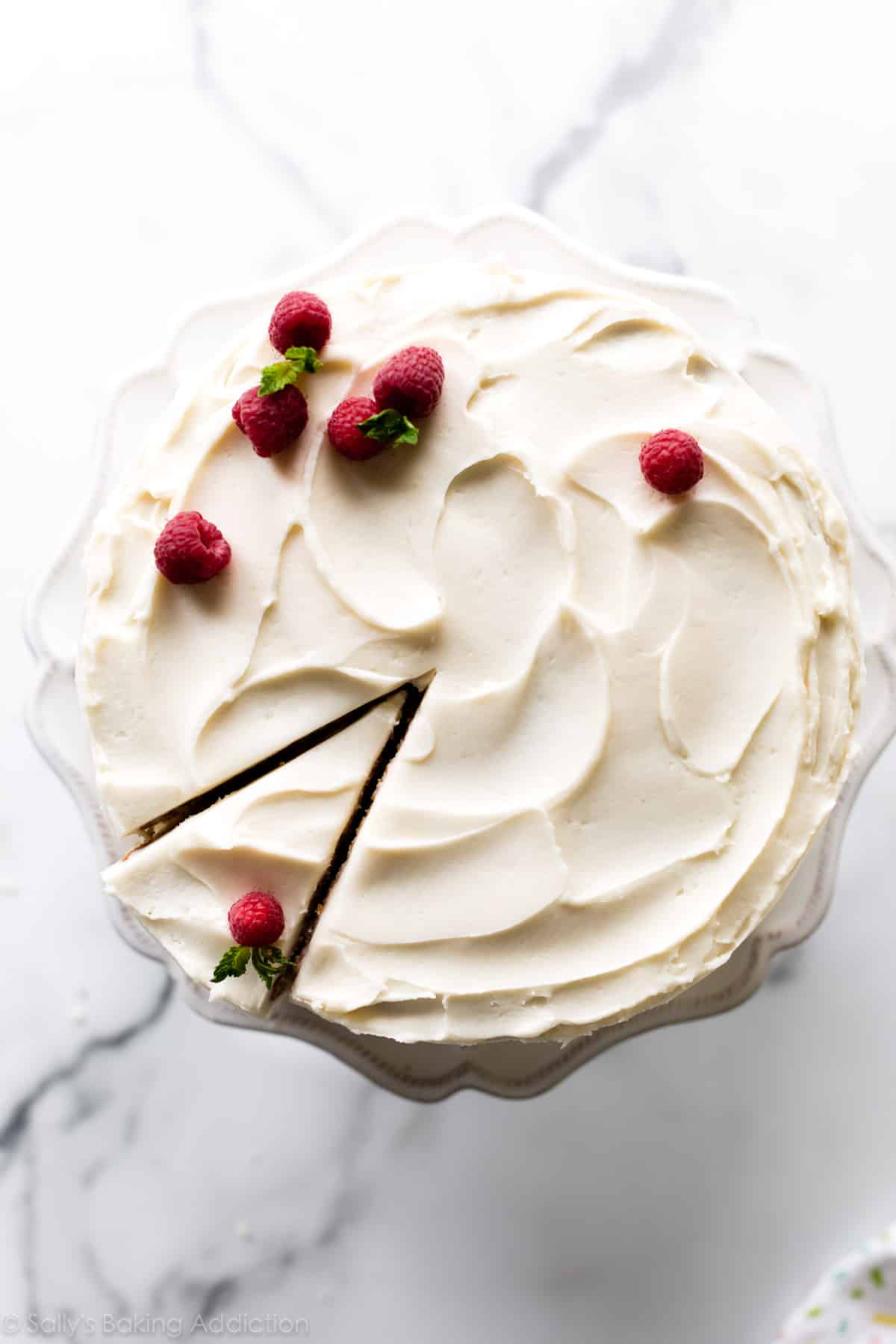
I always eyeball the amount of frosting between cake layers, but I measured when I decorated the pictured cake. The vanilla buttercream recipe below yields about 6 cups of frosting. I recommend you use about 1.5 heaping cups of buttercream between each cake layer and reserve the last 3 cups for outside the cake. If you are going to add a filling such as raspberry cake filling, you’ll use less frosting between the layers. You can use this detailed how to assemble and decorate a layer cake post as a guide!
Cake Decoration Inspiration: For a simple look, stick with vanilla buttercream, fresh berries, and mint sprigs. You can also decorate with chocolate buttercream (I recommend the same amount from this piñata cake), rainbow sprinkles, a chocolate ganache drip like on this chocolate chip cake, or even beautiful buttercream flowers.
Homemade Vanilla Cake Success Tips
Learn from my mistakes and bake the best cake on the 1st try!
- Follow the recipe closely. Use each power ingredient listed.
- Use room temperature ingredients. The batter mixes together evenly when all the cake ingredients are roughly the same temperature. This also reduces the risk of over-mixing and over-baking. Set out your ingredients 1 hour before beginning. Read more about why room temperature ingredients are important.
- Line your cake pans with parchment. Place your cake pans on a large sheet of parchment paper. Trace the bottom of the cake pan with a pencil. Cut parchment paper into rounds. Grease the pan and the parchment paper. Parchment paper rounds guarantee seamless removal from the pan because the cake slides right out.
- Cool cake layers completely. I’ve tried taking shortcuts by assembling a layer cake with semi-warm cake layers. Well, the frosting completely melts and causes the entire cake to collapse. Make sure each layer is cool– refrigerate or freeze the layers if you need to!
- Refrigerate decorated cake. After frosting the cake, place it in the refrigerator for at least 1 hour. This is optional, but it sets the frosting and cake layers. You’ll get beautifully clean slices because the crumbs are cool and tight.
Great read: Check out Tessa’s Top 10 Best Layer Cake Tips.
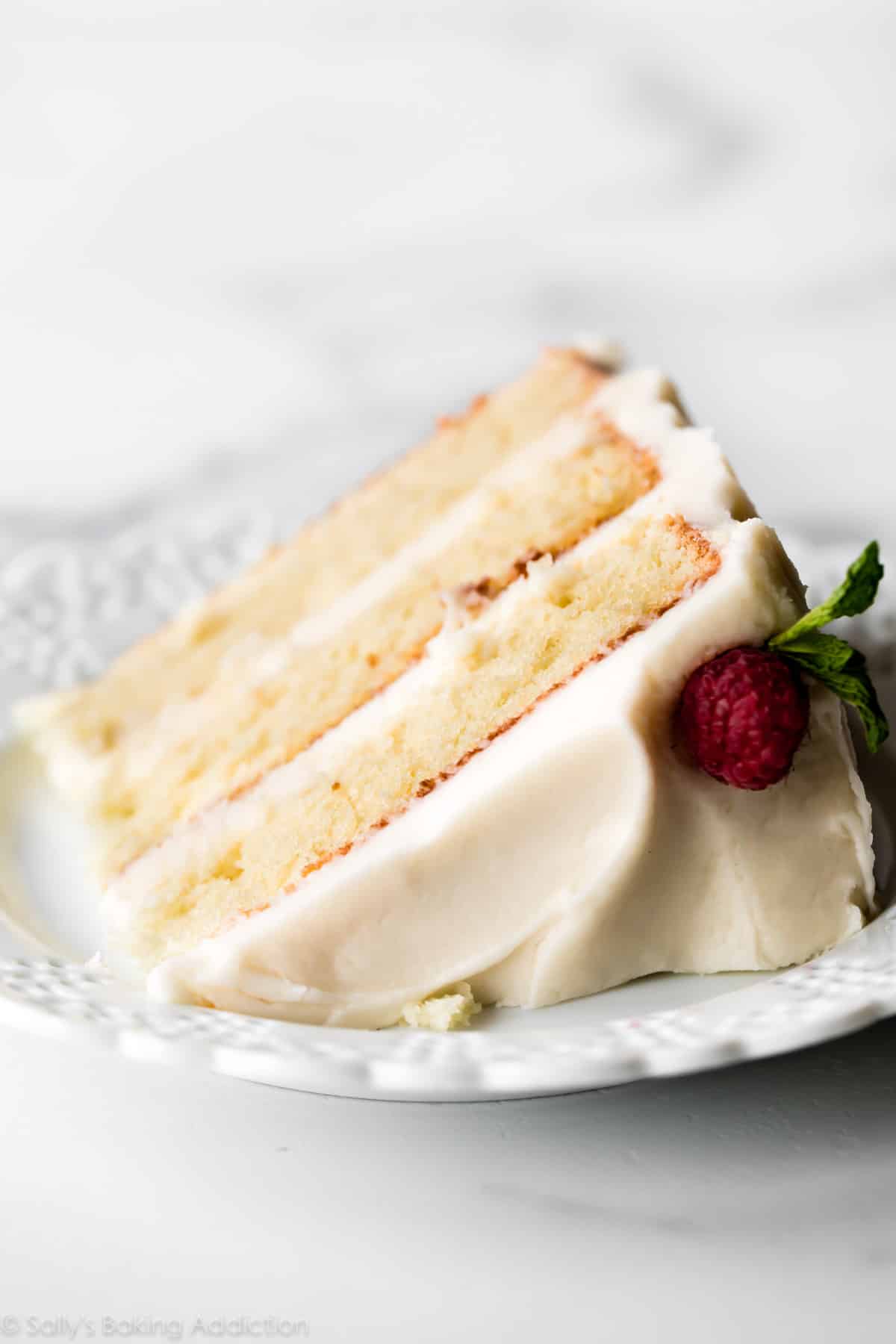
Finding the perfect vanilla cake recipe requires a celebration. Luckily we have cake!!!
More Classic Cake Recipes
And here is my perfected vanilla cupcakes recipe.
Print
Best Vanilla Cake
- Prep Time: 35 minutes
- Cook Time: 25 minutes
- Total Time: 4 hours (includes cooling)
- Yield: 12-14 servings
- Category: Dessert
- Method: Baking
- Cuisine: American
Description
With its outstanding vanilla flavor, pillowy soft crumb, and creamy vanilla buttercream, this is truly the best vanilla cake I’ve ever had. Make sure you read through the recipe and recipe notes before beginning. This recipe yields approximately 8 cups of batter which is helpful if you need this batter for different cake pan sizes and conversions.
Ingredients
- 3 and 2/3 cups (433g) cake flour (spooned & leveled)
- 1 teaspoon salt
- 2 teaspoons baking powder
- 3/4 teaspoon baking soda
- 1 and 1/2 cups (340g) unsalted butter, softened to room temperature
- 2 cups (400g) granulated sugar
- 3 large eggs + 2 additional egg whites, at room temperature*
- 1 Tablespoon pure vanilla extract (yes, a Tablespoon!)
- 1 and 1/2 cups (360ml) buttermilk, at room temperature*
Vanilla Buttercream
- 1 and 1/2 cups (340g) unsalted butter, softened to room temperature
- 5 and 1/2 cups (650g) confectioners’ sugar
- 1/3 cup (80ml) whole milk or heavy cream
- 1 and 1/2 teaspoons pure vanilla extract
- 1/8 teaspoon salt
Instructions
- Preheat oven to 350°F (177°C). Grease three 9-inch cake pans, line with parchment paper rounds, then grease the parchment paper. Parchment paper helps the cakes seamlessly release from the pans. (If it’s helpful, see this parchment paper rounds for cakes video & post.)
- Make the cake: Whisk the cake flour, salt, baking powder, and baking soda together. Set aside.
- Using a handheld or stand mixer fitted with a paddle or whisk attachment, beat the butter and sugar together on high speed until smooth and creamy, about 3 minutes. Scrape down the sides and up the bottom of the bowl with a silicone spatula as needed. Beat in the 3 eggs, 2 egg whites, and vanilla extract on high speed until combined, about 2 minutes. (Mixture will look curdled as a result of the egg liquid and solid butter combining.) Scrape down the sides and up the bottom of the bowl as needed. With the mixer on low speed, add the dry ingredients just until combined. With the mixer still running on low, pour in the buttermilk and mix just until combined. You may need to whisk it all by hand to make sure there are no lumps at the bottom of the bowl. The batter will be slightly thick.
- Pour batter evenly into cake pans. Weigh them to ensure accuracy, if desired. Bake for around 23-26 minutes or until the cakes are baked through. To test for doneness, insert a toothpick into the center of the cake. If it comes out clean, it’s done. Allow cakes to cool completely in the pans set on a wire cooling rack. The cakes must be completely cool before frosting and assembling.
- Make the frosting: In a large bowl using a handheld mixer or stand mixer fitted with a whisk or paddle attachment, beat the butter on medium speed until creamy, about 2 minutes. Add confectioners’ sugar, milk, vanilla extract, and salt with the mixer running on low. Increase to high speed and beat for 2 minutes. Add more confectioners’ sugar if frosting is too thin, more milk if frosting is too thick, or an extra pinch of salt if frosting is too sweet.
- Assemble and decorate: Using a large serrated knife, slice a thin layer off the tops of the cakes to create a flat surface. Discard (or crumble over ice cream!). Place 1 cake layer on your cake stand, cake turntable, or serving plate. Evenly cover the top with about 1 and 1/2 cups of frosting. Top with 2nd cake layer and evenly cover the top with about 1 and 1/2 cups of frosting. Top with the third cake layer. Spread the remaining frosting all over the top and sides. I use and recommend an icing spatula to apply the frosting.
- Refrigerate cake for at least 1 hour before slicing. This helps the cake hold its shape when cutting.
- Cover leftover cake tightly and store in the refrigerator for up to 5 days.
Notes
- Make Ahead & Freezing Instructions: The cake layers can be baked, cooled, and covered tightly at room temperature overnight. Likewise, the frosting can be prepared then covered and refrigerated overnight. Let the frosting sit at room temperature to slightly soften for 10 minutes before assembling and frosting. Frosted cake or unfrosted cake layers can be frozen up to 2-3 months. Thaw overnight in the refrigerator and bring to room temperature before decorating/serving. See how to freeze cakes for detailed instructions.
- Special Tools (affiliate links): 9-inch Round Cake Pans | Glass Mixing Bowl | Whisk | Electric Mixer (Handheld or Stand) | Silicone Spatula | Kitchen Scale (optional) | Cooling Rack | Large Icing Spatula | Cake Turntable | Bench Scraper | Cake Carrier (for storing and transporting)
- 9×13-inch Cake: I recommend using my white cake batter instead. Both use similar ingredients and produce a deliciously light vanilla cake. See recipe notes for the 9×13 inch version.
- 2 Layer Cake: I recommend using my 2 layer white cake batter instead. Both use similar ingredients and produce a deliciously light vanilla cake.
- Bundt Cake: This vanilla cake batter will fit into a 10-12 cup or larger Bundt pan. I’m unsure of the exact bake time (likely around an hour), but use a toothpick to test for doneness. Same oven temperature.
- Cupcakes: Fill cupcake liners 2/3 full. Bake at 350°F (177°C) for 19-21 minutes. Yields about 3 dozen. Or try my vanilla cupcakes recipe.
- Cake Flour: To prevent a dry-tasting cake, make sure you are spooning and leveling the flour or weighing it. For the best results, I strongly recommend cake flour. You can find it in the baking aisle and I have many more recipes using it. Usually a homemade cake flour substitute works, but this recipe uses far too much cake flour and the homemade substitute is not ideal.
- Eggs: 3 whole eggs provide structure, moisture, and richness. 2 extra egg whites keep the cake light and airy. I don’t recommend using 4 whole eggs; stick to the 3 egg & 2 egg white combination. Here are recipes using leftover egg yolks.
- Buttermilk: If you don’t have buttermilk, you can make a DIY buttermilk substitute. Add 2 teaspoons of white vinegar or lemon juice to a liquid measuring cup. Then add enough whole milk to the same measuring cup until it reaches 1 and 1/2 cups. (In a pinch, lower fat or nondairy milks work for this soured milk, but the cake won’t taste as moist or rich.) Stir it around and let sit for 5 minutes. The homemade “buttermilk” will be somewhat curdled and ready to use in the recipe.
- Why is everything at room temperature? All refrigerated items should be at room temperature so the batter mixes together easily and evenly. Read more about why room temperature ingredients are important.
- Want chocolate frosting instead? I recommend the recipe/amount of chocolate frosting I use for Piñata Cake.
- Sprinkle Cake: To make a sprinkle cake, fold about 3/4 cup (135g) of sprinkles into the cake batter. Avoid nonpareils (the little balls), which tend to bleed their color. Or try this confetti birthday cake, which is quite similar to this recipe.







Reader Comments and Reviews
Hi I am Maya, I am 11 years old and I run a small cupcake business. It is called Maya’s sweet treats!
I love also baking cakes! This was a great recipe. The cake was so moist. It was a little heavy tho. My fam loved it so much! The frosting was sooooo sweet that I had to scrape it off though. I frosted the cake with whipped cream the next time and it was amazing! So 5 stars for the cake and 1 star for the frosting. So 4 stars! Overall the CAKE was great, I would totally recommend this recipe and it has become my go to vanilla cake recipe. If anyone in the Cupertino district would like to place a order of custom cupcakes, send me a email at iyervijhmaya@gmail.com
Hi! This cake is so yummy. Any idea how many carbs are in a serving of this cake? I didn’t realize it didn’t have nutrition info at the bottom prior to making it
Hi Taylor! We don’t usually include nutrition information as it can vary between different brands of the same ingredients. Plus, many recipes have ingredient substitutions or optional ingredients listed. However, there are many handy online calculators where you can plug in and customize your exact ingredients/brands. Readers have found this one especially helpful: https://recipes.sparkpeople.com/recipe-calculator.asp
How many cups of batter does this recipe make? Thanks alot…
Hi Martha, this recipe yields *about* 8 cups of batter.
I was just wondering, do you think you could make this with vanilla bean paste for better vanilla flavor or would it be best to just use really nice vanilla extract?
Hi Natalie! Vanilla bean paste is a wonderful replacement for the vanilla extract. Most vanilla bean pastes come with substitution instructions– you usually use about half the amount when subbing in for vanilla extract.
I’ve never made a cake from scratch before, but this one sure looks delicious! I wonder if you could substitute the sugar with stevia? I use a lot of Trim Healthy Mama’s pure stevia extract myself.
Hi Mark, we haven’t tested this vanilla cake with sugar substitutes, but let us know how it goes if you give it a try!
Would is be possible to make this cake a piñata cake (sprinkles etc inside) by adding a fourth layer? I know you have a recipe for a piñata cake but was hoping to use this vanilla cake recipe instead
Hi Rachel! Absolutely. What would be best is dividing the batter between 4 8-inch round cake pans. 4 9-inch cake pans would produce very thin layers. I’m unsure of the best bake time, but you can use a toothpick to test for doneness. Keep a close eye on them.
Hi Sally! I noticed your recipes for layered cake vs sheet cake, both vanilla and chocolate, are quite different. Is that to get the structure needed for the layered cakes, or for some other reason? I guess I’m wondering if the sheet cake recipes would not hold up to layering and decorating.
Hi Anna, mostly for structure purposes. I find sheet cakes (in some instances) have a tendency to become quite dense. I really like this vanilla sheet cake recipe though. It uses the reverse creaming method. Best cake crumb!
The only negative was the icing on the cake! way too sweet!
I agree!
This is absolutely the best cake I have ever had, and I have eaten a whole lot of cake. Dense, sweet, and delicious in every bite. A true masterpiece recipe.
Hi Sally,
My Culinary STEM students want to make a wedding cake. For simplicity, can I use this recipe with two 9 inch pans and one 6 inch pan? Would I need dowels for support?
Hi Deb, You could but you will have a little bit of batter leftover if the third layer is a 6 inch pan (just make a few cupcakes with it!). The top layer would be so light you likely wouldn’t need any dowels but if it’s a teaching moment you can certainly teach them how to properly support the top with a cake round and dowels like we do in this Simple Homemade Wedding Cake.
Hi Sally, I made this cake yesterday it was outstanding and came out perfect! The only negative was the icing on the cake! way too sweet!
I made this cake before and it was so good! I made again today and forgot to add the buttermilk!! The cake looks the same but worried about the taste now!
Hi Sally, This is a great recipe. I’m wondering if the layers would hold if I added a raspberry filling under the frosting.
Thanks, Sandy
Hi Sandy! We would spread a thin layer of frosting and then a layer of raspberry filling between the cakes. Enjoy!
Hello…my daughter and I made this…it was our first 3 layer cake and really appreciated all your details and the video. We found our cake tasted eggy…do you know what that would be?
Again love your recipes and if you have any insights let us know. Thank you
Hi Sofie, so glad to hear you and your daughter enjoy our recipes! Did you make any changes to the ingredients at all? Did you use the 3 egg & 2 egg white combination?
Amazing! Best vanilla cake I’ve ever had too!!! It was flavorful, moist and perfect for a structured cake! This frosting is my go to for my cakes now! SO easy to spread, light and perfectly sweetened. I added a homemade pineapple filling and it turned out so so GOOD!!! Thanks Sally for this recipe.
I’m wanting to make my daughter a rainbow layered cake. I’m hoping to use this recipe before adding the colours! Has anyone tried using this recipe for a rainbow cake successfully?
Hi Brit! We’re made a rainbow cake with this batter (5 layers) before. Bake time was about 20 minutes. We used (and recommend) gel food coloring. Have fun baking!
It turned out Great! I added Cocoa to make it a chocolate cake.
Trying to decide which cake to make and just wondering why you use buttermilk in this recipe and no sour cream, but in your favourite white cake recipe you use sour cream and not buttermilk?
thanks!
Hi Bethany, with this larger cake we like to use buttermilk instead of sour cream and whole milk simply because larger cakes tend to become denser quicker and buttermilk helps prevent that. This cake also needs a few egg yolks for structure.
Loved it! It’s a sweet cake but not overly sweet. The cake flour gives it a super delicate crumb. I cut the recipe in half and baked in a 13×9 pan. It was perfect!
I was very excited to make this cake for my son’s birthday, eventhough it was tasty it didn’t turn out the way I anticipated. I folllowed the directions to a T and found the cake to be much denser then I imagined a cake using cake flour to be. The batter was so thick! The frosting was omg too sweet! 6 cups of powder sugar! Wow! Just didn’t work for me. I ended up adding more heavy cream and salt to attempt to cut down the sweetness. It tasted like store bought frosting from a container before my tweaks! I even added some almond extract to try to help it along. It ended up coming together, but overall I was disappointed and wont be making this cake again.
I followed the recipe for the cake exactly. I even bought cake flour, which I’ve never used in my other homemade cakes. It turned out very heavy and not in a good way. I used only half of the frosting recipe and still had some to spare. We don’t want thick frosting, so that’s a personal preference. It looked really pretty decorated with sprinkles for a friend’s birthday, but I won’t be using this recipe again.
I made this cake over the weekend, and it was a little disappointing. I too found it really dense. I do prefer something a little more dense when assembling/frosting a layer cake, but this was really dense. The batter was so thick…..I felt like it was overdone on the outside while the center was still not done. I have been in search for a really great vanilla cake for some time, but this one was not it. It was fine, but not “the best”. I do love lots of your other recipes tho!
I didn’t have buttermilk so used full fat milk and some vinegar. I also just used self raising flour and the baking soda. I eyeballed the vanilla but weighed everything else out. It was a runny batter and cooked unevenly. My cake started to burn on top but we got there in the end. It was moist and delicious. We used this cake to make lamingtons. It was perfect Thank you
Hello! I love all of your recipes and am hoping to adapt this one to bake a vanilla sprinkle smash cake for my son’s 1st birthday. Would I have to adjust the baking time at all if I did this in 4” cake pans? Thank you!
Hi
I love this cake but have recently become a fan of the reverse creaming method. Would this recipe be suitable for this method and would I need to make any change?
Thanks
Diane
Hi Diane, we haven’t tested it so we can’t be sure. You may enjoy this vanilla sheet cake which utilizes the reverse cream. (Love it too!)
Have you ever done this cake with chocolate icing?
My son is asking for white cake with chocolate icing for his birthday. Seems like an odd combination.
I tried to make this cake substituting mostly whole milk yogurt and some whole fat sour cream for the buttermilk. I reduced the butter to 1 and 1/4 cups to adjust for the higher fat content of the yogurt. The batter tasted amazing, however, the cake fell. Oh well….next time, if I try it I will use buttermilk.
Based on Sally’s recipe for making cake flour using cornstarch and all-purpose flour, I found that to make the 440g of cake flour that this recipe calls for, you should sift together 390g all-purpose flour and 50g cornstarch. I hope this saves someone the extra math!
This is so confusing, why has the recipe changed, the last time I checked this it suggested using 4 eggs and now you’re saying do not use 4 eggs.
What’s the truth?
Hi Pulane, this recipe hasn’t changed since the original publication date. Are you thinking of another cake recipe?
Hi! I wanted to make this as a loaf. Do you have any suggestions on what adjustments I should make?