
Soften butter quickly with this trick. If you forget to let your butter come to room temperature ahead of time, use this quick and easy method.
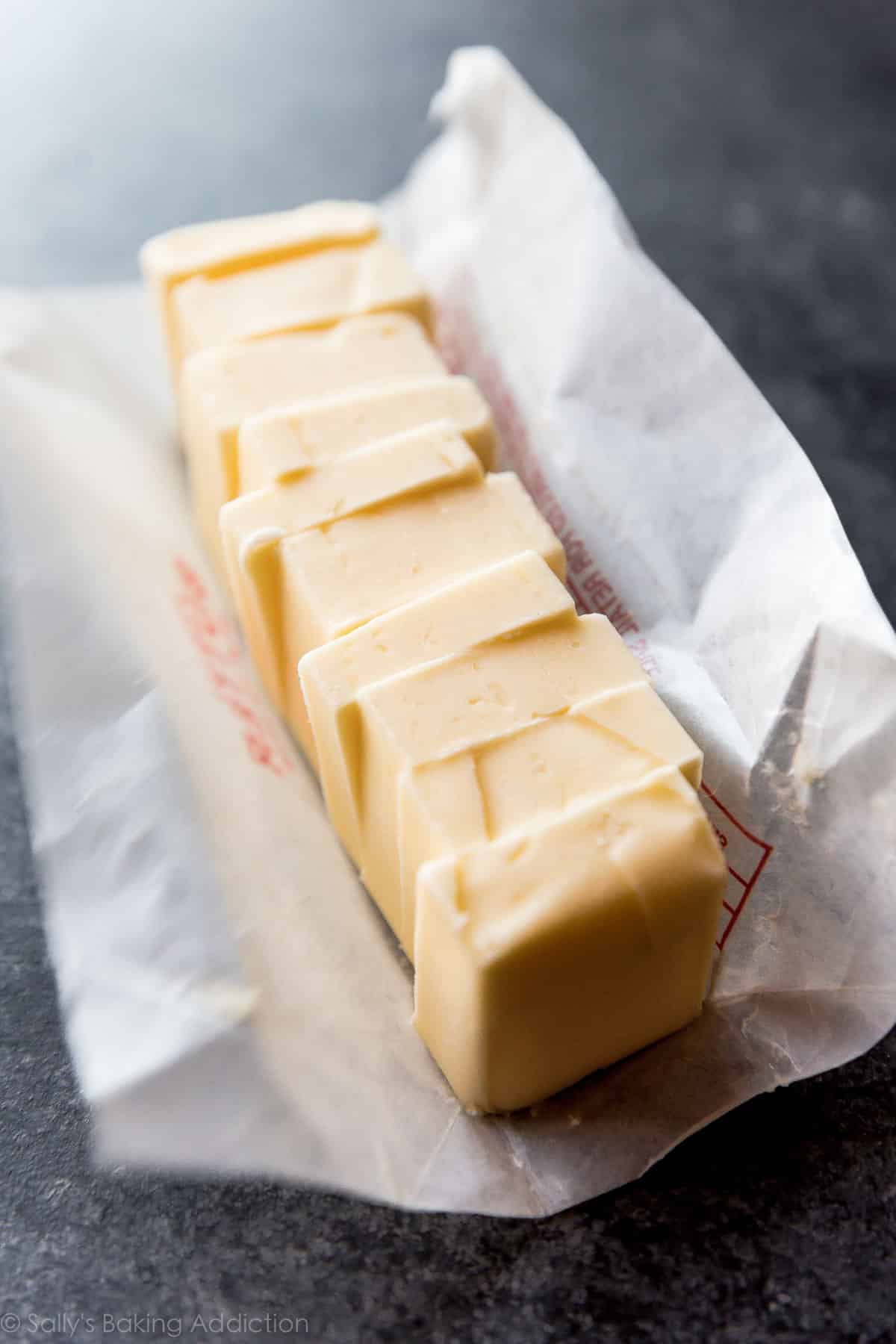
If you find yourself baking more these days, take the time to review this helpful post. I’m so excited to republish it because understanding this crucial concept is key in your baking’s success.
Butter is the starting point for an immense amount of baked goods, so it’s important to have it prepped as the recipe suggests. But guess what? We’re all human and we forget to bring butter to room temperature first or we just don’t have the time. We make up for it by trying to heat it in the microwave, but it always ends up slightly melted. At this point, butter and sugar can’t cream properly leading to cookies over-spreading, dense cakes, overflowing cupcakes, and flat muffins.
Let me help.
Soften Butter Quickly with This Trick
Let’s dive into this a little further.
Why Softened Butter?
First, let’s discuss why you actually need softened butter for your recipe. I actually have an in-depth post about room temperature butter if you’d like to read further.
Most recipes calling for butter call for room temperature/softened butter. And there’s legitimate science involved for this particular consistency. Butter, a solid fat, is capable of holding air and the creaming process is when butter traps that air. While baking, that trapped air expands from the heat and produces a fluffy baked good. Not only this, room temperature ingredients bond together very easily since they’re warmer, creating a seamless and evenly textured batter. A smooth batter with trapped air = a uniformly textured and proper tasting baked good. Cold ingredients do not emulsify together. Period. This results in clumpy frosting, chunky cheesecake, dense cake, flat breads, and oily muffins.
- It’s literally #1 in my 10 best baking tips: if a recipe calls for room temperature butter, use room temperature butter. It can’t properly cream with sugar otherwise.
- And here’s even more on how to cream butter and sugar, including helpful photos and a video tutorial.
Room Temperature Butter Is Colder Than You Think
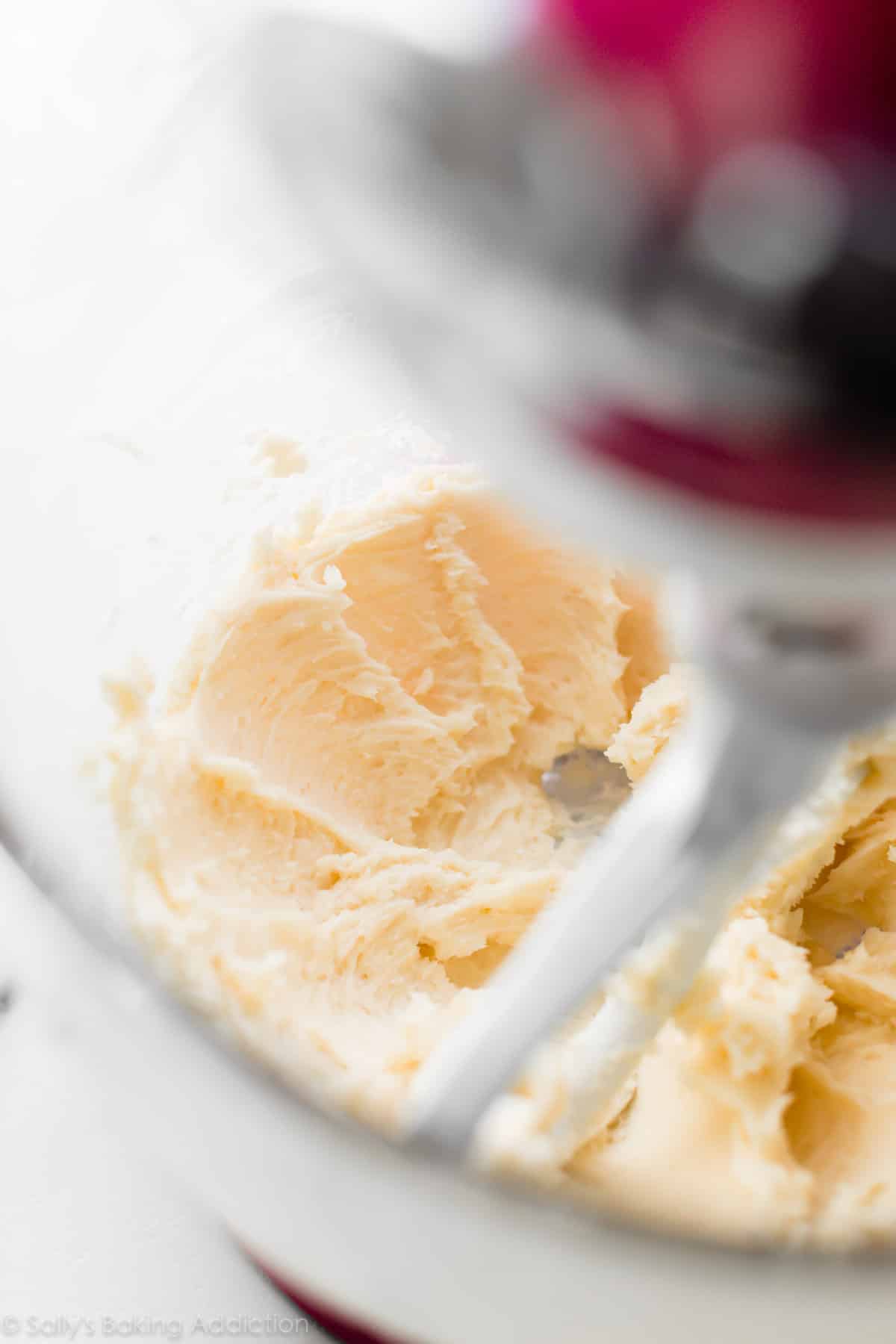
Room temperature butter is cool to the touch and about 65°F (18°C). This might be colder than your kitchen. When you press it, your finger will make an indent. Your finger won’t sink down into the butter, nor will your finger slide all around. To get that perfect consistency and temperature, leave butter out on the counter for around 1 hour prior to beginning your recipe.
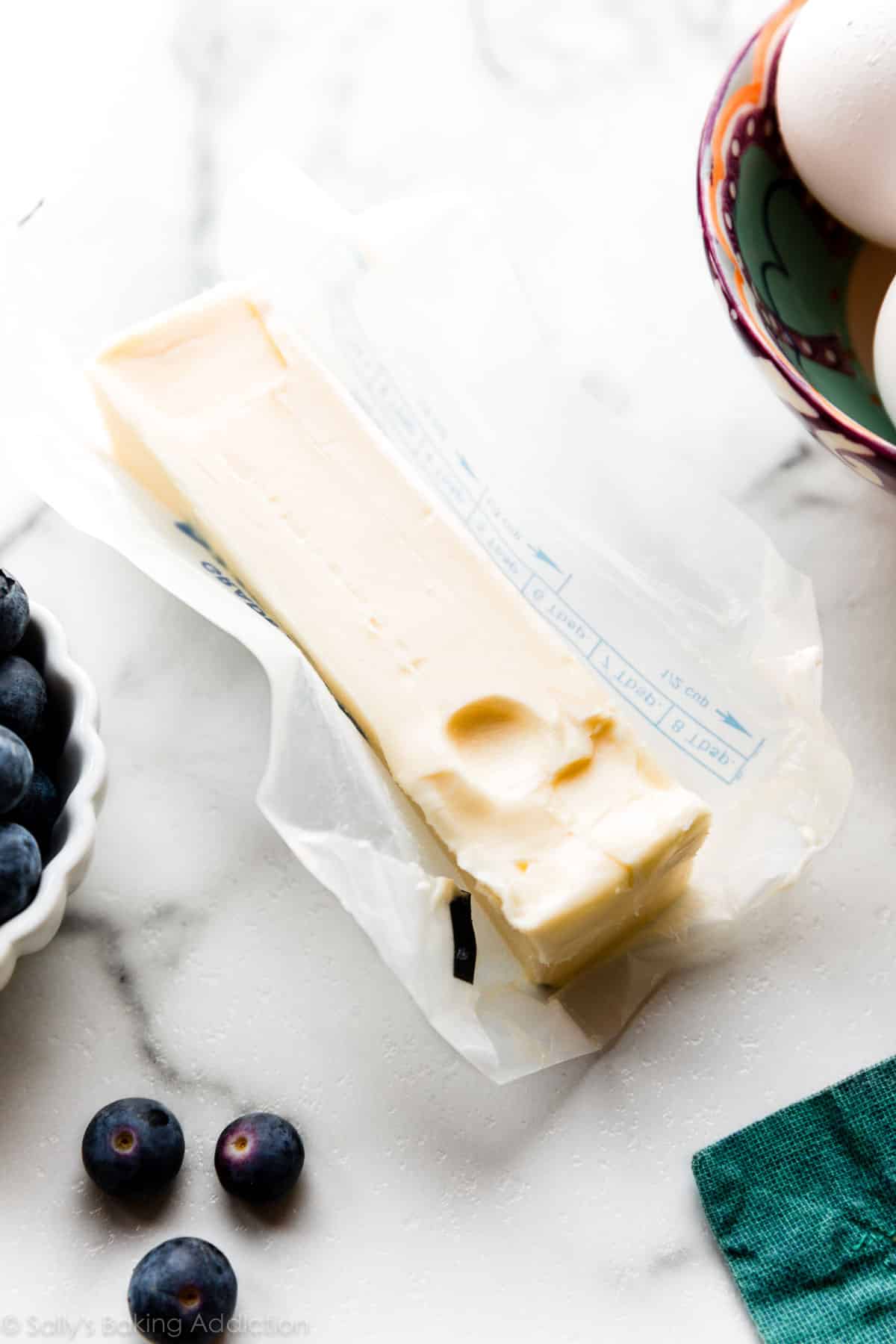
If your cakes are dense, you’re probably softening the butter too much. And butter that’s too warm causes cookies to overspread. But guess what? You have complete control to prevent these problems.
How to Soften Butter Quickly
The best way to soften butter for a recipe is to set it out on the counter for about 1-2 hours. The amount of time depends on the weather and how cool you keep your kitchen. But we forget and/or we just don’t have time.
There’s a billion tricks to softening butter quickly, but the following is what works best for me. Here’s what you need:
- Water
- Butter, sliced into small pieces
- Microwave
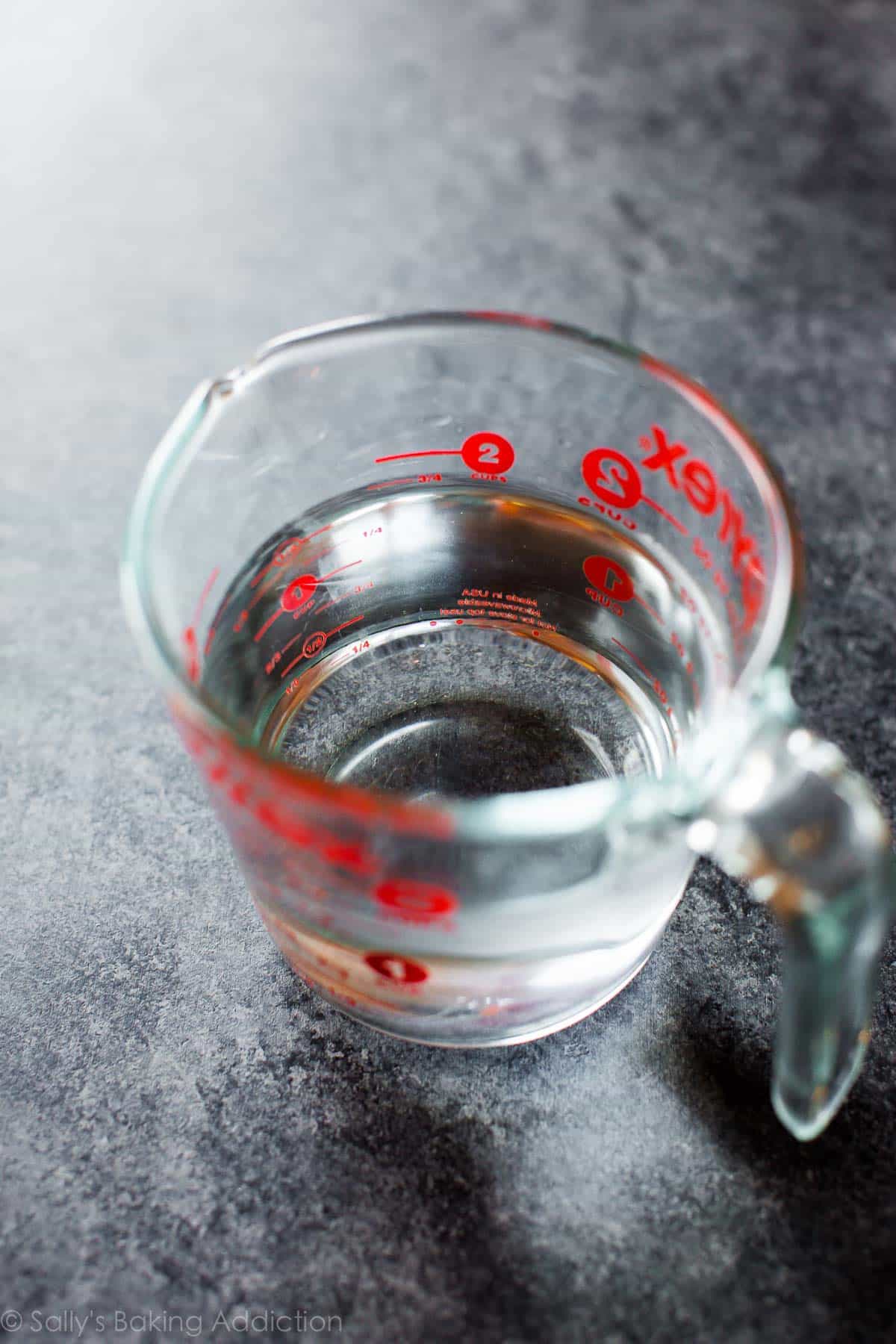
Step 1: Pour 2 cups of water into a microwave-safe cup or bowl. I always use a liquid measuring cup.
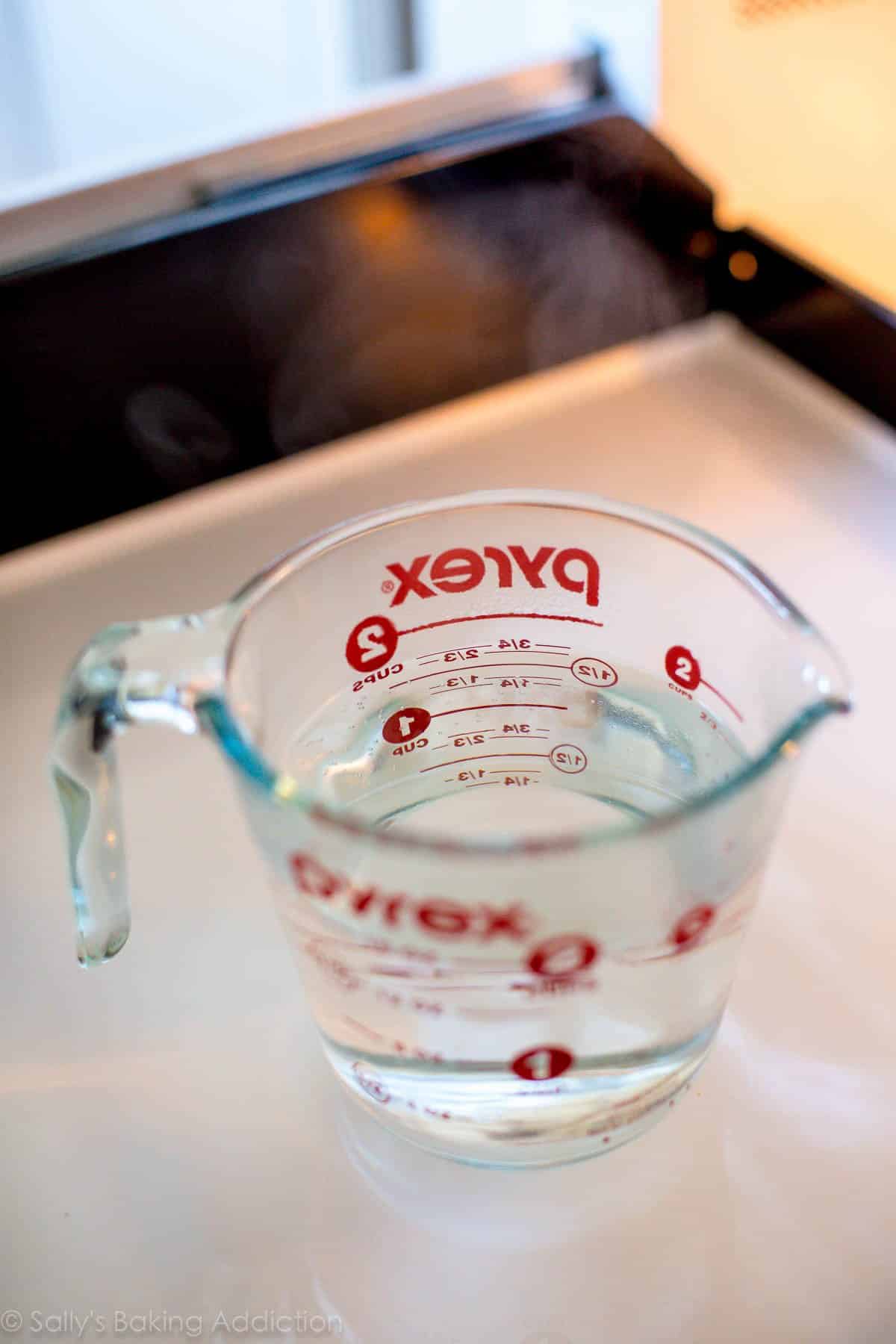
Step 2: Microwave it for 2 minutes until extremely hot. Meanwhile, place butter in a heatproof bowl or on a plate.
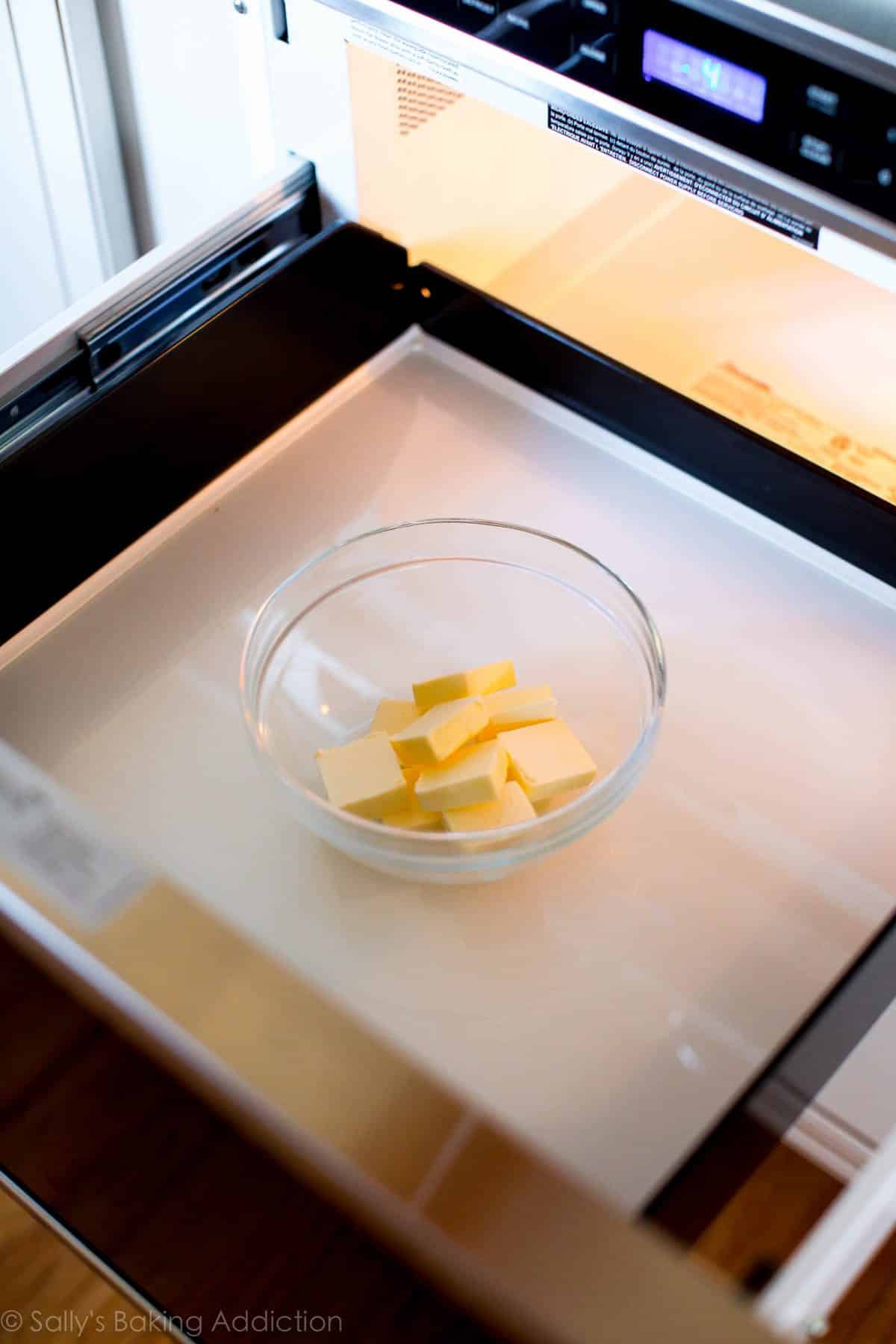
Step 3: Remove water from the microwave. Place butter inside. Quickly close microwave. (Our microwave is one of those models in the kitchen island. I love it!)
Step 4: The radiant heat will soften the butter in about 10 minutes.
Keep This in Mind
The more butter your recipe calls for, the larger the bowl or plate (holding the butter) should be. In other words, you don’t want a huge pile of butter in a small bowl. Spread it out so the pieces of butter can warm up quickly and evenly.
More Tips to Make YOU a Better Baker
- Salted vs Unsalted Butter
- My 10 Best Baking Tips
- Why Room Temperature Ingredients Make a Difference
- 14 Best Baking Tools That Every Baker Needs
- Baking Powder vs Baking Soda
- Buttermilk in Baking 101 (including DIY buttermilk substitute)
- How to Cream Butter & Sugar
How to Soften Butter Quickly
- Prep Time: 2 minutes
- Cook Time: 2 minutes
- Total Time: 15 minutes
- Yield: 1/2 cup
- Category: Baking
- Method: Microwave
- Cuisine: American
Description
Soften butter quickly with this super easy trick.
Ingredients
- 2 cups water
- butter (sliced into pieces)*
Instructions
- Pour 2 cups of water into a microwave-safe cup or bowl. I always use a liquid measuring cup.
- Microwave it for 2 minutes until very hot. Meanwhile, place pieces of butter into a heatproof bowl or on a plate.
- Very carefully remove water from microwave. Place butter in the microwave. Immediately close the microwave door to trap hot air inside.
- The radiant heat will soften the butter in about 10 minutes.
Notes
- Special Tools (affiliate links): Liquid Measuring Cup
- The more butter your recipe calls for, the larger the bowl or plate (holding the butter) should be. Spread the pieces of butter out so they can warm up quickly and evenly. Thinner pieces will soften faster.
And Always Remember
If a recipe calls for room temperature butter, make sure all other ingredients are room temperature as well. This includes eggs, milk, and sour cream. When cold ingredients touch creamed butter, the butter will cool down and solidify again. And, as you now know, this sabotages your recipe. Place eggs in warm water for 10 minutes and/or microwave dairy ingredients (not butter!) for about 10 seconds prior to using. Now go make perfect sugar cookies!









Reader Comments and Reviews
Thank you for sharing this valuable tips Sally. For someone like me who doesn’t bake a lot,tips and technique like this is really helpful..
Sally, This is a great tip! I made your Coconut Cake today for my husband’s birthday dinner. He absolutely loved it, and so did I. It was just perfect, delicate, moist, delicious. Thank you! I love how detailed your recipes are!
Thanks for the tip sally, I am one of those who do impromptu cooking and don’t always have room temp ingredients and wondered why my cookies didn’t turn out.
Thanks
What a great tip! I think I have over softened my butter frequently! I may never take it out ahead of time again. Your teaching is excellent thank you for the tips.
Hi Sally;
This does not refer t the butter but to No Knead White Bread.
When I bake it, it comes out beautifully except the bottom is very crusty and very hard to cut through. I use a small iron roasting pan to bake the bread in. Do you have a suggestion on how to prevent this?
The bread could be over-baked or it could be the roasting pan you are using. Is this my artisan bread recipe? Feel free to email me if you’d like to troubleshoot!
I happen to have beaters that will warm butter as you cream and does in a pinch if you forget to take butter out ahead of time. It seems to work well and we love every one of your recipes that I’ve made so far. I made my first pie crust the other day and it was amazing!
Sounds good, but here’s a different tip that Trisha Yearwood shared on her tv show. Microwave at 40° power for 10 seconds. Keep your eye on it, & add at 10 second intervals as needed. I’ve ALWAYS had success w/this technique.
Wow, a tip that everyone can use! I didn’t realize until now that I over soften my butter most of the time. Sally, you never disappoint! Thank you!⭐️⭐️⭐️⭐️⭐️
That is a really neat tip Sally! I’m thinking it would also work for heating a bread roll or almost any food you want heated up a bit without drying out.
Very helpful, thank you, Sally! I was just wondering, in your Skinny Double Chocolate Chip Muffins, can I replace the applesauce with vegetable oil or melted butter? Thanks!
3/4 cup of melted butter or oil would be too much in my Skinny Double Chocolate Chip Muffins. Instead, try using 1/2 cup of applesauce and 1/4 cup of either.
Sally, great tip for room temp butter and other ingredients. I just made your scones, blueberry! In this re recipe everything had to be very cold! Your tips in the recipe are great. I kept the dry ingredients in the refrigerator while making the liquid ingredients. I got a little worried when I poured the dough onto my counter. It was difficult to get the dough to form a ball. I kept trying and realized it was because all the ingredients were very cold and/or frozen. Finally worked out well and the scones are a hugh hit.
Thank you!
Thank you for this! Will come in handy for all those random cravings 🙂
Hi sally, thanks so much for this tip to soften butter if you forget to leave out. This helps me so much. I enjoy all your recipes. Hope you are feeling well including the soon to be little one and everyone else.
I also read a long time ago to fill a tall drinking glass with the hottest water you can. Let the glass get really hot. Pour out the water and invert it over the stick of butter, which is standing on end. The heat of the glass softens the butter.
Excellent tip! Thank you!
thanks for sharing. It’s a good reminder.
Hi Sally,
Can you share how does perfect creamed butter and sugar look like and the steps? There are so many different schools of thoughts!
This is a wonderful idea for a future Baking Tips post. Thank you so much for the inspiration and idea. You’re right, it can differ between bakers (and even recipes!).
Thank you so much Sally, this is a great tip!!!! Greetings from Chile!!
How interesting. I always thought room temperature meant warm enough so it was really soft. But no! It should be slightly firm. Who knew! Maybe this is also why my cakes kept coming out a little dense.
Thanks for the great – & easy – suggestion on how to change chilled butter into room temperature butter. Great idea & now I can’t wait to try it & see if I finally get a soft light cake.
Hi,
Thanks for this quick method. It worked nicely for a batch of cookies. I had to do it twice but I had 2 sticks of butter to soften.
Kathy
Holy cow a…HOW simple is THAT!! I live in Alaska so our “room temp” kitchen is CHILLIER than most. I bake A LOT of cupcakes and this will be a LIFESAVER in the organizational list of THANGS that need to be done ahead!
THANK you soooo much and also from a GREAT fan,
❤️
Annette
Awesome tip!! Just tried it out this morning while in a rush, and it worked great! Thanks for sharing 🙂
Many thanks for this extremely quick reply, which is very useful. I’ll probably still go on creaming the butter first on those occasions I forget to take it out of the fridge in advance of baking (sadly, most of the time) but I’ll be much more careful to check that it is at room temperature before adding the sugar. Thank you too for your great recipes and for giving many of your ingredients in UK grams as well as cup measurements. This has been really helpful, although we are still having to cope with the frustration of not being able to buy solid cream cheese or graham crackers here!
Thank you so much for this! I am so grateful to have found it after reading your post on Room Temperature Butter! I recently moved to a reallt cold country and found that nomatter how long I leave my butter out it’s still too cold to cooperate and not pliable. Then shortcuts to make it soft but not too soft were not giving me the baked results I wanted. Been searching for an answer to work around this and finally found it!
I occasionally grate my butter to soften it quickly – but that’s mostly for toast, etc. It’s definitely more to clean up, and I wouldn’t be sure how much I left behind on the grater if I needed the butter for baking. In that case, exact measurements are more critical. Bottom line: this is a great technique. Thanks.
Thank you, I can’t wait to try this! I had no idea that the different forms were for specific reasons. And thanks for explaining how the creaming and the baking powder help create the texture.
What a great tip. It works for me every time. Thanks for posting this, Sally!
I have a tip I got from the great Mary Berry (of “Great British Bake-off” fame), which will work if you don’t have access to a microwave (or even if you do). Cut your butter into 1cm/1/2″ cubes and put into a bowl. Cover the butter with warm (Mary says “about as warm as a baby’s bath”) water and leave for 10 minutes – put a timer on. Drain the water at the end of 10 minutes and the cubes of butter are soft enough for anything you want to do with them. If it’s good enough for the Queen of British Baking it’s good enough for me.
A quicker way I use. Is to put the microwave on 30% (low) and put the butter in 20 sec at a time. If you put it on 100% (high) it melt, but 30% works a charm.
This is so great to know! I always forget to put butter out ahead of time!
Sally, you saved me this morning with this tip! I’ve got two loaves of pumpkin bread in the oven right now (the house smells great, of course). I needed to make them in a hurry this morning to bring to someone this afternoon, so I didn’t have time to soften the butter. Your method worked perfectly. Thanks!