
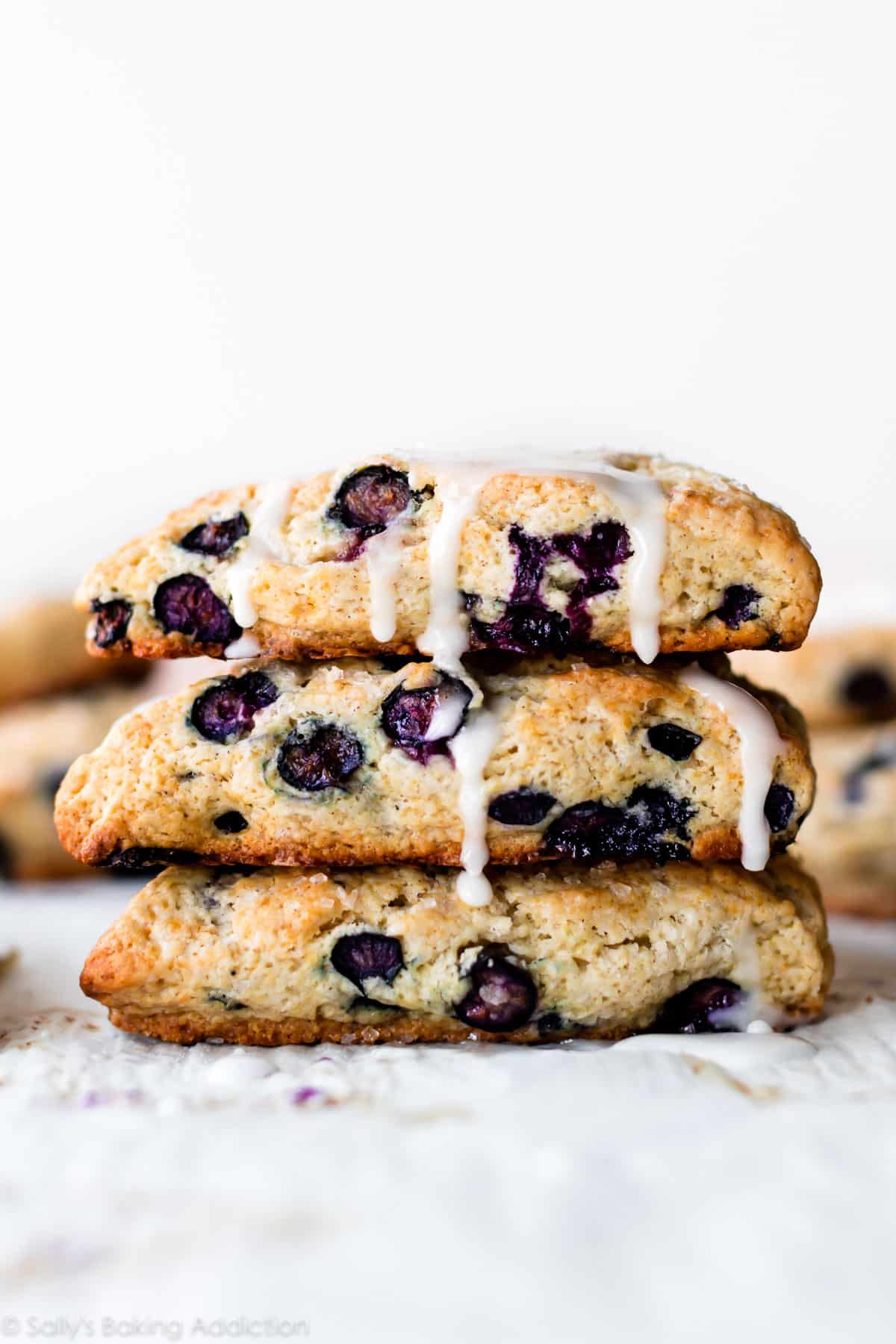
Using my perfected master scone recipe, build your own scones with a variety of add-ins like chocolate chips, berries, or cheese and herbs. These better-than-the-bakery treats are flaky, flavorful, and moist with crisp crumbly edges. There’s a lot of helpful information and step-by-step photos, but feel free to jump right to the recipe!

Scones are sweet or savory, perfect with coffee and tea, welcome at baby showers, bridal showers, brunch, snack time, bake sales, Mother’s Day, and wherever muffins or coffee are appropriate. (All the time!)
But depending on the recipe and technique, scones can be dry and sandpaper-y with flavor comparable to cardboard. They can also over-spread. My basic scone recipe promises uniquely crisp and buttery scones with crumbly corners and a soft, flaky interior.
I have several scone recipes that begin with the same basic formula. Let’s review the fundamentals so you can learn how to make the best scones. Sit back because there’s a lot to cover in this post!

What are Scones?
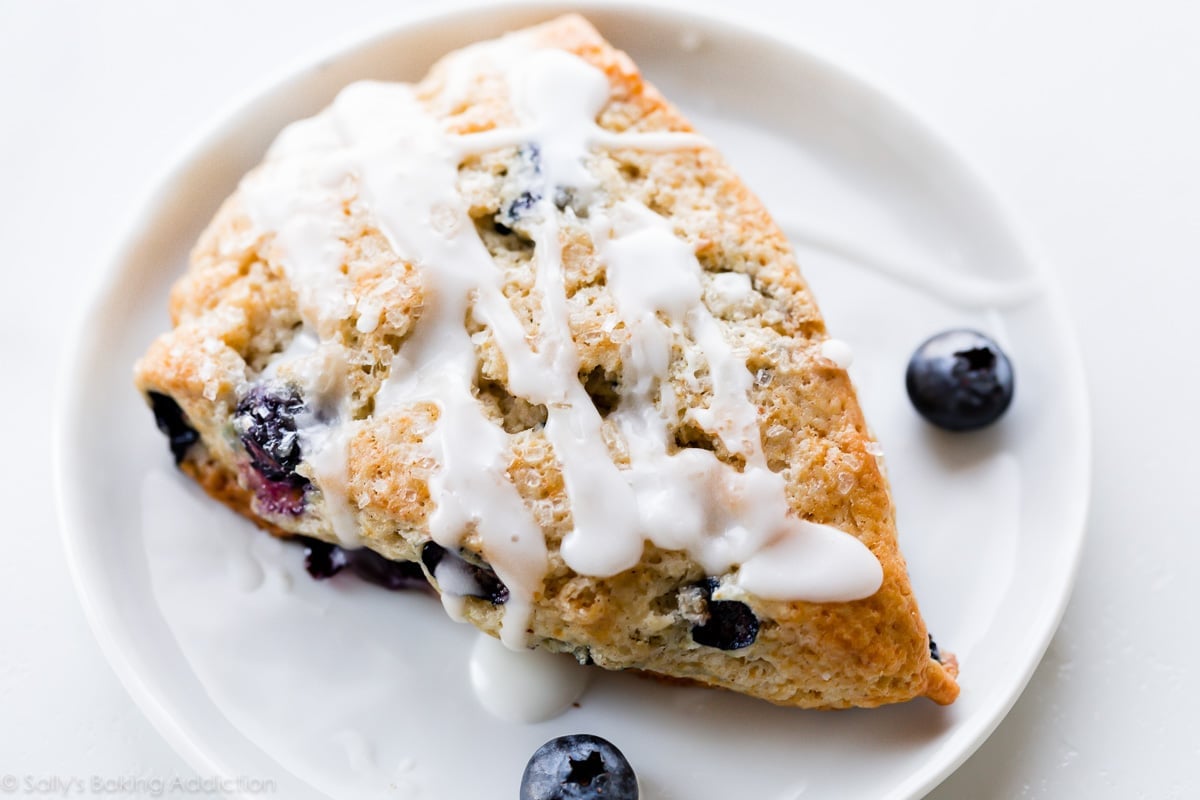
Depending where you live, the term “scone” differs. English scones are more similar to American biscuits and they’re often topped with butter, jam, or clotted cream. American scones are different, but different isn’t necessarily a bad thing! Today’s scones are sweeter, heavier, and aren’t usually topped with butter because there’s so much butter IN them. Sweetness aside, there’s still room for vanilla icing or a dusting of confectioners’ sugar on top. By the way, here’s my favorite recipe for traditional scones.
Scones are leavened with baking powder, so making them is generally quick. Blueberry scones are my favorite variety, but that quickly switches to pumpkin scones in the fall months! (Here are all my scone recipes.)
No matter which flavor you choose, these scones are:
- Moist & soft inside
- Crumbly on the edges
- Buttery & flaky
- Not sandpapery 🙂
One reader, Wendy, commented: “Oh my gosh, I was so intimidated at the thought of making scones. I thought it was so much more complicated. I’ve made these scones twice already—once blueberry and once ham and cheese. SO GOOD! Thank you for an uncomplicated, fool-proof recipe! ★★★★★“
One reader, Yelena, commented: “Absolutely delicious! Easy to make, simple ingredients, and just perfect. ★★★★★“
One reader, Venessa, commented: “It’s my go-to scone recipe. They turn out moist for a scone and so very yummy. Easy to make, which I always appreciate. Thank you! ★★★★★“
One reader, Donna, commented: “This was my first attempt at making scones. The result was amazing! These scones are super easy and delicious! The perfect consistency and nice and moist. I received so many compliments! ★★★★★“
Video Tutorial: Scones
Let’s start with a video tutorial.
Only 7 Ingredients in this Basic Scone Recipe
You only need 7-9 ingredients for my master scone recipe.
- Flour: 2 cups of all-purpose flour is my standard amount, but set extra aside for the work surface and your hands.
- Sugar: I stick with around 1/2 cup of sugar for this scone dough. Feel free to slightly decrease, but keep in mind that the scone flavor and texture will slightly change. Reduce to about 2 Tablespoons for savory flavors. Brown sugar works too. However, if using brown sugar, whisk it into the wet ingredients to get out all the lumps. For example, see my caramel apple scones.
- Baking Powder: Adds lift.
- Salt: Adds flavor.
- Butter: Besides flour, butter is the main ingredient in scones. It’s responsible for flakiness, flavor, crisp edges, and rise.
- Heavy Cream or Buttermilk: For the best tasting pastries, stick with a thick liquid such as heavy cream or buttermilk. I usually use heavy cream, but if you want a slightly tangy flavor, use buttermilk. Thinner liquids change the flavor and appearance. You’ll be headed down a one way street to dry, bland, and flat scones.
- Egg: Adds flavor, lift, and structure.
- Optional: Vanilla extract adds necessary flavor to sweet scones, but skip it if you’re making savory scones. Depending on the flavor, cinnamon is another go-to ingredient.
And don’t forget about the add-ins! Scroll down to see all my favorite scone flavors.
How to Make Scones from Scratch
So now that you understand which ingredients are best, let’s MAKE SCONES!
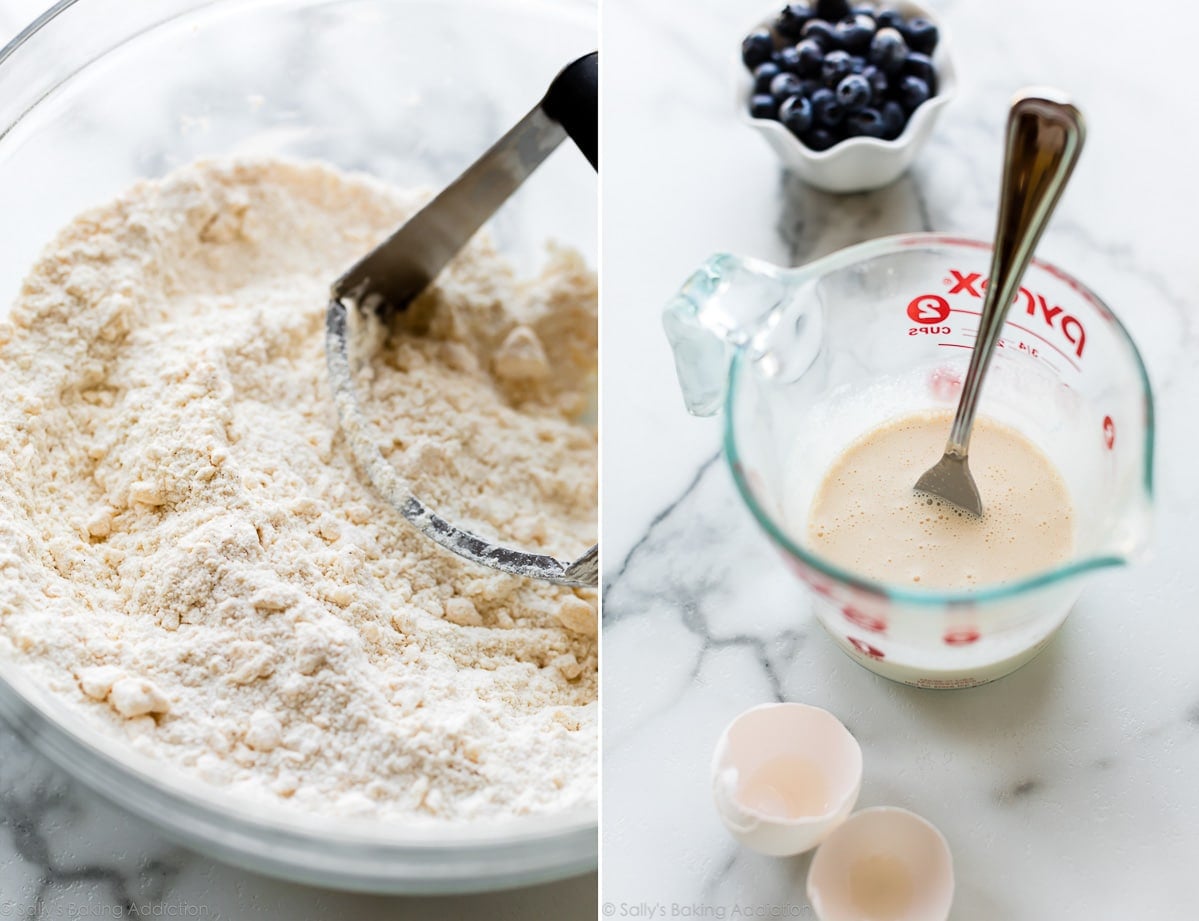
- Mix the dry ingredients together. Use a big mixing bowl because you want lots of room for the mixing process.
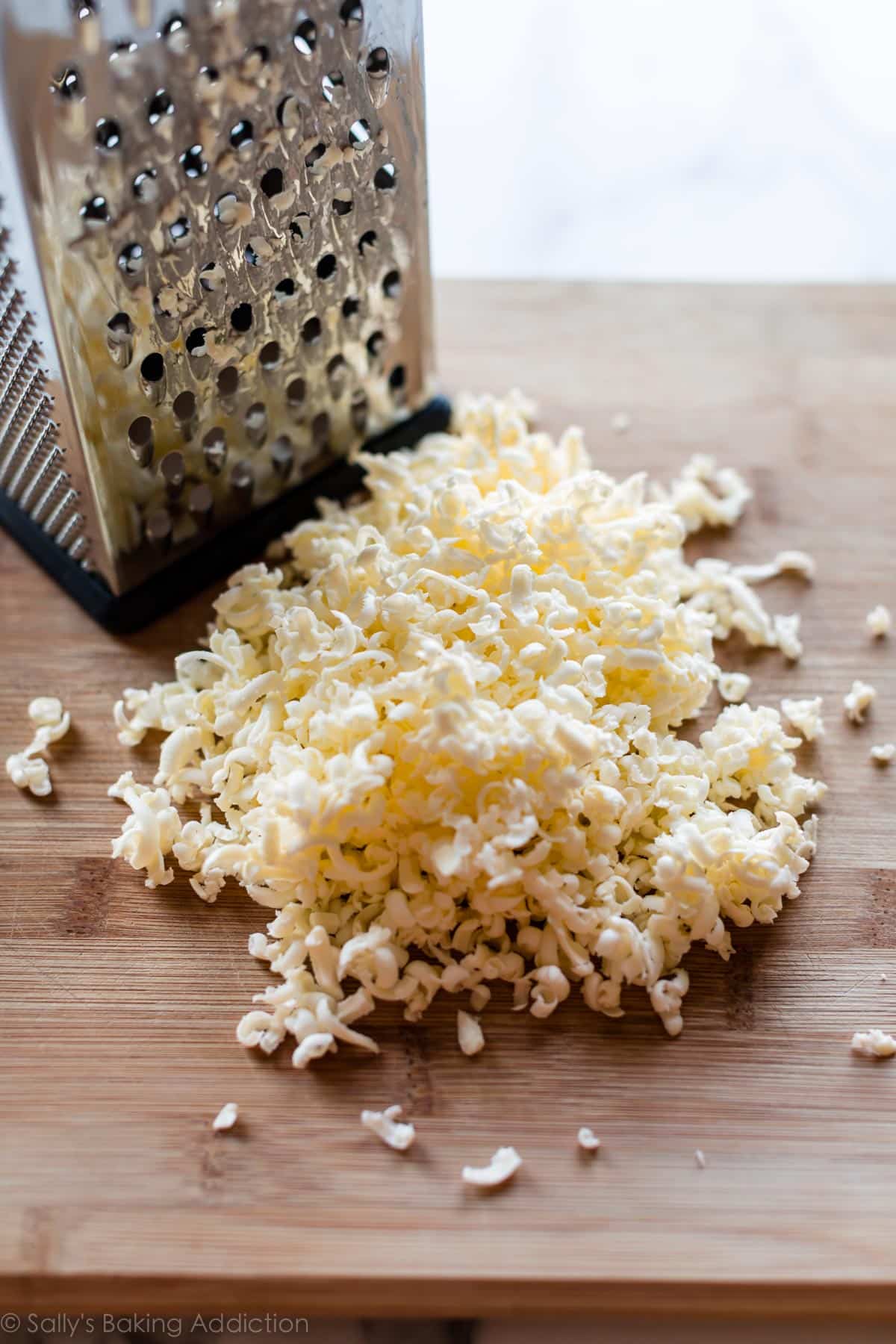
- Cut in the grated frozen butter. You can use a pastry cutter or 2 forks, like we do with pie crust, or your hands. A food processor works too, but it often overworks the scone dough. To avoid overly dense scones, work the dough as little as possible. Messy and crumbly is a good thing!
- Whisk the wet ingredients together.
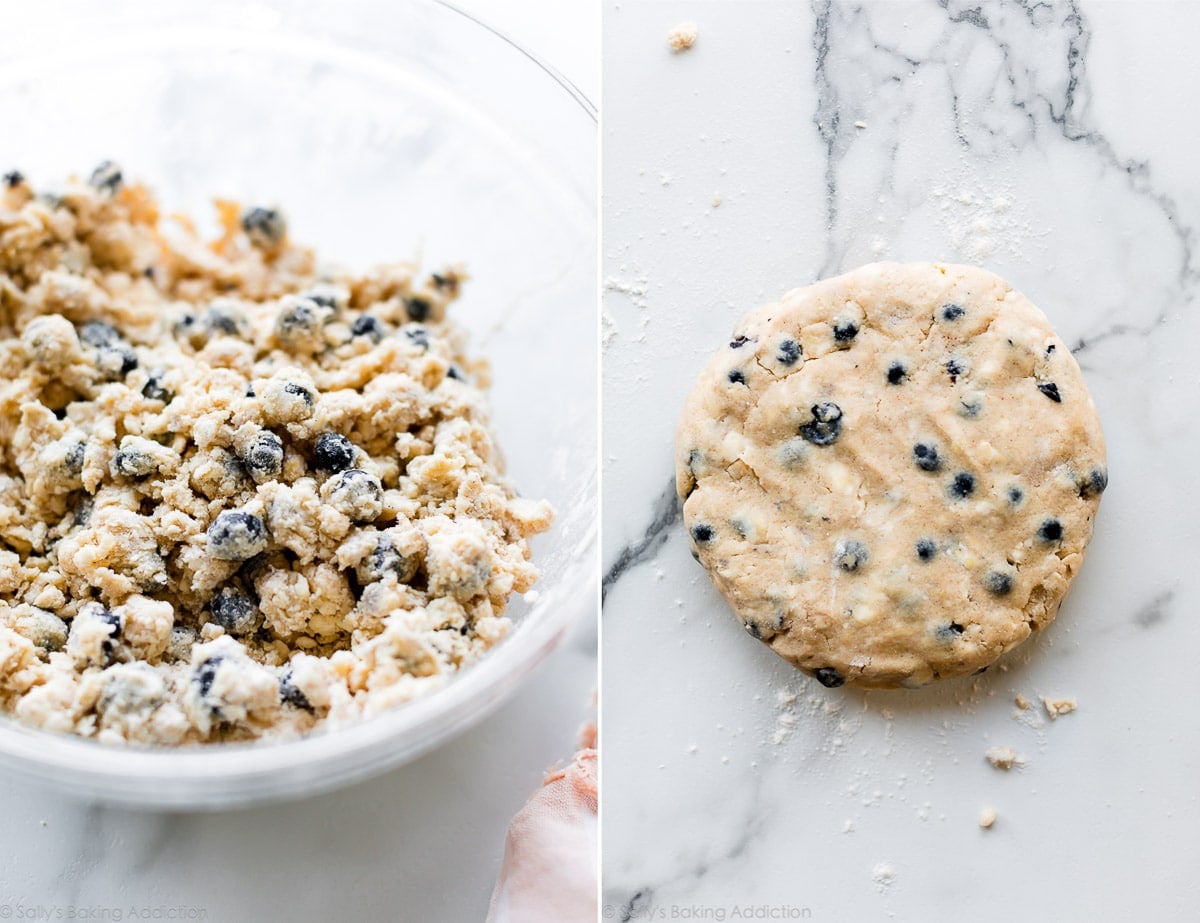
- Mix wet ingredients and dry ingredients. Mix together, then pour out onto the counter.
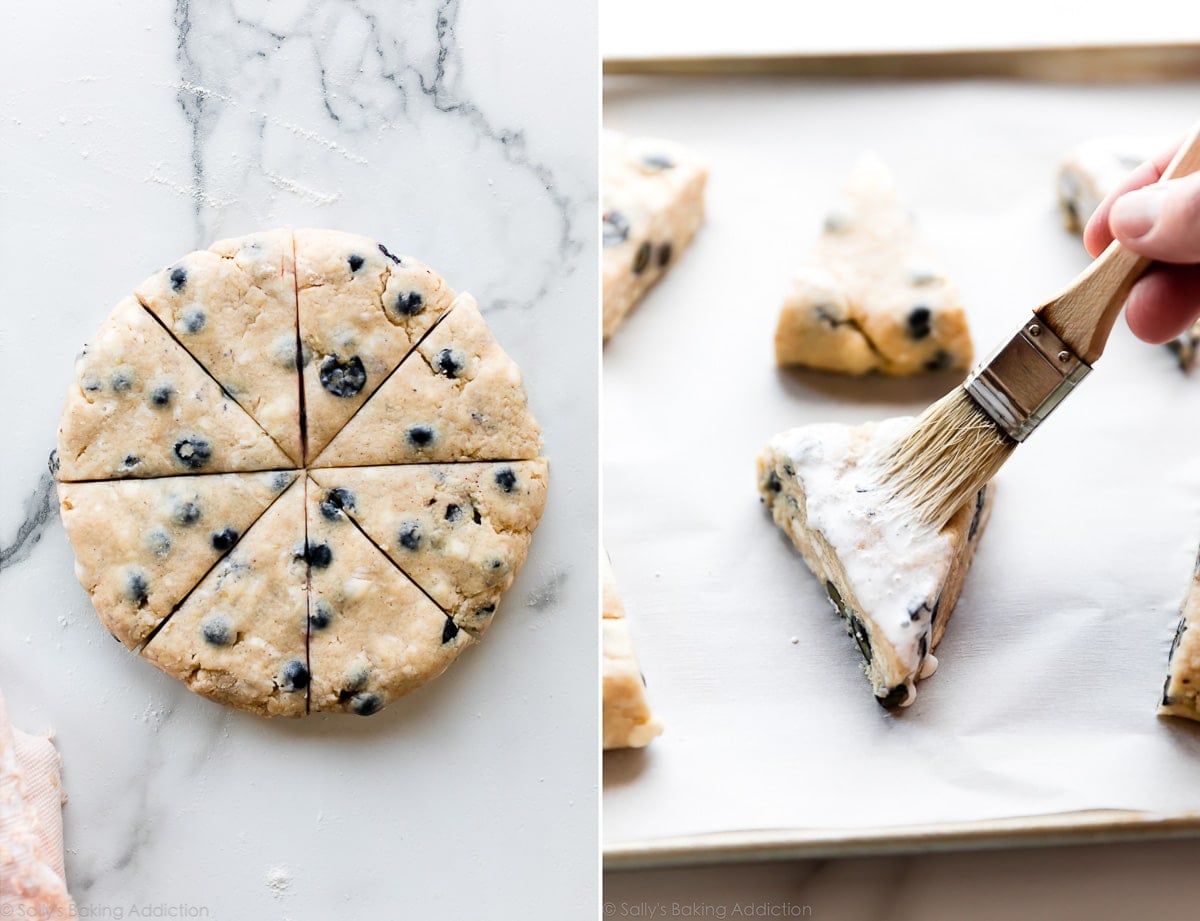
- Form into a disc and cut into wedges. Wedges are easiest, but you can make 10-12 drop scones like I do with my banana scones.
- Brush with heavy cream or buttermilk. For a golden brown, extra crisp and crumbly exterior, brush with liquid before baking. And for extra crunch, a sprinkle of coarse sugar is always ideal!
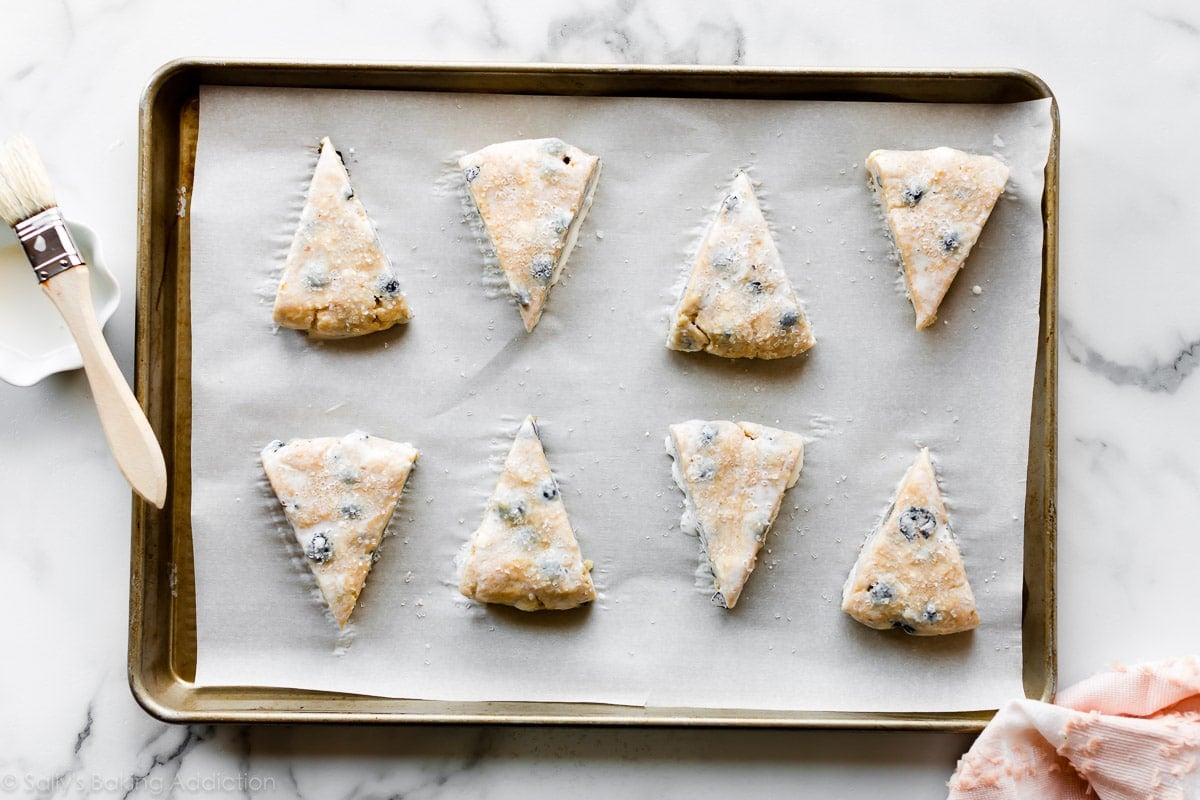
- Refrigerate for at least 15 minutes. Keep scone dough as cold as possible. To avoid over-spreading, I recommend chilling the shaped scones for at least 15 minutes in the refrigerator before baking. In fact, you can even refrigerate overnight for a quick breakfast in the morning!
- Bake until golden brown. Scones bake in a relatively hot oven for only 20-25 minutes.
Cold Ingredients & Frozen Grated Butter
Keeping scone dough as cold as possible prevents over-spreading. When scones over-spread in the oven, they lose the flaky, moist, and deliciously crumbly texture. In other words, they’re ruined. But the easiest way to avoid disaster is to use cold ingredients like cold heavy cream, egg, and butter.
But frozen grated butter is the real key to success.
Like with pie crust, work the cold butter into the dry ingredients to create crumbs. The butter/flour crumbs melt as the scones bake, releasing steam and creating air pockets. These pockets create a flaky center while keeping the edges crumbly and crisp. Refrigerated butter might melt in the dough as you work with it, but frozen butter will hold out until the oven. And the finer the pieces of cold butter, the less the scones spread and the quicker the butter mixes into the dry ingredients. Remember, you don’t want to over-work scone dough.
3 Tricks for Perfect Scones
If you take away anything from this post, let these be it!
- Heavy Cream or Buttermilk: Avoid thinner milks which yield a flatter, less flavorful scone. Canned coconut milk makes a wonderful nondairy option!
- Frozen Grated Butter: See above!
- Refrigerate Before Baking: Remember, cold dough is a successful dough. To avoid over-spreading, I recommend chilling the shaped scones for at least 15 minutes in the refrigerator before baking.
How to prevent flat scones: See #2 and #3. 🙂
How to Freeze Scones
I used to be totally against freezing scone dough. You see, the baking powder is initially activated once wet and if you hold off on baking, the scones won’t rise as much in the oven. However, the decrease in rise is so slight that it doesn’t make a noticeable difference. In fact, you can even shape this scone dough into wedges and refrigerate overnight before baking.
- Freeze Before Baking: Freeze scone dough wedges on a plate or baking sheet for 1 hour. Once relatively frozen, you can layer them in a freezer-friendly bag or container. Bake from frozen, adding a few minutes to the bake time in the recipe below. Or thaw overnight, then bake as directed.
- Freeze After Baking: Freeze the baked and cooled scones before topping with icing or confectioners’ sugar. I usually freeze in a freezer-friendly bag or container. To thaw, leave out on the counter for a few hours or overnight in the refrigerator. Warm in the microwave for 30 seconds or on a baking sheet in a 300°F (149°C) oven for 10 minutes.
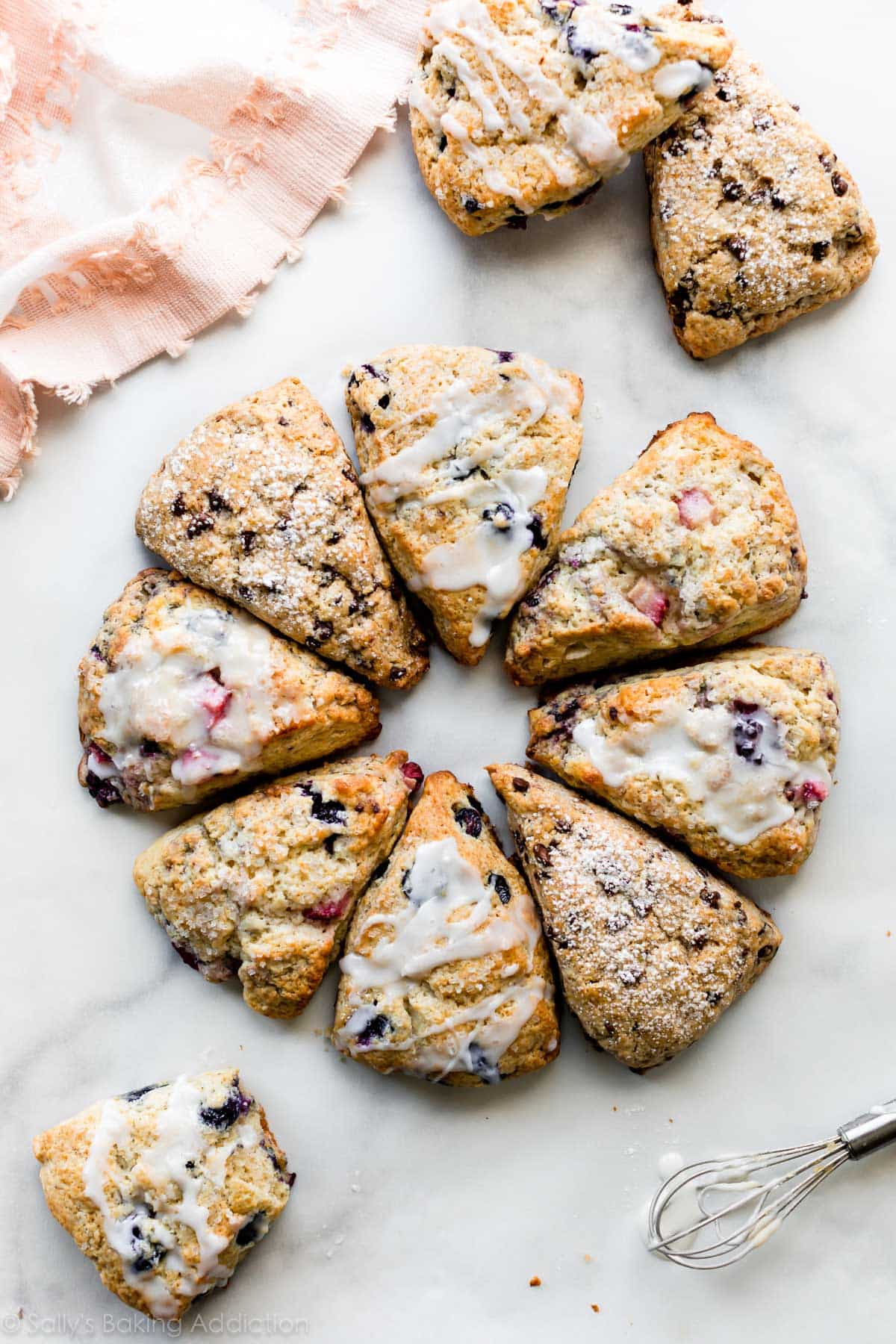
15+ Scone Flavors
- Blueberry Scones and Chocolate Chip Scones (both pictured)
- Cranberry Orange and Pumpkin Scones
- Banana Scones and Lavender Scones
- Lemon Blueberry Scones and Sprinkle Scones
- Caramel Apple and Cinnamon Chip Scones
- Triple Chocolate Scones – they taste like brownies!
- Strawberry Lemon Poppy Seed Scones
- Ham & Cheese Scones
- Mixed Berry (pictured): Follow recipe below and add fresh or frozen mixed berries. Raspberries and blackberries burst easily, so don’t go overboard on those.
- Cherry Chocolate Chip: Follow recipe below and add 3/4 cup semi-sweet chocolate chips and 3/4 cup chopped fresh or frozen cherries.
- Raspberry Almond: Follow the recipe below and add 1/2 teaspoon of almond extract with the vanilla. After shaping the scones, gently press frozen raspberries into each, using about 1 cup total. (Avoid mixing them into the dough, as they can bleed.) Top the shaped scones with sliced almonds before baking (1/3 cup / 37g total almonds). After baking, drizzle with the raspberry icing from these mini vanilla pound cakes.
- Fresh Herb: Reduce sugar to 2 Tablespoons, leave out vanilla extract, and add 2 minced garlic cloves, 1/2 teaspoon ground black pepper, 1/2 cup chopped herbs such as rosemary, parsley, and basil. Additionally, feel free to add 1 cup shredded cheese to the dough and top with sea salt before or after baking!
Using the master recipe below as a starting point, toss in your favorite add-ins like white chocolate chips, toasted pecans, sweetened or unsweetened coconut, dried cranberries, peanut butter chips, etc. If it’s a particularly wet add-in like chopped peaches, blot them with a paper towel before adding to the dough. Top with lemon curd, raspberry sauce, or any of the suggested toppings below. Above all, have fun finding your favorite flavor!
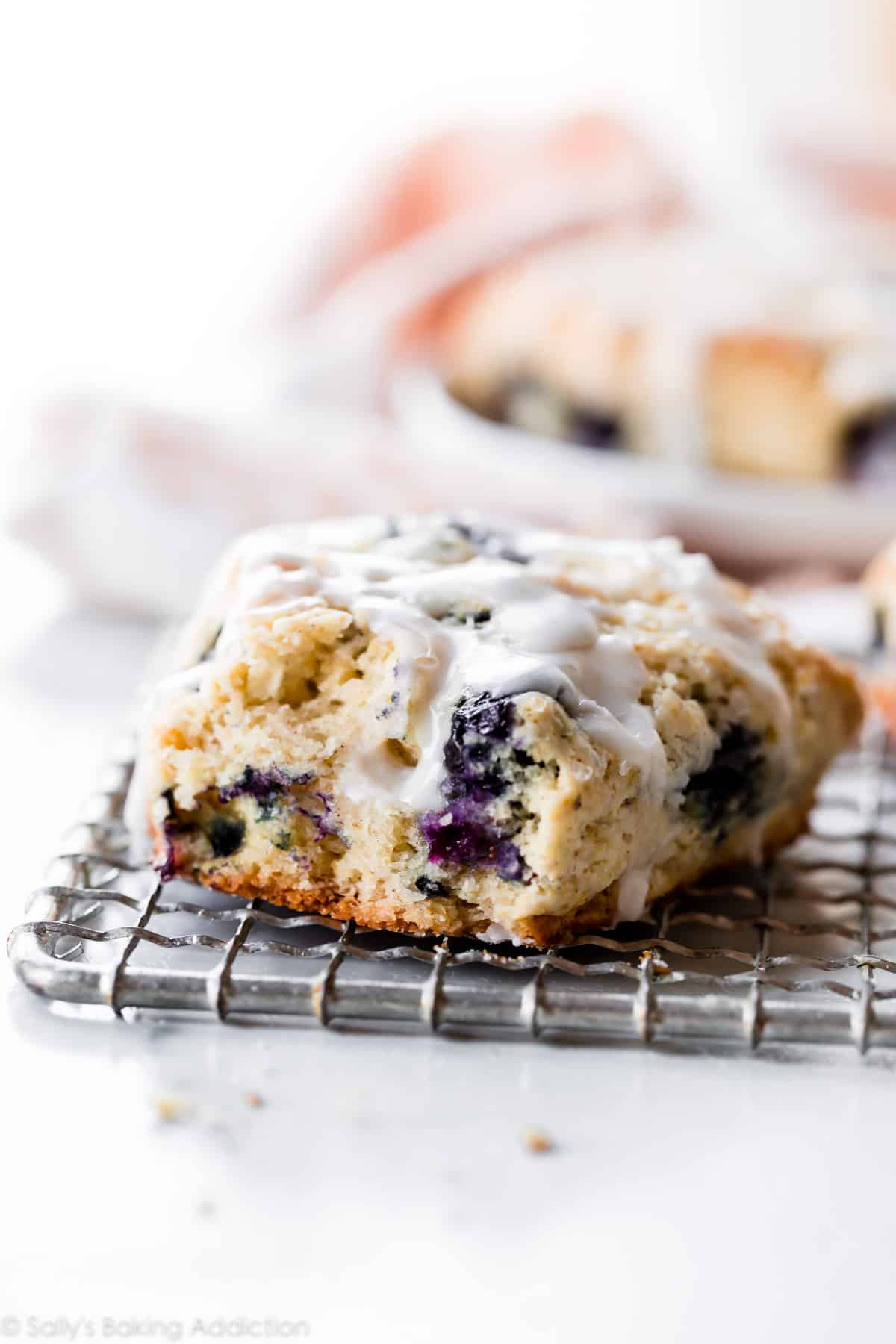
Look At All Of Your Scones!
Feel free to email or share your recipe photos with us on social media. 🙂
Print
How to Make Perfect Scones
- Prep Time: 30 minutes
- Cook Time: 25 minutes
- Total Time: 1 hour
- Yield: 8 large or 16 small scones
- Category: Breakfast
- Method: Baking
- Cuisine: American
Description
Use this basic scone dough for any sweet scone variety. See blog post for a couple savory scone options. Feel free to increase the vanilla extract and/or add other flavor extracts such as lemon extract or coconut extract. Read through the recipe before beginning. You can skip the chilling for 15 minutes prior to baking, but I highly recommend it to prevent the scones from over-spreading.
Ingredients
- 2 cups (250g) all-purpose flour (spooned & leveled), plus more for hands and work surface
- 1/2 cup (100g) granulated sugar
- 1/2 teaspoon salt
- 2 and 1/2 teaspoons baking powder
- 1/2 cup (8 Tbsp; 113g) unsalted butter, frozen
- 1/2 cup (120ml) heavy cream or buttermilk (plus 2 Tbsp for brushing)
- 1 large egg
- 1 and 1/2 teaspoons pure vanilla extract
- 1–1.5 cups add-ins such as chocolate chips, berries, nuts, fruit, etc
- optional: coarse sugar for topping
Instructions
- Whisk flour, sugar, salt, and baking powder together in a large bowl. Grate the frozen butter using a box grater. Add it to the flour mixture and combine with a pastry cutter, two forks, or your fingers until the mixture comes together in pea-sized crumbs. See video above for a closer look at the texture. Place in the refrigerator or freezer as you mix the wet ingredients together.
- Whisk 1/2 cup heavy cream, the egg, and vanilla extract together in a small bowl. Drizzle over the flour mixture, add the add-ins, then mix together until everything appears moistened.
- To make triangle scones: Pour onto the counter and, with floured hands, work dough into a ball as best you can. Dough will be sticky. If it’s too sticky, add a little more flour. If it seems too dry, add 1-2 more Tablespoons heavy cream. Press into an 8-inch disc and, with a sharp knife or bench scraper, cut into 8 wedges. For smaller scones, press dough into two 5-inch discs and cut each into 8 wedges. To make 10-12 drop scones: Keep mixing dough in the bowl until it comes together. Drop scones, about 1/4 cup of dough each, 3 inches apart on a lined baking sheet. To make mini (petite) scones, see recipe note.
- Brush scones with remaining heavy cream and for extra crunch, sprinkle with coarse sugar. (You can do this before or after refrigerating in the next step.)
- Place scones on a plate or lined baking sheet (if your fridge has space!) and refrigerate for at least 15 minutes.
- Meanwhile, preheat oven to 400°F (204°C).
- Line a large baking sheet with parchment paper or silicone baking mat(s). If making mini or drop scones, use 2 baking sheets. After refrigerating, arrange scones 2-3 inches apart on the prepared baking sheet(s).
- Bake for 18-26 minutes or until golden brown around the edges and lightly browned on top. Larger scones take closer to 25 minutes. Remove from the oven and cool for a few minutes. Feel free to top with any of the toppings listed in the recipe Note below.
- Leftover scones keep well at room temperature for 2 days or in the refrigerator for 5 days.
Notes
- Freeze Before Baking: Freeze scone dough wedges on a plate or baking sheet for 1 hour. Once relatively frozen, you can layer them in a freezer-friendly bag or container. Bake from frozen, adding a few minutes to the bake time in the recipe below. Or thaw overnight, then bake as directed.
- Freeze After Baking: Freeze the baked and cooled scones before topping with icing or confectioners’ sugar. I usually freeze in a freezer-friendly bag or container. To thaw, leave out on the counter for a few hours or overnight in the refrigerator. Warm in the microwave for 30 seconds or on a baking sheet in a 300°F (149°C) oven for 10 minutes.
- Overnight Instructions: Prepare scones through step 4. Cover and refrigerate overnight. Continue with the recipe the following day.
- Special Tools (affiliate links): Glass Mixing Bowls | Box Grater | Pastry Cutter | Whisk | Silicone Spatula | Bench Scraper | Baking Sheet | Silicone Baking Mat or Parchment Paper | Pastry Brush
- Scone Flavors: See blog post above. If adding fruit, use fresh or frozen. If frozen, do not thaw. Peel fruits such as apples, peaches, or pears before chopping. If desired, add 1 teaspoon of cinnamon with the flour. I usually add cinnamon when making chocolate chip scones.
- Over-spreading: Start with very cold scone dough. Expect some spread, but if the scones are over-spreading as they bake, remove from the oven and press back into its triangle shape (or whatever shape) using a rubber spatula.
- Mini/Petite Scones: To make smaller scones, press dough into two 5-inch discs and cut each into 8 equal wedges. Bake for 18-20 minutes or until lightly browned.
- Optional Toppings: Vanilla icing, salted caramel, lemon icing from this iced lemon pound cake, maple icing from these banana scones, brown butter icing from these pistachio cookies, lemon curd, orange icing from these hot cross buns, raspberry icing from these mini pound cakes, dusting of confectioners’ sugar.











Reader Comments and Reviews
Hello, I’d like a classic scone without any additives. Can I use this recipe? Do I need to make any adjustments? Thank you!
Hi Shelly, yes, you can make plain scones with this recipe. Enjoy!
I tried this today! Definitely 5 stars for me.
Just tried this recipe as is with no mix ins, it was amazing! I’ve been craving scones and even just the base recipe was perfect. Thanks!
The BEST scone recipe I’ve ever tried. Easy to make, crisp on outside, crumbly & moist on the inside. Can add fruit, &/or nuts, lemon or orange zest, choc chips, etc.,. My fav is blueberry with lemon zest or raspberry with white choc icing!
Hi Sally! Is there a substitute for heavy cream/buttermilk?
Hi Megan, we recommend avoiding thinner milks which yield a flatter, less flavorful scone. Canned coconut milk makes a wonderful nondairy option!
Love the recipe! I was wondering, however, if I could add peanut butter to the mix and if so, how much? Thank you!
Hi Grace, We haven’t tested a recipe for peanut butter scones and it would take some additional recipe testing for us to give you a confident answer. Let us know if you try anything!
Great result from the scones love this recipe and hope you do to
Hi Grace!
For a peanut butter twist, i use peanut butter chips! They are so good with rasperry jam
Hi, I have white lily self rising flour. Can this be used instead of all purpose? Would I need to add some of the baking powder in the recipe?
Hi Christine, we don’t recommend using self rising flour in this recipe. It would take additional recipe testing to ensure accurate results.
Any alternatives for the egg? Allergy, but I’d love to make this!
Hi Cindy, We haven’t tested these scones with any egg substitutes, but let us know if you do any experimenting!
hi sally, is it possible to sub out the brown or regular sugar for maple syrup in your scones recipes? if so, what amount would you suggest?
also, would spelt flour work instead of all purpose?
my sister is undergoing chemo treatments and would like to do healthier alternatives. ty 😉
Hi Sonny! For a healthier treat, you can browse our healthier recipes here, or perhaps search for a scone recipe using the ingredients you would like to use (since adapting this one will likely not yield great results).
ty trina for your honest feedback. that’s one of the many things i love about sally & her team. i’ve been following her since she basically started and would have to print up her recipes! i’ve learned so much from her & her great recipes. she’s one expert baker i’ve recommended for those who have started baking. keep up the great work 😉
How much chocolate powder should I use for chocolate scones please
Hi Andrea, here’s our chocolate scones recipe!
I love using lemon zest and cranberries for scones. Everyone loves them. Even if I am using gluten free flour. I really appreciated this recipe. I think that Buttermilk gives a distinct delicious taste to baking. I enjoy several of your recipes, keep up the good work!
Hello! Is it possible to use a food processor to combine the ingredients? Love your recipes!!
Hi Morgan, A lot of food processors come with a grating blade, if you happen to have one available to you you can use it for the butter. If you do use it to mix the ingredients together, be careful as food processors can be quick to overwork the dough. We hope you love the scones!
Hi Sally, I want to make these for a larger group gathering. How long can the dough be frozen so I can try to pre-plan some of the steps? Will it be ok if I make and freeze dough 3 weeks out? 1 week?
Thank you!
Hi Sylvia, the dough freezes well for up to 3 months. Hope they’re a hit!
Hi Sally! I’m planning to make your glazed cranberry orange scones and have a quick question: for most baked goods the egg and heavy cream need to be at room temp. Since the scones will be refrigerated – as it’s impt to keep the frozen grated butter cold – should the egg and cream not be at room temp but be cold? You didn’t put room temp in the ingredients so I’m guessing they should be cold. Just checking tho!!!
Thanks much!
Judy
Hi Judy, cold is good for this recipe!
EXCELLENT SCONES! Love them. Delicious. Used fresh raspberries. Scones came out perfect. Will be making this again! Thank you!
I have been craving scones for so long so when I got on your site I was so excited to watch you make them. Well, I tried them – they were awful – my husband ate them all, said they tasted good.
I was so concerned about keeping everything cold that I kept in fridge or freezer in between steps and for the time it took to pre-heat oven.
They spread way out and weren’t light and fluffy like yours.
I was so disappointed to say the least.
The dough sure was sticky so I added a little flour. I had done the butter like you said to – with a box grater
I’m afraid to try again. Help!
Scones have always been a fail for me until this recipe. I have made it twice twice in the last two days. Grading frozen butter and chilling for 30 minutes before cooking seem to be the secret. Thank you.
Why unsalted butter??
Hi Enda, you can read more about unsalted vs. salted butter here.
Hi! Can this recipe be made gluten free successfully by subbing the flour for 1:1 GF flour? Thanks!
Hi Anna, we haven’t tested it but some readers have reported success using a 1:1 gluten free all purpose flour blend. Let us know if you try anything!
I used King Arthur Gluten-free flour and mine came out perfect on the first try. I was meticulous about following each step. I placed the dough in the fridge while mixing the wet ingredients. Then placed the triangles back in the fridge for 15 minutes while the oven pre heated.
Can you use dried fruits for these?
Hi Joe, absolutely! We love using dried fruits in scones– we recommend 3/4 – 1 cup total in the dough.
Hi, Sally! I love all the recipes I have tried. I’m an old baker (68) and have been baking for over fifty years. I have made many scone recipes, and your master recipe matches what I have found to be the definitive scone recipe, except for one thing: instead of heavy cream, I always use ricotta cheese, preferably whole-fat. The liquid is incorporated in the ricotta, but in cream or milk or any other liquid, it evaporates and leaves you with a dry, crunchy scone. That is, if you don’t eat them fast enough. And since there’s just me and my wife, and neither of us needs THAT many scones, they dry out. Those made with ricotta seem to last longer, hold their moisture better. My 2¢.
Great idea. Im definitely going to try that!
can I use self rising flour instead of the AP flour, baking powder and salt?
Hi Brenda, we don’t recommend using self rising flour in this recipe. It would take additional recipe testing to ensure accurate results.
Is there a way to make these without egg? I have a little with an egg allergy. I’ve successfully baked cakes using buttermilk as the egg alternative, but was wondering if additional buttermilk could be subbed here for the egg or not. Thanks!
Hi Katie! We haven’t tested these scones with any egg substitutes, but let us know if you do any experimenting.
Amazing. I never seem to have cinnamon chips in the house, so I made a cinnamon-sugar scone. Added a small amount of cinnamon to the dry ingredients, and once the dough came together, spread a layer of cinnamon-sugar and gently folded it in before shaping my circle/cutting. The idea was to have a layer running through the dough. Mostly successful, but I look forward to my next attempt. Also made a simple cream/pwd sugar/vanilla frosting for post-bake.
Sally – I love your recipes. Can’t wait to try this one. Any tips for baking scones at high altitude? I live in Denver, CO (6,000 feet). Thank you!
Hi Marykate, We wish we could help, but we have no experience baking at high altitude. Some readers have found this chart helpful: https://www.kingarthurflour.com/learn/high-altitude-baking.html
I have had to deal with high altitude baking at 6,800 feet for a little over three years now. I have found the King Arthur guidelines to be very helpful! I haven’t had an issue with yeast bread, quick bread, or cookies, but for cakes, cupcakes, and brownies, I follow their guidelines for baking soda and baking powder and things turn out wonderfully!
I love scones and have tried at least a dozen different recipes. This has been the best one, hands down! They have a beautiful texture and flavor. I used frozen huckleberries and did like a layered scone…pressed the frozen berries into the disc, then folded over and flattened to engulf the berries. The dough didn’t turn purple, which is what I wanted. Thanks for such a great recipe! Will try savory next!
First time I made this recipe they came out perfect but the second and third time they flattened down like pancakes. I don’t know what I’m doing wrong. I measure all my ingredients. My baking powder is fresh. I just don’t get it.
Hi Susan, flat scones are usually a result of warm butter in the dough. Have the past couple of times you’ve made them been in the summer with a warmer kitchen? Make sure to keep the butter very cold before baking! Thanks so much for giving these scones a try.
Thank you for scone recipe, giving them a 5 star just delicious !
Is it possible to use yogurt for the heavy cream?
Hi Sheila, you really need heavy cream or buttermilk here. Yogurt is not a good replacement in scones.