
This perfect coconut cake sets the bar for homemade cakes everywhere. It’s supremely moist with a soft fluffy crumb and intense coconut flavor. To ensure success, follow this recipe carefully including using cake flour, egg whites, sour cream, and canned coconut milk.
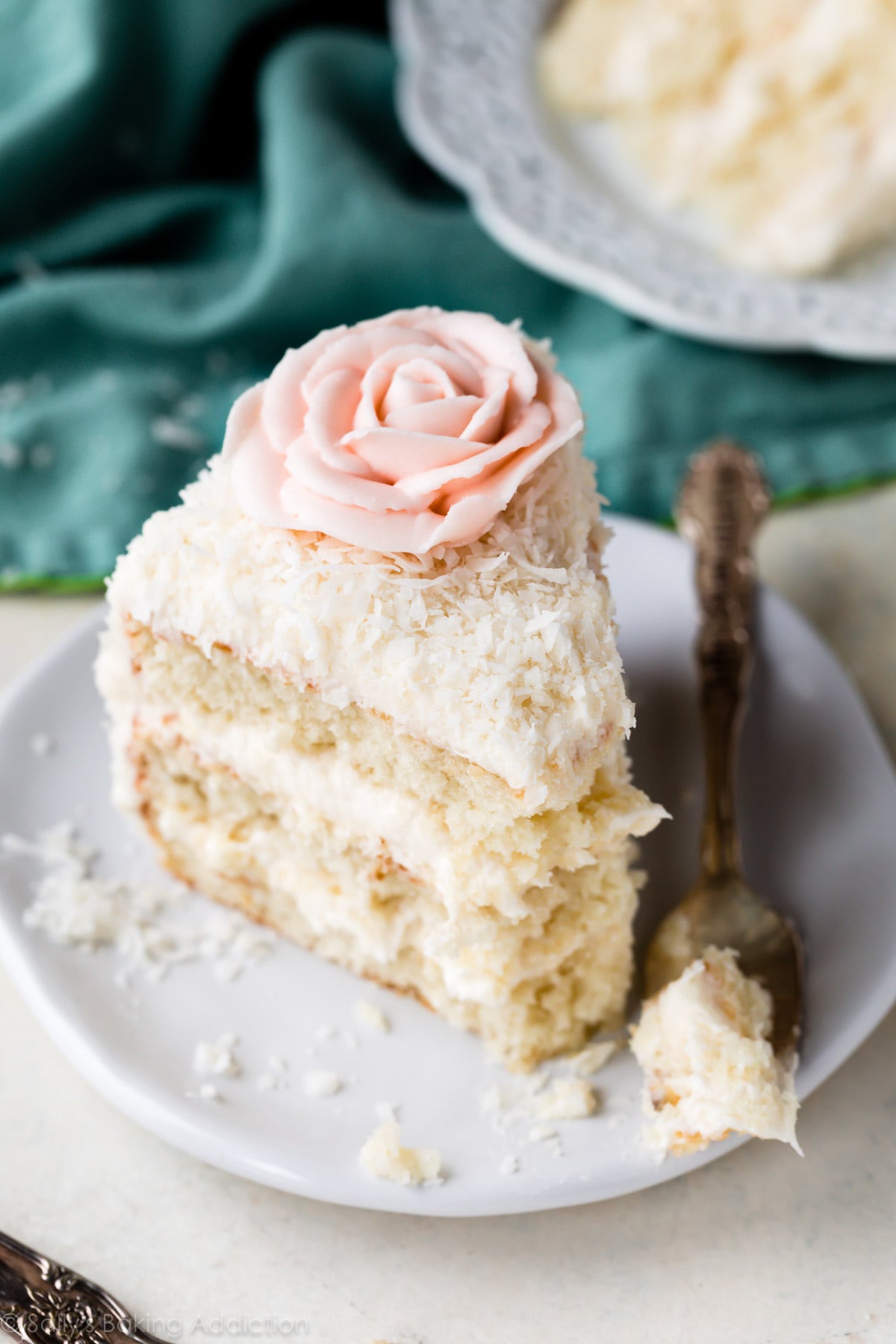
At the request of many readers, let me introduce you to the best coconut cake I’ve ever had. Homemade with love for coconut lovers everywhere, this cake exceeds my expectations. Complete with silky coconut cream cheese buttercream, she’s absolutely perfect and juxtaposes bold flavor with a light crumb.
I endlessly tested this cake recipe. In fact, I’m pretty sure my head turned into an actual coconut during the process. Is there shredded coconut caked into the crevices of my kitchen floor and backsplash? Yes.
5 Reasons to Love This Coconut Cake Recipe
- Not Dry: This coconut cake is mega moist. There’s no point wasting your time (or calories!) on dry cakes.
- Intensely Flavorful: Using coconut milk, shredded coconut, and coconut extract, you are guaranteed an intensely flavorful coconut cake.
- Soft & Fluffy: By following the recipe carefully, as well as using the power ingredients described below, you are guaranteed a soft-as-silk coconut cake crumb.
- Any Shape: Use this cake batter for coconut Bundt cake, coconut cupcakes, a 2-layer cake, 3-layer cake, or a coconut sheet cake.
- Gets Along With Everyone: Use the frosting recipe below or try strawberry frosting, lemon frosting, brown butter cream cheese frosting, champagne frosting, or chocolate buttercream. Add raspberry cake filling between the layers or drizzle salted caramel on top! With so many ways to customize, this coconut cake is always a crowd-favorite when looking for Easter dessert ideas.
Coconut Cake Video Tutorial
This recipe sets the bar for homemade cakes everywhere. It’s simply exquisite and is sure to be one of your favorite spring dessert recipes and Easter brunch recipes. Talk about a show stopper!
How to Make Coconut Cake
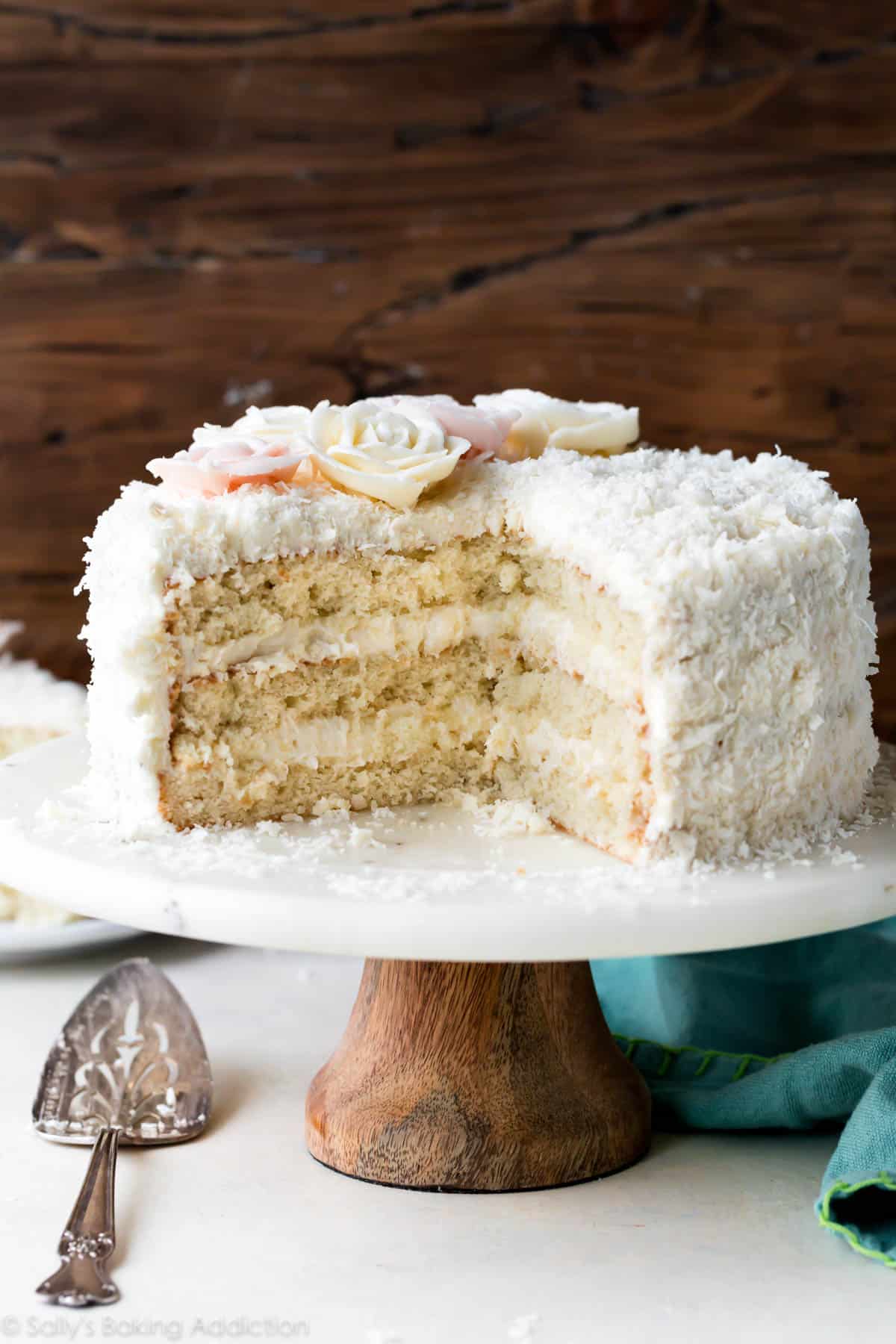
I adapted this recipe from my favorite white cake. Its pristine crumb, fluffy texture, and stick-to-your-fork moisture guarantee cake success. In fact, I have the recipe memorized and even used it as the base of pistachio cake, cookies & cream cake, espresso cake, burnt sugar caramel cake, and strawberry cake. The recipe is cake gold and I knew it would be the perfect starting point for a fluffy and moist coconut cake.
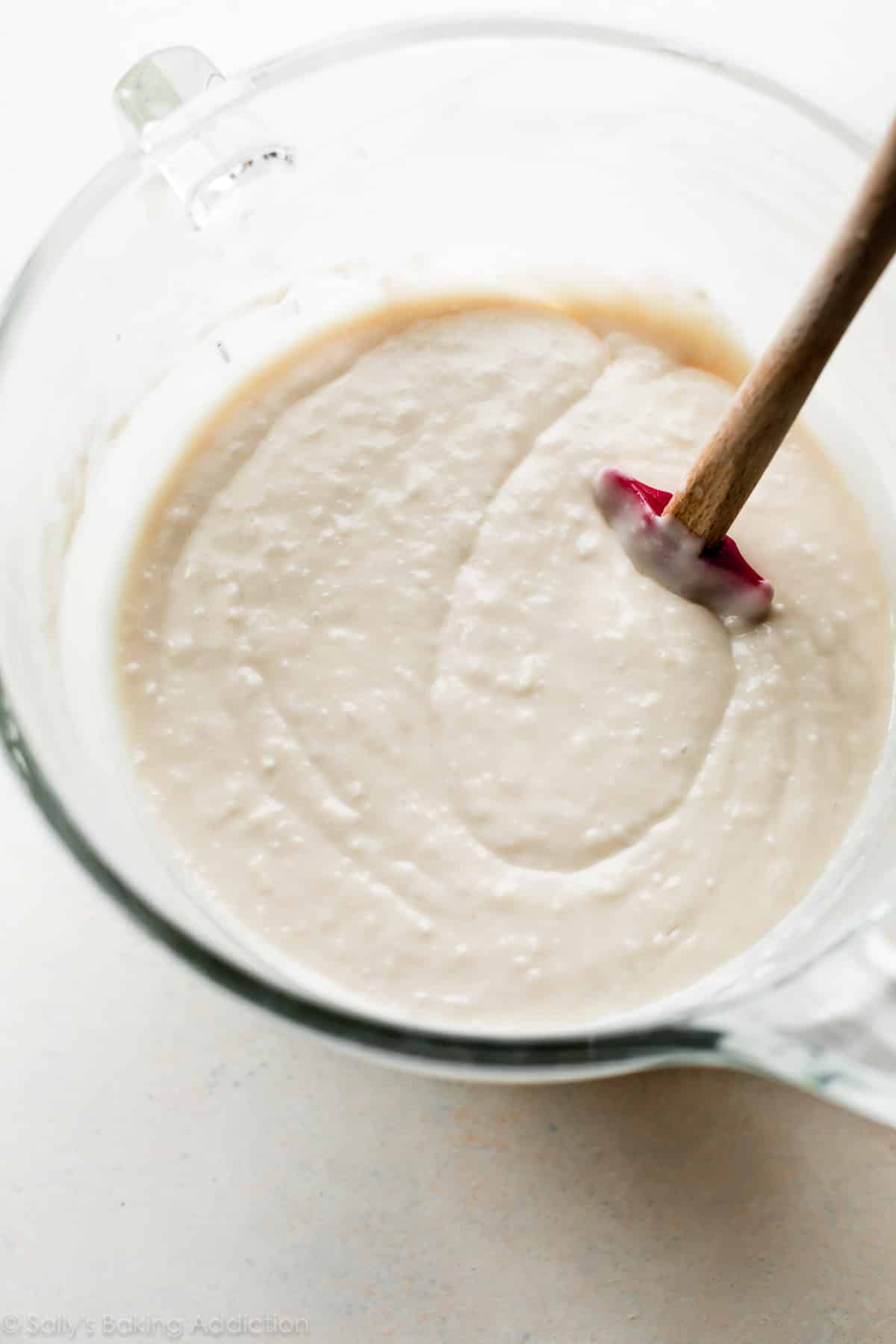
Your coconut cake journey begins with two mixing bowls. Dry ingredients in one and wet ingredients in another (see full recipe instructions below). Combine the two in your mixer, along with coconut milk and sweetened shredded/flaked coconut. That’s it! Your coconut cake batter is ready to bake.
Creamed butter and sugar provide a solid base for this cake recipe. Use room temperature butter, and remember that room temperature is cooler than you think.
Another tip: Use all room temperature ingredients, including the eggs and sour cream. Why? Ingredients bond together very easily when they’re warmer, which creates an evenly textured baked good. Cold ingredients do not emulsify together. Period.
Use These 6 Power Ingredients
Cake is literally nothing without its ingredients and these power players are the difference between dense dry cake and light moist cake.
- Cake Flour: Cake flour produces the softest cake. If you don’t usually buy cake flour, make the exception here. It’s sold in the baking aisle with the other flours. You can use leftovers in any of these cake flour recipes. If you can’t find it, try making this cake flour substitute.
- Egg Whites: Egg yolks are wonderful for moisture, but they’re heavy and weigh down cakes. We use whole eggs in my coconut Easter cake which is much more dense, like a pound cake. To keep this coconut cake light and fluffy, use only egg whites. We’ll add the moisture back in with sour cream.
- Sour Cream: The moist maker! This cake melts in your mouth.
- Coconut Extract: I tested this recipe with and without coconut extract. We loved it both ways, but coconut extract is necessary for best coconut flavor. It’s in the baking aisle near the vanilla extract.
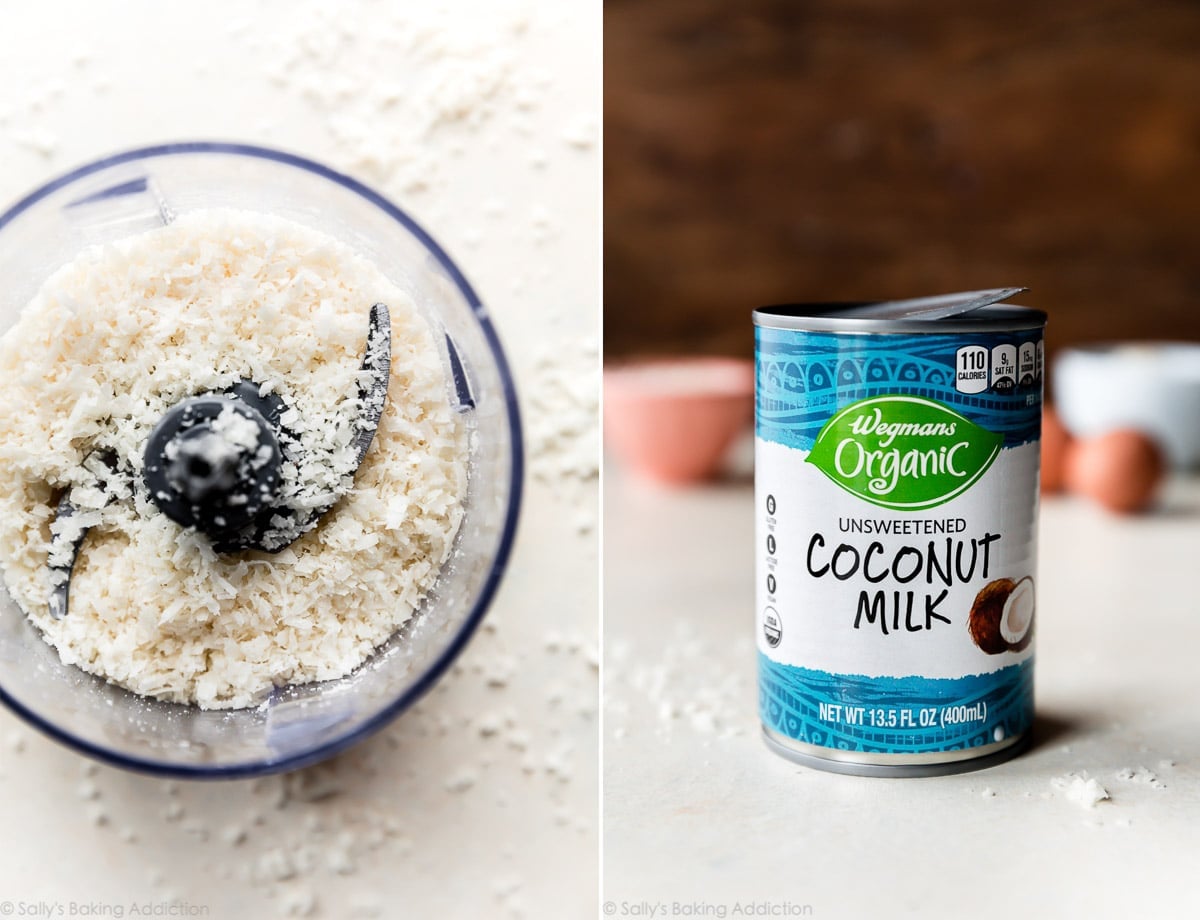
- Canned Coconut Milk: Canned coconut milk is a cooking ingredient, not a beverage. It’s creamier and thicker than regular milk and usually found near the Thai food products. Do not use the refrigerated coconut milk beverage that comes in a carton, because the two are very different.
- Sweetened Shredded Coconut: I recommend using sweetened shredded coconut, also called sweetened flaked coconut. It’s moister than unsweetened coconut and that makes a big difference in the cake’s texture. I reduced the added sugar in the cake batter to make up for the sweetness. Sweetened coconut is sometimes sold as long skinny shreds, a size some find off-putting in cake. Therefore, I recommend pulsing them in a food processor so they’re smaller.
Coconut Cream Cheese Buttercream Frosting
What do you love about vanilla buttercream? It’s buttery, sweet, and smooth.
And what about cream cheese frosting? It’s creamy, silky, and tangy.
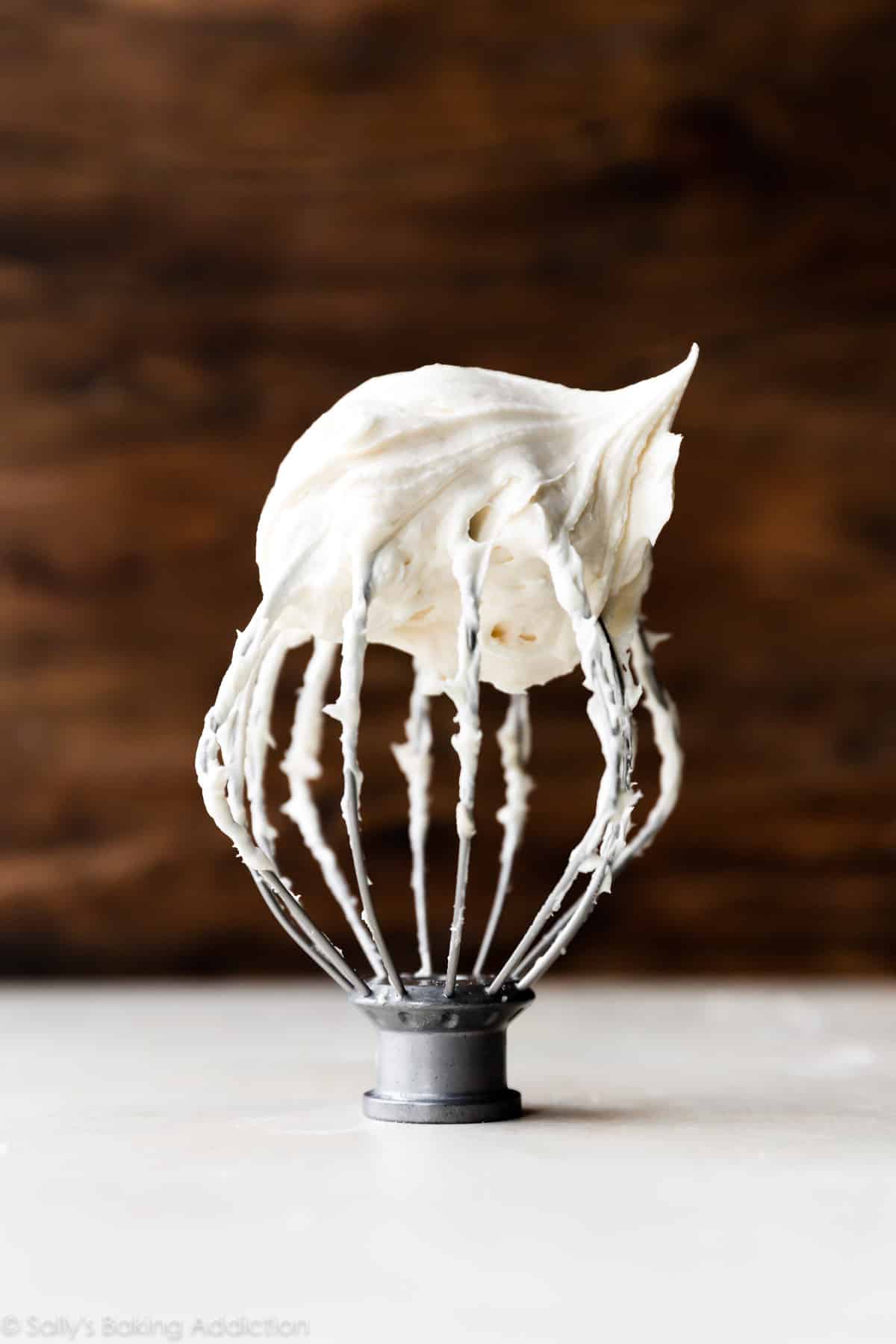
Let’s combine the two, then add coconut milk and coconut extract. It’s even creamier and silkier than the coconut frosting on these coconut chocolate Easter cupcakes so that glides onto the cake seamlessly. (Which is a happy bonus because decorating a layer cake can be quite the task. See more below.)
If you prefer a non-cream cheese option, use my vanilla buttercream instead—use canned coconut milk instead of milk and add 1/2 teaspoon coconut extract.
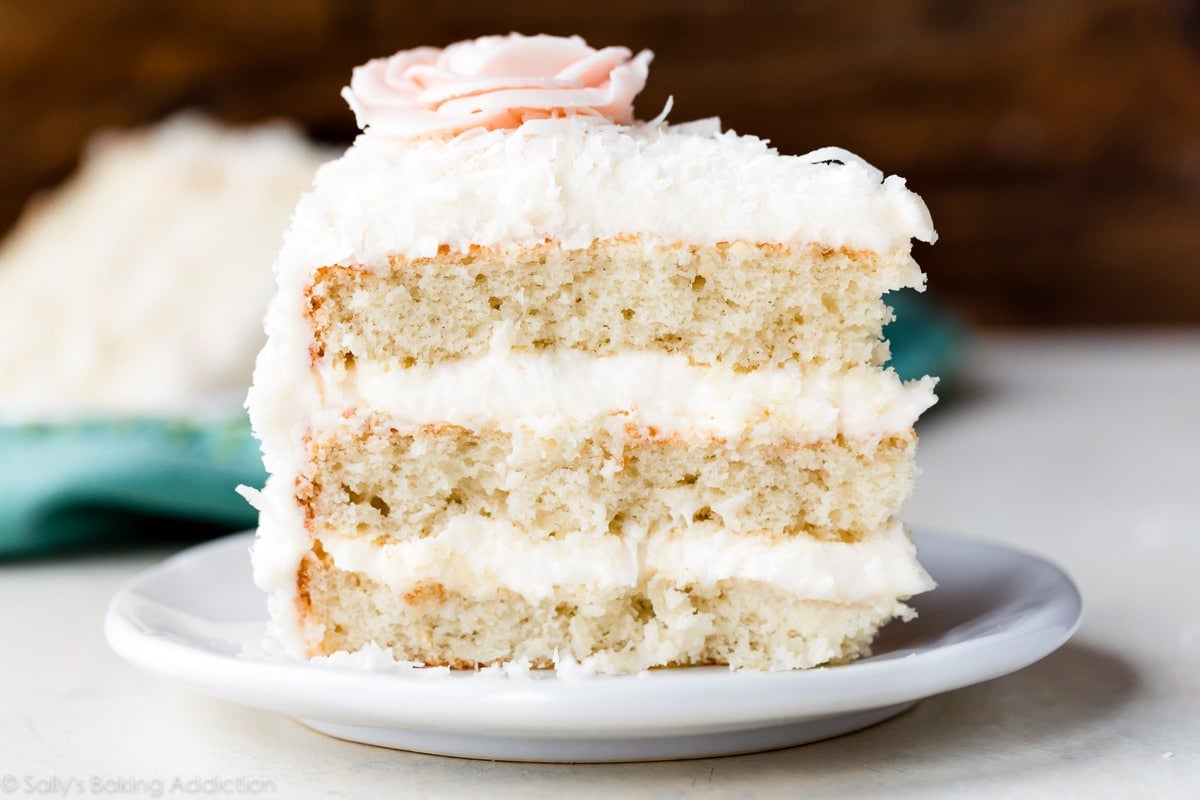
How to Frost a Layer Cake
Alright, let’s do this.
- Cool cakes completely. Sounds obvious, but even the tiniest bit of warmth will melt the frosting. As a result, the layer cake will slip, slide, or even cave in!
- If your cakes have a dome on top, level them off with a cake leveler or serrated knife. Flat-topped cakes ensure a straight and sturdy layer cake.
- Choose a serving plate, cake turntable, or cake stand. The exact cake stand I use in these pictures is no longer available, but here is a similar option.
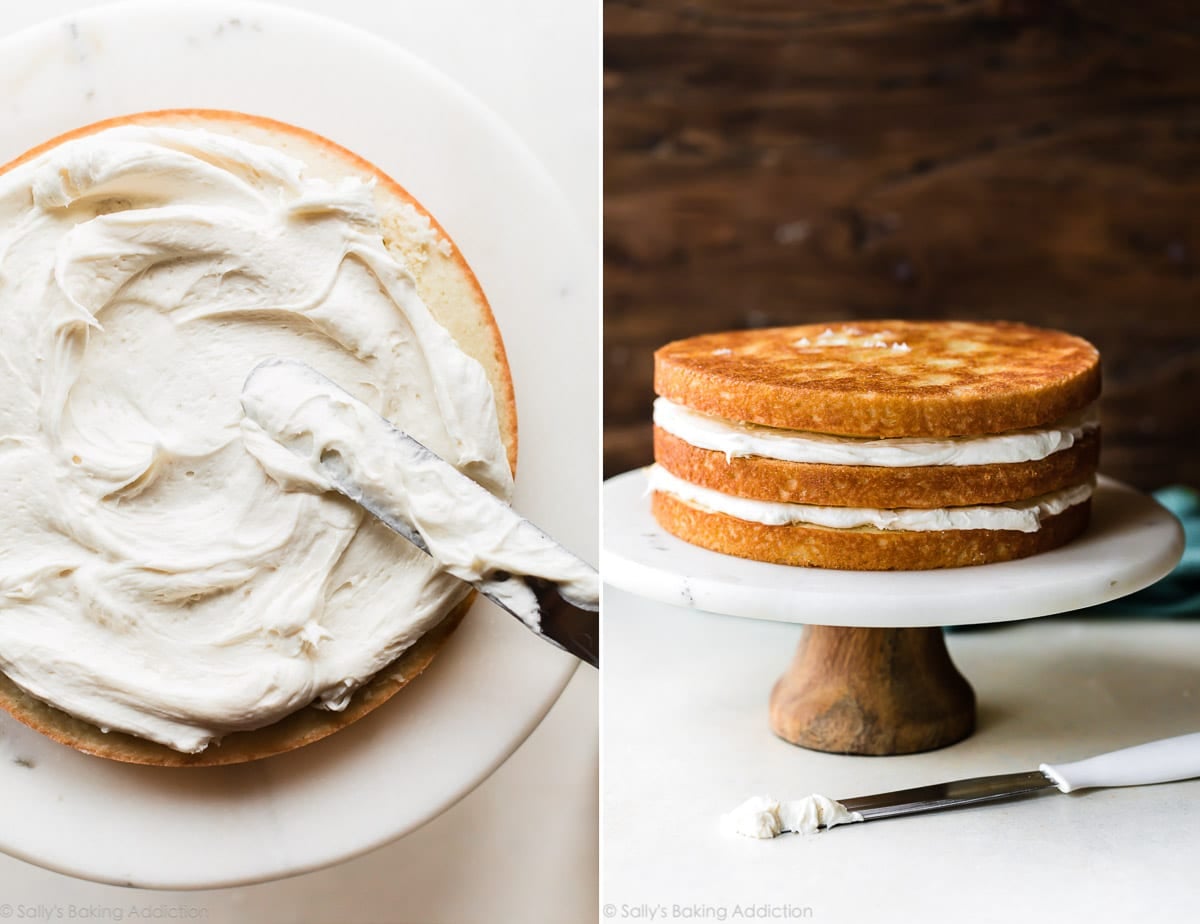
- Place the bottom layer on the cake stand. Using an icing spatula, spread 1 and 1/2 cups of frosting in an even layer on top. Bring the frosting just over the edge of the cake; this will be helpful when it’s time to frost the sides.
- Place the second layer top-side-down on top. Make sure it aligns with the bottom cake layer.
- Spread 1 and 1/2 cups frosting evenly on top, just as you did with the bottom layer.
- Place third layer top-side-up on top. Again, make sure it’s perfectly aligned.
- Divide the remaining frosting in half. (Just eyeball it.) Dollop half of the frosting on top of the cake and use an icing spatula to smooth it to the edges. Apply *some* of the remaining frosting all around the sides of the cake, then use a bench scraper to smooth it in a thin layer. Apply the rest of the frosting on the sides of the cake, then bench scrape to smooth it all out.
- Wipe any excess frosting off of the cake stand.
You can watch me decorate this coconut cake in the video tutorial above or you can use this detailed how to assemble and decorate a layer cake post as your guide. Don’t stress; if you take your time and make sure the cake layers are totally straight, you’re all set.
But I Don’t Want to
Skip the drama and make a coconut sheet cake instead! Sheet cakes are easier to frost because they’re only one layer. See my recipe note about different size coconut cakes.
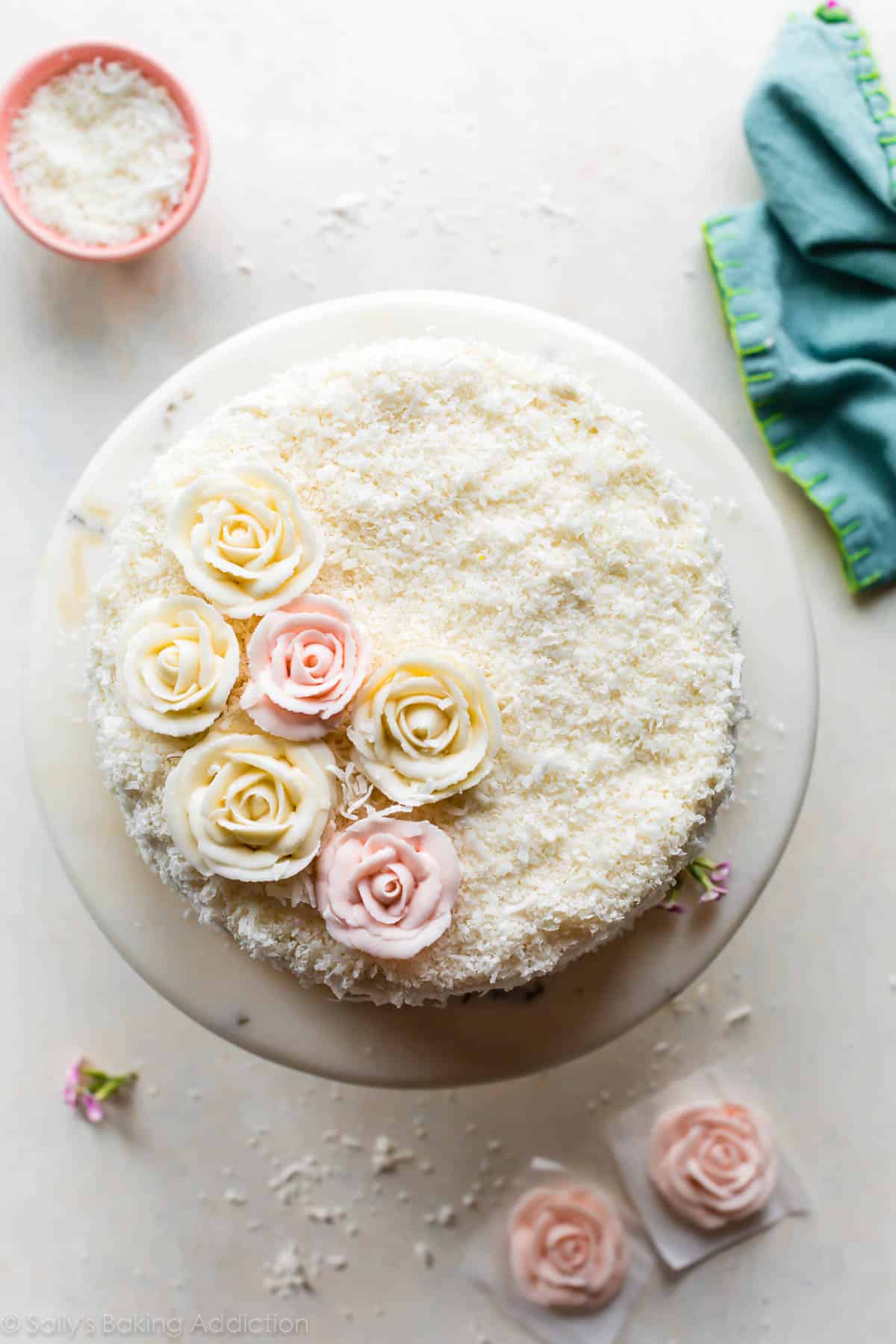
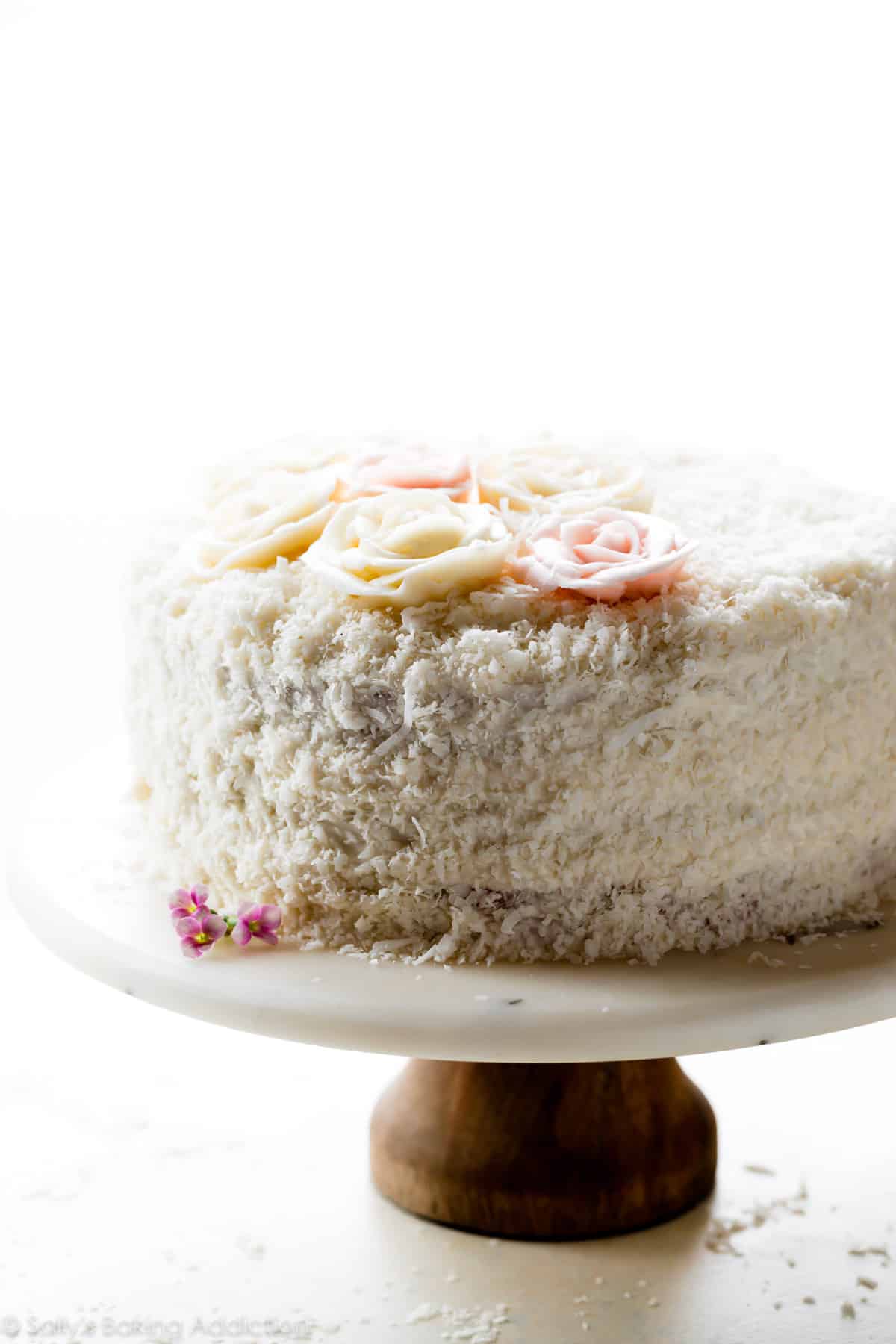
What About the Buttercream Roses?
Let’s give my assistant, Stephanie, a round of applause. This was her first time making “3D” buttercream roses and look how beautifully they turned out! She made the buttercream roses at my house and I froze them until it was time to decorate the coconut cake. She followed this video tutorial. Keep in mind that the cream cheese buttercream WILL NOT work for the intricate buttercream roses. Instead, use my vanilla buttercream and add 1 extra cup of confectioners’ sugar. You need very stiff buttercream for these roses. You also need small squares of parchment paper and:
Loosely cover the roses, then freeze or refrigerate them until ready to decorate, up to 1 week. No need to thaw prior to decorating the cake. Peel off parchment square and place the buttercream rose on the cake. If you’re traveling with the cake, I recommend securing the roses with a tiny dollop of cream cheese buttercream underneath.
Looking for something easier? Use Wilton 1M piping tip for these easy two-toned frosting buttercream roses.
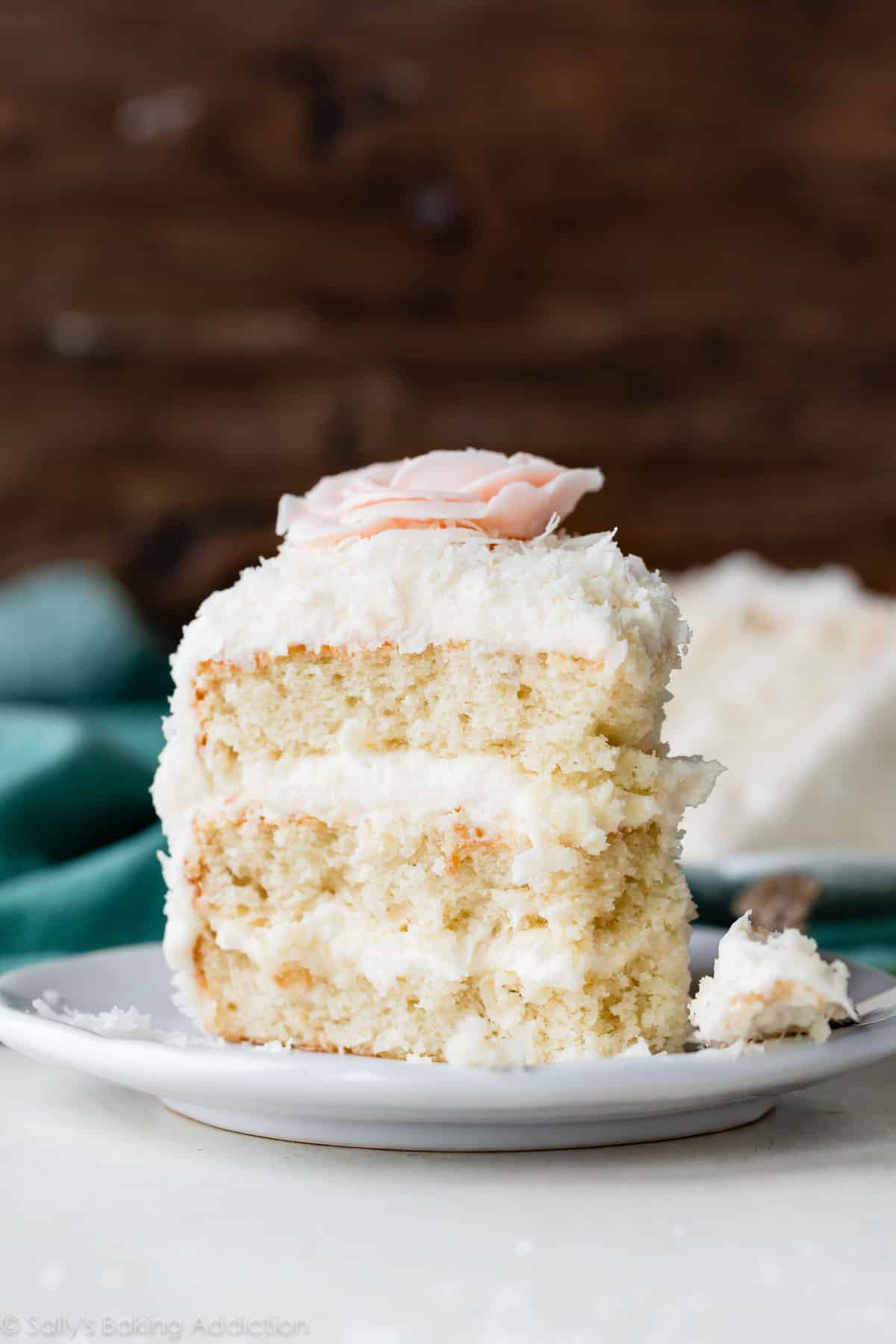
More Classic Cake Recipes
Flavor is the name, moist is the game. These are some of my favorite classic cake recipes!
- Pound Cake
- Vanilla Cake
- Carrot Cake
- Red Velvet Cake
- Strawberry Cake (made from real strawberries)
- Lemon Blueberry Cake
- Chocolate Cake
Coconut Cake
- Prep Time: 35 minutes
- Cook Time: 22 minutes
- Total Time: 4 hours
- Yield: 12 servings
- Category: Dessert
- Method: Baking
- Cuisine: American
Description
This perfect coconut cake sets the bar for homemade cakes everywhere. It’s supremely moist with a soft fluffy crumb and intense coconut flavor. For success, follow this recipe carefully including using cake flour, egg whites, sour cream, and canned coconut milk.
Ingredients
- 2 and 1/2 cups (285g) cake flour (spooned & leveled)
- 2 teaspoons baking powder
- 1/2 teaspoon baking soda
- 1 teaspoon salt
- 3/4 cup (12 Tbsp; 170g) unsalted butter, softened to room temperature
- 1 and 2/3 cups (330g) granulated sugar
- 5 large egg whites, at room temperature
- 1/2 cup (120g) sour cream, at room temperature
- 2 teaspoons pure vanilla extract
- 1 teaspoon coconut extract
- 1 cup (226g/240ml) unsweetened canned coconut milk, at room temperature*
- 1 cup (80g) sweetened shredded coconut
Coconut Cream Cheese Buttercream
- 1 cup (16 Tbsp; 226g) unsalted butter, softened to room temperature
- 8 ounces (226g) full-fat brick cream cheese, softened to room temperature*
- 5 cups (600g) confectioners’ sugar
- 2 Tablespoons (30ml) canned coconut milk
- 1/2 teaspoon pure vanilla extract
- 1/2 teaspoon coconut extract
- 1/8 teaspoon salt
- 2 cups (160g) sweetened shredded coconut
Instructions
- Preheat oven to 350°F (177°C). Grease three 8-inch cake pans, line with parchment paper rounds, then grease the parchment paper. Parchment paper helps the cakes seamlessly release from the pans. (If it’s helpful, see this parchment paper rounds for cakes video & post.)
- Make the cake: Whisk the cake flour, baking powder, baking soda, and salt together. Set aside.
- Using a handheld or stand mixer fitted with a paddle or whisk attachment, beat the butter and sugar together on medium-high speed until smooth and creamy, about 2 minutes. Scrape down the sides and up the bottom of the bowl with a rubber spatula as needed. Beat in the egg whites until combined, then add the sour cream, vanilla extract, and coconut extract. Beat until combined. Mixture will look curdled as a result of the varying textures and solid butter combining. Scrape down the sides and up the bottom of the bowl as needed. With the mixer on low speed, slowly add the dry ingredients and coconut milk. Beat on low speed until combined, then add the shredded coconut. Whisk it all by hand to make sure there are no butter lumps at the bottom of the bowl. The batter will be slightly thick.
- Pour batter evenly into cake pans. Weigh them to ensure accuracy, if desired. Bake for 21–24 minutes or until the cakes are baked through. To test for doneness, insert a toothpick into the center of the cake. If it comes out clean, it’s done. Allow cakes to cool in the pans set on a cooling rack for 1 hour, then remove from the pans and place the cakes directly on the rack to continue cooling. The cakes must be completely cool before frosting and assembling.
- Make the frosting: In a large bowl using a handheld or stand mixer fitted with a whisk or paddle attachment, beat the butter and cream cheese together on medium speed until creamy and smooth, about 2 minutes. Add confectioners’ sugar, coconut milk, vanilla extract, coconut extract, and salt with the mixer running on low. Increase to high speed and beat for 3 minutes. Add more confectioners’ sugar if frosting is too thin, more coconut milk if frosting is too thick, or an extra pinch of salt if frosting is too sweet.
- Assemble and decorate: Using a large serrated knife, slice a thin layer off the tops of the cakes to create a flat surface. Discard (or crumble over ice cream!). Place 1 cake layer on your cake stand, cake turntable, or serving plate. Evenly cover the top with 1 heaping cup (about 250–300g) of frosting. Top with second cake layer and evenly cover the top with another heaping cup of frosting. Top with the third cake layer. Spread the remaining frosting all over the top and sides. I use and recommend an icing spatula to apply the frosting and a bench scraper to smooth the sides. Sprinkle coconut on top of the cake and apply it to the sides. This can get a little messy and you can watch me do it in the video tutorial. See blog post above about buttercream rose decoration.
- Refrigerate cake for at least 20 minutes before slicing. This helps the cake hold its shape when cutting, though it’s still a pretty fluffy cake!
- Cover leftover cake tightly and store in the refrigerator for up to 5 days.
Notes
- Make Ahead & Freezing Instructions: The cake layers can be baked, cooled, and covered tightly at room temperature overnight. Likewise, the frosting can be prepared, then covered and refrigerated overnight. When ready to decorate, let the frosting sit at room temperature to slightly soften for about 15 minutes, then give it one more mix with the mixer on medium speed for about 1 minute before frosting cake. Frosted cake or unfrosted cake layers can be frozen for up to 2–3 months. Thaw overnight in the refrigerator and bring to room temperature before decorating/serving.
- Special Tools (affiliate links): 8-inch Cake Pans | Electric Mixer (Handheld or Stand Mixer) | Glass Mixing Bowls | Whisk | Cake Stand or Cake Turntable | Icing Spatula | Bench Scraper | Cake Carrier (for storing)
- Cake Flour: For the best results, I strongly recommend cake flour. You can find cake flour in the baking aisle and I have many more recipes using it. If you can’t find it, try making this cake flour substitute.
- Egg Whites: Egg whites (no yolks) are KEY to the cake’s fluffy texture. For best success, I recommend using fresh eggs instead of carton egg whites. (Using an egg separator is really handy!) Here are all my recipes using leftover egg yolks. Success tip: Eggs separate much easier when they’re cold.
- Canned Coconut Milk: Canned coconut milk is a cooking ingredient, not a beverage. It is usually unsweetened, so make sure you’re using unsweetened. It’s usually found in the grocery store near the Thai food products. Do not use refrigerated carton coconut milk beverage. You need 1 cup for the cake, not the entire can. You use 2 more Tablespoons in the frosting.
- Sweetened Shredded Coconut: I recommend using sweetened shredded/flaked coconut. It’s moister than unsweetened coconut and that makes a big difference in the cake’s texture. If desired, pulse the coconut shreds in a food processor to chop them up so they aren’t as long inside and outside of the cake. Chopping the coconut is optional.
- Cream Cheese: Use brick cream cheese, not cream cheese spread. If desired, you can use this vanilla buttercream instead (no cream cheese). Use canned coconut milk instead of milk and add 1/2 teaspoon coconut extract.
- 9×13-Inch Sheet Cake: Simply pour the batter into a greased and lightly floured 9×13-inch pan and bake for 40 minutes or until a toothpick inserted in the center comes out clean.
- 2-Layer Cake: Prepare two 9-inch cake pans in step 1. Divide batter between pans and bake for 24–26 minutes or until a toothpick inserted in the center comes out clean.
- Bundt Cake: This cake batter will fit into a greased 10-cup or larger Bundt pan. I’m unsure of the exact bake time (likely around an hour); use a toothpick to test for doneness. Same oven temperature.
- Cupcakes: Fill cupcake liners 2/3 full. Bake at 350°F (177°C) for 19–21 minutes. Yields about 2–3 dozen. Or try my vanilla cupcakes recipe and substitute canned coconut milk for whole milk, 1/2 teaspoon coconut extract for the vanilla bean, and add 3/4 cup (60g) of sweetened shredded coconut.
- Why is everything at room temperature? All refrigerated items should be at room temperature so the batter mixes together easily and evenly. Read more about the importance of room temperature ingredients.







Reader Comments and Reviews
is there a specific brand if coconut extract you prefer to use?
Hi Laura, we usually use McCormick brand extracts.
Im a baking noob, it usually never has worked out for me but this recipe was so easy to follow and turned out exactly as you said and tastes AMAZING! Thank you
Here is my honest assessment of this cake. The cake is light and fluffy, the icing is divinely delicious, and the instructions are perfect. The 3 layers of cake are not too thin as many reviewers seem to complain about. Remember this is a 3 layer cake and, combined with the frosting, it delivers the perfect height for a 3 layer cake and perfect ratio of cake to frosting. So if you think the cake batter is too thin for 3 9 in cake pans, you are wrong. Trust the process. The end result is a beautiful, perfect in height (like with a cake made by a professional bakery), 3 layer coconut cake. This being said though, I found the cake too crumbly. A friend of mine who is an excellent cake baker sent me this recipe and told me it was super delicious but that she found the cake too crumbly. I kept thinking she must have made a mistake. But she is right. I followed all instructions including refrigerating cake for half hour before serving. Yet, I could not cut one single slice without some of the cake crumbling. I used sawing motion, I used non sawing motion, but it made no difference. I was puzzled. Was the cake itself lacking something that made it fall apart. I don’t think so. So what was happening. I think the culprit is the shredded coconut in the cake. It contributed to make the cake crumbly. I found some online research that says “the coarse texture of shredded coconut can create gaps in the batter, leading to a crumbly cake if too much is added. •
Also, I think that cutting down on the shredded coconut in the icing would help. I will again try this recipe but skip the shredded coconut in the batter, and also halve the amount of it in the frosting. I also see that there is such a thing as coconut powder. I may consider adding some in lieu of the shredded coconut. Sally, I love your recipes so I hope you don’t get upset with what I hope is constructive criticism. Thanks.
Your comment is so detailed and helpful. Since I have been reading about the crumble texture was thinking about not using shredded coconut in the batter. The thought of using coconut powder is great. Please let me know if you happened to try it out?
The best cake ever even better the second day
We don’t have sour cream available at where I live. What’s the alternative ingredient I can use
The same amount of full-fat Greek or plain yogurt will work.
Hello! Going to try this to make a two tier wedding cake; how much batter (in grams if possible) did you put in each pan? I need to bake 3 layers of 6″ and 3 layers of 10″. I would really appreciate your input <3 thank you so much in advance
Hi Mili, we didn’t measure the weight of the batter in each pan but will try to do so the next time we make this cake. These posts on cake pan sizes and conversions and homemade wedding cake will be helpful resources for you!
Can you bake this in 2 or 3 6 inch pans
Hi Mandy! Directions for a 2 layer cake can be found in the recipe Notes.
Could I sub Coconut cream for the Coconut milk? Thanks
Hi Neela, coconut cream is too thick for this cake batter. Best to stick with canned coconut milk, which is part coconut cream.
I have been making this recipe for 5 years, as a friend wanted a coconut cake with pineapple filling. It’s been great. But I find that making this a 3 layer 8″ comes out better. I just realized you must have changed to a 2 layer 9″(was 3 9″), which is fine. But also noticed that the amount of butter is different, previously listed 3/4 cup butter, )but in parentheses had 1.5 sticks which i have been using), but today i noticed it now list 3/4 cup, 12 Tbsp 170 g. Did you change for some reason or was it a mistake. I was just checking to see what the comments were when I noticed these changes. If I use 3/4 cup what is going to happen to my cake, instead of 3 sticks?
Hi Sweetness, 1.5 sticks of butter is 3/4 cup butter (and also 12 Tbsp and also 170g). We haven’t changed the amount, it’s still 1.5 sticks (in America), it’s just listed as 3/4 cup (12 Tbsp; 170g) now. And the cake is still 3 layers, that hasn’t changed either. You can use either 8-inch or 9-inch pans for this cake.
My mom wanted a coconut cake for her birthday. This recipe sounded good. First time making a cake from scratch. Super easy and delicious. I baked the 9×13. I only used 3c of powder sugar in the frosting. It held up nicely and was perfect for my single layer. I toasted some of the coconut but primarily used sweet coconut straight from the bag. It was a big hit! I will make this again!
How long should I cook if I made 2 right inch cakes instead?
Hi Sandi, you can use 8 inch pans, but we recommend making a three layer cake still. The bake time will be about the same for 8 inch pans, but use a toothpick to test for doneness.
Good recipe,but to much sugar, I put less .
Could I substitute the granulated sugar for a more natural sugar like coconut sugar?
Hi Menzi, We’d love to help but we are not trained in baking with sugar alternatives. For best taste and texture (and so you don’t waste your time trying to adapt this recipe since it may not work properly), it may be more useful to find a recipe that is specifically formulated for sugar substitutes. Thank you!
I made this as the 9×13 sheet cake to test out the recipe on my husband and a few neighbors before I bake it for a crowd in the next week. It was absolutely delicious! I toasted the coconut for on top of the frosted cake and it added a tasty, nutty crunch – highly recommend!
I just baked this at altitude (5000 ft) and it turned out great with some high altitude mods suggested by King Arthur’s. I used a 9×11 inch Pyrex dish, sprayed with Pam, then parchment, then another spray. I baked it 15 degrees higher and for 5 mins less than Sally’s recommendation for sea level, and it came out perfectly. Other mods: I used 1/2 the amount of powdered sugar for the frosting, and toasted the sweetened coconut in a pan on the stove prior to sprinkling it on top. Fantastic!
What were the recipe modifications for high altitude?
This is an amazing coconut cake!! The recipe was easy to follow ( I made my own cake flour), the cake was fluffy and perfect, the frosting was not overly sweet, just the right about of everything. Seriously, job well done!!!
Hi, can I make this into a chocolate cocounut cake (like Bounty)? I am also looking for an eggless version. Thanks so much.
Hi SB, We haven’t tested making a chocolate version of this exact cake. We also have not tested any egg substitutes. For chocolate and coconut, you may love our German chocolate cake or these chocolate coconut cupcakes as more inspiration for that flavor combination!
Just awesome!
I’m so upset I was making this cake for a birthday and following the instructions to let the cakes cool completely in the pan wasn’t what I should have done!! I’ve Never had any cakes stick in these pans before but they sure stuck today! The first one came halfway out of the pan when I turned it. So I’m trying the trick where you put it back in the oven and then cool slightly and then turn out! Prayers this works
Hi Mell, I’m sorry to hear that! How did you prepare your cake pans? Did you grease first, then add a parchment paper round to the bottom, then grease the parchment as well? That is what we always recommend for round cakes to get them to release easily. We have a video tutorial for it here. Hope this helps for next time!
Can I use coconut cream in place of coconut milk? I need to make it tomorrow 1/16/25 for a pot luck, TIA
Hi Michelle, coconut cream is too thick for this cake batter. Best to stick with canned coconut milk, which is part coconut cream.
The recipe is great but it’s a lucky thing I decided to enlarge it. I did the original recipe plus a half. Each of the layers baked up to only 1 inch thick. I think I should’ve doubled the recipe. If I had followed the original recipe, I would’ve ended up with 3 giant pancakes. I prefer hefty layers.
Hi Fabunmi, these are definitely thinner layers (as you can see in the photos above). How is the texture? If it is dense, we recommend you make sure your baking powder and soda are fresh. We find they lose strength after just 3-4 months. Here’s a helpful post about preventing dense cake as well. Thanks for giving this recipe a try!
OMG! Bliss. Heaven.
I made this cake exactly like the recipe and it was delicious! Everyone saying the layers are to thin but I didn’t think so and neither did everyone else who loved this cake. Great recipe, just make it like the recipe and don’t worry about what it looks like until it’s finished.
Can this be made into a sheet cake instead?
You bet! See recipe Notes for details.
Does this recipe call for 2.5 cups of cake flour or 285 grams? At 112 grams per cup that would be 305 grams not 285. Since I did not have cake flour I used the substitute of 110 grams of ap flour but 16 grams of cornstarch. Using this method, it came out to a total of 355 grams (2.5 cups worth using the cake flour substitute). Can you please clarify how much flour should actually be in this because the measurements are not correct. As a result my cake came out dense and hard and had to be thrown out. Also this is barely enough batter to fill three 8 inch pans let alone three nine in pans. Thank you.
Hi Sharon, the measurements are correct. 2.5 cups of cake flour at 114 grams per cup is 285g.
My cake layers came out sooo thin! I weighed all three equally. Not sure why that happened. Tastes great though!
I made this for my husband’s birthday celebration. I made some minor changes since I couldn’t find some of the ingredients where I live (not in US). I used Creme Fraiche since I didn’t have sour cream on hand, instead of coconut extract I used vanilla, and I used unsweetened shredded coconut. I also used vanilla and unsweetened shredded coconut in the Buttercream recipe section. The only other change was I made 2 layers instead of 3. All of our guests (and I really mean all) absolutely raved about how moist and tasty the cake was — and not overly sweet. I must admit I iced the cake but did not use a lot of the icing from the recipe — it was simply too much. I’m not a fan of thick icing on a cake. All of my guests want the recipe and because we were such an international group, I’m now converting everything into metric equivalents for our non-US friends! This will be my go-to coconut cake going forward for sure!
Love this recipe so much!! And my family requests it for every birthday!!
Perfecto! Have made many times because it’s the absolute best. Tried many recipes they fell short and this one is sooooo good it’ll make you make you want one more bite… .
It’s not too overly sweet, great texture and smells heavenly. This is THE one.
This is absolutely the BEST coconut cake I have ever made! The texture is light and fluffy and the icing is not too sweet! I get absolutely rave reviews and my Granddaughter told me that I could sell this cake for $10,000!!!!! Thank you for sharing such a FABULOUS recipe!