

Let me help you perfect your cookies! With a video tutorial and in-depth descriptions, these cookie baking tips will help improve your next batch.
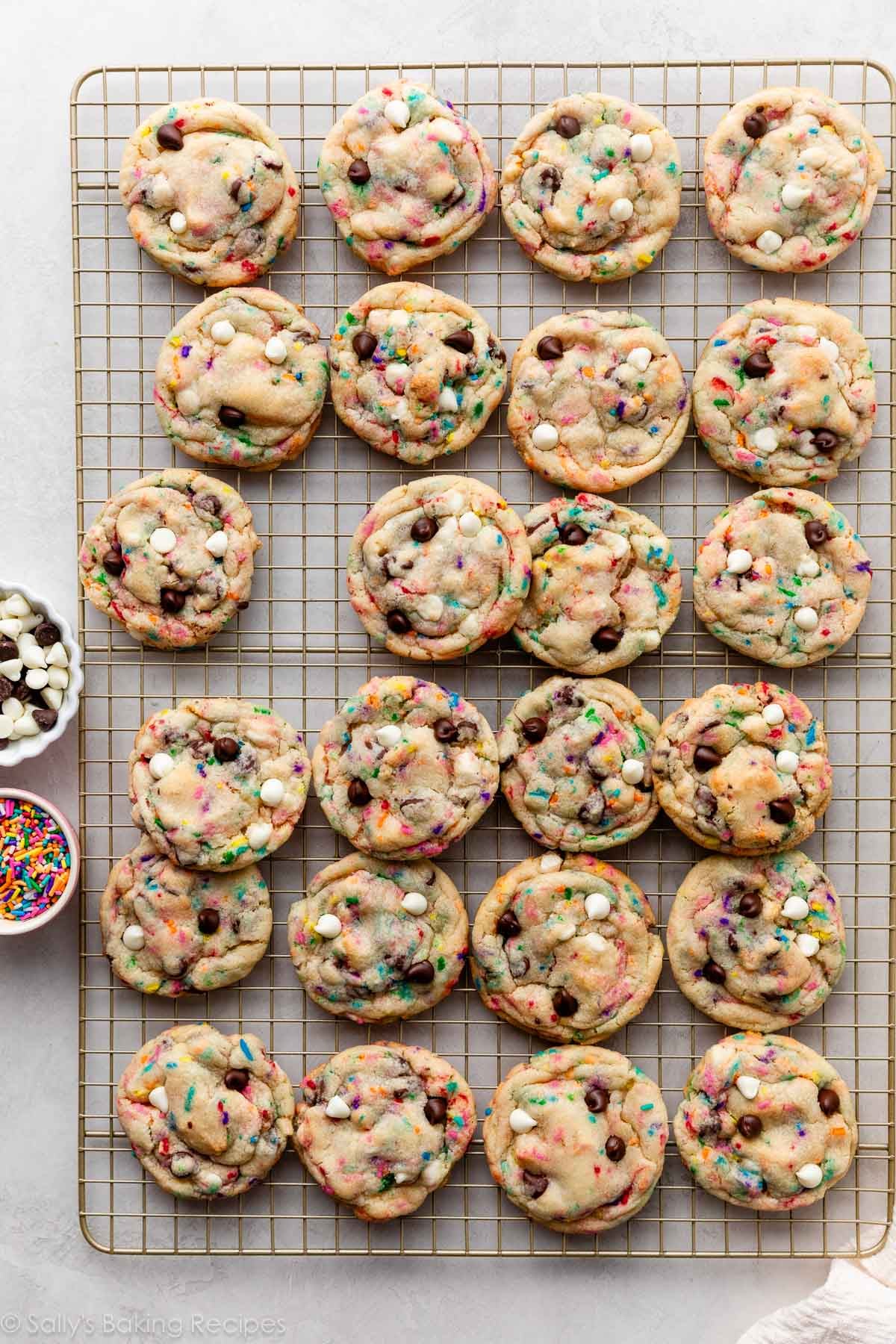
It goes without saying that cookies rule all. And cake batter chocolate chip cookies, you take 1st prize in my eyes. (You’re up there too, chocolate chip cookies and peanut butter cookies!)
Since launching my website in 2011 and publishing Sally’s Cookie Addiction cookbook years later, I’ve witnessed the undeniable allure of these treats. Cookies are the most popular category on this website, as well as my most requested dessert. I have over 200 cookie recipes published! They’re relatively easy and approachable—most don’t require special equipment or complicated ingredients, either. They’re also an easy treat to eat, share, store, ship, freeze, and make ahead. Not only this, cookies are portable, perfect for gifting, and can be made in large batches for bake sales, parties, etc. I’ve never met anyone who doesn’t appreciate a fresh-baked homemade cookie. Have you?
Let me help you perfect your cookies. The following 5 cookie baking tips guarantee a better batch. No more wasted time or ingredients!
5 Cookie Baking Tips
Let’s dive into these cookie baking tips a little further.
1. Chill the Cookie Dough
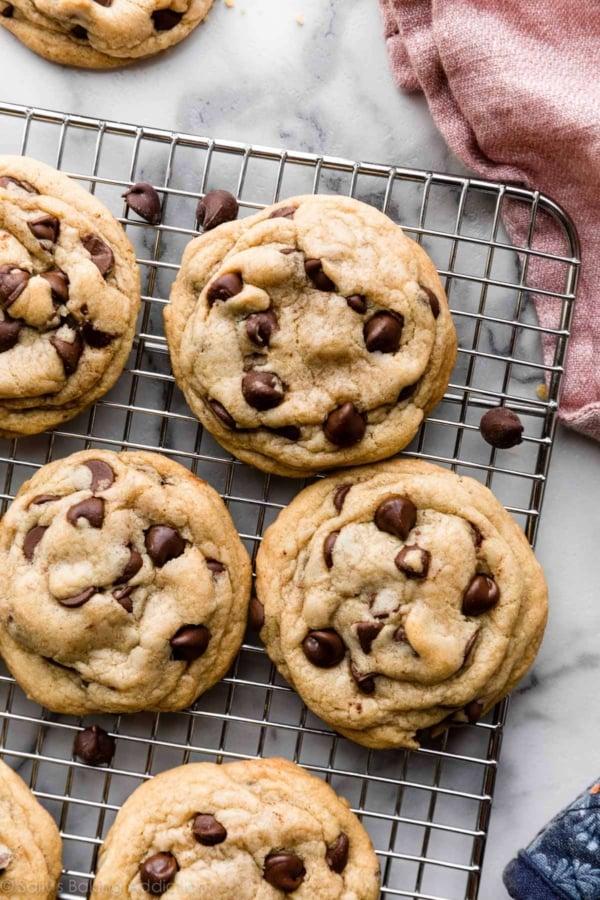
If there’s one thing you learn from this post, it’s this: chill your cookie dough if a recipe calls for it. Chilling cookie dough in the refrigerator firms it up, which decreases the possibility of over-spreading. It not only ensures a thicker, more solid cookie but an enhanced flavor as well. In these soft chocolate chip cookies, for example, it helps develop a heightened buttery, caramel-y flavor. Cold cookie dough is also easier to handle and shape. After chilling, let your cookie dough sit at room temperature for about 10 minutes (or more, depending how long the dough has chilled) before rolling into balls and baking. Sometimes after refrigeration, cookie dough can be too hard to roll/handle.
- If a recipe calls for chilling the cookie dough, don’t skip that step.
- If a recipe yields super sticky cookie dough, chill it before rolling and baking.
You can also chill the cookie dough after you roll it into individual balls. However, some cookie doughs are too sticky right after you mix the ingredients together. So it’s helpful to chill it first (perhaps for just 1 hour), roll into balls, then continue chilling for the amount of time the recipe requires.
Don’t Have Time? Here are my No Chill Cookie Recipes, including favorites like snickerdoodles, giant chocolate chip cookies, and shortbread cookies.
2. Prevent Excess Spreading
Did your cookie dough turn into greasy puddles? I’ve been there too. Here are a few ways to prevent that from happening again:
- Chill your cookie dough. See tip #1 above.
- Use a silicone baking mat or parchment paper. Coating your baking sheet with nonstick spray or butter creates an overly greasy foundation which leads to excess spread. Instead, I recommend lining your baking sheets with parchment paper or silicone baking mats. I prefer to use the mats—they grip onto the bottom of your cookie dough, preventing the cookies from spreading too much. These mats also promote even browning. They can get greasy overtime, so make sure you wash the mats and wipe them clean between cookie batches. (By the way, here’s how I clean silicone baking mats.)
- Never place cookie dough balls onto a hot baking sheet. When baking in batches, let the baking sheets cool to room temperature first.
- Butter may have been too warm. See tip #3 next.
- Under-measuring the flour. Less flour means there’s less to absorb all the wet ingredients in your cookie dough. Spoon and level that flour or, better yet, weigh your flour.
- Don’t over-mix the cookie dough. Cream the butter and sugar for only as long as you need to—a recipe usually specifies the amount of time. Don’t begin beating then leave the room with the mixer running. Whipping too much air into the dough will cause your cookies to collapse as they bake. I guarantee that. Here’s more on how to cream butter and sugar, including lots of helpful photos and a video tutorial.
This tip is so important that I wrote a separate post about it: How to Prevent Your Cookies from Spreading
What if cookies AREN’T spreading? Cookies that resist spreading can also be a problem. When cookies aren’t spreading, it means that there’s too much dry ingredient (flour) soaking up all the liquid. Make sure you are properly measuring your flour. When measuring flour, use the spoon & level method. Do not scoop the flour out of the container/bag. Doing so leaves you with excess flour in the cookie dough. If you’re in the middle of baking a batch and the cookies still aren’t spreading, remove them from the oven, and use a spoon to slightly flatten them out before returning them to the oven. You can also take your big bowl of cookie dough and microwave it for 10-15 seconds to slightly warm it up before scooping/rolling/baking. Warm cookie dough spreads more. (This is what I do when I notice my cookies aren’t spreading!)
3. Temperature is King
This mainly refers to oven temperature, butter temperature, and egg temperature. Cold cookie dough helps too! See tip #1.
- Oven temperature: Unless you have a regularly calibrated oven, your oven’s temperature could be inaccurate. When you set your oven to 350°F, it might not really be 350°F inside. It could be 325°F or 375°F. While this might not seem like a big deal, it poses a huge problem for your cookies such as over-browning, excess spread, underbaking in the centers, and/or uneven baking. Purchase an oven thermometer and place it in the center of your oven. While inexpensive, they’re irreplaceable in a baker’s kitchen. Place it in your oven so you always know the actual temperature.
- Butter and egg temperature: If a cookie recipe calls for room temperature eggs, butter, or any dairy ingredients, make sure you take the time to bring these ingredients to room temperature. Recipes don’t just do that for fun—room temperature ingredients emulsify much easier into batter, which creates a uniform texture. Think of cold, hard butter. It’s impossible to cream cold butter into a soft consistency necessary for cookie dough. Same goes for eggs—they add more volume to the dough when they’re at room temperature. Something to note: room temperature butter is actually cool to the touch, not warm. When you press it, your finger will make a slight indent. To get that perfect consistency and temperature, remove butter from the refrigerator 1 hour prior to beginning.
So yes, temperature is imperative. There’s legitimate science involved!
- Short on time? Use this trick to soften butter quickly!
- Further Reading: Here’s What Room Temperature Butter Really Means
- Further Reading: Why Room Temperature Ingredients Make a Difference
- Further Reading: How to Cream Butter and Sugar
4. Specified Baking Time? Who Cares.
I’m admitting something to you—I never look at recipe times when I bake cookies. Instead, I look at the cookies themselves. This is primarily because all ovens are different and maybe your oven is a convection oven, while the recipe writer’s is a conventional oven. (I bake with conventional. General rule: If you use a convection oven, reduce the oven temperature by 25°F.)
Always go with your instincts. Cookies are done when the edges are set and lightly browned. The top centers can look slightly underbaked if you want a softer cookie. For a crispier cookie, bake the batch a little longer until the centers appear “set.” But always keep in mind that cookies continue to cook for a couple minutes as they cool on the baking sheet.
5. One Batch at a Time
If you’re able and time allows it, I recommend baking 1 batch of cookies at a time on the center rack. Why? You get the best possible results when the oven only concentrates on 1 single batch. If you absolutely need to bake more than one batch at a time for an event, holiday baking, etc., rotate the baking sheets from the top rack to bottom rack once halfway through the baking process. Ovens have hot spots!
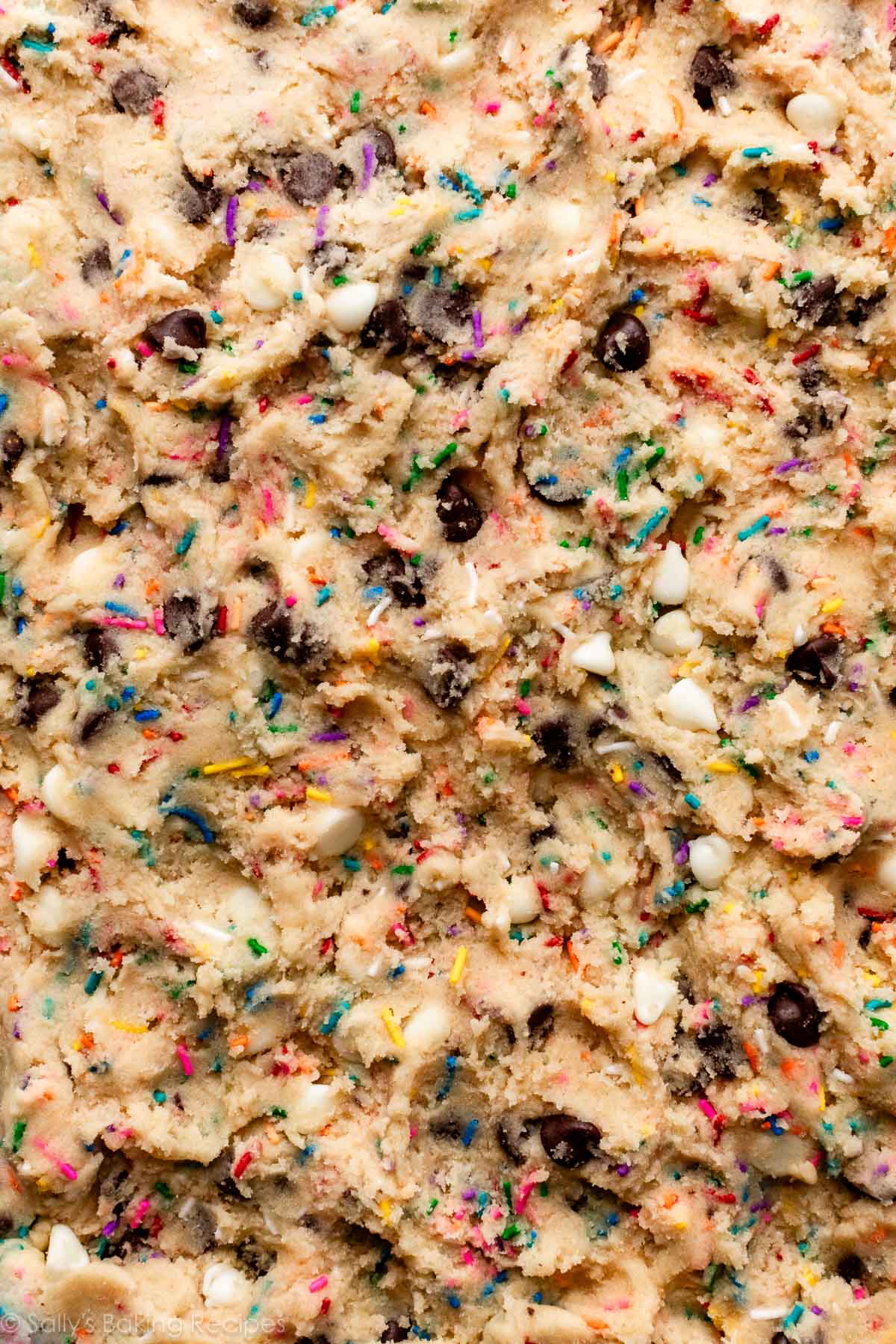
When it comes to baking cookies, it pays off to be a perfectionist!
How to Freeze Cookie Dough
I have an in-depth guide for you: How to Freeze Cookie Dough
More Baking Tips
- 10 Cake Baking Tips for Perfect Cakes
- Baking Powder Vs. Baking Soda
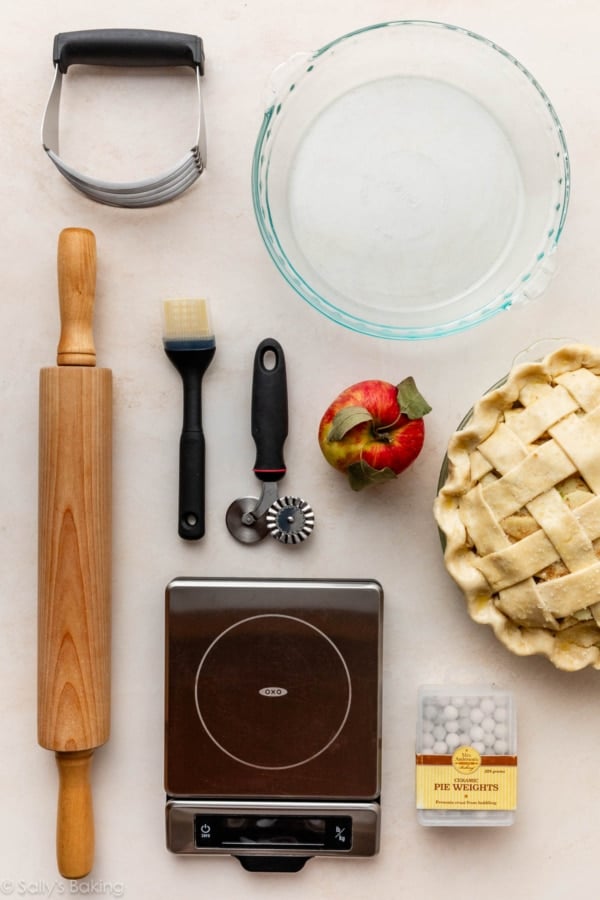
- 14 Best Baking Tools Every Baker Needs
- How to Ship Cookies
- 10 Cupcake Baking Tips & How to Fill Cupcakes
- 10 Best Cookie Baking Tools
- Baking with Buttermilk
See all my Baking Tips.








Reader Comments and Reviews
So if I over softened the butter and used cold eggs, is there anyway to recover my cookie dough? (they’re spreading completely out).
Hi Janelle, is your dough chilled? Unfortunately, if the dough is already mixed there isn’t much you can do at this point, but baking the dough directly from the refrigerator (or even the freezer) should help to minimize spread.
Thank you for sharing your recipe for snickerdoodles. They are delicious!
Pat
I love your recipes! I print them from your web site and I also have your cookbook!
One question: where are your racks placed in your oven? (ie: second from bottom; middle; etc.)
Thanks again for all of the delicious cookies, etc. I’ve been making for my family. Everyone loves all of them…and your chocolate chip cookies are indeed “the best I’ve ever eaten”, according to everyone!
Hi Joan, Great question. Unless otherwise noted, it’s best practice to bake your baked good in the very center of the oven. This means the center rack position. If baking 2 baking sheets of cookies at the same time, position 2 racks as close to the center as you can (ovens have varying amounts of racks). Rotate the pans top to bottom halfway through baking.
I wanted to make a batch of your chewy chocolate chip cookie but I dont know how to make the recipe for a bigger batch. Should I just multiply all ingredients by the # of batches I want to come up with a bigger recipe?
You can absolutely double this recipe.
what is the best way to freeze the lemon crinkle cookies for one month? air tight plastic with layers of parchment in between layers? will powdered sugar stay intact after freezing?
btw, these cookies are AMAZING! I chilled dough for a couple of days so lemon flavor is very apparent! I also added more zest than called for and 1/4 tsp. of lemon extract!! YUM!!
Hi Vickie, yes, that method should work well. The powdered sugar may melt a bit during thawing, but we’ve had good luck freezing and thawing those cookies! Glad you loved them.
I’m wondering why my cookies come out hard after being taken out of the oven and placed on the cooling racks?
Hi Danni-Marie, we’d love to help troubleshoot, but would first need to know which cookie recipe you used. Did they spread? Here are our best tips to prevent cookies from spreading. Is it possible they were over-baked? How did you measure your flour? Be sure to spoon and level (instead of scooping) to avoid packing in too much flour into your measuring cups – or use a kitchen scale.
You mentioned the cookies are done when the edges are set. How do I know when the edges are set?
Hi Anna, the edges are set when they look just lightly browned and feel firm if gently touched.
I meant my dough was drier than the 2 nd batch of dough, I baked a couple and they just looked dry but soft on inside , but still drier cookie than I’d like it to be ,what did I possibly do by mistake ? Can I add something to dough to make it more moist ?
My first batch of dough of the chewy chocolate chip cookies came out dryer. The door was dryer and the second one I baked the cookie to try. It’s a little dull on top dry looking. What did I do wrong?
Hi Barbara! I wonder if your flour could have been over-measured. How did you measure the flour? Make sure to spoon and level (instead of scooping) to avoid packing in too much flour into your measuring cups – or use a kitchen scale. You can read more about properly measuring baking ingredients in this post. You could try adding a touch of milk to moisten the dough for your next batch.
Lemon crinkle cookies – I’ve made them several times with good results but todays are spreading into puddles after having frozen the dough – what did I do wrong – too much lemon? I don’t know.
Hi Dani! Did you make any changes to the recipe this time? Is it a particularly warm or humid day where you are? Make sure your butter isn’t too warm when starting the recipe.
I’m terrible at spacing the cookie dough enough on the baking sheet, so I often get some cookies that are stuck together. What’s the best way to re-shape them, if possible, right after I take them out the oven?
You can use a spoon or a circular cookie/biscuit cutter to gently push in the edges.
How do you ensure cookies are good in high altitudes?
Hi Sheryl! I wish we could help, but have no experience baking at high altitude. Some readers have found this chart helpful: https://www.kingarthurflour.com/learn/high-altitude-baking.html
Hey Sally! I’m about to make your Peanut Butter Oatmeal Chocolate Chip cookies, and I want them to spread a bit more than it looks like they will. (They are going to be the sandwich bit in ice cream sandwiches!) For these cookies specifically, would you suggest I warm the dough more than instructed in the recipe? Upping the granulated sugar and lowering the brown? Less baking powder? Pan banging? Thank you.
Hi Langley! What we would do is slightly flatten your cookie dough balls before baking. This will help initiate more spread. If you still notice they are not spreading enough, you can take them out part way through bake time and gently press on the tops with a spoon. Gently banging the pan on your counter top can help, too. Hope you enjoy the cookies!