
With step-by-step pictures and plenty of helpful tips, learn how to make soft whole wheat bread with this easy-to-follow recipe. You can make this bread 100% whole wheat, or you can use a combination of whole wheat and bread flour for a slightly taller, fluffier loaf. It’s wonderfully soft and flavorful either way! If you’re new to working with yeast, reference my Baking with Yeast Guide for answers to common yeast FAQs.
One reader, Vicki, commented: “This recipe can make anyone love 100% whole wheat bread! I made it exactly as directed with 100% whole wheat and it was the softest and loveliest whole wheat bread I have ever eaten! I will be making this regularly in my house—so much better and healthier than store bought bread. Even people who think they don’t like whole wheat will like this. Thank you for sharing your recipe! ★★★★★“
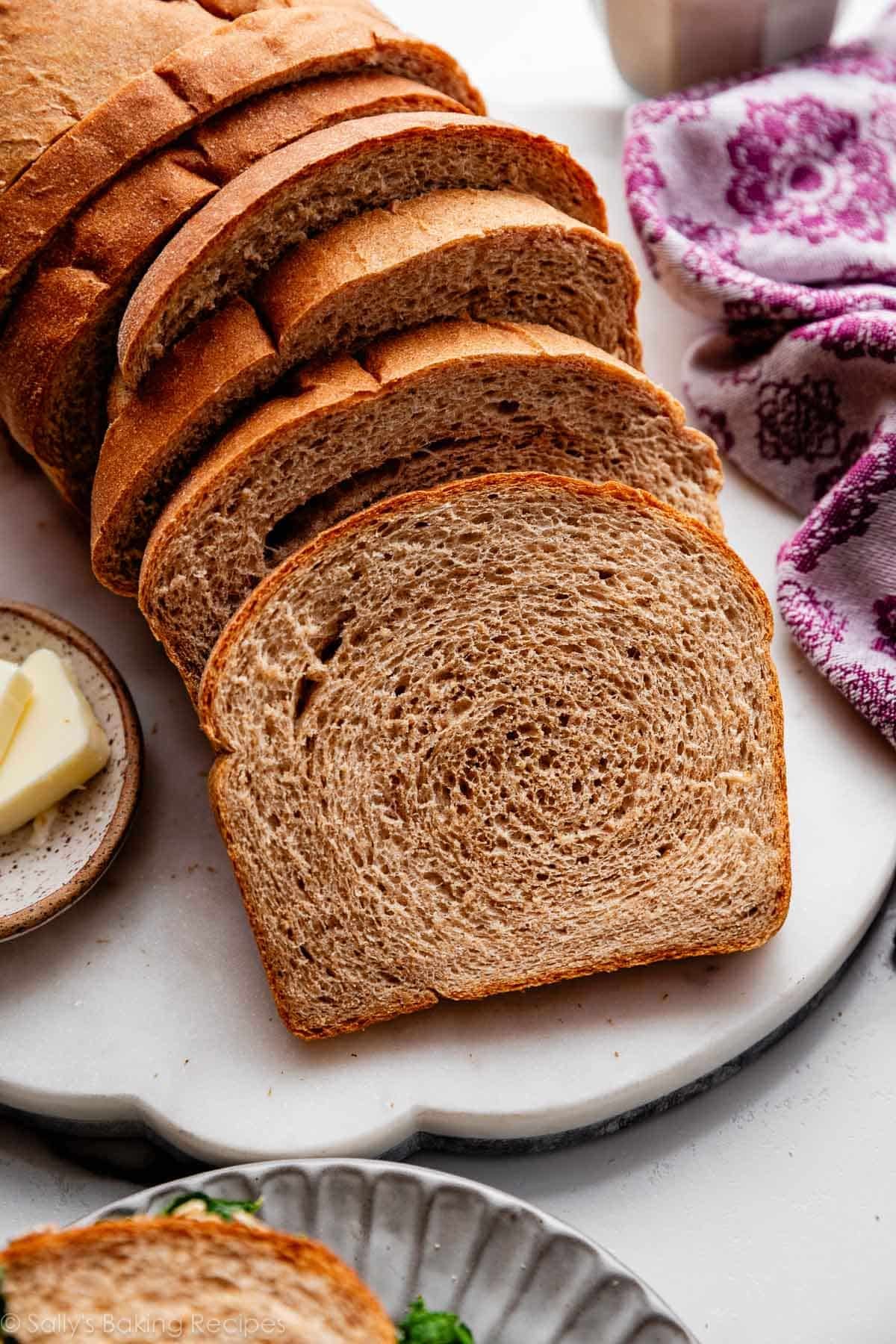
I know there’s major convenience with store-bought bread, but I encourage you to try making it from scratch at least once. (You might be hooked after that!) This whole wheat bread takes a few hours, but most of the work is hands-off while the dough rises. Fresh-baked bread smells incredible and tastes even better—store-bought sandwich bread just can’t compare! Wait until you smell a slice popping up in the toaster.
Here’s Why You’ll Love This Whole Wheat Bread
- Chewy crust with soft texture inside
- Flavorful & hearty
- Lightly sweetened with honey
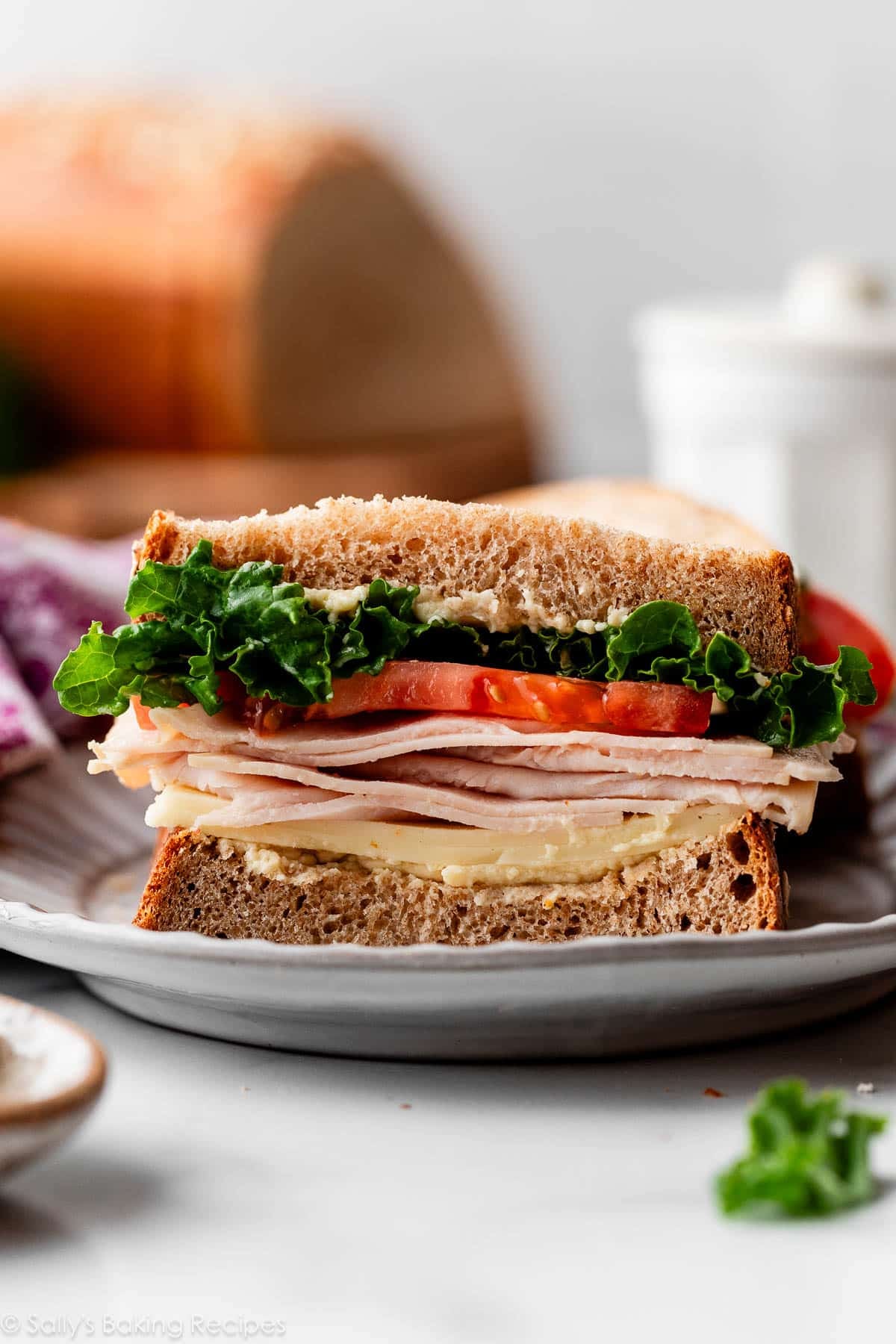
- Makes delicious toast and sandwiches, and can be used in recipes like French toast, breakfast casserole, & sausage and herb stuffing
- Easy to make ahead or freeze
- 8 simple ingredients
Behind the Recipe/Recipe Testing
There are usually 2 key problems when it comes to using 100% whole wheat flour in a bread recipe:
- Because of the bran layer of the wheat grain, bread using 100% whole wheat flour can taste bitter or sour. (Still, always make sure your whole wheat flour is fresh; it can become rancid if stored for too long.)
- Whole wheat flour doesn’t contain the same level of gluten as white flours. This missing gluten can produce a dense and/or flat loaf. Many whole wheat bread recipes call for the addition of vital wheat gluten to make up for it, but I don’t usually keep that in my kitchen… and you may not either.
I experienced both issues in my initial attempts at this recipe. I found that adding a little acid to the dough helped offset the bitterness, and introducing a preferment “sponge” helped give the loaves better flavor, as well as more height. Obviously whole wheat bread will never be as soft, tender, and chewy as white sandwich bread, but this one comes pretty close with my careful recipe & solutions.
Best Ingredients to Use in Whole Wheat Bread & Why:
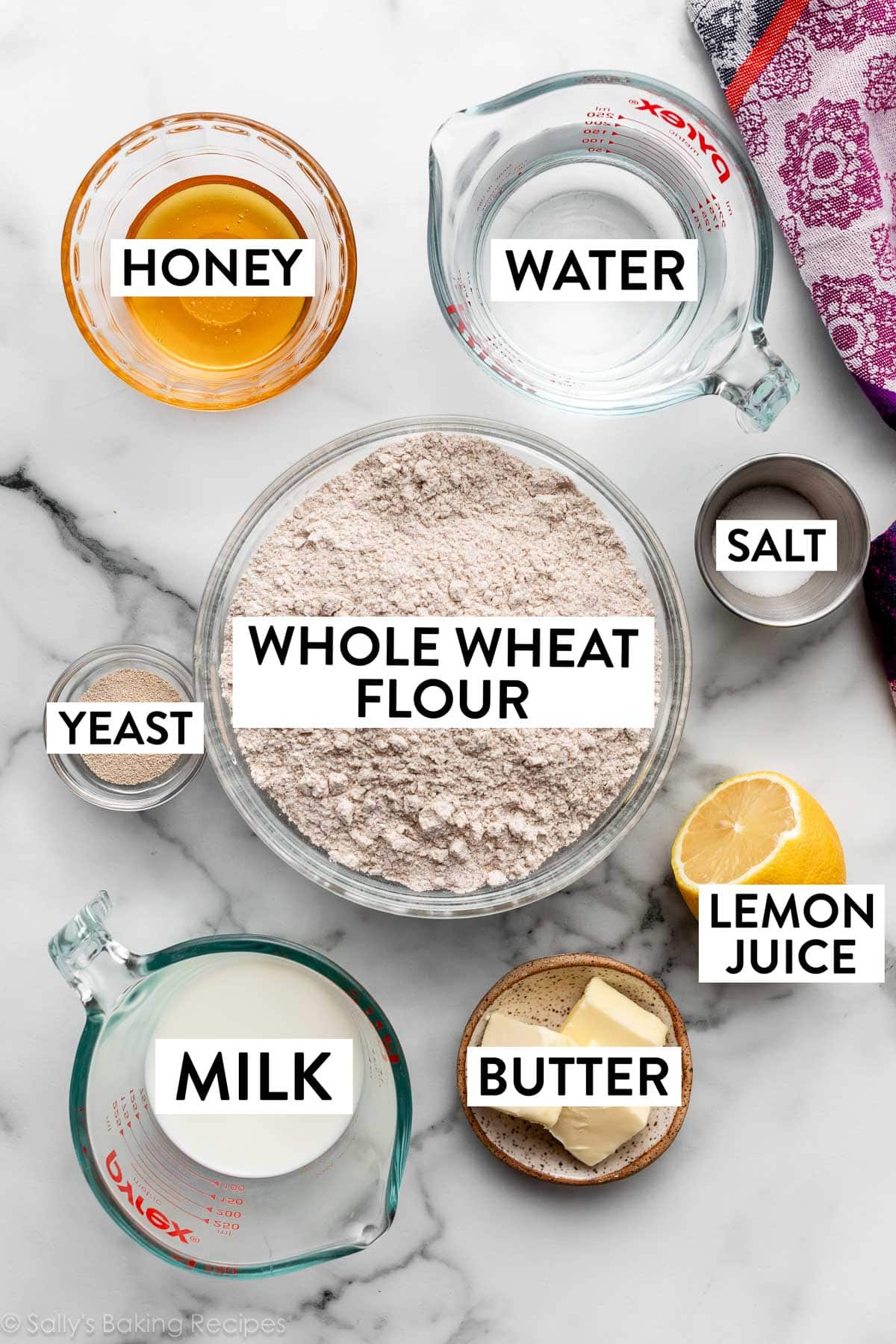
- Water: Warm liquid activates yeast. I use mostly water in this dough because we need a bread that has structure. Using all milk, like I do for my whole wheat dinner rolls, would yield a flimsy bread without much texture, which isn’t ideal for slicing as sandwich bread.
- Whole Milk: To yield a soft bread, you need fat in the dough, so make sure some of the liquid is milk. Low-fat or nondairy milk works too, but whole milk produces phenomenal texture and I highly recommend it.
- Yeast: You can use active dry yeast or instant yeast. If using active dry, the rise times will be a bit longer. I tested it with both.
- Honey: Honey feeds the yeast, increases its activity, and lightly sweetens the bread. In our testing, my team & I unanimously agreed honey was the tastier option over regular granulated and brown sugar. I also use a little honey when making whole wheat pizza dough. If you want, grab a little extra so you can make some homemade honey butter to enjoy on the warm slices of bread.
- Butter: Butter promises a flavorful loaf.
- Lemon Juice: This ingredient may seem strange, but it’s essential for preventing the bread from tasting too bitter. If you don’t have lemon juice, apple cider vinegar is a great substitute.
- Salt: You can’t make flavorful bread without salt!
- Flour: You can use all whole wheat flour, or swap 1 cup of whole wheat flour for 1 cup of bread flour. The bread is soft either way, but a little bread flour yields a slightly taller, fluffier, and lighter loaf. We enjoy it both ways.
Start With Making the Sponge (It’s Easy)
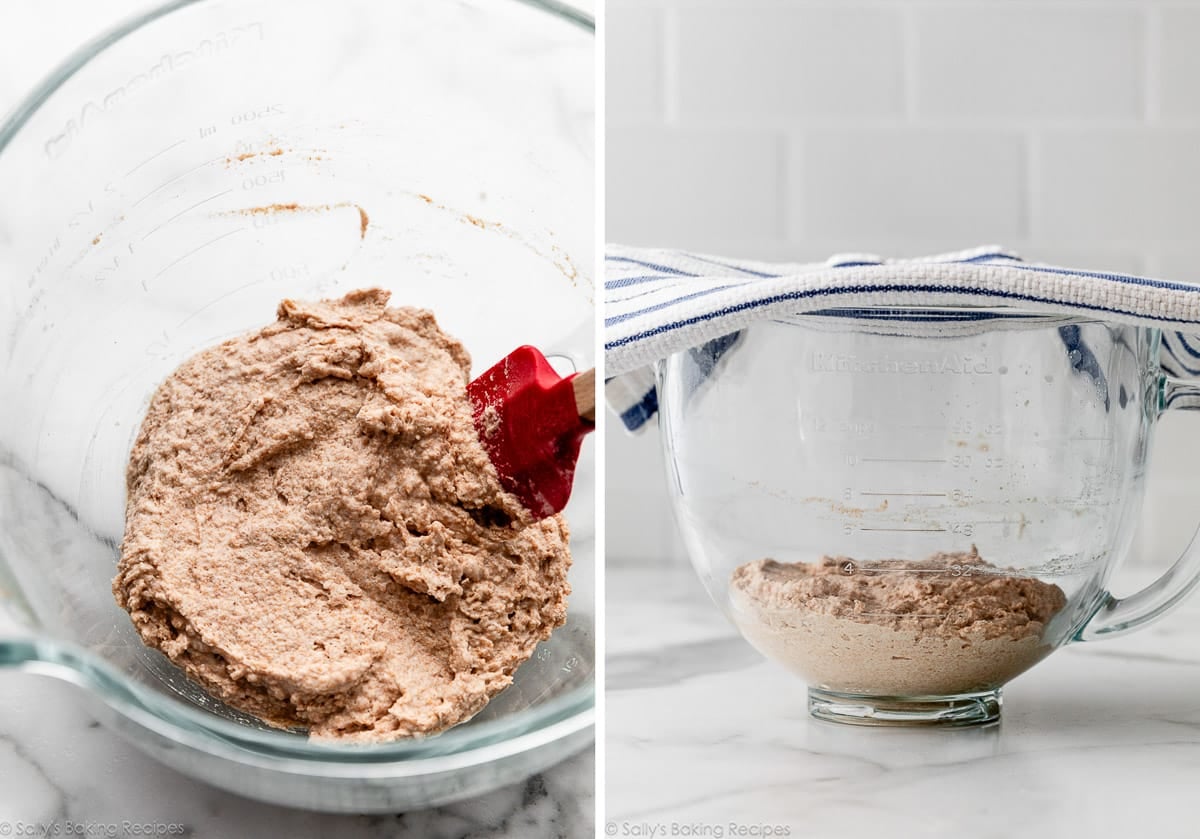
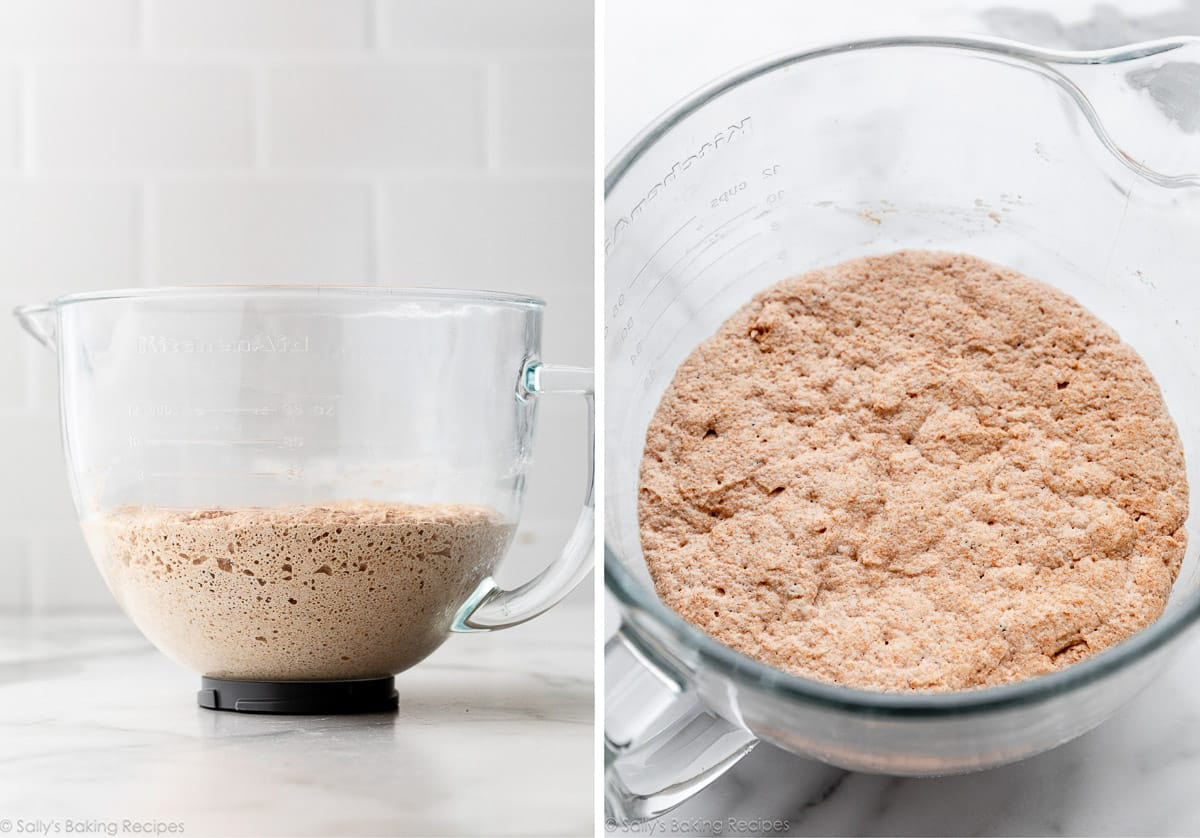
For the sponge, you’ll use all of the liquid (both the water and milk) and yeast in the dough, plus some of the flour. Mix this all together with a spatula, cover it lightly, and let it double in size for about 60 to 90 minutes.
While this step does extend the total time of the recipe, the sponge is crucial for producing a more complex flavor, and gives the bread a lighter texture. By skipping this step, your bread will be a little flat. (In taste and appearance!)
Once the sponge doubles in size, add the remaining ingredients and begin mixing, which will deflate the air and make way for the final dough.
This is the sponge before rising:
This is the sponge after rising:
At this point, the process follows my sandwich bread pretty closely. You’ll knead the dough, and if you’re new to bread baking, my how to knead dough post and video can help. After kneading, let the dough rise twice. Lesson you’ll learn today: making a delicious whole wheat bread is not a race. We must have some patience here! (A hard ask when homemade bread is the reward…)
Step Photos to Help You
Make the dough: I recommend using a stand mixer with a dough hook attachment (most stand mixers are sold with it). If you don’t have a stand mixer, mix the dough together with a spatula or wooden spoon (and a little arm muscle!).
Knead the dough: You can continue beating the dough with the dough hook, or you can knead the dough by hand.
1st rise (about 2 hours): After you knead the dough, cover it and let it rise in a relatively warm spot. Whole wheat dough requires a slightly longer rise time than white sandwich bread because it’s weighed down with wheat germ and bran.
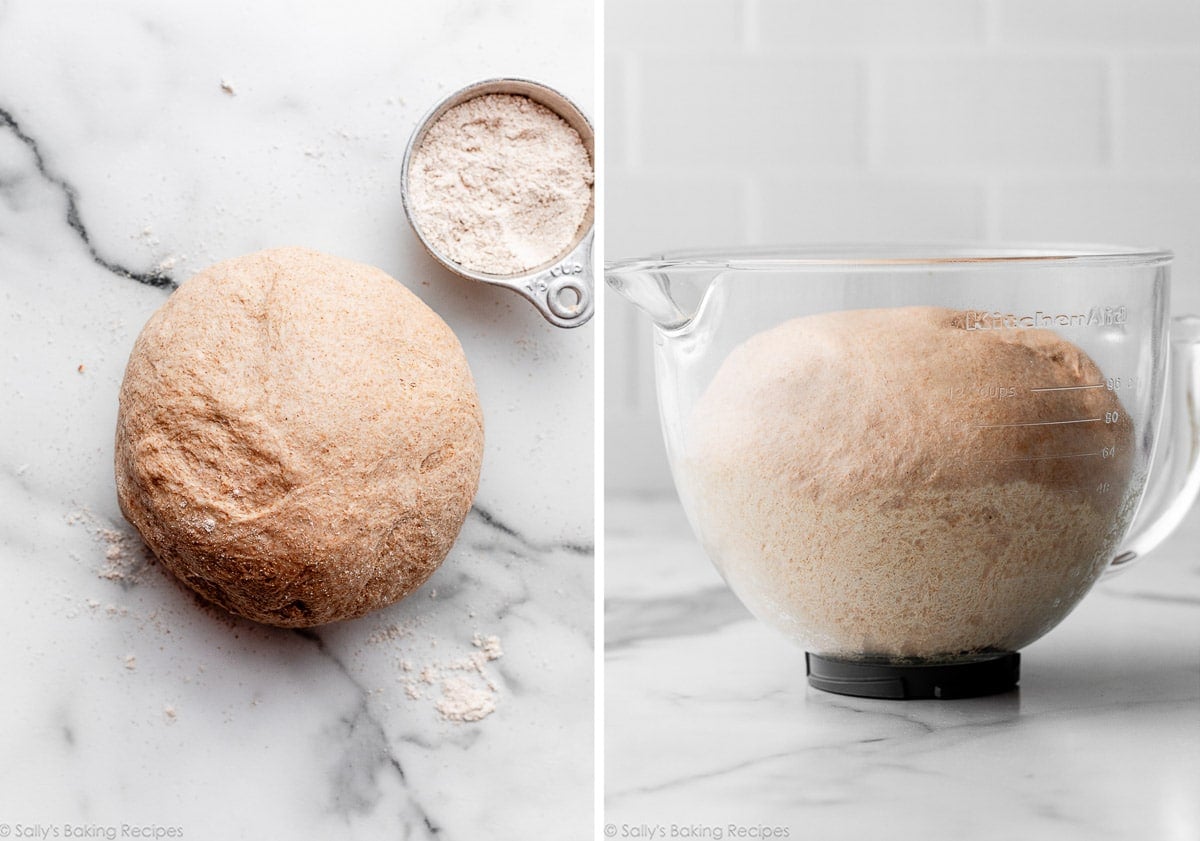
Once it has doubled in size, punch it down to release the air.
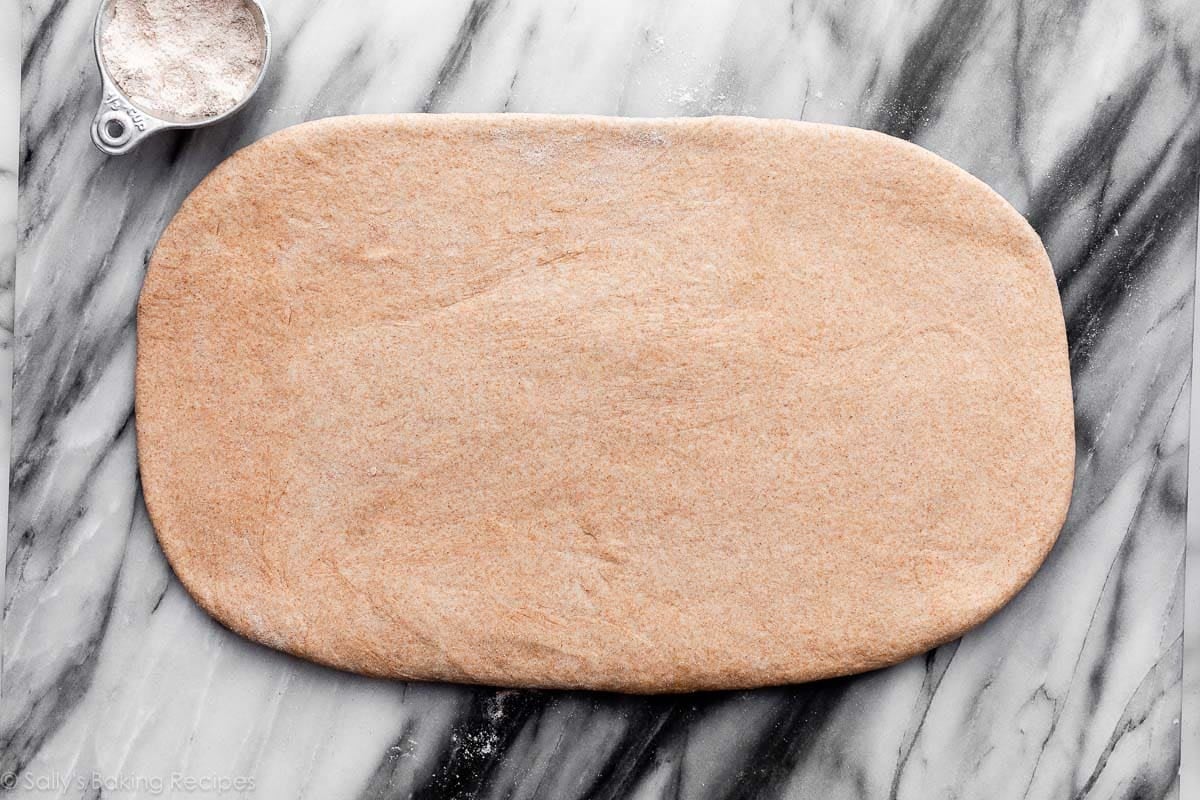
Roll it out into an 8×15-inch rectangle:
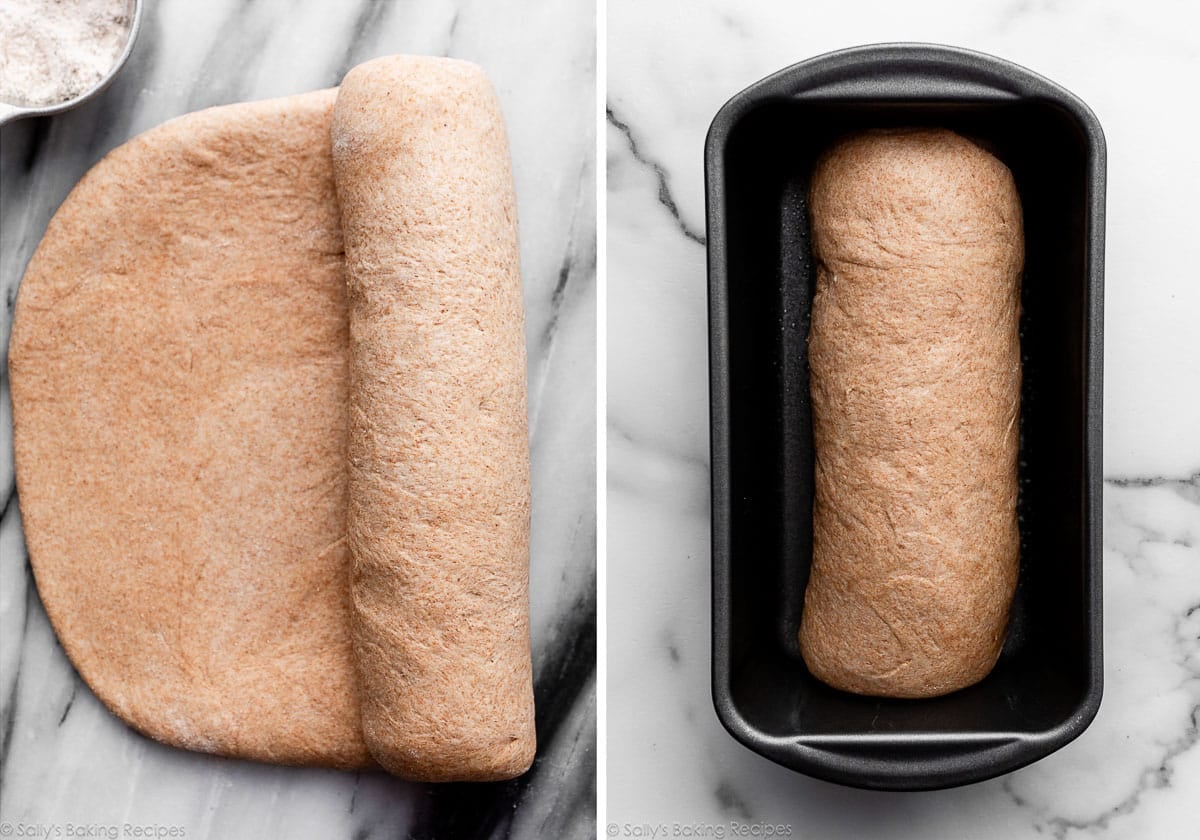
Roll it up tightly starting with the 8-inch side, so you have an 8-inch roll to fit into your greased 9×5-inch loaf pan. (Unlike cinnamon rolls, where you roll up the dough starting with the larger side.)
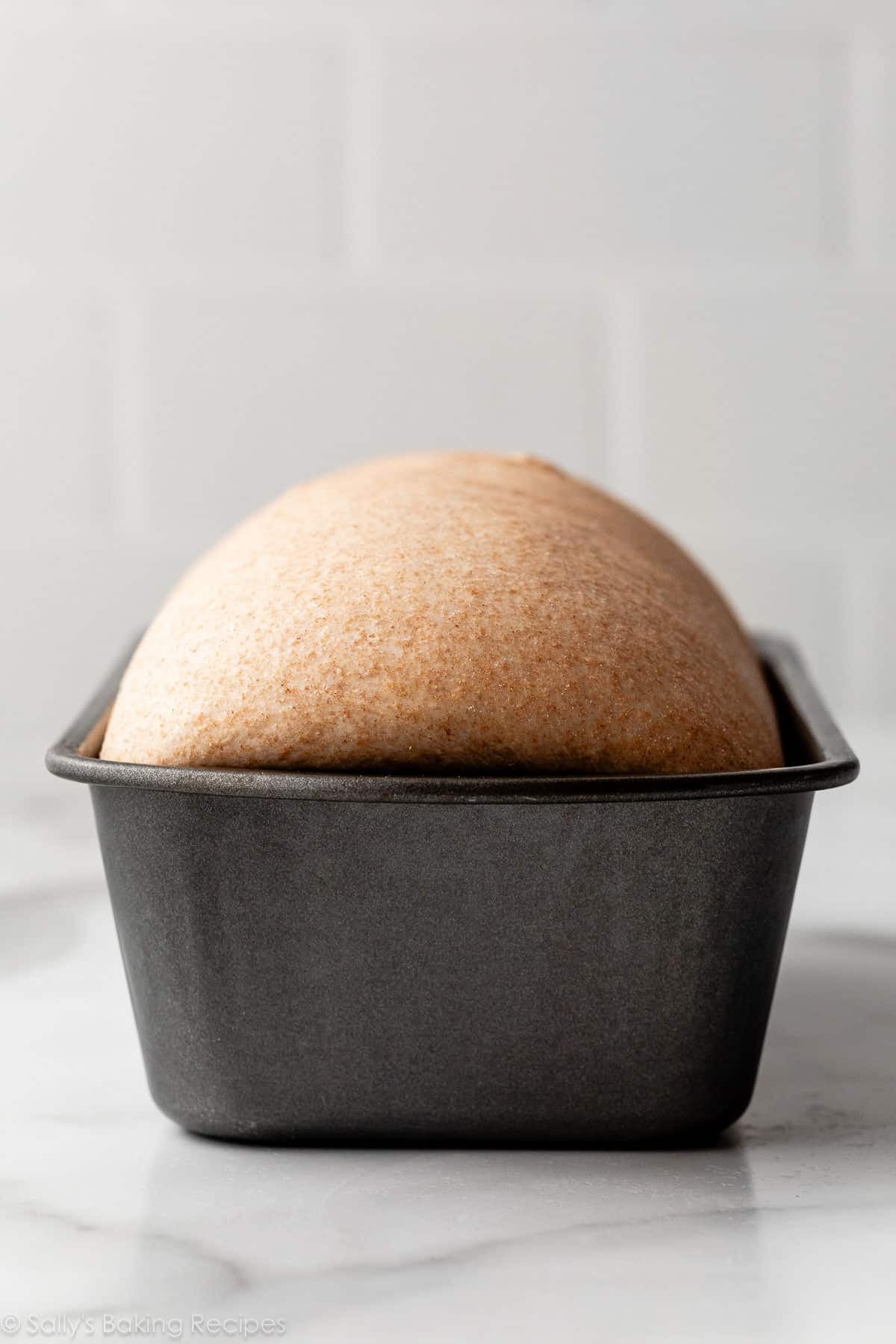
2nd rise (about 1 hour): Let it rise until it’s about an inch above the rim of the pan. Don’t rush this second rise, unless you want a flat loaf.
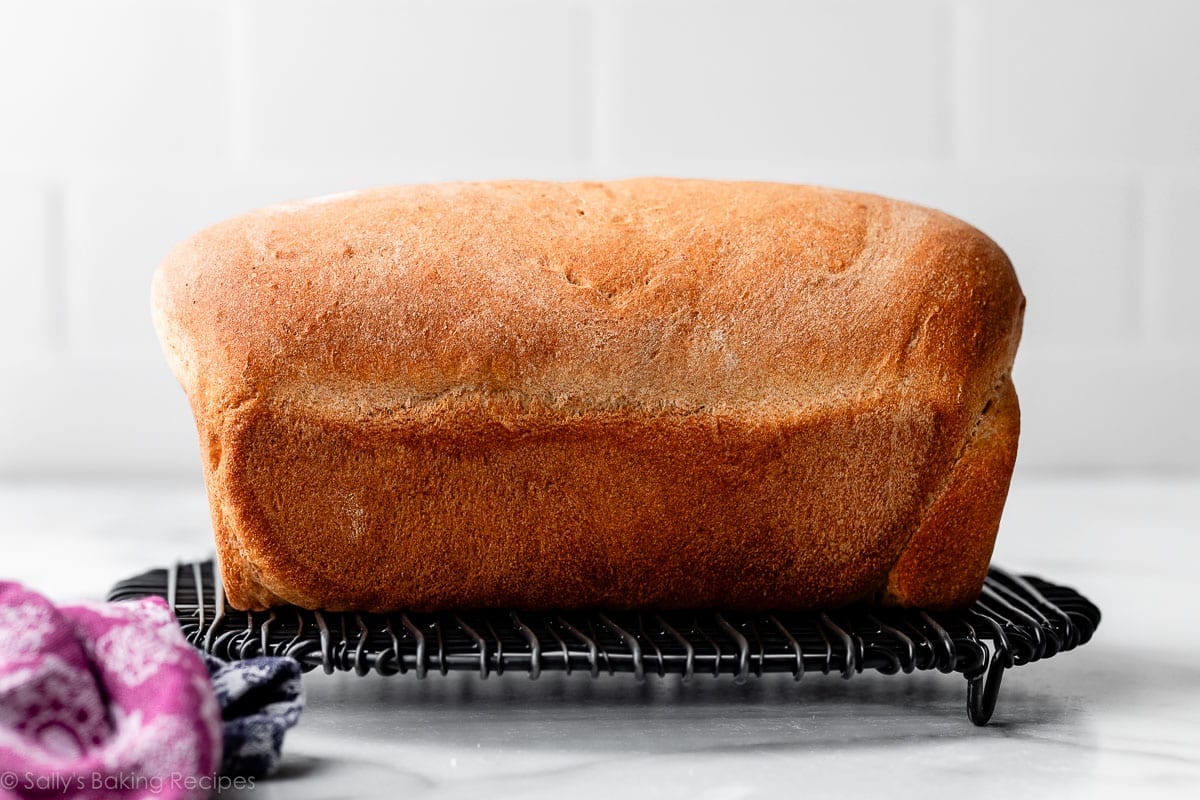
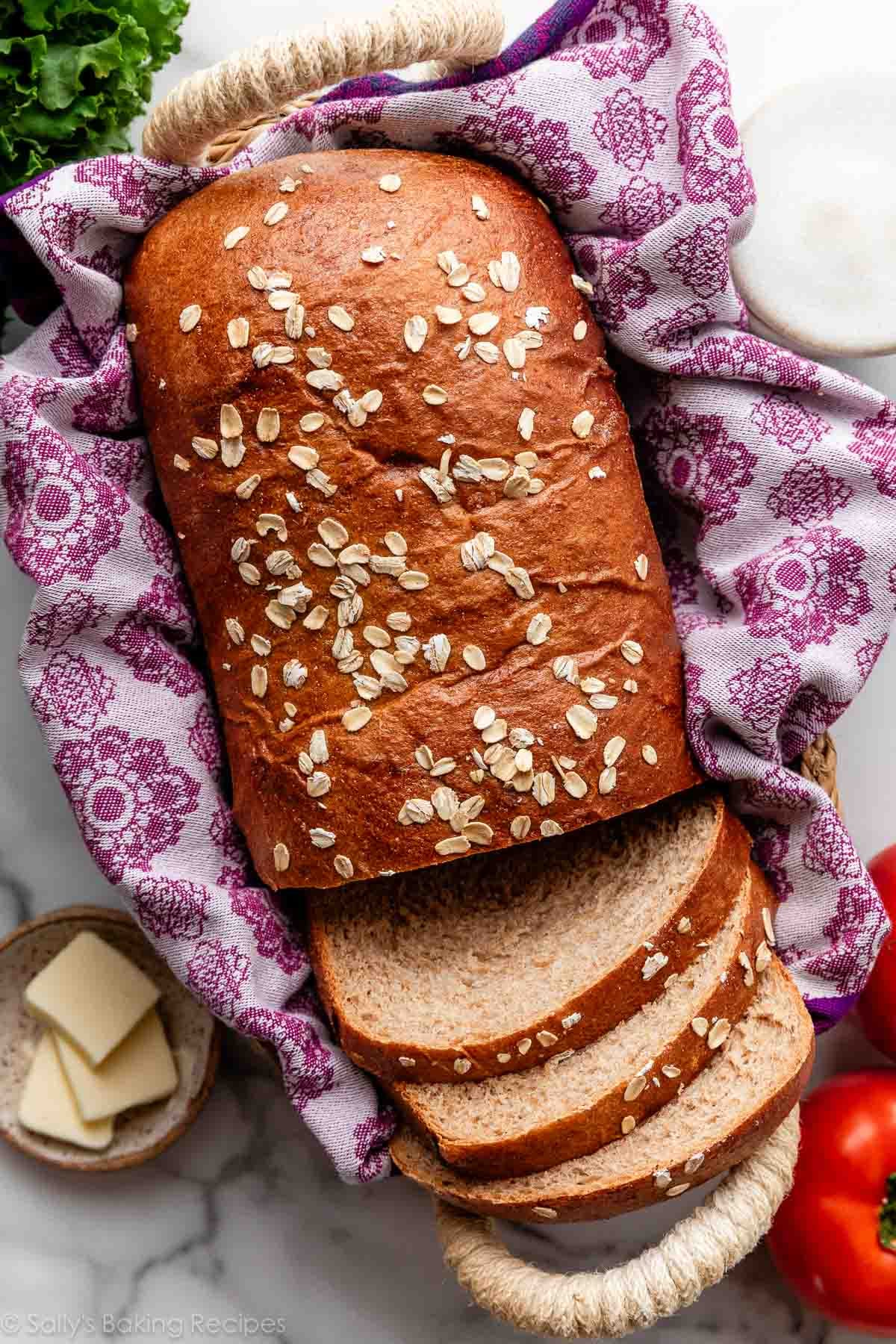
And bake! This whole wheat sandwich bread takes about 36–40 minutes in the oven.
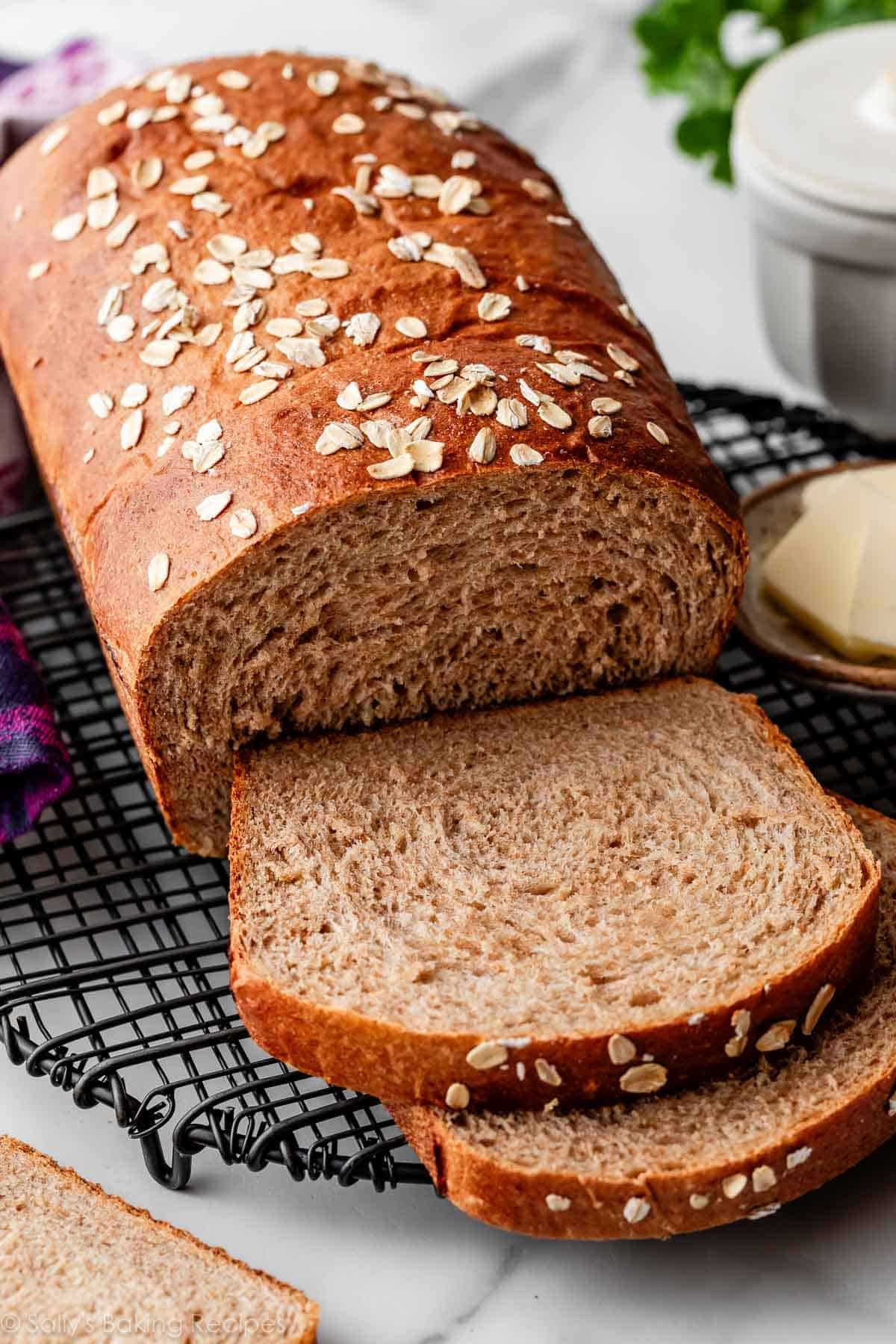
Before baking, feel free to top the bread with oats. You’ll need to brush beaten egg white on top of the dough before adding the oats, so they stick. The oat topping is optional.
Success Tips to Keep in Mind
- You can make this loaf of bread 100% whole wheat, or replace 1 cup (about 125–130g) of the whole wheat flour with bread flour for a lighter, taller, fluffier loaf. The directions remain the same.
- Knead the dough for a long time, at least 8 minutes. If you have a stand mixer, use it for this recipe. This is a heavy whole grain dough, so it requires a good amount of kneading to help produce a more elastic structure.
- When kneading, avoid adding too much flour; a slightly tacky and soft dough is OK.
- Use an instant-read thermometer to check the internal temperature of the baked bread. This guarantees you won’t under-bake or over-bake the bread. It’s an incredibly helpful baking tool! The bread is done when the center of the loaf is 195–200°F (90–93°C).
- If you’re new to working with yeast, please review my Baking with Yeast Guide where I include practical and easy-to-understand answers to many yeast FAQs.
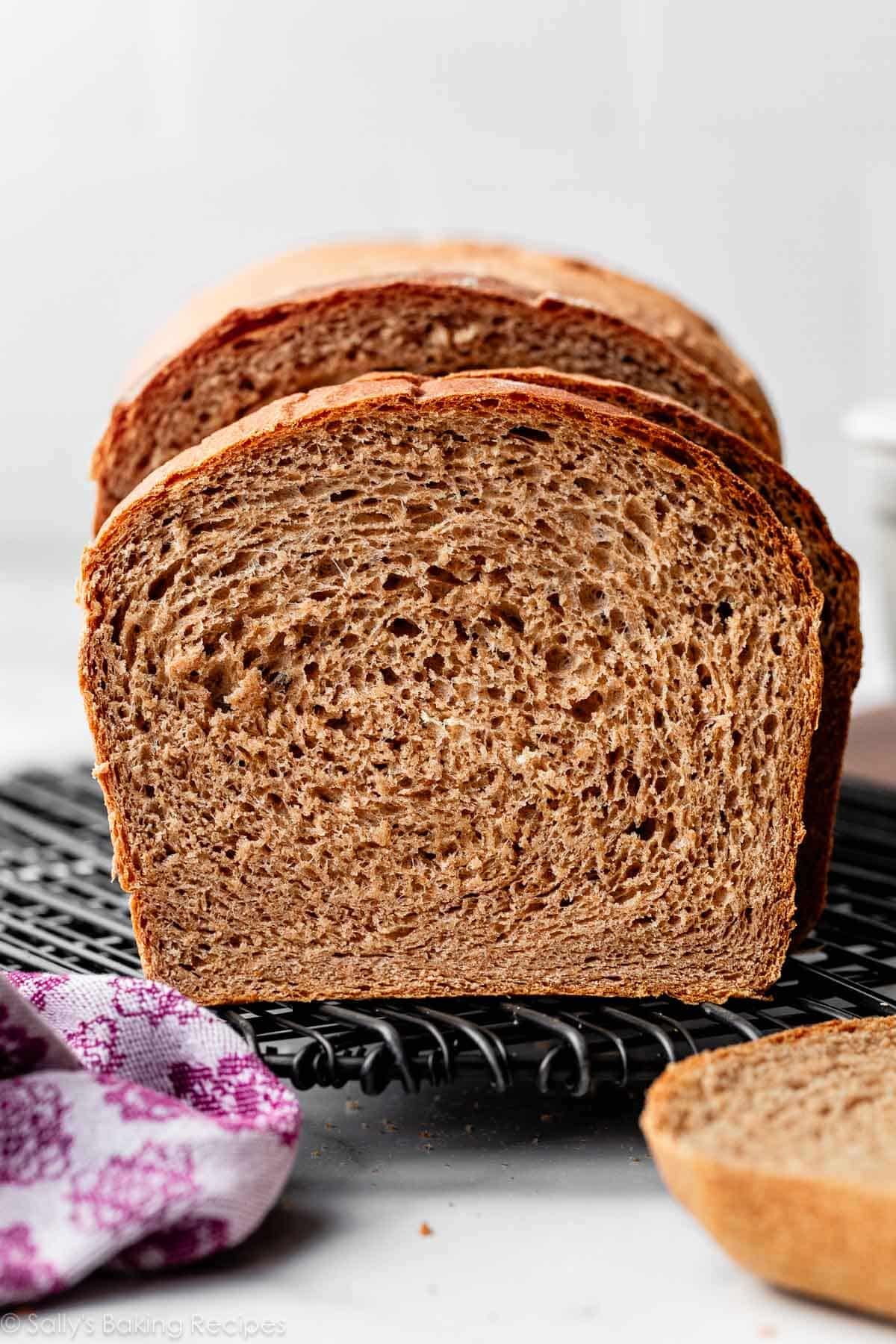
This whole wheat bread is phenomenal when sliced and served warm. The exterior is crisp and crusty, and the interior is hearty, yet soft.
Become a Bread Baker with My Approachable Recipes:
Whole Wheat Bread
- Prep Time: 4 hours, 30 minutes (includes sponge and rises)
- Cook Time: 38 minutes
- Total Time: 5 hours, 10 minutes
- Yield: 1 loaf
- Category: Bread
- Method: Baking
- Cuisine: American
Description
You need just 8 simple ingredients to make this whole wheat sandwich bread. It’s soft yet hearty and oh-so-flavorful, and store-bought sandwich bread just doesn’t compare! You can use 100% whole wheat flour, or you can swap in some bread flour for a taller, fluffier loaf. See recipe Notes for freezing and overnight instructions. You can also reference my Baking with Yeast Guide for answers to common yeast FAQs.
Ingredients
Sponge
- 1 cup (240ml) water, warmed to about 110°F (43°C)
- 1/3 cup (80ml) whole milk, warmed to about 110°F (43°C)
- 2 and 1/4 teaspoons (7g) active dry or instant yeast (1 standard packet)
- 2 cups (260g) whole wheat flour (spooned & leveled)
Dough
- 3 Tablespoons (63g) honey
- 3 Tablespoons (43g) unsalted butter, softened to room temperature
- 1 teaspoon fresh lemon juice (or apple cider vinegar)
- 1 and 1/3 cups (173g) whole wheat flour (spooned & leveled), plus more as needed
- 1 and 1/4 teaspoons salt
- optional oat topping: 1 beaten egg white + 1 Tablespoon whole oats
Instructions
- Prepare the sponge: In a large bowl or the bowl of your stand mixer, whisk the water, whole milk, and yeast together. Add the 2 cups (260g) flour and stir with a spatula or wooden spoon until a thick batter forms. Cover lightly and allow to double in size at room temperature, about 60–90 minutes. Sometimes this can take up to 2 hours. *I do not recommend a hand mixer for this dough because the dough is too thick and heavy.*
- Add the remaining dough ingredients including the honey, butter, lemon juice, remaining flour, and the salt. With a dough hook attachment, or using a spatula or wooden spoon (and some arm muscle!), beat on medium speed/mix until the dough comes together and pulls away from the sides of the bowl, about 3 minutes. If the dough seems too wet to a point where kneading (next step) would be impossible, beat in more flour 1 Tablespoon at a time until you have a workable dough, similar to the photos above. Dough should be soft and a little sticky, but still manageable to knead with lightly floured hands.
- Knead the dough: Keep the dough in the mixer and beat for an additional 8–10 full minutes, or knead by hand on a lightly floured surface for 8–10 full minutes. (If you’re new to bread-baking, my How to Knead Dough video tutorial can help here.) If the dough becomes too sticky during the kneading process, add 1 more Tablespoon of flour at a time to make a soft, slightly tacky dough. Do not add more flour than you need; you do not want a dry dough. After kneading, the dough should still feel a little soft. Poke it with your finger—if it slowly bounces back, your dough is ready to rise.
- 1st rise: Lightly grease a large bowl with oil or nonstick spray. Place the dough in the bowl, turning it to coat all sides in the oil. Cover the bowl and allow the dough to rise in a relatively warm environment for 1.5–2 hours or until about double in size. (For a tiny reduction in rise time, see my answer to Where Should Dough Rise? in my Baking With Yeast Guide.)
- Grease a 9×5-inch loaf pan.
- Shape the dough: When the dough is ready, punch it down to release the air. Lightly flour a work surface, your hands, and a rolling pin. Roll the dough out into a large rectangle, about 8×15 inches. It does not have to be perfect—in fact, it will probably be rounded on the edges. That’s ok! Roll it up into an 8-inch log and place in the prepared loaf pan.
- 2nd rise: Cover shaped loaf. Allow to rise until it’s about 1 inch above the top of the loaf pan, about 45–60 minutes.
- Adjust oven rack to a lower position and preheat oven to 350°F (177°C). It’s best to bake the bread towards the bottom of the oven so the top doesn’t burn.
- Optional oat topping: If you want to add the optional oat topping, add it right before baking the bread. With a pastry brush, brush the risen loaf with egg white, then sprinkle the oats on top.
- Bake the bread: Bake for 36–40 minutes, or until golden brown on top. If you notice the top browning too quickly, loosely tent the pan with aluminum foil. (I usually add it around the 20-minute mark.) To test for doneness, if you gently tap on the loaf, it should sound hollow. For a more accurate test, the bread is done when an instant-read thermometer reads the center of the loaf as 195–200°F (90–93°C). Remove from the oven and allow bread to cool for a few minutes in the pan on a cooling rack before removing the bread from the pan and slicing. Feel free to let it cool completely before slicing, too.
- Cover leftover bread tightly and store at room temperature for up to 1 week.
Notes
- Freezing Instructions: Prepare recipe through step 6. Place shaped loaf in a greased 9×5-inch loaf pan or disposable loaf pan, cover tightly, and freeze for up to 3 months. On the day you serve it, let the loaf thaw and rise for about 4–5 hours at room temperature. Bake as directed. You can also freeze the baked bread loaf. Allow the bread to cool completely, then freeze for up to 3 months. Thaw in the refrigerator or at room temperature, then reheat as desired.
- Overnight Instructions: Prepare the recipe through step 6. Cover the shaped loaf tightly and refrigerate for up to about 15 hours. At least 3 hours before you need the bread the next day, remove from the refrigerator, keep covered, and allow to rise on the counter for about 1–2 hours before baking. Alternatively, you can let the dough have its 1st rise in the refrigerator overnight. Prepare the dough through step 3, then cover the dough tightly and place in the refrigerator for up to 12 hours. Remove from the refrigerator and allow the dough to fully rise for 2 more hours. Continue with step 5.
- Special Tools (affiliate links): Stand Mixer or Large Glass Mixing Bowl with Wooden Spoon or Silicone Spatula | 9×5-inch Loaf Pan | Rolling Pin | Pastry Brush for optional topping | Instant-Read Thermometer | Wire Cooling Rack
- Milk: Low-fat or nondairy milk work here, but whole milk produces phenomenal texture and I highly recommend it.
- Yeast: I usually use instant yeast. You can use active dry yeast instead, with no changes to the preparation. Rise times will be slightly longer. Reference my Baking With Yeast Guide for answers to common yeast FAQs.
- Flour: Make sure your whole wheat flour is fresh. Check the date on the package, and don’t store it uncovered. Whole wheat flour can become rancid if stored for too long, and your bread will taste bitter. You can use all whole wheat flour in this recipe, or substitute 1 cup (130g) of bread flour for a slightly taller, fluffier loaf. You can use 1 cup of bread flour in the sponge in step 1 OR save it for the remaining dough in step 2. If using 1 cup (130g) of bread flour in step 2, you’ll also need the 1/3 cup (43g) of whole wheat flour.
- Honey: Honey produced the best tasting bread. In a pinch, you can use regular granulated sugar or brown sugar. But you will miss out on that honey flavor. I have not tested other sweeteners.
- Can I shape this into a round boule? No, this dough needs the structure of a loaf pan. Instead, you may like this no-knead seeded oat bread.
- Doubling this recipe: For best results, I recommend making two separate batches of dough. This is a big, heavy dough and the sponge will take a very long time to rise, and so will the kneading step. It’s best to make 2 separate doughs.
- Whole Wheat Rolls: I recommend my soft whole wheat dinner rolls recipe, or you can try my multigrain bread/rolls recipe instead.
- Adapted from Sandwich Bread and Whole Wheat Dinner Rolls















Reader Comments and Reviews
I had no success with my loaf! never rose I was so sad I had to throw it away. I’m gonna try it again
This is the first whole wheat recipe for my sister and I. The sponge came out perfectly. We followed the measurements exactly. However, after we added the dough, it was dry and would not come together. We added 2 T water and beat a little longer. However, when we began kneading, it was still too dry. We melted 2T of butter, poured it over the dough, and kneaded it in. It then passed all of the kneading tests. It rose beautifully and baked well. Is there a better solution if the dough is too dry?
Hi Jane! Sounds like there was too much flour in your dough. How did you measure the flour? Make sure to spoon and level (instead of scooping) to avoid packing in too much flour into your measuring cups – or use a kitchen scale. You can read more about properly measuring baking ingredients in this post.
My favourite whole wheat recipe
I’ve made this bread a few times and I love it! However the last couple of times, it hasn’t risen very much on the second rise (the one in the loaf pan). Do you know why this could be? Am I rolling the log too tight perhaps? Both the sponge and first rise are perfect so I don’t think it’s my yeast. Thank you!
Hi Isabelle, it could be because you are rolling it too tight. How long are you giving it to rise? Sometimes I find it needs to take longer than 1 hour to rise 1-inch past the edge of the loaf pan. (If it’s a particularly dry or cold day or my kitchen is cooler than usual.)
These past couple times I’ve given more like two hours in the loaf pan trying to get it to the height I want. I’ll try rolling it more loosely and an even warmer environment. Thank you!
I love this bread! However my bread sinks a bit at the top sfter taking it out of the oven. What could this be from? Note I use course whole wheat flour
Hi Cherie, Over proofed dough will quickly collapse when it’s baked – an easy fix for next time. Don’t let the dough rise for too long or in too hot of an environment.
Hi I would like to know, how many days could this bread stay outside without getting spoiled.
Hi Rose, Cover leftover bread tightly and store at room temperature for up to 1 week.
This bread is fantastic! It looks like shop bought and has a beautiful texture and taste but I know it’s way better for me than anything I could buy in the supermarket. The recipe worked really well using my thermomix to prepare the sponge and knead the dough. I subbed in 100gms of white bread flour for the wholemeal and used half the amount of honey. Worked for me, I feel like a professional baker now!
Hi! I’m very eager to try this out to make some bread for my mother, however she’s diabetic and sugar is very limited on what she can have (even honey sadly), is there any good alternatives to make it more diabetic friendly?
Hi Luna, the honey feeds the yeast, increases its activity, and lightly sweetens the bread. We don’t recommend skipping it! You could try reducing to 1 Tbsp if needed.
This has been the best whole wheat recipe for bread we have ever made and we have tried so many
I was unsure how this would turn out because I made several substitutions – one cup of white all-purpose flour for the bread flour, bottled lemon juice for fresh and half and half (watered down) for the milk. But it came out so beautiful – sturdy but soft and so delicious! I will be making it again and again.
Is there nutrition facts at all? And how many servings per loaf etc?
We don’t usually include nutrition information as it can vary between different brands of the same ingredients. Plus, many recipes have ingredient substitutions or optional ingredients listed. However, there are many handy online calculators where you can plug in and customize your exact ingredients/brands. Readers have found this one especially helpful: https://www.verywellfit.com/recipe-nutrition-analyzer-4157076
I’ve never made whole wheat bread before as I was scared that I’d get overly dense results, but this was delicious and light! Two tips…first, use a food scale for weighing out the flour vs scooping. I often use way too much flour when I scoop vs weigh. Second, I didn’t need the rolling pin…I just stretched the dough with my hands, rolled it and tucked the ends under. It turned out beautifully with a lovely brown, domed top.
This bread recipe is honestly the best I’ve tried. My mom baked bread but she’s passed away and I don’t remember all that she taught me. After failed attempts, I had to find a recipe. This recipe is great and similar to my mom’s! Just the way the dough feels, I could’ve already tell that the bread was going to turn out great. This bread makes you hungry even when you don’t feel hungry! My wife and I ate about half a loaf for dinner just between us both. Thank you. Ms. Sally for the awesome recipe and bread! This bread is heavenly. I pray God tremendously pours blessings on you and your team!!
Hello, just wondering is the wholemeal flour in the recipe wholemeal bread flour and is the bread flour in the recipe white or wholemeal? Just a bit confused as we have bread flour and all purpose flour in both wholemeal and white varieties here in the UK. Thank you.
Hi Osen, the bread flour is a white flour, and the whole wheat flour is an all-purpose flour (not bread flour). Hope this helps!
Very helpful, thank you so much!
Wow! First time ever making a loaf of bread and this was the best recipe! Definitely a labor of love.. I sped up the rising time per instructions provided which helped. Also, I substituted the dairy items with almond milk and plant based butter. End result was delicious and cannot wait to make a sandwich
She isn’t exaggerating–this is easily the best whole wheat bread I’ve ever made. I won’t even bother trying another recipe. Not too heavy, rose beautifully, and the lemon juice really does cut that bitter taste out. Thank you for our new sandwich bread.
Hi, can you substitute white whole wheat flour for regular whole wheat flour? If you can, would your recommend a combination of white whole wheat flour and bread flour or just use white whole wheat flour. Thanks,
Laura
Hi Laura, absolutely! You can use white whole wheat flour with no other changes. You can try it either with all white whole wheat, or with some bread flour. It will be good either way.
I’ve made this recipe a few times and my family loves it! The recipe calls for the sponge portion to be done in 1-2 hours. Do you know if this step could be started the night before? I have seen other recipes utilizing the sponge method for the preferment and oftentimes it says to prepare the night before. Thank you!
Easiest and best whole wheat bread ever! I’d post a photo, but the loaf is GONE! Will make this one over and over. Thank you!
Jump to recipe tab would be nice. My memory isn’t the greatest. I’ve made this recipe dozens of times and it’s awesome everytime. It’s hard to find the recipe everytime
Hi Len, there is a Jump to Recipe button at the top of the page. It’s blue, right under the title of the recipe. Hope this helps!
I love this recipe! It’s simple and the resulting bread is delicious with great weight and texture. Sometimes whole wheat loaves are too heavy and stodgy but not this one: it’s perfect! I make it at least once a week. Thanks!
I’ve made this twice now and will keep trying to be patient and get the full domed rise!
Question, can I use this as a base recipe for wheat cinnamon raisin bread? Thanks!
Hi Sandy, you can use this whole wheat bread as the base, then add the egg white/cinnamon swirl from this cinnamon swirl bread to the whole wheat bread. You can add 3/4 cup (about 110g) of raisins to the cinnamon-sugar mixture. Sprinkle it over the egg white-brushed dough. Enjoy!
Can buttermilk be substituted for mik?
Hi Dave, That should be fine, since it’s such a small amount compared to the water.
This bread tastes great. From the beginning I do believe I put too much flour in it in the and even though I let it proof more than called for. It’s very dense. I will try again, just not today.
Will buttermilk work as the milk choice in this bread?
Hi Elizabeth, That should be fine, since it’s such a small amount compared to the water.
Kitchen Aid says use the knead setting, speed 2, for only 2-3 minutes, but your recipe says keep it going in the mixer for an additional 8-10 minutes. Is this with the dough hook?
Hi Jamie! Yes, with the dough hook. This whole wheat dough needs an extra long knead time.
This is a great recipe. I’ve been making it with local sprouted whole wheat, and rather than milk and water I use whey from homemade yogurt. I use 3 cups of the whole wheat and a half a cup of bread flour. It seems to make the crumb softer and as a nice mouth feel.
Thanks for this! I make homemade yogurt and am excited to use the whey in this recipe.
Hello,
Very keen to make this recipe – no doubt, another 5⭐️ one of Sally’s .
Wondering, can this work successfully in a 9 x 4 Pullman pan?
With thanks,
Sally W
Hi Sally, the may be too much dough for a 9×4 pan, but let us know if you give it a try.
Thanks, Trina
I thought of that too — think I’ll stick with the 9 x 5 pan for now!
Appreciate your very quick response as I am planning on making it today!
I have made this five times now, I am by no means an expert baker and its delicious!! My question is, has anyone every made two loaves out this recipe? My bread turns out huge and have thought about making two out this.
Just to update, I did make two out this recipe and had still had two decent sized loaves, so I would say it works!
I’m wondering if anyone has tried making this in a bread machine? I love Sally’s recipes but I definitely need one I can use the machine with.