
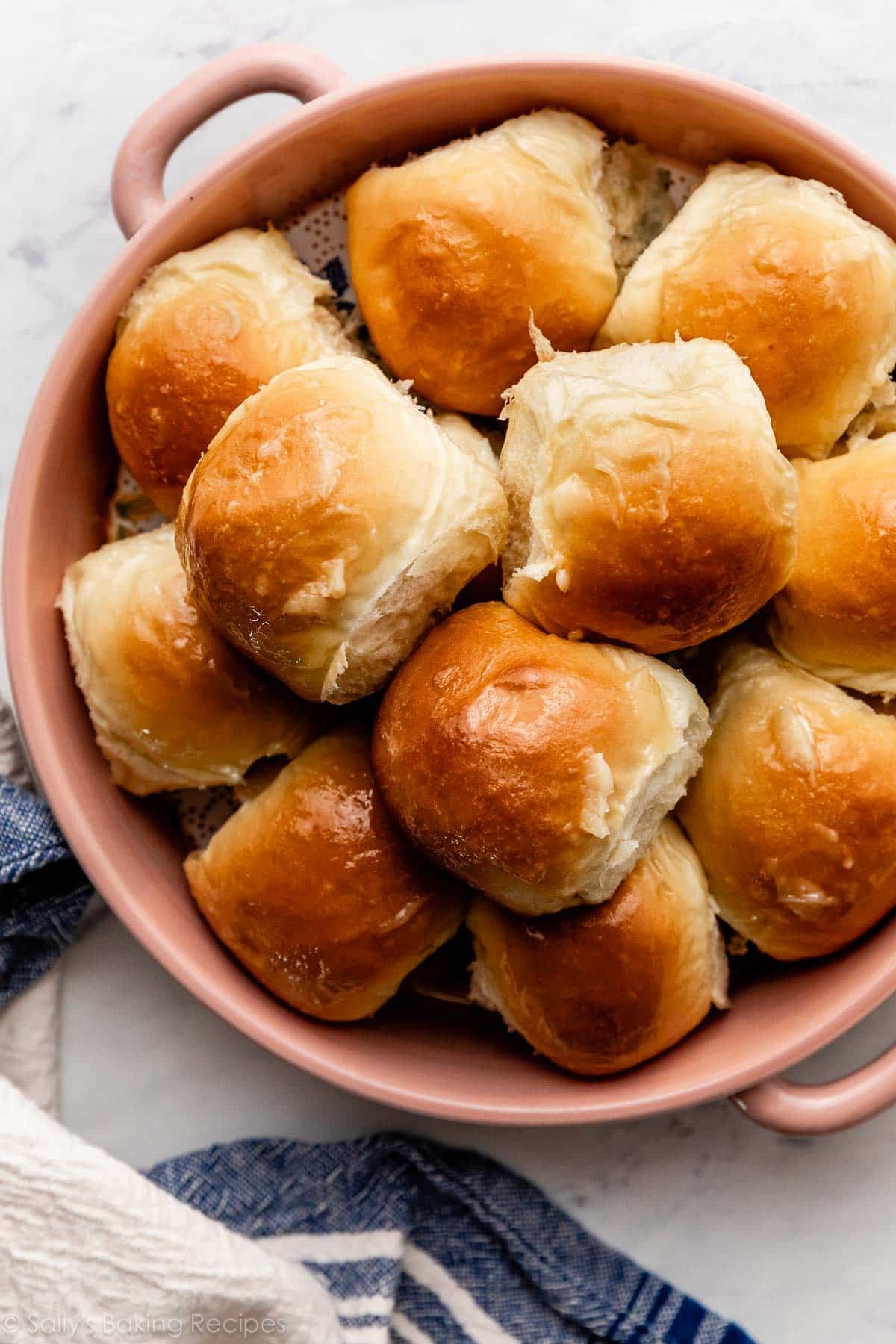
You only need 7 ingredients to make these yeasted honey butter rolls. Fluffy, flaky, soft, and buttery, with a dose of honeyed sweetness, these fresh rolls are in another league than anything store-bought. If you’re a bread beginner, reference my Baking with Yeast Guide for answers to common yeast FAQs.
This recipe is brought to you in partnership with Red Star Yeast.
I originally published this recipe in 2015 and have since added new photos and more helpful success tips. I also made a few small changes to the recipe which are reflected in the printable recipe below.
These soft, flaky, golden honey butter rolls might just be my very favorite rolls to make. I mean, I love my classic dinner rolls, but with the addition of honey, both in the rolls and on top? These rolls are the bee’s knees!
One reader, Mia, commented: “What an amazing recipe! I haven’t even made bread much before. Yet this turned out so successfully. Will definitely be making it on the regular…★★★★★“
I’ve made a few small changes to this recipe over the years. The recipe used to include granulated sugar, for proofing the yeast, but you can actually just use a teaspoon of honey for this! (Convenient, since you’re already using honey in the dough.) I’ve also extended the kneading time to 8–10 minutes, so they’re extra soft. If you’ve made these garlicky homemade breadsticks before, the kneading instructions are exactly the same.
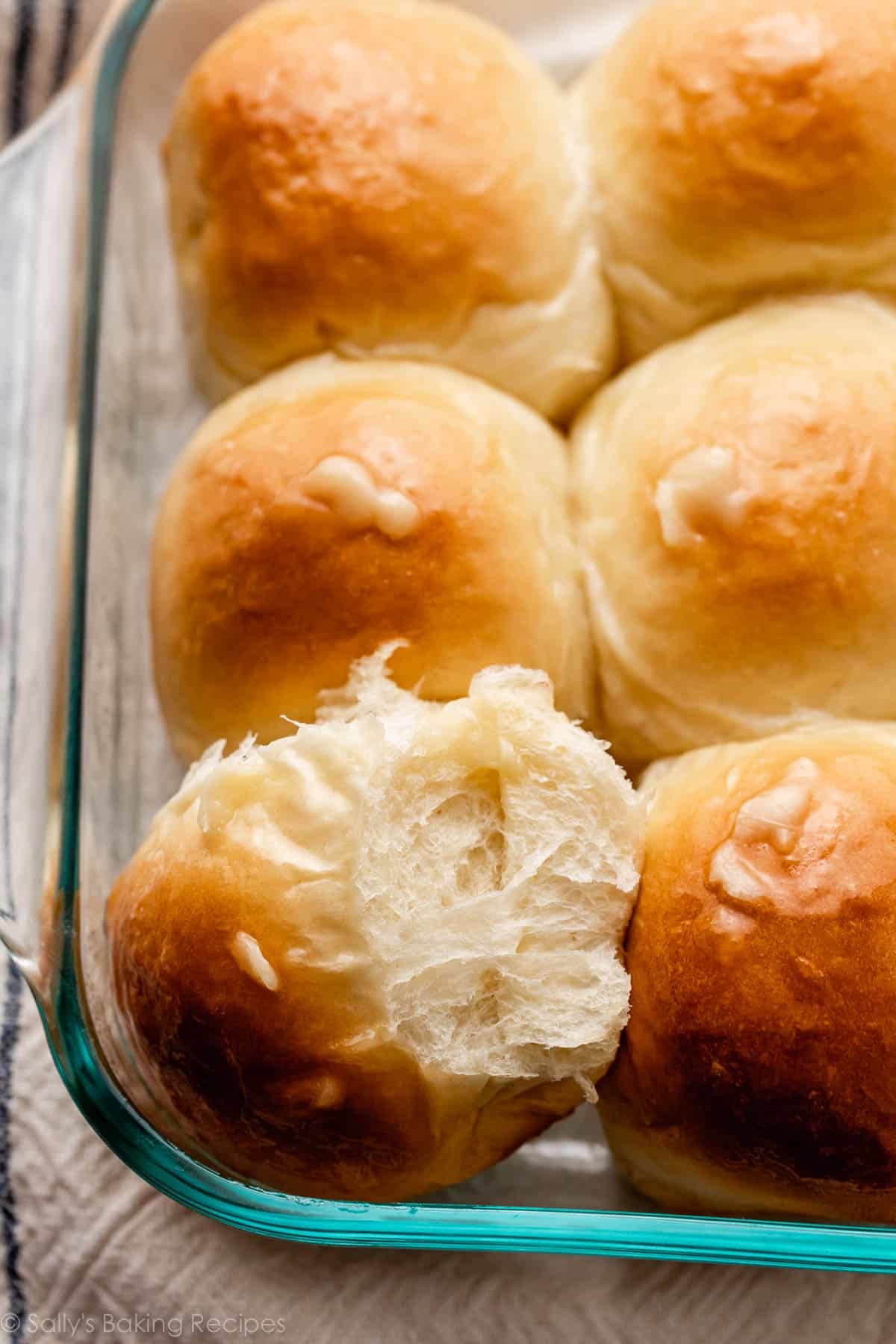
This is an old-fashioned, made-with-love dinner roll recipe, with honey butter going in and on the rolls.
Ingredients You Need for This Rich Dough
Unfortunately, this dough doesn’t come with a winning lottery ticket (though we could call the honey liquid gold!). Rather, “rich” correlates with the amount of fat in the dough. Here’s the difference:
- Rich dough: The softer the bread, the more fat in the dough. For example, this dough includes whole milk, butter, and egg. Recipes like my easy cinnamon rolls, raspberry sweet rolls, pizza pull-apart rolls, sweet potato dinner rolls, and brown butter sage dinner rolls all start with a rich dough.
- Lean dough: The crustier and chewier the bread, the less fat in the dough. Recipes like chewy homemade bagels and soft pretzels, pizza dough, focaccia, and artisan bread all use a lean dough.
You need 7 ingredients total:
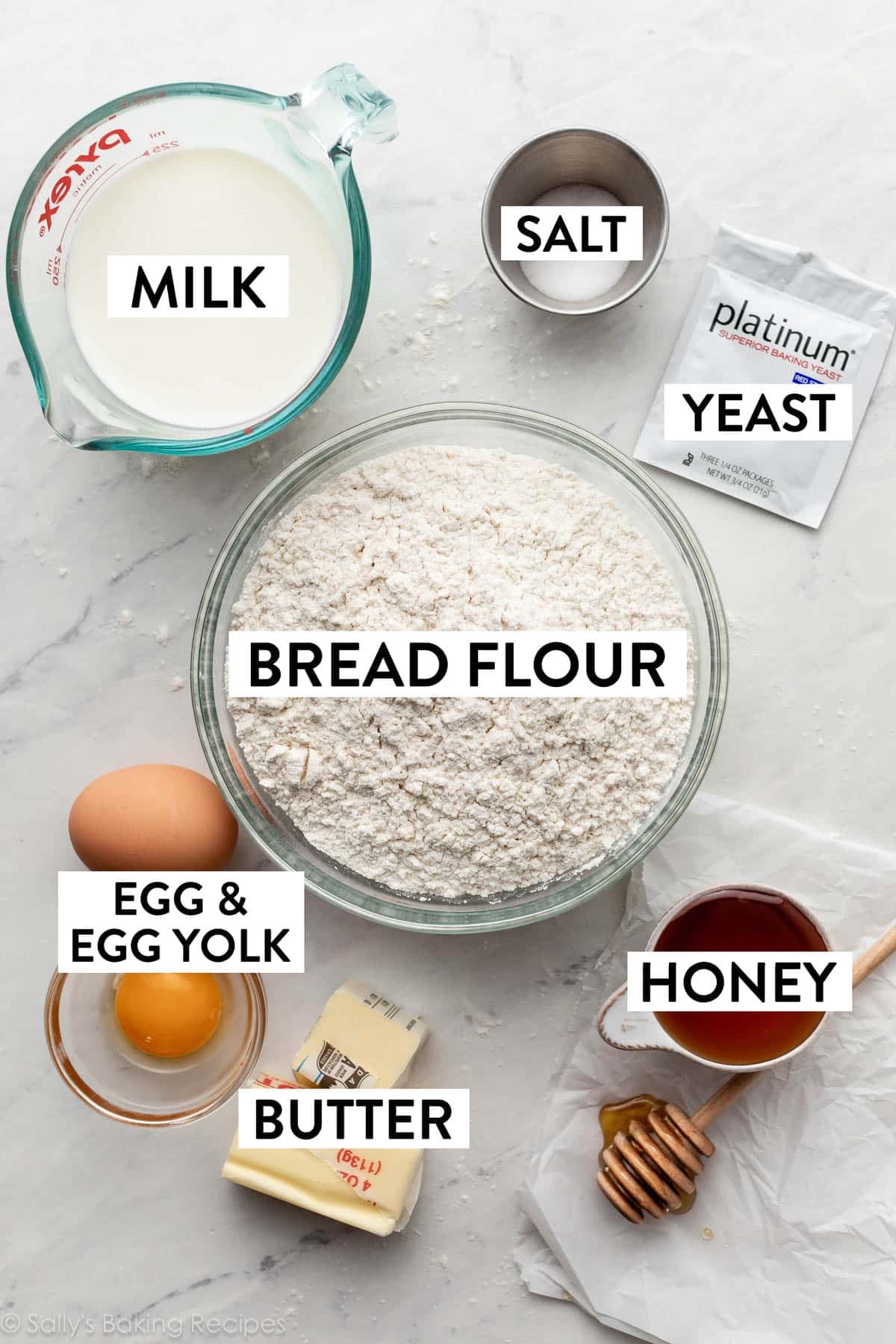
- Milk: Liquid activates the yeast. For the best rolls, use whole milk. Nondairy or low-fat milks work too, but whole milk produces phenomenal flavor and texture.
- Yeast: You can use active dry yeast or instant yeast. If using active dry yeast, the rise times will be a little longer. I recommend Platinum Yeast from Red Star, which is an instant yeast blended with natural dough improvers.
- Honey: The honey feeds the yeast, increases its activity, and tenderizes the dough. Plus it provides that distinctive sweetness these rolls are made for!
- Egg: 1 egg provides structure and flavor, and that extra egg yolk adds richness and makes the rolls supremely soft. Don’t skip it.
- Butter: Butter in the dough promises a flavorful, soft honey butter roll. And is there anything better than slathering honey butter on top of the warm rolls?
- Salt: You can’t make flavorful bread without salt!
- Flour: You can use all-purpose flour or bread flour in this recipe. All-purpose flour is convenient for most, but bread flour produces chewier rolls. There are no other changes to the recipe if you use bread flour. I use bread flour in my honey butter rolls because it contains more gluten than all-purpose. Extra gluten helps make finished rolls extra chewy and, um, more bread-like. Technical terms here.
Making rolls from scratch may sound intimidating and time-consuming, but most of that time is hands-off. If you’re new to baking bread, reference my Baking with Yeast Guide.
One reader, Erin, commented: “This is my go-to recipe for dinner rolls. They are delicious! I make them all the time for family gatherings and they are always a hit. Before I came across Sally’s blog, I never had the confidence to try and make bread of any kind. Because of her detailed instructions and photos, I am now fully confident in my ability to make not only rolls, but tons of other recipes as well. ★★★★★“
The 1st step is to proof your yeast, a step I take even if I’m using instant yeast. All you do is mix the yeast with the warm liquid (milk), and a little sugar (honey). Cover and let it sit for 5–10 minutes until foamy and frothy on top. This proves your yeast is active and ready to get to work:
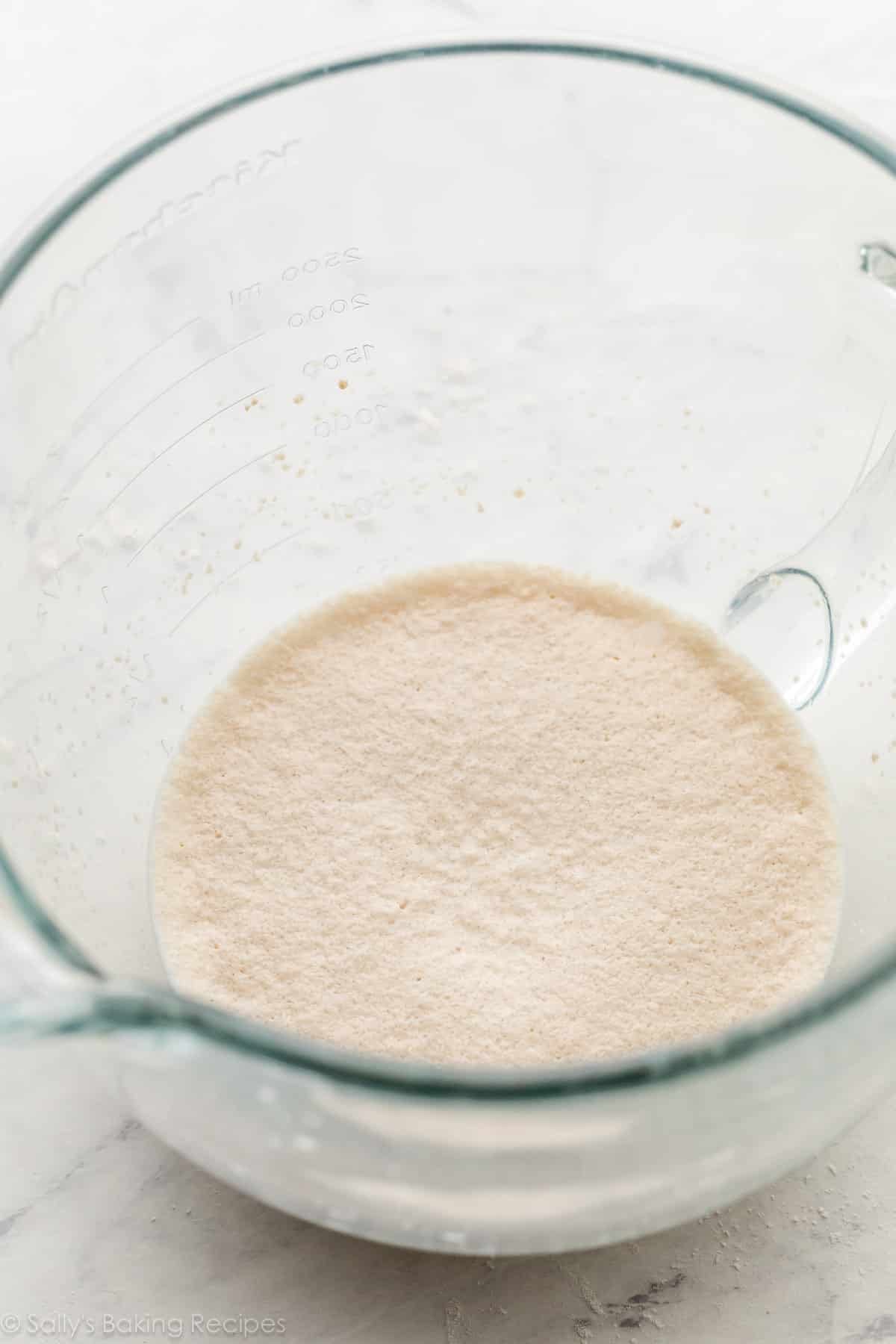
Now you’ll add the rest of the dough ingredients. The process is really easy, and kneading is an important step.
Honey Butter Rolls: Kneading the Dough Is Key
Kneading dough is a common step in bread baking, and this particular dough definitely benefits from a long kneading step (about 8–10 minutes) to help ensure the honey butter rolls stay soft. You can knead dough with your hands or in a stand mixer. A stand mixer obviously makes the job hands-off, but if you don’t have one, kneading is a great stress reliever. 😉
The dough should feel slightly tacky, but not overly sticky. On a lightly floured work surface, using the heels of your hands, stretch and fold the dough with gentle motion. If you’d like a visual of how to knead the dough by hand, you can watch the full video tutorial in my post on how to knead dough.
Kneading the dough serves a couple purposes. First, it incorporates air into the dough, which helps keep the rolls nice and soft. It also encourages the proteins in the flour and moisture in the dough to link together, forming a strong gluten network, which is essential for retaining the gas produced by the yeast. Gluten is what makes bread deliciously chewy.
You know your kneaded dough is ready to rise when it stretches without immediately tearing. After kneading, the dough will be soft and supple, and a windowpane test is always helpful. You can poke the dough with your finger, too. If it slowly bounces back, it’s ready to rise.
After kneading, tear off a small (roughly golfball-size) piece of dough and gently stretch it out until it’s thin enough for light to pass through it. Hold it up to a window or light. Does light pass through the stretched dough without the dough tearing first? If so, your dough has been kneaded long enough and is ready to rise. If not, keep kneading.
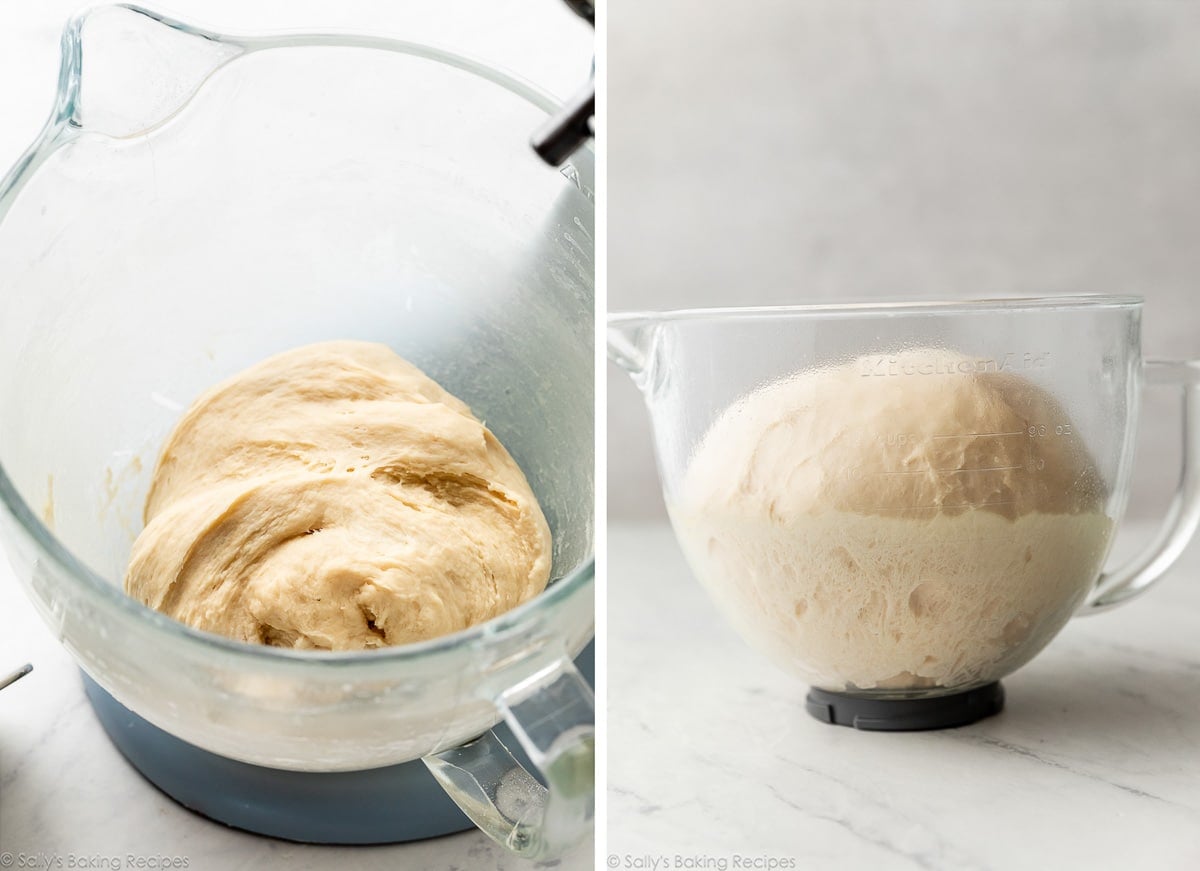
Pictured on the left below is the dough after kneading. It’s smooth and stretchy, and ready to rise. Place the dough in a large greased bowl, turn the dough to coat it in the oil, and then cover it and set it aside. It will double in size in about 1–2 hours, pictured on the right.
Shaping the Rolls
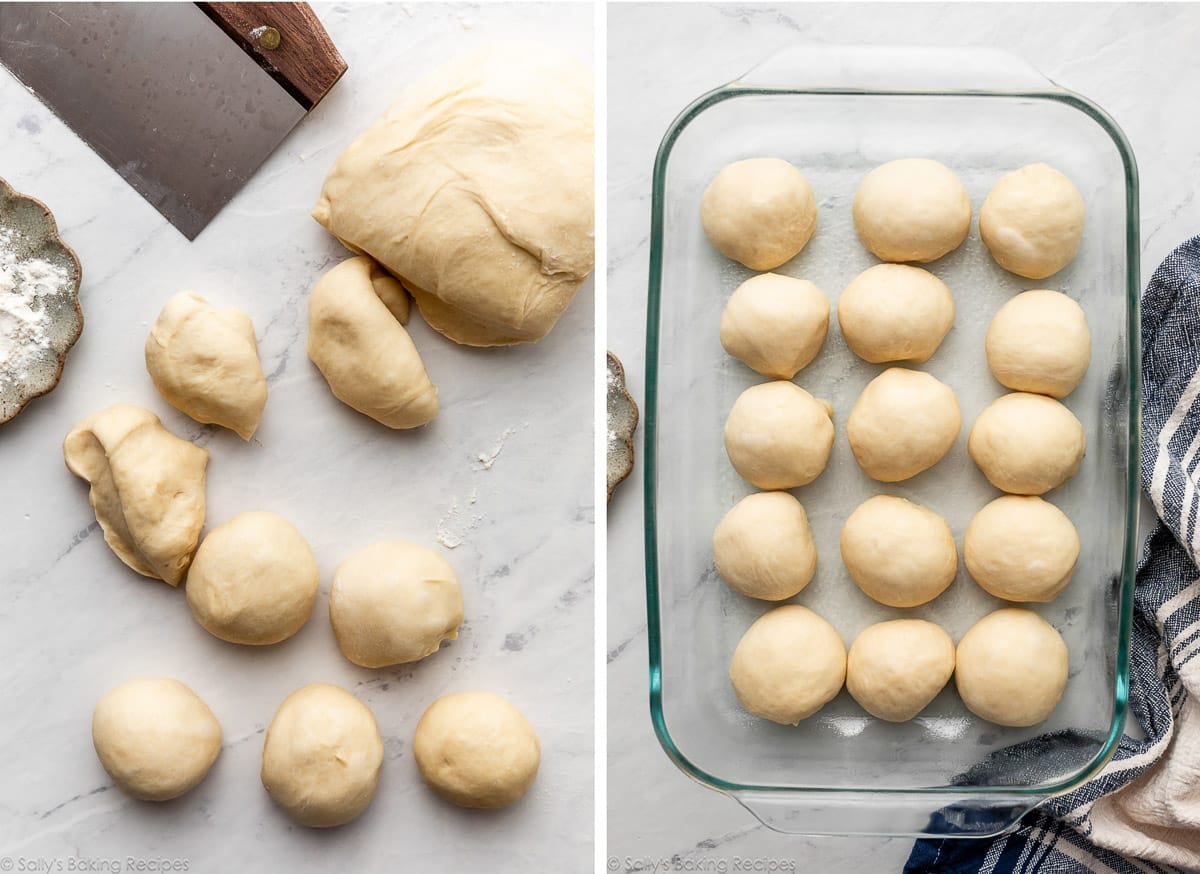
Punch down the risen dough to release the air, and then divide the dough into 15 pieces, roughly equal in size (about 2 ounces/60g each, but they don’t have to be exact!). Take a piece and stretch the top of the dough while pinching and sealing the bottom. Make sure the rolls are smooth on top and sealed on the bottom. I shape hot cross buns the same exact way.
Arrange them in a greased baking pan, loosely cover, and let the shaped rolls rise for another hour before baking.
I didn’t snap a picture of the rolls after rising, but they puff up quite a bit. Then, bake until golden brown.
Honey Butter Topping
Spreading on a sweet and creamy honey butter is the perfect finishing touch to the warm honey butter rolls. You need 2 ingredients for the honey butter topping. Can you guess what they are? LOL.
Make sure your butter is super soft, so you can easily mix it with the honey. I just use a fork to do this, but you could use an electric mixer if you’d prefer. As soon as they’re out of the oven, spread the honey butter on top of the warm rolls. (Just use a knife, or an icing spatula also works great for this.)
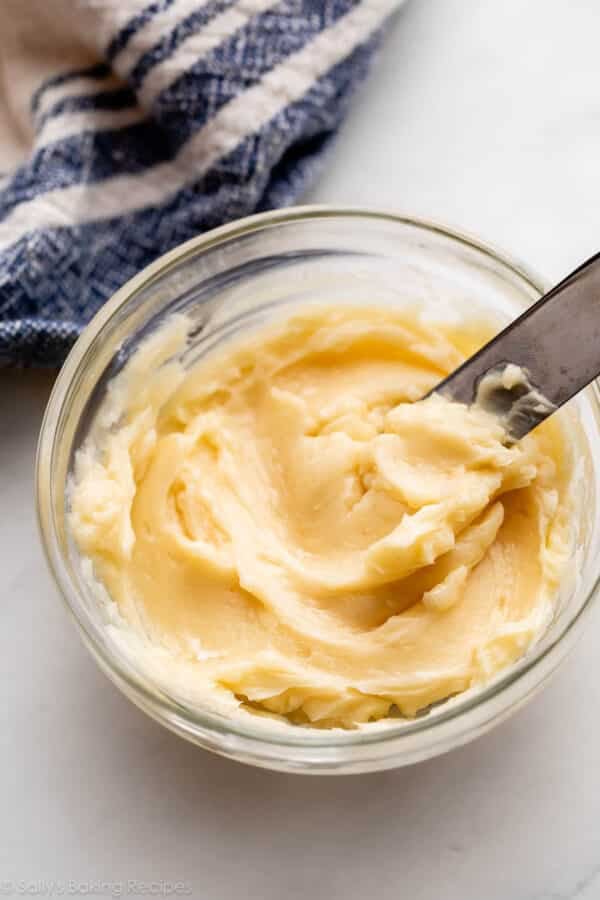
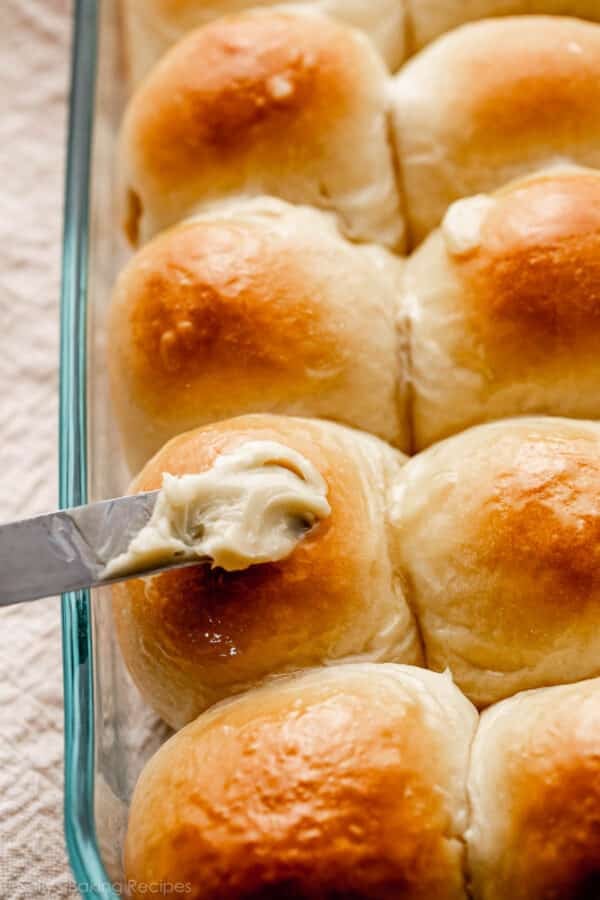
You’ll have extra honey butter to serve alongside the rolls.
How Are These Different?
My popular soft dinner rolls are flaky, soft, and buttery. And so are today’s honeyed version. But today’s recipe produces slightly sweeter and richer-tasting rolls, sort of like those “Hawaiian rolls” you can purchase at the store. They’re a real treat!
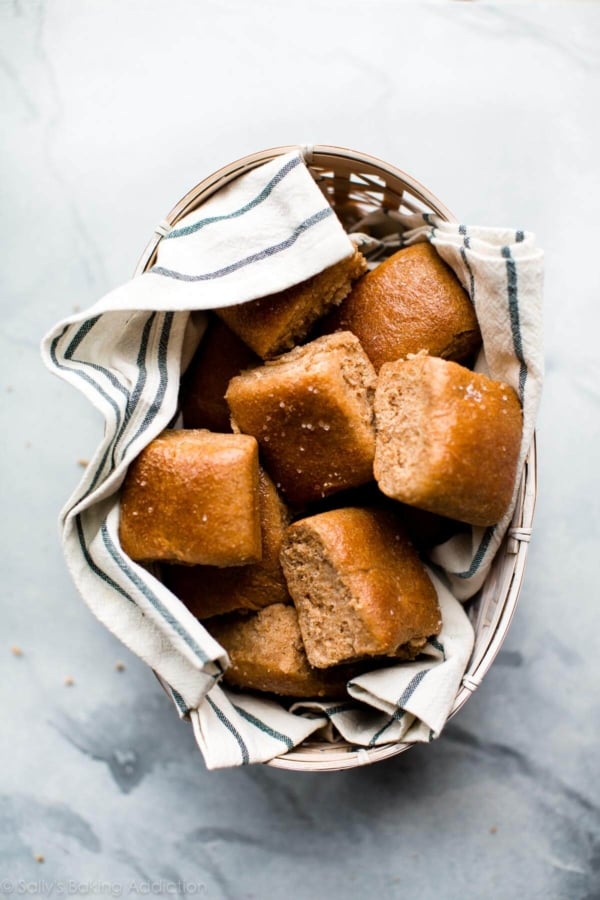
Whole wheat version: Try my honey whole wheat dinner rolls.
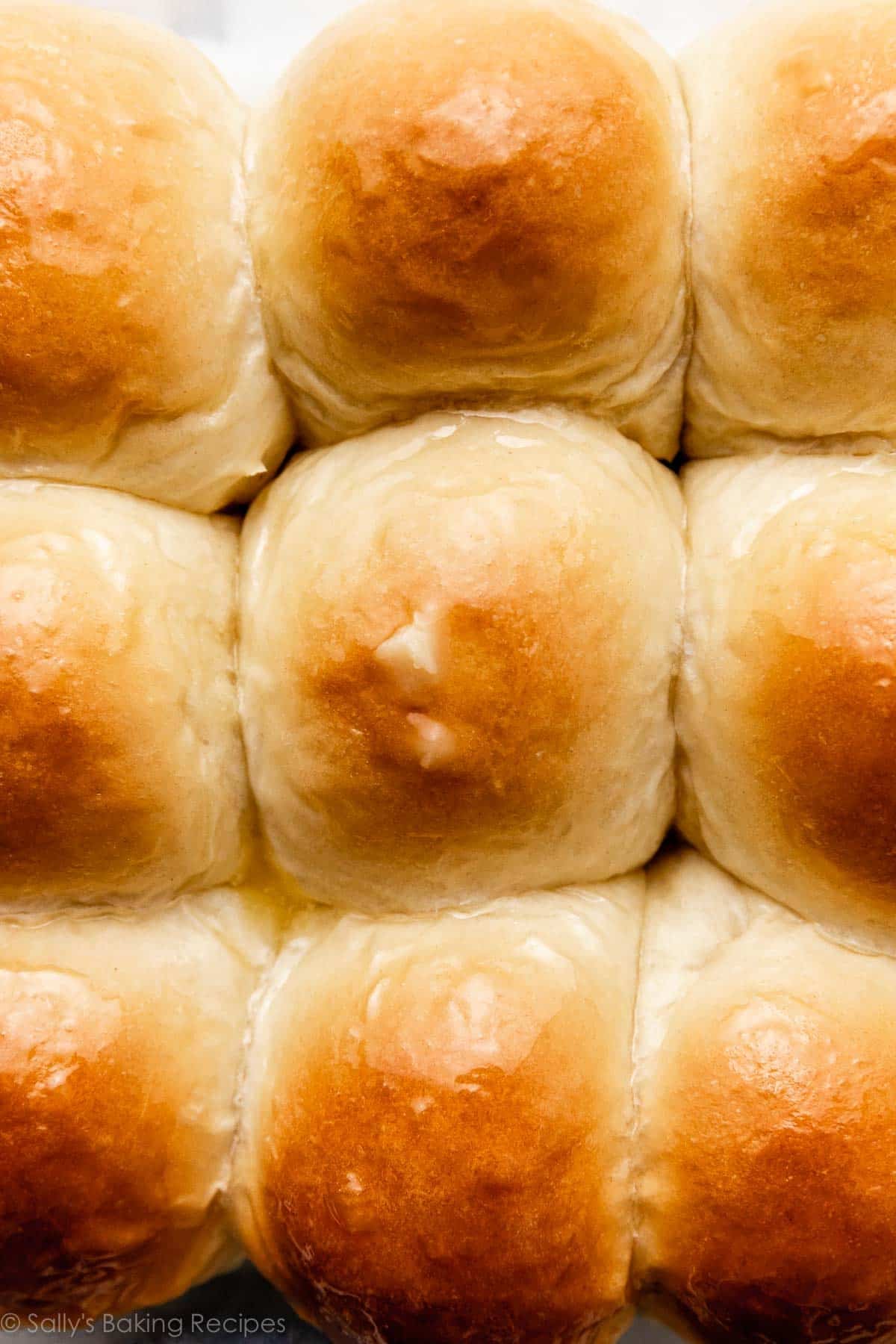
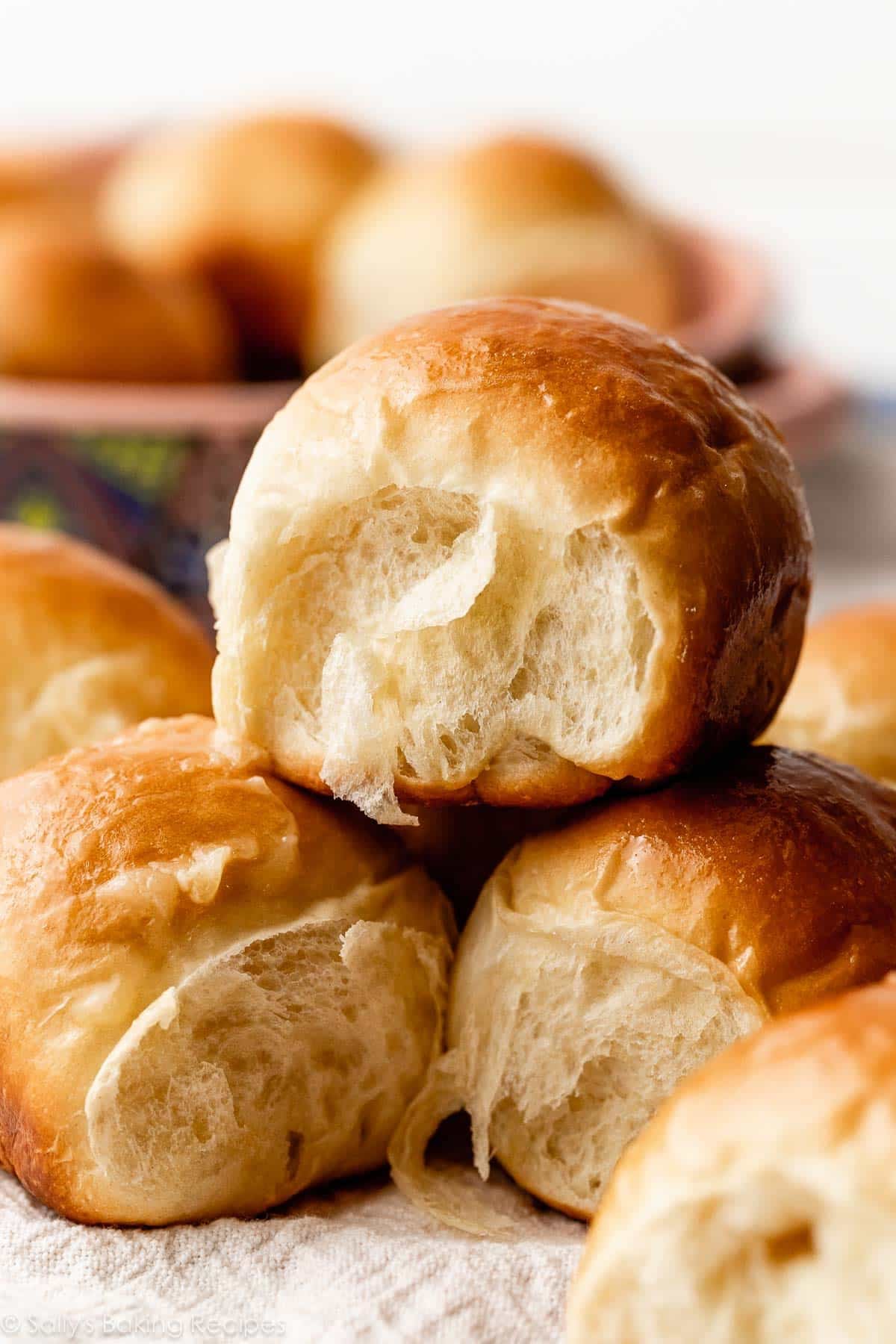
The make-ahead/overnight option detailed in the Notes below is especially helpful if you want fresh-baked honey butter rolls for a big holiday meal, such as Easter brunch or Thanksgiving dinner. Or, you know, Tuesday. 😉
Print
Honey Butter Rolls
- Prep Time: 3 hours, 25 minutes
- Cook Time: 22 minutes
- Total Time: 3 hours, 45 minutes
- Yield: 15 rolls
- Category: Bread
- Method: Baking
- Cuisine: American
Description
You need just 7 ingredients to make these extra soft and flaky honey butter rolls. See recipe Notes for freezing and overnight instructions. You can also reference my Baking with Yeast Guide for answers to common yeast FAQs.
Ingredients
- 1 cup (240ml) whole milk, warmed to about 110°F (43°C)
- 2 and 1/4 teaspoons (7g) Platinum Yeast from Red Star instant yeast or active dry yeast (1 standard packet)
- 1/4 cup (85g) + 1 teaspoon honey, divided
- 1 large egg + 1 egg yolk
- 1/4 cup (4 Tbsp; 56g) unsalted butter, melted and slightly cooled
- 3 and 1/2 cups (455g) bread flour (spooned & leveled)
- 1 teaspoon salt
Topping
- 1/4 cup (4 Tbsp; 56g) unsalted butter, very soft
- 2 Tablespoons (42g) honey
Instructions
- Prepare the dough: Whisk the warm milk, yeast, and 1 teaspoon honey together in the bowl of your stand mixer. Loosely cover and allow to sit for 5–10 minutes until foamy and frothy on top. *If you do not own a stand mixer, you can do this in a large mixing bowl and in the next step, mix the dough together with a large wooden spoon/silicone spatula. It will take a bit of arm muscle. A hand mixer works, but the sticky dough repeatedly gets stuck in the beaters. Mixing by hand with a wooden spoon or silicone spatula is a better choice.*
- With the stand mixer running on low speed with the dough hook attachment, add the remaining honey, egg, egg yolk, melted butter, 3 cups (about 390g) of flour, and salt. Mix on low speed for 1 minute, then add remaining 1/2 cup of flour. Mix on low speed for 1 minute as it all combines. The dough should be thick, yet soft, and just slightly sticky. It should pull away from the sides of the bowl as it mixes. When it does, it is ready to knead. If, however, the dough is too sticky to handle, mix in more flour, 1 Tablespoon at a time. Make sure you do not add too much extra flour; you want a soft, slightly sticky dough.
- Knead the dough: Keep the dough in the mixer and beat for an additional 8-10 full minutes, or knead by hand on a lightly floured surface for 8-10 full minutes. (If you’re new to bread-baking, my How to Knead Dough video tutorial can help here.) If the dough becomes too sticky during the kneading process, sprinkle 1 teaspoon of flour at a time on the dough or on the work surface/in the bowl to make a soft, slightly tacky dough. Do not add more flour than you need because you do not want a dry dough. After kneading, the dough should still feel a little soft. Poke it with your finger—if it slowly bounces back, your dough is ready to rise. You can also do a “windowpane test” to see if your dough has been kneaded long enough: tear off a small (roughly golfball-size) piece of dough and gently stretch it out until it’s thin enough for light to pass through it. Hold it up to a window or light. Does light pass through the stretched dough without the dough tearing first? If so, your dough has been kneaded long enough and is ready to rise. If not, keep kneading until it passes the windowpane test.
- 1st rise: Lightly grease a large bowl with oil or nonstick spray. Place the dough in the bowl, turning it to coat all sides in the oil. Cover the bowl with aluminum foil, plastic wrap, or a clean kitchen towel. Allow the dough to rise in a relatively warm environment for 1–2 hours or until double in size. (For a tiny reduction in rise time, see my answer to Where Should Dough Rise? in my Baking With Yeast Guide.)
- Grease a 9×13-inch baking pan or two 9-inch square or round baking pans. You can also bake the rolls in a cast iron skillet or on a lined baking sheet.*
- Shape the rolls: When the dough is ready, punch it down to release the air. Divide the dough into 15 pieces, roughly 2 ounces or 60g each. (Just eyeball it—doesn’t have to be perfect!) A bench scraper is always helpful for cutting dough. Shape each piece into a smooth ball. Arrange in prepared baking pan.
- 2nd rise: Loosely cover with plastic wrap and allow to rise until doubled in size and puffy, about 1 hour.
- Preheat oven to 350°F (177°C). Bake the rolls for 20–25 minutes or until golden brown on top, rotating the pan halfway through. If you notice the tops browning too quickly, loosely tent the pan with aluminum foil.
- Make the honey butter topping: While the rolls bake, mix the topping ingredients together to make a creamy honey butter. Remove the rolls from the oven when they are done and spread a generous amount of honey butter onto each warm roll. Serve with any remaining honey butter.
- Cover leftovers and keep in the refrigerator for up to 1 week or freeze for up to 3 months, then thaw overnight in the refrigerator. Warm up in a 300°F (149°C) oven for 10 minutes.
Notes
- Freezing Dough Instructions: Prepare recipe through step 6. Place shaped rolls in a greased baking pan, cover tightly, and freeze for up to 3 months. Once frozen, the dough balls won’t stick together anymore and you can place them in a freezer bag if needed. On the day you serve them, arrange the dough balls in a greased baking pan, cover tightly, then let them thaw and rise for about 4–5 hours. Bake as directed. You can also freeze the baked dinner rolls. Allow them to cool completely, then freeze for up to 3 months. Thaw in the refrigerator or at room temperature, then reheat as desired. If reheating the whole pan, lightly cover and reheat in a 300°F (149°C) oven for about 10 minutes or until warm.
- Overnight Dough Instructions: Prepare the recipe through step 6. Cover the shaped rolls tightly and refrigerate for up to about 15 hours. At least 3 hours before you need them the next day, remove the rolls from the refrigerator, keep covered, and allow to rise on the counter for about 1–2 hours before baking. Alternatively, you can let the dough have its 1st rise in the refrigerator overnight. Cover the dough tightly and place in the refrigerator for up to about 15 hours. Remove from the refrigerator and allow the dough to fully rise for 2 more hours. Continue with step 5.
- Special Tools (affiliate links): Stand Mixer (or Glass Mixing Bowl with Silicone Spatula / Wooden Spoon) | 9×13-inch Glass Baking Pan, 2 9-inch Round Baking Pans, 2 9-inch Square Baking Pans, Cast Iron Skillet, or Baking Sheet | Bench Scraper
- Baking Pan: I prefer baking the rolls in a glass 9×13-inch baking pan because I find they brown a little too quickly in a metal pan. But as long as you bake the rolls on a lower oven rack and keep your eye on them, any pan is great. You can also bake these rolls in a large cast iron skillet, in two 9-inch round or square baking pans, or on a lined baking sheet. Bake time remains the same.
- Milk: Whole milk or even buttermilk are ideal for the best, richest flavor and texture. Keeping that in mind, feel free to substitute with a lower-fat or nondairy milk.
- Yeast: Platinum Yeast from Red Star is an instant yeast. You can use Red Star Yeast active dry yeast instead. Rise times will be slightly longer using active dry yeast. Reference my Baking with Yeast Guide for answers to common yeast FAQs.
- Flour: For extra chewy rolls, I like to use bread flour. You can use all-purpose flour or bread flour. All-purpose flour is convenient for most, but bread flour produces a chewier texture. The rolls are still soft and fluffy no matter which you use. Either flour is fine and there are no other changes to the recipe if you use one or the other.
- Can I Use Whole Wheat Flour? I don’t recommend it for this recipe, but you can replace up to 1 cup (about 120–130g) of flour with whole wheat flour. Expect a denser roll. Or try my honey whole wheat dinner rolls recipe instead.







Reader Comments and Reviews
Great recipe! I tested it last weekend and decided to make them for Thanksgiving. However, given how busy the day is in the kitchen, I am thinking about an overnight rise this time. But I am confused by the instruction to remove them from the fridge at least 3 hours before baking and let them rise 1 to 2 hours. Does this mean they need 4 to 5 total hours out of the fridge (the first 3 plus 1 to 2 for a second rise)? Or does it mean they need 3 total hours out of the fridge, but aren’t rising for the first hour or two? For example, if I take my rolls out at noon, should I expect them to be risen and ready to go in the oven at 3?
Hi Bernadette! Take them out a least three hours before you need them to account for rising and baking time.
These rolls are a game changer! Every since I discovered them, I have made them once a month for 3 months in a row. My husband says they are better than the Texas Roadhouse rolls!
Hi Sally! If you had to choose how to prep these rolls ahead for Thanksgiving, would you choose the method where you shape the night before and bake the day of — OR — would you do a full bake the day before and then warm in the oven for 10 minutes right before dinner? Is there any substantial difference? Thanks!
Hi Kate! They will be fabulous either way, but there’s nothing quite like freshly baked rolls (shaping the night before).
Can we use gluten free flour in this recipe?
Hi DK, we haven’t tested this recipe with gluten free flour, but please let us know if you do!
I have not made this recipe yet. Could I substitute Lactaid whole milk for the whole milk?
We haven’t tested that but let us know if you do!
Hi Sally,
I need to try these they look yummy! Can you double this recipe to yield more for a large crowd (say for example a thanksgiving crowd of 25-30 people) or would you recommend making two separate batches?
Thank you!
Hi Kathy, for best results and to prevent over or under mixing, we recommend making separate batches rather than doubling. Hope they’re a hit!
Would a ceramic casserole dish be ok to bake these in? I’m doing a double batch and I only have 1 glass 9×13 dish
Hi Marissa, yes you can use ceramic here, but the bake time may need to be extended.
Can I halve the recipe and bake in one 9 inch square pan? I guess that should give me about 7 or 8 dinner rolls.
Will the other steps in the instructions and baking time stay the same?
Hi Liza, we generally advise from halving yeast recipes, but you can certainly give it a try. Or, see recipe notes for freezing details if you don’t want to have all the rolls at once. If baking in a smaller pan, bake time may be just a little shorter. Hope you enjoy the rolls!
My family loved these dinner rolls! They were so easy to make. My daughter could have sworn they came from Costco – Lol!
Thanks so much for the recipe 🙂
Thank you for the recipe! Can I make the dough in a bread machine?
Yes!
It’s so easy to make. Thank you
Could I use this basic dough recipe and make other types of rolls (cinnamon, lemon, etc.)? This particular dough is absolutely perfect.
Hi Dianna, since this is a rich dough you could certainly try using it for cinnamon rolls. Or you might enjoy our cinnamon roll recipe!
Thank you so much!
Last week I made a batch of rolls that were okay, but not great. Like a fool I strayed from Sally and tried a recipe from some random page. This week I wanted to redeem myself so I came right to Sally’s baking recipes.
I am totally redeemed. These are not only the best rolls I’ve ever made, I think they’re some of the best I’ve ever tasted. I’ve already eaten 3. I recommend making an extra serving of the honey butter because you’re probably going to want to use it as a spread on your roll, although the flavor is also fantastic without.
Oh my heaven! First time trying and look at these beauties! Excellent recipe and instructions. Thanks!
Can I double or triple this recipe? We have a large family and when we are all together there are 29 of us.
Hi Kristi! For best results and to prevent over or under mixing, we recommend making separate batches rather than doubling or tripling.
I love these rolls. I made them sandwich size for my pulled pork and they came out phenomenal. These are my new go to rolls
OMG, im totally gonna make these for my Hawaiian roll crazy family, but is bread flour needed and if so what is the difference with bread flour and all purpose flour? btw love your site and only follow recipes from it!
Hi Macy, bread flour has a slightly higher protein content. All-purpose flour is milled from a softer wheat, and has a lower protein content. Bread flour makes for a slightly stronger, chewier bread. You can use all-purpose in this recipe if that’s all you have.
I make these all the time. They’re amazing!
These were the star at our family dinner. Everyone couldn’t stop raving about them! Absolutely the best dinner rolls I’ve made! The Honey Butter topping is great. Sounds like it would make them too sweet but not the case. They were just right. Thank you Sally for sharing!
I love these too! Thanks Helen, so glad these were a big hit with your family.
These are the best dinner rolls I’ve ever made. Can I use this dough for hamburger buns?
Hi Judy, we’re so glad you enjoyed these! We love using pretzel rolls for burgers. We’ve also used our dinner roll recipe and simply made fewer larger rolls for burgers and sandwiches, you that should work here, too. Let us know what you try!
These rolls (and pretty much everything I’ve tried from Sally’s site) is nothing short of amazing. I went with these rolls for Easter dinner and the only disappointment was that I didn’t make a double batch. Superb softness and taste that is second to NONE. Thank you Sally for making all your ideas accessible to us all. I am grateful for your generosity. By the way… these rolls are AWESOME! 🙂
I’m relatively new to yeast baking and have found your recipes the easiest to follow and the most successful. I made these honeybuns for Easter Sunday dinner and they were a screaming success, will definitely make them again.
We’re so happy to hear this, Annie!
I wanted these to be good – they did not turn out. I followed the directions to the letter, even using STAR yeast. I checked the date on the yeast and it was good (it was new anyway). I did not get the foam like I usually get with the other brand of yeast. And the rolls turned out very tough and dry. I did not overbake them. I used bread flour. I don’t know what happened. I did use the stand mixer to knead it. I got a good rise out of both risings.
The BEST!!
Love the richness, flavor and ease of shaping
the rolls!
I’m not sure if this has come to anyone else’s attention, and for anyone else who prints their recipes, but the printable version of this recipe has not been updated. The kneading time in the printable still states just 2 minutes and the directions for overnight has not been updated as well.
Not my Favorite, Heavy and Dense. Formed my rolls last night, took the pan out of the frig this morning for the 2nd rise. Great height but a heavy dense roll, used bread flour. They looked really good but certainly not my favorite. It is fun trying new recipes though.
This was such a great recipe! Was a hit at my dinner party last night.
Can I double this recipe? I have a large gathering I’m attending and need to bring a gob of rolls.
Hi Chad, for absolutely best taste and texture (and so you don’t waste your time!) we highly recommend making 2 separate batches.
I have a question. I’m not a yeast dough person :). When mixing the ingredients in the stand mixer in Step Two, do you use the dough hook for that part, as well as the kneading? Or should I use the paddle attachment for mixing?
Sally, every one of your recipes that I’ve tried turns out so well. I tell everyone I can about Sally’s Baking Addiction!
I usually use the dough hook for that. Thank you so much for sharing my recipes with others!