
With step-by-step pictures, a full video tutorial, and plenty of helpful tips, learn how to make simple white sandwich bread using a few baking ingredients like flour, water, yeast, salt, and milk. Bread flour promises a super soft interior with an extra chewy crust. This recipe yields 1 loaf, so it’s perfect if you only have 1 loaf pan.
If you’re new to working with yeast, reference my Baking with Yeast Guide for answers to common yeast FAQs. This recipe is brought to you in partnership with Red Star Yeast.
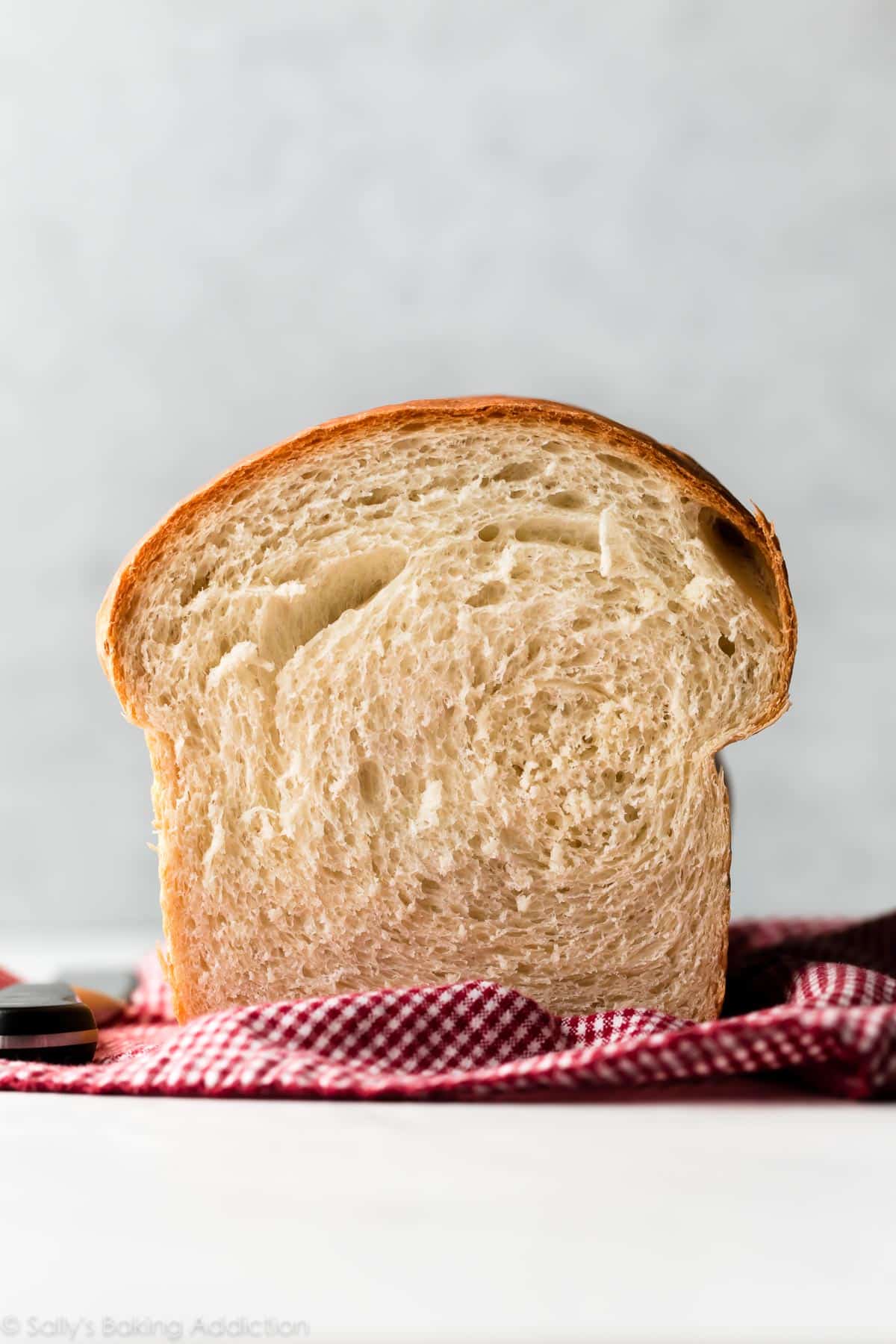
Let’s make homemade sandwich bread. This is a basic staple in any bread baker’s repertoire, but it’s also a recipe that shouldn’t be overlooked. There’s nothing on earth quite like homemade bread and my recipe is loaf perfection—rising tall, tasting buttery-soft, and making the most epic sandwiches. It’s truthfully the best homemade bread I’ve ever tasted and it all comes from just 7 ingredients. And if you’re nervous to bake with yeast, I guarantee you will finally feel confident with this no-fuss recipe.
This Sandwich Bread Is:
- Soft white bread with an extra chewy exterior
- Crisp right out of the oven!
- Made from 7 easy ingredients
- Golden brown with a super impressive rise
- Extraordinary on its own or as the base of a sandwich
- Simple to make
- Easy to make ahead or freeze
Looking for a no yeast alternative? Here’s my no yeast bread.
Just 1 Loaf of Bread
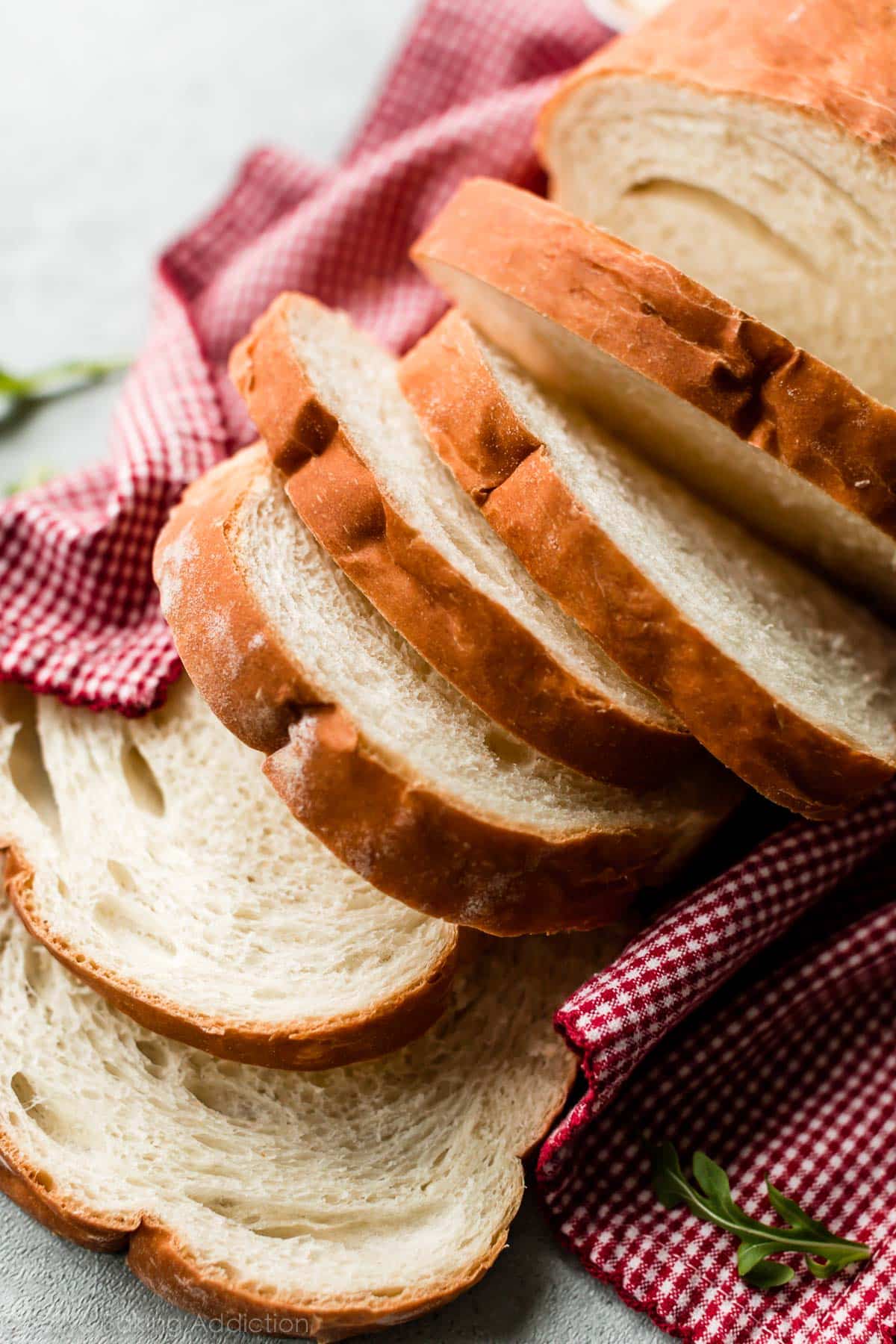
Besides the simplicity of the process, you’ll appreciate that this sandwich bread recipe yields just 1 loaf. You don’t need a crazy amount of flour, multiple loaf pans, and you’re not left with 2-3 leftover loaves on your hands. (Which wouldn’t necessarily be a bad thing.) Just 1 loaf to prepare, rise, shape, and bake—convenient, approachable, and straightforward. My recipes for multigrain bread, homemade cinnamon swirl bread, and honey oat bread both produce just 1 loaf as well.
Overview: How to Make Sandwich Bread
- Make the dough. Continue below to learn more about this dough recipe.
- Knead the dough. Reference my How to Knead Dough video tutorial for extra help with this step.
- Cover the dough and let it rise. The dough rises in about 1-2 hours in a relatively warm environment.
- Punch down the dough to release the air.
- Shape the dough into a large rectangle, then roll it into loaf.
- Let the loaf rise for about 1 hour.
- Bake for 30-34 minutes until golden brown.
As shown in the video tutorial below, the dough comes together with a mixer. You can use a paddle attachment or a dough hook. You can also make the dough by hand, but it requires a bit of arm muscle. After the dough comes together in the mixing bowl, it’s time to knead. You can continue beating the dough with the mixer for this step or you can knead the dough by hand. If you’re new to bread baking, my how to knead dough post and video can help with this step.
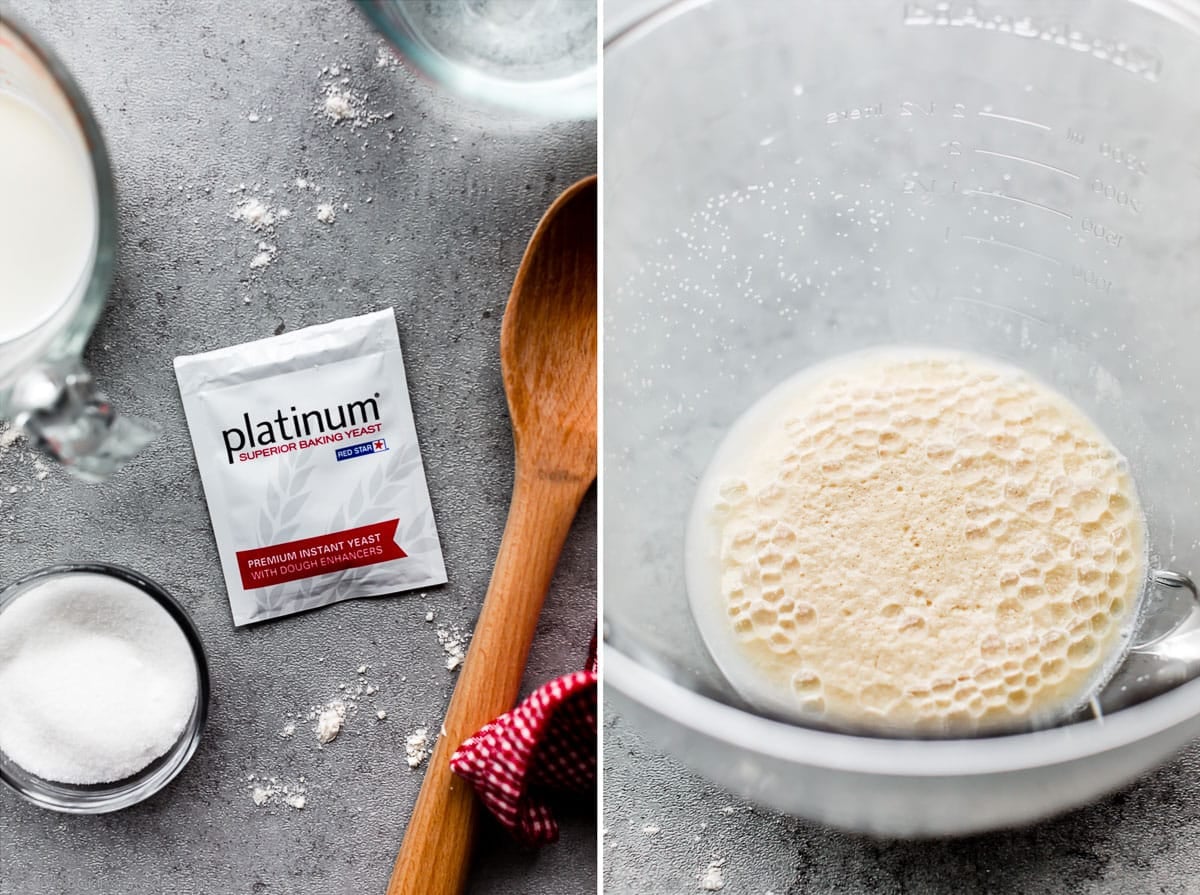
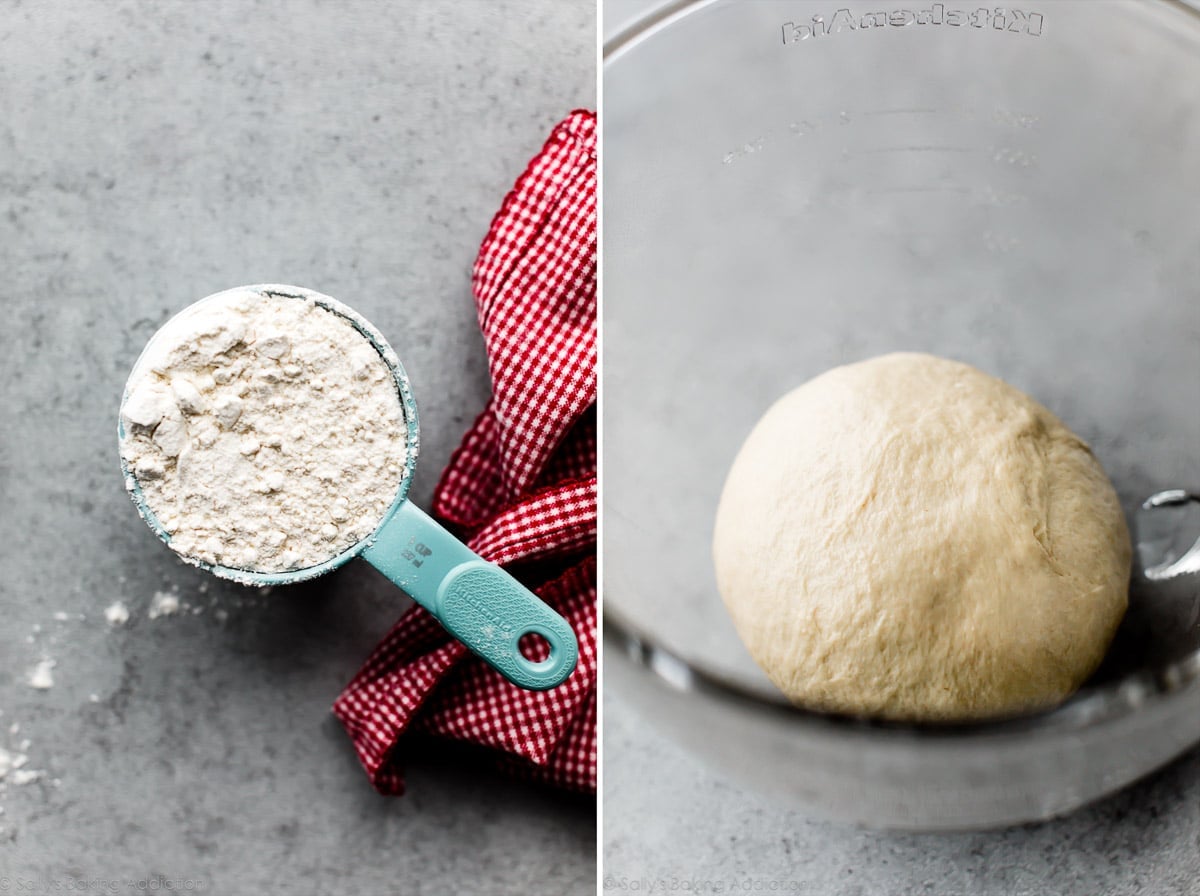
Sandwich Bread Ingredients
You need 7 ingredients—practically the same as my homemade cinnamon swirl bread but less sugar. Likewise, they’re basically the same ingredients as my soft dinner rolls too, but in order to bake a bread that rises tall and has legitimate structure, we’ll leave out some of the fat. Swap some of the milk for water and leave out the egg.
- Water: Liquid activates yeast. I use mostly water in this dough because we need a bread that has structure. Using all milk, like I do for my dinner rolls, would yield a flimsy bread without much texture.
- Milk: To make a soft bread, you need fat in the dough so make sure 1/4 cup of the liquid is milk. Low fat milk works too, but whole milk produces phenomenal texture.
- Yeast: You can use active dry yeast or instant yeast. If using active dry, the rise times will be a bit longer. I recommend Platinum Yeast from Red Star, which is an instant yeast blended with natural dough improvers. It’s my go-to for all bread.
- Sugar: Sugar feeds the yeast, increases its activity, and tenderizes the dough.
- Butter: Butter promises a flavorful loaf. I tested this recipe with melted butter, softened butter, and even olive oil. We liked the loaf made with softened butter the best because it had pronounced buttery flavor and a softer (yet still sturdy) interior.
- Salt: You can’t make flavorful bread without salt!
- Flour: You can use all-purpose flour or bread flour. All-purpose flour is convenient for most, but bread flour produces a chewier crust. There are no other changes to the recipe if you use bread flour. For best taste, I highly recommend bread flour. It’s what I always use when I make artisan bread. If you wish to use whole wheat flour, follow my recipe for whole wheat bread instead.
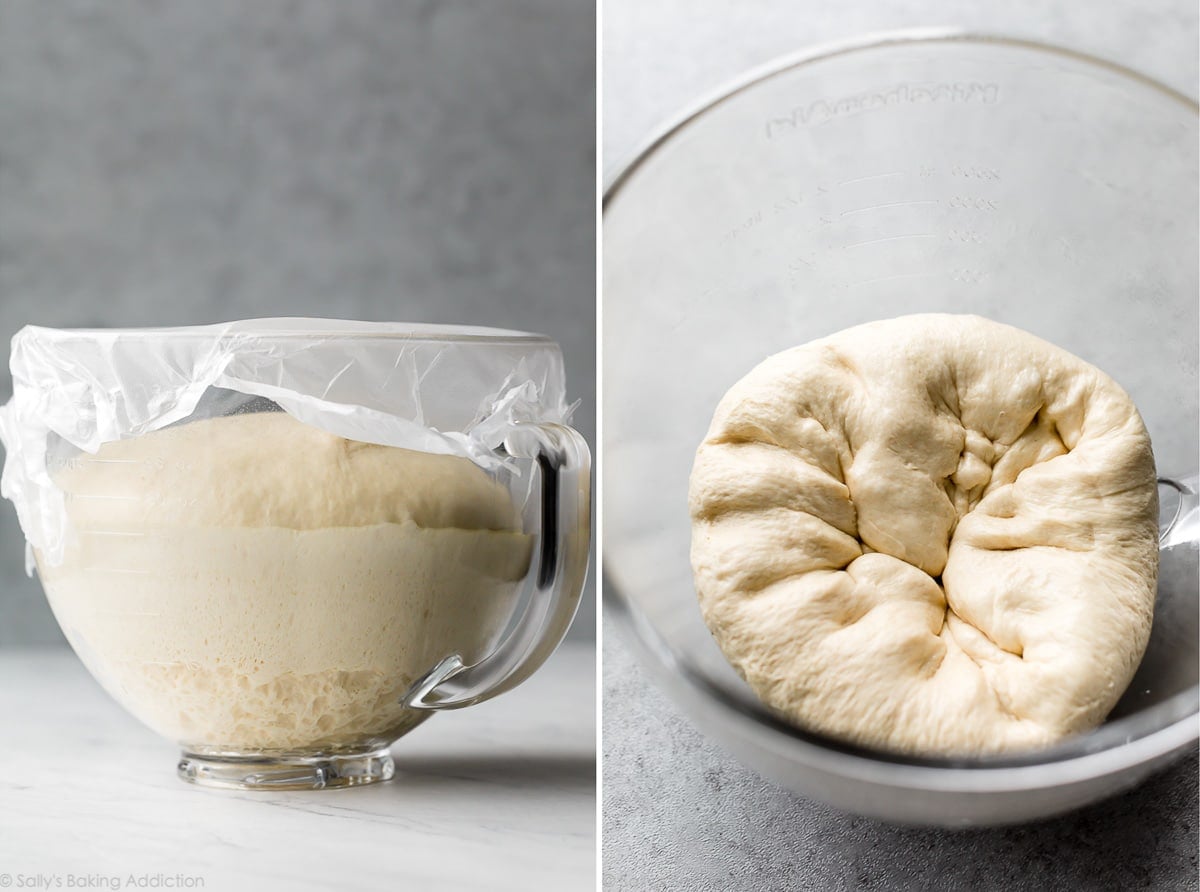
After you make and knead the dough, let it rise. Then, punch it down to release the air:
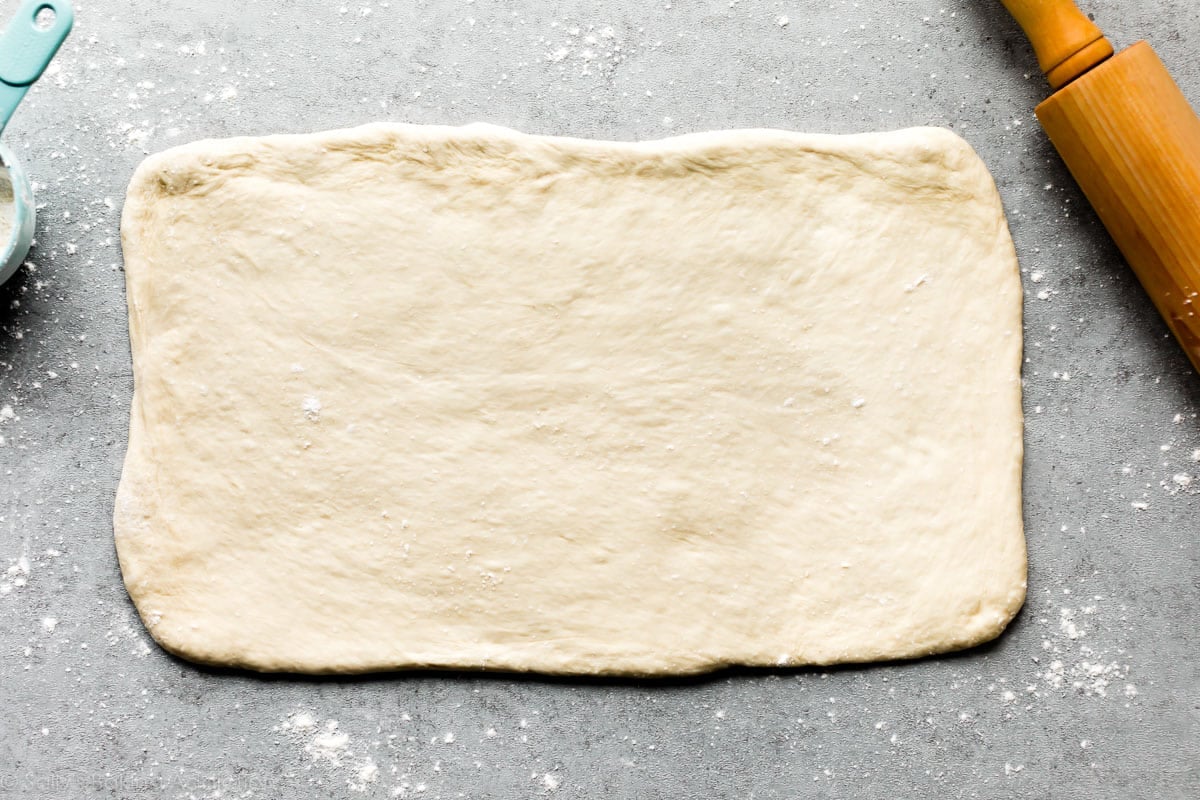
Roll it out into an 8×15-inch rectangle:
Roll it up tightly starting with the 8-inch side, so you have an 8-inch roll to fit into your 9×5-inch loaf pan. (Unlike cinnamon rolls where you roll up the dough starting with the larger side.) Let it rise until it’s 1 heaping inch above the rim of the pan:
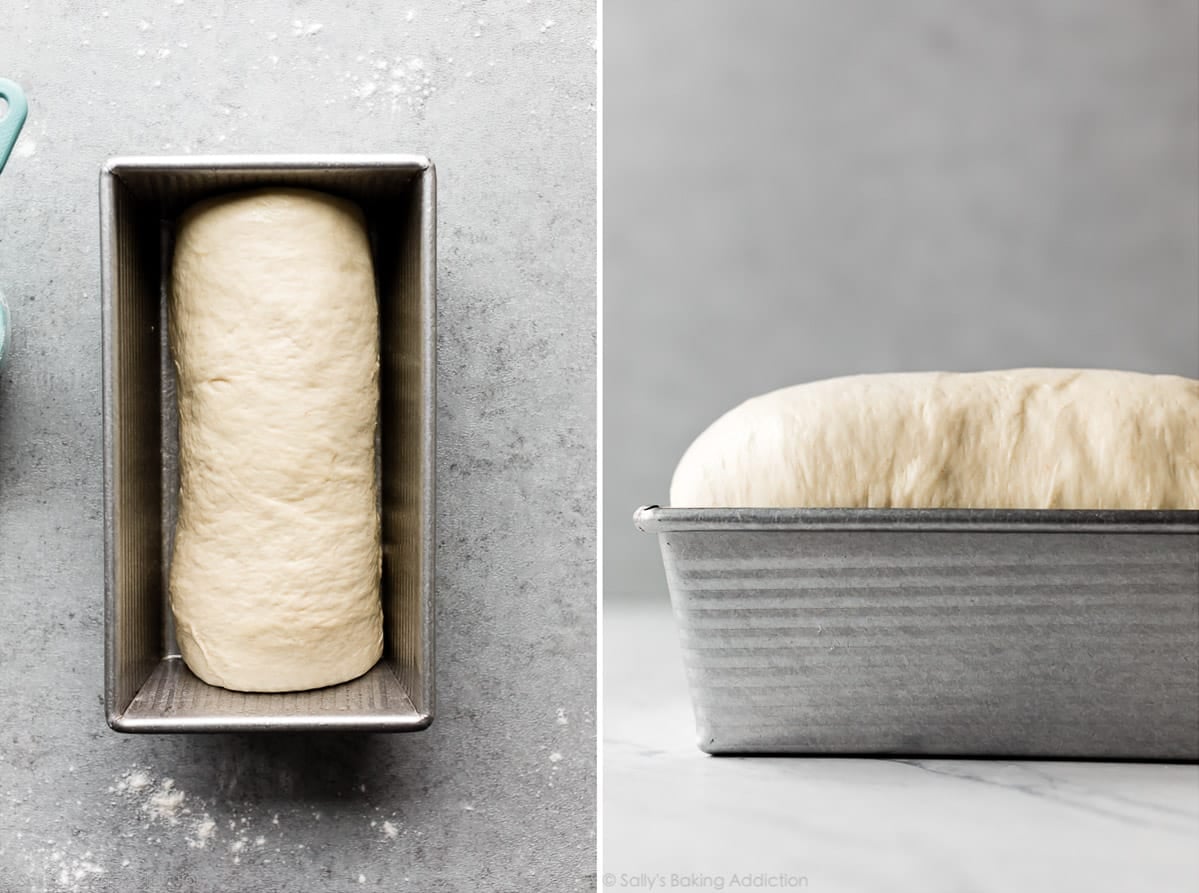
Bake until golden brown, about 30-34 minutes.
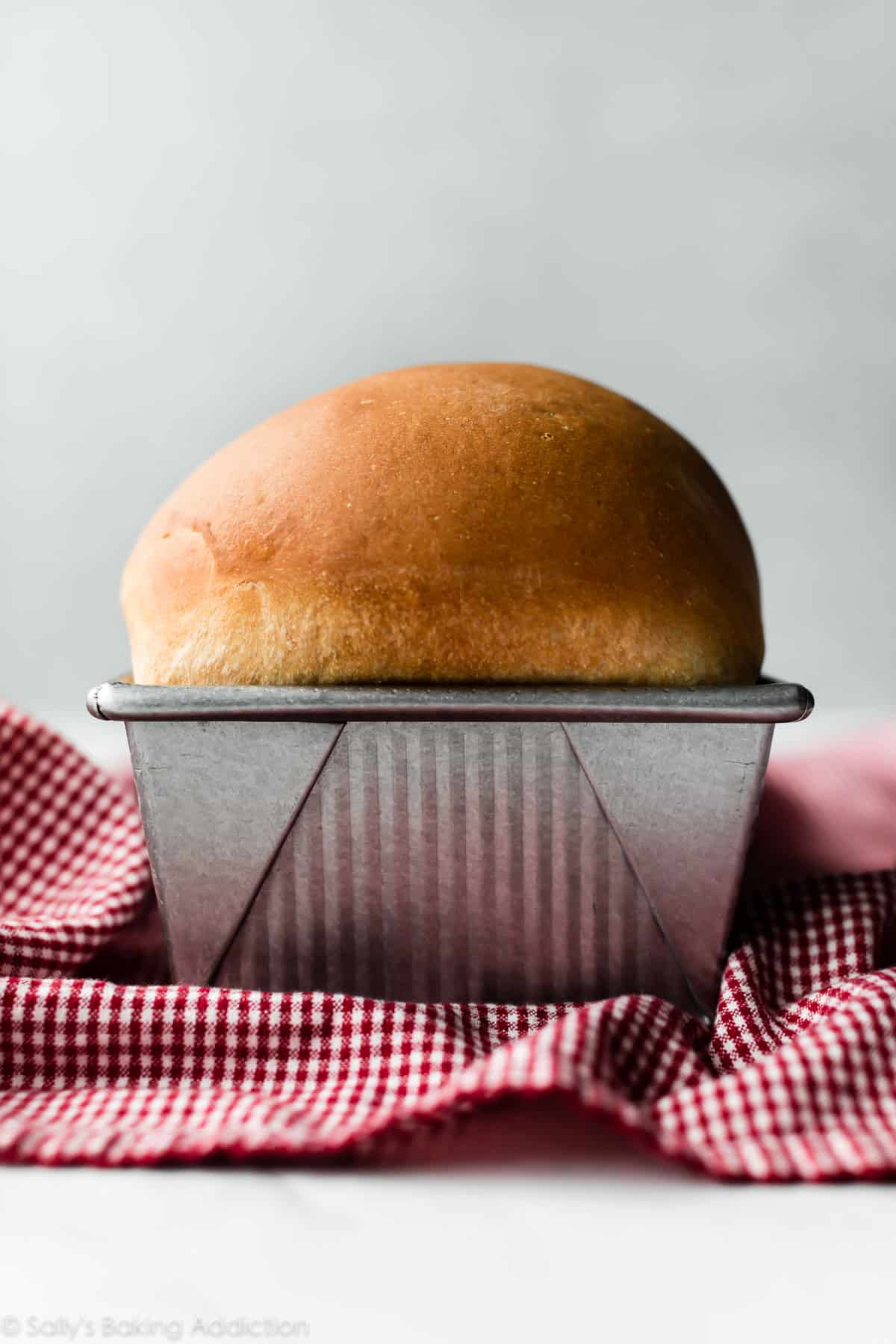
Uses for Homemade Sandwich Bread
- Any sandwich. Like the Ross Geller’s Turkey Moist-Maker Sandwich 🙂
- BLT or grilled cheese
- Avocado toast or bacon & egg sandwiches
- Soup dipper
- Make croutons
- French toast or Blueberry French Toast Casserole
- Or in savory recipes like Breakfast Casserole and Sausage & Herb Stuffing
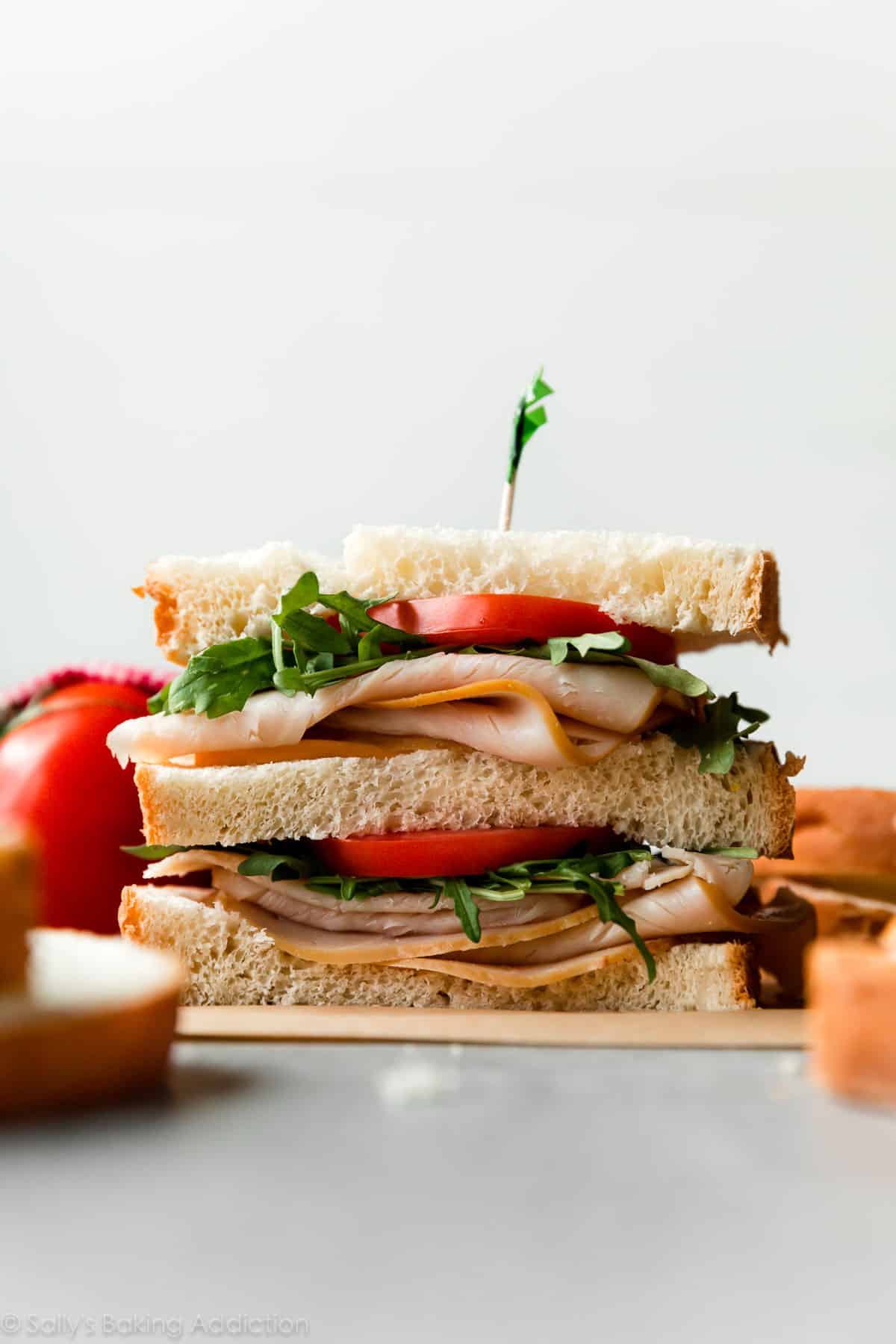
But our favorite way is simply warm toast with regular butter or honey butter & jam. Honestly, toast made from mass-produced bread doesn’t even compare. You can actually taste the soft and buttery toasty crumbs here. Or make an easy turkey sandwich—store-bought bread can’t make a sandwich taste as PERFECT as this.
I understand there’s a major convenience with store-bought bread and I’m not asking you to only make homemade bread for the rest of you life, but try it at least once. It takes a few hours one afternoon and most of the work is hands-off while the dough rises. Fresh-baked sandwich bread smells incredible, tastes even better, and I’m confident there’s no better baked good than this perfect loaf. You won’t regret trying this.
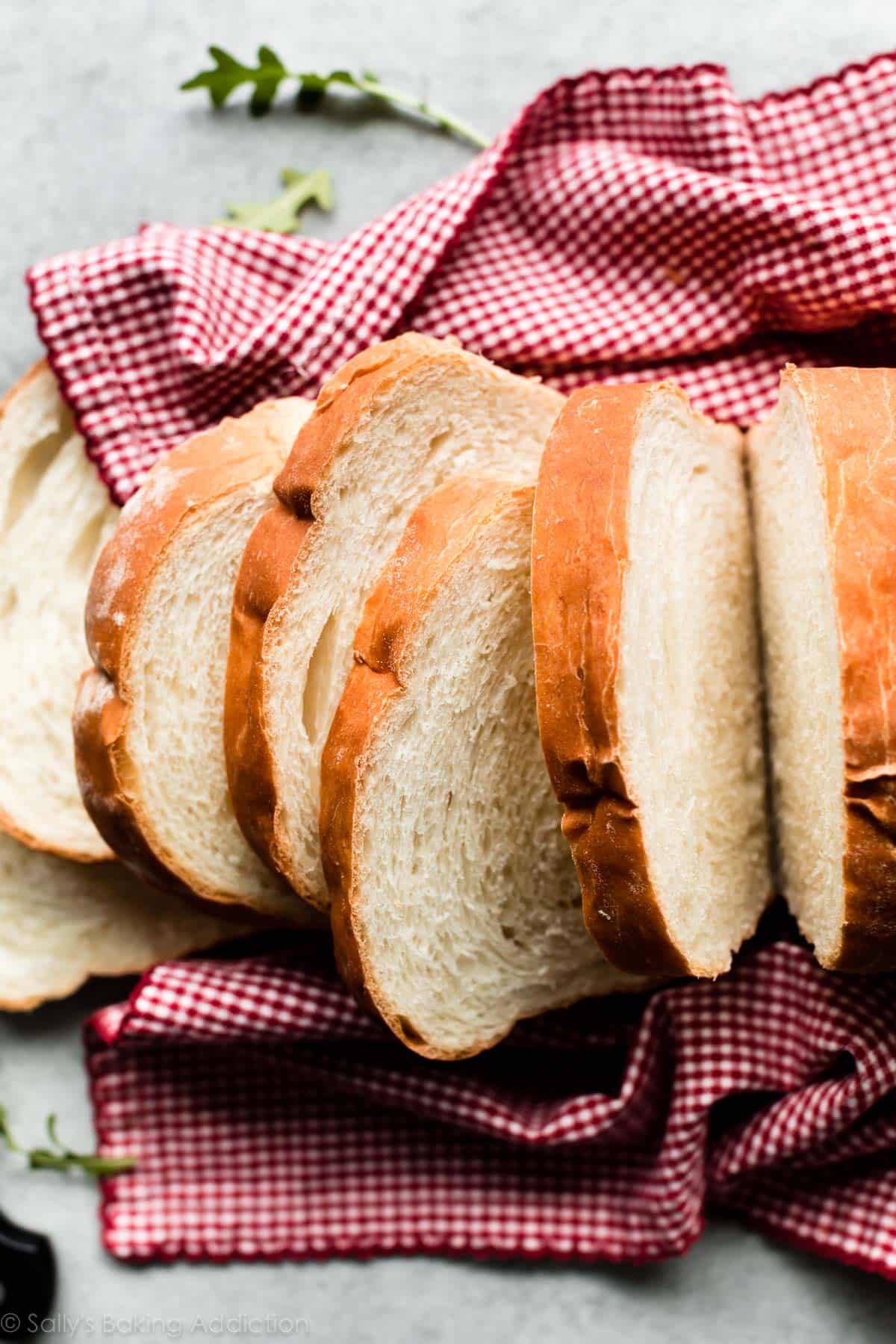
More Easy Bread Recipes
- Focaccia
- Multigrain Bread
- Artisan Bread
- Cheesy Breadsticks
- Pizza Crust
- Homemade Soft Pretzels
- Bread Bowls
- Homemade Breadsticks
- Olive Bread
- Cranberry Nut No-Knead Bread
Sandwich Bread
- Prep Time: 3 hours, 20 minutes
- Cook Time: 32 minutes
- Total Time: 4 hours
- Yield: 1 loaf
- Category: Bread
- Method: Baking
- Cuisine: American
Description
You only need 7 ingredients to make this simple sandwich bread. Soft and buttery with a chewy/crisp crust, this fresh loaf of bread will quickly become a staple in your kitchen. See recipe notes for freezing and overnight instructions. You can also reference my Baking with Yeast Guide for answers to common yeast FAQs.
Ingredients
- 1 cup (240ml) water, warmed to about 110°F (43°C)
- 1/4 cup (60ml) whole milk, warmed to about 110°F (43°C)
- 2 and 1/4 teaspoons (7g) Platinum Yeast from Red Star instant yeast (1 standard packet)
- 2 Tablespoons (25g) granulated sugar
- 4 Tablespoons (1/4 cup; 56g) unsalted butter, softened to room temperature
- 1 and 1/2 teaspoons salt
- 3 and 1/3 cups (about 420–430g) all-purpose flour or bread flour (spooned & leveled), plus more as needed
Instructions
- Prepare the dough: Whisk the warm water, warm milk, yeast, and sugar together in the bowl of your stand mixer fitted with a dough hook attachment. Cover and allow to sit for 5 minutes.
- Add the butter, salt, and 1 cup flour. Beat on low speed for 30 seconds, scrape down the sides of the bowl with a silicone spatula, then add another cup of flour. Beat on medium speed until relatively incorporated (there may still be chunks of butter). Add the remaining flour and beat on medium speed until the dough comes together and pulls away from the sides of the bowl, about 2 minutes. *If you do not own a mixer, you can mix this dough with a large wooden spoon or silicone spatula. It will take a bit of arm muscle!*
- Knead the dough: Keep the dough in the mixer and beat for an additional 5–8 full minutes, or knead by hand on a lightly floured surface for 5–8 full minutes. (If you’re new to bread-baking, my How to Knead Dough video tutorial can help here.) If the dough becomes too sticky during the kneading process, sprinkle 1 teaspoon of flour at a time on the dough or on the work surface/in the bowl to make a soft, slightly tacky dough. Do not add more flour than you need; you do not want a dry dough. After kneading, the dough should still feel a little soft. Poke it with your finger—if it slowly bounces back, your dough is ready to rise. You can also do a “windowpane test” to see if your dough has been kneaded long enough: tear off a small (roughly golfball-size) piece of dough and gently stretch it out until it’s thin enough for light to pass through it. Hold it up to a window or light. Does light pass through the stretched dough without the dough tearing first? If so, your dough has been kneaded long enough and is ready to rise. If not, keep kneading.
- 1st Rise: Lightly grease a large bowl with olive oil or nonstick spray. Place the dough in the bowl, turning it to coat all sides in the oil. Cover the bowl and allow the dough to rise in a relatively warm environment for 1-2 hours or until double in size. (I always let it rise on the counter. Takes about 2 hours. For a tiny reduction in rise time, see my answer to Where Should Dough Rise? in my Baking with Yeast Guide.)
- Grease a 9×5-inch loaf pan.
- Shape the bread: When the dough is ready, punch it down to release the air. Lightly flour a work surface, your hands, and a rolling pin. Roll the dough out into a large rectangle, about 8×15 inches. It does not have to be perfect—in fact, it will probably be rounded on the edges. That’s ok! Roll it up into an 8 inch log and place in the prepared loaf pan.
- 2nd Rise: Cover shaped loaf with aluminum foil, plastic wrap, or a clean kitchen towel. Allow to rise until it’s about 1 inch above the top of the loaf pan, about 1 hour. (See video and photo above for a visual.)
- Adjust oven rack to a lower position and preheat oven to 350°F (177°C). (It’s best to bake the bread towards the bottom of the oven so the top doesn’t burn.)
- Bake the bread: Bake for 32-36 minutes or until golden brown on top. If you notice the top browning too quickly, loosely tent the pan with aluminum foil. (I usually add aluminum foil over the loaf around the 20 minute mark.) To test for doneness, if you gently tap on the loaf, it should sound hollow. For a more accurate test, the bread is done when an instant-read thermometer reads the center of the loaf as 195–200°F (90–93°C).
- Remove from the oven and allow bread to cool for a few minutes in the pan on a cooling rack before removing the bread from the pan and slicing. Feel free to let it cool completely before slicing, too.
- Cover leftover bread tightly and store at room temperature for 6 days or in the refrigerator for up to 10 days.
Notes
- Freezing Instructions: Prepare recipe through step 6. Place shaped loaf in a greased 9×5-inch loaf pan or disposable loaf pan, cover tightly, and freeze for up to 3 months. On the day you serve it, let the loaf thaw and rise for about 4-5 hours at room temperature. Bake as directed. You can also freeze the baked bread loaf. Allow the bread to cool completely, then freeze for up to 3 months. Thaw in the refrigerator or at room temperature, then reheat as desired.
- Overnight Instructions: Prepare the recipe through step 6. Cover the shaped bread tightly and refrigerate for up to about 15 hours. At least 3 hours before you need the bread the next day, remove from the refrigerator, keep covered, and allow to rise on the counter for about 1-2 hours before baking. Alternatively, you can let the dough have its 1st rise in the refrigerator overnight. Cover the dough tightly and place in the refrigerator for up to 12 hours. Remove from the refrigerator and allow the dough to fully rise for 2 more hours. Continue with step 5.
- Special Tools (affiliate links): Electric Stand Mixer or Large Glass Mixing Bowl with Wooden Spoon / Silicone Spatula | 9×5-inch Loaf Pan | Rolling Pin
- Yeast: Platinum Yeast from Red Star is an instant yeast. Any instant yeast works. You can use active dry yeast instead. Rise times will be slightly longer using active dry yeast. Reference my Baking with Yeast Guide for answers to common yeast FAQs.
- Flour: You can use all-purpose flour or bread flour. All-purpose flour is convenient for most, but bread flour produces a chewier loaf of bread and I highly recommend it. The bread is still soft no matter which you use. Either flour is fine and there are no other changes to the recipe if you use one or the other. I don’t recommend whole wheat flour because it doesn’t have the same baking properties as white flour or bread flour (the gluten levels are different). If you wish to use whole wheat flour, try my recipe for whole wheat bread instead.
- Doubling this recipe: For best results, I recommend making two separate batches of dough. However, if you want to double the recipe all in 1 mixing bowl, double all of the ingredients except for the yeast and butter. Use 3 and 1/4 teaspoons yeast and 6 Tablespoons of butter.
- Bread Machine Questions: I don’t own a bread machine so I have not tested it, but some readers in the comments section have had success.
- Adapted from Homemade Cinnamon Swirl Bread











Reader Comments and Reviews
Hi – I was wondering if you have any recommendations for baking this in a covered bread baker (not a cloche, but something shaped like a loaf of bread I don’t know the name:)). Do you think it would work, and if so, would the timing/temperature be different? Thank you!
May I say how very excited I was to find your site!! But I must say I don’t now own & don’t intend to buy any type of machine to make my bread. I have always done it the way my Abuelita, my mom & others have done for years!!! I love, love mixing the dough by hand, feeling the satisfaction in MY hands that I will be ending with a product that I gladly give away as gifts or keep in some cases that I have 2 loaves in one recipe. And I also have arthritis in my hands, but it seems the kneading helps keep my hands “lubricated”!! Thanks again for your very insightful recipes, instructions & better ways to make homemade bread. God bless & keep you & family
Made this it’s incredible made my toddlers and husband very happy! Youre a miracle worker! Can this be turned into sub bread?
Hi Lizeth, you can definitely make rolls for subs as well. In step 6 punch down the dough, form into individual rolls, and continue with second rise. We’re unsure of the bake time needed. We’d love to know how they turn out!
I tried numerous bread recipes, and this one came out amazing. It was soft and was just like store bought but without the crap in it. Thanks.
I made this bread today Sally AND I am Ecstatic about the results it turned out so well.
Tasted Great too! Thank You for sharing the recipe. I wanted to post a pic but no option to.
This recipe has so many great reviews that I can only assume the problem is on my end. I had the add at least 2/3 cup extra flour before the dough would even pull away slightly from the edge of the bowl (using a stand mixer with dough hook attachment). When you say “more as needed” could it be that it is significantly more, or perhaps is it because of a different flour (I’m in Japan)?
Hi Hannah! It could be flour differences. Is it particularly humid by you? That can make a difference as well. You can add flour as needed!
You may be adding the extra flour too soon or maybe kneading too long or not long enough. I did my on setting 2 of kitchen aid or a bit higher but not too high so maybe you had it going too slow so it will take longer.
I found I had to add extra flour too, almost a whole cup extra!
I’m in Australia, so could be the weather or different altitude.
I always use scales when doing any type of baking
I had to knead it for the full 8 minutes to get it to pull away from the bowl… Although it started to pull away in about 5 minutes.
I knew, due to previous experience with Japenese Milk Bread, that it would likely pull away from the bowl after a LOT of kneading!
Could you have added the flour too early?
I used 3 tablespoons of honey instead of sugar, added 5 tablespoons butter instead of 4, substituted 1 cup of rye flour for regular flour for extra taste and this loaf came out amazing! The dough tripled in size in my oven with it set to proof in 45 minutes, thought i had overdone it, second rise in 30 minutes went as planned, baked at 350° for about 30 minutes, internal temp of 190°, loaf came out Super Soft and delicious! Amazing recipe! Best i have found so far…
I selected this recipe to make today. I was very happy with the results!!! Thanks for sharing this with all of us!
Hi Sally! This is the first time I have tried this recipe but I am not new to bread making. My dough is on its second rise and it’s been 2 hours sitting on my counter and it has gotten bigger but not really that close to 1inch above the loaf pan. Is it because I used active dry yeast and not instant yeast? I tried a different sandwhich bread recipe a few days ago and it didn’t rise at all. I know it’s not my yeast cause I just used it to make a different type of bread last week and it worked great. Thanks!
Hi Cathryn! Active dry yeast will take a little longer to rise, we would just give it a bit longer. You can always try a warmer spot too.
Hi! I am new to bread making and this recipe has been a staple in our house it tastes great and really is simple! I do have a slight issue that I cannot figure out what is causing it. When I take the bread out of the oven, it’s perfect! But as it cools, the top of the bread gets a “wrinkled” look on top. It still tastes great but it’s not a pretty looking loaf. Any advice on this?
Hi Corrin, it could be the moisture from the air that’s creating the softer, wrinkly crust– as well as the bread’s top settling down, but make sure not to over-proof your dough because that can weaken the gluten structure leading to more wrinkles.
Hi! Is this a 1 or 2 lb loaf dough? I am ordering new loaf pans and I want to be sure it’s correct.
Hi Haley, the pan is 9×5-inches, or a 1.25 lb loaf pan.
I thought instant yeast did not need proofing, but you do, is that just to make sure the yeast is good?
Exactly correct, Steve!
First off, salutations. My first attempt at making sandwich bread and I followed the recipe with a few exceptions:
1. I scaled all my ingredients.
2. I used powder milk.
3. I utilized a medium sized sterling silver spoon for mixing.
4.. I first mixed the butter (cold) with the flour and salt.
5. I used the 430g of flour from the start and gave me a perfect dough.
6. I scored the top of the loaf.
I baked the dough at 350 F for 30 minutes and I was rewarded with the most beautiful loaf of bread I had ever seen. The texture wesome, the taste awesome, the only puzziling discovery was that the following day the loaf had shrunk in size.
Thank you very much for this recipe. One loaf is perfect for my wife and I as we usually bake sourdough breads three times a month. Living abroad I miss a good sandwich bread, good mustard, good pickles, good ketchup, good beef franks, good peanut butter along other items. I now make most of these staples and now have an awesome bread for grilled cheese sandwiches, toast, peanut butter and jelly sandwiches…etc.
Hello
I could not find the oven temperature required to bake the bread.
Hi Shae, see step 8: “Adjust oven rack to a lower position and preheat oven to 350°F (177°C).“
Hi Sally!
When I first started baking this bread recipe, it came out amazing! So soft and bouncy! now after a couple months of making it, it seems to not bake as fast as it used to and always comes out dry. I can’t seem to figure out why. Any ideas?
Hi Sadie, have you switched ingredients at all? Or started baking in a new oven? The weather and humidity can also play an important role in how dough comes out, so if your weather has changed recently, that could also be a contributing factor. Be sure to spoon and level (or use a kitchen scale) to weigh your flour and be careful not to overbake the bread, both of which can cause the bread to come out dry. Hope this helps and we’re so glad this recipe has become a favorite for you!
I didn’t see it’s not recommended to double this recipe until I was done with the first rise. I decided to continue just to see how it turned out. It still turned out really good! Just a little bit too much yeast. Next time I make it I’ll try the recommended adjustments to double and I’ll also try the two separate batches. We’re a big family so I’d be making bread every day if I only made one load at a time.
Love this recipe and have been making it for several months. I have sourdough starter. Instead of the instant yeast, can I use the discard of the starter?
I make the spread every single Sunday and I absolutely love it, I never see myself going to a different recipe. My one issue I have is storing the bread. I don’t know of any airtight bread containers that can store this breads height specifically, it’s a very fluffy loaf every time And I usually end up storing it in a Ziploc airtight bag. Any suggestions or links to specific storage containers for this?
Hi Ava, we’re so glad you enjoy this recipe! We most often will use a Ziplock bag, wrap it, or slice it to fit in a particular container, but you could certainly purchase a bread box that will fit most standard sizes loaves.
Do you happen to know the nutritional values for this recipe?
Hi Angela, We don’t usually include nutrition information as it can vary between different brands of the same ingredients. Plus, many recipes have ingredient substitutions or optional ingredients listed. However, there are many handy online calculators where you can plug in and customize your exact ingredients/brands. Readers have found this one especially helpful: https://www.verywellfit.com/recipe-nutrition-analyzer-4157076
Love love love this recipe! Tried the overnight version for the first time and made 2 loaves. 1 loaf rose in the fridge quite well and the other was still quite flat when I took it out which is fine because it says to let it rise on counter 1-2 hours before baking. The loaf that rose in the fridge looks ready to bake. Should I still let it sit on the counter for 1-2 hours? Or can I bake it right away?
Hi Justine, the loaf that looks ready to bake–did it rise about an inch over the top of the pan? We’d still recommend letting it come to room temperature for a bit before baking, but keep a close eye on it to make sure it doesn’t over proof. So glad you’re enjoying this recipe!
I’ve used this recipe a few times now and it turns out pretty good. The problem I often have is the amounts of flour listed often don’t seem enough. My dough won’t come together using the kitchen aid mixer. So it seems I add about 3 3/4 cup flour. However I’m wondering if that’s affected my end product because often times my bread ends up really fragile and crumbly. Any thoughts on why I can’t get the dough to come together in my kitchen aid?
Hi Stephanie! There are a lot of variables that go into the consistency of dough, even down to the weather and humidity in the air. There’s nothing wrong with adding just a little more flour to bring the dough into a less sticky and knead-able consistency. This is a naturally soft bread, so a bit of crumbliness is normal. Be careful not to over bake, either, which can cause excess crumbliness. Hope this helps for your next loaf!
That happens to me quite often as we have a lot of humidity where I live. I have learned that the amount called for is if conditions are perfect. After a while though, you will just get a feel for how it should look and feel.
Can I start this at night and bake it in the morning? Very new to making yeast recipes and this one was highly recommended! Thanks!
Hi Melody, yes, see the recipe Notes section below the recipe for overnight instructions! Hope it turns out great!
Every time I try to make this and add the last cup of flour the dough becomes hard as a rock. I am spooning and leveling the flour, just like your video shows. I use bread flour and follow the recipe exactly. The dough is great, up until that last cup. I even tried once to melt the butter to add more liquid, but it still came out hard. I knead by hand since I don’t have a mixer so there is no way I am over working it. I have made the bread using only 2 and 1/3 cups flour and it comes out amazing. Why am I having such an issue with this last cup?
Hi Jessica, we’d love to try to help troubleshoot, but are a bit stumped by this one! 2 and 1/3 cups flour does not seem like anywhere near enough flour for the amount of liquid in the recipe–we usually end up needing to add more than the 3 and 1/3 cups flour, in fact! Are you using the right amount of liquid? That said, if the bread comes out great for you with that lesser amount of flour, then go ahead and make it the way that works for you!
This is happening to me!! After cup 2.5 it gets so hard. I’m using King Arther bread flour. Kneading is difficult bc it’s so hard and breaks apart so I can’t even do the window test.
What about using whole lactaid milk? Is that okay to use?
Hi SA, we haven’t tested it, but some readers have reported using it with good results. If you try it, please report back!
I’ve made a lot of sandwich bread… and this… is the best… the most amazing recipe! I used my breadmaker to mix and rise… then my second rise was in my loaf pan. The result was amazing!!! I will be buried with this recipe!! Lol~~~
I have made this bread recipe, every single week for the last 52 weeks so I figured it was time to leave a review. My entire family cannot get enough! I triple the recipe every week so we have 2 sandwiches loaves and then I make one cinnamon roll (just roll out the recipe and sprinkle cinnamon sugar and roll up). Best recipe ever!!
We love this bread… I do have a question though.. It’s turning out TOO soft. We can’t spread anything on it without it crumbling in our hand haha. Do you guys know what I could do differently? What am I doing wrong?
Hi Stephanie, so glad you enjoyed this bread recipe! This is a soft bread, so a little crumbliness is normal. Over-baking can cause the bread to be dry/crumbly. Also make sure not to add too much flour to the dough (spoon and level or use a kitchen scale instead of scooping). Hope these tips help for your next loaf!
I started baking my own bread to stay away from seed oils and preservatives. This is by far our family’s favorite bread recipe. I usually double or triple the recipe and freeze a loaf to have it ready for later in the week. It is a must if you haven’t tried it before. Love!
I used this recipe to make sandwich bread for the first time and not only was it so easy to make but it was so delicious! So much that we finished the loaf of bread in a day and I’m currently making another!
This bread recipe has become a weekly staple at our house. I make the dough in the bread maker, then bake it in the oven. Super easy and delicious!
It took a few goes but I finally got this to work in a bread maker. I needed instant dried yeast (not just dried yeast) and the butter needed to be melted to liquid (then cooled slightly). Delicious and easy!
I made this bread and it turned out excellent! First time making bread. Have you tried to use gluten free baking flour? My daughter can’t have gluten and she really wants to try a gluten free version. thank you
Hi Robyn, we haven’t tested this recipe with gluten free flour, so we’re unsure of the results. Let us know if you do give it a try.