Another fresh and exciting recipe for you!
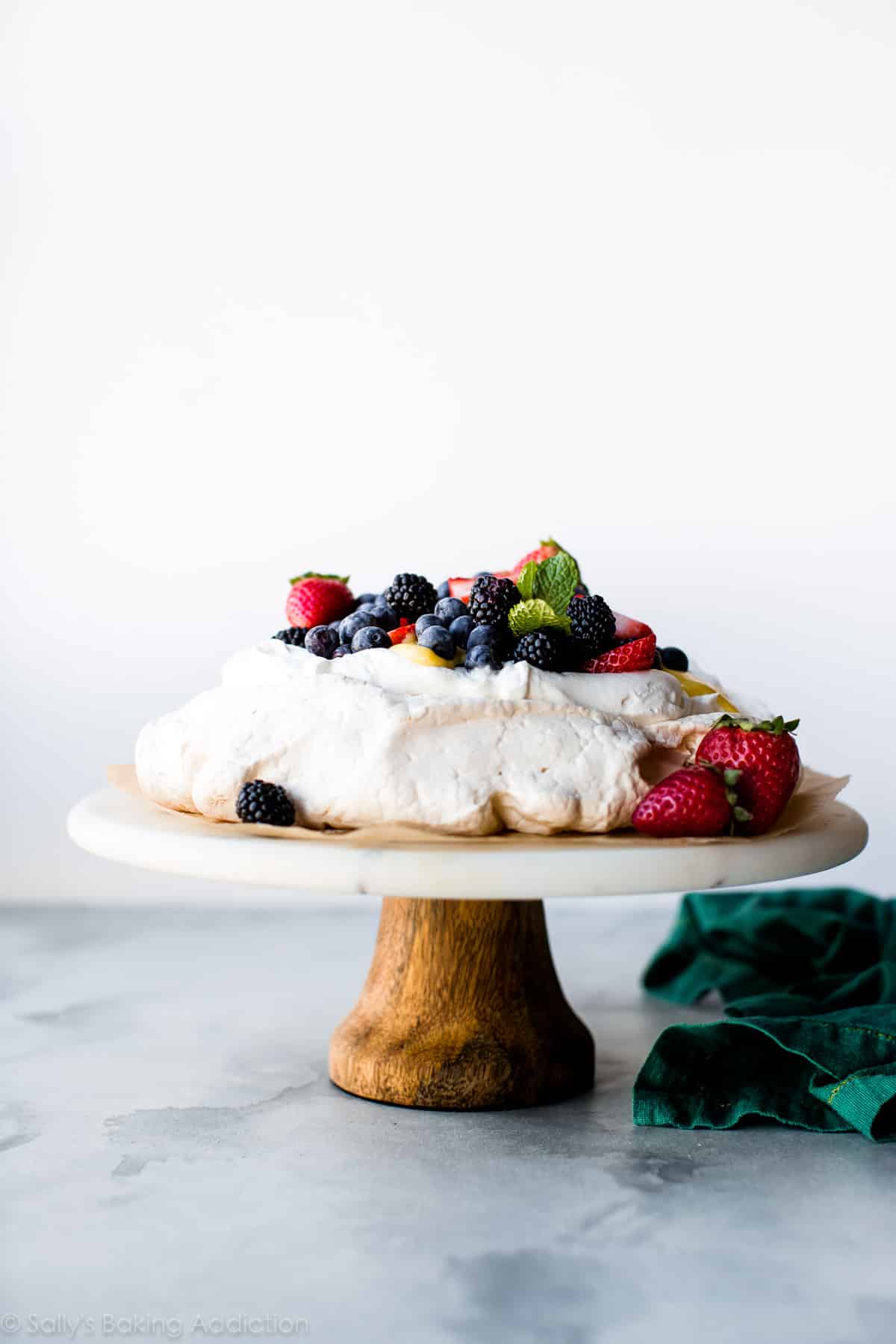
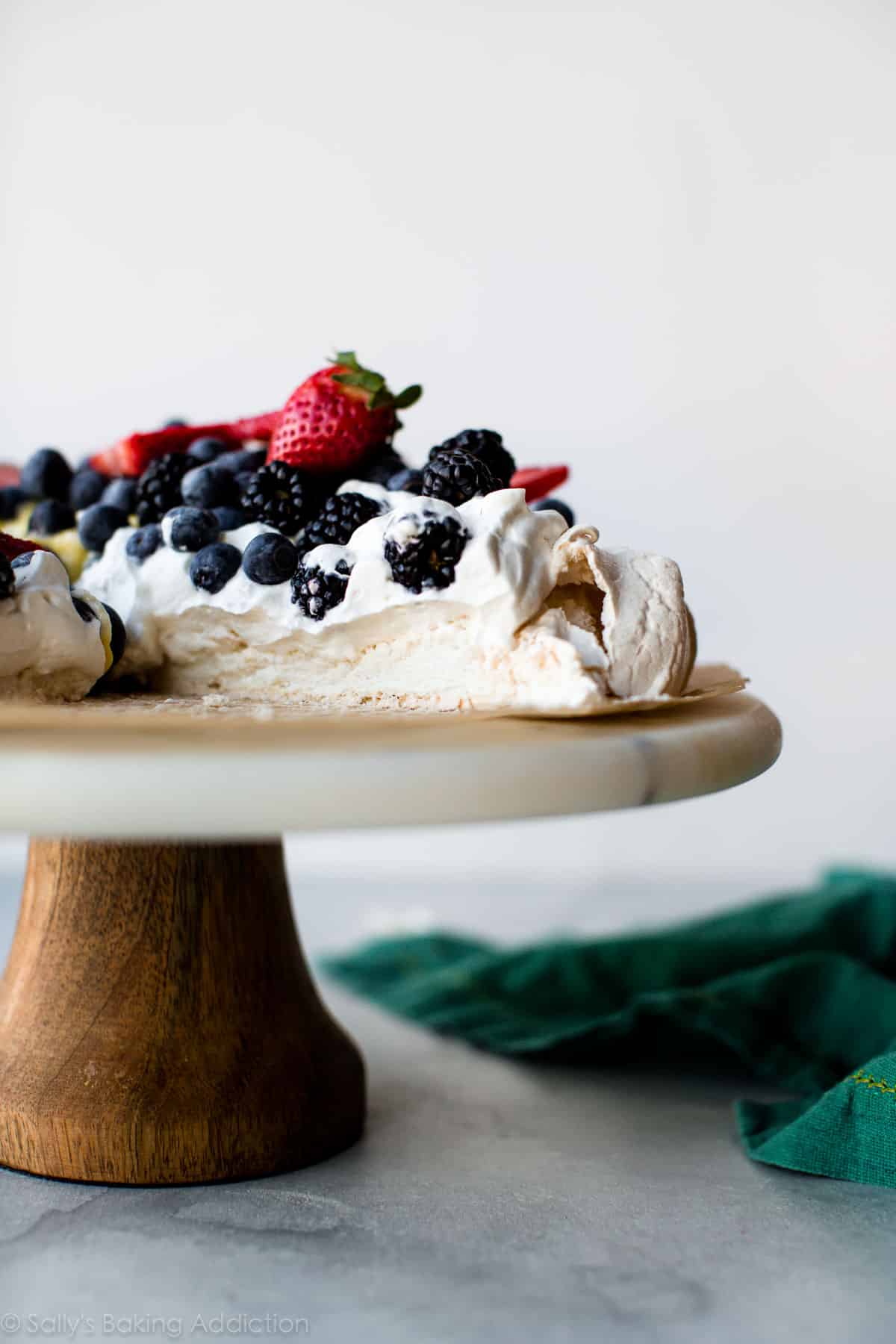
What is pavlova? Pavlova is a dessert popular in New Zealand and Australia. It’s not as common here in the states, but I hope to help change that! A texture lover’s dream come true, pavlova is made from egg whites that are slowly baked in a relatively cool oven. The egg whites take on a chewy-crisp texture on top, a soft marshmallow texture inside, and a crunchy crisp texture around the edges. That’s three completely different textures in one single bite. The crunchy edges are just like meringue cookies.
Pavlova loves to be dressed up with assorted toppings, mainly fresh whipped cream and piles of fresh fruit. Naturally gluten free, pavlova is light, sweet, and screams warm weather favorite. Happy spring, my friends, we’re making PAVLOVA!!
Video Tutorial: How to Make Pavlova
To obtain the unique pavlova texture, you must adhere to an exact recipe. While it’s fun to play around with ingredients, pavlova is not the time to stray from what’s listed. It’s picky, but picky doesn’t mean difficult. In fact, you only need 5 ingredients to make pavlova and I bet you have each in your kitchen right now:
- Egg whites
- Sugar
- An acid such as cream of tartar or vinegar
- Cornstarch
- Vanilla extract
Let me explain why these ingredients are used.
Pavlova Ingredients
- Egg whites – beaten into stiff peaks, egg whites are the base and volume of pavlova.
- Sugar – in addition to sweetening the dessert, sugar stabilizes the egg whites by holding them together both in the oven and as the whole pavlova cools. Without sugar, the protein molecules (science!) in egg whites will collapse. Additionally, sugar helps achieve the delightfully crisp texture. (Sugar is so much more than a sweetener in our baked goods.) Speaking of sugar, make sure that you use superfine or caster sugar. Just pulse sugar a few times in a food processor to reduce the size of the crystals.
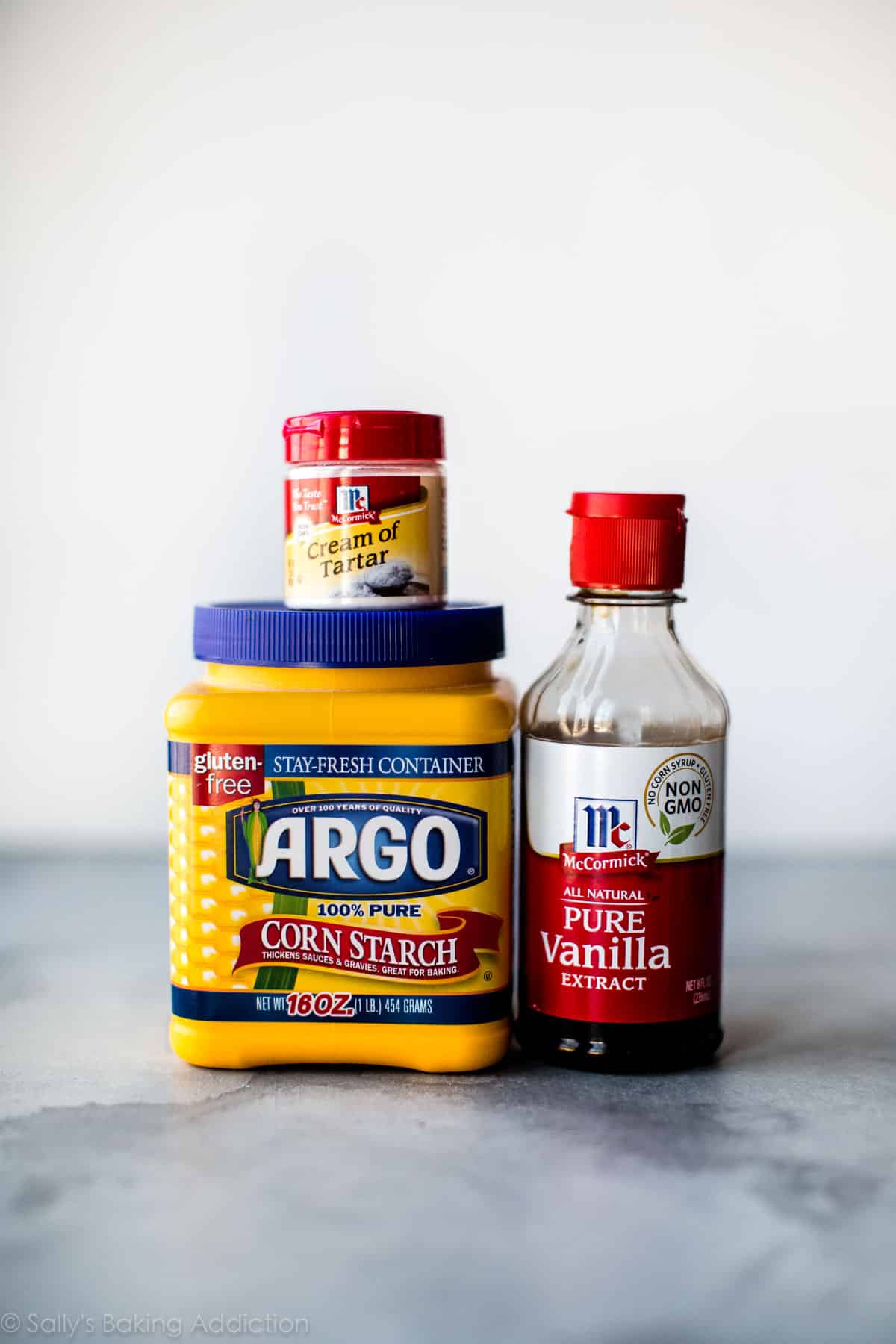
- Acid – you can use 1/2 teaspoon of cream of tartar or 1 teaspoon white, apple cider vinegar, or even lemon juice. The pavlova will NOT taste like vinegar, I promise. The acid helps the egg whites hold onto air and, like the sugar, helps prevent the egg whites from collapsing. I tested with both and I actually prefer cream of tartar. I found that my pavlova spread a bit more when I used liquid acid.
- Cornstarch – I tested pav with and without cornstarch. I found that the center was fluffier and more marshmallow-y with cornstarch. Then I tested with 1 teaspoon cornstarch and 2 teaspoons cornstarch. I found it was a little chalky tasting with 2 teaspoons. I’m sticking to 1 teaspoon.
- Vanilla extract – purely for flavor!
(Not sponsored by any of these companies, but here’s exactly what I use.)
Ingredients are simple and method is effortless. There’s plenty of downtime when making pavlova. All you really have to do is watch it beat in your stand mixer then check on it in your oven. Kick your feet up!
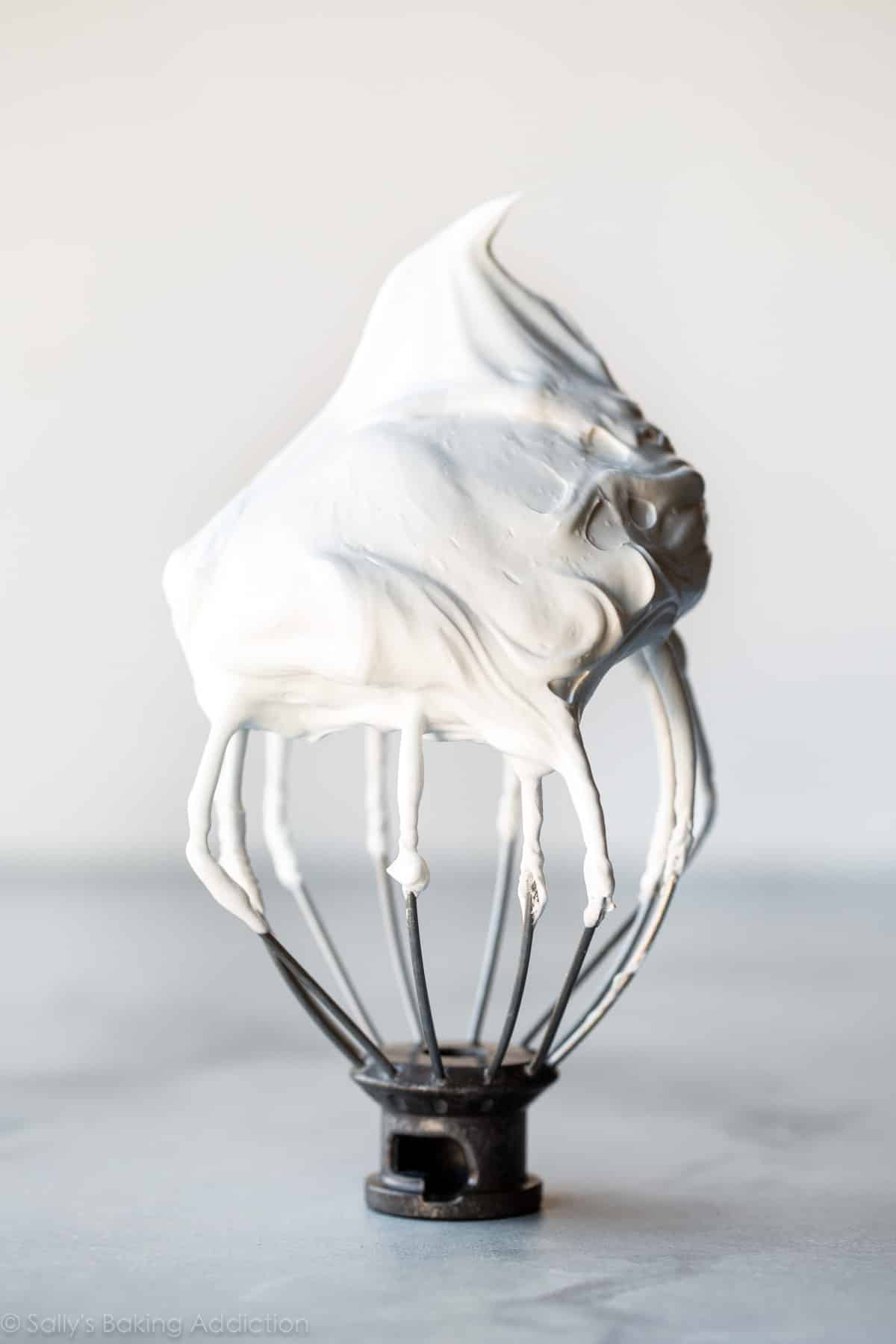
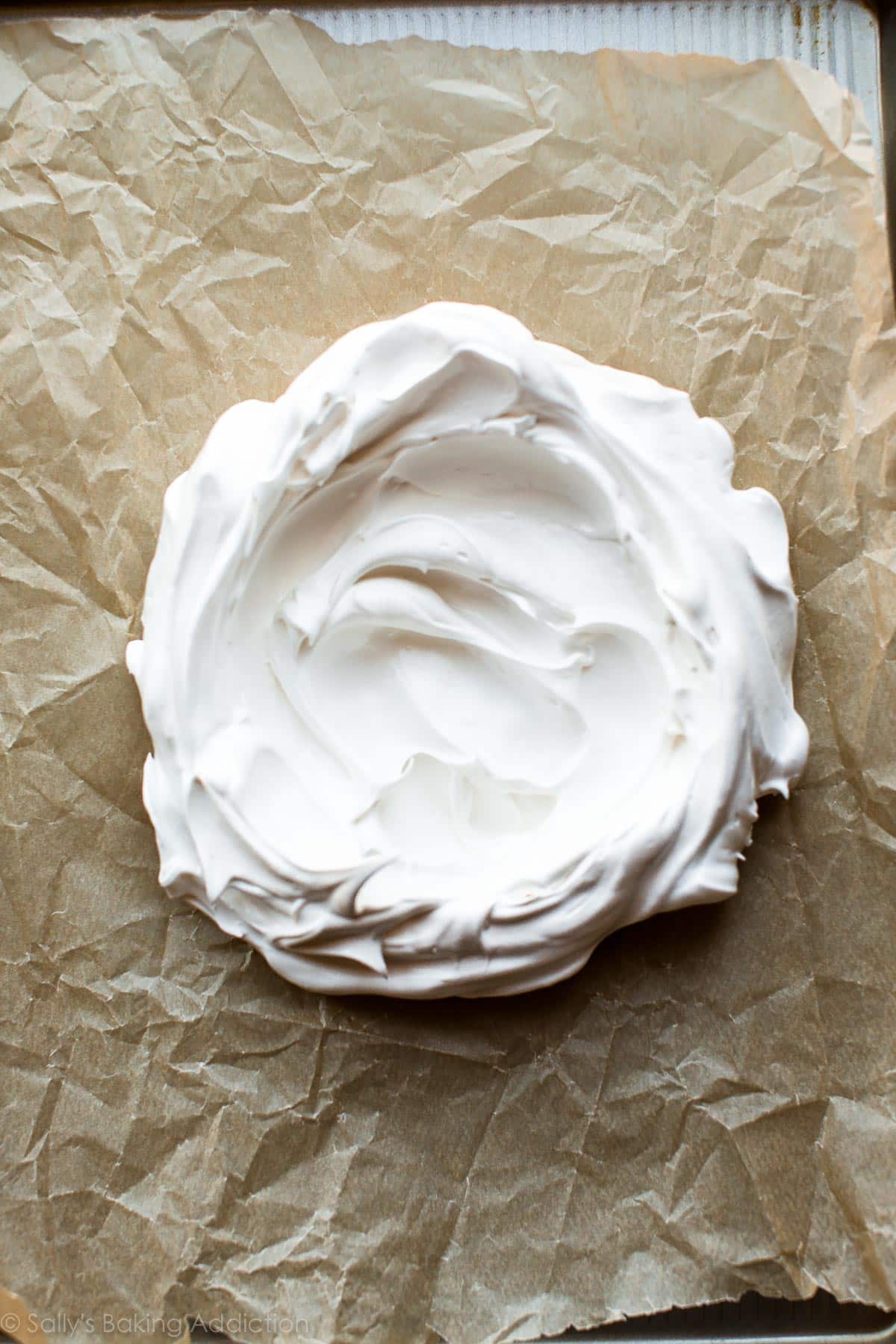
Just like our chocolate swirled meringue cookies and the meringue on our lemon meringue pie, whip the egg whites into super stiff peaks. Stiff enough that you can hold the whisk over your head and feel confident that the whipped egg whites won’t drop. 😉 Then you’ll spread the pavlova mixture onto your lined baking pan. You can use parchment paper or a silicone baking mat. Do not grease the baking pan—use a nonstick surface instead. Spread it into a circle, about 8-9 inches in diameter. You can eyeball it or trace one with a pencil. I just eyeball it. Like I did in the lemon meringue pie video, use the back of a spoon to create decorative peaks. Make sure the edges are tall and you have a nice dip in the center. That’s where we’ll pile our whipped cream and fruit!
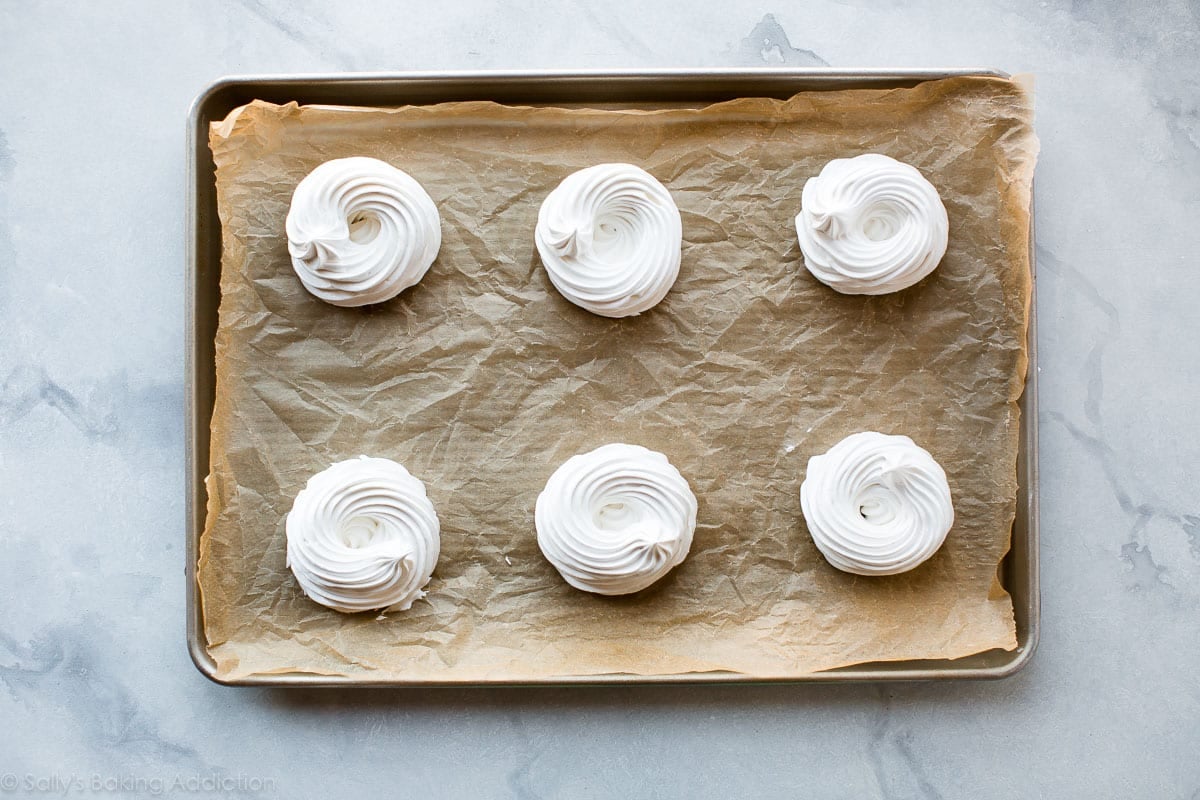
Alternatively, you can make mini pavlovas. Here I piped the mixture into 6 mini pavlovas using Ateco 849. A piping tip isn’t necessary—you can just spoon it on. Again, make sure you leave a dip in the center to hold the toppings.
A relatively cooler oven is imperative for properly cooking your pavlova, but let’s start the pavlova at 350°F (177°C) then reduce it down to 200°F (93°C). I do this to help “set” the outer crust quickly. This trick helps reduce spread.
A properly cooked pav is pale in color. Cracks and bumps are par for the course, but the pavlova shouldn’t completely deflate. Especially if you follow the precise measurements and instructions in the recipe. You can help avoid too many cracks by cooling the pavlova in the oven. The sudden change of temperature (inside the oven to outside the oven) shocks the pavlova, so it’s best to cool inside the cooling oven.
Make sense?
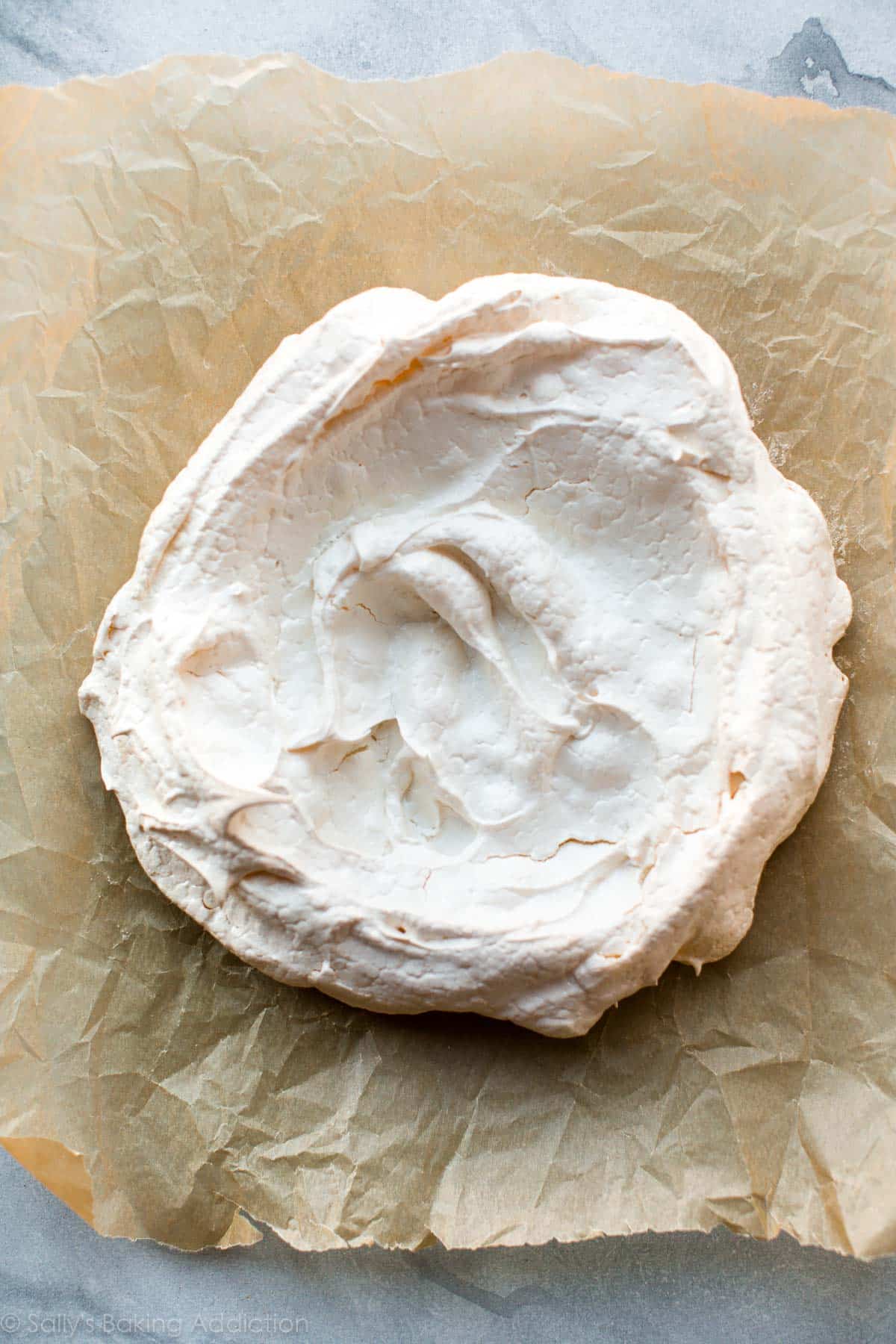
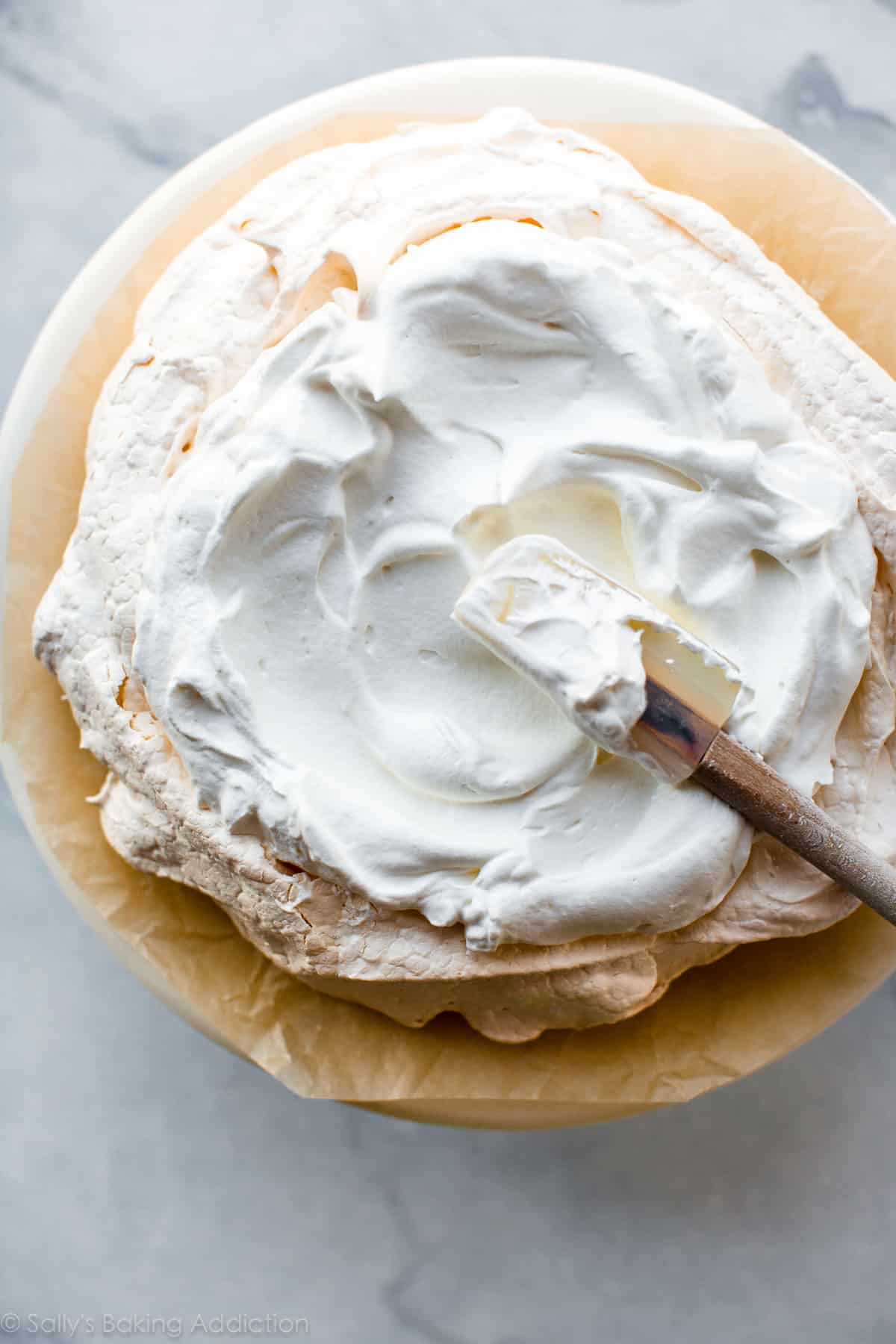
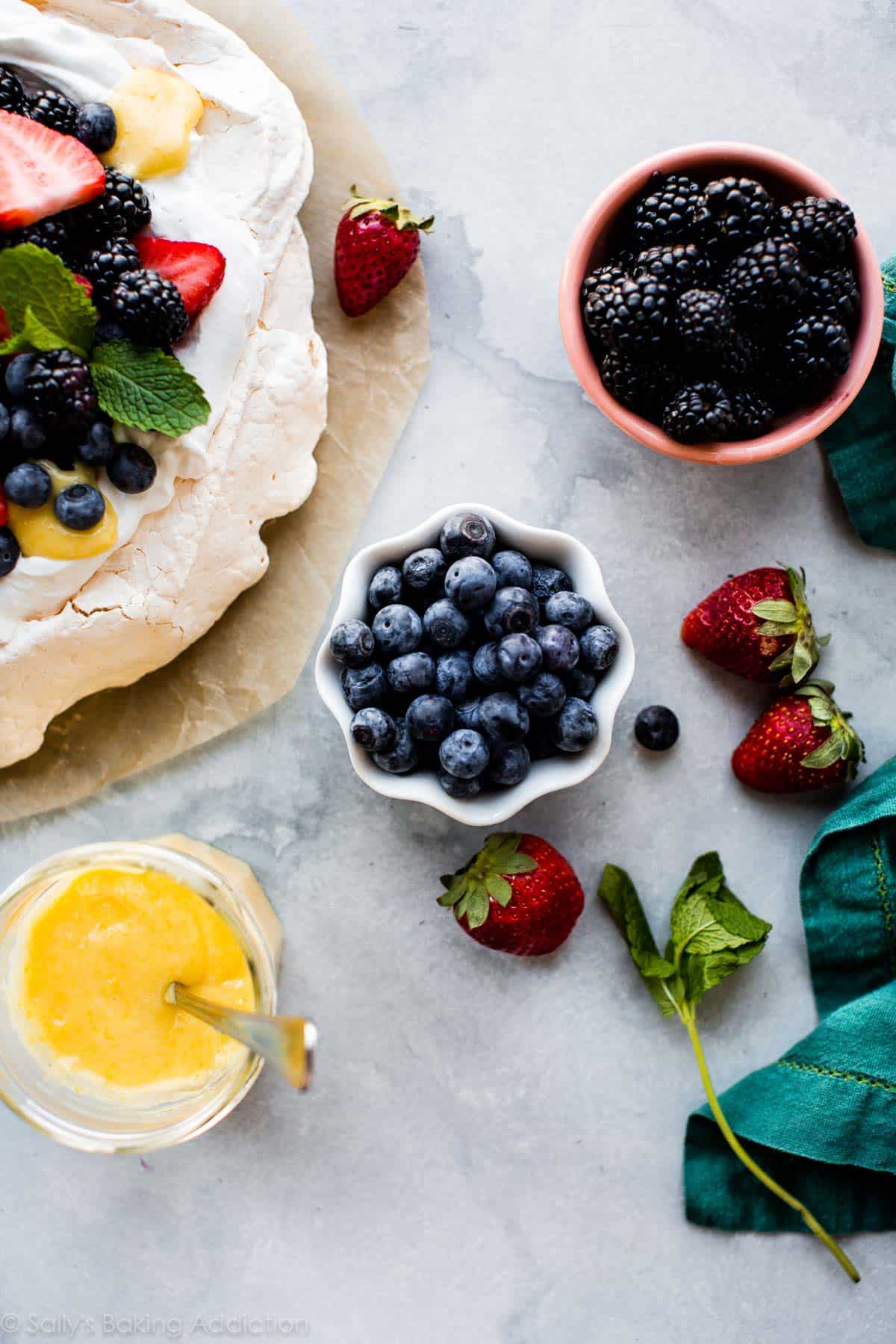
You can top your pavlova or mini pavlovas any which way, but here are some of my topping suggestions:
- Whipped cream is essential. You can get a little creative and flavor your whipped cream.
- Homemade lemon curd. You’ll have exactly 4 egg yolks left over anyway!
- A lot of fresh berries… enough to make a fruit pizza jealous!
- Edible florals and herbs
- Strawberry sauce, raspberry sauce, or blueberry sauce
- Chocolate shavings
- Seasonal fruits like mango, kiwi, passionfruit, blood oranges
No need to get artistic, just pile it all on top into a massive pavlova mountain.
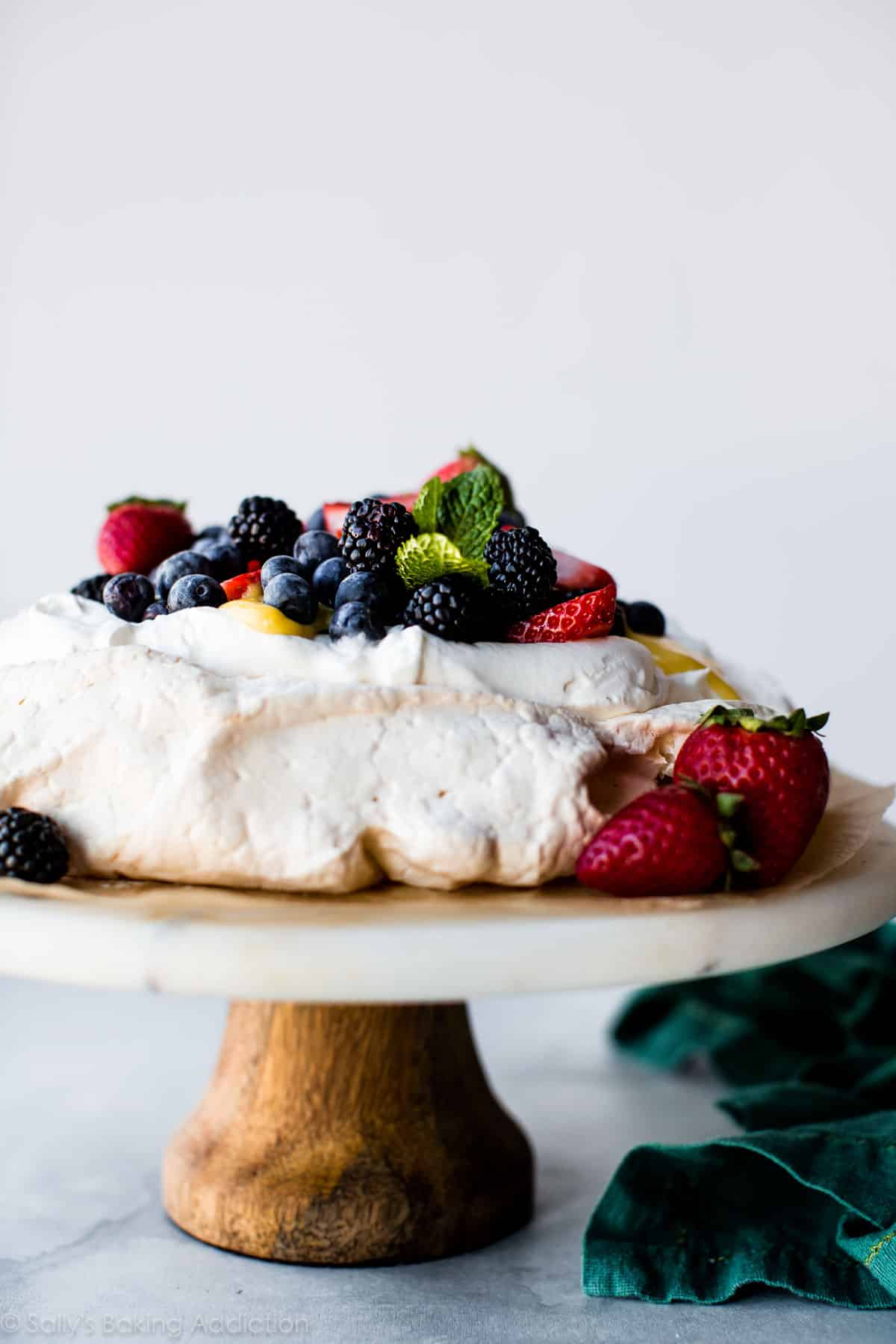
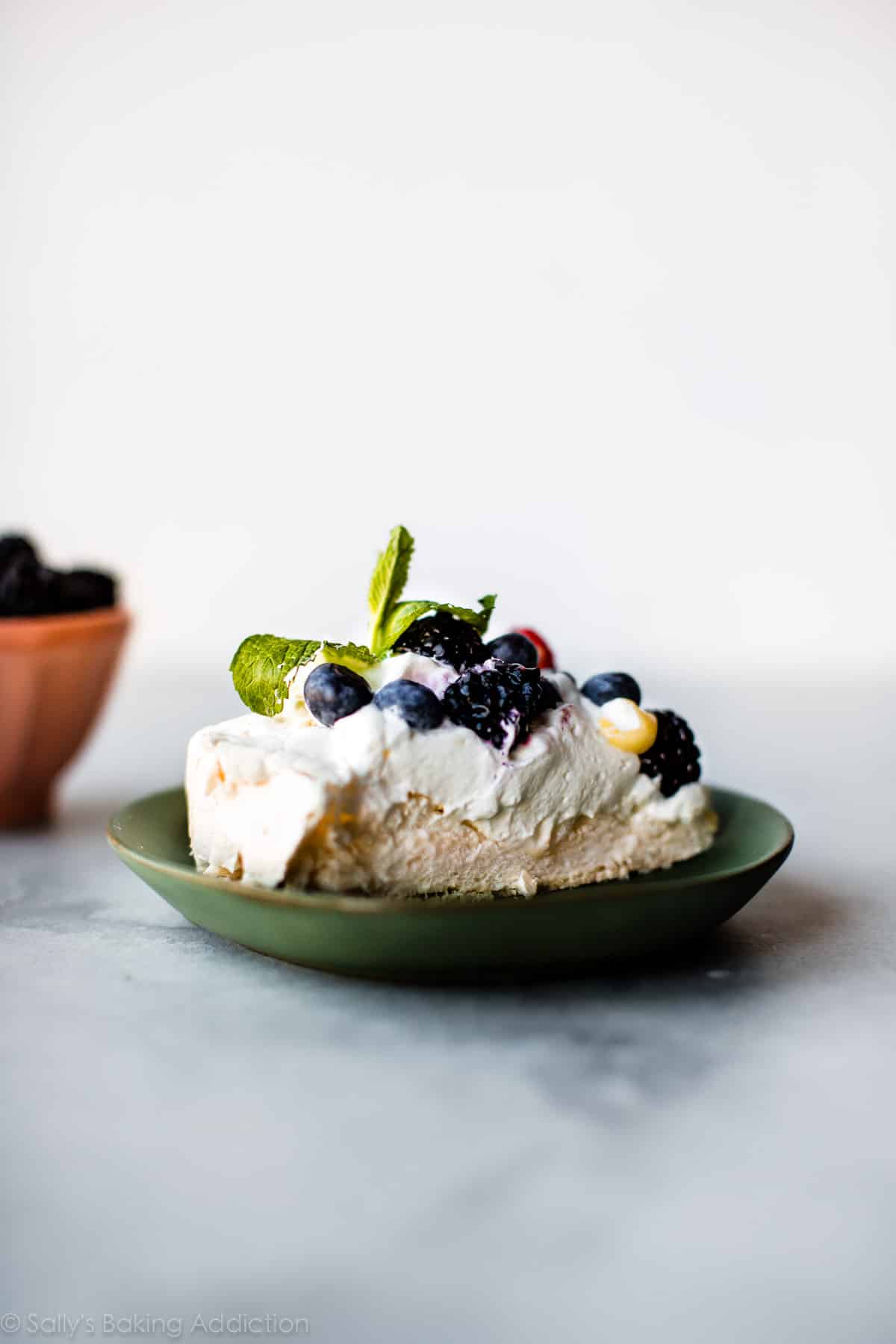
Things are bound to get a little messy when slicing, but if you cooked the pavlova long enough so that the bottom is crisp and the edges are set, it will hold a pie slice shape. This big thing serves about 8-10 people!
If you’re still on the fence about trying pavlova, might I remind you that the center tastes like marshmallows.
Have fun!
For more gluten-free baking inspiration, here are 40 gluten-free dessert recipes that are always a hit, including cranberry frangipane tart and flourless chocolate cake.
Print
Pavlova
- Prep Time: 20 minutes
- Cook Time: 90 minutes
- Total Time: 4 hours
- Yield: serves 8-10
- Category: Dessert
- Method: Baking
- Cuisine: New Zealand
Description
Pavlova is crisp on the edges, chewy on top, and marshmallow soft and creamy in the centers. Pile high with lemon curd, whipped cream, and fresh fruit to make a delicious, naturally gluten-free dessert!
Ingredients
- 4 large egg whites (use the yolks for lemon curd!)*
- 1 cup (200g) superfine sugar*
- 1 teaspoon pure vanilla extract
- 1/2 teaspoon cream of tartar*
- 1 teaspoon cornstarch
Toppings
- Homemade whipped cream, fresh fruit, strawberry topping, lemon curd, or any desired topping (see post for suggestions)
Instructions
- Preheat the oven to 350°F (177°C). Line a large baking sheet with parchment paper or a silicone baking mat. (Preliminary note: you will quickly reduce the oven to 200°F (93°C) in step 4.)
- With a handheld mixer or a stand mixer fitted with a whisk attachment, beat the egg whites on medium-high speed until soft peaks form, about 5 minutes. Add the sugar in 2 additions, beating for 30 seconds between. Once all of the sugar has been added, turn the mixer up to high speed and continue beating until glossy stiff peaks form, about 2 minutes. The peaks should be stiff enough that you can hold the whisk upright and the peaks won’t move. Add the vanilla extract and beat for 1 more minute. The peaks should still be very stiff. If not, keep on mixing on high speed. Using a rubber spatula, fold in the cream of tartar and cornstarch.
- Spread the pavlova mixture into an 8-9-inch circle (see note for mini size). You can make decorative peaks with the back of a large spoon if desired. Make sure the edges are relatively tall and there is a nice dip in the center.
- Place pavlova in the oven. As soon as you close the oven door, reduce heat to 200°F (93°C). The pavlova will stay in the oven as it cools down to 200°F (93°C). Bake until the pavlova is firm and dry, about 90 minutes total. Rotate the baking sheet if you notice some spots browning. Try to limit how many times you open the oven as the cool air will interrupt the baking.
- Turn the oven off and let the pavlova cool inside the oven. Once the pavlova is cool, you can store it covered at room temperature for up to 2 days. Or serve right away.
- Once cool, top the pavlova with whipped cream and assorted toppings. Slice and serve.
Notes
- Make Ahead Instructions: See step 5 for making the pavlova in advance. Pavlova is best enjoyed right after it’s garnished. It doesn’t freeze well.
- Special Tools (affiliate links): Electric Mixer (Handheld or Stand) | Baking Sheet | Silicone Baking Mat or Parchment Paper | Marble Cake Stand or Serving Platter
- Egg Whites: (1) Room temperature egg whites whip faster than cold egg whites. And (2) room temperature egg whites whip into a greater volume than cold egg whites. So make sure your egg whites are at room temperature before beginning.
- Sugar: Superfine sugar dissolves easier into egg whites. To avoid tasting sugar granules, pulse 1 cup granulated sugar a few times in a food processor. You now have superfine sugar to use in the recipe.
- Acid: You can use 1/2 teaspoon of cream of tartar or 1 teaspoon of white vinegar, apple cider vinegar, or lemon juice.
- Mini Pavlovas: Divide pavlova mixture up into individual portions instead of spreading into one large 8-9-inch circle. In the photos, I piped the mixture into 6 mini pavlovas using Ateco 849. A piping tip isn’t necessary—you can just spoon it on. Make sure you leave a dip in the center to hold the toppings. Bake time depends on size, see step 4 for what to look for. If making 6 mini pavlovas like I did, bake for 35-40 minutes at 200°F (93°C). Start them in a 350°F (177°C) oven, like I do in this written recipe.
- Pavlova base from reader Laurel. Thanks, Laurel!







Reader Comments and Reviews
If Pavlina is stored at room temperature and whipped cream in fridge, once I’ve assembled the pavlova before dinner guests arrive, where do I store it?
Hi Karen, if possible, we’d recommend leaving the pavlova at room temperature, whipped cream in the refrigerator, and then topping right before serving.
I loved this sooooooooo much it was so good. thank you Sally <3
I made this for Easter. My father has esophageal dysphasia and swallowing is difficult for him. He loves strawberry shortcake, so I made this as a substitute with a strawberry sauce. Was nervous because my brother is a chef. Well, it came out perfectly. It was so easy. And it was melt in the mouth delicious. Used the yolks to make a flan – another soft and easy dessert! My recommendation- use an oven thermometer to know exactly the oven temperature. Helps baking come out right.
This has been my youngest daughter’s favorite birthday request for 40 years!!
Can I use powdered sugar instead of blending regular sugar?
Hi Tori, Powdered sugar is too fine and fluffy for the recipe. Superfine is best!
Is it possible to double the recipe for mixer and then just bake on two baking sheets, rotated halfway during baking time?
Hi Sanja, For best taste and texture (and best success!), we highly recommend making two batters/two batches instead of doubling all at once.
I’m not much of a baker, but we were going to a friend’s house for dinner and they asked us to bring the dessert. I can’t have dairy, so dessert is always a little different for me. But then I found this recipe and we looked like rock stars! 😀 Even without a stand mixer, we followed the instructions really closely and this turned out spectacular. We topped it with a plant-based hand whipped cream, strawberries, raspberries, blueberries, mango and the lemon curd recipe linked to in this recipe (only modification there was avocado butter). I honestly can’t believe it turned out so delicious. Maybe I’m a little bit of a baker after all!
So happy to hear that this pavlova was a hit for you, Amy!
This was amazing – so light and so delicious. A perfect accompaniment after a heavy meal. I will definitely make it again.
Hi Sally, I want to make Pavlova for Easter and would like to make ahead of time. In your notes #1, it says to see Step 5, but no instructions there for making in advance. Can you advise please. Thanks
Hi Sherry, Once the pavlova is cool, you can store it covered at room temperature for up to 2 days before serving. Hope this helps!
This is gorgeous and lush looking. Sally, every one of your recipes is perfect and I’ve followed you for years. Unfortunately sugar is poison in my system – I’m not diabetic – and I’m wondering if I can use superfine Lakanto monk fruit instead of sugar? Thank you.
Hi Lisa, We’d love to help but we are not trained in baking with sugar substitutes. For best taste and texture (and so you don’t waste your time trying to adapt this recipe since it may not work properly), it may be more useful to find a recipe that is specifically formulated for sugar substitutes. Thank you!
Flavor turned out great. Texture not so much. It never achieved that crisp crunch. The shape held up pretty well, but texture was mushy marshmallow cotton-candy like. I followed the time and temp, wondering if I didn’t cool it slowly enough? What part of the cooking process should the pavlova be crunchy?
Hi Maycie, Did you start baking this at a higher temperature? Starting the pavlova at 350°F (177°C), and then reducing it down to 200°F (93°C), is what helps to “set” the outer crust quickly. Hope this helps!
Easy recipe to follow with delicious results! This was my first pavlova (trying it out so I can use at my soon-to-be 11 year old daughter’s tea themed birthday party), and the directions made it so stress free. Thank you!
My daughter wanted to make this (Bluey), and we absolutely ADORED it. First time, but won’t be the last! Thank you for helping provide amazing memories in the kitchen!
We also are making this thanks to Bluey! How funny!
Me too, hahaha! And It’s so good!
Such a good recipe! Made it once before and am now being asked to make it again because of Bluey lol. Love how many comments here are because of the same.
Could I add cocoa powder to make it chocolate? If so, how much?
Hi K, we haven’t experimented with a chocolate variation – let us know if you give it a try!
I followed this recipe exactly as stated. I let it sit to cool in the oven for maybe 2 hours and there was ZERO cracking and the inside and outside were absolute perfection. Marshmallow insides and a thin layer of crunch on the outside. I didn’t have cream of tartar so I used white vinegar as suggested as an alternative – no issue. Topped it with lemon curd, fresh whipped cream, and all of the berries I had left over in the fridge. Definitely saving this as my go to pavlova base!
Can I substitute meringue powder somehow? I bought a huge container for some of my Christmas cookies and have an awful lot left over
Hi Liz! We don’t recommend meringue powder for this recipe, we really only use meringue powder for royal icing. It stays good for a while, usually, and sugar cookies are great any time of the year 🙂
Great pavlova! I used 1/2 tsp vanilla and 1/2 tsp orange blossom. However, I strongly disagree that it feeds 8-10. It’s possible that my friends and I eat more than others, but I’d say this feeds 4-6 – 6 with room temperature egg whites.
This is a great recipe but I wish you would have specified in the ingredients to use room temp egg whites. I didn’t see the bottom suggestion until too late.
I spend a lot of time in my kitchen, and I love to experiment with recipes. Sometimes my experiments are a flop and sometimes they are a hit. I came upon this Pavlova recipe after a failed attempt the week before. It was pure magic! I baked the meringue a day ahead, then assembled everything right before serving. Everyone, even two of my toughest critics, RAVED about it! It will definitely become a part of a regular rotation in my repertoire!
I am an experienced cook, but I have never made pavlova. I followed the instructions to make mini pavlovas. But they are taking much longer to become firm…. I used confectioner’s sugar rather than pulsing normal sugar, but I can’t imagine that’s the reason? I even raised the temp from 200 to 250, but they have been in almost 90 minutes (for the minis!_ and are still not firm. Why?
Hi Ruth, the egg whites will not reach glossy peaks if you use confectioners’ sugar. You still need the granules from superfine sugar.
I made this at my work party and it’s a hit! My coworkers have been requesting it. It does make the difference with sugar so make sure you follow instructions. Excellent recipe and I made it every year!
Hey Sally,
When should I put the toppings on my Pavolva?
Hi Anna Kelly, Once the pavlova is cool, you can add the toppings, slice, and serve. Enjoy!
Help! I’m an avid reader of your recipes and they always turn out perfectly! I followed this to a T but I’m getting NO PEAKS after adding sugar. Any ideas? I did use liquid egg whites from a carton – could that be the problem?
Hi Sarah! We haven’t tested this recipe with egg whites from a carton, but they can be more difficult to whip up. Additionally, is it a particularly humid day by you? Humidity can make meringue quite difficult.
I also used liquid egg whites like Sarah B and discovered they got to soft peaks faster than 5 minutes but once I added the sugar it took a LOT longer that 3 minutes to get to a consistency that would hold a shape — but they never got “stiff” like with fresh egg whites. So, I ditched the idea of mini-pavlovas because the meringue was not stiff enough. The hot oven did keep the pavlova in place on the baking sheet and it actually puffed up a bit more so I lost what little indention I had made. However, I’ll just pile the whipped cream up and load it with fruit and it will still be delicious.
Making this again (per the family’s request!) for Christmas Dinner! It’s a delicious and light ending to a heavy meal! I make the mini pavlovas and use a chocolate balsamic vinegar to drizzle over the Grand Marnier macerated berries!
Great recipe. Your tip on room temperature egg whites was new to me and made a difference. Thank you, as always your recipes deliver.
Pavlova was actually invented in New Zealand by farmers in the 1920s, published as a recipe in 1929.. The Aussies named & claimed it in 1934. Both were after the ballerina Anna Pavlova toured downunder.
I didn’t like that in step 1 you line a large baking sheet but when you put it in the oven it says to use a round pan.
Hi Jackson! When the recipe says “Spread the pavlova mixture into an 8-9-inch circle”, that is referring to the shape of the pavlova itself. The step by step photos above and the video should help for a visual 🙂
Can I put a hot filling in the pavlova? Does I have to wait until it cools. I would love to fill them with Southern Chess Pie filling! Just an idea I’ve had lately and I want the cookie top on it when cooled, just not sure it can go in hot. Will the pavlova melt with the heat?
I made this recipe several times, large and small. Easy and to die for. The lemon curd makes it outstanding! Thank you
Turned out perfectly. It was a big hit at my party.