
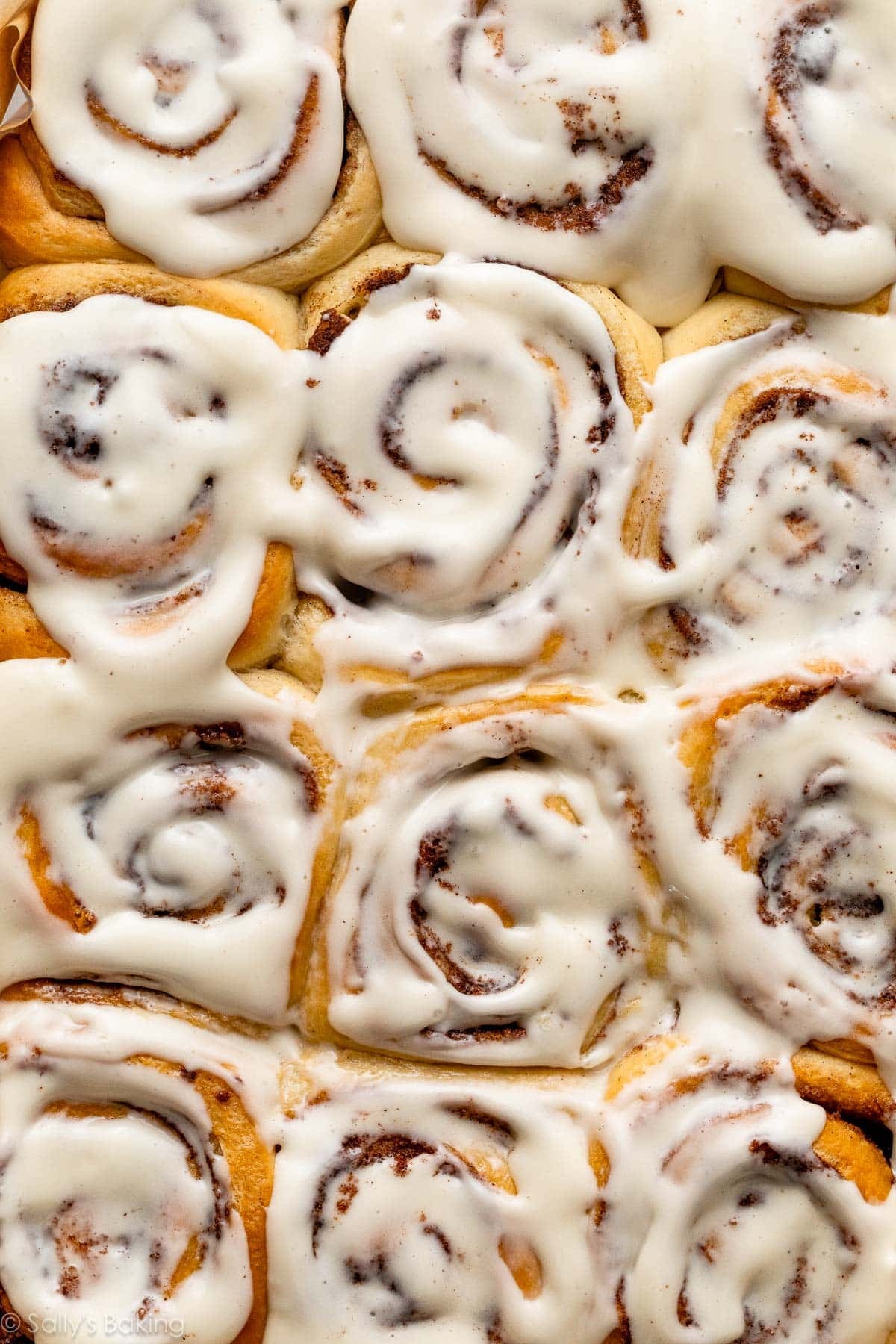
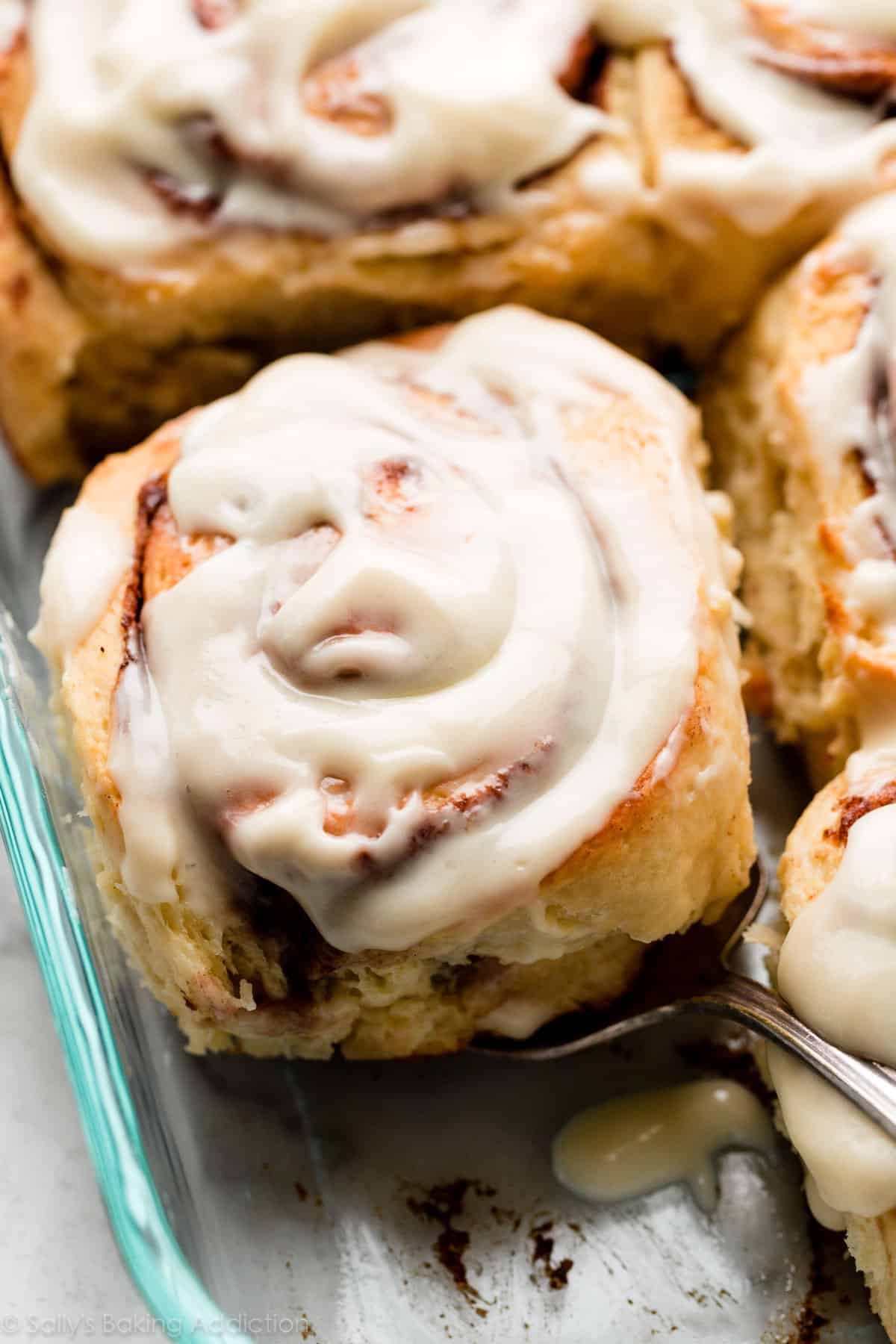
This recipe yields a pan of buttery soft, gooey cinnamon sweet, and extra fluffy homemade cinnamon rolls topped with tangy cream cheese icing. It’s been a reader favorite recipe for years and I love it so much that I turned this rich dough into apple cinnamon rolls, maple pecan sticky buns, maple cinnamon rolls, and even a cinnamon roll wreath. You can make the cinnamon rolls within a few hours or get started the night before using the overnight preparation option.
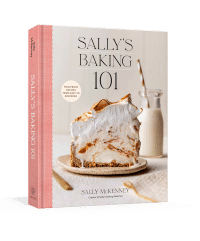
I originally published this recipe in 2014 and have since added new photos and a video tutorial, as well as more detailed instructions and success tips. This recipe is such a fan favorite, that it deserved a spot in print! You’ll also find this recipe in my cookbook, Sally’s Baking 101.
After making countless batches of these cinnamon rolls since I published the recipe many years ago, plus answering readers’ comments and questions, I thought it would be beneficial to update the post with more helpful information and success tips. Homemade cinnamon rolls are a popular breakfast choice, so I want to make sure you have all the resources you need for this classic recipe.
By the way, if you love this dough, be sure to try it as raspberry sweet rolls or strawberry sweet rolls with lemon glaze next. Or for a sprinkle loaded treat, my birthday cake cinnamon rolls use the same dough, too!
Tell Me About These Homemade Overnight Cinnamon Rolls
- Texture: This is one of my richest homemade doughs, so you’re already promised a soft, springy, and fluffy texture. I usually use all-purpose flour, but if you use the optional bread flour, your rolls will be a little chewier. I find that these homemade cinnamon rolls are even fluffier than my easy 1 rise cinnamon rolls (and that’s because there’s the additional rise here!).
- Flavor: The smell of warm cinnamon rolls is oh-so-irresistible and inviting. Once you take that first bite, you’ll enjoy a fresh homemade dough that’s swirled with endless pockets of (Cinnabon style!) sweet and gooey cinnamon.
- Ease: Homemade dough and shaped breads require more precision and effort than making say, a coffee cake. But the dough is pretty straightforward and simple to shape, as long as you have enough flour nearby for your hands, work surface, and rolling pin.
- Time: This dough requires 2 rises. Once you understand the assembly process, the prep moves pretty quickly. Set aside at least 4-5 hours from start to finish or divide between 2 days with the overnight option. Whichever method you choose, keep in mind most of that time is hands off as the dough rises.
If you are craving cinnamon rolls right now, and just can’t wait for dough to rise, try these no yeast cinnamon rolls!
What Readers are Saying:
“I HAD to come and leave this rave review. I just baked and iced these cinnamon rolls ay 9:05 am. It’s now 10:55 am in a household of only 3 people only two are left. This recipe is the best I’ve ever tried. ★★★★★” – Chelsea
“Delicious and easy to follow! This was my first time cooking with yeast and my first time making homemade cinnamon rolls and this was a great recipe to start with. Everyone at brunch was blown away. ★★★★★” – Hannah
“Delicious! I have tried many cinnamon roll recipes, and this is my new favorite. I prefer a roll that is large, more fluffy than dense/gooey, and buttery without being overly sweet. This fit the bill! ★★★★★” – Brice
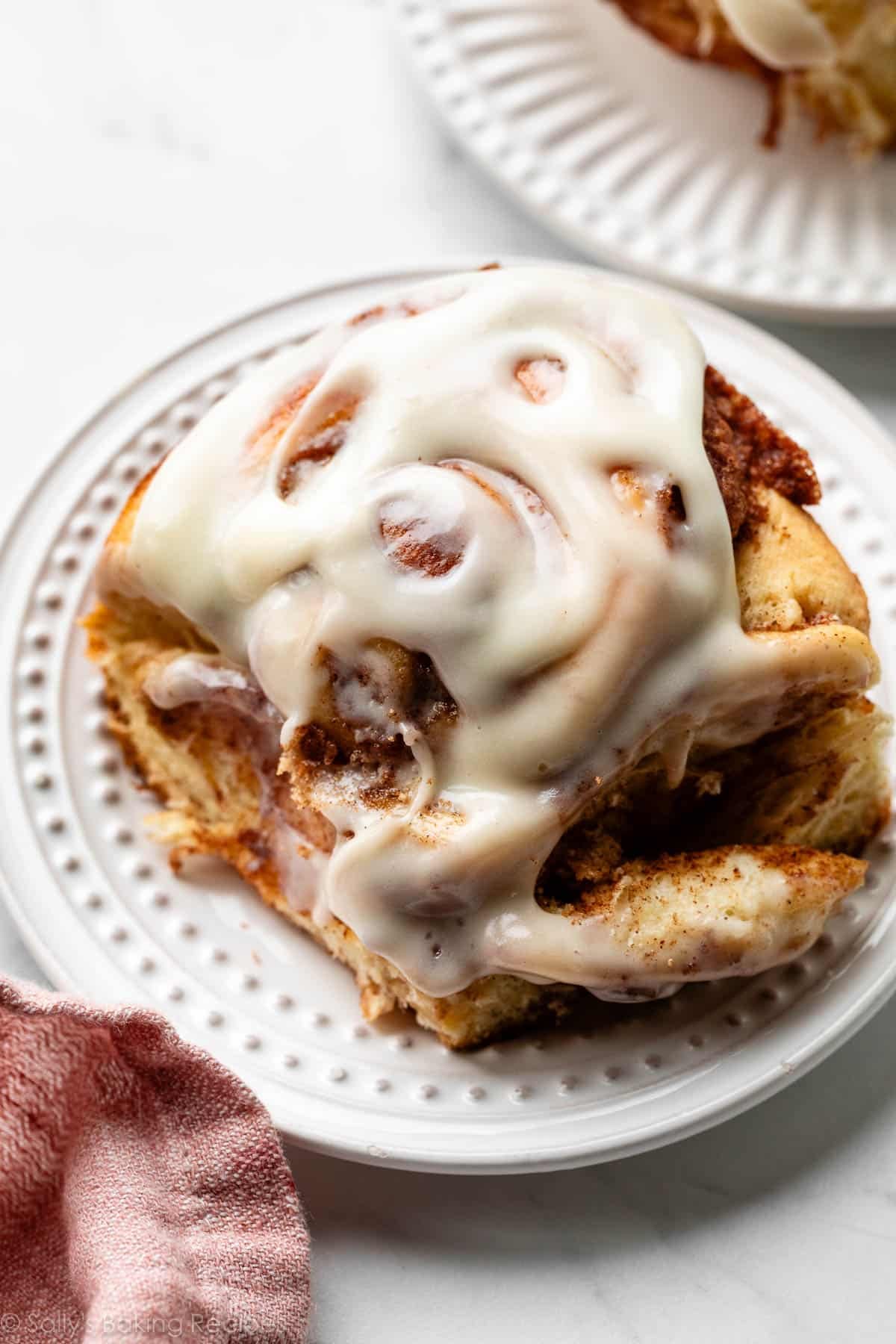
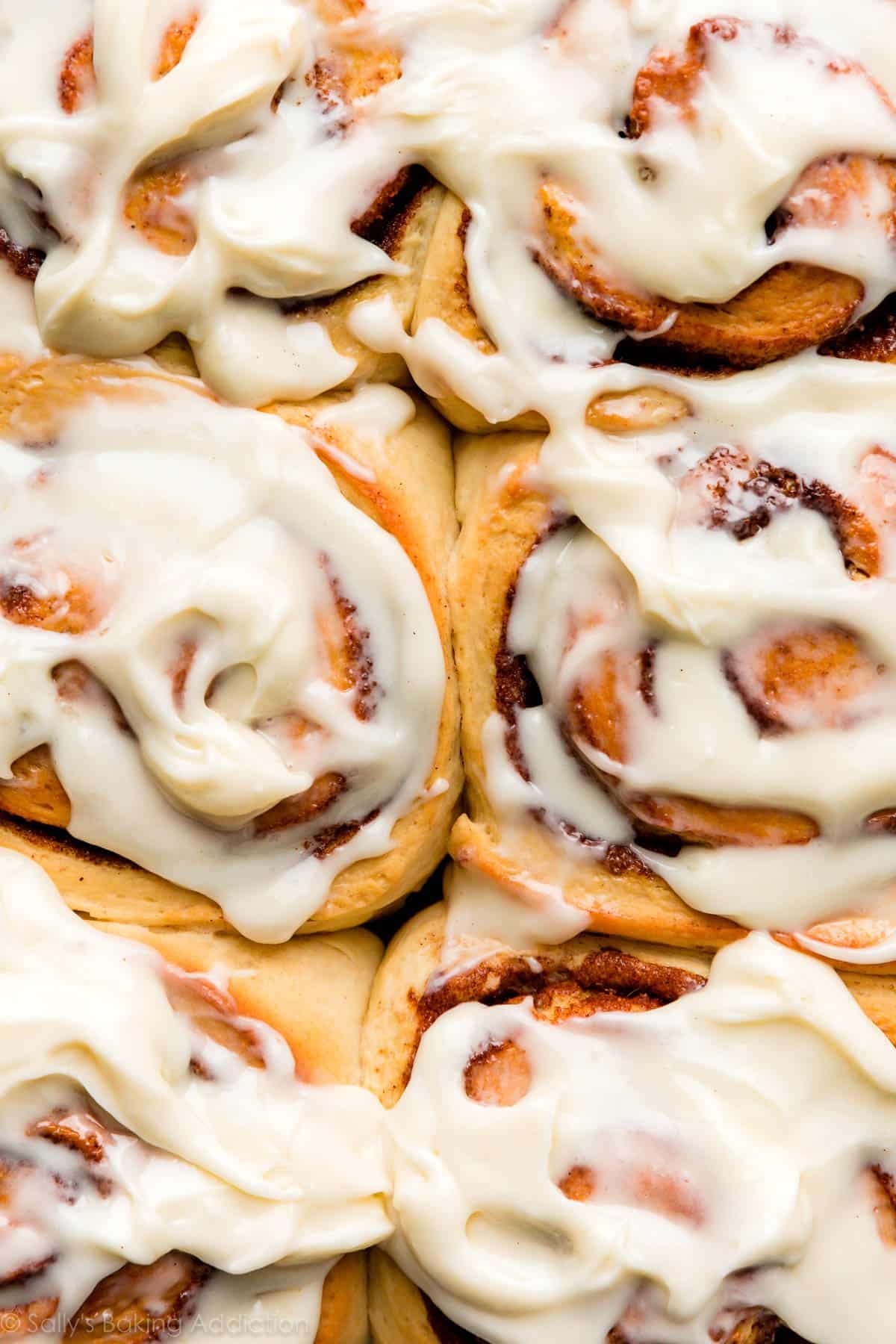
Are You A Yeast Beginner?
This Baking with Yeast Guide is a wonderful starting point for beginners. I answer many common yeast FAQs in easy-to-understand explanations, so you can learn the basics before beginning.
7 Crucial Ingredients in These Homemade Cinnamon Rolls
Feel free to skip straight to the recipe. But if you’re new to making bread, the following explanations are points that I’ve learned over the years and will be massively helpful.
- Whole milk: Whole milk is ideal for the richest tasting cinnamon rolls. Buttermilk works just as well without any changes to the recipe. Many readers have successfully substituted nondairy milks. In a pinch, you can use 2% or 1% milk, but do not use nonfat milk.
- Sugar: You need 2/3 cup of white granulated sugar in the dough. Use 2 Tablespoons in step 1 below (the proofing step), then add the rest in step 2.
- Yeast: You can use active dry or instant yeast. Follow the directions exactly as written regardless of which you choose. You’ll still proof the yeast in warm milk with some sugar even if you use instant yeast. This step ensures that the yeast is active and not expired. Most yeast these days is already active, but it’s a quick 5-10 minute step that prevents you from wasting your time just in case the yeast has expired. If using active dry yeast, the rise times will be a little longer. For the past 10+ years, my go-to brand has been Red Star Yeast. I always recommend Platinum Yeast from Red Star.
- Butter: This is a rich dough, meaning it has fat to help guarantee softness. Use 1/2 cup of softened butter and to help it blend easier, cut it into 4 pieces before adding.
- Eggs: Like butter, eggs promise a softer, richer dough.
- Salt: Dough is bland without salt.
- Flour: Flour is the structure of the dough. You can use either all-purpose flour or bread flour. You’ll notice the rolls are a little chewier if you use bread flour, which is exactly why we use it in recipes like these blueberry bagels. It’s not a huge difference, so don’t worry if you only have all-purpose flour. (That’s what I usually use!)
Note: You’ll notice that I use more yeast in this recipe compared to my easy cinnamon rolls. Why? These are much fluffier and larger—about twice the size.
Step-by-Step Photos
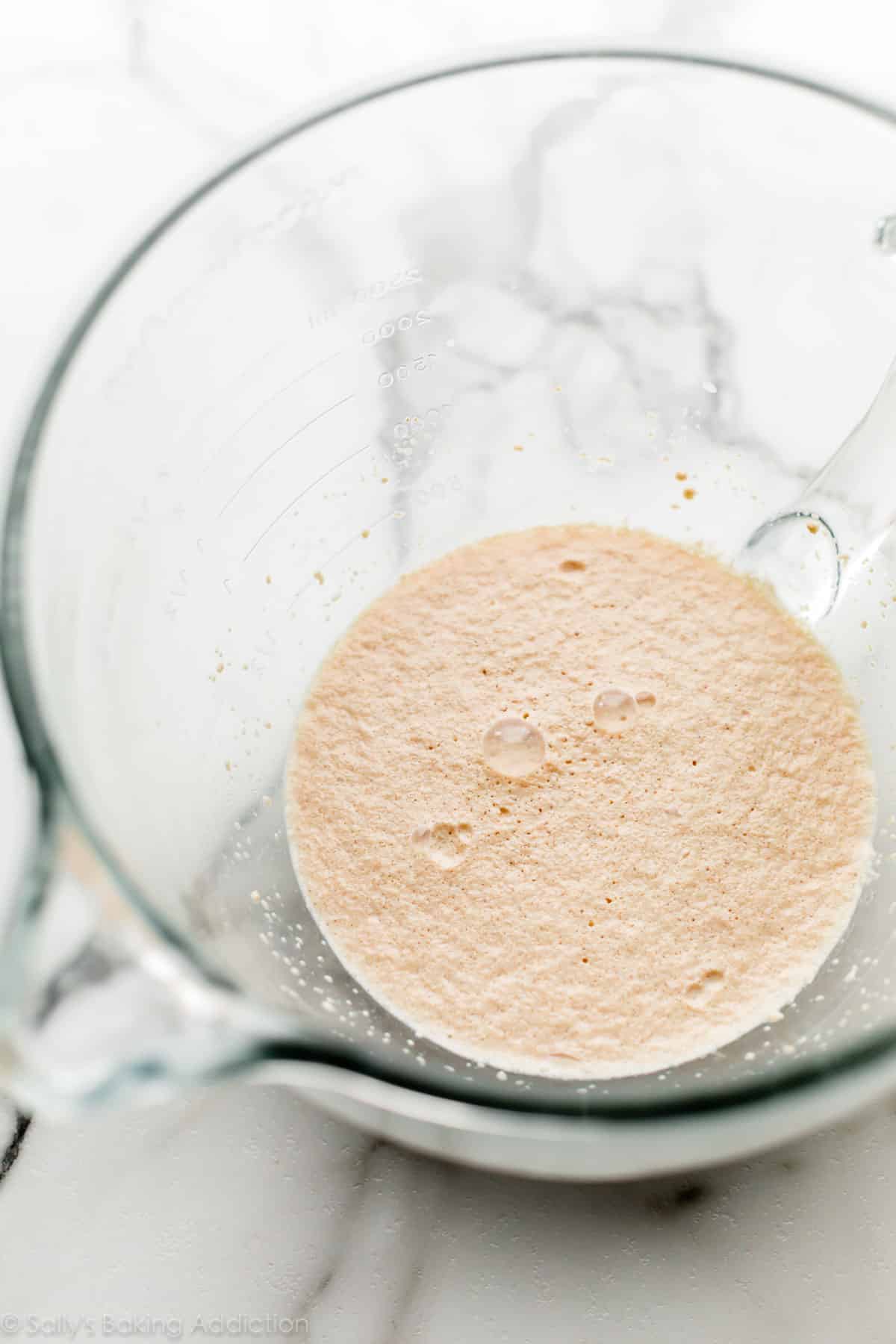
Here’s what you’re looking for after you let the warm milk, some of the sugar, and yeast sit for about 5-10 minutes. The top will be a little foamy:
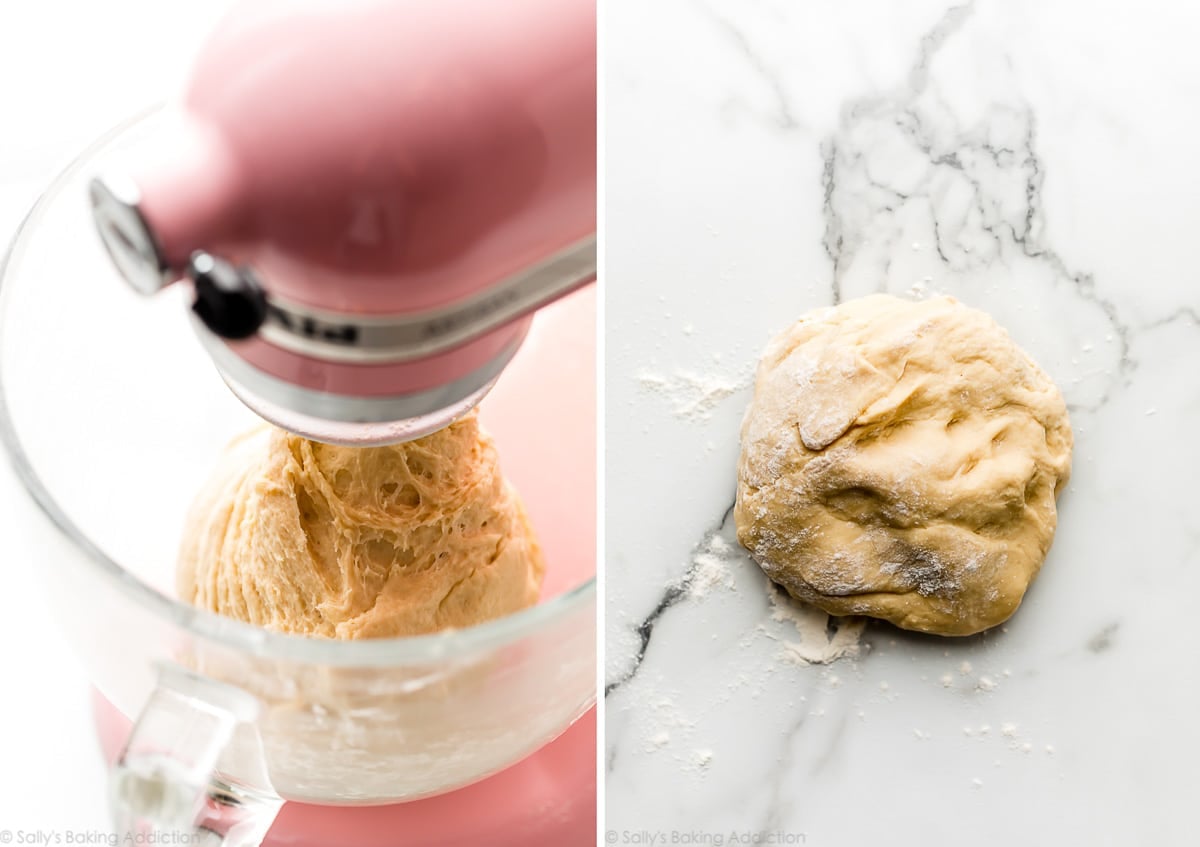
After the dough comes together, it will be a little soft and sticky—that’s normal. As explained in step 3 below, knead the dough on a floured counter or keep it in the mixer for kneading. If you’d like a visual of how to knead the dough by hand, you can watch the full video tutorial in my post on how to knead dough.
What If I Don’t Have a Stand Mixer? If you do not own a mixer, you can mix the dough together with a large wooden spoon/silicone spatula. It will take a bit of arm muscle. A hand mixer works, but the sticky dough repeatedly gets stuck in the beaters. Mixing by hand with a wooden spoon or silicone spatula is a better choice.
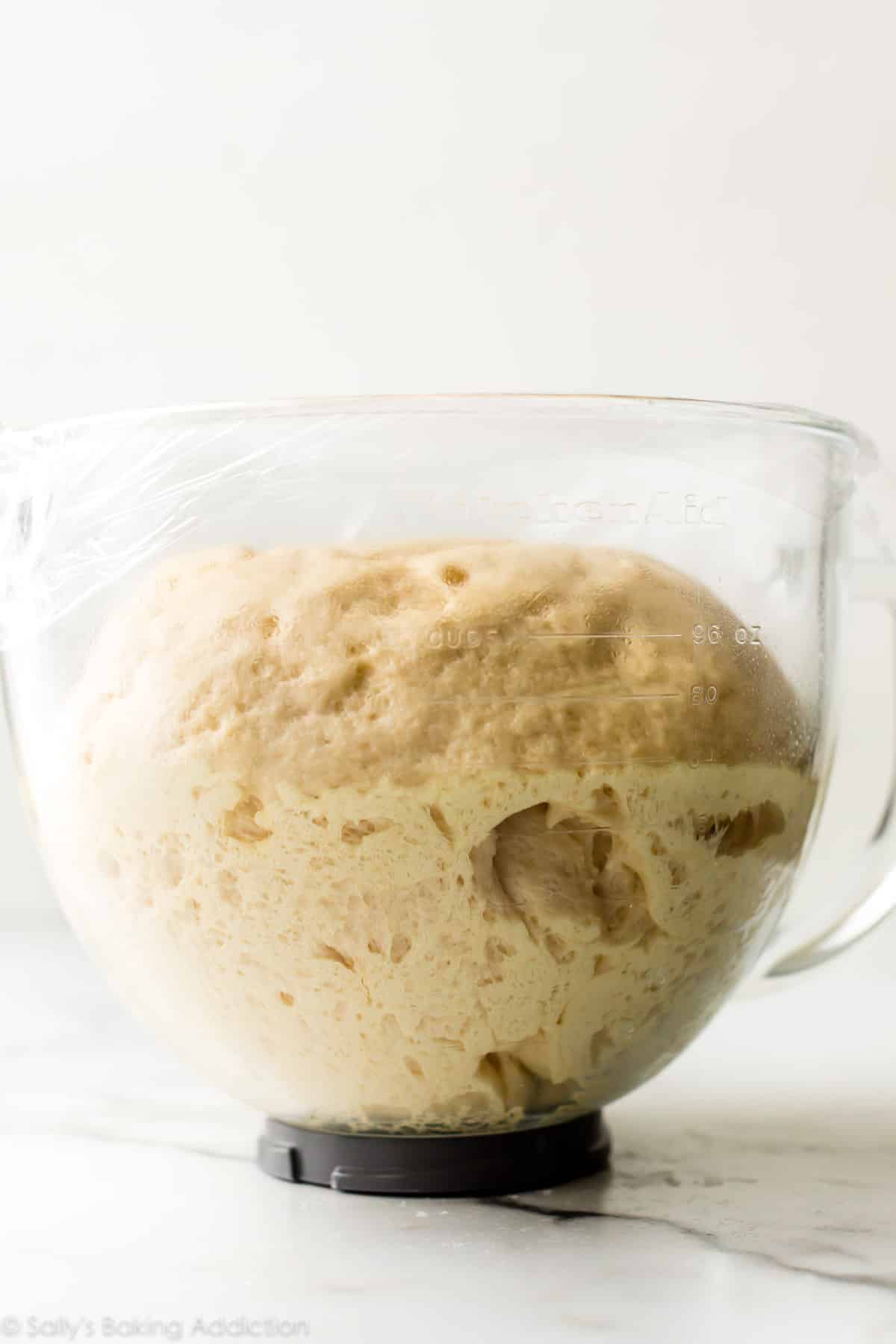
Let the dough rise until doubled in size:
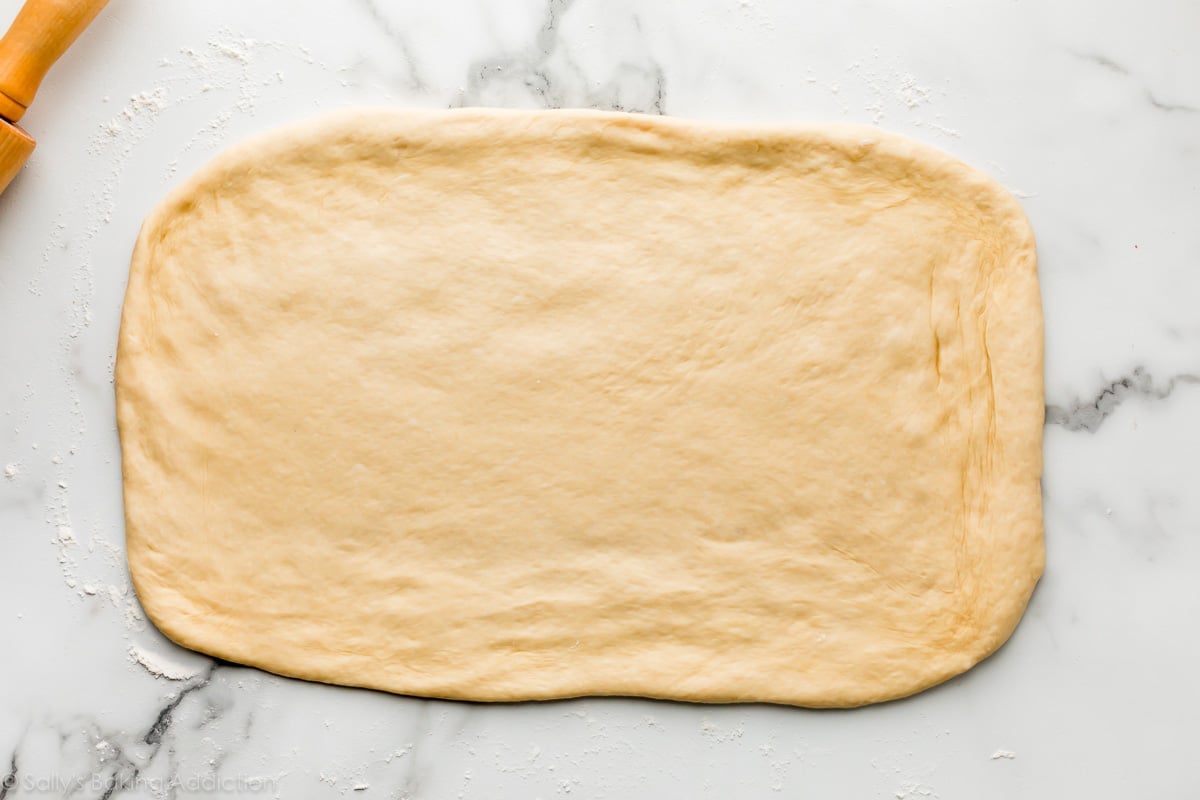
Punch the risen dough down and roll it out.
Baker’s Tip: If the dough keeps shrinking as you roll it out, stop what you’re doing, cover it lightly, and let it rest for 10 minutes to relax the gluten. When you return to the dough, it should stretch out much easier.
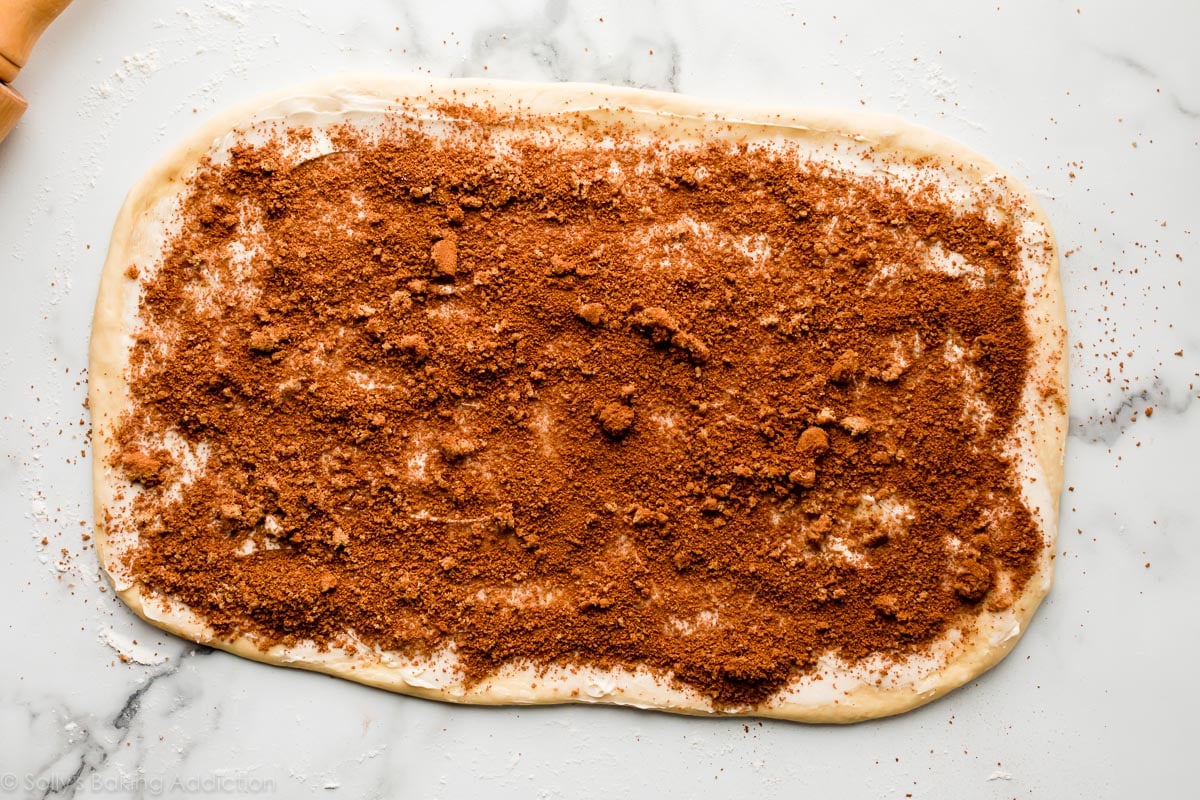
Spread softened butter on top, then sprinkle on a mixture of cinnamon and sugar (I use brown sugar, but you could use white granulated sugar if you prefer).
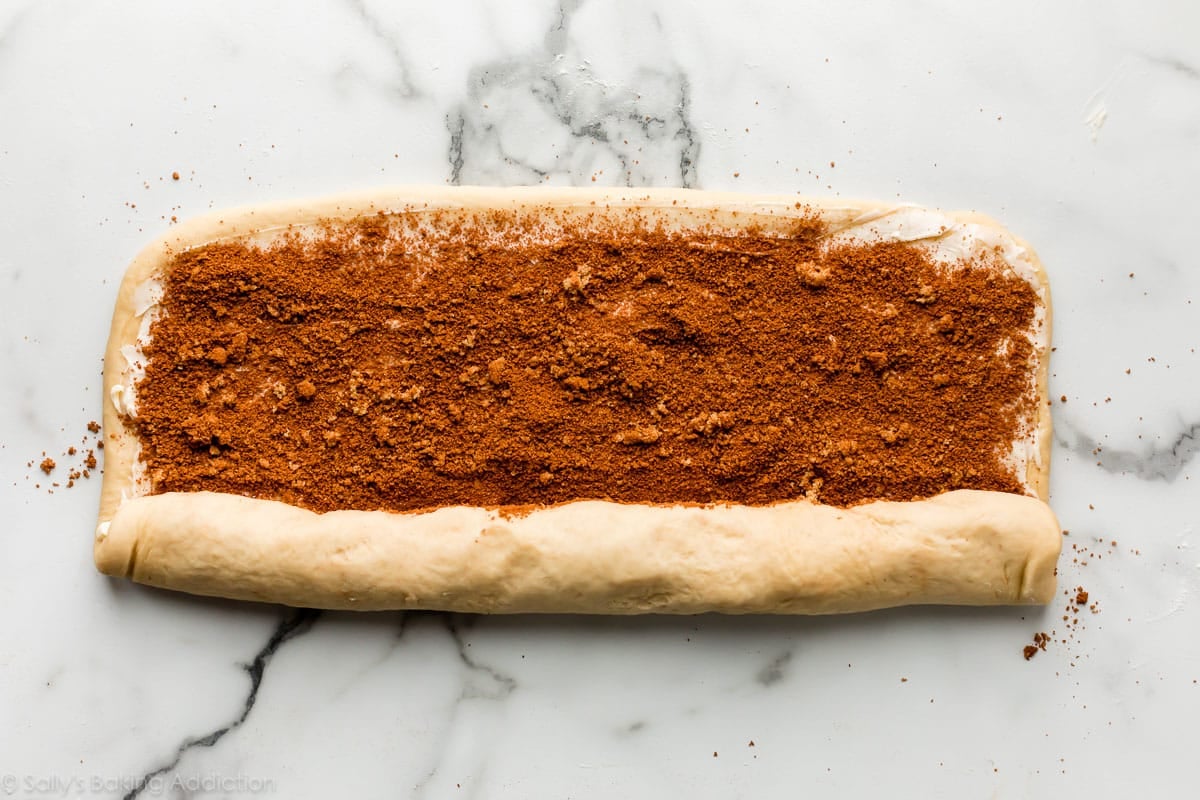
Roll it up:
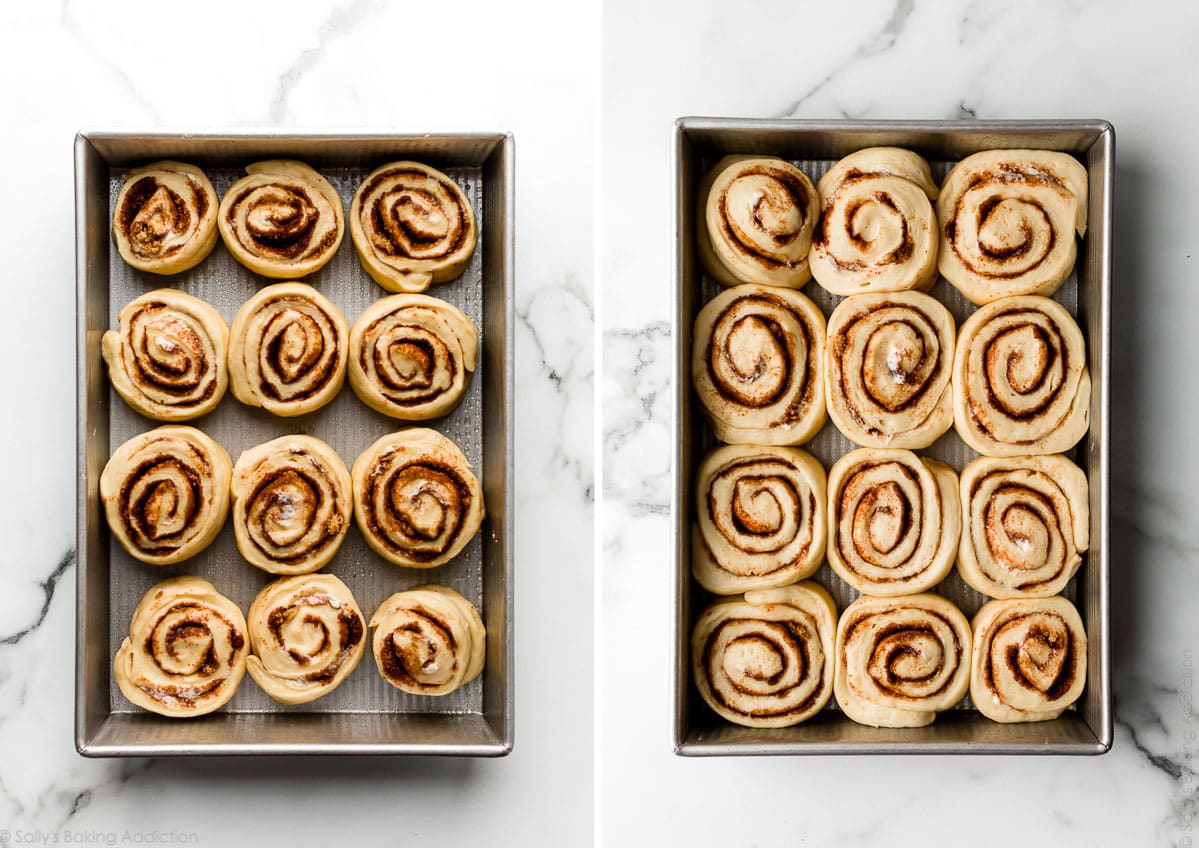
Use a very sharp knife to cut the roll into 12 rolls, each about 1.5 inches. Arrange in your greased baking pan, cover, then let the rolls rise until doubled in size and puffy, usually about 1 hour. The left photo is before rising and the right photo is after rising:
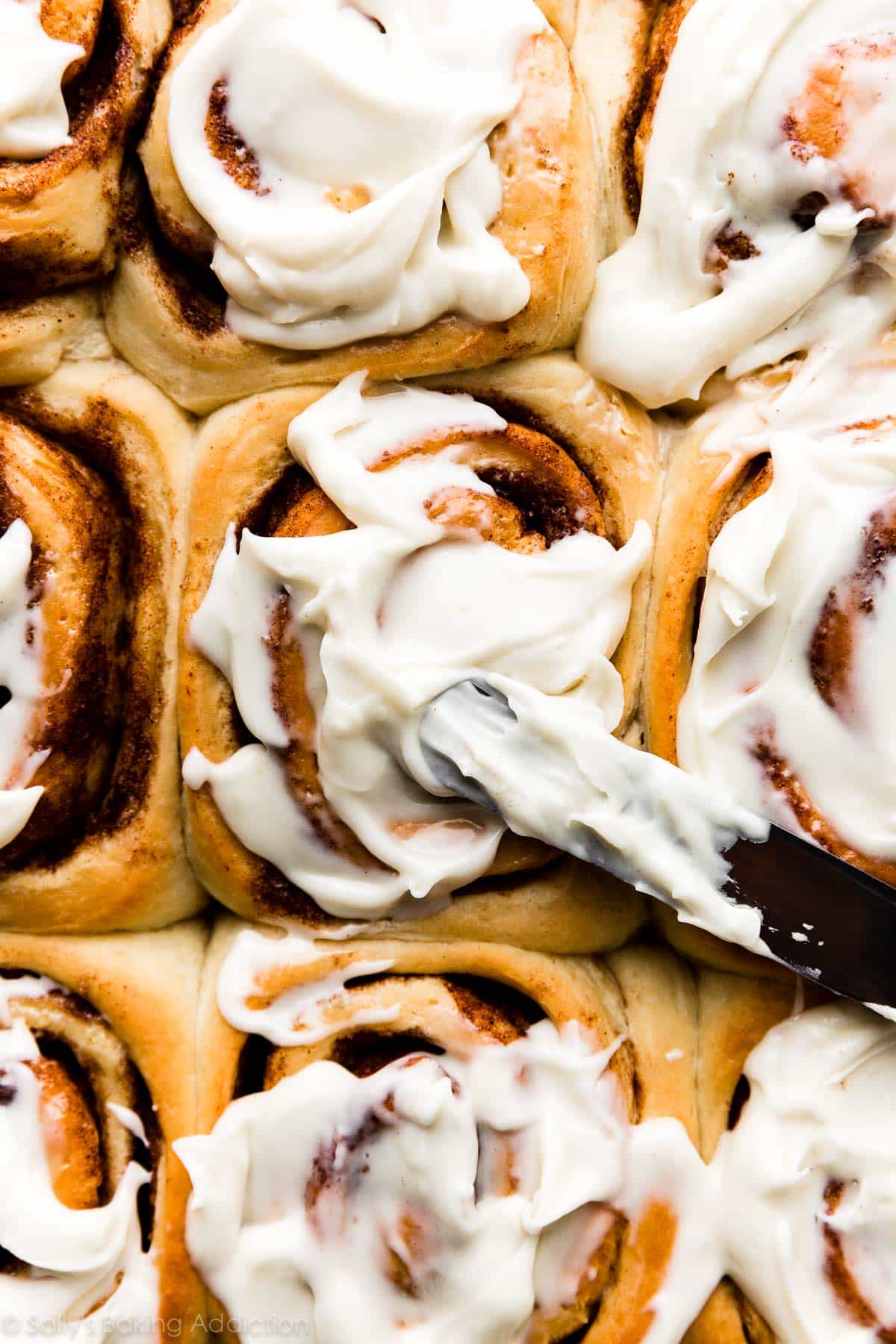
Bake the rolls and then make the tangy cream cheese icing to smother on top. If cream cheese isn’t your favorite, you could top the rolls with vanilla icing, the brown sugar icing from these pumpkin donuts, cinnamon cream cheese frosting from these gingerbread cinnamon rolls, maple icing from maple cinnamon rolls, or even the caramel icing from apple cinnamon rolls. Lots of options!
5 Success Tips
- Use brown sugar or granulated sugar in the filling: I used to use granulated sugar in the cinnamon sugar filling, but recently switched to brown sugar for extra flavor. Brown sugar doesn’t necessarily make the filling more moist—there’s also butter, so it’s moist and gooey either way. (I love the brown sugar filling so much I used it to create this cinnamon swirl cheesecake!) Use whichever sugar you prefer.
- Best pan to use: I recommend a 9×13-inch glass pan or metal pan. Avoid ceramic pans. If you must use ceramic, keep in mind that the rolls will likely take longer to bake through.
- Evenly baked cinnamon rolls: These are extra big and fluffy cinnamon rolls, so to help guarantee the centers AND tops cook evenly, tent a piece of aluminum foil over the rolls after about 15 minutes in the oven. This will protect the tops from browning too quickly before the centers can cook.
- Don’t have all morning to spend on this dough? Feel free to prep the dough the night before. This is a wonderful way to save time in the morning so you can wake up and eat sooner. See my make-ahead/overnight instructions in the written recipe below.
How to Freeze Homemade Cinnamon Rolls So They Still Taste Fresh
Let me share a tip I’ve learned after working with this dough for several years. You can prep the rolls and freeze them ahead of time so they still taste fresh.
- Here’s how: Bake the rolls in step 9 for only about 10 minutes. Cool completely, then cover and freeze. To serve, take the rolls out of the freezer and place in the refrigerator overnight to thaw. Once thawed, finish baking them for about 15-20 minutes.
I often use this method when I gift cinnamon rolls to others—just copy/paste or write these freezing instructions down. This method is also helpful if you have company over, want to cut down on time, or are entertaining. I like to make these cinnamon rolls ahead when I’m hosting holidays. For more inspiration to complete your menu, see my Easter brunch recipes, make-ahead Thanksgiving breakfast ideas, and Christmas breakfast ideas.
Print
Homemade Overnight Cinnamon Rolls
- Prep Time: 3 hours, 30 minutes (includes rises)
- Cook Time: 25 minutes
- Total Time: 4 hours (or overnight)
- Yield: 12 rolls
- Category: Breakfast
- Method: Baking
- Cuisine: American
Description
This recipe yields a pan of buttery soft, gooey cinnamon sweet, and extra fluffy homemade cinnamon rolls topped with tangy cream cheese icing. You can make the cinnamon rolls within a few hours or get started the night before using the overnight preparation option. This recipe is also in my cookbook, Sally’s Baking 101.
Ingredients
Dough
- 1 cup (240ml) whole milk, warmed to about 110°F (43°C)
- 2/3 cup (133g) granulated sugar, divided
- 1 and 1/2 Tablespoons (14g) active dry or instant yeast (2 standard packets)*
- 1/2 cup (8 Tbsp; 113g) unsalted butter, softened to room temperature and cut into 4 pieces
- 4 and 1/2 cups (563g) all-purpose flour or bread flour (spooned & leveled), plus more as needed
- 2 large eggs, at room temperature
- 1/2 teaspoon salt
- 2 teaspoons oil or butter for the bowl (or use nonstick spray)
Filling
- 1/2 cup (8 Tbsp; 113g) unsalted butter, softened to room temperature
- 2/3 cup (133g) packed light or dark brown sugar
- 1 and 1/2 Tablespoons ground cinnamon
Cream Cheese Icing
- 4 ounces (113g) full-fat brick cream cheese, softened to room temperature
- 1 cup (120g) confectioners’ sugar
- 1 Tablespoon (15ml) heavy cream or milk
- 1/2 teaspoon pure vanilla extract
Instructions
- Prepare the dough: Whisk the warm milk, 2 Tablespoons of sugar, and the yeast together in the bowl of your stand mixer fitted with a dough hook or paddle attachment. Cover and allow mixture to sit for 5–10 minutes or until foamy on the surface. *If you do not own a mixer, you can do this in a large mixing bowl and in the next step, mix the dough together with a large wooden spoon/silicone spatula. It will take a bit of arm muscle. A hand mixer works, but the sticky dough repeatedly gets stuck in the beaters. Mixing by hand with a wooden spoon or silicone spatula is a better choice.*
- Add the remaining sugar (1/2 cup or 100g) and the butter and beat on medium speed until the butter is slightly broken up. Add about 1 cup (125g) of the flour, the eggs, and salt and beat on low speed for 30 seconds. Scrape down the sides of the bowl, then add the remaining flour. Beat on medium speed until the dough comes together and pulls away from the sides of the bowl, about 2 minutes. Dough will be soft. If it seems too sticky and clings to the sides of the bowl instead of forming a rough mass around the dough hook or spoon, add more flour, 1 Tablespoon at a time, and continue to mix until the dough pulls away from the sides of the bowl but is still moist and tacky. If it feels dry and crumbly, add more milk, 1 teaspoon at a time, mixing well after each addition.
- Knead the dough: Keep the dough in the mixer (and switch to the dough hook if you used the paddle) and beat on low speed for an additional 5 full minutes, or knead by hand on a lightly floured surface for 5 full minutes. (If you’re new to bread-baking, my How to Knead Dough video tutorial can help here.) If the dough becomes too sticky during the kneading process, sprinkle 1 teaspoon of flour at a time on the dough or on the work surface/in the bowl to make a soft, slightly tacky dough. Do not add more flour than you need because you do not want a dry dough. After kneading, the dough should feel smooth, supple, and elastic. Poke it with your finger—if it slowly bounces back, your dough is ready to rise. You can also do a “windowpane test” to see if your dough has been kneaded long enough: tear off a small (roughly golfball-size) piece of dough and gently stretch it out until it’s thin enough for light to pass through it. Hold it up to a window or light. Does light pass through the stretched dough without the dough tearing first? If so, your dough has been kneaded long enough and is ready to rise. If not, keep kneading until it passes the windowpane test.
- 1st Rise: Lightly grease a large bowl with oil or butter (or use nonstick spray). Place the dough in the bowl, turning it to coat all sides in the oil. Cover the bowl with plastic wrap or a clean kitchen towel. Allow the dough to rise at room temperature for 1 and 1/2 to 2 hours or until doubled in size. (I always let it rise on the counter and it takes about 2 hours. For a tiny reduction in rise time, see my answer to Where Should Dough Rise? in my Baking with Yeast Guide.)
- Grease the bottom and sides of a 9×13-inch baking dish (glass or metal) or line it with parchment paper.
- Roll out the dough: Punch down the dough to release the air. Place dough on a lightly floured work surface and using a lightly floured rolling pin, roll dough into a 12×18-inch rectangle. Make sure the dough is smooth and evenly thick. If the dough keeps shrinking as you roll it out, stop what you’re doing, cover it lightly, and let it rest for 10 minutes to relax the gluten. When you return to the dough, it should stretch out much easier.
- For the filling: Spread the softened butter all over the dough. The softer the butter is, the easier it is to spread in this step. (Microwave it for a few seconds to soften if needed.) In a small bowl, mix the brown sugar and cinnamon together. Sprinkle evenly over the butter. Tightly roll up the dough to form an 18-inch-long log. If some filling spills out, sprinkle it on top of the roll. With an extra-sharp knife, cut into 12 even rolls, about 1.5 inches thick. Arrange in the prepared baking pan.
- 2nd Rise: Cover the pan and allow the rolls to rise until puffy, about 1 hour. (Or use the overnight option in the Notes below.)
- Preheat the oven to 350°F (177°C).
- Bake for about 25–28 minutes or until they are lightly browned on top, rotating the pan halfway through. If the tops are browning too quickly, loosely tent a piece of aluminum foil over the top of the pan. Remove pan from the oven and place pan on a cooling rack for about 10 minutes while you make the icing.
- Make the icing: In a large bowl using a handheld or stand mixer fitted with a paddle or whisk attachment, beat the cream cheese on medium speed until smooth and creamy. Add the confectioners’ sugar, cream/milk, and vanilla. Beat on low speed for 30 seconds, then increase to high speed and beat for 1 minute. Spread the icing over the warm rolls and serve immediately.
- Cover leftover frosted or unfrosted rolls tightly and store at room temperature for up to 2 days or in the refrigerator for up to 5 days.
Notes
- Make Ahead Instructions – Overnight: To prepare the night before serving, prepare the rolls through step 7. Cover the rolls and refrigerate for 8–12 hours. (16 hours max. 8–12 hours is best, but 16 hours is OK if absolutely needed. Do not exceed 16 hours.) The next morning, remove from the refrigerator, keep covered, and allow to rise for 1–2 hours at room temperature before continuing with step 9.
- Make Ahead Instructions – Freezing: You can freeze cinnamon rolls for up to 3 months, and I recommend a few different methods for freezing cinnamon rolls. The first method is to freeze them after shaping, before they’ve had their 2nd rise (step 7). Thaw in the refrigerator overnight, then let rise for 1.5–2 hours at room temperature before baking. The second method is to par-bake the risen rolls for 10 minutes, let cool completely, then cover and freeze. Thaw in the refrigerator overnight, then let sit at room temperature for 30 minutes before baking. Finish baking for 15–20 minutes. You can also freeze fully baked cinnamon rolls. See How to Freeze Cinnamon Rolls for more details about all of these methods.
- Special Tools (affiliate links): Stand Mixer or Large Glass Mixing Bowl with Silicone Spatula or Wooden Spoon | Rolling Pin | 9×13-inch Glass Baking Pan or Metal Baking Pan | Cooling Rack
- Milk: I recommend using whole milk for the best, richest-tasting dough. You could also use buttermilk. Reduced-fat, low-fat, or nondairy milk works in a pinch. Do not use nonfat milk.
- Yeast: You can use active dry or instant yeast in this recipe. Follow all of the same instructions. If using active dry yeast, the rise times are usually slightly longer. Reference my Baking with Yeast Guide for answers to common yeast FAQs.
- Other Icing Options: Instead of cream cheese icing, you can top the warm rolls with vanilla icing, the brown sugar icing from these pumpkin donuts, maple icing from maple cinnamon rolls, or even the caramel icing from apple cinnamon rolls.
- Gluten Free: We have not tested this recipe with gluten-free flour, so we are unsure of the results.







Reader Comments and Reviews
This recipe is easy to follow and delicious. My kids ask for these all the time and we will NEVER eat store bought again. I love the versatility of this as you can either have day of or the overnight option. I usually opt for overnight and they never fail.
my family loved this recipe! i used diamond kosher salt and found that 1/2 tsp salt was not enough. i would recommend adding at least 1 tsp if using diamond kosher but will have to test it again. I topped these with maldon flakey salt which really brought out the flavor and they tasted amazing!
Loved this recipe! In the Midwest we eat cinnamon rolls with chili! My daughter and I did the overnight method so we could cook them fresh and make the house smell amazing for our Sunday dinner. My Italian in-laws found the chili, cinnamon roll combo a little odd but deep down I know they loved it!
Followed all directions and they didn’t turn out. Will be finding a different recipe, kinda upset cause kids were wating on them this morning.
Hi Tanya, we’re sorry these cinnamon rolls didn’t turn out as anticipated. We’d be happy to help troubleshoot. Can you share more about what specifically didn’t seem to work about the recipe?
I always come back to this recipe, it’s my favorite! I was wondering if you have any advice about making them REALLY far ahead, like a couple of days? Is it possible to freeze the rolls for a few days, thaw overnight, and then leave at room temp to rise before baking?
Hi Cecilia, see recipe notes for a few different make ahead options. So glad these are a favorite for you!
Made these in my home economics free bake in school and the teacher asked only for my recipe out of the whole class. Safe to say they were so loved a left the school with only 2 left, my friends were all over them I HAD to made more, the best cinnamon rolls EVER. Made with whipped cream cheese frosting and it was incredible, use your recipes for every occasion, and never fail to reward my baking with confidence from tasters!! Thanks for this
They are so light and fluffy, truly amazing
I love this recipe and have made it so many times, I use the overnight method. People absolutely rave over these delicious cinnamon rolls.
I plan to make these in a 9″ round aluminum pan, using a ramekin in the center as a place holder for a disposable container of frosting. I then plan to give them out as holiday treats. Do you have any recommendations on how to reheat these?
Hi Danielle, what a great idea! You can either warm each roll individually in the microwave or reheat the entire pan in the oven to your liking. Hope they’re a hit!
Hi Danielle! Have you found the best temp and reheating time? I want to do something similar instead of gifting boxes of Christmas cookies this year and want to add a note to the pan of rolls. Thank you 🙂
I NEVER bake with homemade dough. Like maybe once a year or less. And these were so easy for me to do and I’m learning a ton in the process. When I made the recipe the first time the middle was still a little doughy in the middle row of cinnamon rolls. I did the renting technique with the foil and it didn’t seem to make a huge difference so I added a little bit longer and it just ended up cooking things unevenly. Any suggestions? Also one more question… I live alone and often can’t finish 12 cinnamon rolls. How can I properly freeze the remaining ones and/or can I only bake a few at a time and freeze the uncooked rolls and if so what to store them in while freezing.
Hi Sierra! If the rolls cooked unevenly, even with the foil, maybe your oven is running a little too hot. You can try turning it down next time (and we always recommend using an in-oven thermometer!). See recipe notes for freezing instructions!
I dont understand why you need 2 packets of instant yeast if 1 packet proofs 4 cups of flour. Can you not bloom it, and just add in with the flour if using instant.
Hi Catherine, there is a bit more yeast here than in our other recipes to guarantee fluffier and larger rolls. You’ll still proof the yeast in warm milk with some sugar even if you use instant yeast. This step ensures that the yeast is active and not expired. Most yeast these days is already active, but it’s a quick 5-10 minute step that prevents you from wasting your time just in case the yeast has expired. Hope you enjoy this recipe!
loved the idea i could make it at night and bake it in the morning such a time saver. i added one minced apple and it was delicious. this is a recipe i will save
I love this recipe and have made it many times. Today I baked them in jumbo muffin tins to make them easier to transport out and share. Worked like a charm.
You can use dental floss to cut the cinnamon rolls instead as a knife often flattens the roll a little. There is a YouTube video on this if you need a tutorial. It’s now my Go To.
I’ve tried making this recipe twice now and love the taste! However, when I roll the dough, I find it very soft and hard to cut neatly. This may be due to the high humidity where we live… any suggestions to how I can make the dough firmer in order to roll them better?
Hi Kimmy, adding a little extra flour will help. You don’t want to add too much to really change the end result’s texture, but just enough to help making cutting easier. I recommend another 1/4 cup, or about 31g). And don’t be afraid to generously flour your work surface when rolling out.
I have tried many cinnamon roll recipes over the years but this one was easy to follow, super fluffy moist cinnamon rolls. Everyone loved them! Thank you!
I have made more than a few recipes of Cinnamon Rolls. None have ever come out this well. Easy to follow and the final product is spot on delicious! Thank you again for providing these to us.
have you ever baked in an aluminum pan? thinking of an easier pan to use to freeze for later and the disposable aluminum would be more convenient but not sure if that messes up baking times.
Hi Becky, yes, you can absolutely make these in a disposable aluminum pan. We’d love to know how they turn out!
Hi Sally,
I am the mother of the groom, and have been asked by his bride to bake 4 dozen cinnamon buns which will be stacked as a wedding cake. I am baking your double rise buns. My question is this….I have to bake these 6 days prior to the wedding. To ensure the absolute freshest buns, can you please give me some tips on how to best freeze these so they are perfect!
Thank you!!
Hi Margaret, we’d recommend wrapping them tightly in a layer of Press N Seal and then a layer of aluminum foil. We’d also recommend waiting until they’re thawed to frost them. Hope this helps and that they’re a hit!
This is the only recipe that actually yielded 12 equal rolls!!! Loved it!!❤️❤️❤️
I’ve used this recipe countless times, it’s my go-to for chewy, delicious cinnamon rolls!
I was wondering if they could be baked in a muffin tin? I’d love to have a way to gift them individually.
Hi Kathryn, absolutely! We’re unsure of the exact bake time, but it should be pretty similar.
First times making homemade cinnamon rolls and I really enjoyed the recipe. I made the night before and I let the rolls sit at room temperature for two hours before putting them in the oven. I allowed to rest for ten minutes after bake time and the rolls were doughy. They did not get cooked all the way through. I used a glass pan like you recommended. Any other tips?
The flavor was amazing and of course my family ate the rolls around the edges thy were mostly cooked but I’d really like to nail it and enjoy all the rolls
Hi Kelsey, we’re glad your family enjoyed the rolls! If the tops/edges were done but underneath was a bit doughy, it may help to cover the pan with aluminum foil a bit earlier (after 10 minutes or so of baking), and lower the oven rack. Hope this solves the issue for next time!
Could I bake these in muffin tins for small servings
Hi Natalie, absolutely! We’re unsure of the exact bake time, but it should be about the same.
Hi –
For the fridge option, is it OK if it’s in the fridge less than 8 hours? As long as you let it rise outside of the fridge for one to two hours? Thanks!
Hi Alexa, yes, that will work just fine. Enjoy!
Almost all the filling ended up on the bottom. What did I do wrong?
Hi Renea, how strange! We haven’t experienced that before. Were your rolls rolled tightly? If they’re too loose, the filling could be melting down since it’s not being held together to the sides of the dough as much. Softened butter is needed for the filling, but make sure it’s not *too* soft to the point of being melty. Hope this helps for your next batch!
For dividing dough “logs” of this sort, I use a tip I picked up somewhere (I believe it was the GBBO). Instead of using a knife, take a length of dental floss (unflavored, preferably). Holding both ends, slide it under the “log” to where you want to make your cut, cross the ends and pull!
For your freezing instructions, are there two options? 1- you bake them for 10 minutes, let them cool and then freeze?
2- you go through step 8 and freeze them prior to any oven?
Hi Anthony, there are 2 freezing options: the first you listed, where you par-bake the rolls for 10 minutes and then freeze. Or, you can completely bake the rolls and freeze them for up to 3 months.
Hi! I haven’t made these yet but I really want to. Am i able to do two overnight rises? I want to make rhe dough way now but bake on Thursday. I just don’t want to over proof it. Thanks so much!
Hi Sabine, we don’t recommend additional rises, as it will cause the dough to overproof and collapse when bake. See recipe notes for our recommended make ahead options.
I recently tried making cinnamon rolls using this recipe. I followed the instructions carefully, but encountered some issues due to the warm environment where I live. This resulted in a strong yeasty flavor in the rolls.The recipe was straightforward, but the over-proofing led to a pronounced yeast taste. Additionally, I realized I had forgotten to add salt, which affected the overall flavor. Despite these challenges, the rolls were soft and had a good texture, but the yeasty flavor was quite overwhelming.For anyone trying this recipe, I recommend keeping an eye on the proofing time, especially in warm conditions, and don’t forget to add salt. I served the rolls with vanilla ice cream, which helped balance out the flavor somewhat.
The best cinnamon rolls I have ever made! As was promised, buttery, soft like pillows and not overly sweet. Easy to follow recipe, outstanding results from the first try. Thank you for sharing a wonderful recipe Sally, it’s definitely a keeper!
Hi! I’ve made this recipe twice now and I can’t seem to get the rolls to puff up during the 2nd rise. Any thoughts? (The kids still devour them even though they’re not really fluffy.).
Hi Stephanie, are you using the overnight method where they sit in the refrigerator? If so, try letting them sit out at room temperature for longer to give them more time to puff up.