
Breakfast has never been more indulgent! These are glorious make-ahead maple pecan sticky buns, made with pure maple syrup in the caramel glaze topping. They’re as flaky and soft as my overnight cinnamon rolls, but with an ooey-gooey pecan layer that becomes the topping. For best results, read through all of my instructions before beginning.
I originally published this recipe in 2017 and have since added new photos, a video tutorial, and additional success tips.
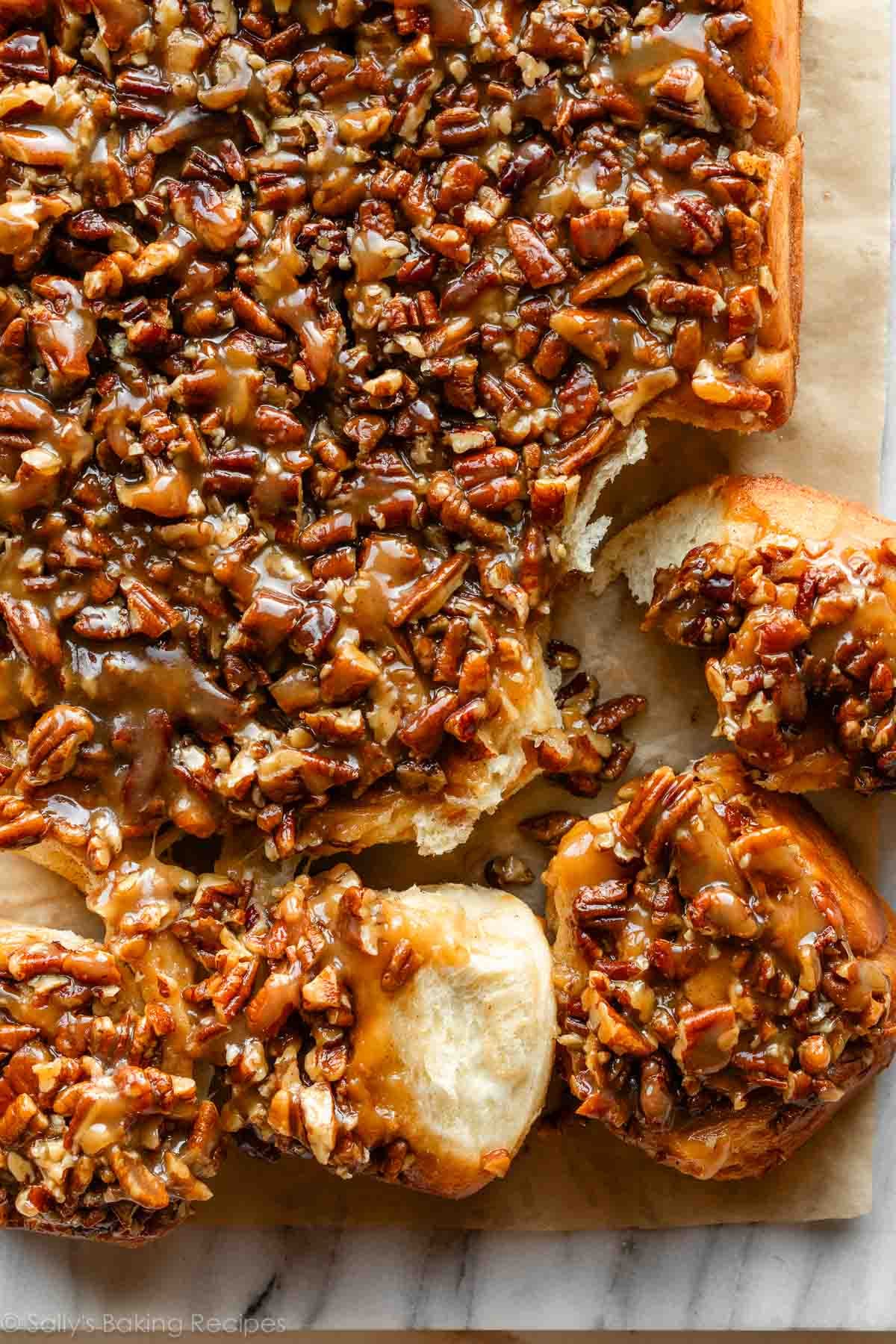
Why have basic cinnamon rolls when you can have brown sugary, butter-y, maple-y pecan sticky buns? There’s absolutely no comparison. They’re tastier than you could even imagine and give regular ol’ cinnamon rolls a run for their money. If you’re on team cinnamon roll, I guarantee this recipe will change your mind. This is probably my most favorite recipe of all time.
I know this is a big statement, but sticky buns > cinnamon rolls.
One reader, Susie, commented: “I’m not an experienced baker with yeast, but these came out perfect on the first try! They may have been the best thing I’ve ever baked and will absolutely be on repeat in my kitchen. ★★★★★”
Another reader, M.J., commented: “What a great recipe. Followed it exactly and the buns were perfect. I have been looking for a recipe for pecan buns like my mom used to make and this hit the mark. ★★★★★“
These Maple Pecan Sticky Buns Are:
- Rich and decadent
- Maple-flavored and nutty
- Packed with warm cinnamon spice
- Made with pure maple syrup
- Piled high with a sticky, brown sugary, caramel-y, buttery, maple pecan topping
- A make-ahead or overnight breakfast recipe, perfect for holiday entertaining
- Simple to prepare and can be started the night before (like pumpkin French toast casserole!)
- An extra special Thanksgiving or Christmas breakfast, or holiday brunch
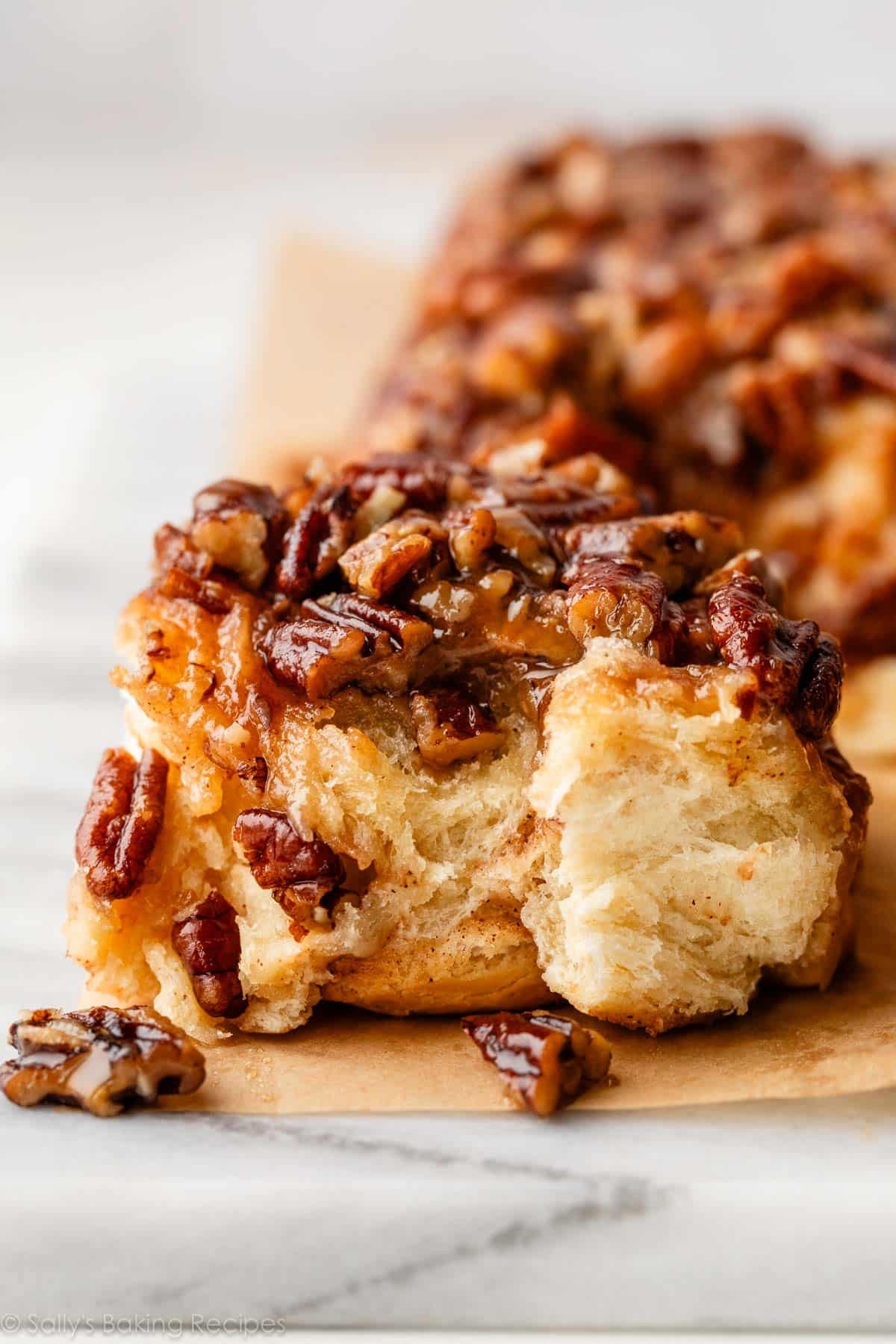
3 Parts to Pecan Sticky Buns
There are 3 parts to today’s maple pecan sticky buns:
- The soft, rich dough
- The brown sugar-cinnamon filling
- The maple pecan topping
Let’s quickly walk through each.
Dough: This is the same trusty dough I use for my overnight cinnamon rolls and maple cinnamon rolls. Which means 3 things. (1) It’s dependable—I’ve used this dough at least 50x in the past several years, and am even publishing it in my next cookbook, out September 2025. (2) It’s a make-ahead recipe, but doesn’t necessarily have to be. You can begin prepping these maple pecan sticky buns the night before OR you can completely prepare them in the morning. Choose which is best for your schedule. And (3) it’s loved. There’s a reason I turn to this dough recipe time and time again. The dough is buttery and soft—the softest, richest dough I’ve worked with.
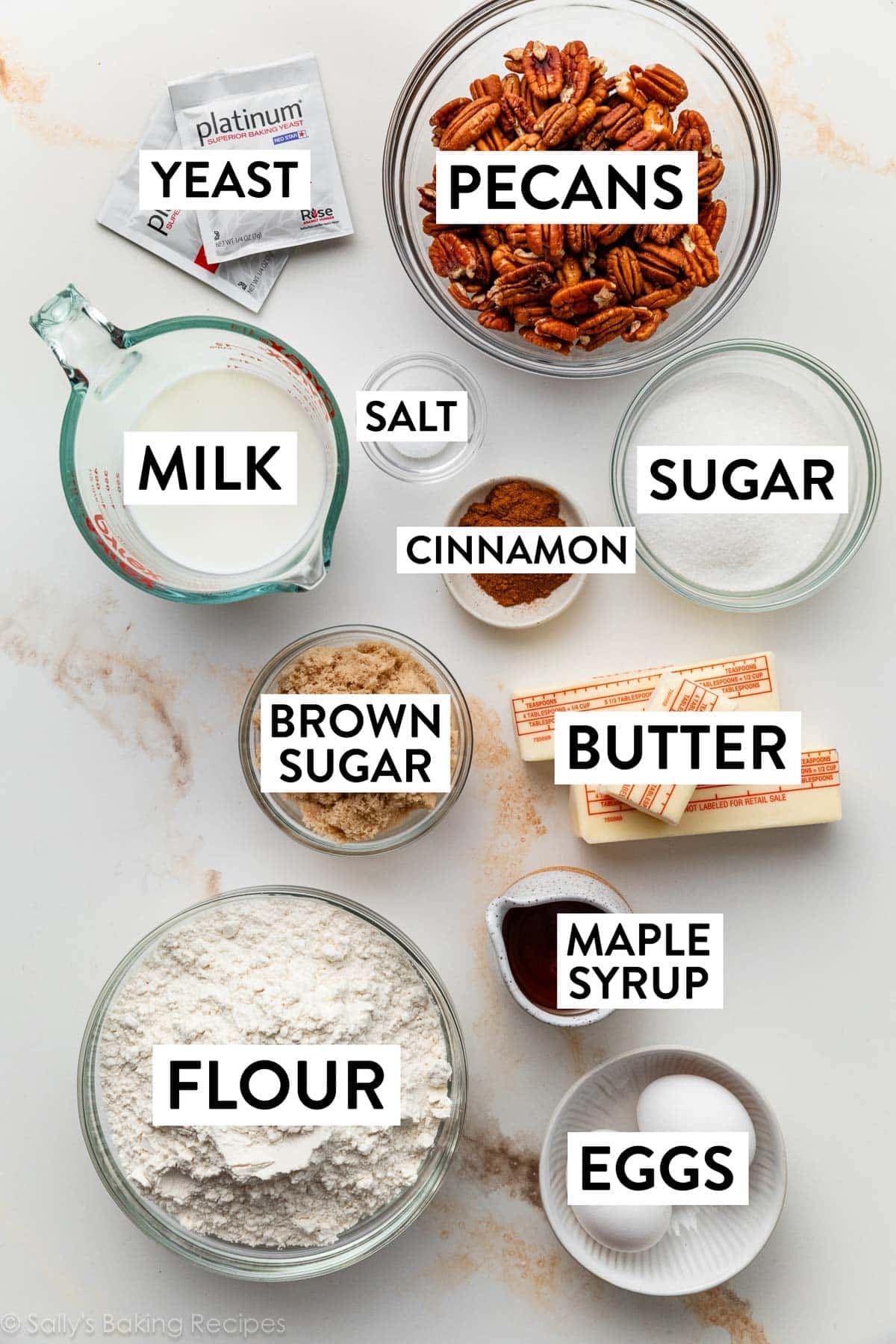
Here are all of the ingredients you need, including for the maple pecan topping:
Filling: Use brown sugar in the filling instead of granulated sugar. Why? It has more flavor. If you have dark brown sugar, go ahead and use that. If not, light brown sugar works wonderfully. You’ll combine the sugar with cinnamon, and sprinkle it over softened butter on top of the rolled out dough.
Topping: I decided to introduce maple into the traditional pecan sticky bun topping because I wanted to avoid using corn syrup—and because I often crave maple in the morning! Corn syrup is typically used in the gooey caramel topping, but there’s no reason why pure maple syrup can’t be subbed in… we’d be missing out on so much flavor!
How to Make Maple Pecan Sticky Buns
I have a lot of step photos to walk you through the process, as well as a video tutorial included in the recipe below. I include these step photos because baking with yeast can be intimidating. And I don’t want you afraid of the stuff. Sticky buns aren’t scary! 😉
Baking with Yeast Guide
Reference this Baking with Yeast Guide whenever you work with baker’s yeast. I include practical answers to all of your common yeast questions.
Make the sticky bun dough. If you need extra help kneading the dough, my How to Knead Dough video tutorial will walk you through it.
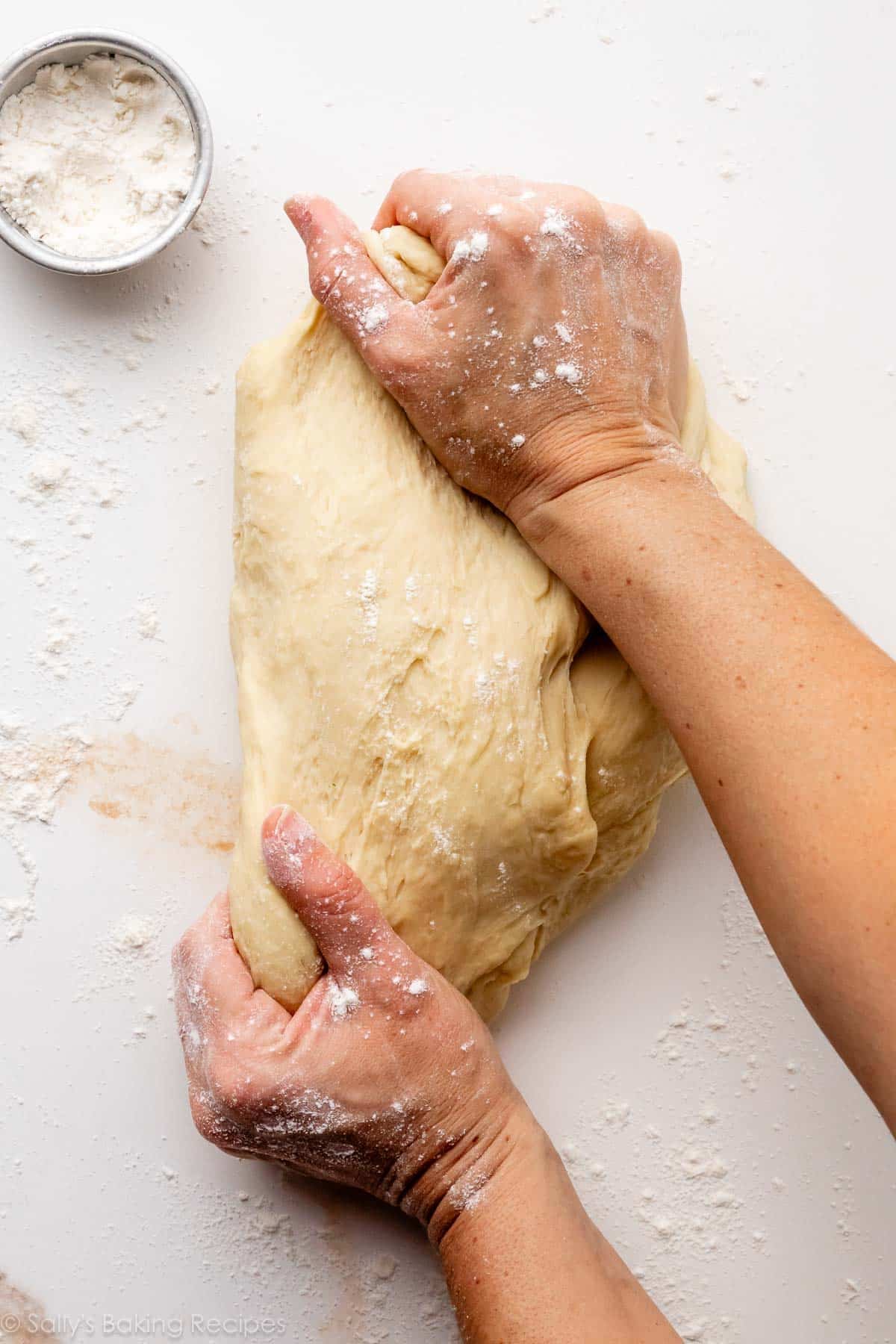
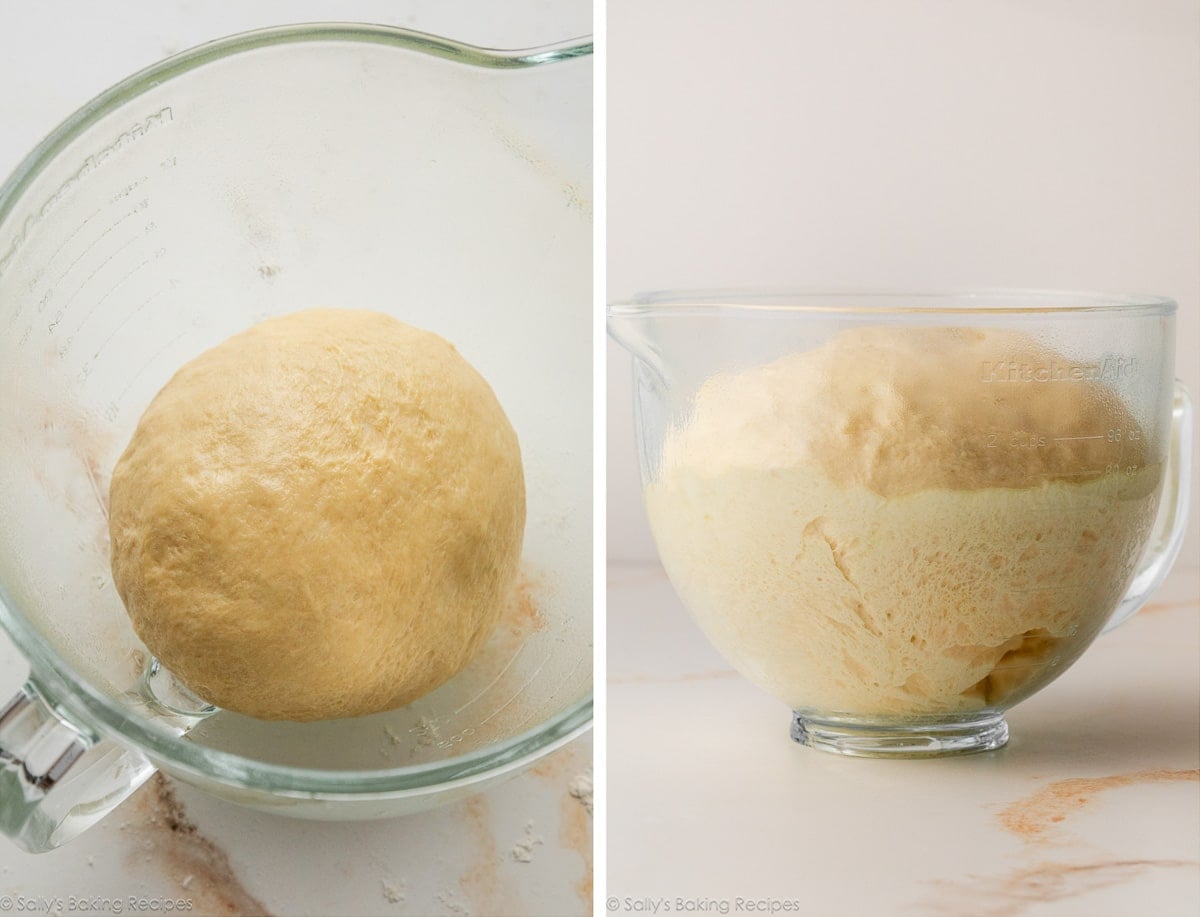
Let the dough rise (1st rise). Transfer the dough onto a floured surface, knead it, then place it in a lightly greased bowl. Let rise until doubled in size, about 1 and 1/2 to 2 hours.
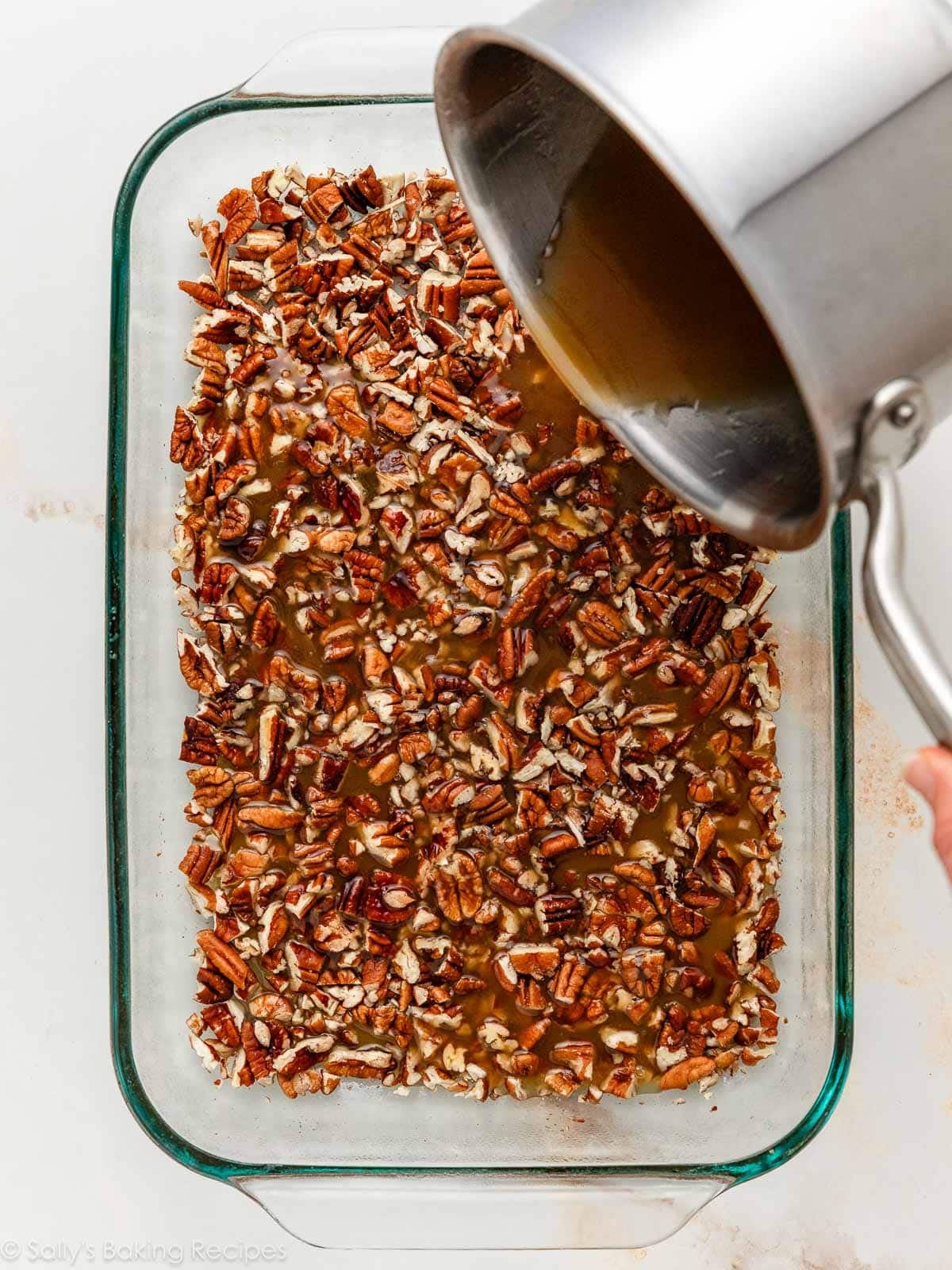
Make the topping, then pour it into a greased 9×13-inch baking pan. I urge you to use a 9×13-inch glass pan or metal pan, and not a ceramic pan. Ceramic pans take longer to heat, and the rolls won’t bake evenly. You’ll wind up with under-baked rolls in the center, while the bottom (the topping) may burn.
Roll the dough into a rectangle, about 12×18 inches. Make sure the dough is smooth and evenly thick.
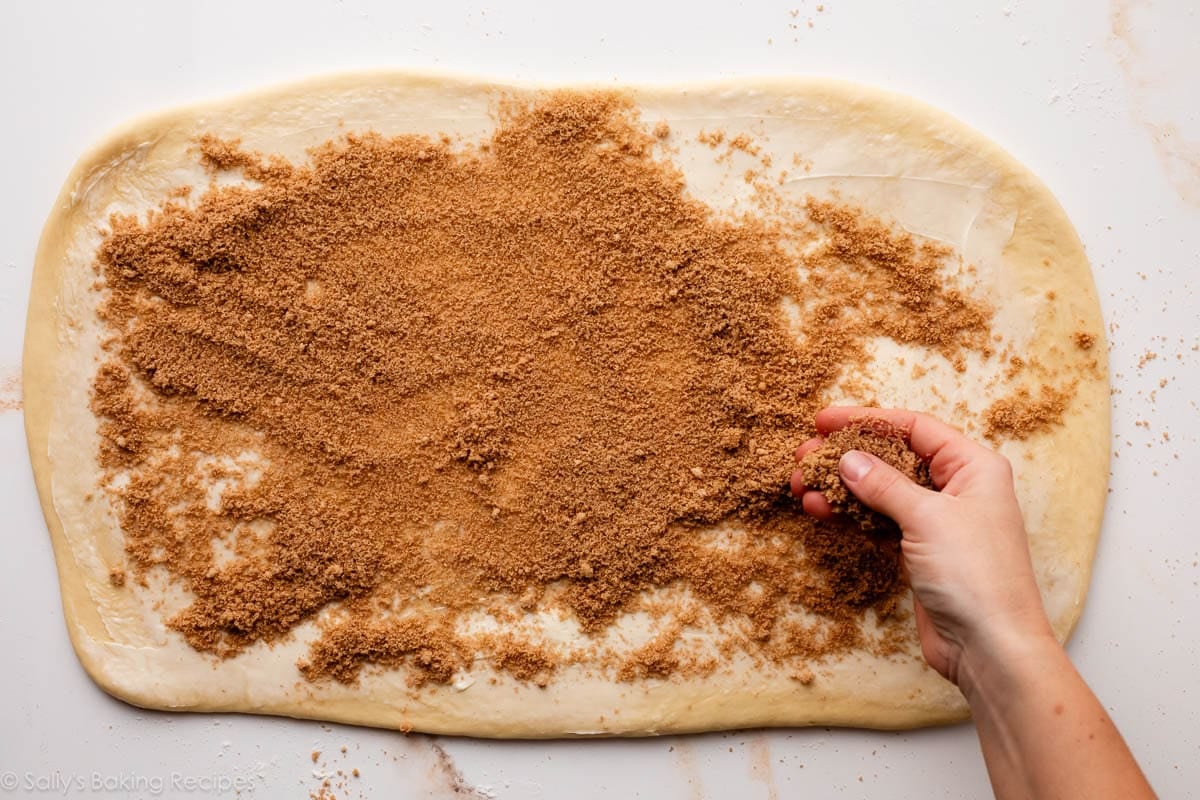
Add the filling.
Roll up dough & cut into rolls. This should form an 18-inch log. Cut into 12 even rolls. Arrange them in the baking pan on top of the topping. (You’ll invert the pan when they’re done baking!)
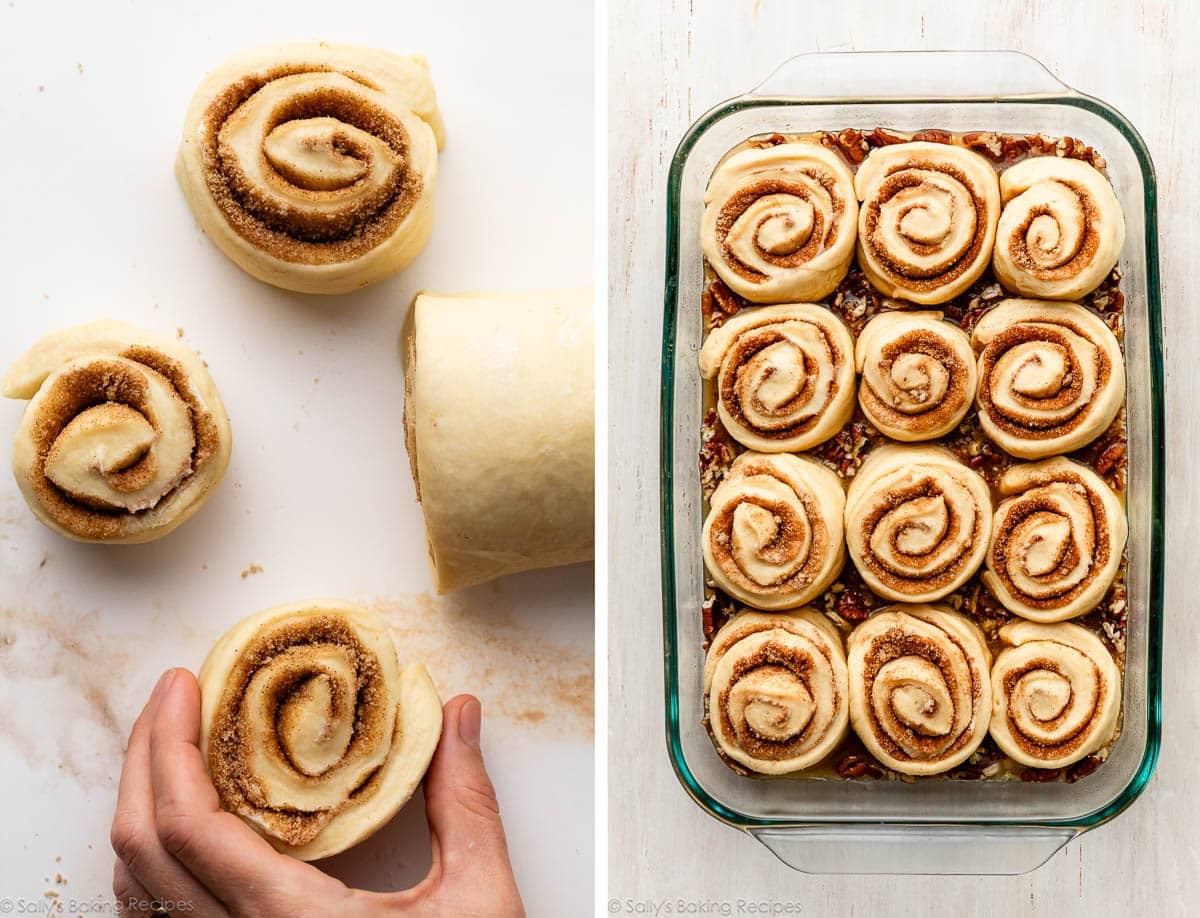
Let the rolls rise (2nd rise). About 30–45 minutes, or until puffy.
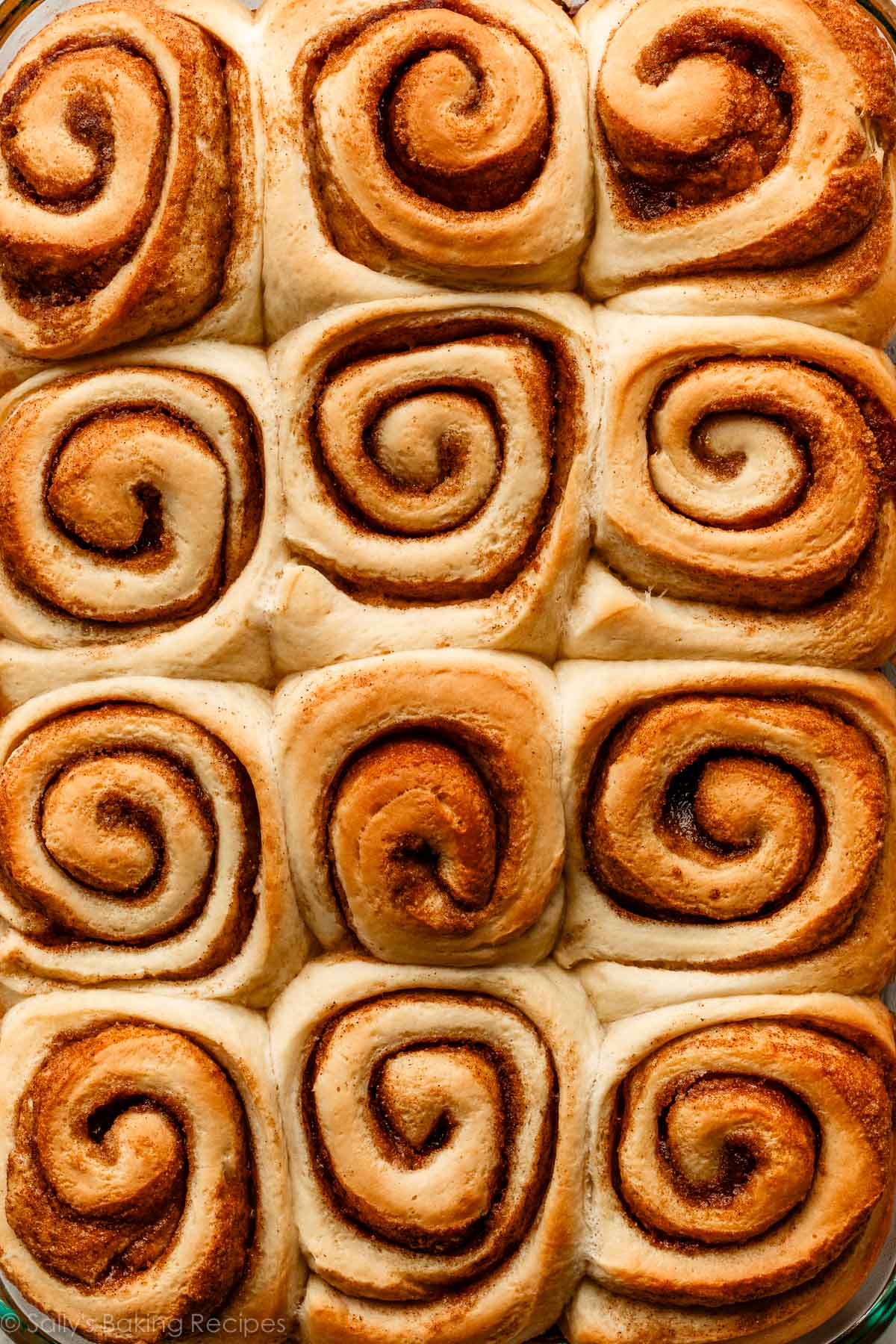
Bake. The rolls take about 25 minutes to bake. Tip: halfway through the bake time, cover the rolls loosely with aluminum foil so the tops don’t over-brown.
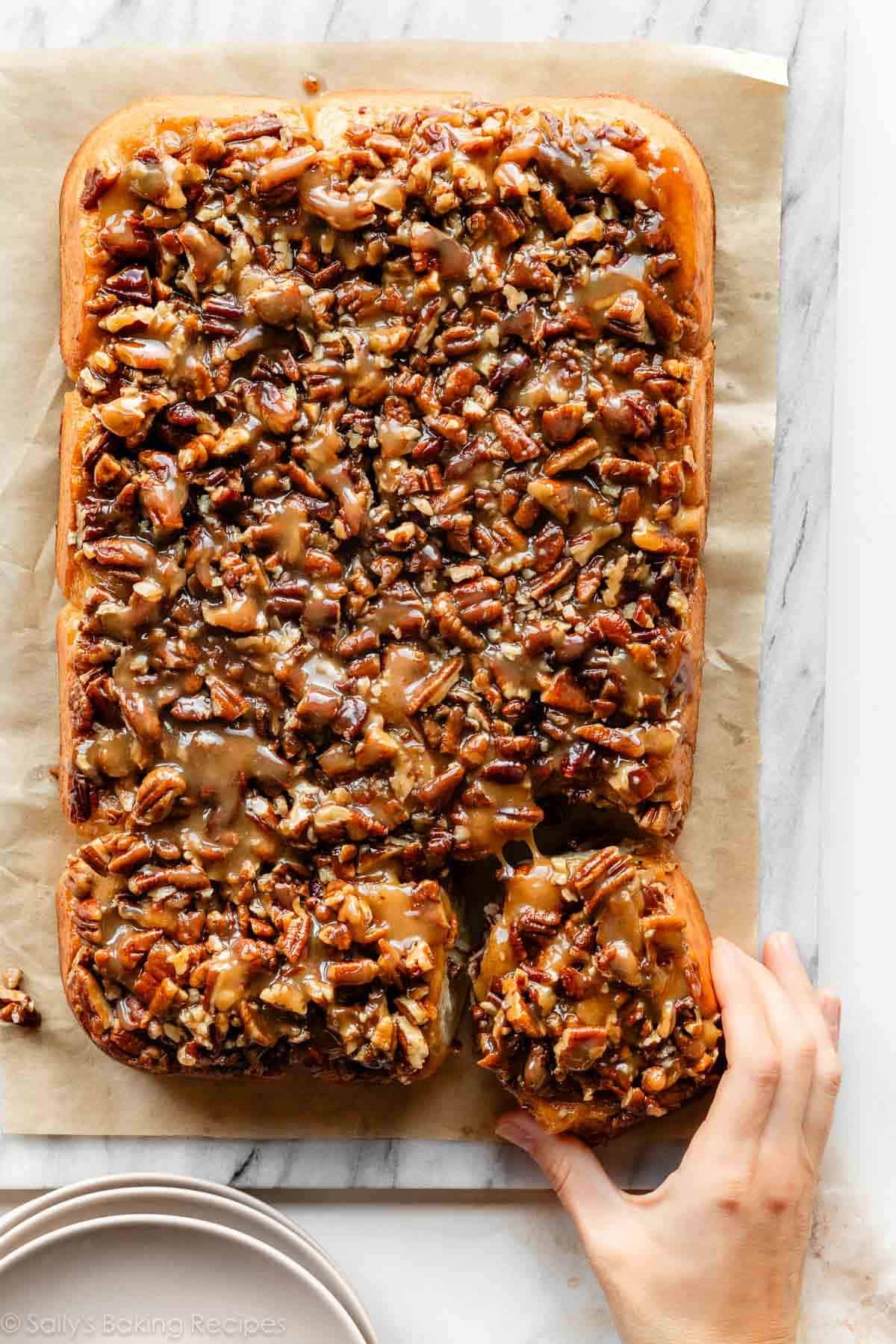
Flip rolls & serve. Let the rolls cool for 5 minutes. Using oven mitts, carefully invert the pan onto a large serving platter. The warm topping will deliciously melt down the sides! Serve warm.
Who needs cream cheese icing when you have THIS?
Overnight Instructions
These maple pecan sticky buns are a great choice for holiday entertaining because they can be prepared the night before serving. To prepare the night before, simply place the shaped (unbaked) rolls on top of the pecan topping as instructed, cover the rolls tightly, then refrigerate for 8–12 hours. The next morning, remove the rolls from the refrigerator and allow them to rise on the counter for about 1 hour before baking.
To round out your breakfast, this bagel breakfast casserole and spinach and bacon breakfast strata are also great make-ahead options.
Print
Maple Pecan Sticky Buns
- Prep Time: 4 hours (includes rises)
- Cook Time: 28 minutes
- Total Time: 4 hours, 40 minutes (or overnight)
- Yield: 12 buns
- Category: Breakfast
- Method: Baking
- Cuisine: American
Description
Breakfast and brunch have never been more indulgent and delicious than with these make-ahead maple pecan sticky buns! This is a soft, rich dough and a caramel-like stove-top glaze made with maple syrup. Use a 9×13-inch glass pan or metal pan for baking. Review recipe Notes before beginning and see the video tutorial below.
Ingredients
Dough
- 1 cup (240ml) whole milk, warmed to about 100°F (38°C)
- 2/3 cup (135g) granulated sugar, divided
- 1 and 1/2 Tablespoons (14g) active dry or instant yeast (2 standard size packets)
- 1/2 cup (8 Tbsp; 113g) unsalted butter, softened to room temperature and cut into 4 pieces
- 2 large eggs, at room temperature
- 1/2 teaspoon salt
- 4 and 1/2 cups (563g) all-purpose flour or bread flour (spooned & leveled), plus more as needed
- 2 teaspoons canola, vegetable, or olive oil for bowl (or use nonstick spray)
Topping
- 2 cups (250g) chopped pecans
- 1/2 cup (8 Tbsp; 113g) unsalted butter
- 2/3 cup (135g) packed light or dark brown sugar
- 1/4 cup (60ml) whole milk
- 1/4 cup (60ml) pure maple syrup
- 1/4 teaspoon salt
Filling
- 1/4 cup (4 Tbsp; 56g) unsalted butter, softened to room temperature
- 1/2 cup (100g) packed light or dark brown sugar
- 2 teaspoons ground cinnamon
Instructions
- Prepare the dough: Whisk the warm milk, 2 Tablespoons sugar, and the yeast together in the bowl of your stand mixer fitted with a dough hook or paddle attachment. Cover and allow mixture to sit for about 5 minutes or until foamy on top. *If you do not own a mixer, you can do this in a large mixing bowl and in the next step, mix the dough together with a large wooden spoon/silicone spatula. It will take a bit of arm muscle. A hand mixer works, but the sticky dough repeatedly gets stuck in the beaters. Mixing by hand with a wooden spoon or silicone spatula is a better choice.*
- On medium speed, beat in the remaining sugar (which should be 1/2 cup, or 100g) and the softened butter until it is slightly broken up. Add the eggs and salt and beat on medium speed until combined. The butter won’t really be mixing into the mixture, so don’t be alarmed if it stays in pieces. Turn the mixer down to low speed and, with it running, add 1 cup of flour at a time, making sure it’s fully incorporated before adding the next. After 4 cups have been added, add the last 1/2 cup and beat until the dough comes together and pulls away from the sides of the bowl, about 3 minutes. Dough will be soft. If it’s not pulling away from the sides of the bowl, add more flour, 1 Tablespoon at a time, until it reaches a kneadable consistency.
- Knead the dough: Keep the dough in the mixer and beat for an additional 5 full minutes, or knead by hand on a lightly floured surface for 5 full minutes. (If you’re new to bread-baking, my How to Knead Dough video tutorial can help here.) If the dough becomes too sticky during the kneading process, sprinkle a teaspoon of flour on the dough or on the work surface/in the bowl to make a soft, slightly tacky dough. Do not add more flour than you need because you do not want a dry dough. After kneading, the dough should feel soft, smooth, and elastic. Poke it with your finger—if it slowly bounces back, your dough is ready to rise. You can also do a “windowpane test” to see if your dough has been kneaded long enough: tear off a small (roughly golfball-size) piece of dough and gently stretch it out until it’s thin enough for light to pass through it. Hold it up to a window or light. Does light pass through the stretched dough without the dough tearing first? If so, your dough has been kneaded long enough and is ready to rise. If not, keep kneading until it passes the windowpane test.
- 1st Rise: Lightly grease a large bowl with oil or nonstick spray. Place the dough in the bowl, turning it to coat all sides in the oil. Cover the bowl with aluminum foil, plastic wrap, or a clean kitchen towel. Allow the dough to rise in a relatively warm environment for 2 hours or until double in size. (I always let it rise on the counter and it takes about 2 hours. For a tiny reduction in rise time, see my answer to Where Should Dough Rise? in my Baking with Yeast Guide.)
- Meanwhile, make the topping: Grease the bottom and sides of a 9×13-inch glass baking pan or metal baking pan. Spread chopped pecans in an even layer in the pan. Set aside. Combine the rest of the topping ingredients in a small saucepan over medium heat. Stir until the butter has melted, then bring to a simmer. Allow to simmer for 2 minutes, stirring occasionally. Remove from heat, give it a quick whisk, then pour over pecans. Set aside.
- Roll out the dough: Punch down the dough to release the air. Place dough on a lightly floured work surface and, with a lightly floured rolling pin, roll dough into a 12×18-inch rectangle. Make sure the dough is smooth and evenly thick. If the dough keeps shrinking back as you roll it out, stop what you’re doing, cover it lightly, and let it rest for 10 minutes to relax the gluten. When you return to the dough, it should stretch out much easier.
- For the filling: Spread the softened butter all over the dough. The softer the butter is, the easier it is to spread in this step. (Microwave it for a few seconds to soften if needed.) In a small bowl, mix the sugar and cinnamon together. Sprinkle evenly over the butter. Tightly roll up the dough to form an 18-inch-long log. If some filling spills out, sprinkle it on top of the roll. With an extra sharp knife, cut into 12 even rolls, about 1.5 inches wide each. Arrange in the prepared baking pan, on top of the pecan topping.
- 2nd Rise: Cover the rolls tightly and allow to rise until puffy, about 30–45 minutes. (Or use the overnight option in the Notes below.)
- Preheat oven to 350°F (177°C). Bake for 25–28 minutes or until the rolls are golden-brown on top. About halfway through baking time, loosely tent a piece of aluminum foil over the top of the pan to prevent the tops from browning too quickly. Remove pan from the oven and place on a wire rack. Cool for 5 minutes.
- Using oven mitts, carefully invert the pan onto a large serving platter. The warm topping will melt down the sides. Serve warm.
Notes
- Make Ahead Instructions – Overnight: To prepare the night before serving, prepare the rolls through step 7. Cover the rolls tightly and refrigerate for 8–12 hours. (16 hours max. 8–12 hours is best, but 16 hours is OK if absolutely needed. Do not exceed 16 hours.) The next morning, remove from the refrigerator and allow to rise on the counter for about 1 hour before continuing with step 9.
- Make Ahead Instructions – Freezing: You can freeze sticky buns for up to 3 months, and I recommend a few different methods for freezing sticky buns. The first method is to freeze them after shaping, before they’ve had their 2nd rise (step 7). Thaw in the refrigerator overnight, then let rise for 1.5–2 hours at room temperature before baking. The second method is to par-bake the risen buns for 10 minutes, let cool completely, then cover and freeze. Thaw in the refrigerator overnight, then let sit at room temperature for 30 minutes before baking. Finish baking for 15–20 minutes. You can also freeze fully baked sticky buns. See How to Freeze Cinnamon Rolls for more details about all of these methods.
- Special Tools (affiliate links): Stand Mixer or Large Mixing Bowl and Wooden Spoon/Silicone Spatula | 9×13-inch Glass Baking Dish | Rolling Pin | Cooling Rack
- Milk: Whole milk or 2% is best for this rich dough and topping. I do not recommend nondairy milk in the topping, but you could use it in the dough.
- Yeast: If using active dry yeast, the rise times will be slightly longer. I always use an instant yeast. Reference my Baking with Yeast Guide for answers to common yeast FAQs.
- What can I use instead of maple syrup? If you want to skip the maple syrup in the topping, replace it with light or dark corn syrup.
- Gluten Free: We have not tested this recipe with gluten-free flour, so we are unsure of the results.







Reader Comments and Reviews
Could I combine your apple cinnamon roll recipe with this pecan topping?
Hi Heather, we haven’t tested that but can’t see why not. Sounds like a fabulous combination!
We love these! We have an egg allergy in our family and we substitute the egg with egg replacer. Tastes amazing.
These are delicious! Next up, peach pie cinnamon rolls!
Just found this recipe! Looks amazing and i can’t wait to try it! I can’t have nuts – I know it is slightly defeating the purpose of trying this recipe but what could i use instead of pecans to get the same result?
Hi Jess, You can simply omit the pecans or swap in raisins instead. Let us know if you give it a try!
I have heard using banana chips for a crunch to replace nuts is very good! I haven’t tried it personally but plan to soon!
I haven’t tried these yet, but plan to soon. I have been looking for a great pecan sticky bun recipe for decades, ever since my bakery with the best sticky buns ever closed.
Just wondering how they would work with instant yeast? Would they be as fluffy? Would you skip the second rise or the first?
Hi Marty, you can make this recipe as written with instant yeast. Enjoy!
I love all your bread recipes so i decided to give this sticky bun recipe a try. I’m so glad I did because It’s perfect!
I’ve made these twice, and they taste great, but the cooking time is WAY under what is needed. I use a glass pan as suggested, and they take nearly twice as long to bake as the recipe suggests.
Hi Cori, thanks forgiving these a try! Is it possible the rolls over-proofed and rose too much? Did you bake these on the lower oven rack? We always recommend using an in-oven thermometer for best results, as many ovens run a little (or a lot!) off.
Can I use parchment paper in the metal baking pan to make it easier?
Hi Beth, yes, absolutely. You can line the 9×13 inch pan with parchment instead of greasing it.
Would I be able to omit the pecans for nut allergies? I can’t use any nuts, but would love to try these!
Hi Chedva, You can simply omit the pecans or swap in raisins instead. Let us know if you give it a try!
Walnuts replacing pecans for a less expensive and option to offset all the sugar. I have started making walnut pies instead of pecan pies for the holidays and everyone loves the change.
Can I use coconut sugar instead of white sugar in this recipe?
Thank you
Hi Deborah, we don’t recommend it. Best to stick with granulated sugar, as coconut sugar would require some additional testing.
Can you substitute buttermilk for whole milk in the main recioe?
Sure can! No other changes necessary.
What a great recipe. Followed it exactly and the buns were perfect. I have been looking for a recipe for pecan buns like my mom used to make and this hit the mark. I always test my buns with a food thermometer registering at least 185 to 190. Perfect every time.
Hello, I made these and was super excited. I am not a baker but decided to just dive right in after making hugely successful bread bowls. My problem is after a few mistakes, (eggs after flour added) and not a really great rise (good, yes. great, no) I made the recipe as instructed. In the end though, most but not all turned out as desired. One in the middle rose as if it had cooked through but deflated after the 5 minutes rest. Yup, one of the ones in the middle ended up just being uncooked dough. Any ideas?
Hi Heidi, Make sure not to over-proof them. The bottoms will bake last with this wet, sticky base. You can cover the top with aluminum foil to prevent it from browning too much while the bases finish baking through.
Can I substitute whole milk with 2% milk?
Hi Amber, yes, you can. Whole milk provides the most richness and the best texture, but you shouldn’t notice a big difference with 2%.
What internal temperature should the buns be when they are done? I assume around 195 degrees? Mine were not done in the time you suggested.
Hi Lynne, yes, between 190-200F is the internal temperature you’re looking for when checking for doneness.
What can I substitute the eggs with?
I’ve made this twice now for Xmas morning. They’re delicious! Both times, though, the baking time was not enough. Different ovens each time. The first time they were just way undercooked. This time I was ready with my thermometer and they took around 50-55 mins for the inner rolls to be fully cooked. Worth the wait but I recommend having a thermometer handy. My oven does not usually need longer bake times (maybe 5-10mins max at times).
This was my first time making these buns. They were great! Only question I have is regarding the portion of the roll touching the sauce. When I first flipped them over, they appeared soggy where they were touching the glaze. When we started eating though, it appeared that it was actually not fully cooked and still raw on that side of the roll. I don’t know if cooking longer would rectify this as the other side of the rolls were done? Wondering if anyone else has this issue. I’m sure it’s due to the sauce, but I’m not sure how to avoid that.
Hi Nicki, sounds like they needed to bake for longer. The bottoms will bake last with this wet, sticky base. You can cover the top with aluminum foil to prevent it from browning too much while the bases finish baking through.
First time making this recipe and wow! Delicious! The topping was perfect. Got a nice even rise, but the rolls in the middle were too raw doughy. Found this out after I had turned them over. I did tent them and they did not rise to a very large size. Any ideas? I kept baking and checking every 10 minutes. Had to take the done ones out at different times. They were beautiful until I had to break them apart and rebake the raw ones. I guess I need to practice the recipe a bit more. My family loved them.
Hi Nisie, We’re so glad you and your family enjoyed these. Make sure not to over-proof them. The bottoms will bake last with this wet, sticky base. You can cover the top with aluminum foil to prevent it from browning too much while the bases finish baking through.
Hi. I’m excited to try this recipe, as all of your recipes that I have tried have been perfect. I’d like to gift these to a few friends. Can I use disposable pans, maybe 8×8?
i only make a half batch at a time. 6 rolls fit in an 8 or 9 inch round pan nicely.
Would the topping recipe need to be adjusted if I made these rolls without nuts?
Could I add some raisins to the pecans?
I live in Denver. As we are a mile high, will this recipe work at this high altitude?
Hi Bonnir, We wish we could help, but we have no experience baking at high altitude. Some readers have found this chart helpful: https://www.kingarthurflour.com/learn/high-altitude-baking.html
I live in Monument at almost 7500 feet and I didn’t adjust anything but you will need to make sure you bake a bit longer than called for. Just keep an eye on them. So yummy!
Hi! Can I use this icing on cinnamon rolls?
Hi Claudia, yes, you can–the rolls underneath are cinnamon rolls!
What causes the dough to remain underbaked? I posted earlier about trying to make these using the parbake then freeze method, but after the 10 minute parbake, they were still so uncooked that the middles kept rising when they were cooling on the counter. I baked them for another 30 minutes (intending to freeze fully cooked), but they were still clearly underbaked in the middle. I froze them like that, then thawed them overnight and stuck them back in the oven this morning. I baked them for another 35+ minutes this morning, they were still so raw in the middle that they were inedible (the outer edges, however, were cooked, and delicious!) I finally tried a trick from another baker, and cut the whole pan up into pieces, mixed well, and baked for another 20 minutes. There are still chunks of undercooked dough! I measured ingredients carefully, they were kneaded well, and both rises looked good. The few bites I was able to eat were really tasty, so I’d love to try the recipe again, but before I do, would like to know what I need to tweak???
Hi Cassie, I think the issue was freezing them. Though my instructions tell you to do exactly what you did, I wonder if the issue was when they kept rising after that 10 minute bake. That paired with the thick topping (which is on the bottom), may have just interrupted the baking process. I’m so sorry you had trouble. If you ever try them again, see if you can set aside enough time to make them all in one go (or try the overnight method). I will take a look at my freezing instructions.
I must have over proofed my dough even though I only proofed it for about an hour on the first rise – I think I had it too close to a hot oven! Bake time was closer to 30 minutes and it’s definite doughy but still delicious. This has happened with my cinnamon rolls so I seem to have issues with over proofing! Could you add any additional instructions or tips to the recipes as a reminder to avoid over proofing? And what can happen when the dough is over proofed? I get so excited that the yeast is working that I forget that I can’t let it go to far too sometimes
Hi Stephanie, Overproofing can often cause dough to deflate when touched or while baking. You may find our baking with yeast guide helpful!
Do you have a preference between using AP flour or bread flour for this recipe? Is the rise time and end result the same?
Hi Elle! Bread flour yields a slightly chewier roll, otherwise the same!
i’ve made these several times. today was the first with bread flour. much nicer dough. more even rise. even better texture.
I make these regularly for family and friends and everyone raves about them. Instead of baking in a 9″x13″ pan, I use two cake pans – sometimes I make half into cinnamon rolls since the recipe is the same base. It works out great.
So disappointed in this recipe. Baked for 30 minutes and they were literally raw inside. Put them back in the oven, but seriously doubt that will work. Should have used KAF recipe. I’ve had problems before with amounts and cook times in Sally’s recipes. Baking is more precise than cooking and I think her recipes leave too much room for error.
Hi Arlene, thank you for the feedback. It’s concerning your rolls were raw inside after 30 minutes of baking. Did the rolls over-proof and rise too much? Did you bake these on the lower oven rack? They should cook through with more oven time. Again, thanks for the feedback.
i’ve made this recipe several times abd an proofing again right now. i highly suggest trying this recipe again exactly as written with one change – six rolls per 9 inch round cake pan.