
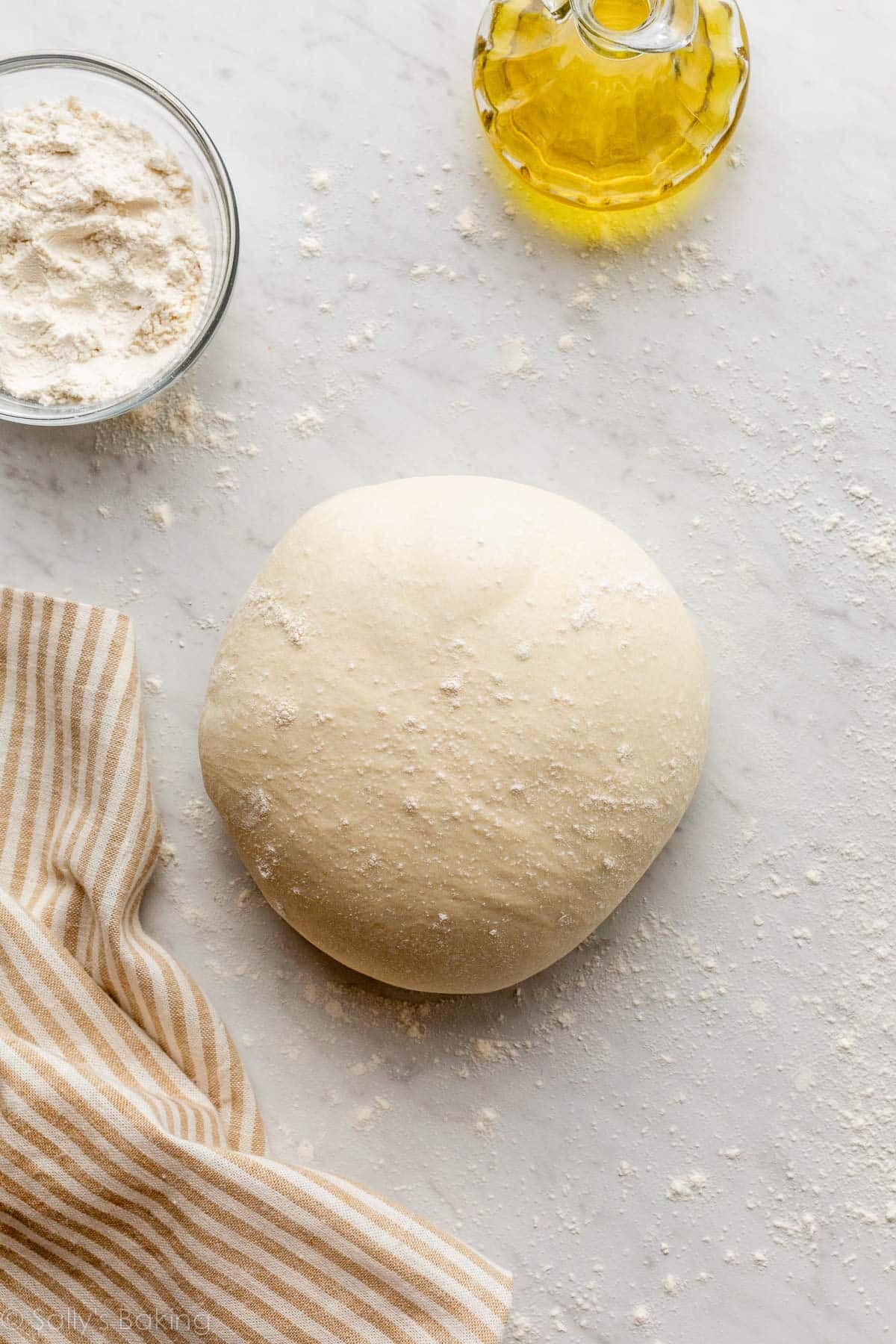
This easy pizza dough recipe is great for beginners and produces 2 soft and chewy homemade pizza crusts. Skip the pizza delivery because you only need 6 basic ingredients to begin!
This recipe is brought to you in partnership with Red Star Yeast. Originally published in 2013, this pizza dough recipe is a massive fan favorite and you’ll also find it in my New York Times best-selling cookbook, Sally’s Baking 101.
Every great pizza begins with a great pizza crust. Some like it thin and crispy, while others prefer a thick and soft crust. This homemade pizza crust has it all: soft & chewy with a delicious crisp and AWESOME flavor. It’s my go-to pizza dough recipe and just a glance at the hundreds of reviews in the comments section tells me that it’s a favorite for many others too. In fact…
Easy Dough for Bread Beginners
This is a no-fuss dough recipe for beginners. You need just 6 basic ingredients, plus a little cornmeal for preparing the pan. (You can skip that if needed.) Most of the time is hands off as the dough rises. You might wonder… why waste the time when you can just buy frozen pizza dough? Frozen pizza dough is certainly convenient, but from-scratch crust has unbeatable flavor and texture that only comes from fresh dough. And you can use the dough for cheese breadsticks, too!
If you’ve ever made homemade bagels or sandwich bread, you can easily make pizza dough because it’s quicker, easier, and requires fewer steps.
Reader, Andy, commented: “Super easy, super fast, super good! I don’t like doughy thick pizzas and I find with this recipe that I can make them thin and crunchy, I love how easy it is. I make pizza once or twice a month! Haven’t bought one for quite some time now! ★★★★★“
Overview: Homemade Pizza Dough Ingredients
All pizza dough starts with the same basic ingredients: flour, yeast, water, salt, and olive oil.
- Yeast: I use Platinum Yeast from Red Star. I have the best results when I use this instant yeast. The Platinum yeast is fantastic because its careful formula strengthens your dough and makes working with yeast simple. You only need 1 standard packet of yeast (2 and 1/4 teaspoons) to get the job done.
- Water: I tested this pizza dough recipe with different amounts of water. 1 and 1/3 cups is the perfect amount. Use warm water to cut down on rise time, about 100-110°F. Anything over 130ºF kills the yeast.
- Flour: Use unbleached all-purpose white flour in this recipe. Bleaching the flour strips away some of the protein, which will affect how much water the flour absorbs. You can substitute bread flour for a chewier pizza crust. If you love whole grain bread, try this whole wheat pizza dough instead.
- Oil: A couple Tablespoons of extra virgin olive oil adds wonderful flavor to the dough. Don’t forget to brush the dough with olive oil before adding the toppings, which prevents the crust from tasting soggy.
- Salt: Salt adds necessary flavor.
- Sugar: 1 Tablespoon of sugar increases the yeast’s activity and tenderizes the dough, especially when paired with a little olive oil.
- Cornmeal: Cornmeal isn’t in the dough, but it’s used to dust the pizza pan. Cornmeal gives the pizza crust a little extra flavor and crisp. Most delivery pizzas you enjoy have cornmeal on the bottom crust!
You could also add 1 teaspoon each garlic powder and Italian seasoning blend to the dough when you add the flour.
One reader, Shane, commented: “Excellent pizza dough. I add about 1 tbs of garlic powder and Italian herbs to give the dough more flavor as well as 40 grams of cornmeal for a little crunch. It freezes well and makes a nice thin crust. ★★★★★“
This is a Lean Bread Dough
Pizza crust, like homemade bagels, artisan bread, and focaccia, requires a lean dough. A lean dough doesn’t use eggs or butter. Without the extra fat to make the dough soft, you’re promised a crusty pizza crust. (However, I recommend using some olive oil for flavor and to keep the interior on the softer side.) Recipes like dinner rolls & sweet potato dinner rolls, homemade breadsticks, and overnight cinnamon rolls require fat to yield a “rich dough,” which creates a softer and more dessert-like bread.
Overview: How to Make Easy Pizza Dough
- Make the dough: Mix the dough ingredients together by hand or use a hand-held or stand mixer. Do this in steps as described in the written recipe below.
- Knead: Knead by hand or with your mixer. I like doing this by hand. If you’re new to yeasted doughs, my How to Knead Dough post and video can help with this step.
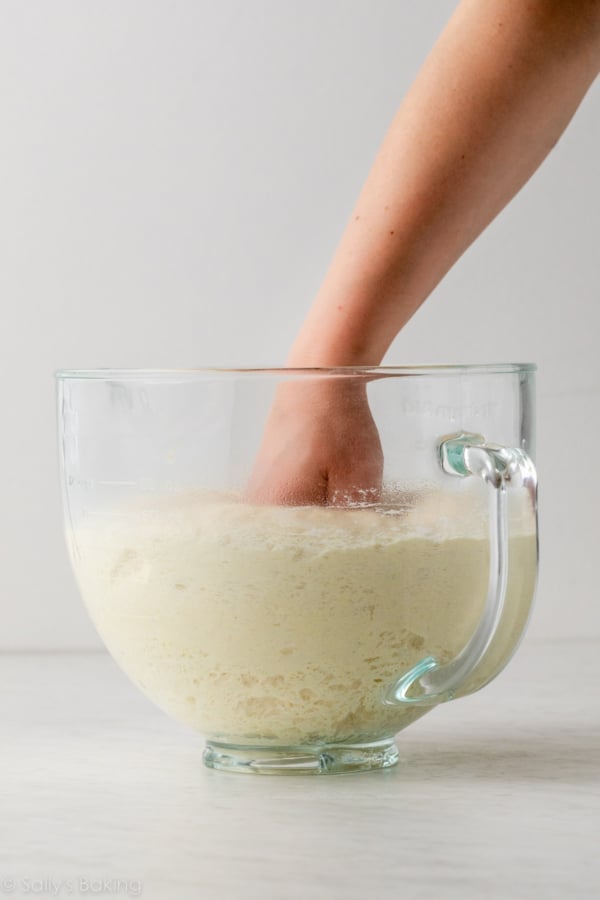
- Rise: Place dough into a greased mixing bowl, cover tightly, and set aside to rise for about 90 minutes or overnight in the refrigerator.
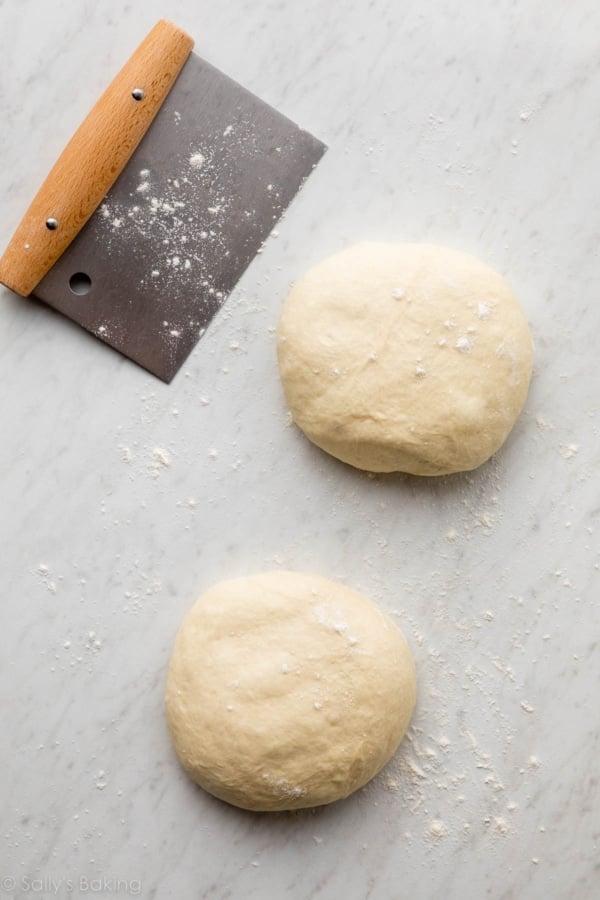
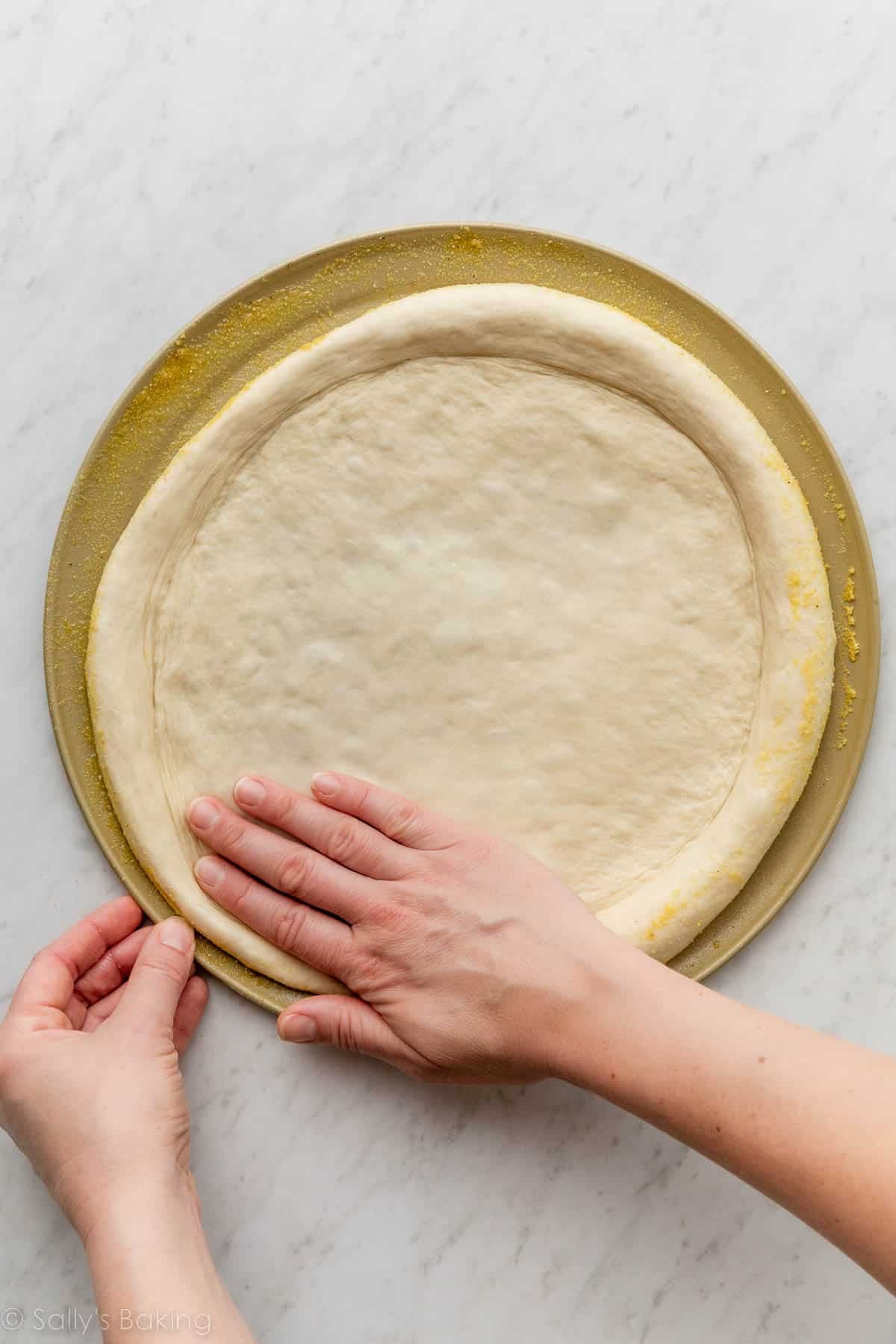
- Punch & shape: Punch down risen dough to release air bubbles. Divide in 2. Roll dough out into a 12-inch circle. Cover and rest as you prep the pizza toppings.
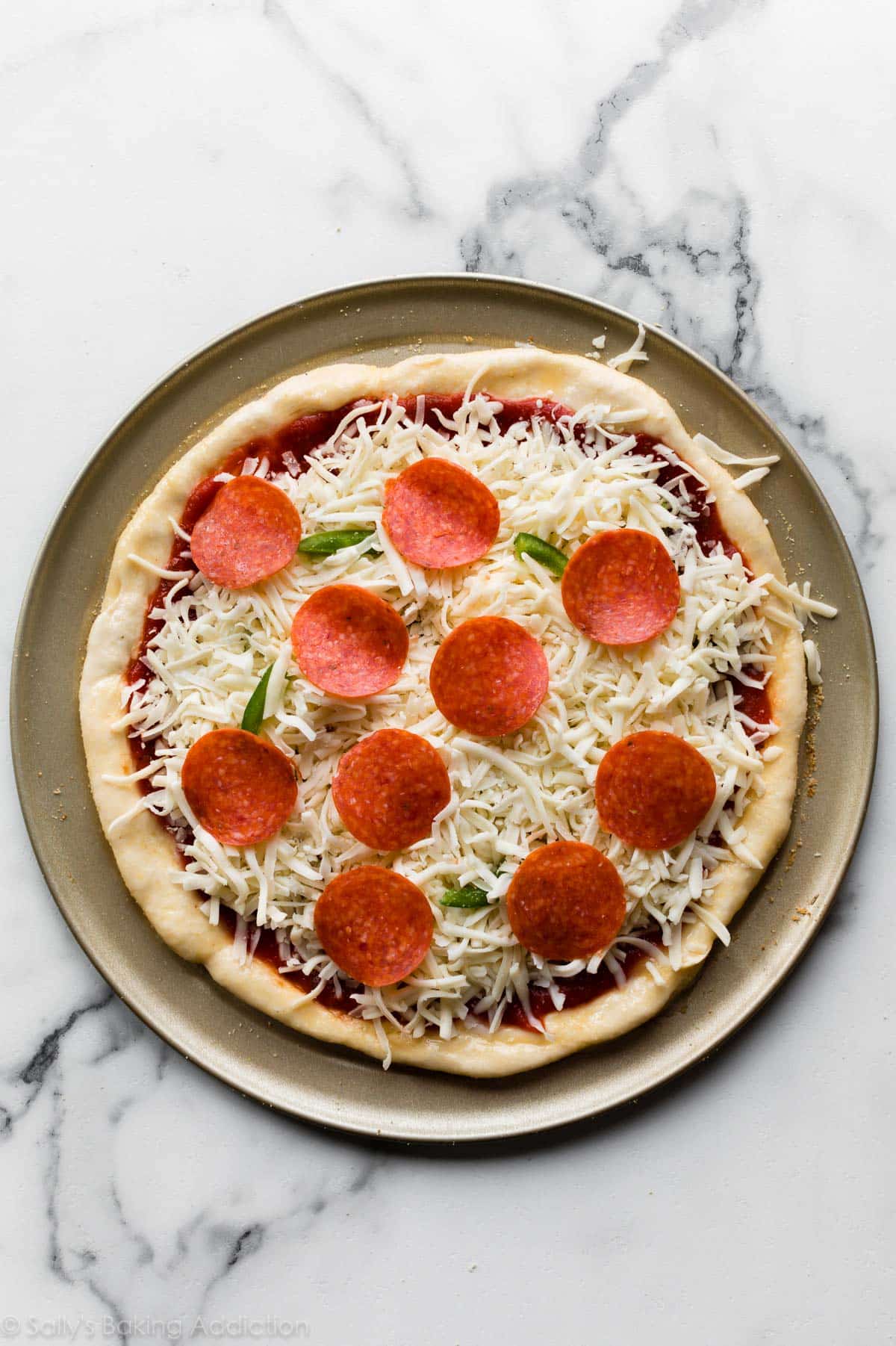
- Top it: Top with favorite pizza toppings.
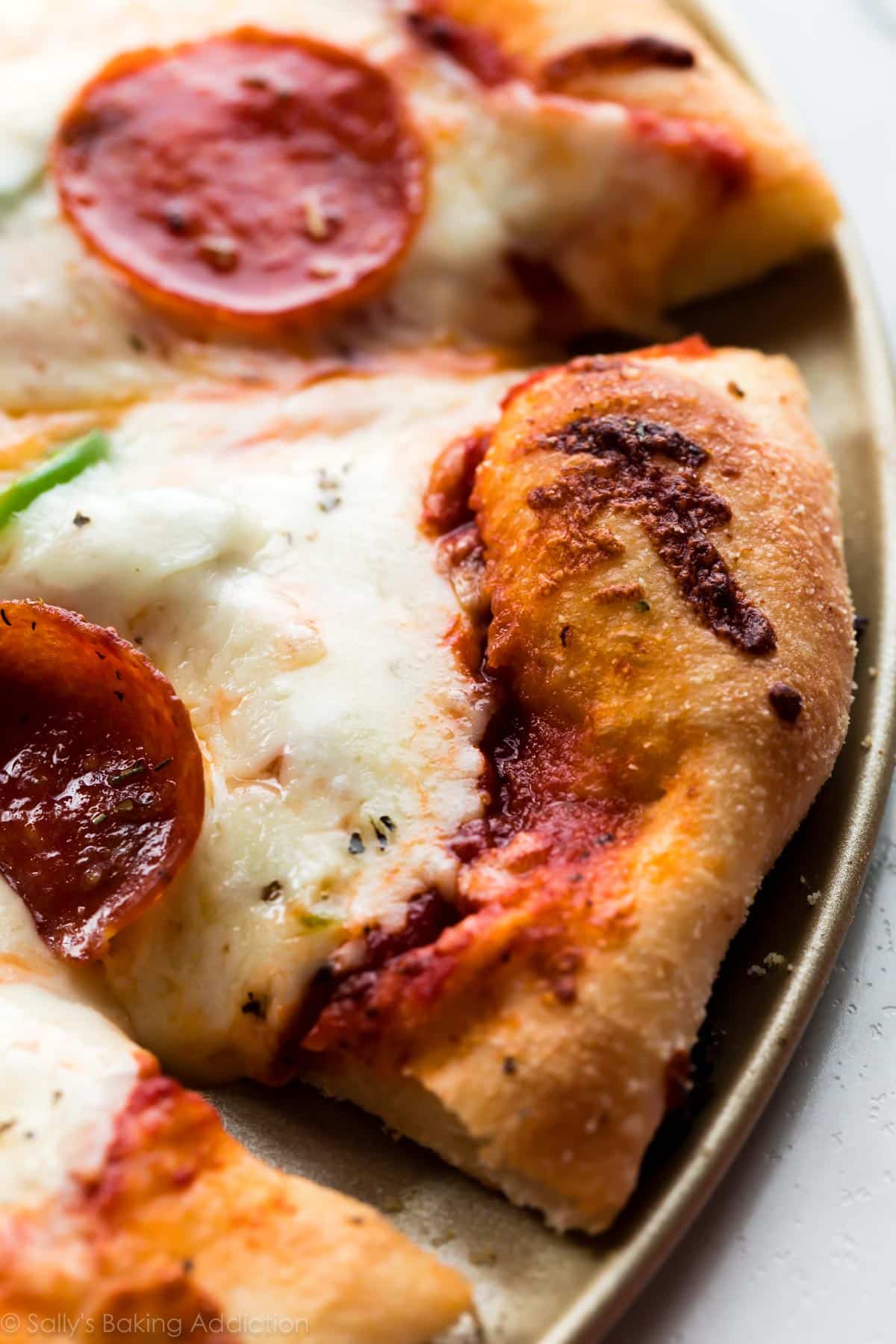
- Bake: Bake pizza at a very high temperature for only about 15 minutes.
Young bakers can lend a hand AND have fun in the process. Let the kids help you press down the dough and shape into a circle. They can add their cheeses and make pepperoni faces on top of the pie. Who doesn’t love a smiley pizza? 🙂
Favorite Pizza Pans
Let me share my top choices for pizza pans just in case you’re shopping for a new one. I use and love (affiliate links) this one and this one. If you like baking your homemade pizzas on pizza stones, I’ve used this one before and it’s wonderful.
If you don’t have a pizza pan, use a regular sheet pan. Grease it with olive oil and sprinkle with cornmeal as directed below, and then press the dough into whatever shape that will fit. Make sure the dough is about 1/2-inch thick. For a thinner pizza, stretch the dough out more.
Uses for Homemade Pizza Dough
Here are the many uses for this homemade pizza dough:
- Stuffed Crust Pizza
- Pesto Pizza
- Homemade Ham & Cheese Pockets
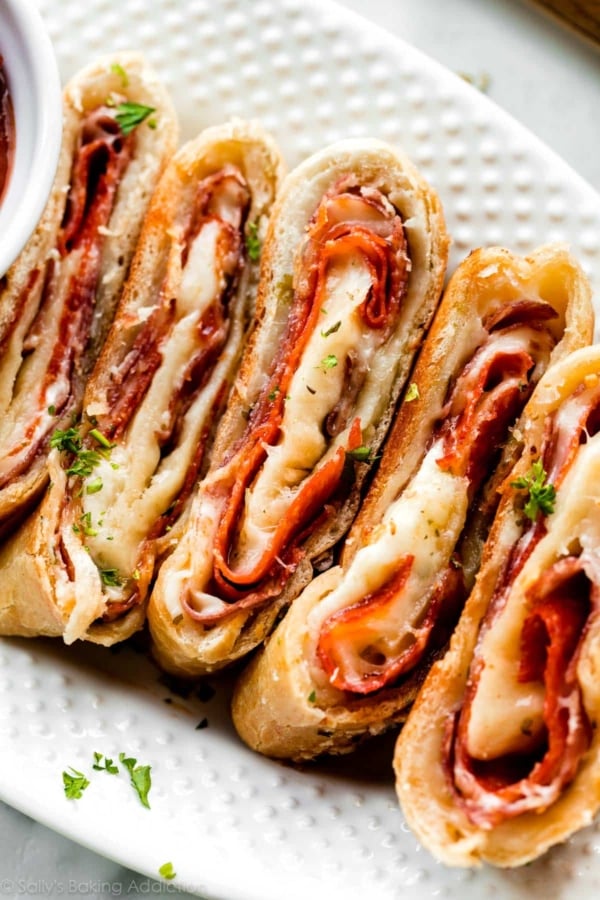
- Pepperoni Pizza Rolls
- Stromboli
- Spinach Artichoke White Pizza
- Homemade BBQ Chicken Pizza
- Garlic Knots
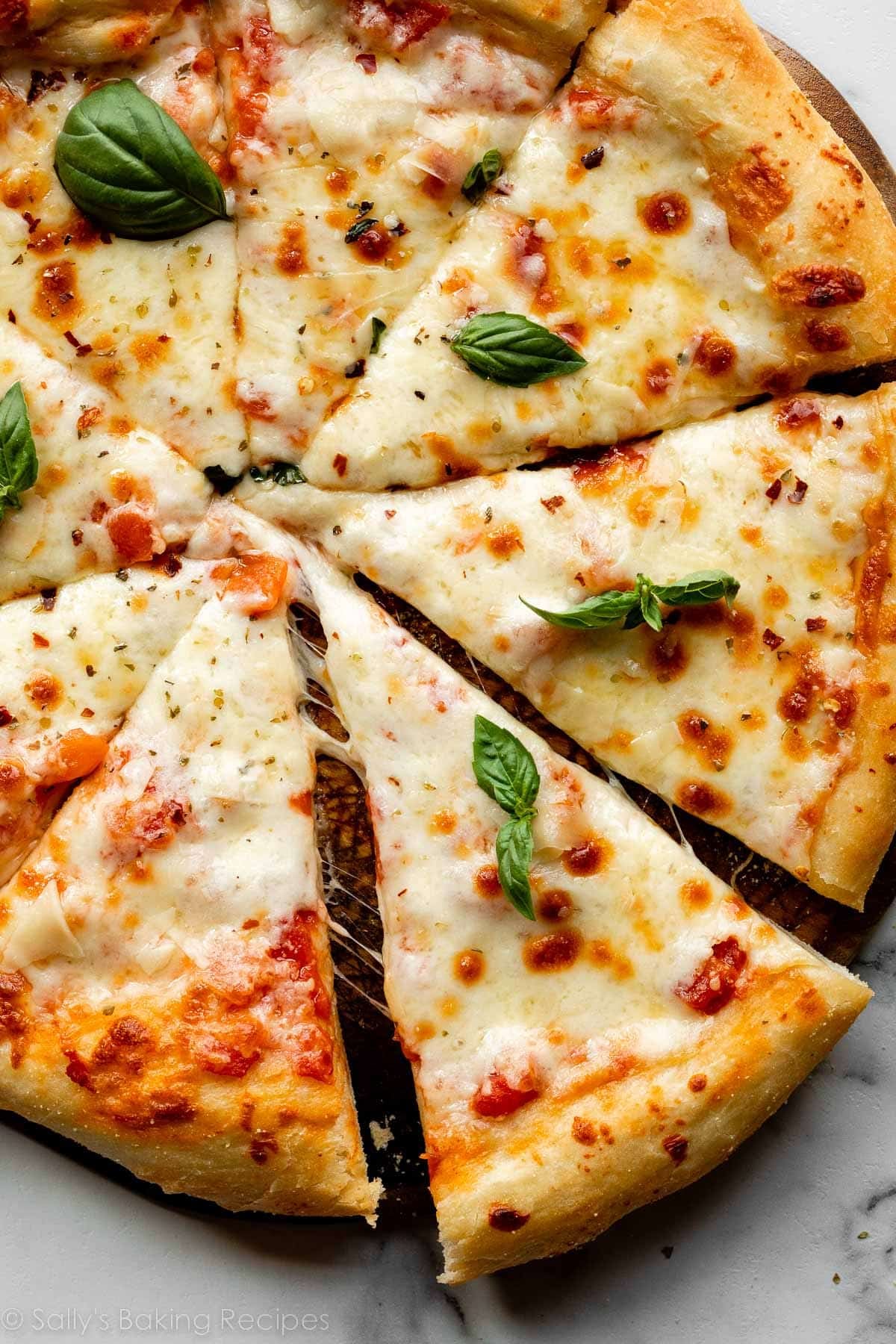
- Margherita style (pictured above): For 2 pizzas, when it’s time to top it in step 6 below, top with the following. (Feel free to halve for only 1 pizza.) Make a homemade tomato sauce by blending 1 28-ounce can San Marzano tomatoes, 1 Tablespoon olive oil, pinch of salt, and 2 minced cloves of garlic. Spread on shaped doughs. Top each with 2-3 ounces thinly sliced fresh mozzarella. Bake as directed, and then sprinkle each hot pizza with 2 Tbsp freshly grated parmesan cheese and a handful of roughly chopped fresh basil.
- Apple gorgonzola pizza is a favorite: For 1 pizza, when it’s time to top it in step 6 below, top with 1 and 1/2 cups (6oz or 168g) shredded mozzarella cheese, 8 ounces crumbled gorgonzola cheese, thin slices of apple, then sprinkle with chopped fresh or dried rosemary before baking.
- Or any other pizza topping you love: pepperoni, crumbled sausage, black olives, onions, mushrooms, jalapeños, etc
Here are my flatbread pizza crust, whole wheat pizza dough, Chicago-style deep dish pizza, and cold veggie pizza recipes.
Print
Easy Homemade Pizza Dough
- Prep Time: 2 hours, 15 minutes
- Cook Time: 15 minutes
- Total Time: 2 hours, 30 minutes
- Yield: 2 12-inch pizzas
- Category: Dinner
- Method: Baking
- Cuisine: American
Description
Follow these basic instructions for a thick, crisp, and chewy pizza crust at home. The recipe yields enough pizza dough for two 12-inch pizzas and you can freeze half of the dough for later. Close to 2 pounds of dough total. This recipe is also in my New York Times best-selling cookbook, Sally’s Baking 101.
Ingredients
Dough
- 1 and 1/3 cups (320ml) warm water (about 110°F/43°C)
- 1 Tablespoon (13g) granulated sugar
- 2 and 1/4 teaspoons (7g) Platinum Yeast from Red Star instant yeast (1 standard packet)*
- 3 and 1/2 to 4 cups (438–500g) unbleached all-purpose flour (spooned & leveled), plus more as needed
- 2 Tablespoons (30ml) extra-virgin olive oil, plus more for greasing
- 1 teaspoon salt
- sprinkle of cornmeal, for dusting the pan
Toppings (halve these amounts if making just 1 pizza)
- extra-virgin olive oil, for brushing
- 2 garlic cloves, minced (optional)
- 1 cup (250g) store-bought pizza sauce
- 4 cups (1lb/454g) shredded mozzarella cheese
Instructions
- Whisk the warm water, granulated sugar, and yeast together in the bowl of your stand mixer fitted with a dough hook or paddle attachment. Cover and allow to rest for 5 minutes. *If you don’t have a stand mixer, simply use a large mixing bowl and mix the dough with a wooden spoon or silicone spatula in the next step.
- Add the flour, olive oil, and salt. Beat on medium speed for 2 minutes, until the dough pulls away from the sides of the bowl.
- Knead the dough: Keep the dough in the mixer and beat for an additional 5 full minutes, or knead by hand on a lightly floured surface for 5 full minutes. (If you’re new to bread-baking, my How to Knead Dough video tutorial can help here.) If the dough becomes too sticky during the kneading process, sprinkle 1 teaspoon of flour at a time on the dough or on the work surface/in the bowl to make a soft, slightly tacky dough. Do not add more flour than you need because you do not want a dry dough. After kneading, the dough should still feel a little soft. Poke it with your finger—if it slowly bounces back, your dough is ready to rise. You can also do a “windowpane test” to see if your dough has been kneaded long enough: tear off a small (roughly golfball-size) piece of dough and gently stretch it out until it’s thin enough for light to pass through it. Hold it up to a window or light. Does light pass through the stretched dough without the dough tearing first? If so, your dough has been kneaded long enough and is ready to rise. If not, keep kneading until it passes the windowpane test.
- Rise: Lightly grease a large bowl with oil or nonstick spray—just use the same bowl you used for the dough. Place the dough in the bowl, turning it to coat all sides in the oil. Cover the bowl with aluminum foil, plastic wrap, or a clean kitchen towel. Allow the dough to rise at room temperature for 60–90 minutes or until double in size. (Tip: For the warm environment on a particularly cold day, heat your oven to 150°F (66°C). Turn the oven off, place the dough inside, and keep the door slightly ajar. This will be a warm environment for your dough to rise. After about 30 minutes, close the oven door to trap the air inside with the rising dough. When it’s doubled in size, remove from the oven.)
- Preheat oven to 475°F (246°C). Allow it to heat for at least 15–20 minutes as you shape the pizza. (If using a pizza stone, place it in the oven to preheat as well.) Lightly grease baking sheet or pizza pan with nonstick spray or olive oil. Sprinkle lightly with cornmeal, which gives the crust extra crunch and flavor.
- Shape the dough: When the dough is ready, punch it down to release any air bubbles. Divide the dough in half. (If not making 2 pizzas, freeze half of the dough for another time. See freezing instructions below.) On a lightly floured work surface using lightly floured hands or rolling pin, gently flatten the dough into a disc. Place on prepared pan and, using lightly floured hands, stretch and flatten the disc into a 12-inch circle, about 1/2-inch thick. If the dough keeps shrinking back as you try to stretch it, stop what you’re doing, cover it lightly for 5–10 minutes, then try again. Once shaped into a 12-inch circle, lift the edge of the dough up to create a lip around the edges. I simply pinch the edges up to create the rim. If using a pizza stone, place the dough directly on baker’s peels dusted with cornmeal.
- Cover dough lightly with plastic wrap or a clean kitchen towel and allow to rest for a few minutes as you prepare your pizza toppings. I suggest pepperoni & green peppers or jalapeño slices, Hawaiian pizza, pesto pizza, spinach artichoke white pizza, or homemade BBQ chicken pizza.
- Top & bake the pizza: Using your fingers, press dents into the surface of the dough to prevent bubbling. Lightly brush olive oil over the top of the crust. Sprinkle with minced garlic (if using), then spread on 1/2 cup (125g) pizza sauce, and top with 2 cups (227g) shredded mozzarella cheese. Top with any additional toppings of your choice and bake for 13–15 minutes or until the crust is golden brown.
- Slice hot pizza and serve immediately. Cover leftover pizza tightly and store in the refrigerator.
Notes
- Freezing Instructions: This recipe yields enough dough for two 12-inch pizzas, a little less than 2 pounds (900g) total. After the pizza dough rises and you divide the dough in half (step 5), you can freeze one of the balls of dough to make pizza at a later time. Or you can simply freeze both balls of dough separately. Lightly coat all sides of the dough ball(s) with nonstick spray or olive oil. Place the dough ball(s) into individual zipped-top bag(s) and seal tightly, squeezing out all the air. Freeze for up to 3 months. To thaw, place the frozen pizza dough in the refrigerator for about 8 hours or overnight. When ready to make pizza, remove the dough from the refrigerator and allow to rest for 1 hour on the counter. Preheat the oven and continue with step 5, punching down the dough to release air if needed.
- Overnight/All Day Instructions: Prepare the dough through step 3, but allow the dough to rise for 8–12 hours in the refrigerator. (If it needs to be in the refrigerator for longer, use cooler water (about 70°F/21°C) in the dough, which will slow the dough’s rise and allow for more time.) The slow rise gives the pizza dough wonderful flavor! When ready, continue with step 4. If the dough didn’t quite double in size overnight, let it sit at room temperature for 30–45 minutes before punching down (step 5).
- Special Tools (affiliate links): Stand Mixer or Large Mixing Bowl and Wooden Spoon or Silicone Spatula | Dough Scraper | Pizza Pan or Baking Sheet | Pastry Brush | Pizza Cutter
- Yeast: Red Star Platinum yeast is an instant yeast. You can use active dry yeast instead. The rise time will be at least 90 minutes. Reference my Baking with Yeast Guide for answers to common yeast FAQs.
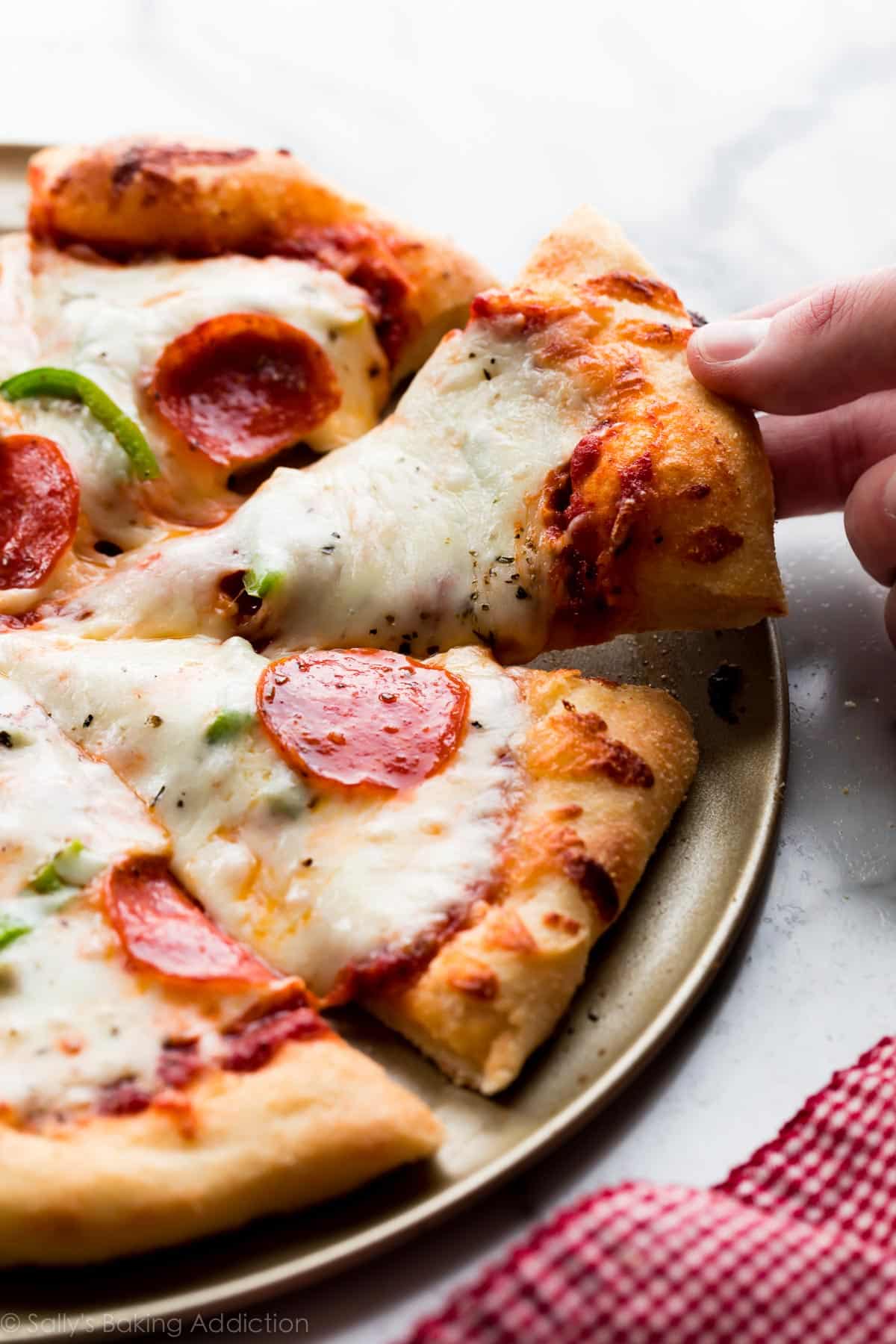
- Pictured Pizza: This recipe yields 2 pizzas. For each, top with 1/2 cup pizza sauce, 2 cups shredded mozzarella cheese, pepperoni slices, thinly sliced green pepper or jalapeño, and a sprinkle of Italian seasoning blend or dried basil.
Recipe originally published on Sally’s Baking Addiction in 2013
FAQ: How Can I Make The Dough Ahead of Time?
Prepare the dough through step 3 above, but allow the dough to rise for 8-12 hours in the refrigerator. (If it needs to be in the refrigerator for longer, use cooler water in the dough which will slow the dough’s rise and allow for more time.) As a bonus, the slow rise gives the pizza dough wonderful flavor! When ready, continue with step 5 in the recipe above (the shaping step). If the dough didn’t quite double in size when rising, let it sit at room temperature for 30-45 minutes before shaping.
FAQ: How Do I Freeze Homemade Pizza Dough?
This recipe yields two 12-inch pizzas. After the pizza dough rises and you divide the dough in half (step 5), you can freeze one of the balls of dough to make pizza at a later time. Or you can simply freeze both balls of dough separately. Lightly coat all sides of the dough ball(s) with nonstick spray or olive oil. Place the dough ball(s) into individual zipped-top bag(s) and seal tightly, squeezing out all the air. Freeze for up to 3 months.
FAQ: How Do I Thaw Frozen Pizza Dough?
Place the frozen pizza dough in the refrigerator for about 8 hours or overnight. When ready to make pizza, remove the dough from the refrigerator and allow to rest for 30 minutes on the counter. Continue with step 5 in the recipe above.









Reader Comments and Reviews
Second time made. Still trying to perfect it but it always tastes amazing,best pizza dough I’ve ever tried. Ours is quick sticky but we roll it on the parchment paper and baking tray under it so it doesn’t stick.
I tried the reciepe three times and dough was really tough when mixing by hand so I tried with the mix and the mixer had a tough time mixing. third time I had my 90 year old mom help to make sure we followed to a tee and same thing. So dissapointed that the recipe did not work. I am in So Cal could it be the altitude difference?
Hi Valerie, how are you measuring your flour? Be sure to spoon and level (or use a kitchen scale) to ensure it isn’t over measured, which can make the dough dry and tough to knead. The high altitude could also certainly be a factor. We wish we could help, but we have no experience baking at high altitude. Some readers have found this chart helpful: https://www.kingarthurflour.com/learn/high-altitude-baking.html
you communicate very well. i learned that you are self taught. That validates my premise that instruction booklets be written by amateurs, because they won’t take for granted anything and explain it so it’s understandable. you have a natural talent to communicate.
Would this recipe work in an outdoor propane pizza oven?
Hi Carol, it should, yes!
Hi! I first tried this recipe a few months ago so my girls could make individual pizzas with their friends when I didn’t have time to let my usual 00 pizza dough rest in the fridge overnight. I measured it out, spoon and level method, and it was perfect. I’ve since made it twice, using the same method of measurement the second time and weighing it out in my food scale the last time because that’s my preferred unit of measurement for baking. I think the weights given for using a scale may be off. When weighing ingredients, the dough was much much stickier and required quite a bit of extra flour. Also, when I weighed the olive oil it seemed like more than what the recipe called for in Tablespoons. I tested my observation as I poured the weighed oil into my dough and the weighed amount was quite a bit more than the spooned amount. Other than those discrepancies, the recipe is great.
I really loved this recipe. the dough came out perfect. i’ve tried a few recipes and this is by the far the best. it poofed lovely and had a great taste and chew. my only issue( and this is all recipes) How in the world do I get the bottom of the frost crispy? i’ve tried various pizza pans, stones, par cooking and putting on oven rack but it never gets that pizzeria crunch on the bottom. any tips??
Hi Kristy, we’re so glad you loved this dough! Usually an extra-crispy crust is caused either by baking for longer or simply rolling it out thinner.
Try putting it in a cast iron pan and cook on medium heat for 2 minutes, then add toppings and go from there. Baking time will be less.
Me and my family absolutely adore this recipe baked twice this week .
I plan to make this for dinner one night but wondering how to prepare earlier in the day. Is it possible once it’s risen to refrigerate until dinner time?
Hi Lora, see the recipe notes for Overnight/All Day Instructions. Enjoy!
I’ve made this recipes dozens of times now. It’s perfect every time. Get to know your climate (in FL with high humidity flour ratios are a little different/rising time varies) and you’ll be able to replicate this recipe consistently. A family tradition at this point!
I figured first time making pizza dough, that it might not turn out great. You learn hot to do it better. Well I was so wrong, this came out great and the picky critic’s thought so too. I will say every recipe I have tried from you has always been yummy!
I loved it!!! The dough comes out amazing and great tasting every time!!!! I have shared it with my daughters!! Thank you!!!!
Dear Sally, Great recipe, thank you. When people have trouble with the dough coming out hard, they can try this: begin with 2 1/2 cups of flour. As you are kneading the dough, sprinkle in about a tablespoon at a time until the dough is perfect. You will end up adding about another 1/2 cup. In some places, 3 1/2 cups is too much flour and you end up with a thick, chewy dough. .
I have used this recipe many times. I use it for not only pizza but also bread sticks, cheesy garlic bread, hot pockets, calzones, etc. I started using brown sugar instead of white sugar. I think it gives it a nice flavor. Thanks for the recipes — I use many of them and they turn out perfect every time.
I love this recipe! I made it today for lunch and it was super hit. Next time i might split the dough for three pizzas and I felt the pizzas were on the thicker side. I did not use any extra flour just the mentioned amount in the recipe. Thanks for this recipe! I shall make it again!
This recipe is amazing and really easy to follow! Thank you!
We have made this recipe many times, thank you! My question is, the dough is REALLY sticky when it comes time to get it into shape. Could you tell me why that is? The pizza is extremely hard to get into shape without sticking to the lightly floured bench and I can’t use a rolling pin because it’ll stick to that too.
I’ve tried floured hands and also wet hands, each of which I’ll struggle to get into shape!
It always comes out of the oven beautifully and crunchy with a nice airy crust (must different from your video) but we loved it.
Just wish I could find a solution to the sticky finished dough.
It passes windowpane test, measured flour/ingredients with scale.
Thank you xx
Hi Lucie, it sounds like you may just need to add a little more flour when you’re making or kneading the dough. It’s a pretty sticky dough in general, but depending on where you are in the world, it may be that the climate/humidity is making it extra sticky. Try that, and then if it’s still giving you trouble when you’re trying to shape it and keeps shrinking back when you’re trying to stretch it out, cover it lightly and let it rest for 10 minutes before trying again. Hope this helps!
I found lightly oiling my hands rather than flouring or wetting them worked wonders with this soft dough. I knew rolling it wasn’t going to happen…maybe it would work between 2 slightly oiled parchment pieces or with an oiled marble rolling pin. I didn’t have much luck with flouring my surface, I would have had to add quite a bit, when I didn’t need to add much oil to coat my hand to prevent sticking. While it took a few minutes to press it into my pan and make it all even, in the beginning it wanted to shrink back the way it does a bit when you start rolling dough out, but it quickly started to stay out at the edges. It was soft enough that when I realized I made my outer crust too thick I was able to press it back into the bottom/center and level that part out.
It was kind of a sticky mess before I decided to press it in the pan, and oil my hands. Amazing recipe and worth that trial and error. I’m not used to such a soft dough, usually wetting my hands is enough. It baked great and had an amazing texture and flavour. Next time will be so much easier since I’ll go into it knowing how to handle it, but its a great recipe.
Hi, in my country, I don’t have cornmeal. What can I replace with or can I omit it?
Thank you.
Hi Doris, if you don’t have cornmeal, you can replace with semolina, or you can simply skip it. Enjoy the pizza!
Absolutely an amazing recipe! I totally would’ve made this more if my hand wasn’t injured from a work incident or had a dough mixer. I make cheesy garlic bread rolls with this recipe by adding a bit of cheesestick to the middle and some garlic butter before and after baking! Even when I make it wrong I still always love the bread (making it the correct way the recipe calls for is the best though!). My roommates love it when I use this recipe and ask me to make it for events. It’s so easy and is just soft and delicious. I cannot praise this enough <3
This recipe came out dense and hard. I think perhaps too much flour.
Hi Kate, how did you measure your flour? Be sure to spoon and level (or use a kitchen scale) to ensure just the right amount of flour. If the flour is over measured, it can cause the dough to become dense and hard. Be careful not to over-knead the dough, either, as that cause it to bake up dense. Thanks for giving this one a try!
Oh my goodness, not a beginner at all, but was looking for an easy pizza crust recipe. It was delicious, easy to work with,loved the feel of this dough. Husband said keep this recipe. Love love love it. Going to try making Stromboli with this crust recipe soon
So glad you loved it, Rita!
I’ve made this twice now and both times ended up SO sticky that I had to add probably 2 cups more flour. I measured using a food scale and followed to a T. Do you think it’s because I used bleached flour instead of unbleached? I want to make it right next time. Thanks!
Hi Koda, there are a number of factors that can go into the consistency of yeasted doughs, down to the weather and even the humidity in the air. If the dough seems really wet, there’s nothing wrong with adding a bit more flour until it comes together to a workable consistency. The bleached flour shouldn’t be an issue. Hope this helps!
Great recipe, I added 3 tsp of Italian seasoning to the dough and then string cheese for stuffed crust. Worked out amazing.
So I figured I would comment on this recipe since this is the 4th time I have made it and it has become my go to pizza crust recipe. I used to use a no yeast recipe but have fallen in love with this recipe. It is so versatile I have used it twice to make pizza. I have also used it to make calzones with my nephews which turned out delicious and was a fun dinner night. This last time I made it I wish I could post the pictures with this because it was awesome. I decided to try and make my own version of a Papa Murphy’s stuffed pizza with a stuffed crust and it turned out amazing. There was nothing left of the pizza by the end of the night. I can’t eat the regular pizzas anymore from Papa Murphy’s as I have to get the gluten free and missed the Chicago stuffed pizza so I decided to try and make my own with this pizza dough recipe and it came out delicious and I think better then I remember it tasting. I have recently discovered the bleach in the flour tears my stomach up which is what most everything is made of when trying to eat out so I save a lot that way but I miss a lot of stuff I used to be able to eat and now try and make it homemade this is one of those I get back. I did try this recipe with a gluten free flour I had on hand still for one of my regular pizza makings and it worked out perfectly as well.
I love this recipe! It turns.out great each time I make it!! I was wondering of I can use the King Arthur Flour pizza flour in this recipe? I have been wanting to try it, but the recipe on the back of that bag is different from this one!!
Hi Courtney, Pizza flour typically has a higher protein level and forms a stronger gluten network. It creates a chewier pizza crust. We published this recipe with all-purpose flour since it’s more commonly used in kitchens, but you can use either with no changes to the recipe. Enjoy!
This was a great pizza base. I made 1×14″ pizza in our electric pizza oven (my new toy!) rather than 2×12″ but used a different topping for each half of the pizza. A breadmaking tip I borrowed from my wife was to warm the flour (I gave it about 3 minutes in the microwave on medium) then sift it into the mixing bowl; this was “value” flour but ok to use for bread, as is the norm in France. I also used “quick” yeast (with ascorbic acid) which I didnt need to reconstitute before I started although I was careful to keep it away from the salt. Finally, I rolled/pulled my base onto semolina to add crispness – which it did!
A great success.
It turned out wonderfully
I truly loved this recipe, I’ve prepared it yesterday for my boyfriend and he loved it very much, thank you for sharing this great recipe.
Made the dough within 90 minutes using a tip I learnt in school food technology which is: once you have kneaded your dough, put glad-wrap over the top of the glass bowl with dough inside and microwave for 20 seconds and rest for 30 minutes and repeat once more. Family loved it and the crust was actually crusty! Thanks Sally x
This is my go to pizza recipe. Works great every time and the dough is easy to work with.
Horrible. Had high hopes for this recipe and it did not turn out as I expected. Even remade it twice just for it to dissapoint then too. I feel bad leaving a bad review, but it has to be done.
Hi Mikenlee, can you provide feedback about how the dough did not turn out? I’d love to be able to provide some troubleshooting tips and advice.