
If ever there was a sweet treat that tastes tons/miles/years(!) better made from scratch vs. store-bought, it’s homemade marshmallows. With just the right amount of sweetness, a delicate kiss of vanilla flavor, and a pillow-soft texture you won’t find anywhere else, this recipe should come with a warning: one taste of these homemade marshmallows might ruin you for the store-bought kind forever! Watch the video tutorial (below the recipe) before you begin.
Try my homemade marshmallow creme, aka meringue frosting, next!
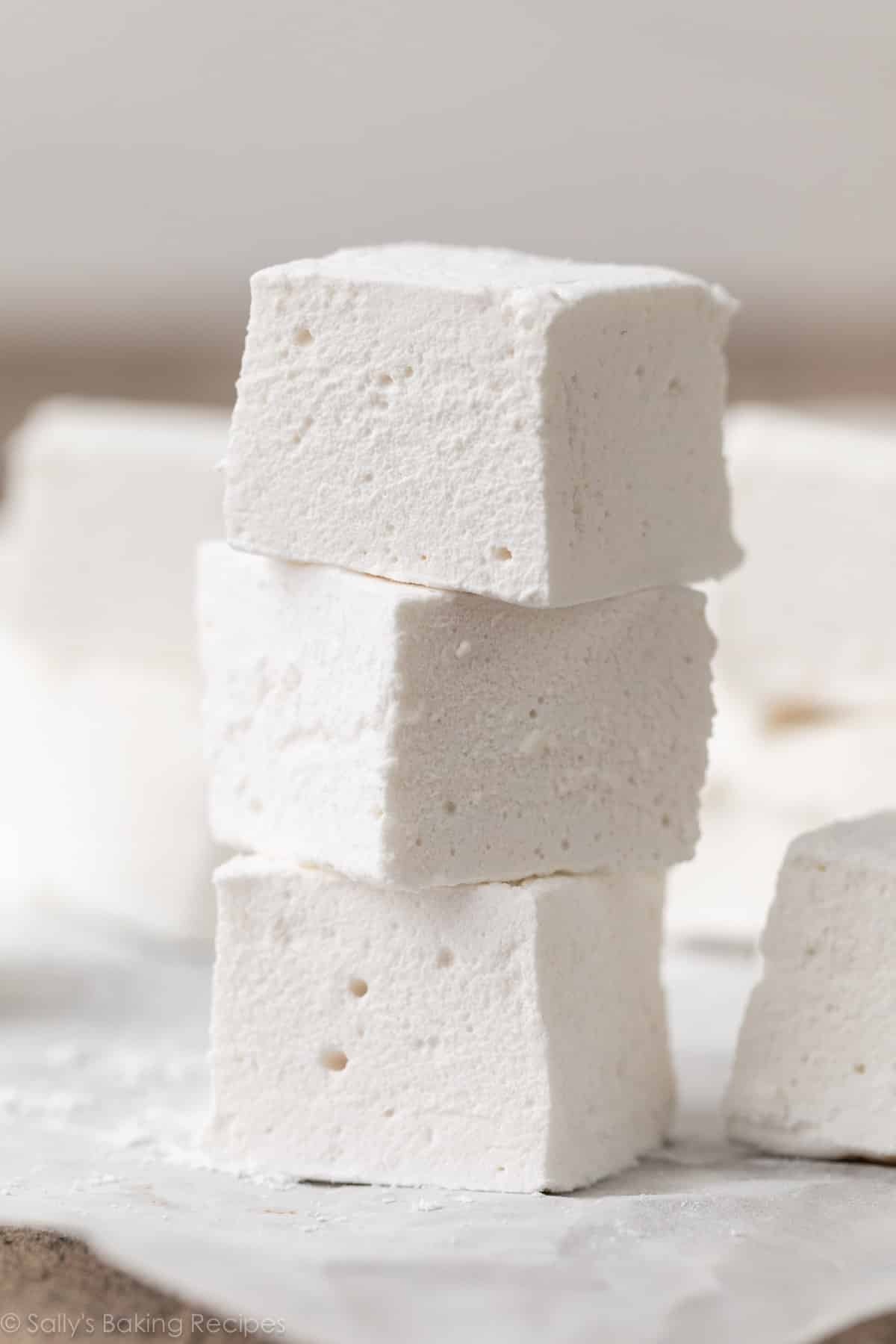
Have you ever tried a homemade marshmallow before? If you have, you’ll know what I mean when I say there is just no comparison to the packaged kind. Sure, those are convenient for campfire s’mores, and work perfectly well for making rice krispie treats, but trust me on this: eating a homemade marshmallow is an experience on another level entirely. Today, you’re leveling up to Cloud 9… it’s soft and sweet here and you won’t want to leave.
I originally published this recipe in my cookbook Sally’s Candy Addiction, but since that book is no longer in print, I decided to share this must-try marshmallow recipe with readers who can’t get their hands on the book.
If you’re nervous about making homemade stovetop candy, I’m here to guide you through each and every step, with plenty of detailed instructions and step photos below. This is also a great recipe to add to your baking bucket list! Homemade marshmallows require several hours to set—ideally overnight—so this is a good make-ahead recipe.
One reader, Sabrina, commented: “First time making homemade marshmallows—it was quick (besides the setting) and easy. Used them in hot chocolate and they were a lot better than store bought (in both taste and texture). ★★★★★”
Another reader, Vicki, commented: “I made these as part of my holiday baking and they were a huge hit! My dad even said they were better than regular marshmallows, and I definitely agree. The directions were super clear and they were a lot easier to make than I would have thought. The hardest part was waiting for them to set! ★★★★★“
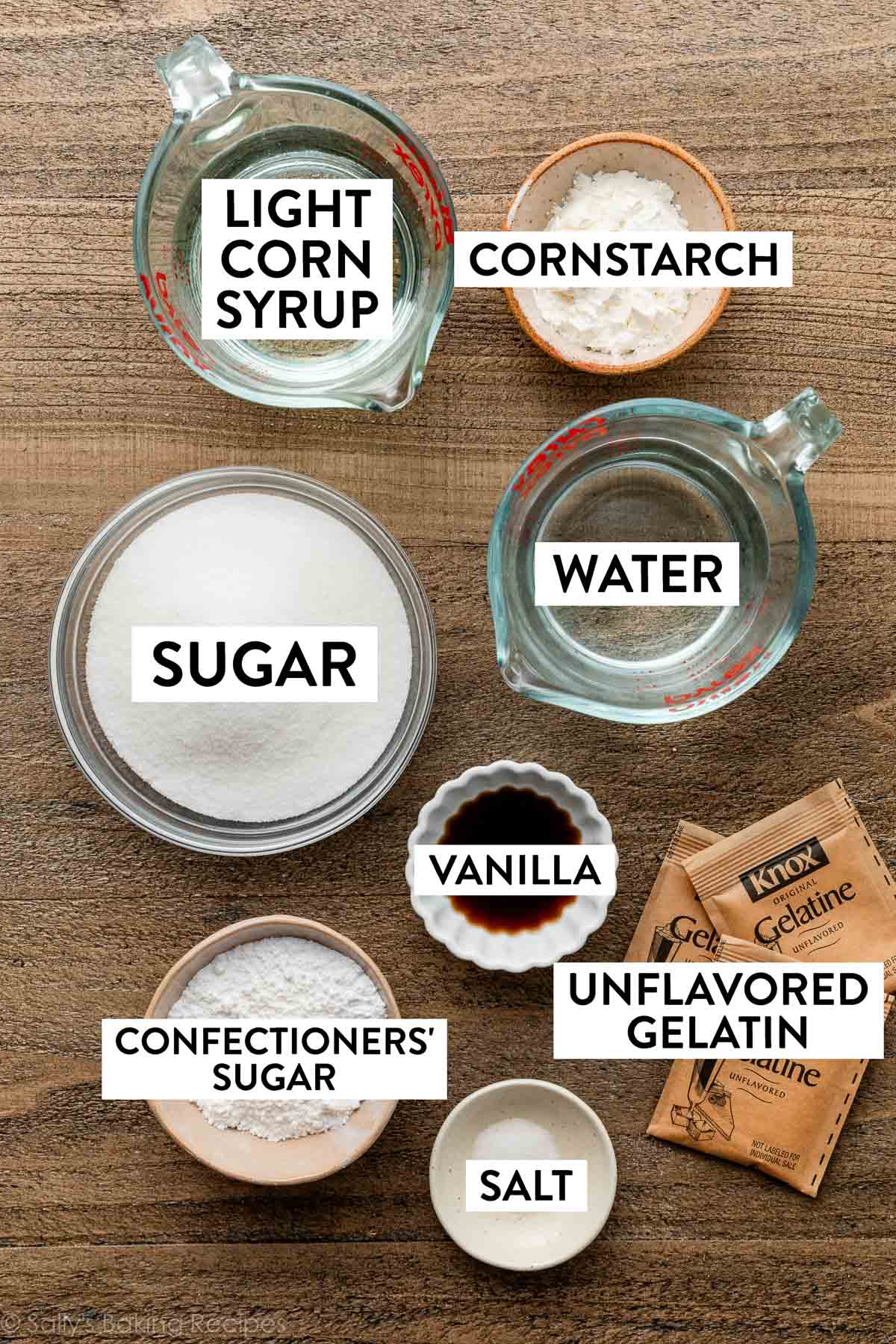
Ingredients You Need & Why:
- Confectioners’ Sugar: For coating the outside of the marshmallows—sweetly, of course!
- Cornstarch: For coating the outside of the marshmallows, to prevent them from sticking to your fingers (though I can’t promise a totally non-sticky experience).
- Gelatin: This sets the marshmallows so they have structure and stability (and are no longer a marshmallow cream). It also gives marshmallows their spongey, chewy texture.
- Water: To dissolve the gelatin, and dissolve the sugar.
- Light Corn Syrup: Imperative for making candy, as it prevents crystallization. It’s necessary when making soft caramel candies, too. I have not had success with any substitutes.
- Granulated Sugar: Cook into a sweet sugar syrup that’s the base of these candy confections.
- Salt: To balance the sweet.
- Vanilla Extract: Because this is the main flavor in these marshmallows, I strongly recommend using high-quality pure vanilla extract (not imitation vanilla). You could also use vanilla bean paste. See recipe Note below.
Yes, you can. But you’ll need to use a different recipe, as subbing out gelatin is not a 1:1 swap. I know many have tried this vegan marshmallows recipe from Serious Eats with great success.
Yes! You’ll add the vanilla at the end of the recipe, when you’re whipping the cooked sugar syrup. Instead of vanilla, you can use another extract such as peppermint, coconut, lemon, maple, or almond. I would start with only 1/2 teaspoon of any of these, taste, and then whip in more if desired. If adding another flavor, you can leave out the vanilla, or reduce the amount down to 1 teaspoon. You could also add 1/4 to 1/2 teaspoon of cinnamon. Taste, and then add more if desired.
Yes, absolutely. Add a drop of gel food coloring when you add the extract. Pink marshmallows are always fun, and you can top them with sprinkles after spreading into the pan and before setting.
I make marshmallow creme using egg whites and sugar, and not gelatin and corn syrup. The recipe below would need several adjustments. Try this homemade marshmallow creme aka meringue frosting.
And some special tools you’ll need to make marshmallows, as well:
- Sieve or sifter
- Heavy-duty 3-quart saucepan (something like this)
- Candy thermometer (The one pictured below is no longer in stock, but I also have the one I just linked and it’s even better. Great quality!)
- Pastry brush
- Stand mixer with whisk attachment, or a handheld mixer
Step-by-Step: Making Marshmallows
You can find the full printable recipe below, but first I’ll walk you through some of the steps and answer some questions that may come up. Making homemade candy, like marshmallows, can be challenging, and I want to set you up for success.
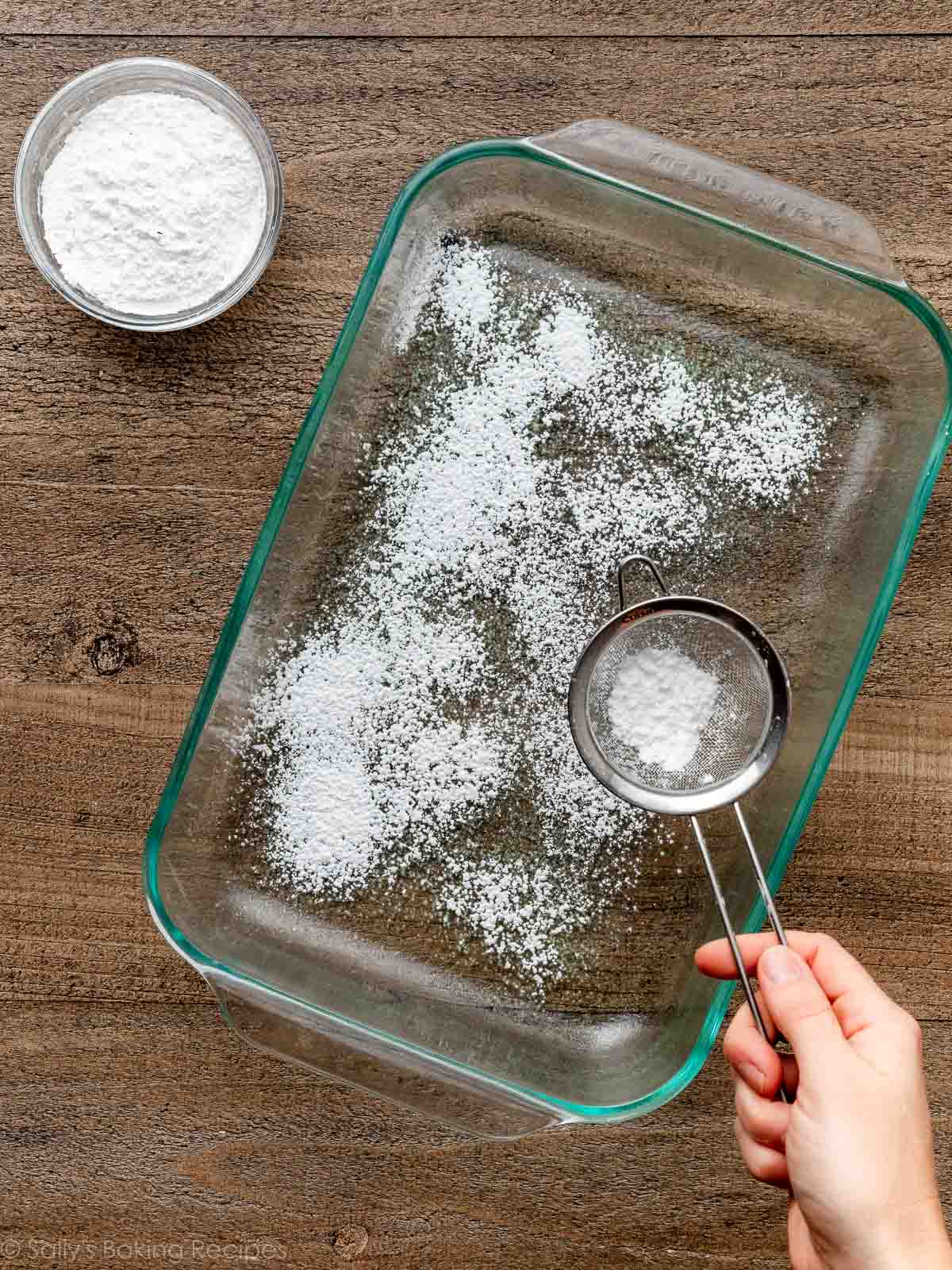
Start by greasing a 9×13-inch glass or ceramic baking dish (I just use nonstick spray) and sifting together the confectioners’ sugar and cornstarch. Sprinkle a little of that mixture very lightly over the pan, then set the remainder aside. This is creating an ultra-nonstick environment for the marshmallows, which are, as you know, very sticky!
I do not recommend using a metal pan. Why? Because it can affect the flavor of the marshmallows. I’ve had marshmallows with a strange metallic aftertaste, and it is because of the pan.
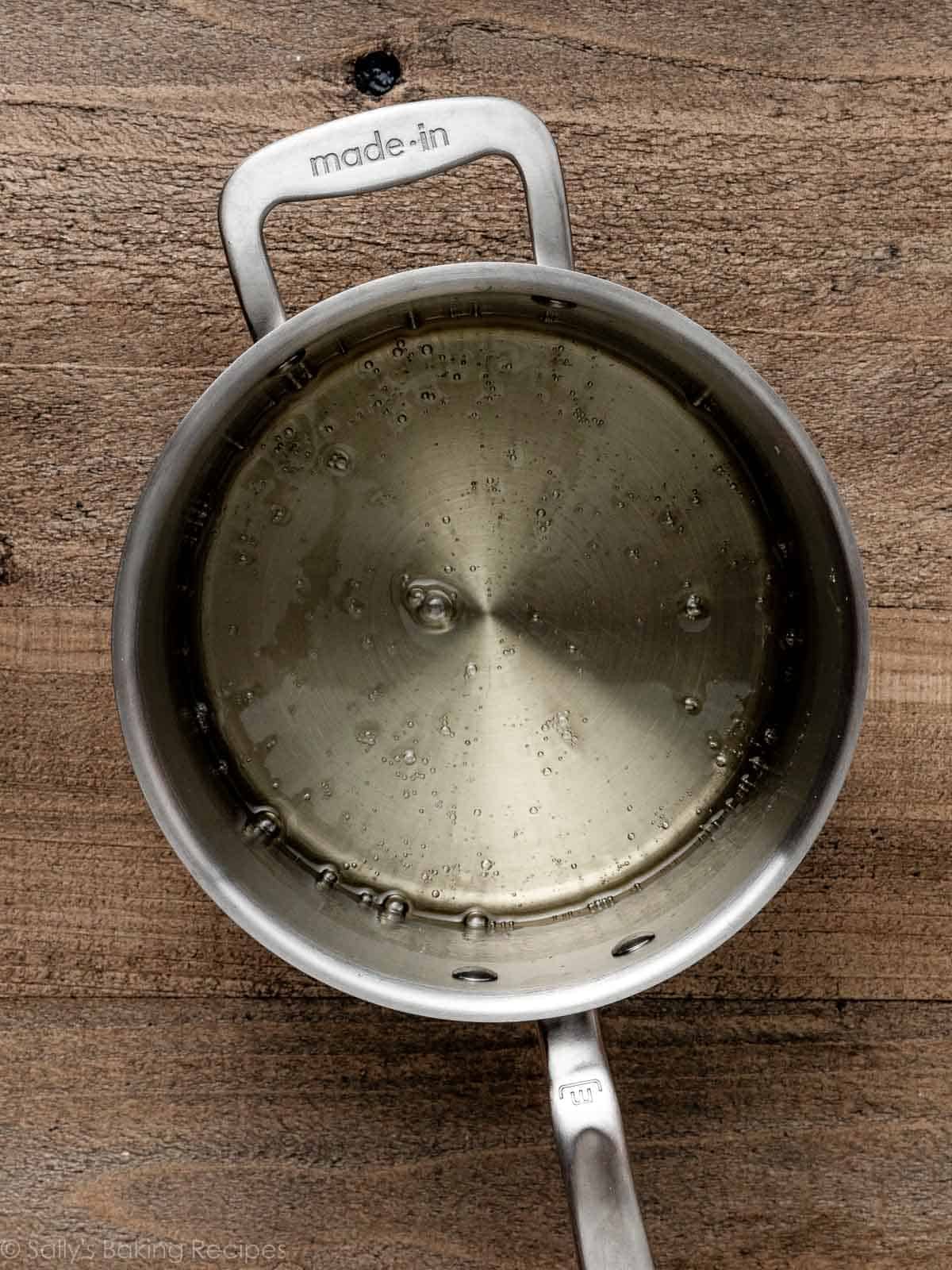
Combine gelatin and water in the bowl of your stand mixer and let sit. Meanwhile, cook your sugar syrup on the stove. As it cooks, use a pastry brush moistened with water to brush down the sides of the pan, to prevent crystallization and the sugar from burning on the sides of the pan.
Do I Absolutely Need a Candy Thermometer?
Yes, I highly recommend using a candy thermometer. This isn’t a scary tool, nor should it intimidate you! It’s a tool that will make the process MUCH easier, and much more accurate. All you have to do is attach it to your pan and don’t let the needle touch the bottom of the pan (that would give an inaccurate reading since the bottom is the hottest). With a candy thermometer, you’ll know exactly when the sugar syrup has reached “soft ball” stage, or 235–240°F/113–116°C. That’s exactly when it’s done on the stove. A candy thermometer takes the guesswork out of the candy-making process.
I always cook candy recipes like this one on the stove, but used a hot plate here so I could take a helpful photo to show you what the mixture looks like:
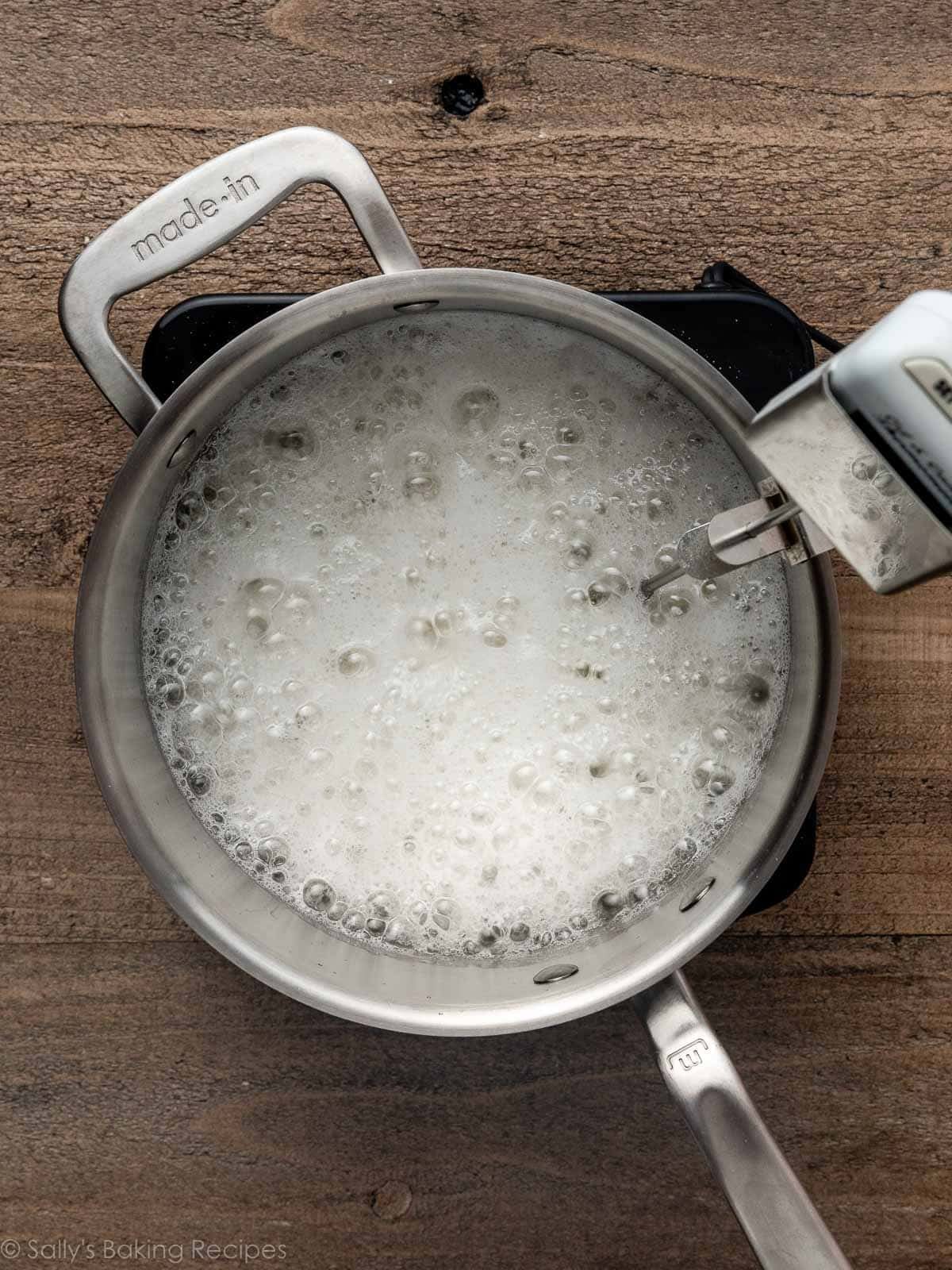
Success Tip: Homemade candy, including marshmallows, is very particular not only when it comes to ingredients, but also with regard to weather. Never cook candy on a humid day because it will absorb moisture from the air, which can result in too-soft consistency or texture. Cool, dry days are ideal.
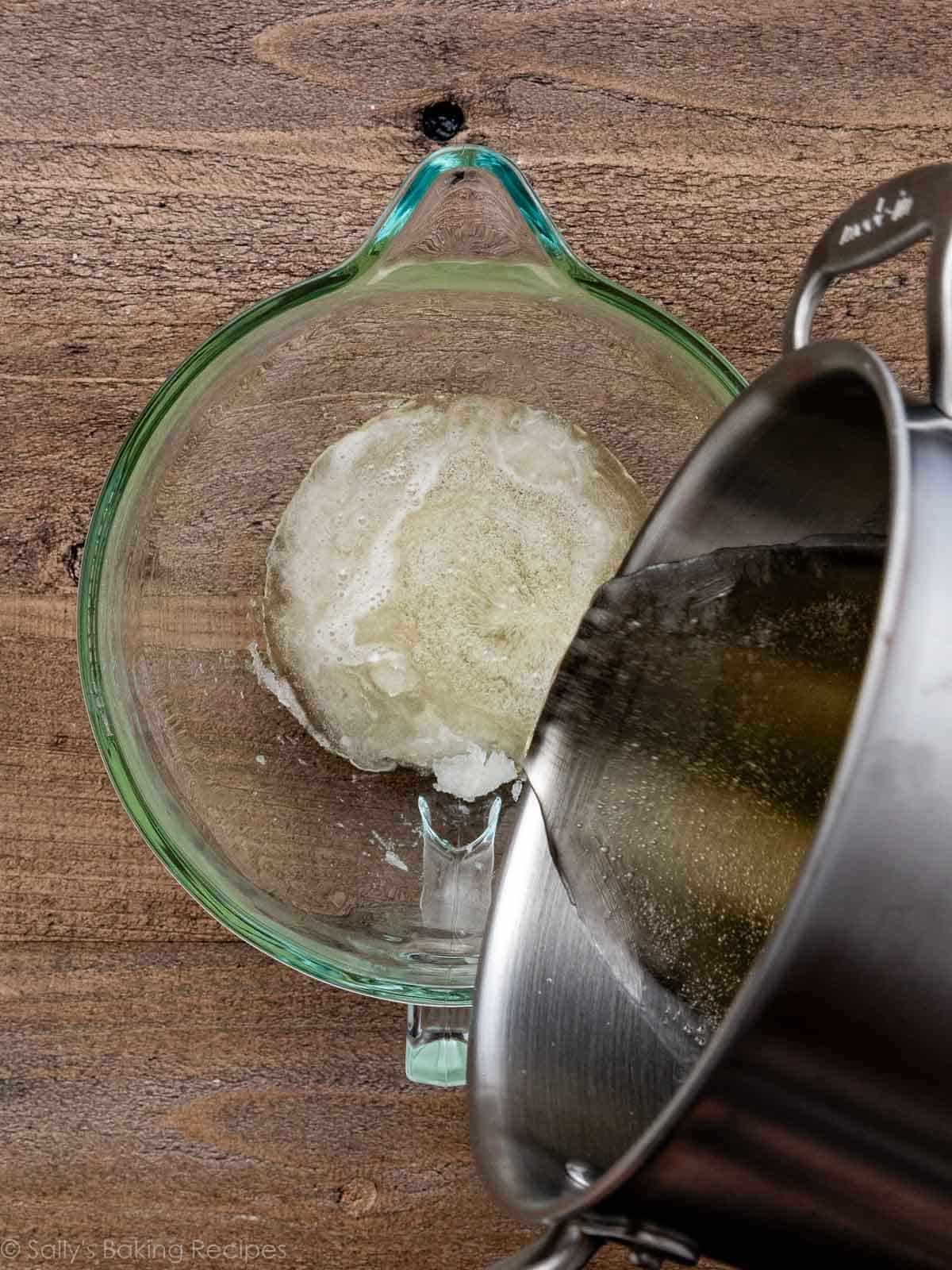
Let the hot sugar syrup sit for a few minutes, and then pour it into the gelatin mixture. Gradually increase the mixer speed to high, and let the mixer run for 10–15 minutes, whipping the marshmallow until it’s white, thick, and shiny.
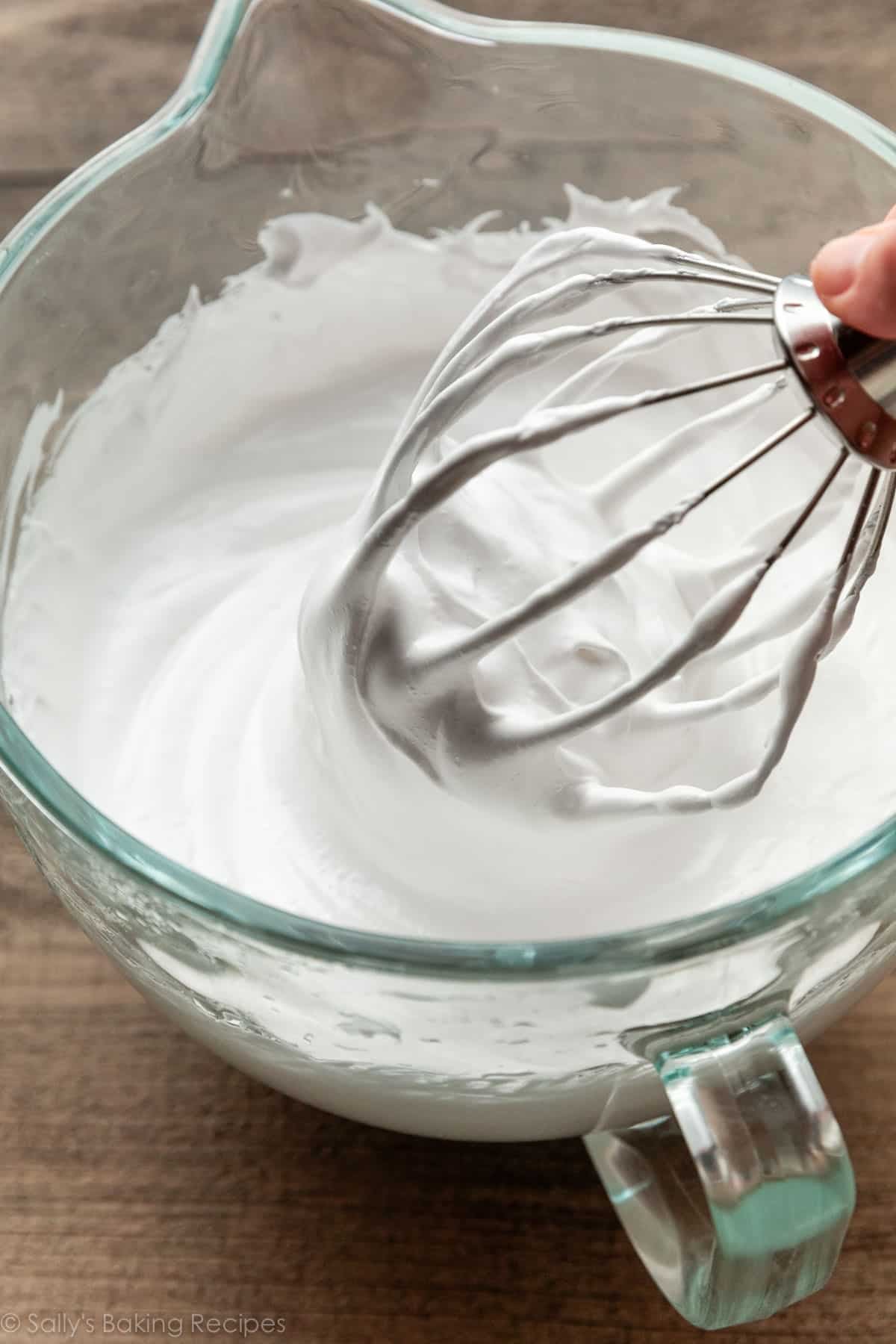
At the very end of mixing, add in the vanilla extract.
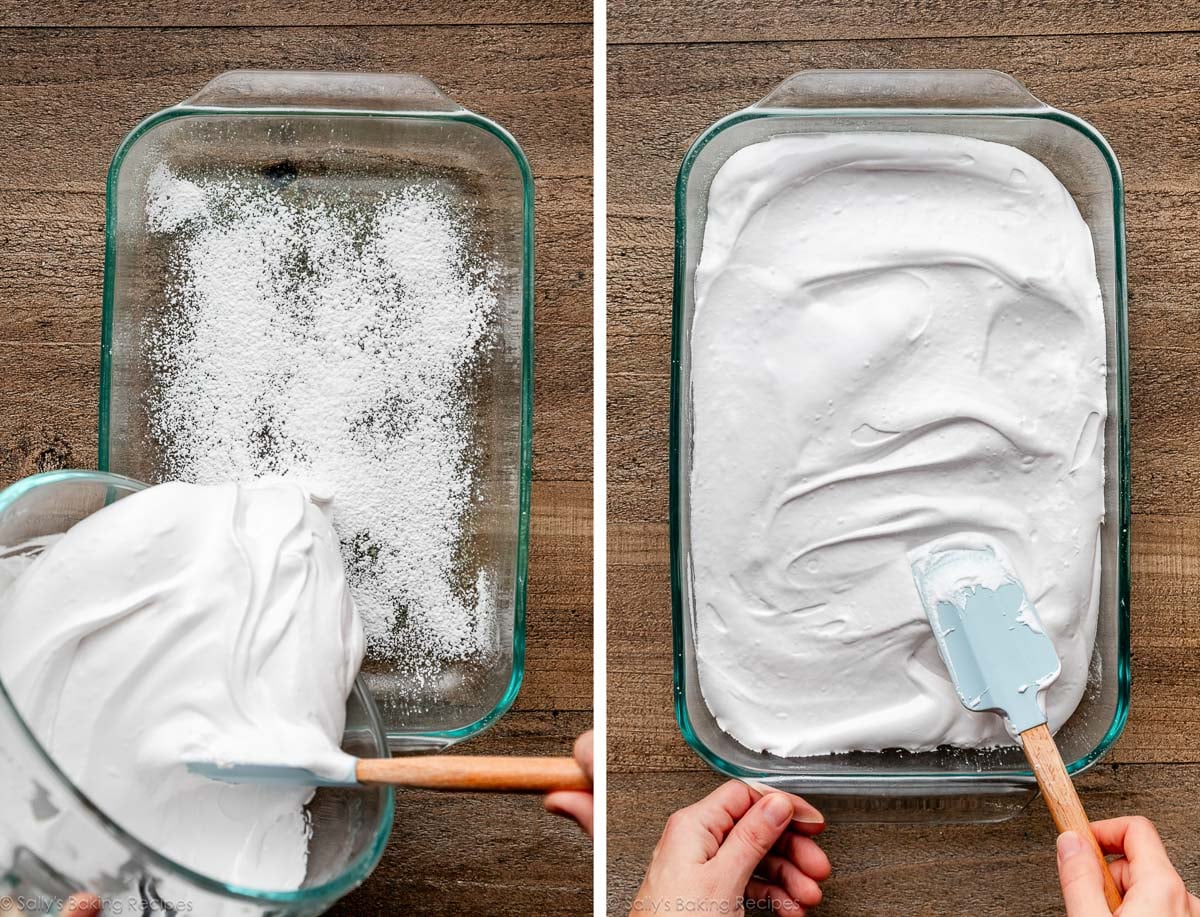
Pour/spoon the mixture into the prepared pan, and smooth the top with a spatula. Let the marshmallow sit, uncovered, at room temperature for at least 6 hours—ideally, overnight.
How Do I Neatly Cut Homemade Marshmallows?
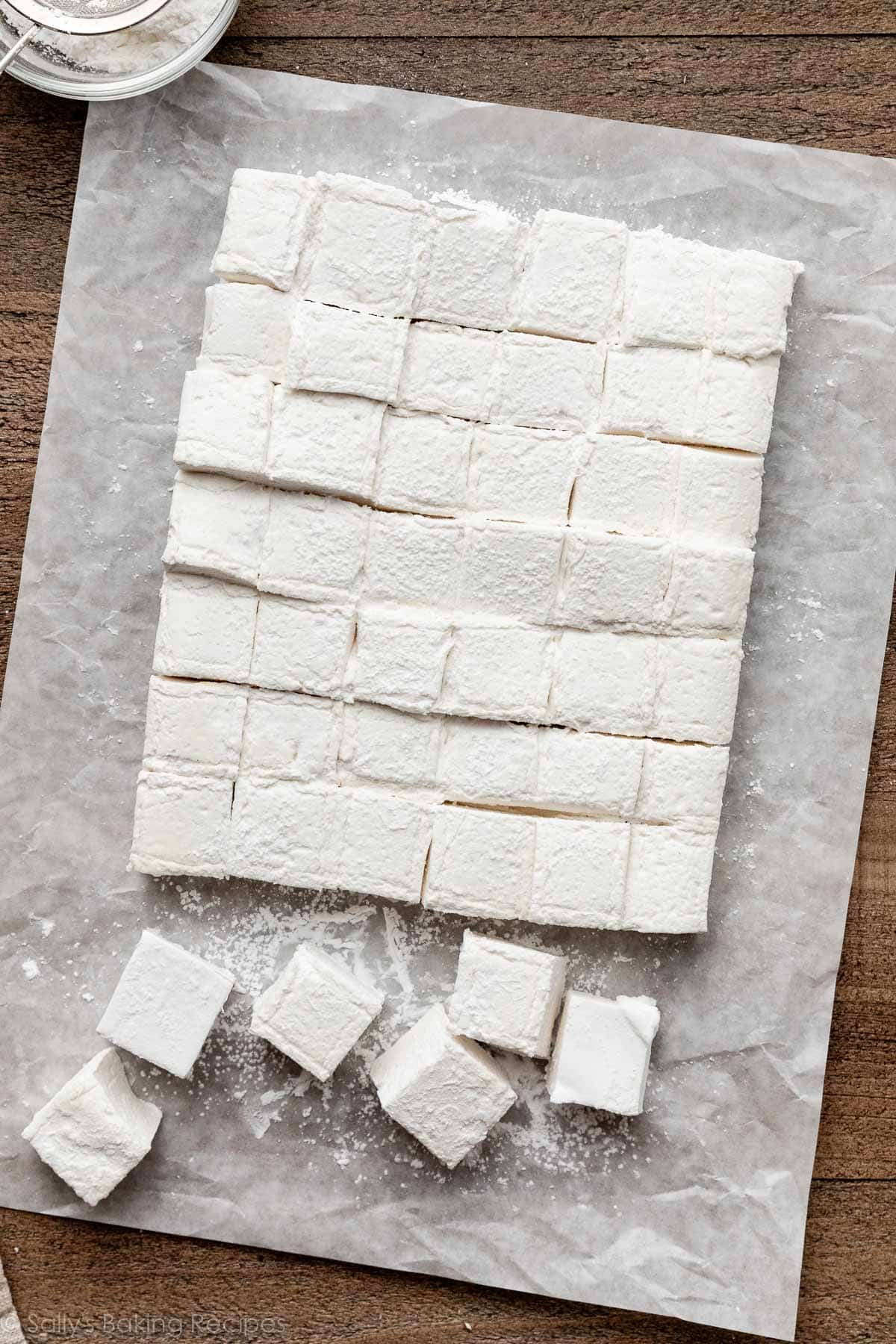
After they’ve set, it’s time to cut the marshmallows. Lay a sheet of parchment paper on the counter or on a cutting board, and dust it with some of the remaining confectioners’ sugar/cornstarch mixture. Dust the top of the marshmallow with this mixture, too.
Use a knife to loosen the edges of the marshmallow from the pan, then invert the pan onto the prepared surface. Lift a corner of the pan and use your fingers to peel the marshmallow away from the pan.
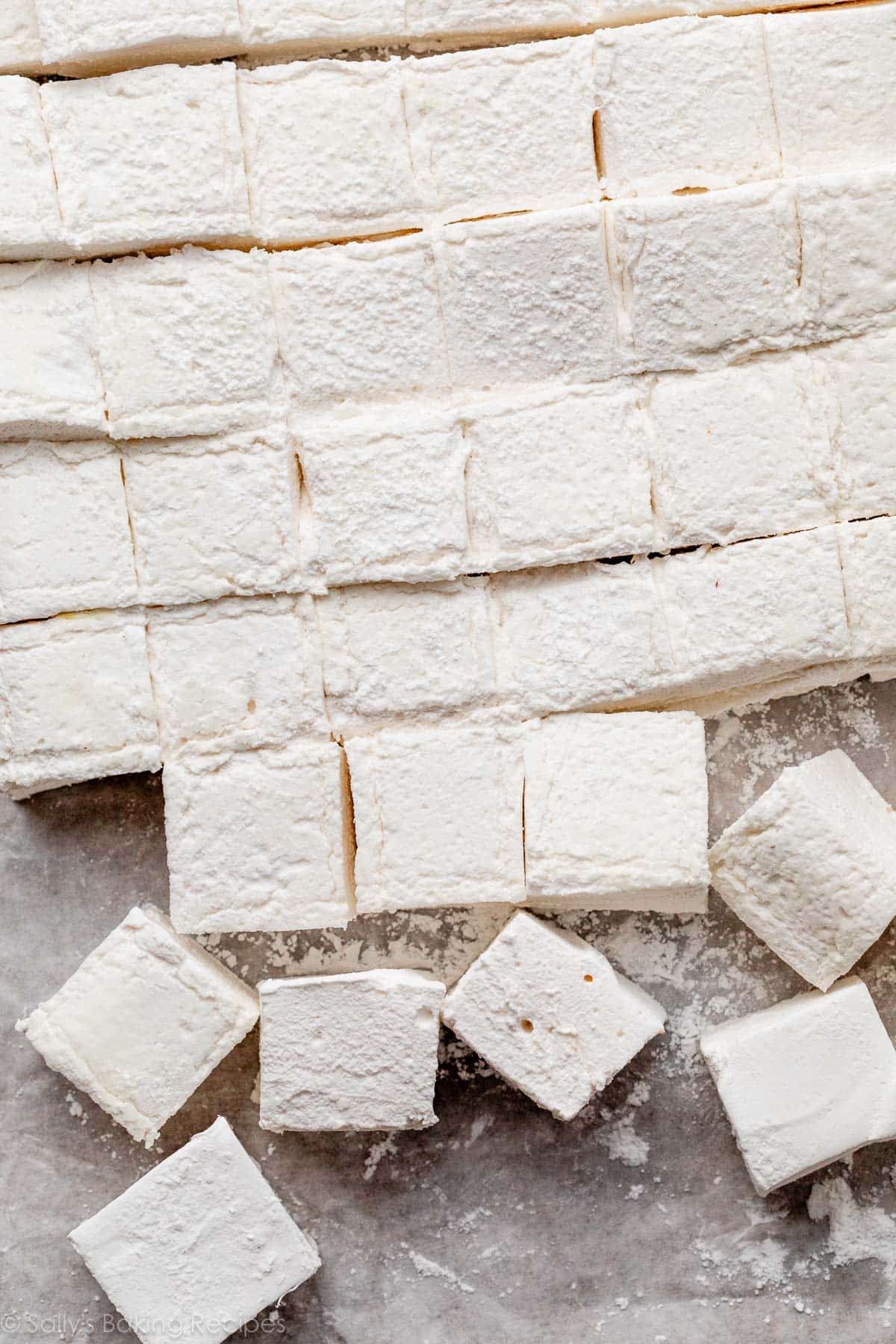
Coat a sharp knife blade in the sugar/cornstarch, and slice the marshmallow into 1.5-inch squares, re-coating the knife as needed. I find that running the blade under hot water and wiping it dry with a towel helps make for clean cuts, too.
Roll the edges of the marshmallows in the sugar/cornstarch mixture, so the outside is no longer sticky. That’s it! You’re done.
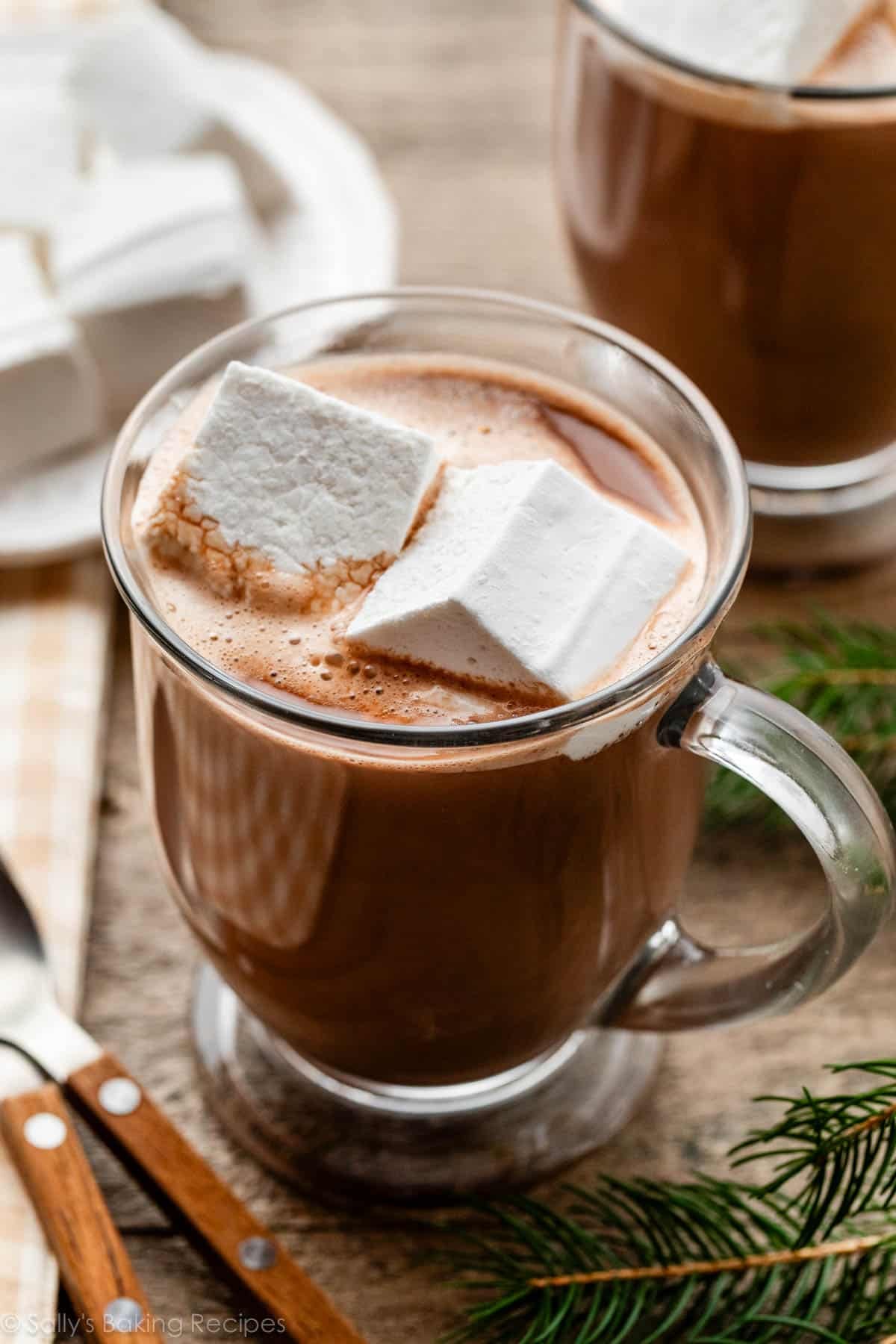
Now, all you need is a batch of slow cooker hot chocolate, because these puffy pillows are ready to give everyone the sweetest of sweet dreams!
How to Store Homemade Marshmallows
Layer them between sheets of parchment or wax paper in an airtight container, and store at room temperature in a cool, dry place for up to 2 weeks. I do not recommend freezing homemade marshmallows, as they never really soften up after thawing.
Can I Use Homemade Marshmallows for…
- Toasting over a fire for s’mores? Yes!
- Rice Krispie Treats? Yes!
- Topping Sweet Potato Casserole? Yes, please! For that, you can skip the pecan topping. Place the marshmallows on top when there’s only 5 minutes of bake time left.
Homemade marshmallows also make a wonderful gift; wrap them up with some gourmet hot chocolate mix and a cute mug. Who wouldn’t want to receive that? P.S. If you’re in need of more gift-giving inspiration, check out my Holiday Gift Guide for Bakers, updated annually.
Print
How to Make Homemade Marshmallows
- Prep Time: 35 minutes
- Cook Time: 15 minutes
- Total Time: 6 hours, 50 minutes
- Yield: about 54-60 marshmallows
- Category: Candy
- Method: Cooking
- Cuisine: American
Description
If ever there was a homemade sweet treat that tastes worlds away from the store-bought version, it’s homemade marshmallows. These have just the right amount of sweetness, a delicate kiss of vanilla flavor, and a pillowy soft texture you won’t find anywhere else. This is a great make-ahead recipe, as the marshmallows need to set for at least 6 hours, and last for 2 weeks. Avoid making these on a humid day, as the moisture in the air can prevent the marshmallows from setting properly.
Ingredients
- 1/3 cup (40g) confectioners’ sugar
- 3 Tablespoons (24g) cornstarch
- 3/4 ounce (21g) unflavored gelatin (3 standard 1/4-ounce packets)
- 1 cup (240ml) cold water, divided
- 1 cup (325g) light corn syrup
- 1 and 1/2 cups (300g) granulated sugar
- 1/4 teaspoon salt
- 1 Tablespoon pure vanilla extract
Instructions
- Generously spray the bottom and sides of a 9×13-inch glass or ceramic baking pan with nonstick cooking spray. (I do not suggested a metal pan, as it can affect the taste of the marshmallows.) Sift the confectioners’ sugar and cornstarch together into a bowl and sprinkle some of it very lightly all around the pan, to dust it. Set the remaining sugar/cornstarch mixture aside.

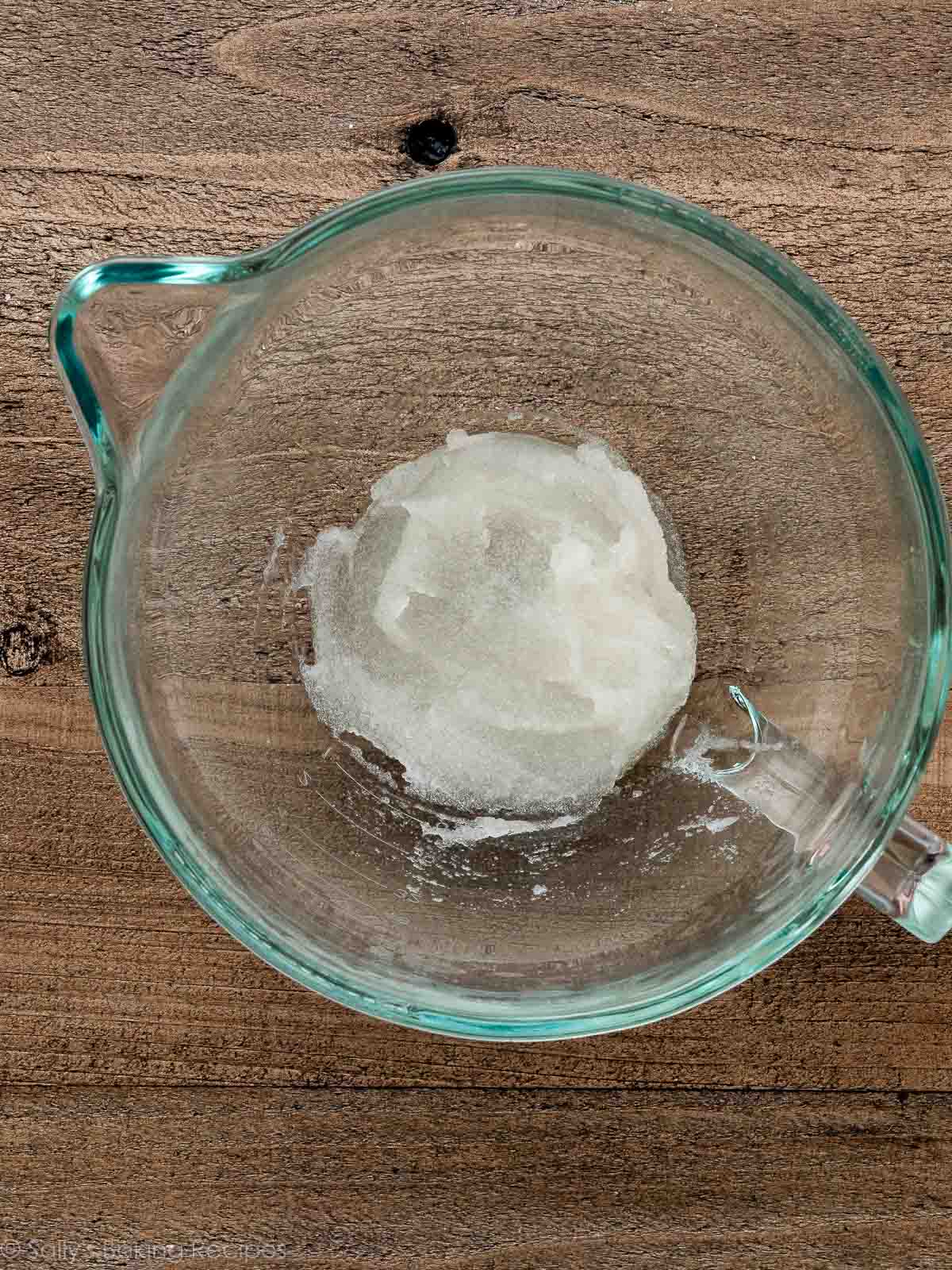
- Place the gelatin and 1/2 cup water in the bowl of a stand mixer fitted with a whisk attachment. (Or, if using a handheld mixer, a regular large mixing bowl.) Whisk/beat on low speed for 1 minute to briefly combine. Allow to sit as you cook the sugar syrup—no need to cover.
- Place the remaining 1/2 cup water, the corn syrup, granulated sugar, and salt in a 3-quart heavy-duty saucepan over medium heat. Stir with a wooden spoon until the sugar has dissolved. Attach a candy thermometer to the side of the saucepan. Do not let it touch the bottom of the pan. As the sugar syrup begins cooking, brush down the sides of the pan with a water-moistened pastry brush to prevent the sugar from crystallizing.
- Without stirring, brushing down the sides of the pan as needed, cook the sugar syrup until it reaches soft ball stage (when it reaches 235–240°F (113–116°C) on a digital candy thermometer). Remove the pan from heat and let sit for 5 minutes.
- Turn the mixer on low speed and slowly pour the hot syrup into the gelatin mixture as the mixer runs. The syrup will be extremely hot, so use caution.
- Gradually increase the mixer speed until it reaches high. Whip the mixture for 10–15 minutes, or until it is white, thick, and shiny. If using a handheld mixer, this could take longer. During the last minute of whipping, add the vanilla extract.

- Pour/spoon the marshmallow into the prepared pan and smooth out the top with a silicone or offset spatula. Allow to sit, uncovered, at room temperature for at least 6 hours, and up to 48 hours.

- Once completely firm, you can cut the marshmallows. To do so, cover a large surface or cutting board with parchment paper. Liberally sprinkle the surface as well as the top of the marshmallow with some of the remaining cornstarch/sugar mixture. Using a sharp knife, loosen the edges of the marshmallow from the pan, and then invert the pan onto the prepared surface. Lift a corner of the pan and use your fingers to help peel the marshmallow away from the pan.
- Using a sharp knife, cut the marshmallow into 1.5-inch squares, coating the knife blade with some of the leftover cornstarch/sugar mixture as needed. I find running the blade under hot water and wiping it dry helps to make clean cuts as well. Roll the edges of the marshmallows in the cornstarch/sugar mixture, if desired, so they are no longer sticky.
- Store leftover marshmallows at room temperature in an airtight container, with parchment paper between layers, in a cool, dry place for up to 2 weeks.
Notes
- Make Ahead Instructions: Marshmallows are a wonderful make-ahead recipe because they need to set for at least 6 hours, and up to 48 hours before cutting (see step 7). Then, they last up to 2 weeks.
- Special Tools (affiliate links): Fine Mesh Sieve | 9×13-inch Glass Baking Pan | Electric Mixer (Handheld or Stand Mixer) | Heavy-Duty Saucepan (like this one) | Pastry Brush | Digital Candy Thermometer | Parchment Paper Sheets
- Can I Make These Without Gelatin? Yes, you can. But you’ll need to use a different recipe, as subbing out gelatin is not a 1:1 swap. I know many have tried this vegan marshmallows recipe from Serious Eats with great success.
- Can I Make These Without Corn Syrup? Not this recipe. Corn syrup is imperative for making candy, as the inverted sugar in it helps prevent crystallization (aka a ruined batch of cooked sugar syrup). There are no replacements that I have successfully tested.
- Can I Use Vanilla Bean Paste? Yes. You can replace the vanilla extract with vanilla bean paste. I recommend using 2 teaspoons of the paste.
- Can I Flavor the Marshmallows With Anything Besides Vanilla? Yes! Instead of vanilla, you can use another extract such as peppermint, coconut, lemon, maple, or almond. I would start with only 1/2 teaspoon of any of these, taste, and then whip in more if desired. If adding another flavor, you can either leave out the vanilla, or reduce the amount down to 1 teaspoon. You could also add 1/4 to 1/2 teaspoon of cinnamon. Taste, and then add more if desired.
- Can I Tint the Marshmallows a Color? Yes, absolutely. Add a drop of gel food coloring when you add the extract. (I do not recommend liquid food coloring.) Pink marshmallows are always fun, and you can top them with sprinkles after spreading into the pan and before setting.
- Can I Make This Into Marshmallow Cream? I make marshmallow creme using egg whites and sugar, and not gelatin and corn syrup. The recipe below would need several adjustments. Try this homemade marshmallow creme aka meringue frosting.
- Avoid Making These On a Humid Day: Homemade candy, including marshmallows, is very particular not only when it comes to ingredients, but also with regard to weather. Never cook candy on a humid day because it will absorb moisture from the air, which can result in too-soft consistency or texture. Cool, dry days are ideal.
Recipe originally published in Sally’s Candy Addiction in 2016.







Reader Comments and Reviews
So good. The recipe was easy to follow and the marshmallow texture was very nice. I made mine with a mix of vanilla, cardamom, and orange extracts for a little fun variation
Amazing. Quite easy to make and taste wonderful. The directions are clear and easy to follow. I will never buy from the store again 🙂
I’ve made this twice and each time my mixture was flat and would not set properly, I mixed on high for over 15 minutes? Very baffled.
Hi Jessica, when you say flat, do you mean the cooked syrup/gelatin was not thickening during the whipping step? Are you using a handheld or stand mixer? Did you cook the syrup to 235–240°F (113–116°C)?
I loved making marshmallows they are delicious. However Even though if follow the instructions exactly, they do now pour out, I have to really work hard to get them out of the bowl and I end up with only half of the marshmallows going into the prepared pan.
Can you help me with this problem
Thank you
Hi Donna, it sounds like the mixture may be too stiff. Obviously it’s going to be very sticky, but it should pour out nicely into the pan. If you try them again, see if you can stop the mixer a minute or 2 sooner.
I’m going to add candied bacon, with just a bit of cayenne, ginger root powder, and cinnamon added to the sugar for the bacon. It will give an interesting pop of salt to the sweet.
That is a fantastic idea. I might drizzle choc on mine (already made) and then crumble bacon on them. Maybe spicy bacon. Thank you for the idea!!!!
These marshmallows taste good. But are they good enough for the effort required to make them? First, directions say to spray a glass dish generously, which I did. And when I turned the finished marshmallows over, all the generous yellow spray was stuck to the bottom, I had to blot it off. Second, the amount of stickiness is almost unmanageable. You have very little time between when the batter is done whipping to when you can get it spread in the baking dish before it becomes stiff and almost unspreadable. Cutting the finished product was challenging as expected. But absolutely nothing compares to the effort required to clean up this sticky mess. The recipe is not difficult to make but the clean up is a deal breaker for me. Definitely not worth the effort.
Does humidity affect how these marshmallows set up?
Hi Sally! Yes, humidity can make anything meringue-based tricky.
I made these recently and they turned out fantastic, My question is this: Can they be made into chocolate marshmallows (not dipped) by using cocoa powder? If so when should it be added?
Can you add these to a cookie and bake them? If so should I freeze the marshmallow first?
Hi Kim, yes, you can use these just as you would any store-bought marshmallows. I would freeze them, to ensure they don’t melt right away.
These look fantastic and I can’t wait to make them but my mixer is broken…Do you think it would be possible to whisk by hand?
Hi Justin, while you could certainly try it, it would be *very* difficult to successfully whip this by hand.
Challenge accepted
I want to try this recipe but I’ve read that humidity affects the overnight set up process. As I live in the rainy NW, do you know if this would affect the marshmallows?
Can I cut these using cookie cutters? I’d like to then dip them in chocolate and decorate.
Hi Beth, yes, absolutely. After they set.
Can you coat these in chocolate? If so, what chocolate would you recommend? Thank you.
Hi Carolyn, I don’t see why not! I would chop up a baking chocolate bar, such as Baker’s or Ghirardelli, and melt it, then dip the marshmallows in it. Let us know how they turn out!
Would you need to add coconut oil so the chocolate would harden/set up?
I made these for the first time two years ago to add to my cookie platter gift trays. They were a huge hit, I did dip the tops in chocolate on some of them. My question, do you think they could be cut into shapes? I make hot cocoa bombs as gifts and think a snowflake shape would be an amazing addition.
I just made these for the first time and I used mini cookie cutters to cut them out and they turned out cute. One side of them is not as crisp as the other shape wise but they definitely look like the cookie cutters I used. I greased them up really good with cooking spray before each time I cut them. The one thing is I did end up with a lot of extra marshmallow that wasn’t shaped. I actually then used a pizza cutter and cut those into mini marshmallow rough cubes.
Hi Sally, I would like to make swirled marshmallows—-would I just sprinkle droplets over the mixture and swirl it before it sets?
Hi Wendy, droplets of food coloring? I haven’t tried that, but you certainly could. I would use gel food coloring, and go very light on the amount just in case it interferes with how the marshmallows set up.
Hello! Would Stainless Steel mixer bowls have the same effect on marshmallows as a metal pan?
(Am using a KA bowl lift, so had to ask)
lass mixing bowl f
Hi Logan, you can use a stainless steel mixing bowl. I just advise you don’t let the marshmallows set up in a metal pan. Sometimes it can leave an aftertaste.
Is there a way to make the marshmallows set faster?
Hi Emily, unfortunately, no. This is a good recipe to start a day ahead and just let them set overnight.
Could you use a silicon candy tray instead of the glass baking dish
Hi Mary, we haven’t tested the marshmallow in one of those, but I don’t see why it wouldn’t work. If you try it, please report back!
I have been leery about making homemade marshmallows for years, fearing they would be a gloopy mess. I am happy to say that I worried for nothing! These are such soft pillows of goodness that was relatively simple to make! And each person who tasted one said first “taste just like a marshmallow!”, then “they’re so soft!”
This is a keeper! I’ve eaten them on their own, in hot chocolate, and this morning in my coffee! I’m interested in trying different flavors next. Thanks for the recipe and easy to follow instructions!
Haven’t made yet. My question is how much of this recipe goes into your Rice Krispies recipe?
If you are making our Rice Krispie Treats recipe, you would still need 20 oz (566g) of these marshmallows. Enjoy!
Can you send these as a mailed food gift? Are there any special steps/packaging needed?
Hi Paige, absolutely! These last a good while. Just make sure they’re packaged with a bit of cushion around them. You can store in a tin or plastic container.
Is there a substitute for corn syrup in your recipes? We don’t use seed oils.
Hi Natalie, with regards to the corn syrup, there’s no sub for this exact recipe. Corn syrup is imperative for making this candy, as the inverted sugar in it helps prevent crystallization (aka a ruined batch of cooked sugar syrup/base of the marshmallow). There are no replacements that I have successfully tested.
This recipe looks delicious, I have to try it. Can I use the infrared thermometer?
Hi Andrea, I’ve never tried it. I recommend a candy thermometer.
I make homemade marshmallows every Christmas. It’s easier than it seems and so worth the effort! One tip, I cut mine with a pizza cutter instead of a knife. Clean it between cuts and leave it a little wet. I’ve tried a bunch of other ways and this works best.
Such a great tip, thank you for sharing Nancy!
Great recipe, thank you! Could these be dried in a dehydrator to add to dried hot cocoa mix?
Can these be used to make Rice Krispie treats?
Yes!
I have been wanting to make homemade marshmallows for some time, so this recipe is great!
I know you said, USE corn syrup, but do you think it is possible to use honey instead?
Or, do you recommend any sites that have a recipe without corn syrup ?
Thanks!
Hi Rebeka, I would look for a recipe that has been formulated for using a corn syrup substitute, so sorry I don’t have that. It’s not a 1:1 switch to honey here.
Thanks so much for answering, Sally!
These sound delicious! Would it be possible to cut this recipe in half to make smaller batch?
Hi Annie, halving the recipe would be fine. (I just do not recommend doubling it as the added volume can mess up the cooking process.) I would use an 8-inch square pan or a 9-inch square pan for thinner marshmallows. The whipping time would be shorter since you are working with less.
How would you incorporate toasted coconut as a coating, similar to store bought toasted coconut marshmallows?
Hi Susan, you can sprinkle toasted coconut on top of the marshmallow mixture after spreading it into the pan, and before it sets.
Are there alterations for using this recipe for marshmallow crème?
Hi Cindy, when I make marshmallow creme, I actually use egg whites. Here is my recipe. You won’t need gelatin. It’s a soft, sweet meringue, but tastes like marshmallow creme.
I hardly ever use cornstarch. Can I substitute flour instead, and if so, what would be the ratio of replacement flour to cornstarch? Many thanks!
Hi Liz, no, you won’t want to use flour unless it has been heat-treated first. You could probably skip it and just use confectioners’ sugar instead, but the marshmallows may still stick a bit. I strongly recommend cornstarch.