
This homemade cinnamon swirl bread recipe is a family favorite and requires only a handful of basic ingredients (just 8!). It’s soft and tender with the most unbelievably gooey cinnamon swirl inside. Each yeasted bread slice tastes fabulous on its own, but try it toasted with some honey butter… unbelievable! For a no-yeast version, see my cinnamon swirl quick bread.
I originally published this recipe in 2015 and have since added new photos and made a few changes to the recipe steps, which are outlined in the post below.
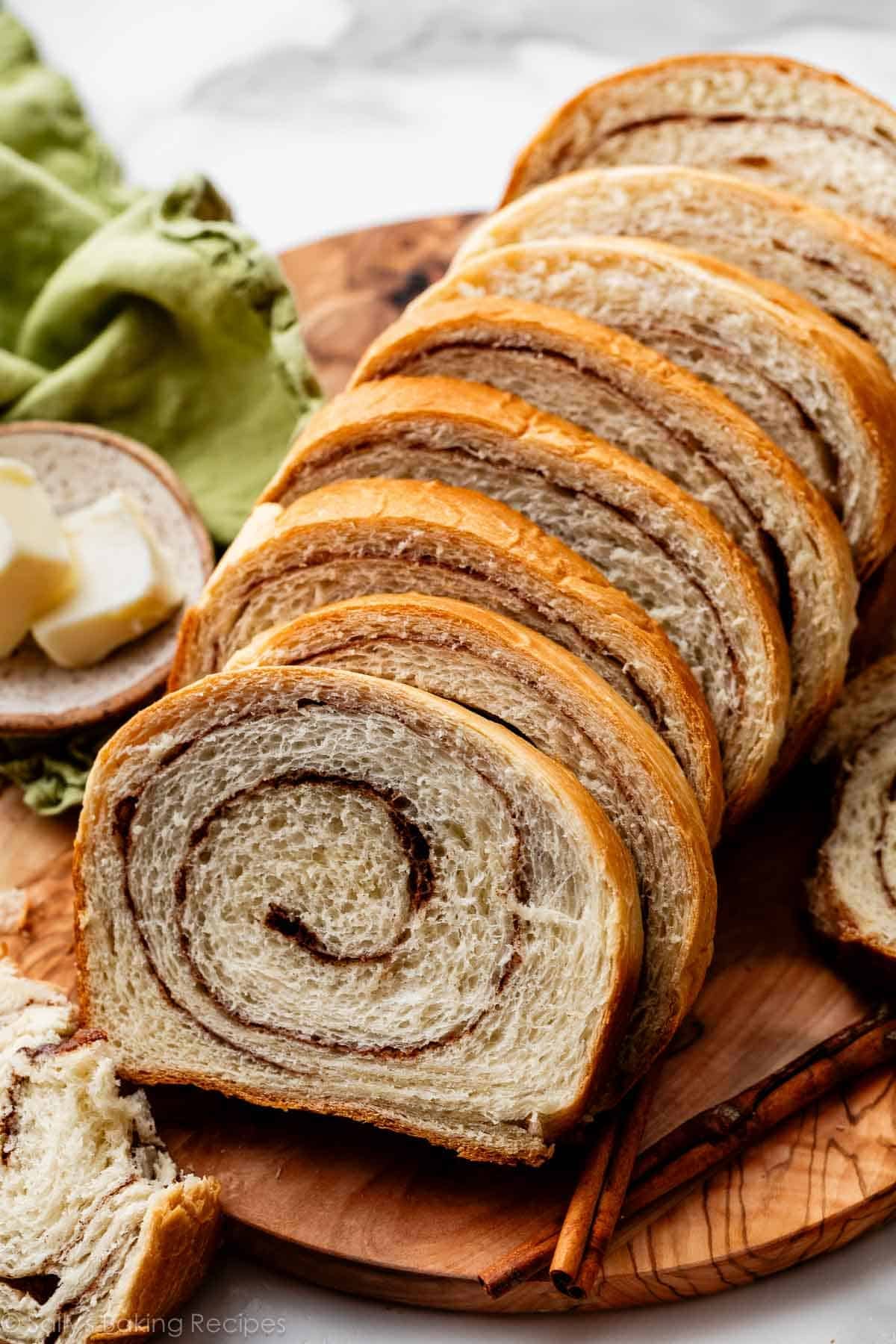
Homemade cinnamon swirl bread is one of life’s greatest treasures. Hot & fresh out of the oven, the smell alone will captivate a large crowd. The bread is buttery soft and the hypnotizing swirls are deliciously sweet. This recipe is basically a simplified version of my cinnamon crunch bread.
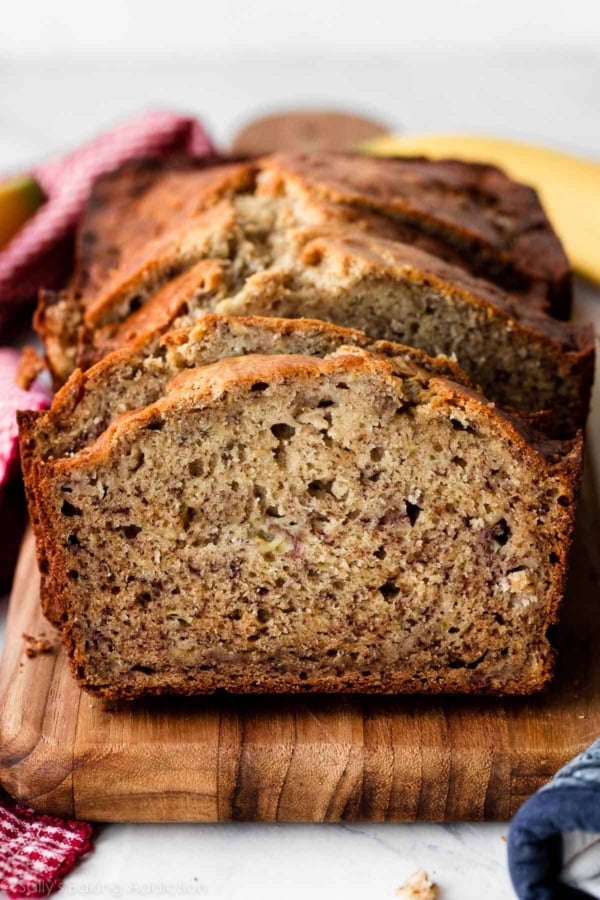
You know I love a good cinnamon sugar swirl (I mean, have you tried this cinnamon swirl banana bread??) But honestly, there is nothing on earth quite like the craft of homemade yeast bread. Isn’t it so satisfying? That’s why I have so many homemade yeast bread recipes on this website. Everyone’s favorite!
One reader, Michelle, commented: “One of the best recipes for cinnamon swirl out there. The bread is fluffy like you would find in a bakery and it has just the right amount of cinnamon and sugar, without being too gooey. We made our first loaf last night and by morning it was gone, so we have to make a second loaf. ★★★★★”
Baking with Yeast Guide
Are you a yeasted bread beginner? Reference this Baking with Yeast Guide whenever you work with baker’s yeast. I include practical answers to all of your common yeast questions.
Updated & Improved Cinnamon Swirl Bread Recipe
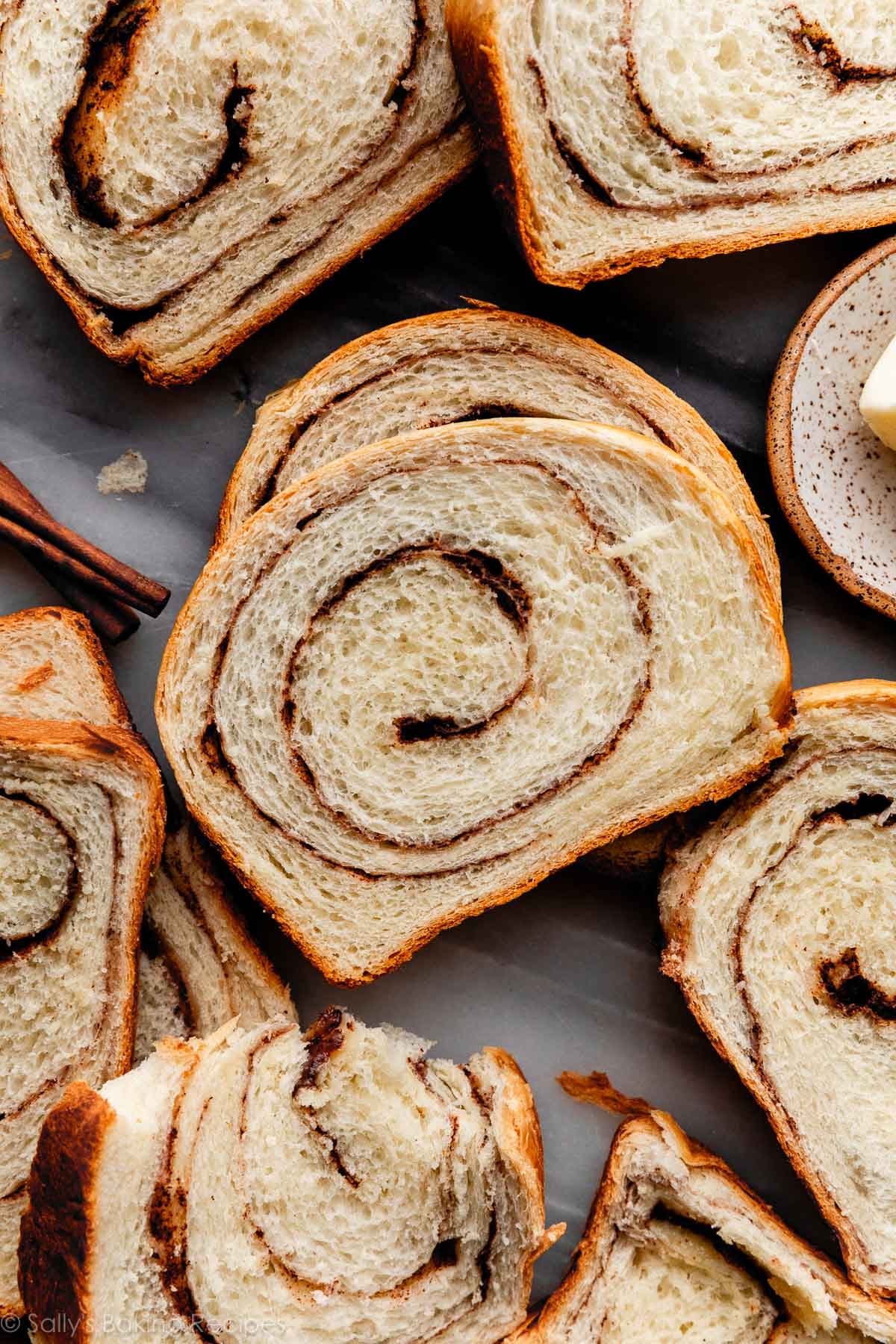
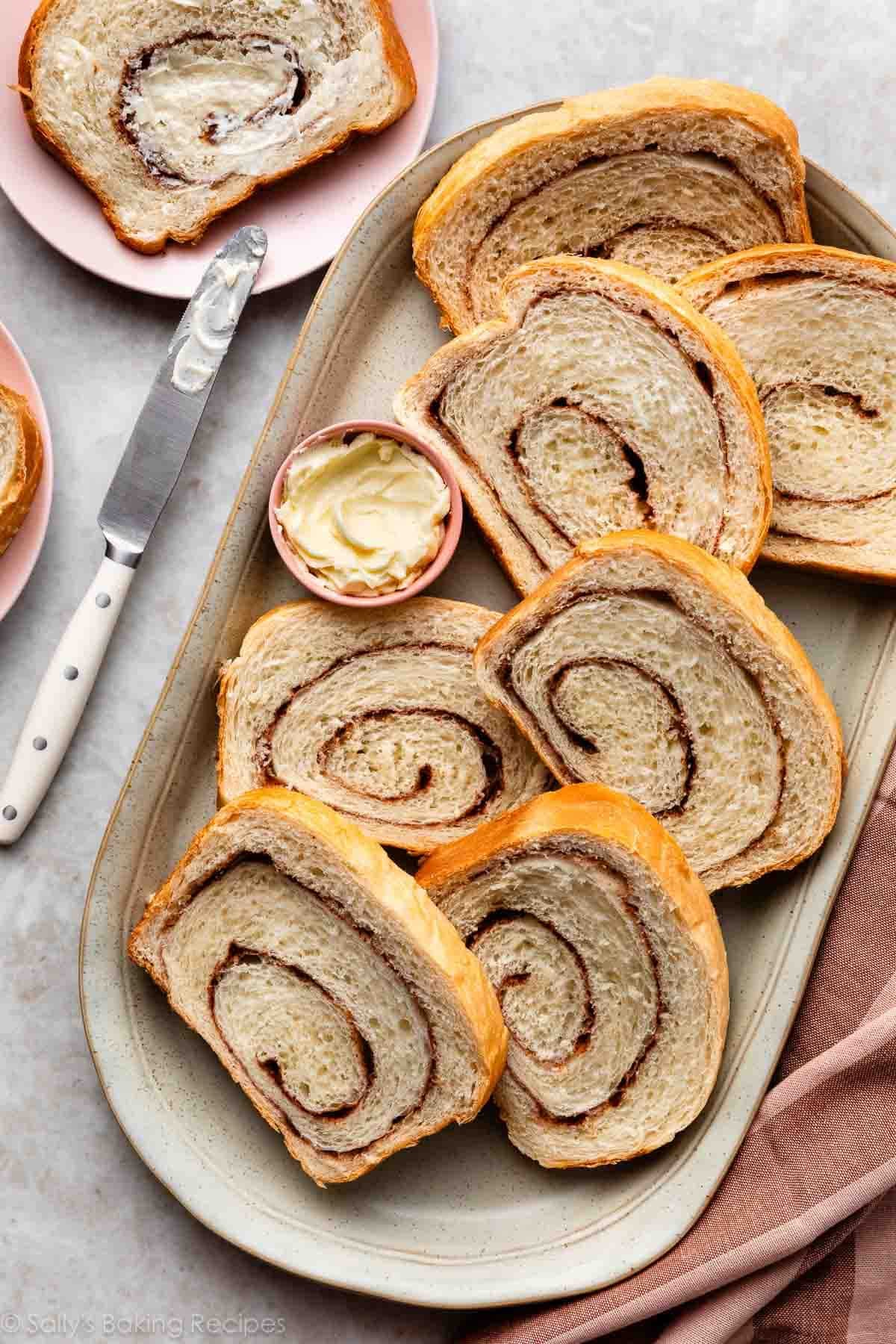
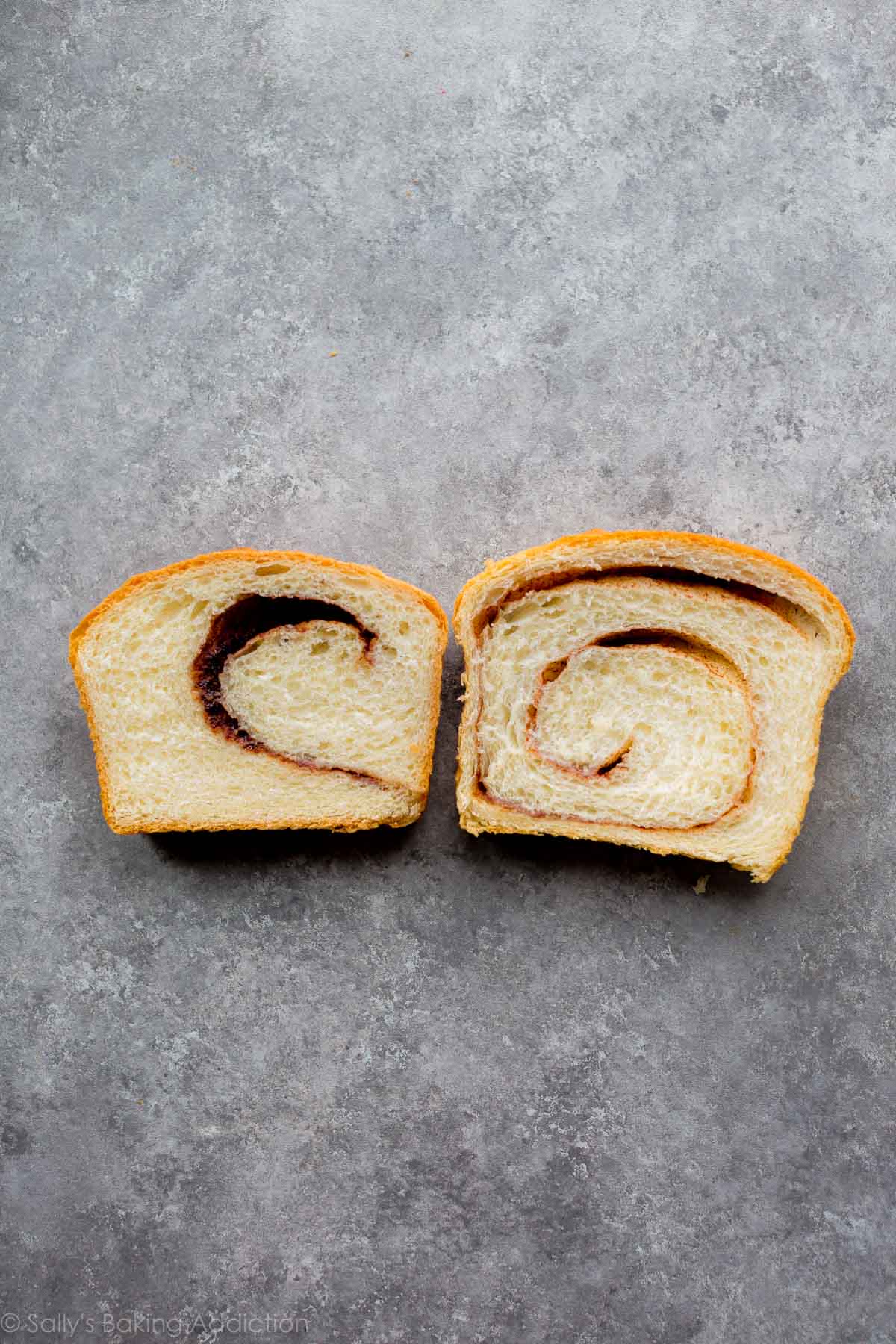
This recipe has seen some updates over the past decade, and I want to show a quick comparison photo. When I first published this recipe, I shaped the dough into a thick square and rolled it up. This gave me very little swirl inside the baked bread. Now I roll it out into a thinner 8×20-inch rectangle. I brush the rolled-out dough with egg white, and sprinkle the cinnamon sugar on top. The egg white helps the cinnamon sugar stick, and helps prevent large air gaps in the baked bread.
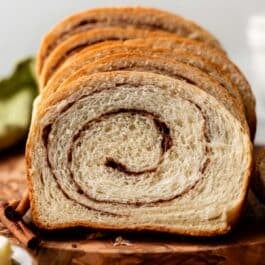
This method produces more swirls in each slice. The loaf also rises taller as it bakes. I still can’t believe the BIG difference these SMALL changes make. Look at the slices:
How to Make Yeasted Cinnamon Swirl Bread
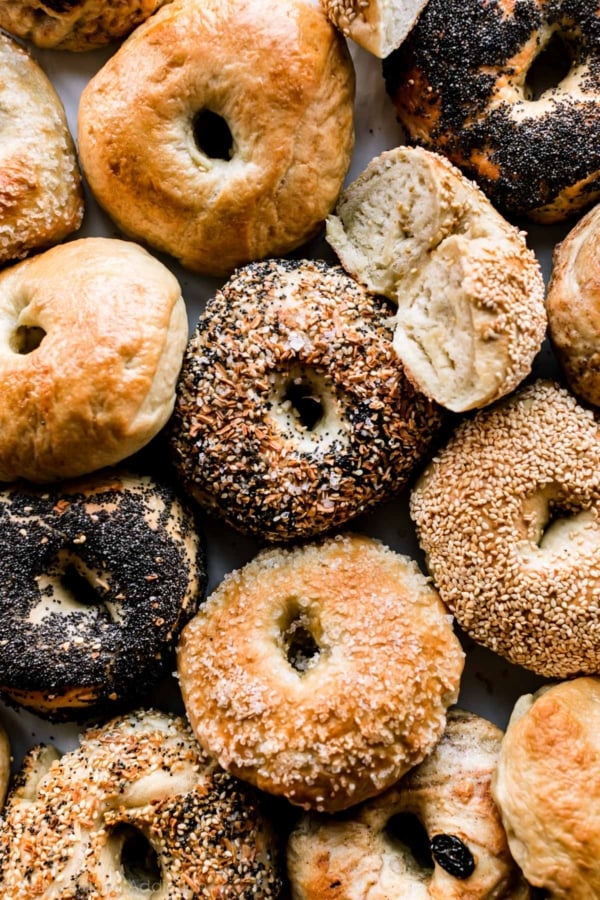
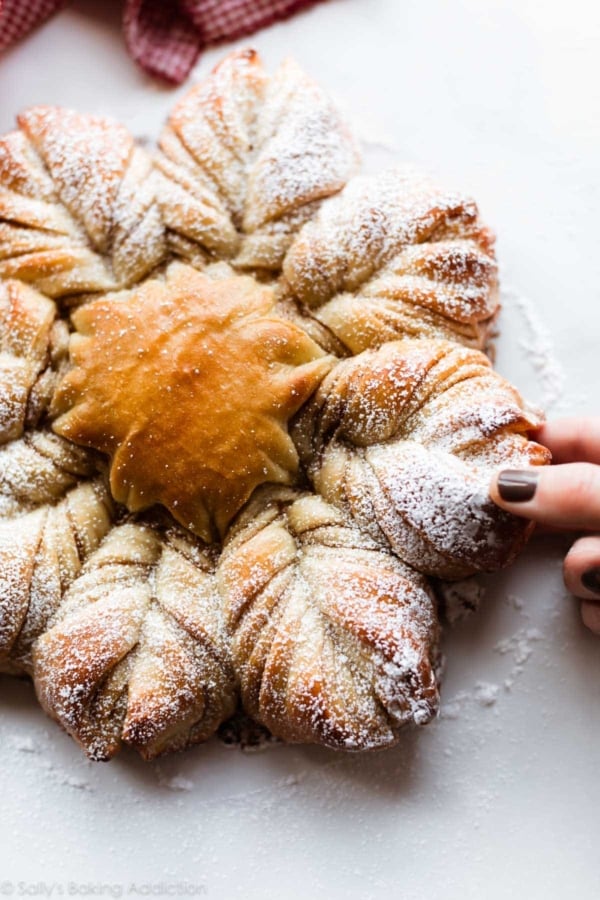
Today I’m teaching you how to become a bread-baking professional (well, close to it!). This recipe is very similar to my sandwich bread recipe, but it’s a little sweeter. Follow my tips and soon you’ll bake homemade croissants or croissant bread, homemade bagels, cheese bread, and even star bread. With only a handful of basic ingredients, your kitchen will transform into a bread bakery!
- Prepare the Dough: The first step is to mix the bread dough. You need yeast, sugar, water, milk, butter, bread flour, and salt. The thing about homemade bread is that the ingredients are SO basic, but throw the word “yeast” in there and many feel intimidated. I promise it’s not difficult to throw this dough together. As long as you give the yeast, sugar, water, and milk a few minutes to sit before adding the other ingredients, you’re on the right track!
- Use Bread Flour: All-purpose flour doesn’t have enough strength to support the rise and structure of cinnamon swirl bread. Bread flour is sold right next to the all-purpose flour in the baking aisle, and if you need some recipe inspiration for your leftover bread flour, try any of these recipes.
- Knead the Dough: Do you know how to do this? If not, I have an entire tutorial and video for How to Knead Dough.
- First Rise: The dough must rise twice. After you knead the dough, let it rise until doubled in size.
- Swirl the Dough: After the dough rises, punch it down, then roll it out. Brush with egg white, sprinkle with cinnamon and sugar, and roll back up.
- Second Rise: Place the rolled dough into a loaf pan and let it rise for 1 more hour.
- Bake: Pat yourself on the back because—congratulations!—you’re a bread baker with the simplest yet tastiest homemade cinnamon bread recipe in the world.
These Step-by-Step Photos Will Help:
These are the ingredients you need:
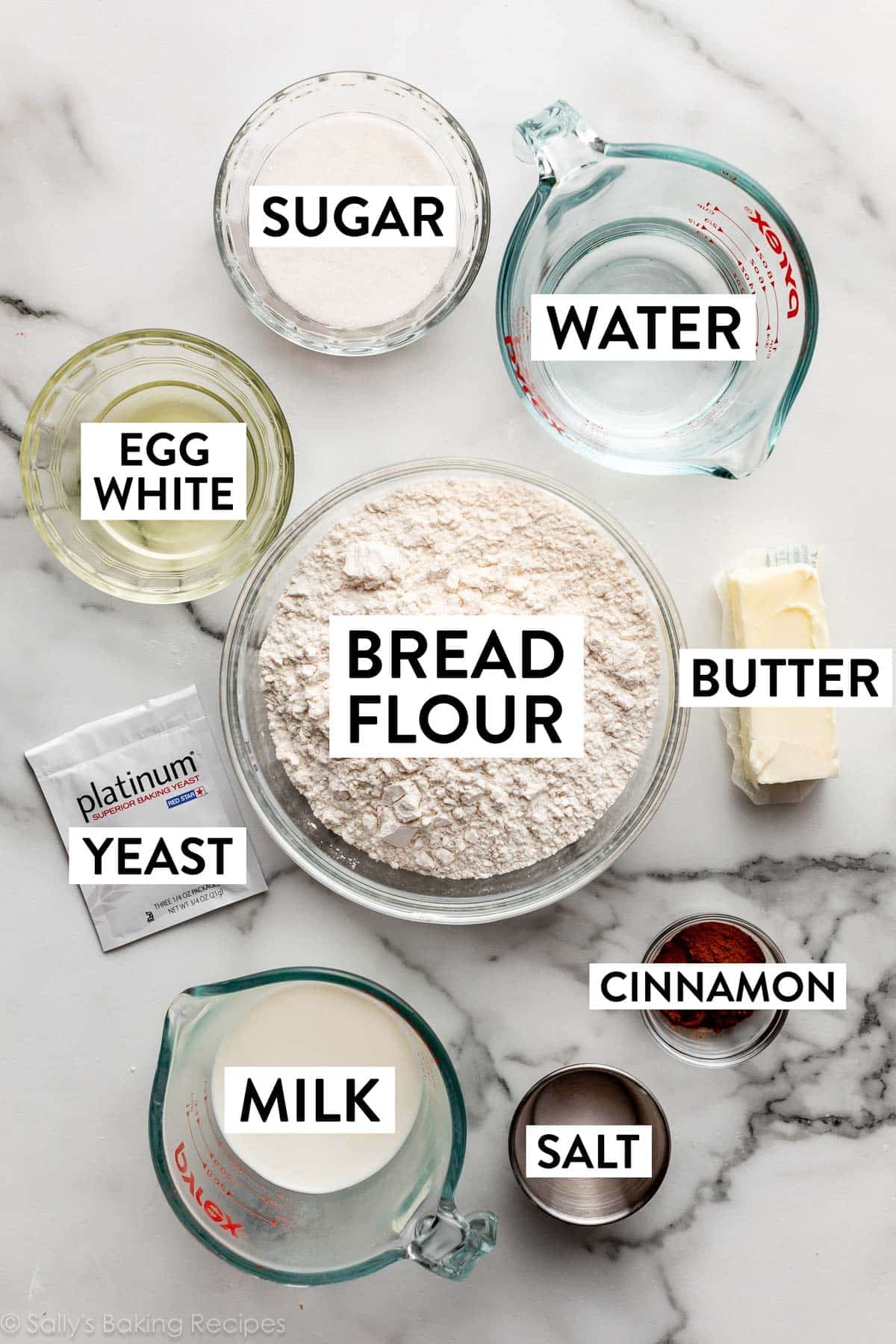
Here is the dough after kneading:
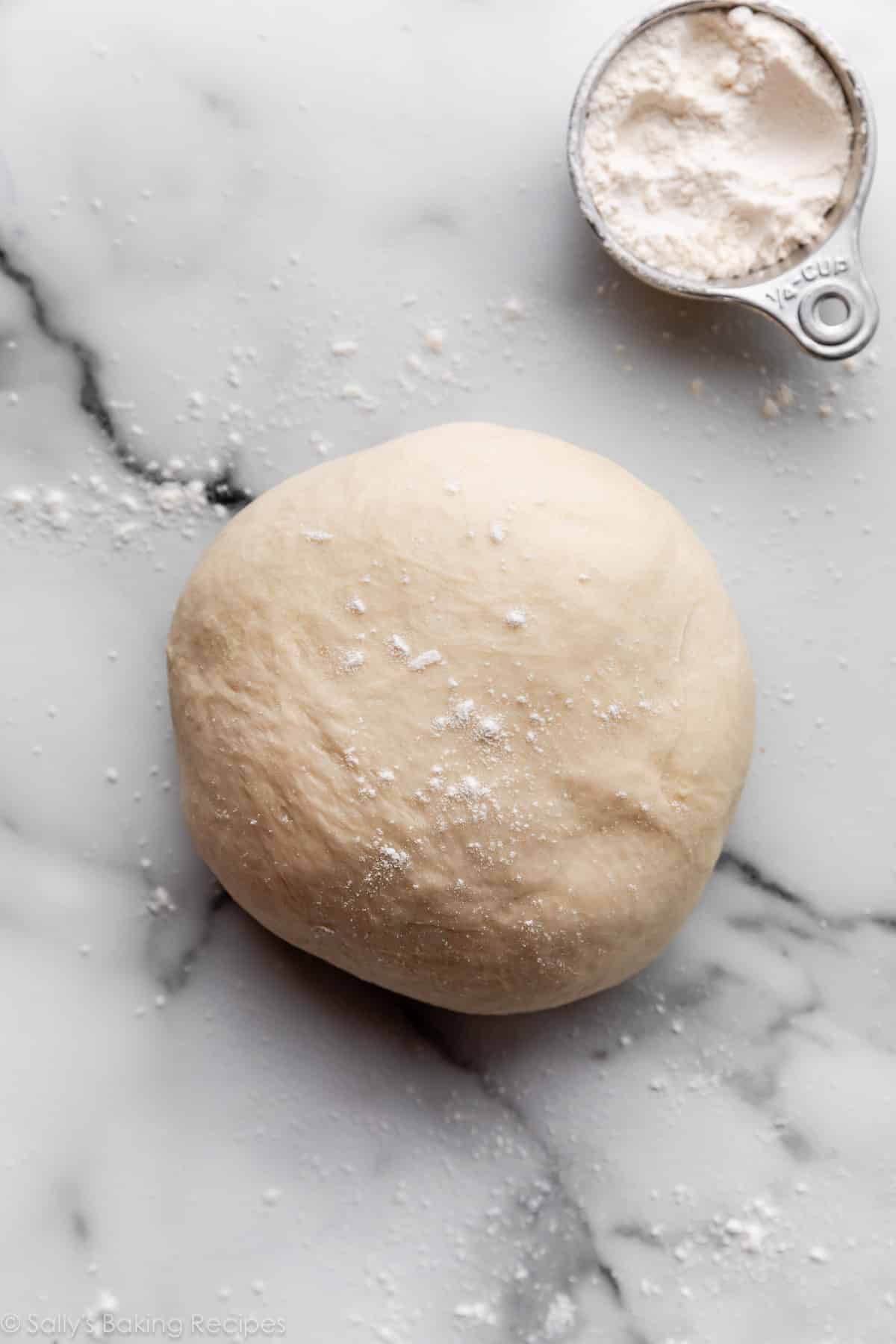
Let the kneaded dough rise until doubled in size, like this:
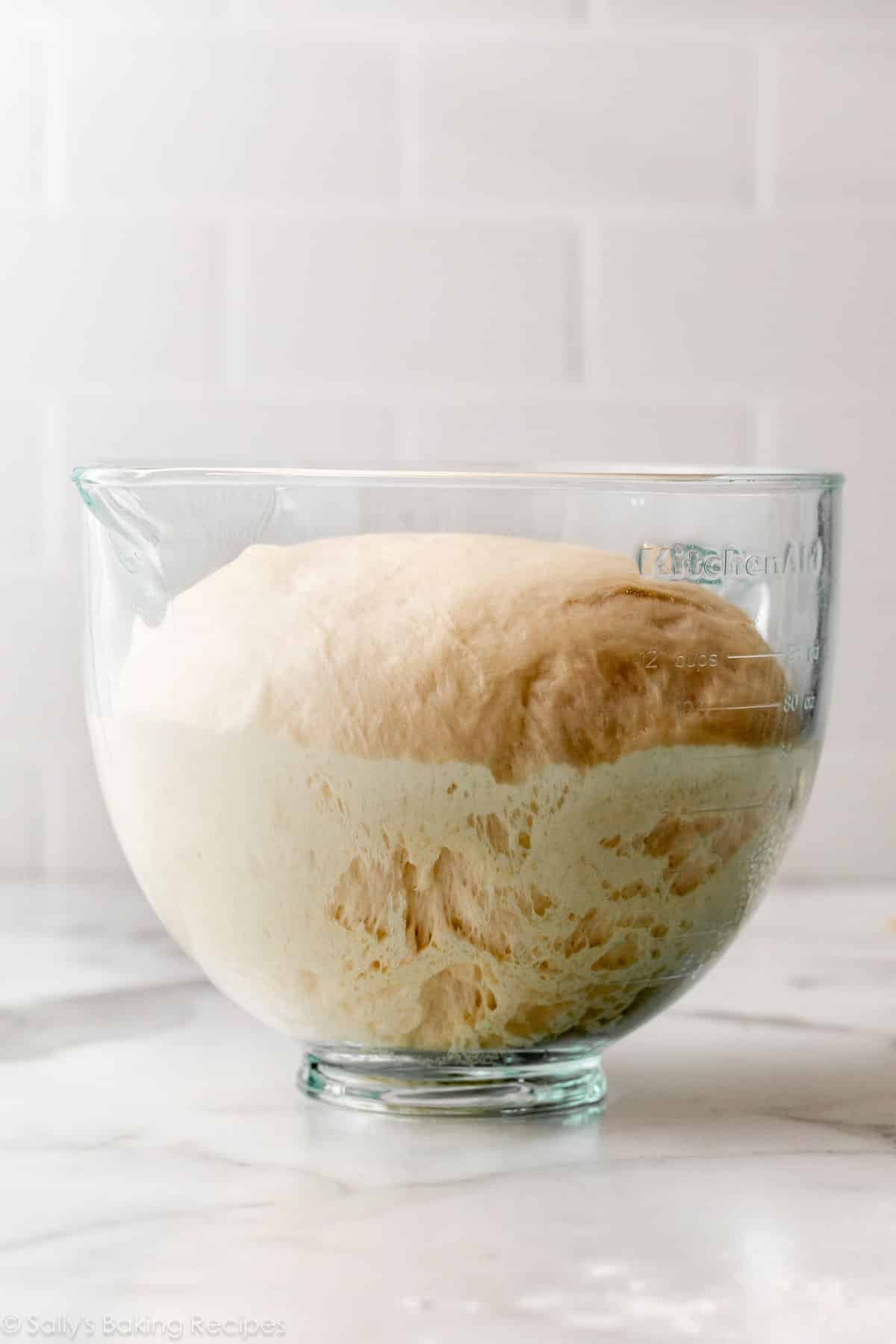
Punch it down to release the air, and roll it out into an 8×20-inch rectangle:
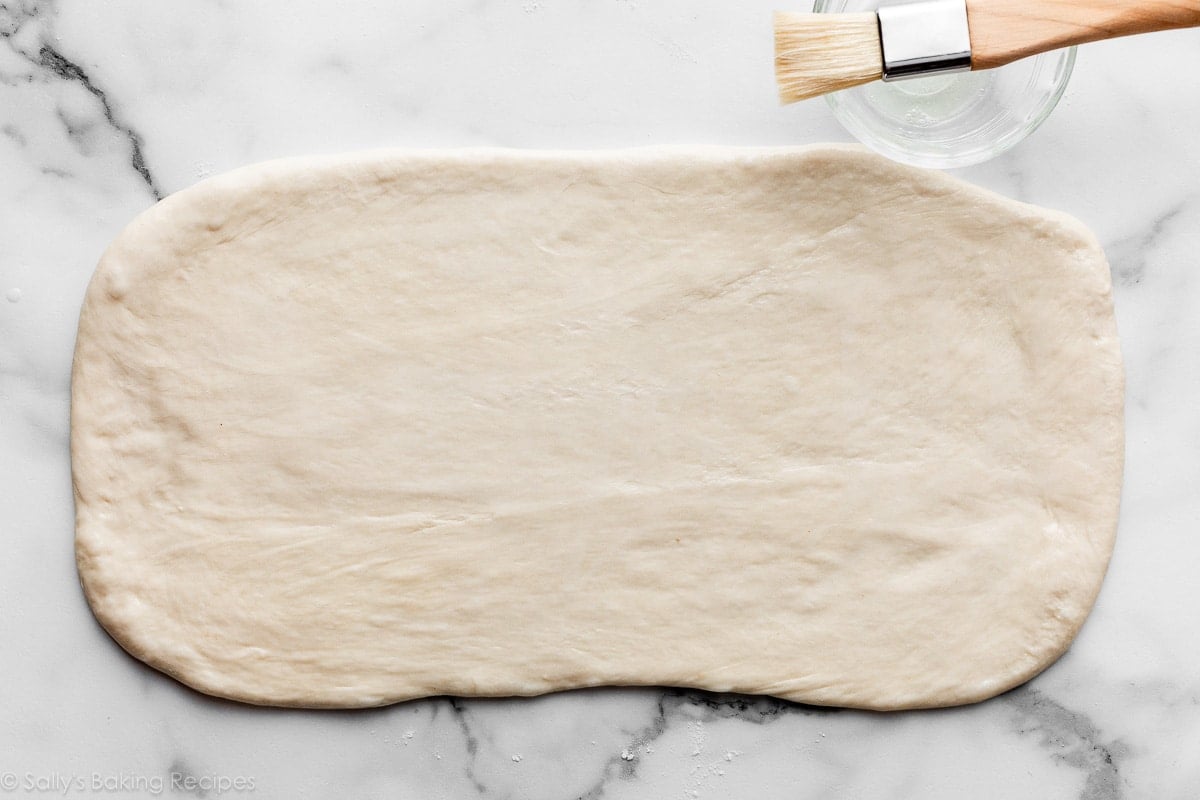
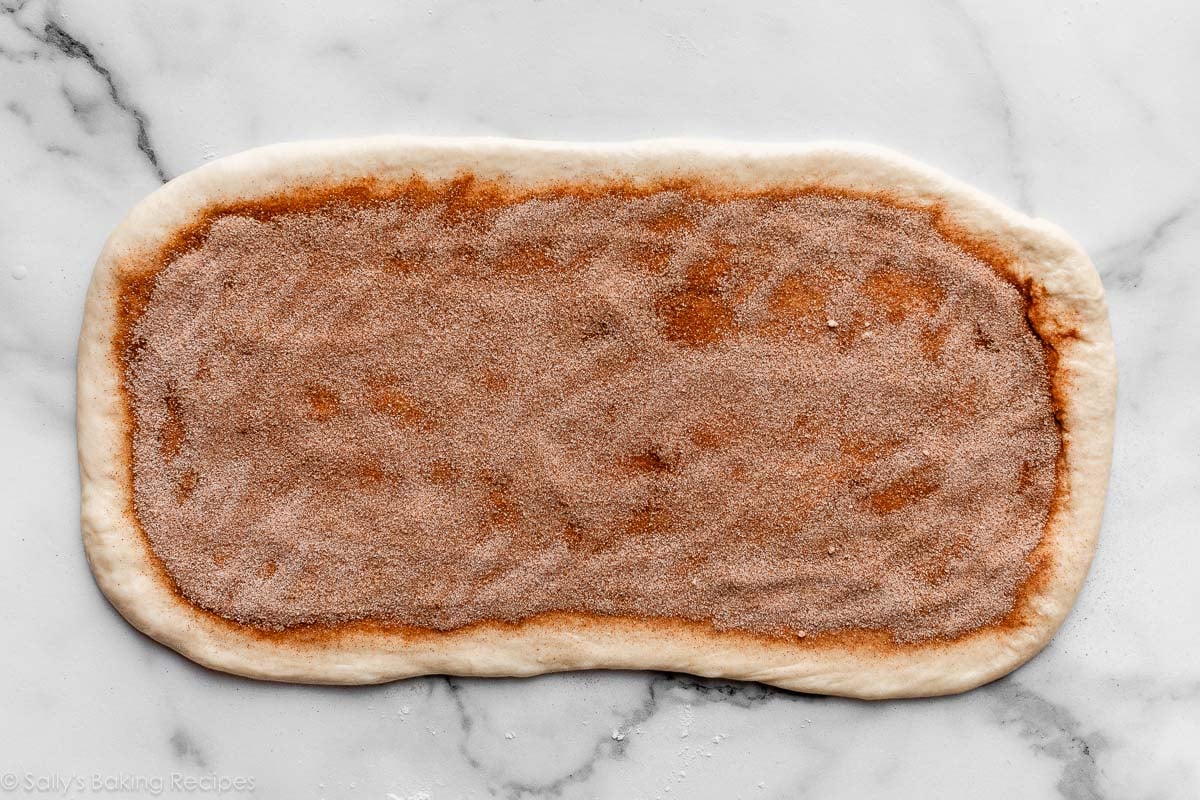
Using a pastry brush, brush the surface with a beaten egg white. Sprinkle cinnamon sugar on top:
Roll it up into a 9-inch log, place into a loaf pan, and let it rise once again. Here is the dough before and after this 2nd rise:
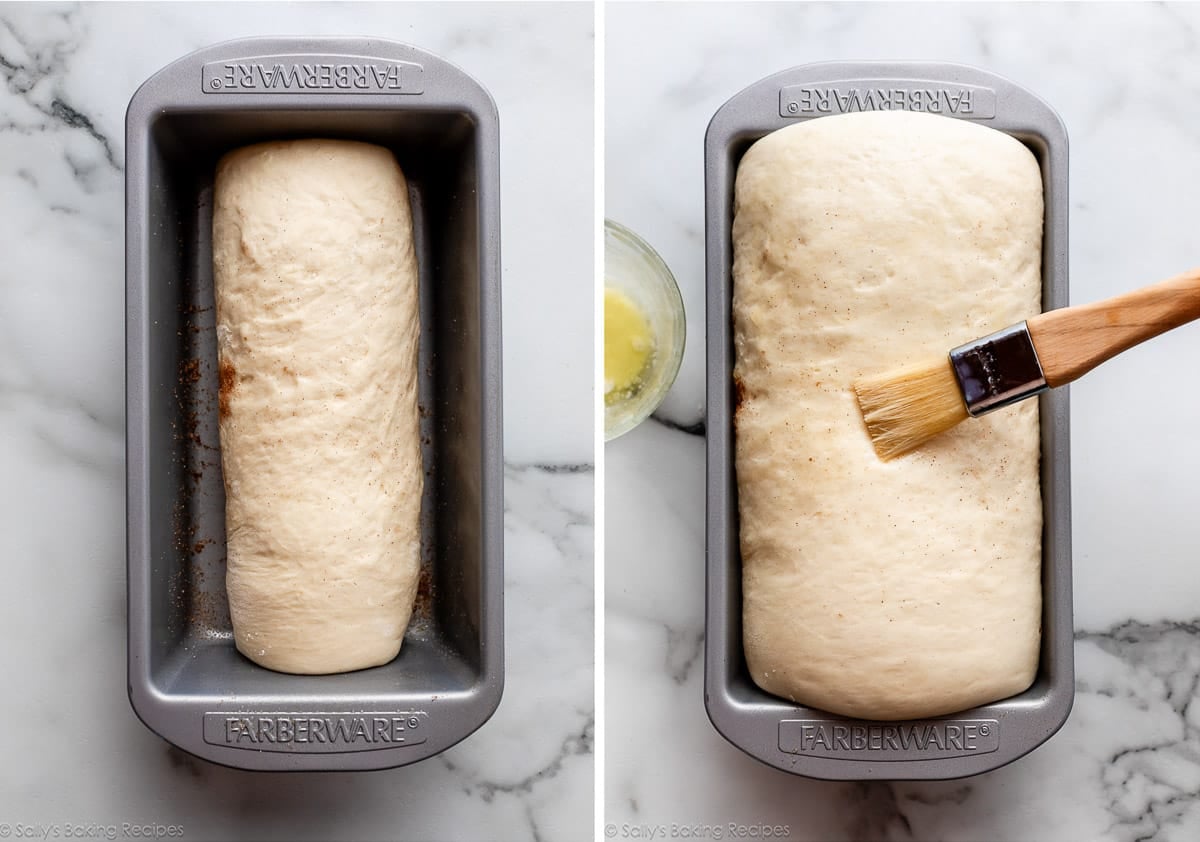
Before baking, lightly brush the top of the loaf with melted butter.
The bread takes about 40 minutes in the oven. Use an instant-read thermometer to check the internal temperature of the baked bread. This guarantees you won’t under-bake or over-bake the bread. The bread is done when the center is 195–200°F (90–93°C). An instant-read thermometer is an incredibly helpful bread-baking tool; you can also use it at the very beginning of the bread-making process to check the liquids are warmed to the right temperature to activate the yeast.
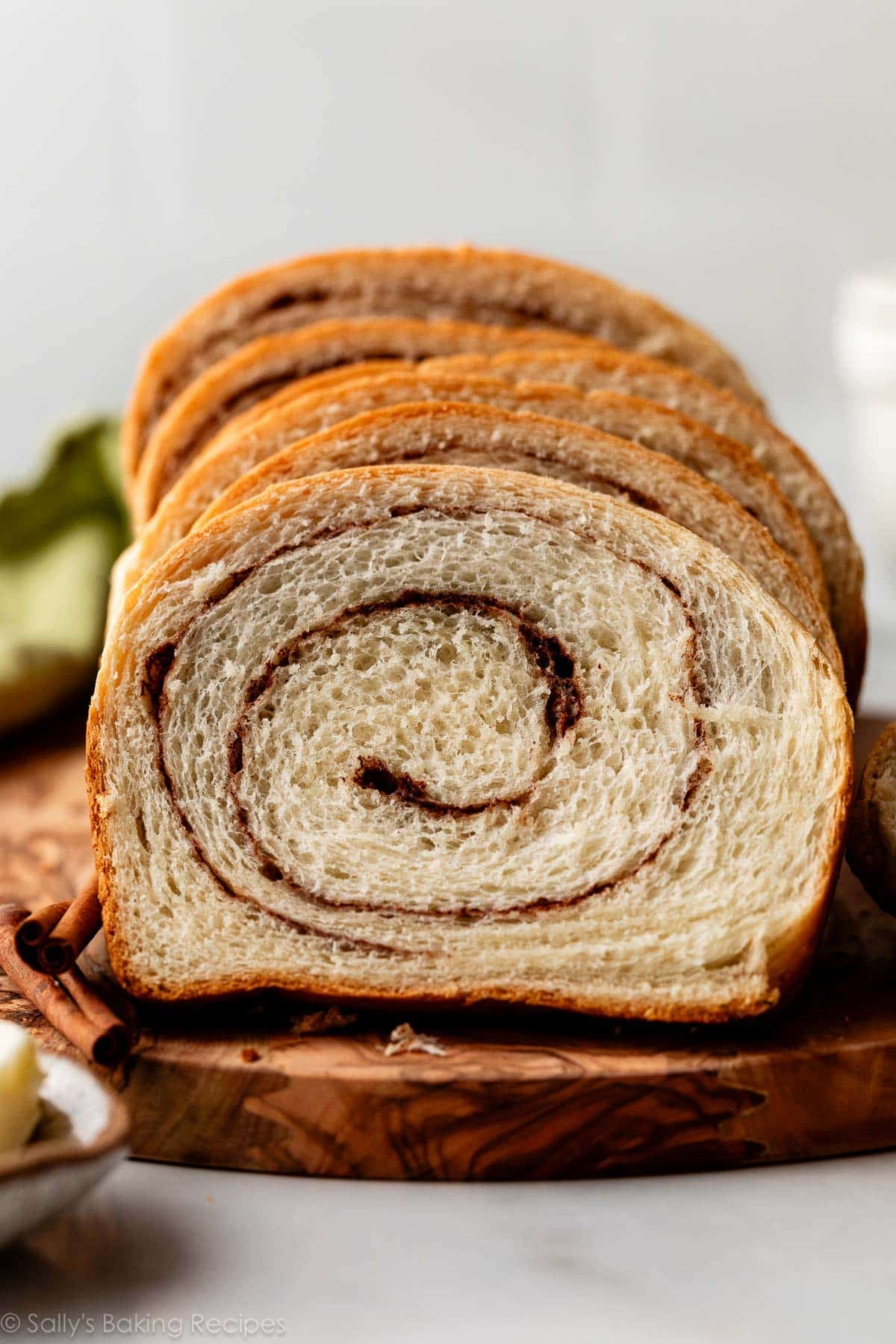
Gaps can form between the dough and cinnamon swirl in your homemade cinnamon swirl bread. It’s happened to me plenty of times! It’s the moistened dough separating from the dry cinnamon-sugar mixture as it bakes. To help prevent this, make sure you are brushing the dough with egg white before adding the cinnamon sugar. Additionally, you can use a toothpick or thin skewer to poke 3 holes in the top of the risen loaf right before baking; this will help steam escape.
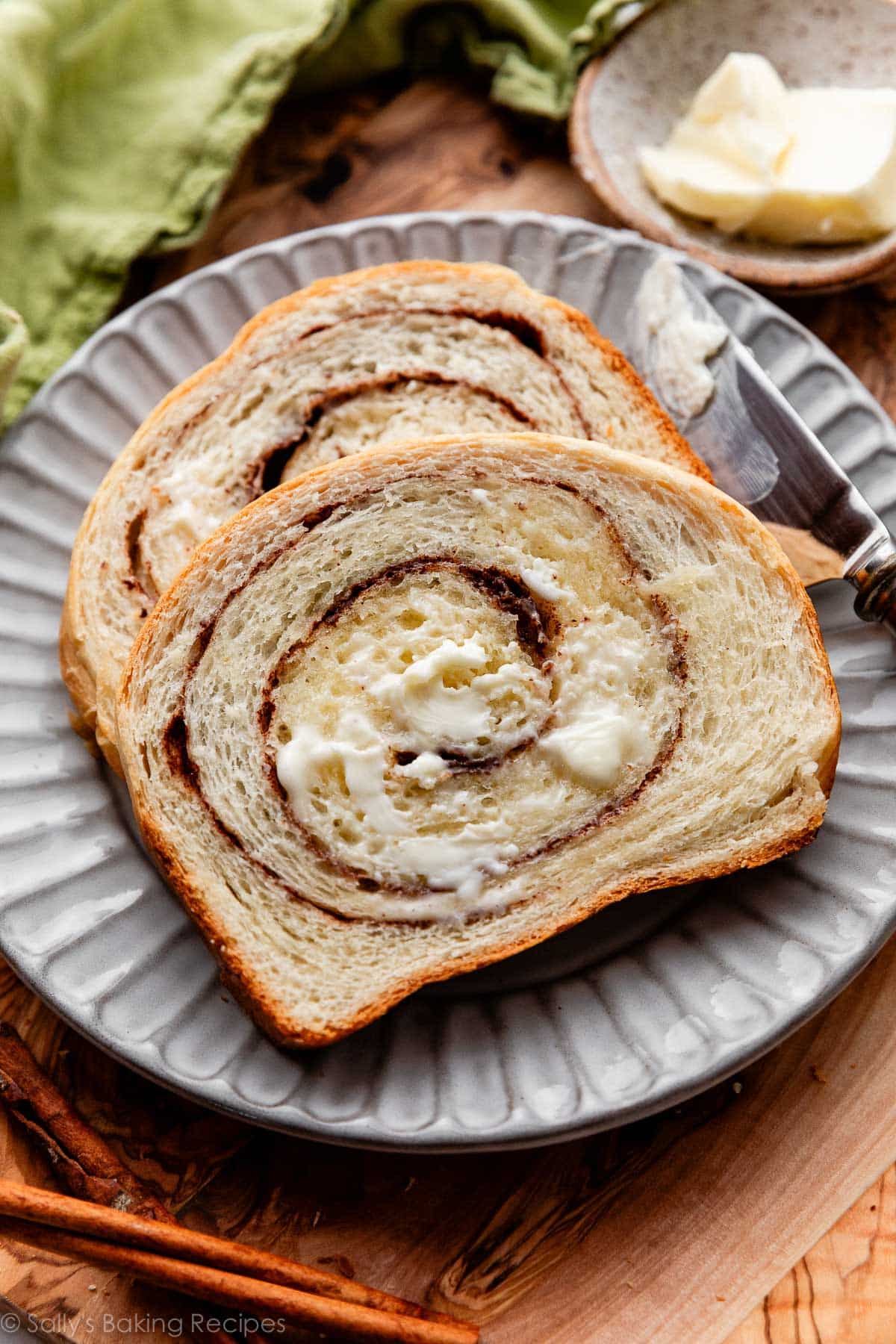
I still can’t decide which is best: the smell of homemade cinnamon swirl bread baking, the buttery and fluffy interior, or the hypnotizing, gooey, sticky, delectable cinnamon swirl.
Try it with a swipe of homemade honey butter or cinnamon butter. And, you’ll definitely want to use this bread to level up your French toast game, especially if you use it for apple cider French toast!
Become a Bread Baker with My Approachable Recipes:
- Homemade Bread Bowls
- Multigrain Bread (so soft!)
- Whole Wheat Bread
- Soft Pretzels & Soft Pretzel Rolls
- Homemade Breadsticks
- Dinner Rolls
- No-Knead Honey Oat Bread
- Homemade Pizza Dough
- Homemade Flatbread Pizza
- Cinnamon Raisin Bagels
Here are all of my bread recipes and video tutorials.
Homemade Cinnamon Swirl Bread
- Prep Time: 3 hours, 30 minutes
- Cook Time: 40 minutes
- Total Time: 4 hours, 45 minutes
- Yield: 1 loaf
- Category: Bread
- Method: Baking
- Cuisine: American
Description
This homemade cinnamon swirl bread recipe is a family favorite and only requires a handful of basic ingredients. It’s soft and fluffy with the most unbelievably gooey cinnamon swirl inside! See recipe Notes for freezing and overnight instructions. You can also reference my Baking with Yeast Guide for answers to common yeast FAQs.
Ingredients
- 1/2 cup (120ml) water, warmed to about 110°F (43°C)
- 1/2 cup (120ml) whole milk, warmed to about 110°F (43°C)
- 2 and 1/4 teaspoons (7g) instant or active dry yeast (1 standard packet)*
- 1/4 cup (50g) granulated sugar, divided
- 4 Tablespoons (1/4 cup; 56g) unsalted butter, softened to room temperature and cut in 4 pieces
- 3 cups (390g) bread flour (spooned & leveled), plus more as needed
- 1 teaspoon salt
For the Swirl & Topping
- 1 egg white, beaten
- 1/4 cup (50g) granulated sugar
- 2 teaspoons ground cinnamon
- 1 Tablespoon (14g) unsalted butter, melted
Instructions
- Prepare the dough: Whisk the warm water, warm milk, yeast, and 2 Tablespoons of sugar together in the bowl of your stand mixer fitted with a dough hook attachment. Loosely cover and allow to sit for 5–10 minutes until foamy and frothy on top. *If you do not own a stand mixer, you can do this in a large mixing bowl and in the next step, mix the dough together with a large wooden spoon or silicone spatula. It will take a bit of arm muscle. A hand mixer works, but the sticky dough repeatedly gets stuck in the beaters. Mixing by hand with a wooden spoon or silicone spatula is a better choice.*
- Add the remaining sugar, the butter, 1 cup flour (about 130g), and the salt. Beat on low speed for 30 seconds, scrape down the sides of the bowl with a silicone spatula, then add another cup of flour. Beat on medium speed until relatively incorporated (there may still be chunks of butter). Add the remaining flour and beat on medium speed until the dough comes together and pulls away from the sides of the bowl, about 2 minutes. If the dough seems too wet to a point where kneading (next step) would be impossible, beat in more flour 1 Tablespoon at a time until you have a workable dough. Dough should be soft and a little tacky, but still manageable to knead with lightly floured hands.
- Knead the dough: Keep the dough in the mixer and beat for an additional 8–10 full minutes, or knead by hand on a lightly floured surface for 8–10 full minutes. (If you’re new to bread-baking, my How to Knead Dough video tutorial can help here.) If the dough becomes too sticky during the kneading process, sprinkle 1 teaspoon of flour at a time on the dough or on the work surface/in the bowl to make a soft, slightly tacky dough. Do not add more flour than you need; you do not want a dry dough. After kneading, the dough should still feel a little soft. Poke it with your finger—if it slowly bounces back, your dough is ready to rise. You can also do a “windowpane test” to see if your dough has been kneaded long enough: tear off a small (roughly golfball-size) piece of dough and gently stretch it out until it’s thin enough for light to pass through it. Hold it up to a window or light. Does light pass through the stretched dough without the dough tearing first? If so, your dough has been kneaded long enough and is ready to rise. If not, keep kneading.
- 1st Rise: Lightly grease a large bowl with oil or nonstick spray. Place the dough in the bowl, turning it to coat all sides in the oil. Cover the bowl and allow the dough to rise in a relatively warm environment for 1.5-2 hours or until double in size. (I always let it rise on the counter. Takes about 2 hours. For a tiny reduction in rise time, see my answer to Where Should Dough Rise? in my Baking with Yeast Guide.)
- Grease a 9×5-inch loaf pan. (I usually use this one or this one.)
- For the swirl: In a small bowl, whisk 1/4 cup (50g) sugar and the cinnamon together.
- Shape the dough: When the dough is ready, punch it down to release the air. Lightly flour a work surface, your hands, and a rolling pin. Roll the dough out into a large 8×20 inch rectangle. It does not have to be perfect—in fact, it will probably be rounded on the edges. That’s ok! Using a pastry brush, brush the surface with beaten egg white, then sprinkle on the cinnamon-sugar, leaving a 1-inch border uncovered. Roll it up into an 8-inch log. Place the loaf, seam-side down, into the prepared loaf pan. If any cinnamon-sugar filling spilled out of the sides, don’t waste it! Sprinkle it on top of the bread in the loaf pan.
- 2nd Rise: Cover the shaped loaf and allow to rise for 1 hour, or until it’s about 1 inch above the top of the loaf pan.
- Adjust oven rack to a lower position and preheat oven to 350°F (177°C). (It’s best to bake the bread towards the bottom of the oven so the top doesn’t burn.)
- After the dough rises, melt the remaining 1 Tablespoon of butter. Lightly brush the melted butter on top of the shaped loaf before baking. Bake for 35–45 minutes, or until golden brown. Check on the bread about halfway through baking—if the top of the loaf is browning too quickly, tent with aluminum foil. To test for doneness, if you gently tap on the loaf, it should sound hollow. For a more accurate test, the bread is done when an instant-read thermometer inserted into the center of the loaf registers 195–200°F (90–93°C).
- Remove from the oven and allow bread to cool for a few minutes in the pan on a cooling rack. Remove loaf from the pan and cool it directly on a cooling rack for at least 10 minutes before slicing. Feel free to let it cool completely before slicing, too.
- Cover leftover bread tightly and store at room temperature for 6 days or in the refrigerator for up to 10 days.
Notes
- Overnight Instructions: Prepare the dough through most of step 4, allowing the dough to rise overnight in the refrigerator instead of in a warm environment. The slow rise gives the bread wonderful flavor! In the morning, let the dough sit on the counter until it comes to room temperature, then continue with step 5. I don’t recommend shaping the bread the night before as it will puff up too much overnight.
- Freezing Instructions: Baked bread freezes wonderfully! Wrap the loaf in plastic wrap, then a layer of aluminum foil. Freeze for up to 3 months. Thaw overnight in the refrigerator or at room temperature, then warm to your liking. You can also freeze the bread dough. After punching down the dough in step 7, wrap the dough tightly in plastic wrap, then a layer of aluminum foil. Freeze for up to 3 months. Thaw overnight in the refrigerator, then bring to room temperature. Once at room temperature, punch the dough down again to release any air bubbles. Continue with the rest of step 7 (shaping the dough).
- Special Tools (affiliate links): Electric Stand Mixer | Glass Mixing Bowl | Wooden Spoon or Silicone Spatula | Rolling Pin | Pastry Brush | 9×5-Inch Loaf Pan | Instant-Read Thermometer | Cooling Rack
- Milk: Whole milk or 2% milk are best. I don’t suggest a lower-fat milk. Readers have used nondairy milks with success, but I haven’t personally tested it.
- Yeast: I always use Red Star Platinum yeast, an instant yeast. You can use active dry yeast instead, with no changes to the preparation. Rise times will be slightly longer. Reference my Baking With Yeast Guide for answers to common yeast FAQs.
- Flour: Higher-protein flour like bread flour is best for this bread recipe because of its strong gluten formation and high rise. All-purpose flour may yield a flimsy bread.
- Whole Wheat Flour: I don’t recommend whole wheat flour because it doesn’t have the same baking properties as white flour or bread flour (the gluten levels are different). If you wish to use whole wheat flour, try my recipe for whole wheat bread instead, and feel free to add the egg white/cinnamon swirl to that dough instead.
- Can I Add Raisins? Yes, you can add 3/4 cup (about 110g) of raisins to the cinnamon-sugar mixture. Sprinkle it over the egg white-brushed dough.
- Bread Machine Questions: I don’t own a bread machine so I have not tested it, but some readers have reported success in the comments section.
- Prevent Large Gaps: Gaps can form between the dough and cinnamon swirl in your homemade cinnamon swirl bread. It’s happened to me plenty of times! It’s the moistened dough separating from the dry cinnamon-sugar mixture as it bakes. To help prevent this, make sure you are brushing the dough with egg white before adding the cinnamon-sugar. Additionally, you can use a toothpick or thin skewer to poke 3 holes in the top of the risen loaf right before baking; this will help steam escape.










Reader Comments and Reviews
Clear instructions, easy to bake, and tastes delicious – especially toasted with peanut butter!! I added a few raisins since my mother loves them.
This recipe was absolutely perfect!! I used regular active dry yeast (not instant) and the 1st rise took about 2 hours. Will definitely be making again! I also highly recommend using it for French toast the next day. Delicious!
I love this recipe so much! I’ve made it many times now and it always comes out perfect. However, I just tried the overnight directions for the first time and felt they weren’t very clear. You stated to follow through step 3 allowing it to rise in the refrigerator overnight. So does this mean you are only to do half of step3 and omit the rising in the warm environment? That’s what I did and in the morning the dough did not seem to have doubled and was too cold to continue to step 4 and roll out. The directions say nothing about letting the dough come to room temp before you attempt it so please help! Now I’m wishing I had just stayed up a late to Finish tge bread as usual.
This loaf came out beautifully – it was relatively easy to make. I used fresh yeast instead of dry as that’s all I had and it worked just as well!
Used your recipe and my cinnamon bread turned out perfectly! My most satisfied bread ever! I hand kneaded the dough (surprising easy) and proofed it for over 2 hours because i left for a jog and got caught in the rain. It turned out so well and the swirl looked fabulous too. For those who are looking for bread recipe to try, please look no further. This is a very good formula and I am keeping it. Thank you
After the 2nd rise and all looks great, the loaf suddenly collapses….. is this normal or am I doing something wrong? I put loaf in oven on “proof”, they rise wonderfully, and then when I take it out to get oven ready to bake, it collapsed back to pan level????
Hi Shelley! I’m happy to help. I actually direct readers to a very helpful article whenever this happens: https://thebreadguide.com/why-does-my-bread-collapse-or-flatten/
It could be a variety of factors including under-kneading, over-proofing (usually the culprit), too warm of an environment for rising, too warm of liquid in the dough, or even being too rough when handling the dough. I think you’ll find that article very helpful. I know I always do!
I made this a few days ago as 2 mini loaves and they came out beautifully! This could probably easily make 3 minis. I baked them for about 30 minutes, though I forgot to write it down exactly (sorry). I just sliced into one today for French toast and it is incredible. It was chewy instead of super soft with a perfectly strong cinnamon taste, just the way I like it!
Hello! Planning to make this today. Can you use whipping cream? Conserving our milk for now!
Please let me know thank you!
Can’t wait to try it!
Also your bread with the cheese rolled up was amazing!
Hi Ally! No, whipping cream is too heavy. The next best option would be water. The bread won’t taste as soft.
Hi Sally – big fan of all of your recipes! I just took this out of the oven and can’t wait to try it. It’s not as pretty looking as the cheese bread. Do you think I can split this bread down the middle and twist it like the cheese bread? Thanks again!
Absolutely! I would follow the same assembly instructions as the cheese bread, but using this dough and cinnamon sugar topping.
I made this last night, and my mom ate most of it. I don’t blame her, it is so addictive!
Oh, and I also mixed the dough in the bread machine on the white bread manual cycle.
This bread is fantastic!! I finally got around to making it, and I know I will be making it often! So easy, soft, and it made the perfect cinnamon swirl!! Thankyou Sally! 🙂
There are large gaps in between my swirls towards the top and the center of the swirl sunk down to the bottom. The swirls on the end pieces look perfect, but the middle doesn’t seem right. Did I not bake it long enough?
Hi Sarah! Gaps are natural with this time of swirled bread, however, there are 2 fixes. First, try using confectioners’ sugar in place of granulated sugar in the swirl topping. (Mix it with the cinnamon.) The confectioners’ sugar has extra sticking power to help the dough adhere to itself. Second, the dough could have been over-proofed right before baking, which caused the bottom layers to collapse. Both are easy fixes if you decide to try the bread recipe again. 🙂
Would you recommend using the 50g of confectioner’s sugar to replace the 50g of white sugar? Or would you change the amount?
Hi Laura, same amount!
Thank you Sally for this recipe! the dough rose really well twice but the bread didn’t get bigger while baking. In fact it decreased in volume. Would you have any advice ? I used active dry yeast.
Hi Mathilde! Collapsing dough is common when dough has been over-proofed or rose too long or too fast. Follow the rise times indicated. Your environment may also have been too warm. I hope this helps!
My 1st attempt at cinnamon swirl bread & I was pleasantly surprised! I added raisins to the dough during kneading & it held up wonderfully. My loaf never got the hollow thud sound when finished; it had a little give to the center but was perfectly done. I’ve become a fan of Sally & her baking addiction! The chocolate chip cookies have been a family fav for a while now. Thanks Sally!
Hi, Rebecca! I’d recommend making two separate loaves rather than doubling. It helps the ingredients to incorporate better. Hope this helps!
I started making this bread back between 2014-2017 and I absolutely love it. I thought there used to be a recipe attached at the bottom for this amazing French toast recipe using this bread. Do you happen to still have it. It required heavy cream and half and half I think. Happy Holidays and I look forward to hearing back from you.
Hi Dee! I’ve never had a french toast recipe associated or attached to this one, sorry! Here is my favorite French Toast Casserole if you’re interested.
I tried this last week and it was great. I was hoping to would be a little sweeter though. I know other recipes use confectioners sugar with the cinnamon as well. Have you tried this? Also when folks say they let it prove in the fridge, I am assuming this is the second proof, correct? Thanks for the recipe!
Hi Laura! I haven’t tried it, but you can definitely try adding confectioners’ sugar to the filling if desired. You can proof the dough in the refrigerator either time, but it will take significantly longer because of the cool temperature.
Hi Sally! Thanks so much for all of your incredible recipes! My dad LOVES raisins, and for this recipe, I’m wondering if you think I can add more than a 1/2 cup of them, or whether you think that’ll compromise the results. Thanks so much in advance for any guidance ! Happy holidays!
Hi Caitlin! You can definitely add more raisins to the filling. In fact, I usually do since I love them!
I have baked cinnamon bread (using a different recipe) for over 20 years as Christmas gifts. If you want to add more spirals to your loaf and more flavor, spread the cinnamon/sugar mixture over the entire rectangle. Then pull 1/3 in from the left, add more cinnamon/sugar, then the final trifold from the right and again MORE cinnamon/sugar. Then roll. This makes a picture perfect loaf.
I’ve made this bread twice in the past five days. It is delicious! The dough is a dream!!! Perfect cinnamon bread-check!
I would love to see your take on a cinnamon swirl coffee cake-like the kind you get at the grocery store but better. Thanks, Sally!!
I followed the recipe exactly, and chose to add 3/4 of a cup of raisins. The first slices were delicious, but as we got to the middle of the loaf there were HUGE air pockets that really ruined it. Very disappointing as I made sure to use lots of egg wash which the recipe said would help prevent this. Any other tips on how to prevent these air pockets? I also tried rolling the loaf pretty tightly, but clearly that didn’t work either.
Hi Catherine, a few air pockets are normal, but here is another tip for next time: poke a toothpick in a few places on top of the bread right before baking. This helps that steam escape (which is creating the gaps!). That, in addition to rolling tightly and using the egg wash like you mentioned, should help reduce the gaps. Hope this helps and thank you for giving this recipe a try!
Best, best recipe ever! I wish I could include a picture of my masterpiece. Just gorgeous and delicious. Thank you for sharing.
I made the dough in my bread machine, then rolled out and baked as directed. It came out perfect!
I’ve made this bread twice in the Past two days! It’s ridiculous how easy it si to make and how flavorful it is. I let it rest in the refrigerator overnight & it came out beautifully. I made the other loaf same day & it still gave me great results! Such a flavorful bread and it isn’t overly sweet. I need to make it with some golden raisins next time. It’s so fluffy! Thanks for such a great recipe.
This recipe works great. My wife loves it with the raisins. Thank you for a perfect recipe.
Fabulous recipe! I used a cup of milk and no water and allowed the dough to rise (first rise) overnight in the refrigerator, which made it super easy to rollout and roll up in the morning. Once shaped, I let it rise about an hour and a half. Absolutely delish!
I could have finish the whole loaf by myself! It’s so good… yummy
Hi I just saw this recipe today and made this, it tasted so good but lacking the cinnamon flavor which I’m sure is because I didn’t put the whole sugar cinnamon mixture.. But I was curious how much of the cinnamon sugar mixture do you put in? Its says to sprinkle it, but is it like only a little bit or the whole sugar mixture? haha for future references
Hi Katie! Use all of the cinnamon/sugar mixture. 🙂
Sally, how do you feel about a cinnamon streusel topping to this recipe; would it be too much and load it down? Thank you.
I think it sound great, however the bread rises VERY tall and the streusel would end up falling off the loaf as it rises. It might not be the best idea!
Hi Sally…Can this be made into 3×5 loaves to share with friends? If so, how would I roll this out?
Hi Patricia! I’m not 100% positive without testing those exact measurements myself. The rolled/shaped logs would have to be length of the pans, so 5 inches long. Let me know exactly what you test.
Hi can I use 2% milk or only whole milk.
Thanks!!
Hi Rosie! 2% milk would be fine.
This was absolutely AMAZING!!!! The bread was super soft and like the ones you buy at the store but even better because it was homemade. I used raisins and they were super!!! Thank you for this amazing recipe!