
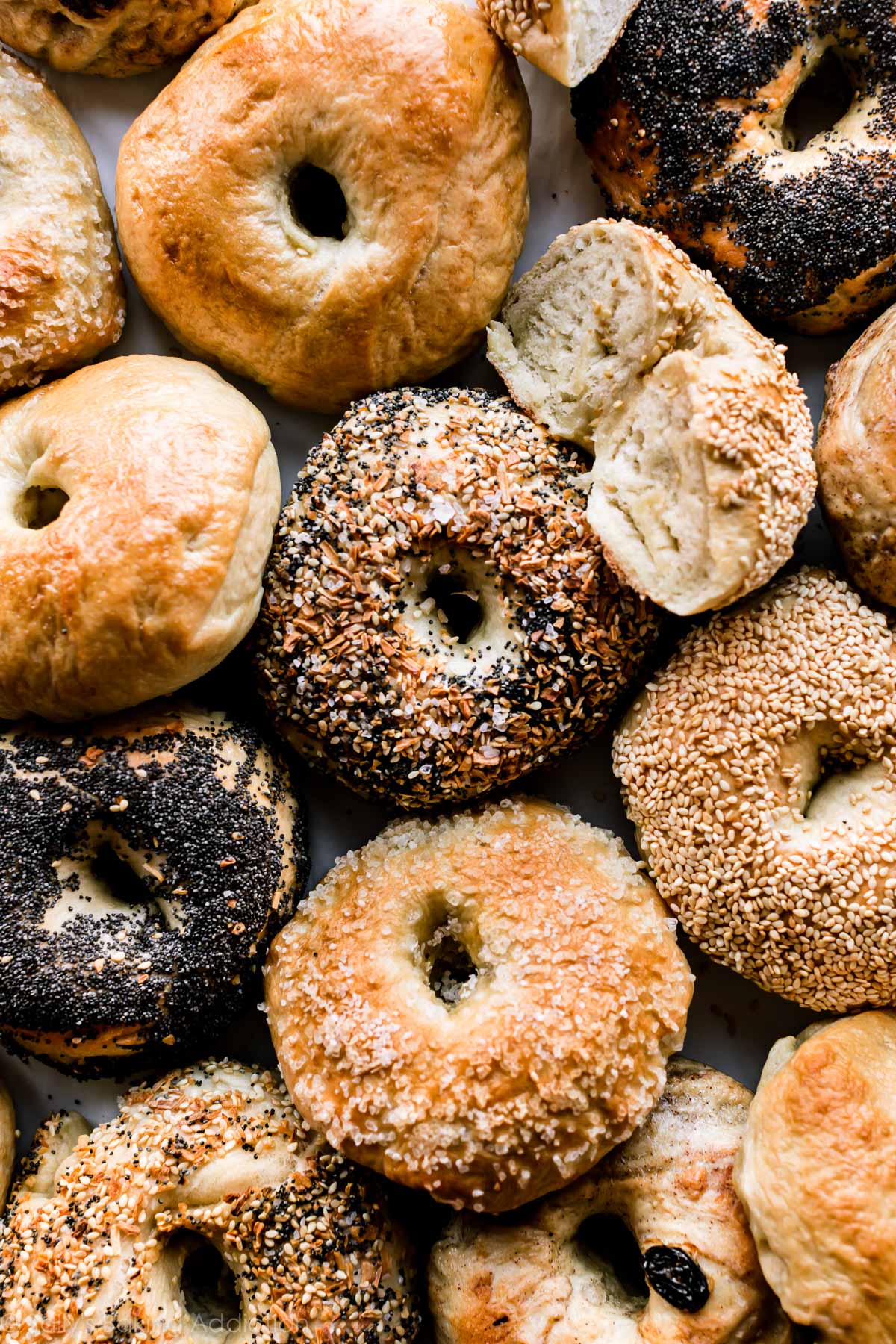
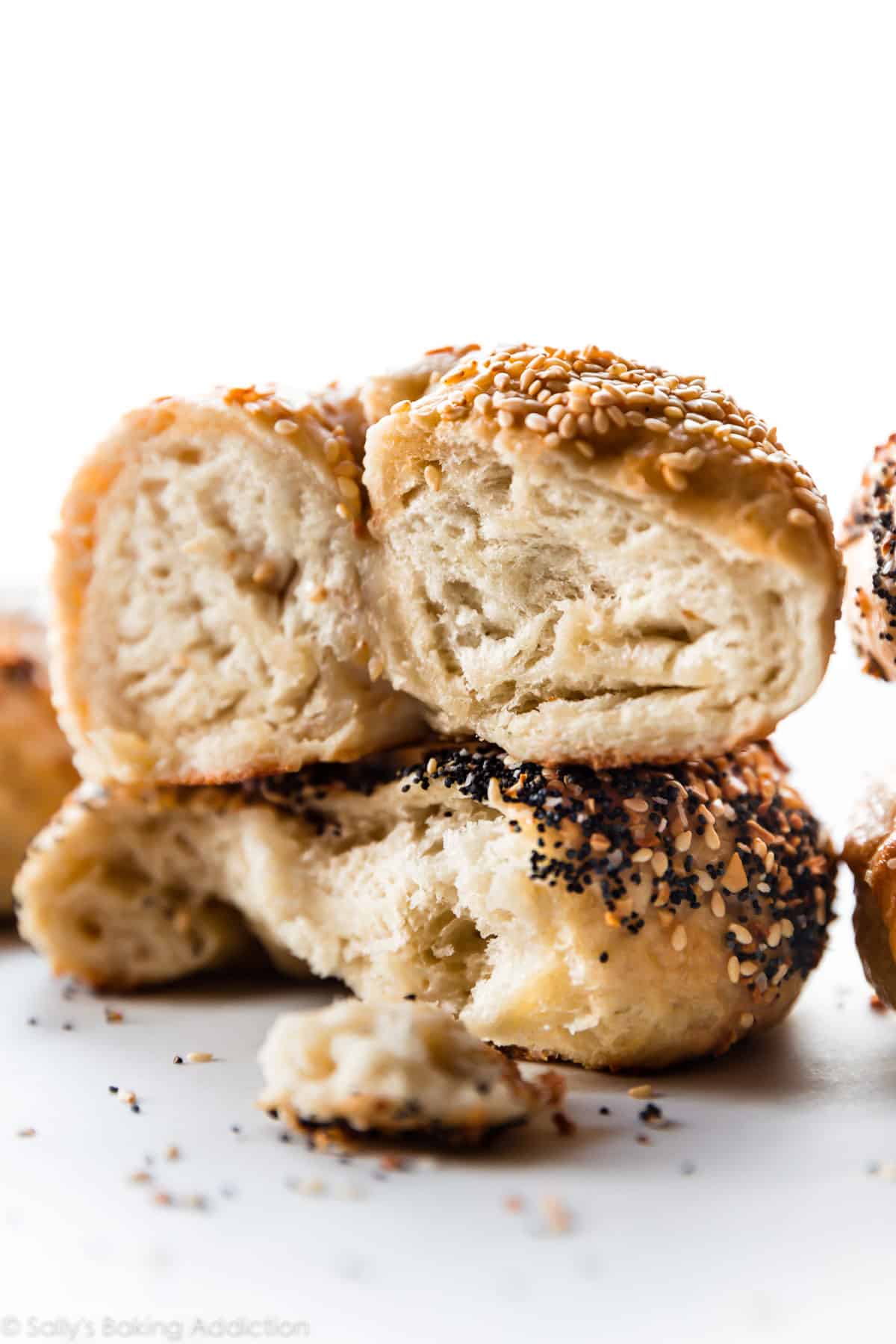
This easy homemade bagels recipe proves that you can make deliciously chewy bagels in your own kitchen with only a few basic ingredients and baking tools! Watch the video tutorial before you get started.
Today I’m teaching you how to make homemade bagels with only a few basic ingredients and kitchen tools. Today you’re going to tackle any fears of yeast-bread baking—and I’m right here to guide you along! This recipe is such a fan favorite that I included it in my New York Times best-selling cookbook, Sally’s Baking 101.
Bagels, crème brûlée, soft pretzels, and French macarons. What do these foods have in common? Each seem really complicated to make at home. That’s why you’ll often find them on your baking bucket list. But secretly, they couldn’t be easier. Homemade bagels taste fresher, are cheaper, and you’ll earn the bragging rights for from-scratch baking. (P.S. Each of those recipes has a video tutorial!)
Bagels Require a Lean Dough
The first step is to make the bagel dough. You need only 5 ingredients:
- Warm Water: Liquid for the dough.
- Yeast: Allows the dough to rise. I recommend an instant or active dry yeast.
- Barley Malt Syrup or Sugar: Bakeries use barley malt syrup to sweeten the bagel dough—it can be a little difficult to find, but either white or brown sugar is a fine substitute.
- Bread Flour: A high-protein flour is necessary for bagels. We want a dense and chewy texture, not soft and airy like cinnamon rolls. Bread flour is the only solution!
- Salt: Flavor.
Notice how there is no fat? This is called a lean dough. Lean dough is ideal for recipes like focaccia, pizza dough, artisan bread, and cranberry nut no-knead bread. Breads like dinner rolls and homemade breadsticks, and sweet bread, such as cinnamon rolls, include fat for richness and flavor.
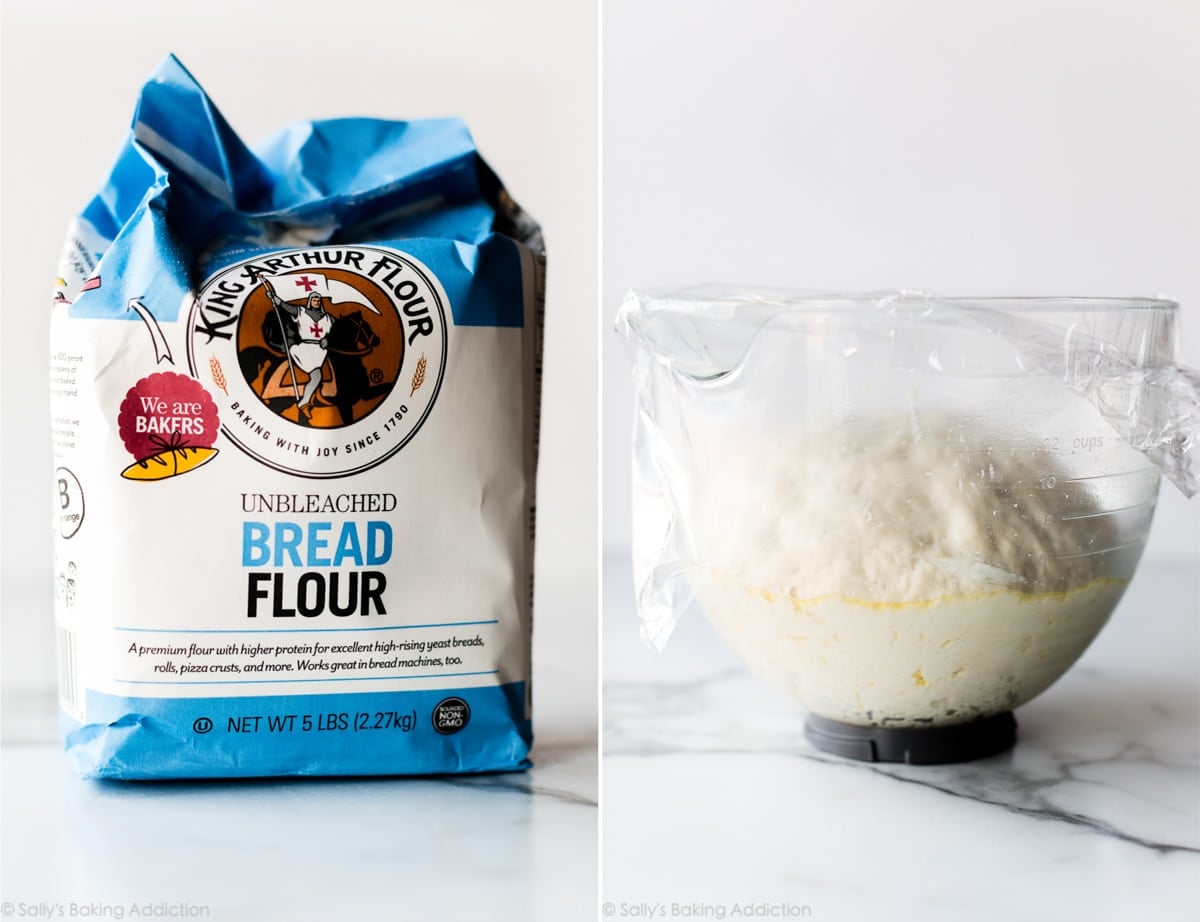
You can prepare and knead the dough with a stand mixer or by hand. If you’d like a visual of how to knead the dough by hand, you can watch the full video tutorial in my post on How to Knead Dough.
After the dough has been kneaded, let it rise for 60–90 minutes. Punch it down, then divide into 8 sections and shape into bagels.
How to Shape Bagels
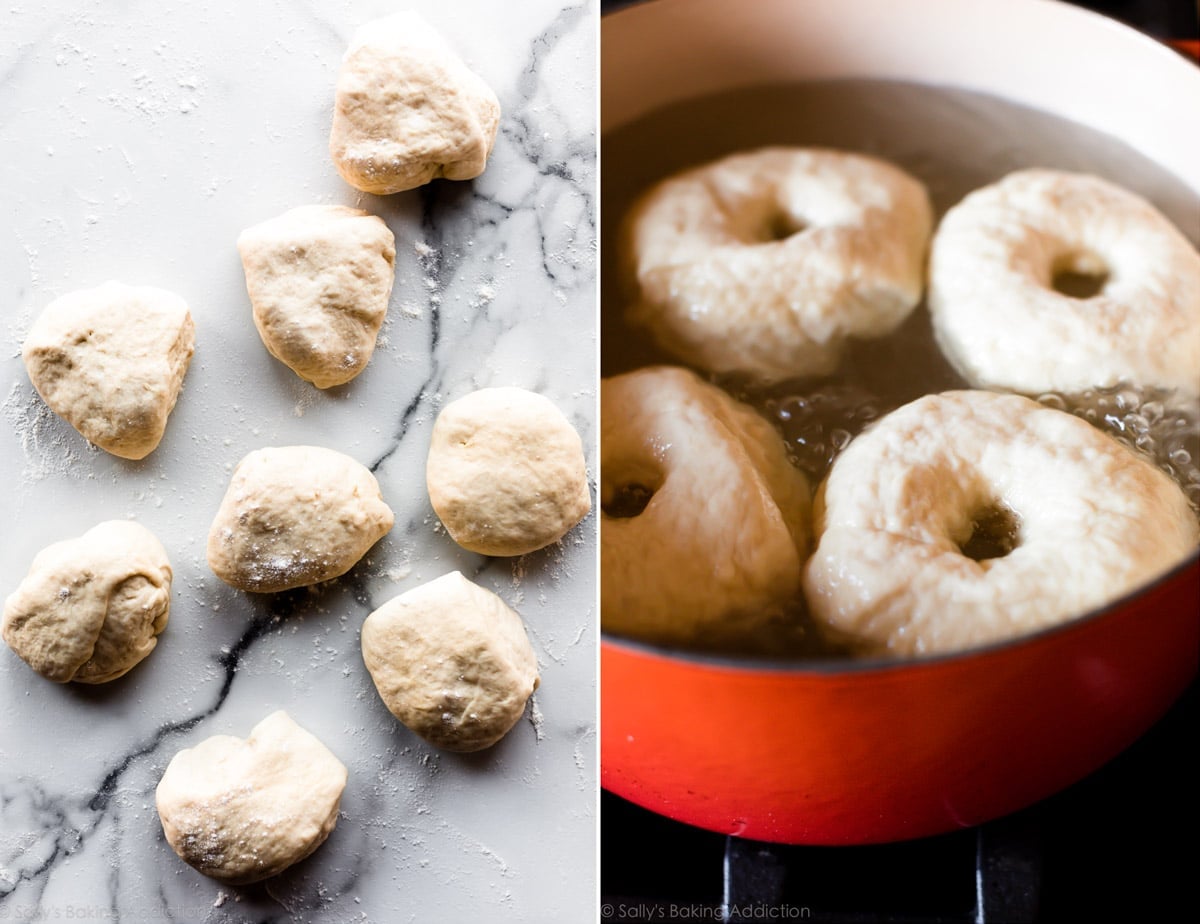
Shaping bagels is easier than it looks. Poke your finger through the center of the ball of dough, then use 2 fingers to widen the hole to about 1.5–2 inches. That’s it! I don’t really do anything fancy and the bagels don’t need to be perfect. Mine never are!
Bagel Water Bath
Bagels must cook for 1 minute on each side in a pot of boiling water. This is actually the most important step in the whole recipe. Why?
- Boiling the bagels gives the bagel its beautiful shine. But looks aren’t everything—this shine is actually a result of the dough’s starches gelatinizing which creates a crisp, shiny coating. I learned this from Cooks Illustrated.
- Boiling bagels cooks the outer layer of dough, which guarantees they’ll hold their shape in the oven.
Add honey or barley malt syrup to the water bath. Why? The sugar adds extra caramelization and crisp. Brushing the boiled bagels with egg wash does the same. Don’t skip either!
Homemade Bagel Varieties
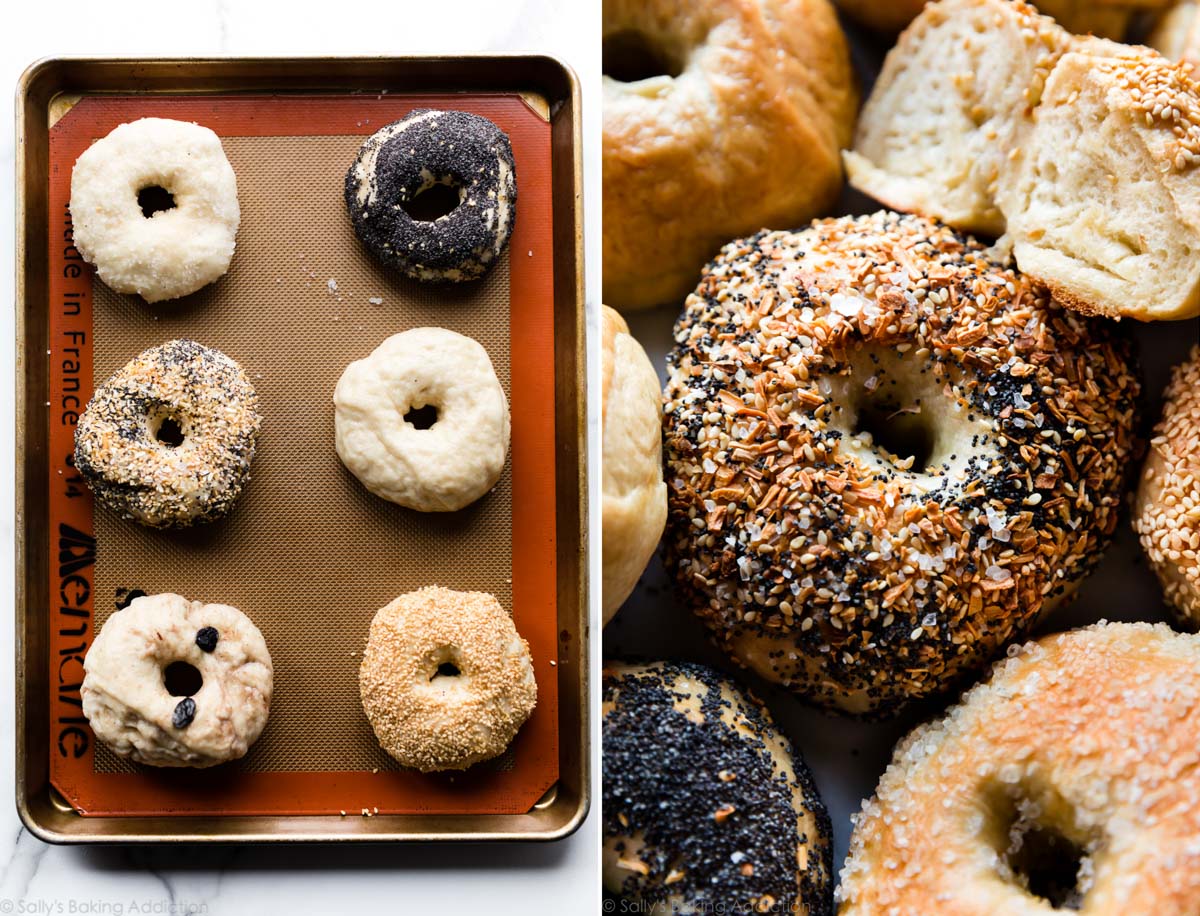
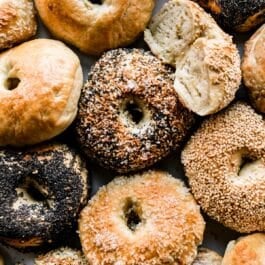
- Plain Bagels: Follow the recipe below. These are excellent as the base for breakfast casserole.
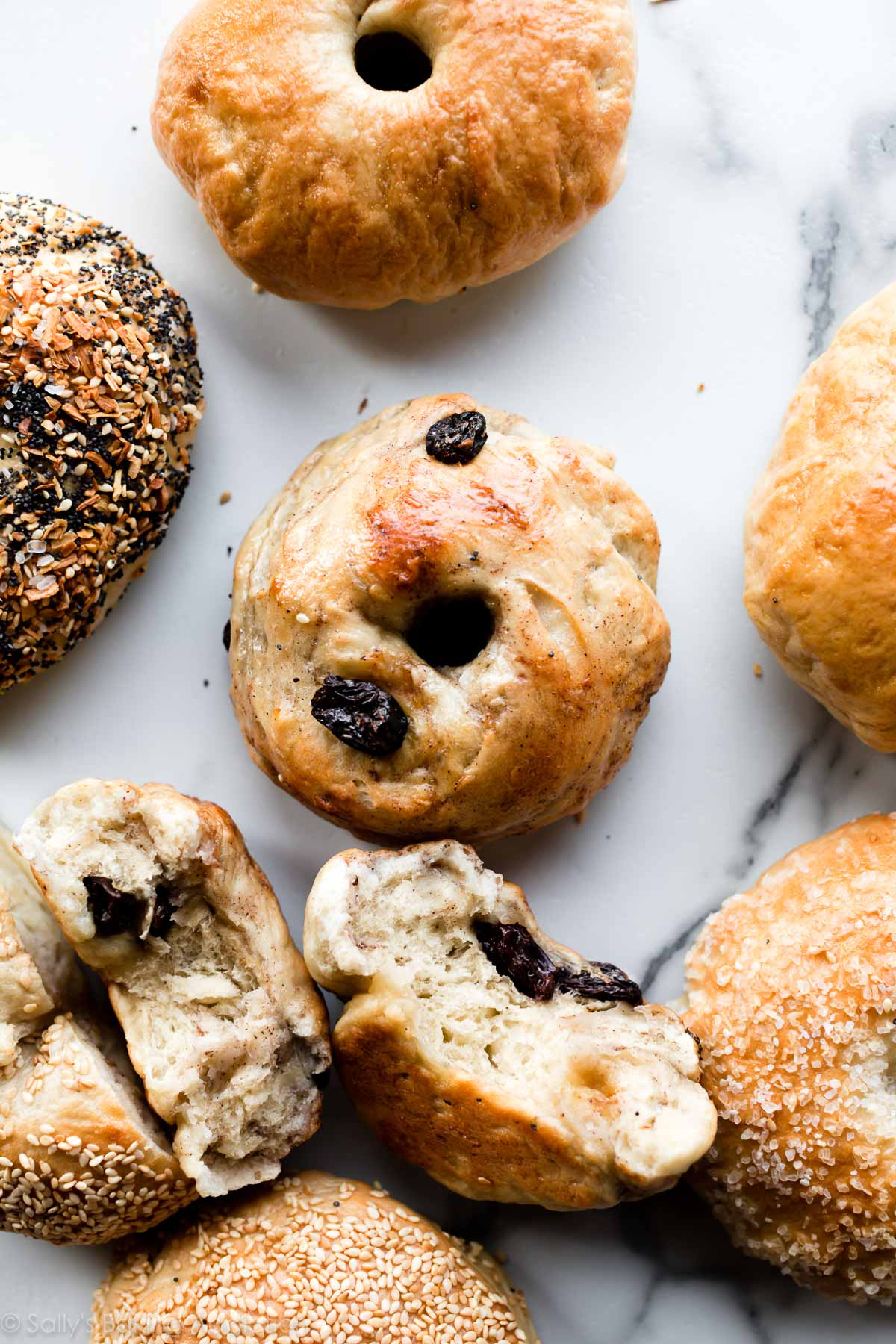
- Cinnamon Raisin Bagels: Follow my cinnamon raisin bagels recipe.
- Everything Bagels: Follow my everything bagels recipe.
- Blueberry Bagels: Follow my blueberry bagels recipe.
- Sesame Seed Bagels: Use 1/3 cup sesame seeds. After brushing with egg wash in step 9, top with or dunk each bagel into topping. Use more as needed.
- Poppy Seed Bagels: Use 1/3 cup poppy seeds. After brushing with egg wash in step 9, top with or dunk each bagel into topping. Use more as needed.
- Salt Bagels: Use 1/3 cup coarse sea salt. After brushing with egg wash in step 9, top with or dunk each bagel into topping. These are pretty salty, so feel free to go lighter on the salt.
- Cheese Bagels (Asiago, Cheddar, etc.): Add 1/2 cup of shredded cheese to the dough when you add the flour. After brushing with egg wash in step 9, sprinkle with extra cheese.
- Cinnamon Crunch Bagels: Add 1 teaspoon of cinnamon to the dough recipe below when you add the salt. Double the cinnamon crunch topping from cinnamon crunch bread. After brushing the bagels with the egg wash in step 9 below, spoon cinnamon crunch topping on each.
Some readers have used this bagel recipe to make whole wheat bagels by replacing half of the bread flour with whole wheat flour. I haven’t tried it, but I do use some whole wheat flour when making homemade English muffins, another breakfast staple!
Homemade Bagels Recipe
- Prep Time: 2 hours, 10 minutes
- Cook Time: 25 minutes
- Total Time: 3 hours
- Yield: 8 bagels
- Category: Bread
- Method: Baking
- Cuisine: American
Description
Make fresh bagels right at home with this tested dough recipe. Don’t skip the water bath and egg wash—both provide an extra chewy and golden brown crust. This recipe is also in my cookbook, Sally’s Baking 101.
Ingredients
- 1 and 1/2 cups (360g/ml) warm water (between 100–110°F/38–43°C)
- 2 and 3/4 teaspoons (8g) instant or active dry yeast*
- 1 Tablespoon barley malt syrup, granulated sugar, or brown sugar*
- 4 cups (520g) bread flour (spooned & leveled), plus more as needed*
- 2 teaspoons salt
- for coating the bowl: nonstick spray, butter, or oil
For Boiling & Topping
- 2 quarts (1.9L) water
- 1/4 cup (85g) barley malt syrup or honey
- egg wash: 1 egg white beaten with 1 Tablespoon water
Instructions
- Prepare the dough: In the bowl of a stand mixer fitted with a dough hook attachment, whisk the warm water, barley malt syrup/sugar, and yeast together. Cover and allow to sit for 5 minutes. *If you don’t have a stand mixer, use a large mixing bowl and mix the dough with a wooden spoon or silicone spatula in the next step.*
- Add the flour and salt, and beat on medium speed for 2 minutes, until the dough comes together and pulls away from the sides of the bowl. If it seems too sticky and clings to the sides of the bowl instead of forming a rough mass around the dough hook or spoon, add more flour, 1 Tablespoon at a time, and continue to mix until the dough pulls away from the sides of the bowl. The dough should be stiff and somewhat dry. If it is crumbly and breaks off in pieces, add more water, 1 teaspoon at a time, mixing well after each addition.
- Knead the dough: When the dough has reached the proper consistency, beat on low speed with the dough hook for an additional 6–7 minutes, or knead by hand on a lightly floured surface for 6–7 minutes, until the dough feels smooth, supple, and elastic. (If you’re new to bread-making, my How to Knead Dough video tutorial can help here.) If the dough becomes too sticky during the kneading process, sprinkle 1 teaspoon of flour at a time on the dough or on the work surface/in the bowl to make a soft, slightly tacky dough. Do not add more flour than you need because you do not want a dry dough. After kneading, the dough should still feel a little soft. Poke it with your finger—if it slowly bounces back, your dough is ready to rise. You can also do a “windowpane test” to see if your dough has been kneaded long enough: tear off a small (roughly golfball-size) piece of dough and gently stretch it out until it’s thin enough for light to pass through it. Hold it up to a window or light. Does light pass through the stretched dough without the dough tearing first? If so, your dough has been kneaded long enough and is ready to rise. If not, keep kneading until it passes the windowpane test.
- Lightly grease a large bowl with nonstick spray, butter, or oil. Place the dough in the bowl, turning it to coat all sides in the oil. Cover the bowl with plastic wrap or a clean kitchen towel. Allow the dough to rise at room temperature for 1.5–2 hours, or until doubled in size.
- Line two large baking sheets with parchment paper or silicone baking mats.
- Shape the bagels: When the dough is risen, punch it down to release the air. On a lightly floured surface, divide the dough into 8 equal pieces, about 4 ounces (113g) each. Shape each piece into a ball. Press your index finger through the center of each ball to make a hole, then stretch and widen the hole to about 1.5–2 inches in diameter. Arrange the shaped bagels on the prepared baking sheets. Loosely cover the shaped bagels with a kitchen towel or plastic wrap and let them rest for 5–10 minutes as you prepare the water bath.
- Preheat the oven to 425°F (218°C).
- Water bath: Fill a large, wide pot with 2 quarts (1.9L) of water. Whisk in the barley malt syrup or honey. Bring to a boil over high heat, then reduce heat to medium-high. Drop 2 or 3 bagels in at a time, making sure they have enough room to float around. Boil the bagels for 1 minute, then use a spatula to flip each bagel over and boil for 1 minute more. Using a slotted metal spatula, lift the bagels out of the water, letting the excess water drain off. Place the bagels back on the lined baking sheets. Repeat with remaining bagels.
- Using a pastry brush, brush the egg wash on top and around the sides of each bagel. If you’re adding toppings, dip the tops of the bagels into the toppings immediately after applying the egg wash.
- Bake for 20–25 minutes, rotating the pans halfway through, until the bagels are dark golden brown. Allow the bagels to cool on the baking sheets for 20 minutes, then transfer to a cooling rack to cool completely.
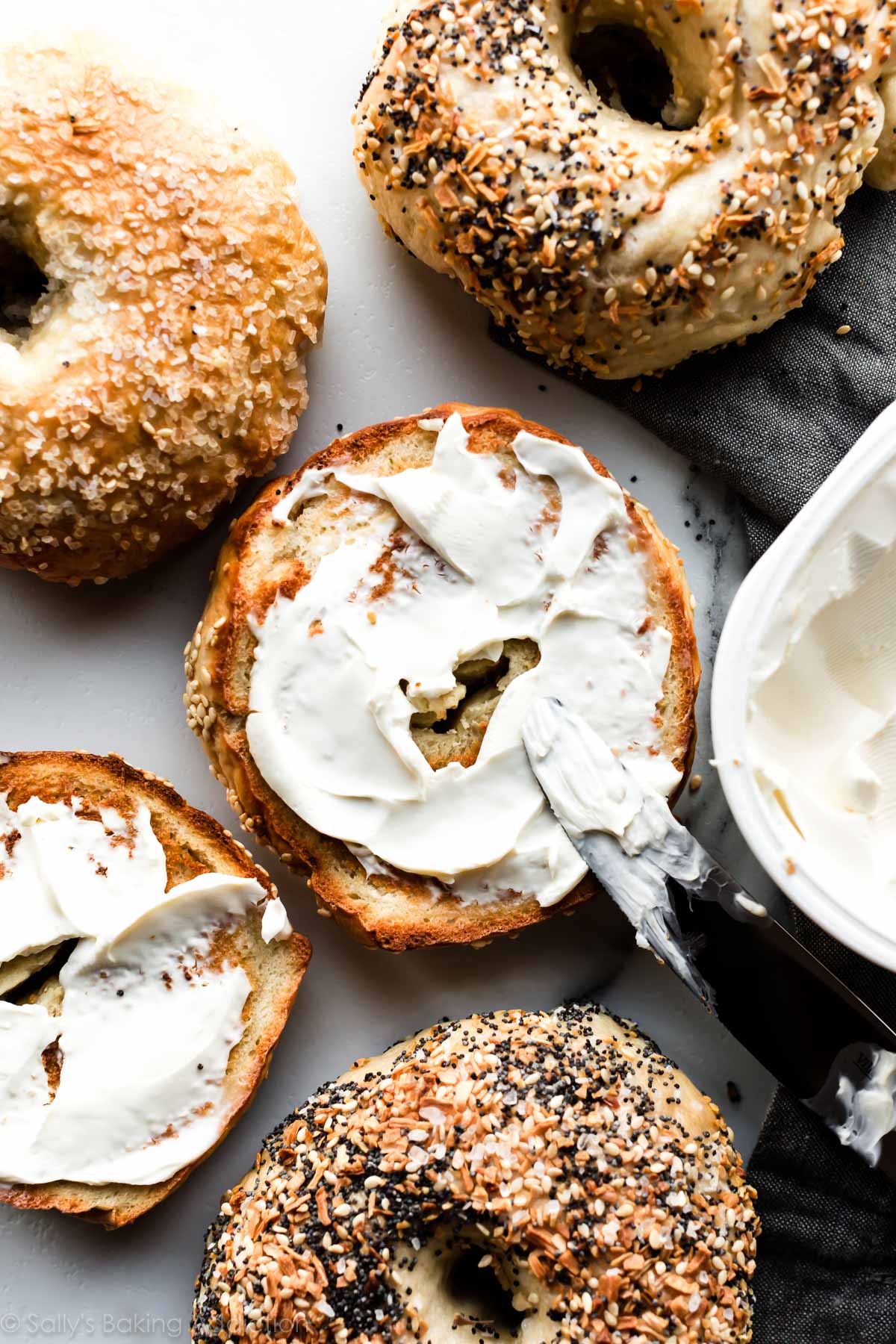
- Slice, toast, top, enjoy however you want! Cover leftover bagels tightly and store at room temperature for up to 4 days or in the refrigerator for up to 1 week.
Notes
- Overnight Make-Ahead Instructions: Prepare the dough through step 4, but allow the dough to rise overnight in the refrigerator instead of at room temperature. The slow rise gives the bagels wonderful flavor! In the morning, remove the dough from the refrigerator and let the dough rise for 45 minutes at room temperature. Continue with step 5. I don’t recommend shaping the bagels the night before as they may puff up too much overnight.
- Freezing Make-Ahead Instructions: Baked bagels freeze wonderfully! Freeze them for up to 3 months, thaw overnight in the refrigerator or at room temperature, then warm to your liking. You can also freeze the bagel dough. After punching down the dough in step 6, wrap the dough tightly in plastic wrap, then a layer of aluminum foil. Freeze for up to 3 months. Thaw overnight in the refrigerator, then punch the dough down again to release any air bubbles. Continue with the rest of step 6.
- Special Tools (affiliate links): Stand Mixer | Baking Sheets | Parchment Paper or Silicone Baking Mats | Large Pot (such as a 5- or 6-quart Dutch Oven) | Pastry Brush
- Yeast: Use instant or active dry yeast. If using active dry yeast, the rise time may be closer to 2 hours. 1 standard packet is about 2 and 1/4 teaspoons, so you will need a little more than 1 packet of yeast. Reference my Baking with Yeast Guide for answers to common yeast FAQs.
- Barley Malt Syrup: This ingredient can be a little hard to find, but truly gives bagels that traditional malty flavor we all know and love. Most natural food stores carry it. I offer alternatives such as brown sugar in the dough and honey in the water bath; I’ve made bagels with these alternatives AND with barley malt syrup and honestly love both versions.
- Bread Flour: Bagels require a high protein flour. Bread flour is a must. Here are all my recipes using bread flour if you want more recipes to use it up. All-purpose flour can be used in a pinch, but the bagels will taste flimsy and won’t be nearly as chewy.
- Bread Machine: Place the dough ingredients into the pan of the machine. Program the machine to dough or manual, then start. After 9–10 minutes, the dough will be quite stiff. Allow the machine to complete its cycle, then continue with the recipe.
- Bagel Varieties: See blog post above for various add-ins and toppings. Note that the toppings are added after the egg wash in step 9. Some readers have used this bagel recipe to make whole wheat bagels by replacing half of the bread flour with whole wheat flour. I haven’t tried it, but let me know if you do!
- Halve or Double: You can halve this dough recipe by simply halving all of the dough ingredients (do not halve the water or honey for the boiling step). No changes to the recipe instructions. For best taste and texture and to not overwhelm your mixer with excess heavy dough, I do not recommend doubling this dough recipe. Instead, make separate batches of dough.
- Adapted from a mix of recipes I’ve tried: King Arthur Flour, Cook’s Illustrated, and Complete Book of Breads







Reader Comments and Reviews
i have the bagels baking now – so far they look great! two questions – is it normal for the dough to be a bit sticky after proofing? additionally, is it normal for the bagels to significantly expand during the boiling process? thanks for the recipe – everything from your site is always a hit with me and my husband!!
Hi Abbie! Yes, the dough can be sticky after proofing. They shouldn’t expand a ton during boiling, but they will a bit. Let us know how they go!
Easy to do with great instructions. Love this recipe, don’t change a single thing!
Oh my god this was so good. My bf and i just made these and dear god as two idiots who dont know how to bake that well this was so good. The recipe was so simple and easy to follow and they came out so much tastier than the other recipe we followed in the past. Thank you so much Sally you are my savior.
I was hoping to make chocolate chip bagels . Any suggestions?
Hi Qudsia, for chocolate chip bagels, you can chocolate chips in when we add the raisins in our Cinnamon Raisin Bagels. Same amount. Let us know if you give them a try!
I’ve made this recipe a few times and find a little more water makes for smoother bagels. About 2 cups
Hey! I love making bagels at home, but for some reason my dough cracks on top during the baking step. This is especially noticeable when I top with a cinnamon and sugar mixture. Any ideas on what I can do differently?
Hi Belle, This just comes down to shaping the dough, the technique can take some practice. Try to smooth out ridges/cracks in the dough balls before forming the bagel shape. Some cracks are normal! Ours have them in the photos above. Hope this helps for your next batch!
I haven’t made this yet, but I’m curious if I need to use the mixer or if I could do it by hand?
Hi Cici, you can mix by hand using a large mixing bowl and a wooden spoon or silicone spatula—it will take a bit of arm muscle!
I weighed everything out and the dough would not stick together. Shaping was difficult. Not impressed with this recipe.
Hi Aubrey, was the dough too dry? I haven’t found that issue with this particular dough before; it’s certainly stiff, but smooths out as you knead it. I wonder if the dough wasn’t kneaded long enough?
Nutritional info would be great if you could be provided Dash calories, carbs, etc.
Hi Leslie, We don’t usually include nutrition information as it can vary between different brands of the same ingredients. Plus, many recipes have ingredient substitutions or optional ingredients listed. However, there are many handy online calculators where you can plug in and customize your exact ingredients/brands. Readers have found this one especially helpful: https://www.verywellfit.com/recipe-nutrition-analyzer-4157076
I had a hard time with cracks in my dough as I made the bagles. They are delicious, just some not so pretty. What did I do wrong?
Hi Mary! This just comes down to shaping the dough, the technique can take some practice. Try to smooth out ridges/cracks in the dough balls before forming the bagel shape. Some cracks are normal! Ours have them in the photos above.
I did too, but found adding more water helped with better dough elasticity and smoother bagels in the end. 2 cups is what I used.
My son is allergic to egg. Is there an alternative to the egg wash?
Hi Carrie, instead of egg wash, you can brush them with milk before baking. Enjoy!
I’m so happy! I made this recipe, starting yesterday, and finished it up for breakfast today. They were amazing! Admittedly, mine were a little on the ugly side, but the texture and flavor were spot on! I’m turning into a baking addict because of you, Sally! Making a recipe that required a couple of different techniques really gave me the confidence I need to tackle anything! Thank you so much for sharing your wisdom, talent and recipes!
Perfection. Chewy inside and crisp exterior.
Is it possible to make blueberry bagels with this recipe? Would you use fresh or frozen blueberries?
I’ve made many other of Sally’s recipes and I LOVE them. Sally’s is always my first stop when I want to try baking something new!
Hi Liz, For blueberry bagels, we recommend using dried blueberries and following our cinnamon raisin bagels, swapping the raisins for blueberries. The moisture from fresh blueberries is too much for the bagel dough. Hope this helps!
Have you ever tried gluten free 1 to 1 flour?
Hi Valerie, we haven’t tested these bagels with gluten free flour. Let us know if you try it!
I already posted on this recipe before, but I had a question! I’ve had great success and rave reviews on the plain bagels, an onion variation that I tried, and cheddar! My wife said “we may never buy bagels again!” My favorite kind of bagel has always been egg bagels. I was going to just throw a few eggs into the dough to see what happens but I figured I would ask the experts! Any suggestions for adapting this recipe to make egg bagels?
Hi Mike, We haven’t tested an egg version. If you do fine one you love, let us know!
I was having a craving and didn’t want to go buy bagels but I had everything to make these! I loved this recipe, I ended up flipping and rotating at the half way mark and only cooking for 20 minutes which ended up working best for me because I had the perfect chew for my bagel,I read I should’ve put the topping side down first but I didn’t and so when I flipped the topping got crispy but again that was fine I can work with that. I also substituted honey in the boil for salted and put sugar in my water, I didn’t have honey . All in all loved. I’m sure my husband is going to love these too! Thank you Sally
This recipe looks amazing! I love blueberry bagels and want to know if it would work to mix fresh blueberries into the dough? Would the ratios change for the flour or water?
Hi Elise! For blueberry bagels, we recommend using dried blueberries and following our cinnamon raisin bagels, swapping the raisins for blueberries. The moisture from fresh blueberries is too much for the bagel dough. Hope this helps!
I loved this recipe and the way the details were made so clear for each step. I was a bit nervous about it being my first time, but I did it!! They’re edible!! My girls loved them! I made 16 mini bagels instead and it worked out beautifully!! Even if you are a beginner this recipe has been made so easy to follow that I believe you will be successful. Cheers to homemade delights!
Can you freeze the bagels? Either before or after baking?
You bet! See recipe Notes for details.
yet another great recipe! I’ve made cheddar and cheddar jalapeño, hoping to make some cinnamon raisin this weekend. I also attempted blueberry bagels but REALLY struggled with the moisture……..any tips with working with blueberries?
Hi Amanda, we’re so glad you enjoyed the bagels! For blueberry bagels, we recommend using dried blueberries and following our cinnamon raisin bagels, swapping the raisins for blueberries. The moisture from fresh blueberries is too much for the bagel dough. Hope this helps!
Has anyone made these as rainbow bagels? They are my daughters favorite, but I’d like to try to make them for her myself. I don’t want to overmix the dough. Thanks for any input!
Hi Carmela, we haven’t tested it, but we would divide the dough into however many colors you want after you mix it together, and then knead the color into the different doughs in the kneading step. Gel food coloring would be best.
I made these for the first time today and they turned out amazing. I probably won’t buy store brands again, they’re that good. I topped mine with crushed pumpkin seeds and sea salt before bsking and they turned out incredible. Thank you for this recipe!
My go to bagel recipe? It’s perfect!!
Any issues in using a bread maker for the dough? Arthritic hands kneading for ten minutes is a challenge.
Hi Eddee, we haven’t personally tested it, but many readers have done so with success. Hope you enjoy the bagels!
My first time making bagels and they turned out perfectly! Such a great recipe and fun to make!
These turned out so well!
Been getting into baking as a midlife crisis kind of thing since the holidays… Made a bunch of Sally’s cookies for Christmas and decided to test myself with bagels for the first time. So glad I did! Made six instead of the 8 and they came out PERFECT!
Hi Sally,
Instead of Barley Malt Syurp in the water bath, can I use molasses?
Hi Chelsie, we haven’t tested molasses in the water bath, but let us know if you do!
I used a tablespoon of molasses in three quarts of water and they came out delicious! I also used the called for tablespoon of sugar then and extra 2t of molasses in the dough. The overnight rise made this easy and added great flavor.
made some cheddar ones today, SUCH A HIT! They won’t last long, haha. Thanks for another great recipe
I always thought you were supposed to boil Bagels in baking soda water like you do for pretzels. Would you know if that makes a different flavor or chewiness? And also for making onion bagels will the onion burn if I put it on the top of the bagels, or should I mix the onion in or how would that work best?