
Even if you’ve never made homemade bread or worked with yeast before, this homemade crusty artisan bread is for you. It’s the perfect beginner recipe because it only requires 4 ingredients without any special pans or mixer, there’s no kneading or complicated shaping involved, and 95% of the work is hands-off. Bread masters will appreciate this recipe too because it delivers with delicious flavor, a slightly crisp and mega chewy crust, and those signature soft holes inside like ciabatta or French bread.
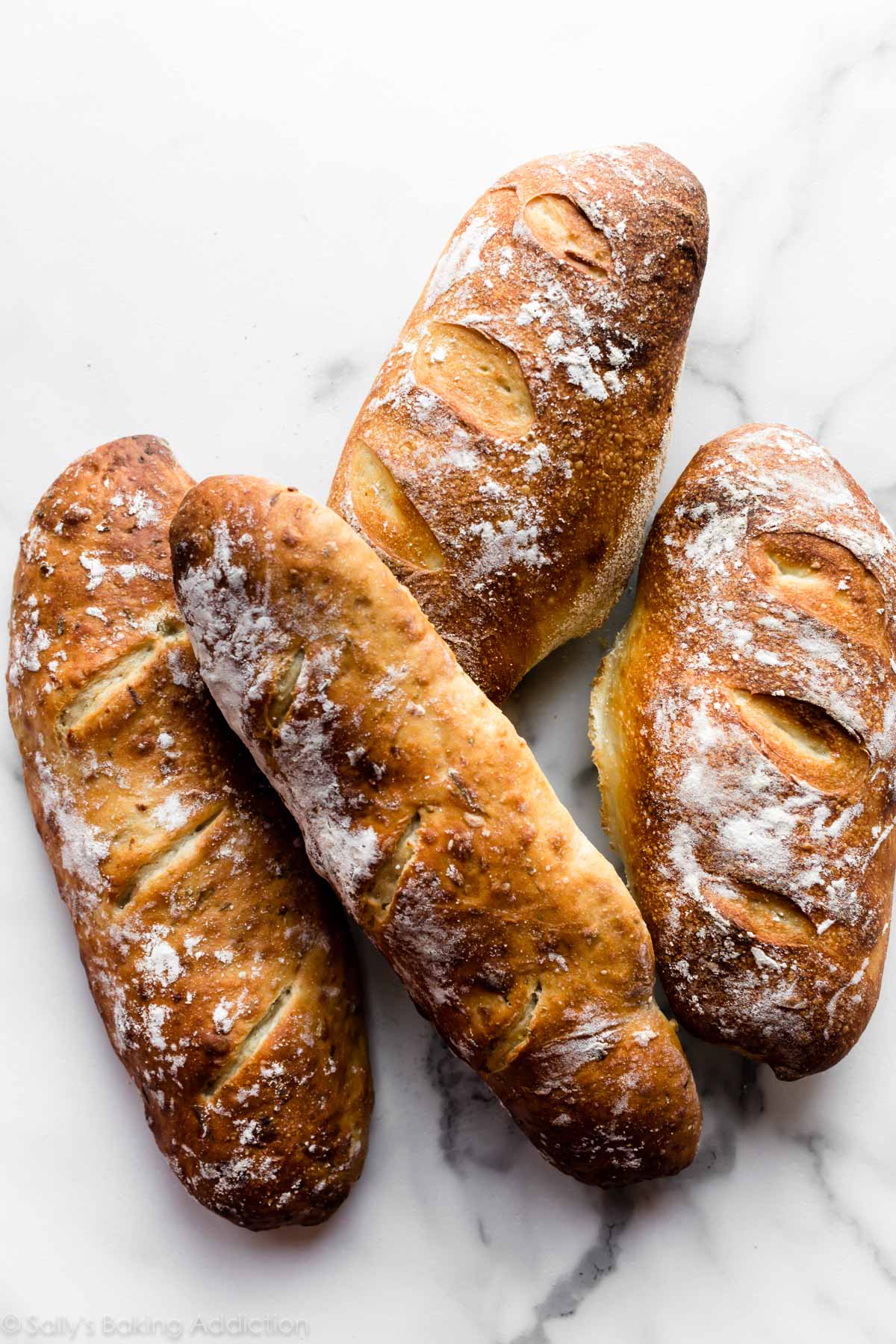
Bread Beginners—Start Here
Have you ever wanted to master homemade bread? Real, crusty, chewy, delicious bakery-style loaves that taste incredible with dips, soups, sauces, and comforting dinners? This is where you start. This artisan bread recipe is for beginners, but even bread masters will appreciate its flavor and ease. It’s so fresh, so flavorful, and so surprisingly easy because it basically makes itself.
You only need 4 ingredients without any special pans or mixer, there’s no kneading, no poolish or dough starter required, and you can add herbs, cheeses, and spices to make a variety of bread flavors.
This base recipe will soon be on repeat in your kitchen. After you realize how easy it is to make real homemade bread, you’ll find any excuse to bake a loaf. You can even turn it into garlic bread and homemade croutons.

What is Homemade Artisan Bread?
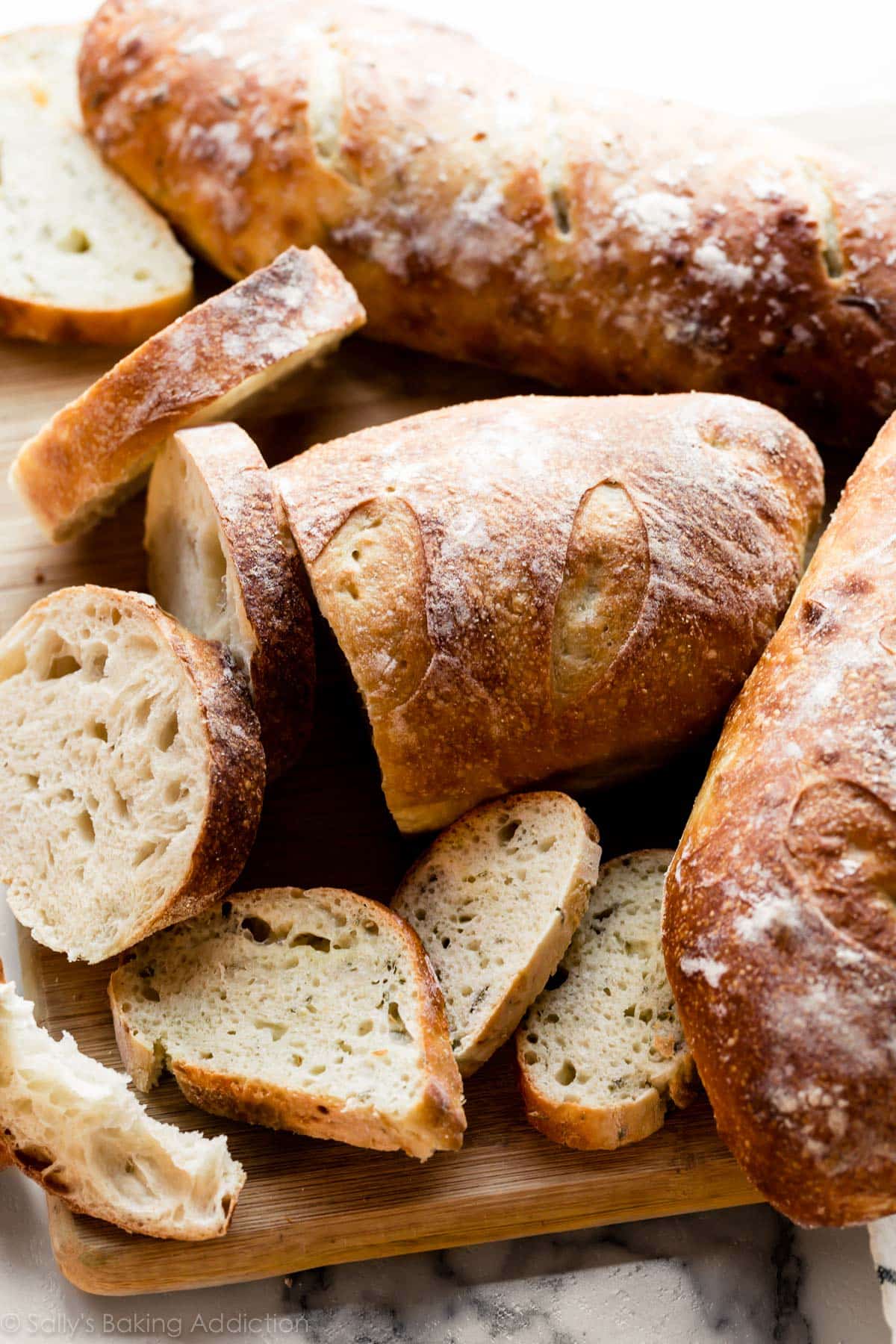
When it comes to bread, the term “artisan” doesn’t mean 1 particular thing. But, generally, artisan bread is homemade, fresh, crusty, and deliciously rustic-looking. An artisan is a skilled worker, one who works with their hands. But ironically, there isn’t much “work” involved with this recipe.
Why You’ll Love This Bread Recipe
- Easier than you ever imagined
- Soft + flavorful
- Chewy, slightly crisp crust
- Shape however you want
- No special pans, poolish, or dough starter required
- Only 4 ingredients
- You decide the length of time it rests
Like sandwich bread, whole wheat bread, focaccia, homemade English muffins, seeded oat bread, and homemade bagels—the process is surprisingly easy. If you’re new to yeast, reference my Baking with Yeast Guide for answers to common yeast FAQs.
Only 4 Ingredients
The crustier and chewier the bread, the less fat in the dough—also known as a “lean dough.” We’re using a lean dough for our artisan loaf today. (If you’re curious, a “rich dough” is a soft bread dough with the presence of fat, such as butter and eggs—the kind we need for overnight cinnamon rolls, sweet potato dinner rolls, brioche, and honey butter rolls.) Without fat, we’re left with the basics.
- Bread Flour: While you can use all-purpose flour in this recipe, I strongly recommend using bread flour. Just like when we make olive bread, pizza bread, and asiago-crusted skillet bread, bread flour produces a stronger, chewier bread and that makes a big difference in a recipe with only 3 other ingredients.
- Instant Yeast: Instant yeast is key in this recipe. While you can use active dry if that’s all you have, any quick rise or instant yeast will produce flavorful results in less time. I use more yeast in this recipe compared to my cranberry nut no-knead bread and no-knead jalapeño cheddar bread. Why? Those doughs rest and rise at room temperature. However, for more flavor and just as much rise, I use more yeast and let this dough rest in the refrigerator. (Cool air slows the fermentation process.)
- Salt: You can’t make good bread without salt and for best flavor, I recommend a coarse salt, such as coarse sea salt. I find the bread’s flavor lacking with regular table salt.
- Water: I normally encourage you to use warm liquid with yeast because warm liquid helps the yeast work faster. However, use cool or room temperature water here. Not freezing cold, not super warm—cool to touch. 70°F (21°C) is great, but the exact temperature doesn’t matter as long as it’s not hot or warm. The cooler the water, the longer the dough takes to rise and, usually, the better the bread’s flavor. (This is important since there are so little ingredients to add substantial flavor!) We use the same cool water method for no knead honey oat bread.
- Optional Cornmeal: Dusting the pan with cornmeal adds a pop of flavor and a little crunch to the bottom crust. This is completely optional. If you have it, use it. If you don’t have it, don’t worry about it.
You can also add herbs and seasonings such as garlic, rosemary, dill, chopped onion, jalapeño, shredded cheese, chopped nuts, dried cranberries, etc. My no yeast bread is the quick bread alternative here—you can add flavors to that loaf, too!
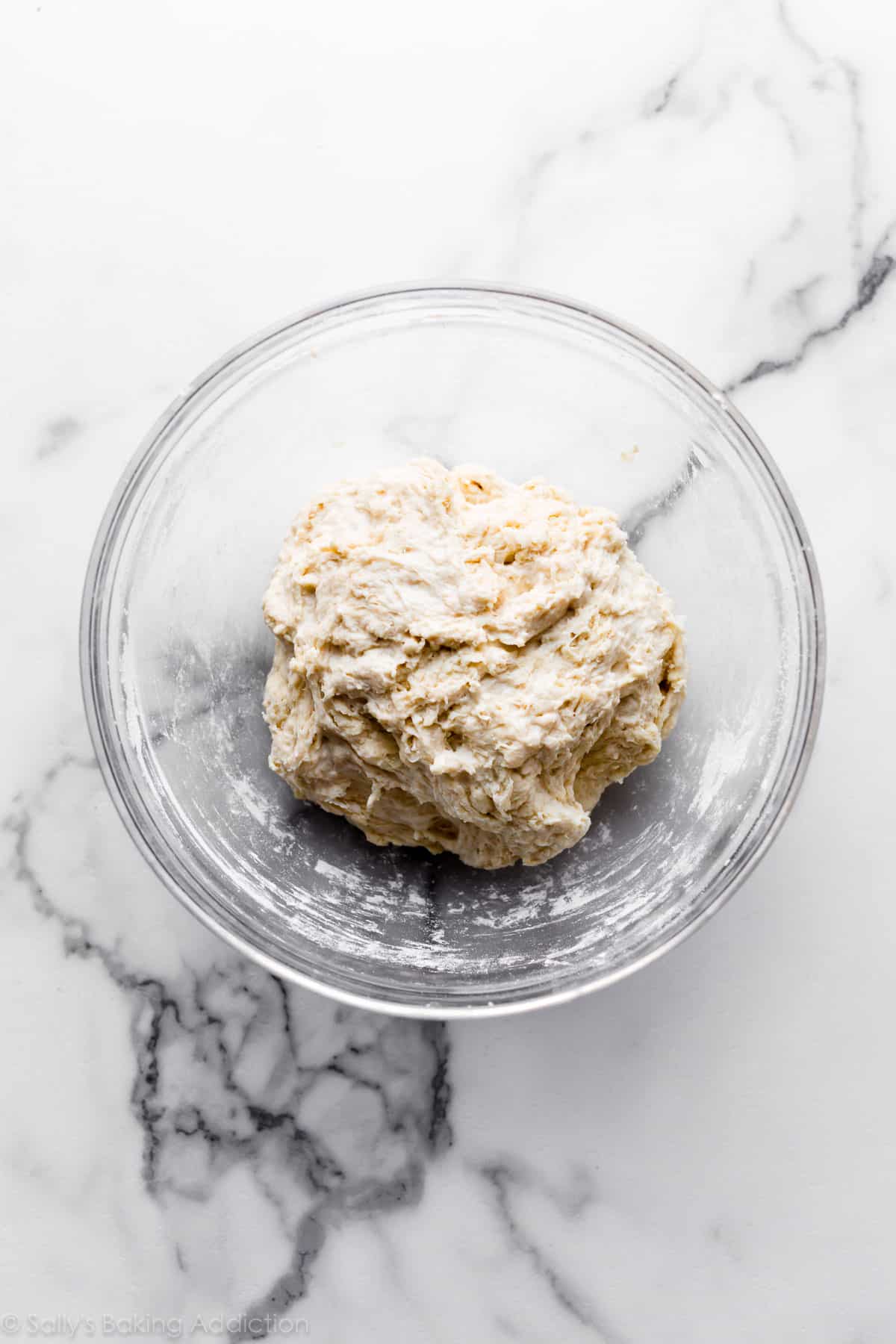
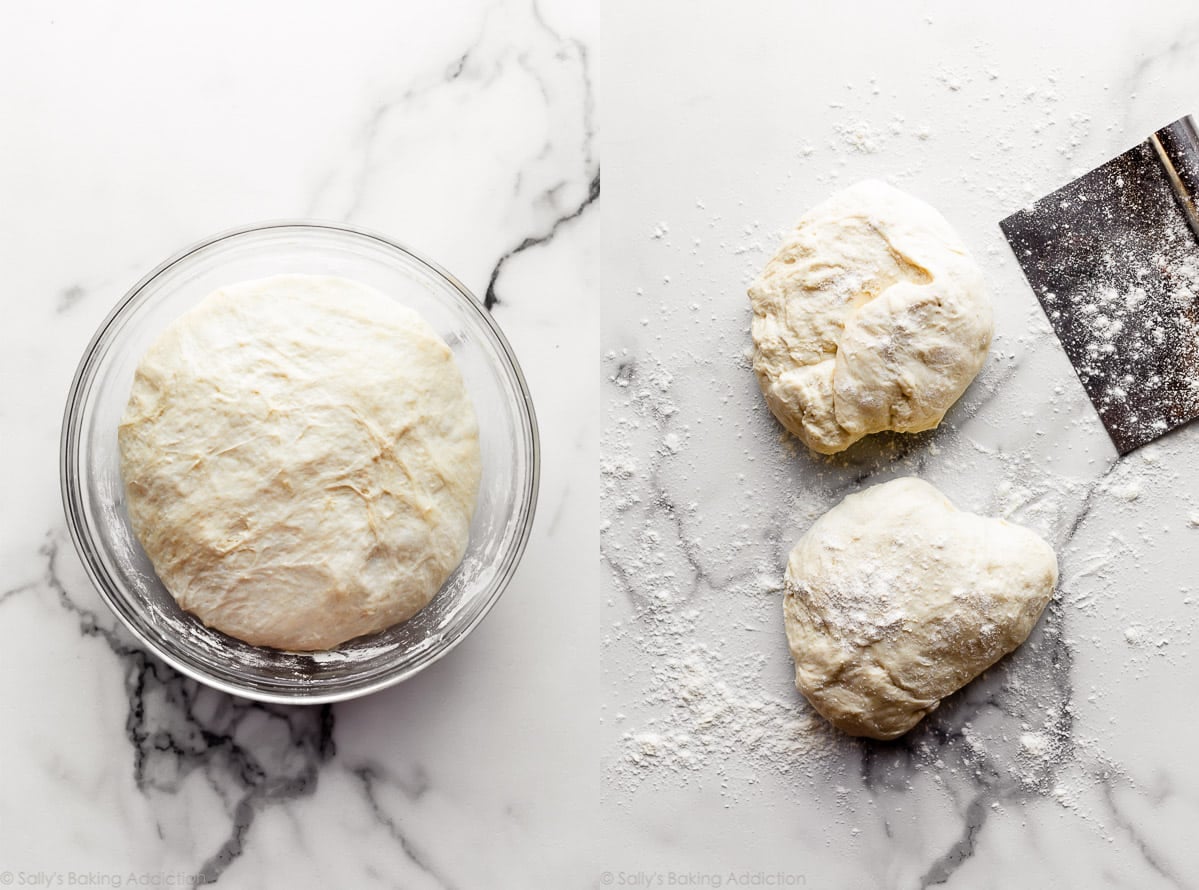
Baker’s Tip: Avoid adding too much flour to the dough as you work with it. The stickier it is—and the longer it sits in the refrigerator—the more likely you’ll have those big airy pockets of air in the crumb.
How to Make Homemade Artisan Bread in 5 Steps
- Mix the dough ingredients together. At first the dough will seem very dry and shaggy and you’ll question if it will even come together. But it will. Use a spatula at first, then switch to your hands to ensure all of the flour is moistened. The dough is actually a little sticky after it’s thoroughly mixed.
- Let it rise at room temperature for 2-3 hours. Cover the dough and let it rise at room temperature for about 2-3 hours until doubled in size.
- Use right away or refrigerate. After 2-3 hours, you can immediately continue with the next step. However, for ideal flavor and texture, I strongly recommend letting the dough sit in the refrigerator for at least 12 hours and up to 3 days. Yes, 3 full days! I usually only let it rest for about 18 hours. During this crucial step, the cold air slows the fermentation process and adds so much flavor and texture. So, you can bake bread in 2-3 hours or in 3 days. The longer it sits, the better it tastes. 🙂
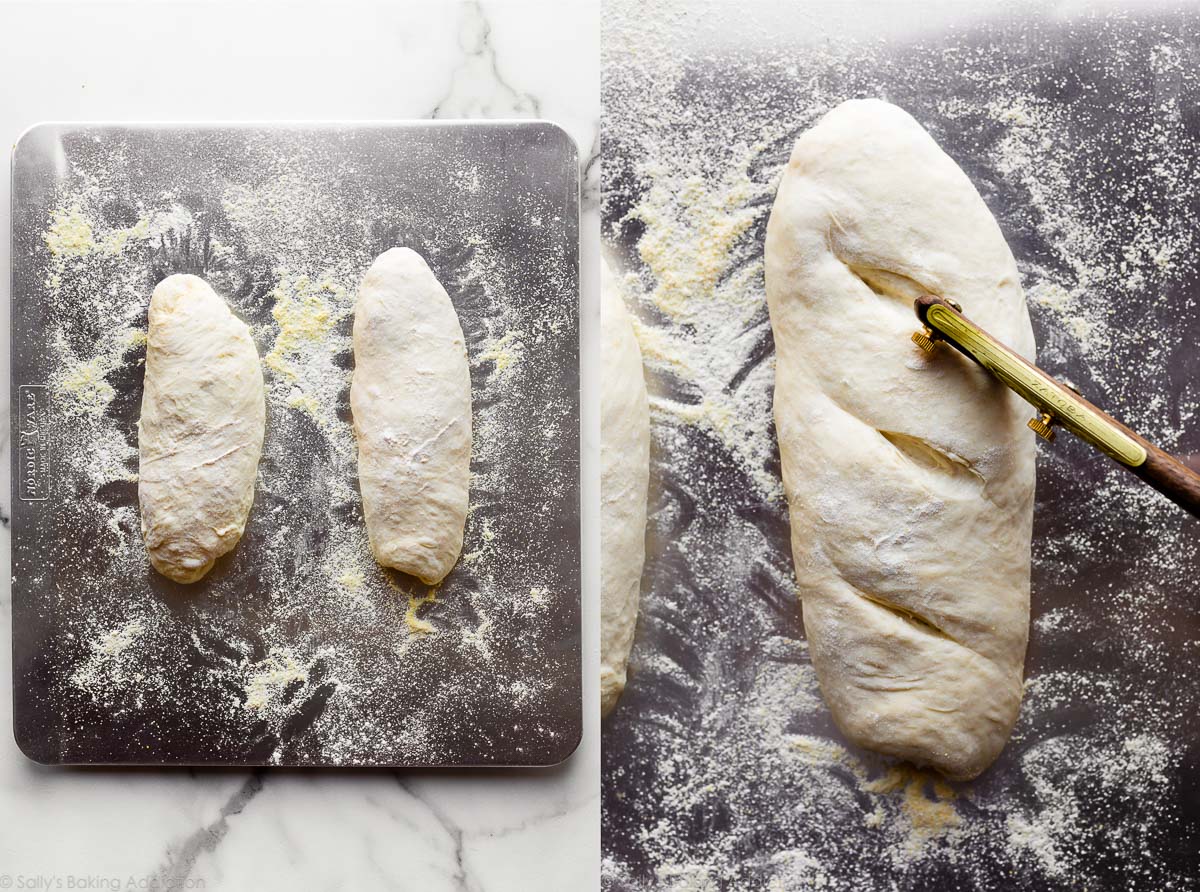
- Shape into 2 loaves or 1 boule. Rest as oven preheats. You can shape the bread into a round loaf (boule) or two longer loaves. I usually make two longer loaves side-by-side on a flat baking sheet, about 9×3 inches each. Preheat the oven to a very hot 475°F (246°C). The extremely hot air will immediately set the crust so the bread rises up instead of spreading all over. Score the loaves on top right before baking. Scoring also helps control the bread’s expansion. To help ensure a crispier crust, after the oven preheats, pour boiling water into a metal or cast iron baking pan on the bottom oven rack. Immediately place the baking sheet inside and shut the oven door to trap the steam. The steam will help create that coveted crisp crust.
- Bake until golden brown, about 20-25 minutes. Gently tap the loaves because if they sound hollow, they’re done.
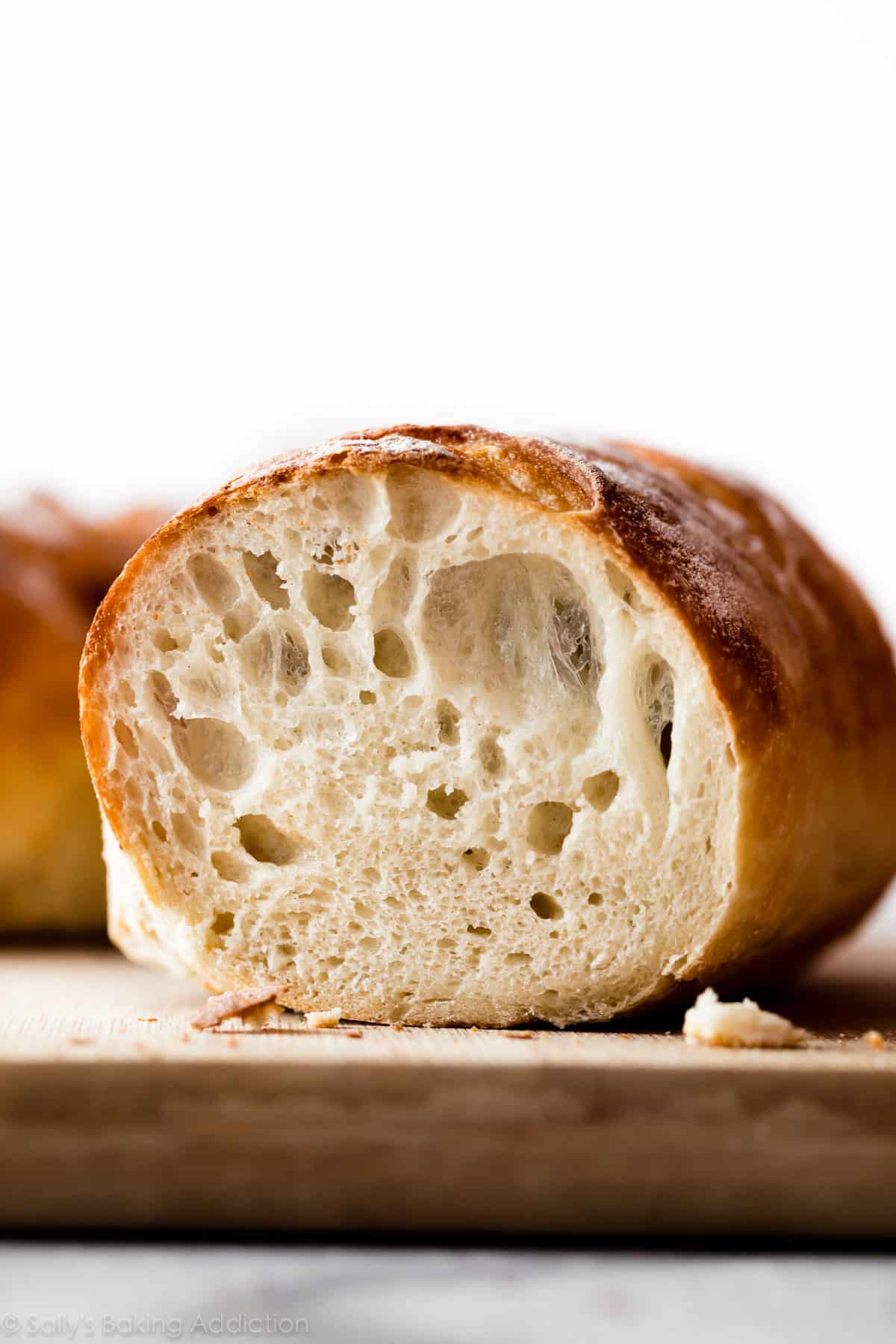
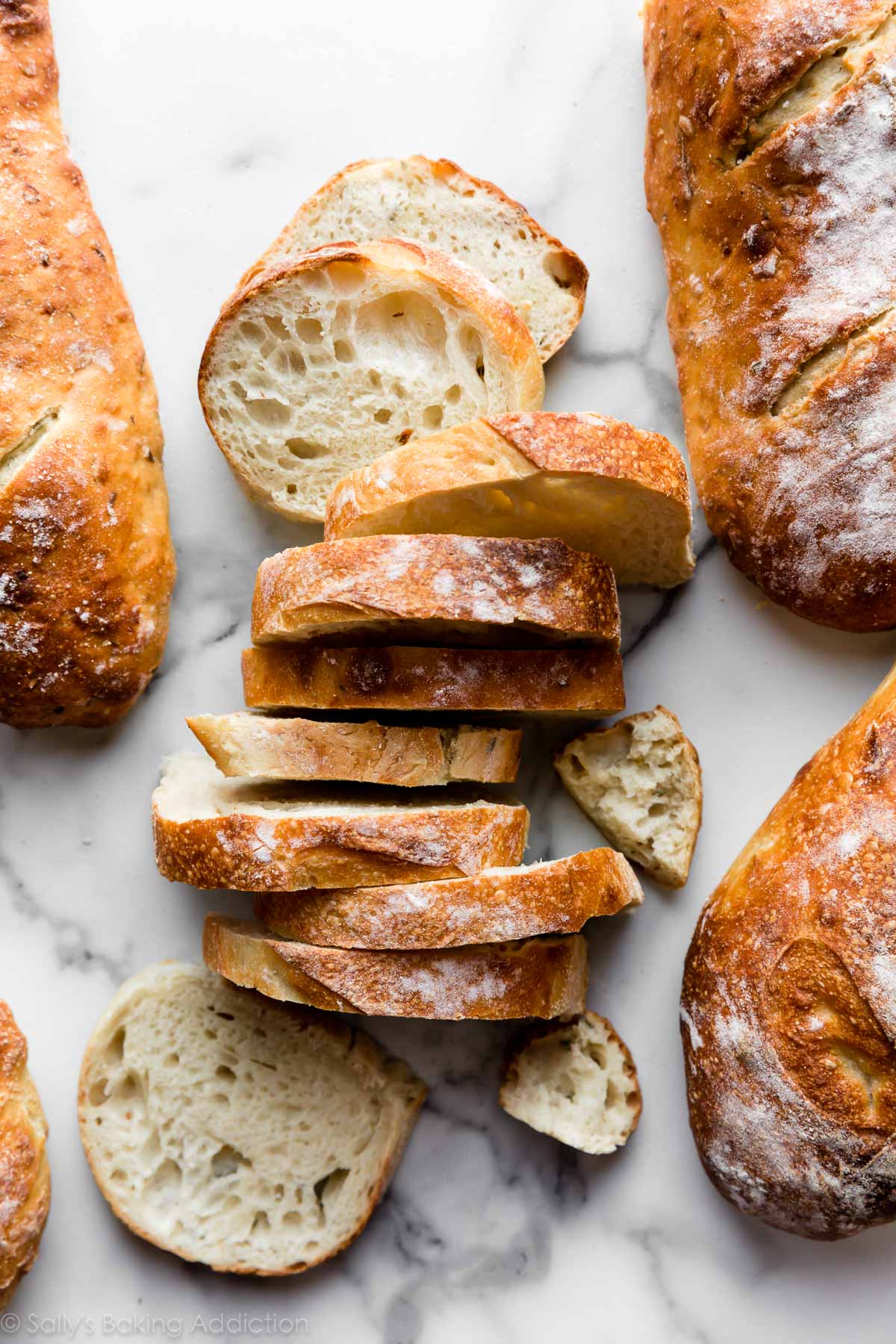
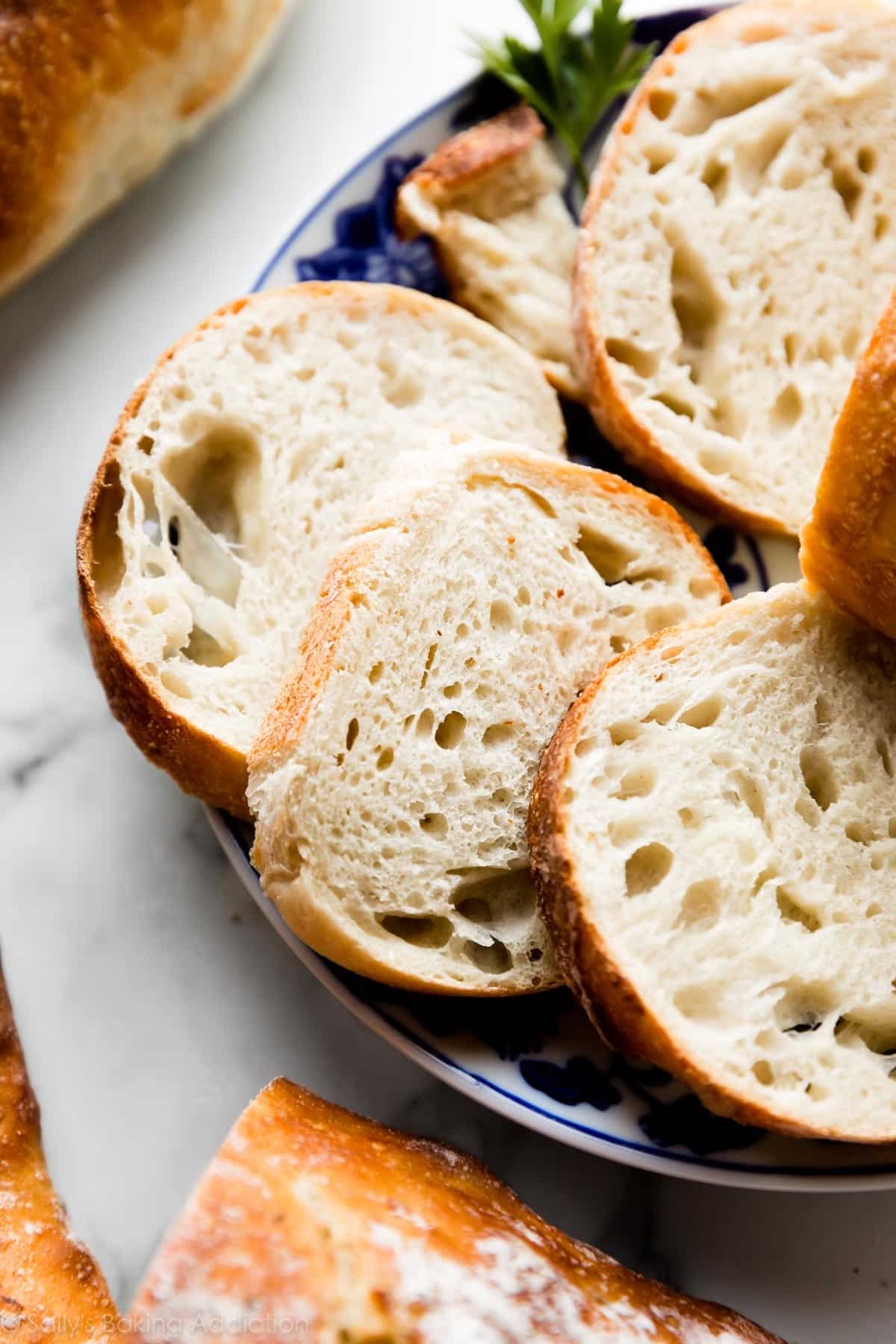
Look at those deliciously soft holes inside! Reminds me of ciabatta or a French baguette, both of which can be a little more complicated to make.
Serve Artisan Bread With
- Slather with homemade honey butter or cinnamon butter
- Slice and dunk in crab dip, beer cheese dip, garlic & bacon spinach dip, or even homemade Italian dressing
- Serve alongside slow cooker chicken chili or pumpkin chili
- As a dunker for homemade tomato soup, creamy cauliflower potato soup, minestrone soup, creamy chicken noodle soup, crab soup, or slow cooker creamy chicken & corn soup
- With a big bowl of mac & cheese or spaghetti with slow cooker turkey meatballs
- Use for my goat cheese & honey crostini
- It’s the perfect starch in breakfast casserole or baked apple cider French toast
- Use it to make homemade garlic bread or homemade croutons
- With anything because homemade bread is everything’s best friend

Homemade Artisan Bread Recipe
- Prep Time: 4 hours
- Cook Time: 25 minutes
- Total Time: 4 hours, 25 minutes
- Yield: 2 8-inch loaves
- Category: Bread
- Method: Baking
- Cuisine: American
Description
Even if you’ve never made homemade bread or worked with yeast before, this homemade artisan bread is for you. Watch the video tutorial below and review the recipe instructions and recipe notes prior to beginning. If you’re new to working with yeast, reference my Baking with Yeast Guide for answers to common yeast FAQs.
Ingredients
- 3 and 1/4 cups (about 430g) bread flour (spooned & leveled), plus more for hands and pan
- 2 teaspoons (about 6g) instant yeast
- 2 teaspoons (about 9g) coarse salt (see note)
- 1 and 1/2 cups (360ml) water, close to room temperature at about 70°F (21°C)
- optional: cornmeal for dusting pan
Instructions
- In a large ungreased mixing bowl, whisk the flour, yeast, and salt together. Pour in the water and gently mix together with a silicone spatula or wooden spoon. The dough will seem dry and shaggy, but keep working it until all the flour is moistened. If needed, use your hands (as I do in the video tutorial below) to work the dough ingredients together. The dough will be sticky. Shape into a ball in the bowl as best you can.
- Keeping the dough in the bowl, cover the dough tightly with plastic wrap or aluminum foil and set on the counter at room temperature (honestly any normal room temperature is fine!). Allow to rise for 2-3 hours. The dough will just about double in size, stick to the sides of the bowl, and have a lot of air bubbles.
- You can continue with step 4 immediately, but for absolute best flavor and texture, I strongly recommend letting this risen dough rest in the refrigerator for at least 12 hours and up to 3 days. Place covered dough in the refrigerator for 12 hours – 3 days. I usually let it rest in the refrigerator for about 18 hours. The dough will puff up during this time, but may begin to deflate after 2 days. That’s fine and normal—nothing to worry about.
- Lightly dust a large nonstick baking sheet (with or without rims and make sure it’s nonstick) with flour and/or cornmeal. Turn the cold dough out onto a floured work surface. Using a sharp knife or bench scraper, cut dough in half. Some air bubbles will deflate as you work with it. Place dough halves on prepared baking sheet. Using floured hands, shape into 2 long loaves about 9×3 inches each (doesn’t have to be exact) about 3 inches apart. Loosely cover and allow to rest for 45 minutes. You will bake the dough on this prepared baking sheet.
- During this 45 minutes, preheat the oven to 475°F (246°C).
- When ready to bake, using a very sharp knife or bread lame (some even use kitchen shears), score the bread loaves with 3 slashes, about 1/2 inch deep. (“Score” = shallow cut.) If the shaped loaves flattened out during the 45 minutes, use floured hands to narrow them out along the sides again.
- Optional for a slightly crispier crust: After the oven is preheated and bread is scored, place a shallow metal or cast iron baking pan or skillet (I usually use a metal 9×13-inch baking pan) on the bottom oven rack. Carefully and quickly pour 3-4 cups of boiling water into it. Place the scored dough/baking pan on a higher rack and quickly shut the oven, trapping the steam inside. The steam helps create a crispier crust.
- Place the shaped and scored dough (on the flour/cornmeal dusted pan) in the preheated oven on the center rack. Bake for 20-25 minutes or until the crust is golden brown. Gently tap the loaves—if they sound hollow, the bread is done. For a more accurate test of doneness, the bread is done when an instant read thermometer inserted in the center reads 195°F (90°C).
- Remove the bread from the oven and allow to cool for at least 20 minutes before slicing and serving. Store leftovers loosely covered at room temperature for up to 5 days or in the refrigerator for up to 1 week.
Notes
- Make Ahead & Freezing Instructions: The dough can sit in the refrigerator for up to 3 days, so this is a wonderful recipe to begin ahead of time. You can also bake the bread, allow it to cool, and freeze for up to 3 months. Thaw at room temperature before serving. You can also freeze the dough. Complete the recipe through step 3. Wrap in plastic wrap and place in a freezer-friendly container. To bake, allow dough to thaw overnight in the refrigerator, or for 2-3 hours at room temperature. Continue with step 4 and the rest of the recipe instructions.
- Special Tools (affiliate links): Glass Mixing Bowls | Silicone Spatula or Wooden Spoon | Baking Sheets | 2-cup Measuring Cup | Bread Lame | Instant Read Thermometer
- Flour: For absolute best flavor and chewy texture, I strongly recommend using bread flour. You can use a 1:1 substitution of all-purpose flour in a pinch with no other changes to the recipe. I recommend avoiding whole wheat flour in this dough. If necessary, use half bread flour and half whole wheat flour. The bread will taste dense.
- Yeast: You can use instant or active dry yeast, but I highly recommend an instant (aka “rapid rise” or “quick rise” yeast). The bread will rise faster. I usually use Platinum yeast by Red Star, which is an instant yeast. 2 teaspoons is a little less than 1 standard packet. If using active dry yeast, there are no changes needed to the recipe. The rise time in step 2 may take longer.
- Salt: Use a coarse salt, such as coarse sea salt, in this bread. I find the flavor slightly lacking when using regular table fine salt. If you only have fine salt, reduce to 1 and 1/2 teaspoons.
- Water: Use cool water. 70°F (21°C) is great, but the exact temperature doesn’t matter as long as it’s not hot or warm.
- Round Loaf: If you want to shape the dough into a boule (round loaf) simply shape into a round ball instead of 2 loaves in step 4. Baking instructions are the same, but the loaf will take a few extra minutes in the oven. If you want to bake the boule in a dutch oven, see next note.
- Using a Dutch Oven: Follow this dough recipe through step 3, then follow the simple shaping/baking instructions (steps 2-5) in my Cranberry Nut No Knead Bread recipe including using the parchment paper. If your parchment paper can’t withstand heat this high, you can either lower the oven temperature and bake the bread for longer or grease the Dutch oven instead.
- Using a pizza stone: If you want to bake your bread loaves on a pizza stone, place pizza stone in the preheating oven. In step 8, place the shaped and scored dough on your preheated pizza stone. If the bottom of the shaped dough is pretty sticky, dust the hot pizza stone with some extra cornmeal. Bake as directed.
- No Nonstick Pan: If you don’t have a nonstick baking sheet, line it with parchment paper instead. Coat with a dusting of flour and/or cornmeal before placing the dough on top. Parchment paper can burn, so it’s best to check the box to see how much heat yours can tolerate. Lower your oven heat if necessary and bake the bread for longer until golden brown and when gently tapped, sound hollow.
- Flavor ideas: Before pouring in the water in step 1, add any of the following ingredients/combination of ingredients to the dry ingredients in the bowl: 4 cloves minced garlic + 3 Tablespoons chopped rosemary, 3 Tablespoons your favorite fresh herb (chopped), 1 cup your favorite shredded cheese, a diced jalapeño, 3/4 – 1 cup dried cranberries and/or chopped nuts, 2 teaspoons garlic powder, etc.
- Reference my Baking with Yeast Guide for answers to common yeast FAQs.
- Recipe adapted from King Arthur Flour & Red Star Yeast, similar method originally from Jim Lahey.
Nutrition
- Serving Size: 2 slices
- Calories: 136
- Sugar: 0.1 g
- Sodium: 389.8 mg
- Fat: 0.7 g
- Carbohydrates: 27.2 g
- Protein: 4.7 g
- Cholesterol: 0 mg












Reader Comments and Reviews
Easy recipe… hasn’t come out brown as the picture. A bit gummy on the crust… but has lots of bubbles. Looks flatter even though I tried shaping it before placing it in the oven. I’ll give it another try another time.
Have used this recipe twice now and love it! Haven’t been able to refrigerate the dough and wait a couple of days before baking as I am too eager to make the bread. Love it.
Ms Sally, instead of 2 loaves, could this be divided into 4 or even 6 loaves for individual servings? What do you think a time frame would be for baking?
Hi Sherry! You can definitely make smaller rolls/buns. Careful shaping into rolls or buns– this is a sticky dough, so use floured hands. The bake time will be only a few minutes shorter. Bake until golden brown and when lightly tapped, they sound hollow.
The bread came out great but I’m curious as to why you use a baking sheet instead of a baking steel in the oven. Would this work baked on a steel?
Hi Lori! We’re sure a baking steel would work, but we don’t have one ourselves.
Does the refrigerated dough need to be room temperature before baking? Thank you!
Hi Melissa, the dough will come to room temperature during the 45 minute rest while the oven is preheating.
Hello Bakers
For the fifth time I am preparing the Artisan Bread. But this time, I am adding flavors!
I do not have fresh herbs, but I do have dry spices – such as rosemary, Italian spice, and granulated garlic (and fresh garlic), would you say to incorporate two teaspoons of each? I will also add cheddar (one cup as the recipe calls for).
Thank you!
Hi Lee, we would start with 1 tsp each dried herb/spice, but that’s really up to your personal preference!
This is a really good bread recipe!
The first time I made it I didn’t change anything. It didn’t come out very brown, but it was delicious. The 2nd time, all I did different was brush it with seasoned olive oil after scoring it.
Sally’s site is my #1 go to when looking for new baking recipes. I’ve made this bread twice now. First time I was a little skeptical and thought I had messed it up because dough was SO STICKY, but it turned out delicious. Nice crusty top and chewy inside. Only problem was it was burnt on the bottom (I actually had to cut the bottom off) So the second time I baked it a little less. It was still a little dark on the bottom, but not burnt. However it didn’t get the nice crusty top since I removed it earlier, though still delicious 🙁 Will have to keep playing around with it to perfect it!
Made exactly as directed. Let it sit in frig for 2 days. Never rose at all. Baked it up anyway. Was very dense…not chewy at all. Very salty (Used the flake salt as recommended). Used the water bath and never got the hollow sound even when temperature was 195 degrees. Sliced one piece and threw the two loaves away. Sorry, but won’t be making this again.
Can I use this as a pizza dough? I just changed my mind and want pizza instead of bread
Hi Sarah! We haven’t tested this dough as pizza dough. You’ll lose all the air bubbles in the shaping process and it may taste quite dense, but we would love to hear how it goes if you try.
I love this recipe! I’ve made it several times and it always comes out perfect! I’m currently making it right now, but I’m in a pickle. I’m on step 4- it’s shaped and resting for the 45 minutes. But…… I have to leave now and don’t have time to let it finish resting and bake it before I go. Can I bake it when I get home? How long can it rest (already shaped) on the counter?
Hi Katie, we would refrigerate the shaped bread until it’s ready to bake. Next time, the dough can sit in the refrigerator for up to 3 days, so this is a wonderful recipe to begin ahead of time.
This recipe didn’t work at all for me.
Hi Joe, we’re happy to help troubleshoot if you could let us know what didn’t work for you. Thanks!
Couldn’t I just bake the bread on silicone mats I just purchased the nonstick pans you advertise because I only had stainless steel
Hi Lisa, yes, you can bake on the silicone mats on top of a baking sheet.
I have made this bread several times and love it, for the taste and the simplicity. I usually addd one cup of sunflower seed or pumpkin seeds. One question, is there any adjustment that would be needed to the recipe if I were to use gluten free flour?
Hi Ulric, we have not tested this recipe with gluten-free flour, but you should expect different results if doing so–especially with yeasted breads.
Truth. Second attempt. First attempt I over-handled the dough and didn’t “cut” it in two.
Holy cow is this bread amazing!!! Found that the less I handled it, the better. Used a mixing bowl that food doesn’t tend to stick to and a silicone spoon-spatula. After the dough was mixed and ingredients well incorporated, covered the bowl tightly with foil and in the fridge for two days. Poured it out onto a floured sheet pan. Cut into two, gently shaped them, covered for 45 mins, scored the tops and into the oven. I am a cook NOT a baker but wow oh wow. Just amazing!
Thank you, Sally. I have confidence now to try some of your other recipes.
I made this once before and it was pretty good but not as good as when I’ve made the simply sandwhich bread. I think it started when the dough didn’t rise a ton. Would adding say 1-1.5 tablespoons of sugar help with that at all?
Can’t wait to try again! Thank you!
Hi Maddie! This is a different style bread than the simply sandwich bread, which will be much softer. This no knead slow rise method gives a nice crust and chewy center. Make sure to handle the dough with care to keep all the air bubbles in tact.
I made this baguette numerous times and it is wonderful. I need to make 4 instead of two since my neighbor smells it each time, lol. How do I double the recipe without messing it up. I need exact amounts to make 4. Thank you!
Hi Vaughn, for best results, we recommend making two separate batches rather than doubling. Enjoy!
I have made this recipe dozens of times – it is alway perfect and delicious. I would like to add some cracked wheat to the recipe and am wondering if I could replace some of the flour for the cracked wheat 1:1 or leave the recipe as is and add cracked wheat as an add in like dried fruit. Any thoughts?
Hi Kolina, we don’t have any experience baking with cracked wheat, but would love to hear what you try!
I always thought I wanted to be a recipe creator but reading these questions lets me know I am not cut out for it. People want to change ingredients and methods and expect the creator to be an expert on everything they can think of. You work at perfecting a recipe but then someone asks “hey if an add bubblegum to the recipe will the bread blow bubbles?” Like you should have tested that.
Thanks for the recipe the bread came out tasty and next time in my oven I will cook it longer than 22 minutes.
I just took my loaves out of the oven. The dough had been refrigerated for 18 hours. I baked them on a cookie sheet with cornmeal. I let the loaves rise on the pan for 45 minutes. I’m not sure that was long enough as there were cracks underneath one loaf and the other kind of burst out one side.
I am wondering why else this could have happened. I can send a picture, if it would help.
Hi Rosanna, did you score the tops of the loaves before baking? When bread cracks in spots, it’s often heat trying to escape. Scoring the tops of the loaves will create a natural spot for the heat to escape and the bread to rise.
Hey guys! When I first saw this recipe, I had my doubts but now it’s a go to recipe! If you want to make bread but the idea is intimidating this is your recipe! I’ve been using Sallys Baking Addiction for years and this is by far one of her best & easiest recipes!
Hi Sally, I’d love to try this recipe with use of some dark rye flour in addition to the bread flour. Can you guide me as to the proportion of rye flour to bread flour? Thank you!
Hi Sylvia, we have not tested this recipe with rye flour, so are unsure of what to recommend. We have, however, swapped out 1 cup (130g) of bread flour for the same amount of whole wheat flour with no issue.
I love this recipe so much I’ve made it countless times and it always turns out great I’m making it right now to welcome our new stove. The one thing I wish is that the website would add the Dutch Oven instructions into this recipe so I didn’t have to flip around between recipes.
Absolutely easy and delicious! I am a novice baker and was intimated at first but not anymore! Followed directions and made plain. I let dough rise for 2 hours on counter then in fridge for 2 days. I see garlic and rosemary in my future. 🙂
Like most said, this dough is sticky. I handle it like prepping ciabatta. I mix the dough, let it rise in a long box with cover. I wet my hands, stretch and fold to give it a bit of structure. 16 hrs later in the fridge I got it to warm up to room temperature. To bake it, I inverted on a lined tray and dusted it liberally with flour. I used a pastry cutter to cut and shape, dusting when I needed to. I baked as mentioned, with 20 cubes of ice on the bottom drip tray. It is pillowy, undersrtandable with 80% hydration. Taste pretty good with olive spread and stew.
Sorry, I just read your guide on baking with yeast and that answered my question. Thank you! Kate
Thank you for this very detailed and thorough recipe. After reading your whole method and watching (more than a few times) your video, I became confident I can make this. I don’t have a cast iron that’s big enough for bread so I appreciate that you used a method that doesn’t use one. It came out great and delicious! I’ll try to add cheese, herbs, garlic, nuts, dried fruits or maybe even seeds next time. Kudos to you and your team. Please continue to guide us first timers. God bless!!!
Made this recipe last week in the boule shape in my Le Creuset. Absolutely wonderful, followed the directions exactly. My rest time was about 18 hours in the fridge. So easy and delicious- lasted all week wrapped in a cloth napkin in the fridge.
I’ve been making this bread for sometime now ,couple of times a week. Absolutely love it as I shared it with my family!!. The problem I now have is gluten sensitivity, and I am going to start using European flour. Are there any changes that I need to make? I purchased OO and also all purpose French wheat
Hi Dorothy, we haven’t tested this recipe with 00 flour, but it should work–it just may change the texture a bit. If you give it a try, please report back how it turned out!
Used French all purpose farine to make bread yesterday. The only adjustments I would make from your recipe would be less water and less salt. I had to add more flour as the dough was too thin. Also, for some reason it tasted saltier but don’t know why. The bread is delicious despite my adjustment.
All purpose and bread flour weigh 120g per cup so 3-1/4c should be 390g – am I missing something? I like to weigh my flour due to the variations that can come from scooping/spooning etc. thank you!
Hi Sarah, I weigh 1 cup of spooned and leveled bread flour to be 130g. 120g always gives me just under. 130g per cup is how I tested this recipe.
Hi Sally, I’ve made this several times and always turns out great. I made my Doug last night and forgot to put it into the refrigerator. Is it still ok to use? Thanks Bridget
Hi Bridget, it should be fine if left to rise overnight on the counter, if you were able to place it in the refrigerator first thing in the morning. Glad this is a favorite for you!
I love this recipe! Followed it to the “T” including letting the dough rest in the refrigerator for 18 hours after rising. Also used the boiling water in the oven for a crispier crust. It came out perfect! First time making bread without my bread machine. Thanks Sally!