
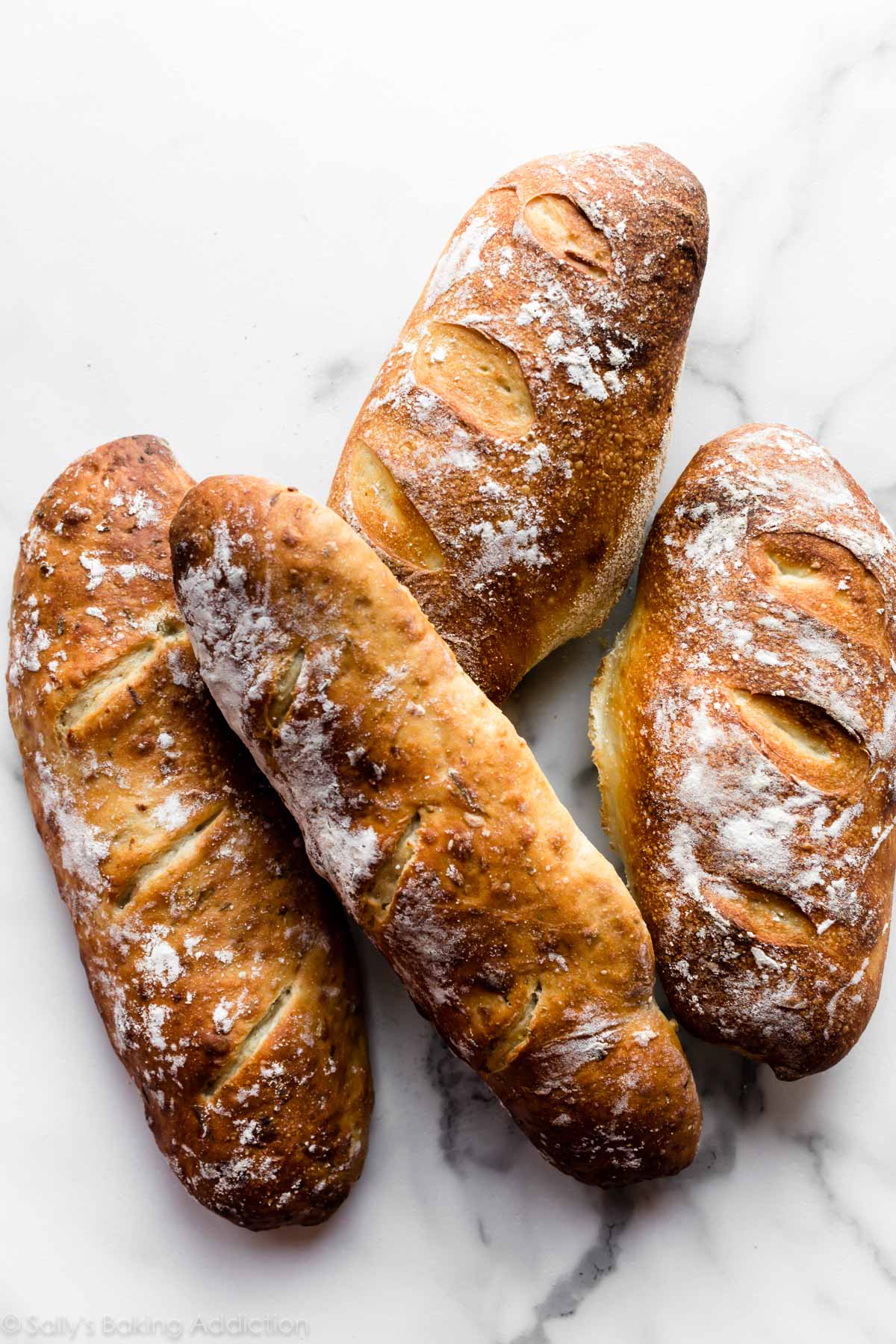
Even if you’ve never made homemade bread or worked with yeast before, this homemade crusty artisan bread is for you. It’s the perfect beginner recipe because it only requires 4 ingredients without any special pans or mixer, there’s no kneading or complicated shaping involved, and 95% of the work is hands-off. Bread masters will appreciate this recipe too because it delivers with delicious flavor, a slightly crisp and mega chewy crust, and those signature soft holes inside like ciabatta or French bread.
Bread Beginners—Start Here
Have you ever wanted to master homemade bread? Real, crusty, chewy, delicious bakery-style loaves that taste incredible with dips, soups, sauces, and comforting dinners? This is where you start. This artisan bread recipe is for beginners, but even bread masters will appreciate its flavor and ease. It’s so fresh, so flavorful, and so surprisingly easy because it basically makes itself.
You only need 4 ingredients without any special pans or mixer, there’s no kneading, no poolish or dough starter required, and you can add herbs, cheeses, and spices to make a variety of bread flavors.
This base recipe will soon be on repeat in your kitchen. After you realize how easy it is to make real homemade bread, you’ll find any excuse to bake a loaf. You can even turn it into garlic bread and homemade croutons.

What is Homemade Artisan Bread?
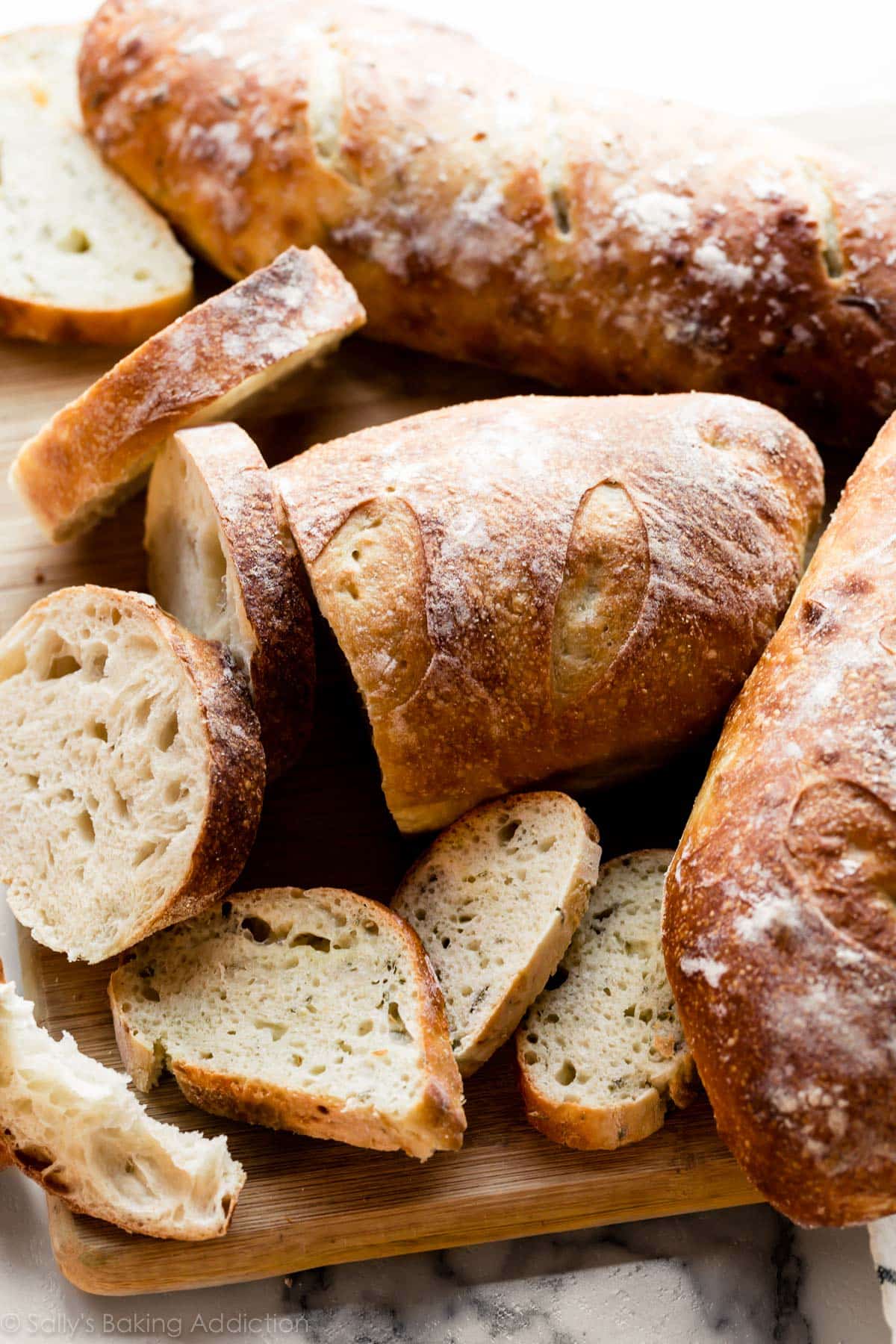
When it comes to bread, the term “artisan” doesn’t mean 1 particular thing. But, generally, artisan bread is homemade, fresh, crusty, and deliciously rustic-looking. An artisan is a skilled worker, one who works with their hands. But ironically, there isn’t much “work” involved with this recipe.
Why You’ll Love This Bread Recipe
- Easier than you ever imagined
- Soft + flavorful
- Chewy, slightly crisp crust
- Shape however you want
- No special pans, poolish, or dough starter required
- Only 4 ingredients
- You decide the length of time it rests
Like sandwich bread, whole wheat bread, focaccia, homemade English muffins, seeded oat bread, and homemade bagels—the process is surprisingly easy. If you’re new to yeast, reference my Baking with Yeast Guide for answers to common yeast FAQs.
Only 4 Ingredients
The crustier and chewier the bread, the less fat in the dough—also known as a “lean dough.” We’re using a lean dough for our artisan loaf today. (If you’re curious, a “rich dough” is a soft bread dough with the presence of fat, such as butter and eggs—the kind we need for overnight cinnamon rolls, sweet potato dinner rolls, brioche, and honey butter rolls.) Without fat, we’re left with the basics.
- Bread Flour: While you can use all-purpose flour in this recipe, I strongly recommend using bread flour. Just like when we make olive bread, pizza bread, and asiago-crusted skillet bread, bread flour produces a stronger, chewier bread and that makes a big difference in a recipe with only 3 other ingredients.
- Instant Yeast: Instant yeast is key in this recipe. While you can use active dry if that’s all you have, any quick rise or instant yeast will produce flavorful results in less time. I use more yeast in this recipe compared to my cranberry nut no-knead bread and no-knead jalapeño cheddar bread. Why? Those doughs rest and rise at room temperature. However, for more flavor and just as much rise, I use more yeast and let this dough rest in the refrigerator. (Cool air slows the fermentation process.)
- Salt: You can’t make good bread without salt and for best flavor, I recommend a coarse salt, such as coarse sea salt. I find the bread’s flavor lacking with regular table salt.
- Water: I normally encourage you to use warm liquid with yeast because warm liquid helps the yeast work faster. However, use cool or room temperature water here. Not freezing cold, not super warm—cool to touch. 70°F (21°C) is great, but the exact temperature doesn’t matter as long as it’s not hot or warm. The cooler the water, the longer the dough takes to rise and, usually, the better the bread’s flavor. (This is important since there are so little ingredients to add substantial flavor!) We use the same cool water method for no knead honey oat bread.
- Optional Cornmeal: Dusting the pan with cornmeal adds a pop of flavor and a little crunch to the bottom crust. This is completely optional. If you have it, use it. If you don’t have it, don’t worry about it.
You can also add herbs and seasonings such as garlic, rosemary, dill, chopped onion, jalapeño, shredded cheese, chopped nuts, dried cranberries, etc. My no yeast bread is the quick bread alternative here—you can add flavors to that loaf, too!
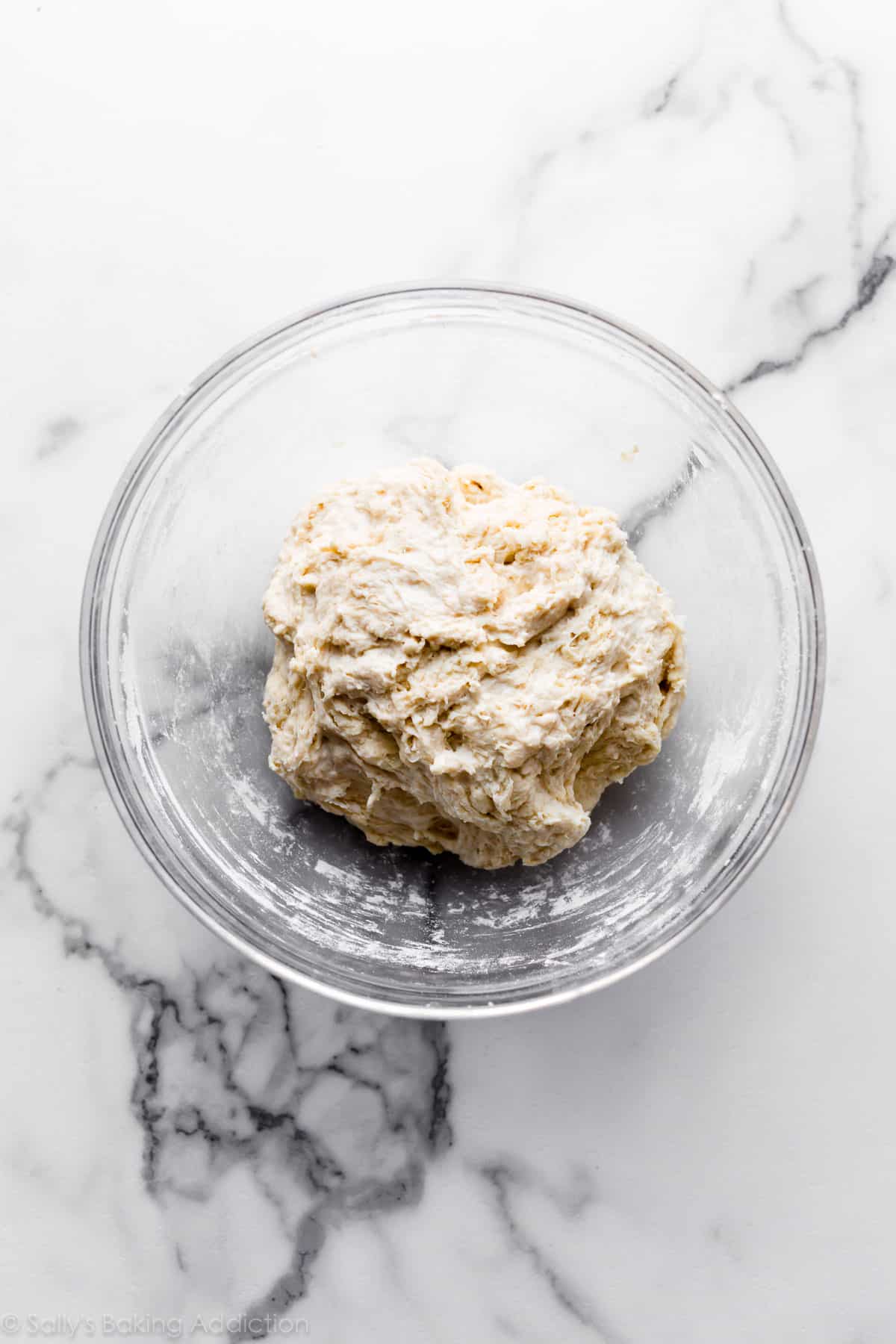
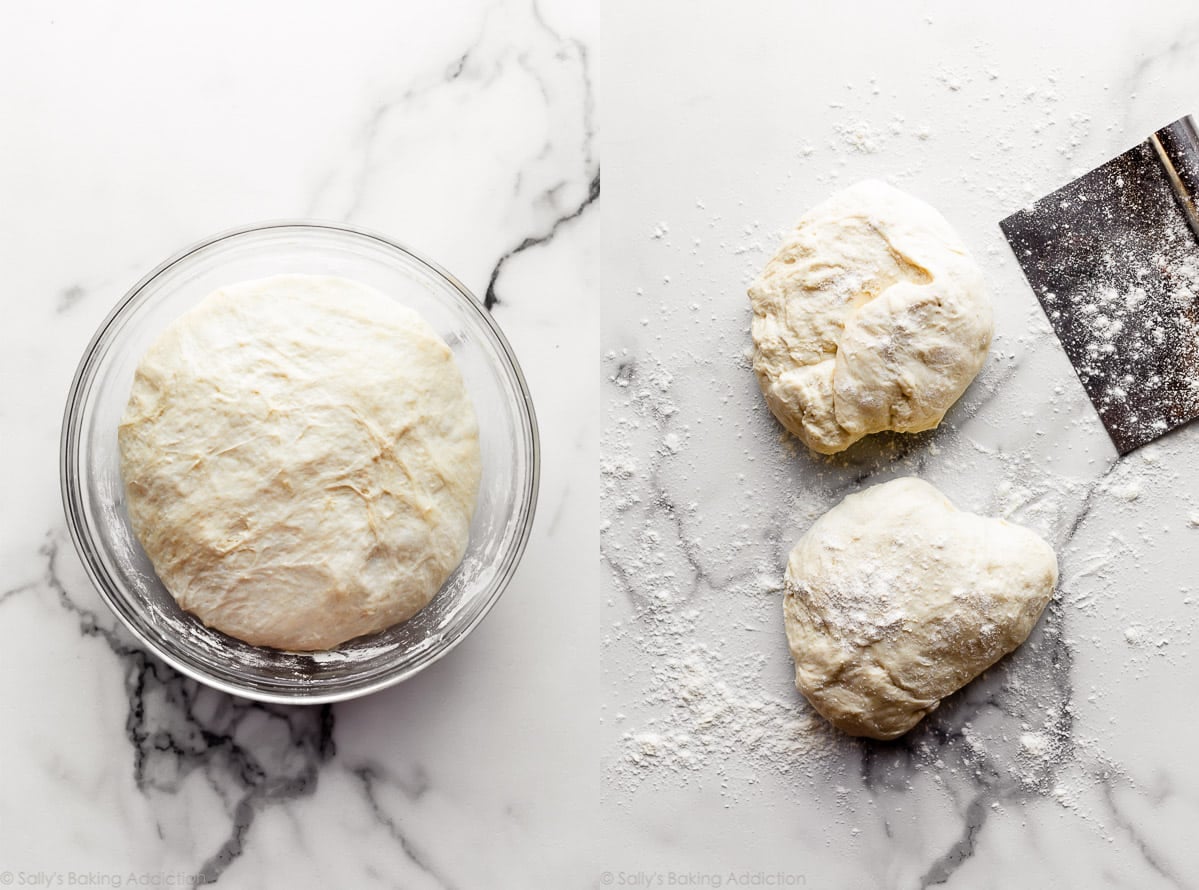
Baker’s Tip: Avoid adding too much flour to the dough as you work with it. The stickier it is—and the longer it sits in the refrigerator—the more likely you’ll have those big airy pockets of air in the crumb.
How to Make Homemade Artisan Bread in 5 Steps
- Mix the dough ingredients together. At first the dough will seem very dry and shaggy and you’ll question if it will even come together. But it will. Use a spatula at first, then switch to your hands to ensure all of the flour is moistened. The dough is actually a little sticky after it’s thoroughly mixed.
- Let it rise at room temperature for 2-3 hours. Cover the dough and let it rise at room temperature for about 2-3 hours until doubled in size.
- Use right away or refrigerate. After 2-3 hours, you can immediately continue with the next step. However, for ideal flavor and texture, I strongly recommend letting the dough sit in the refrigerator for at least 12 hours and up to 3 days. Yes, 3 full days! I usually only let it rest for about 18 hours. During this crucial step, the cold air slows the fermentation process and adds so much flavor and texture. So, you can bake bread in 2-3 hours or in 3 days. The longer it sits, the better it tastes. 🙂
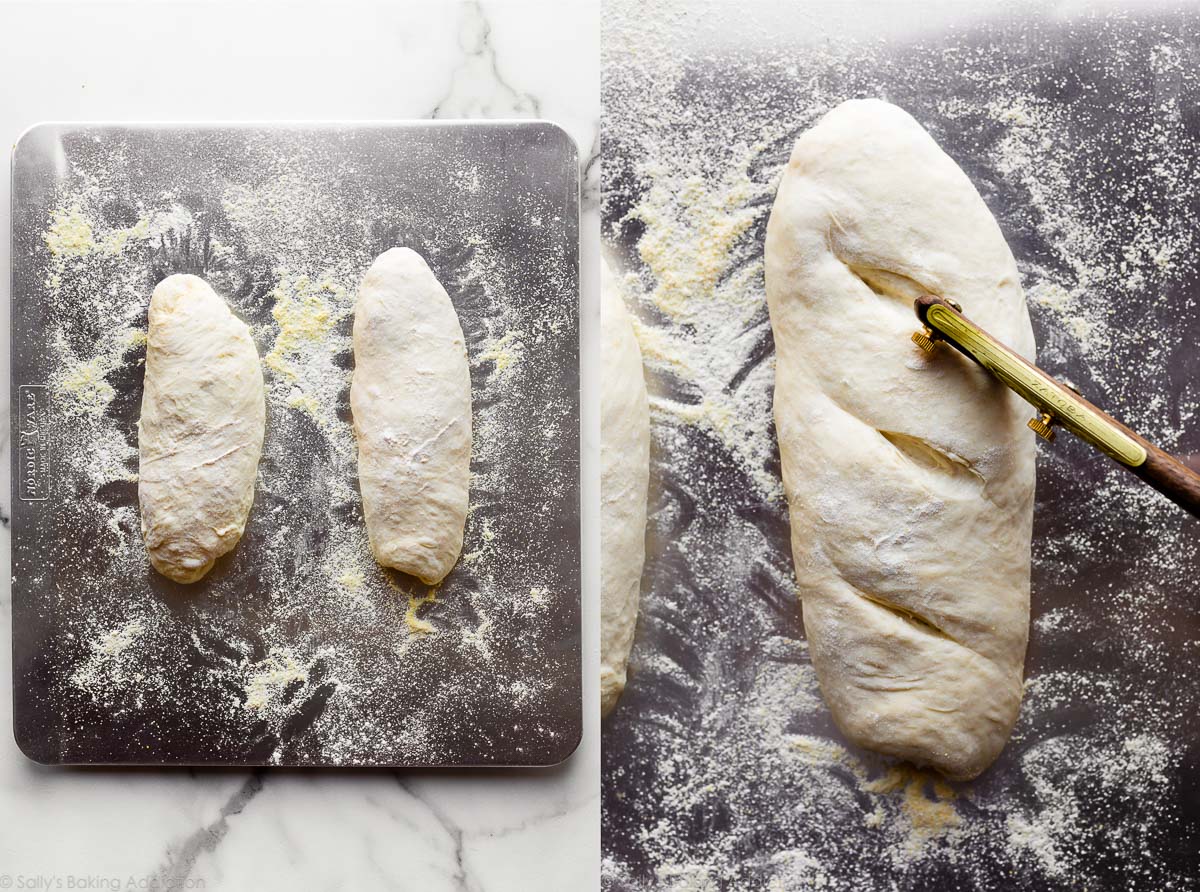
- Shape into 2 loaves or 1 boule. Rest as oven preheats. You can shape the bread into a round loaf (boule) or two longer loaves. I usually make two longer loaves side-by-side on a flat baking sheet, about 9×3 inches each. Preheat the oven to a very hot 475°F (246°C). The extremely hot air will immediately set the crust so the bread rises up instead of spreading all over. Score the loaves on top right before baking. Scoring also helps control the bread’s expansion. To help ensure a crispier crust, after the oven preheats, pour boiling water into a metal or cast iron baking pan on the bottom oven rack. Immediately place the baking sheet inside and shut the oven door to trap the steam. The steam will help create that coveted crisp crust.
- Bake until golden brown, about 20-25 minutes. Gently tap the loaves because if they sound hollow, they’re done.
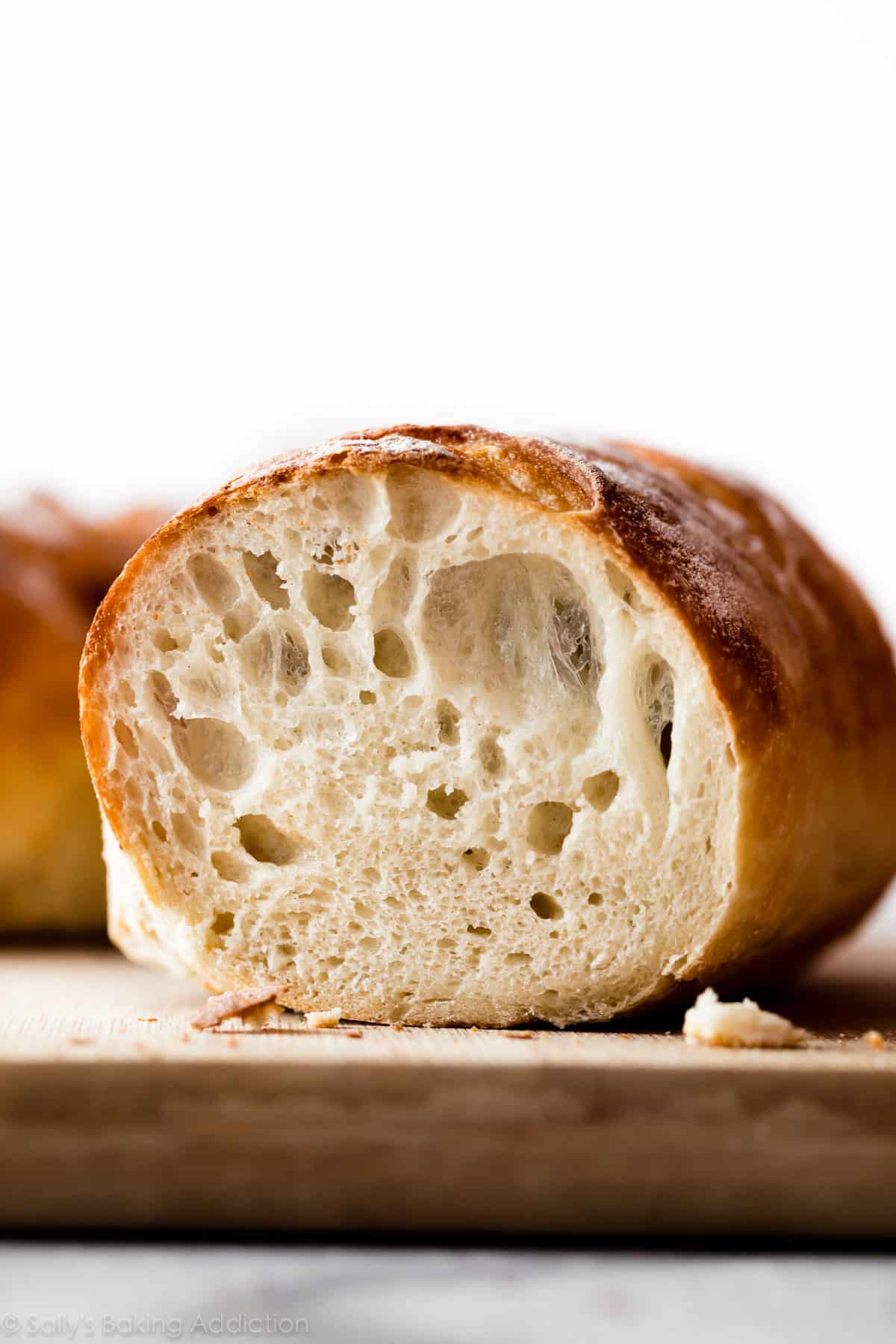
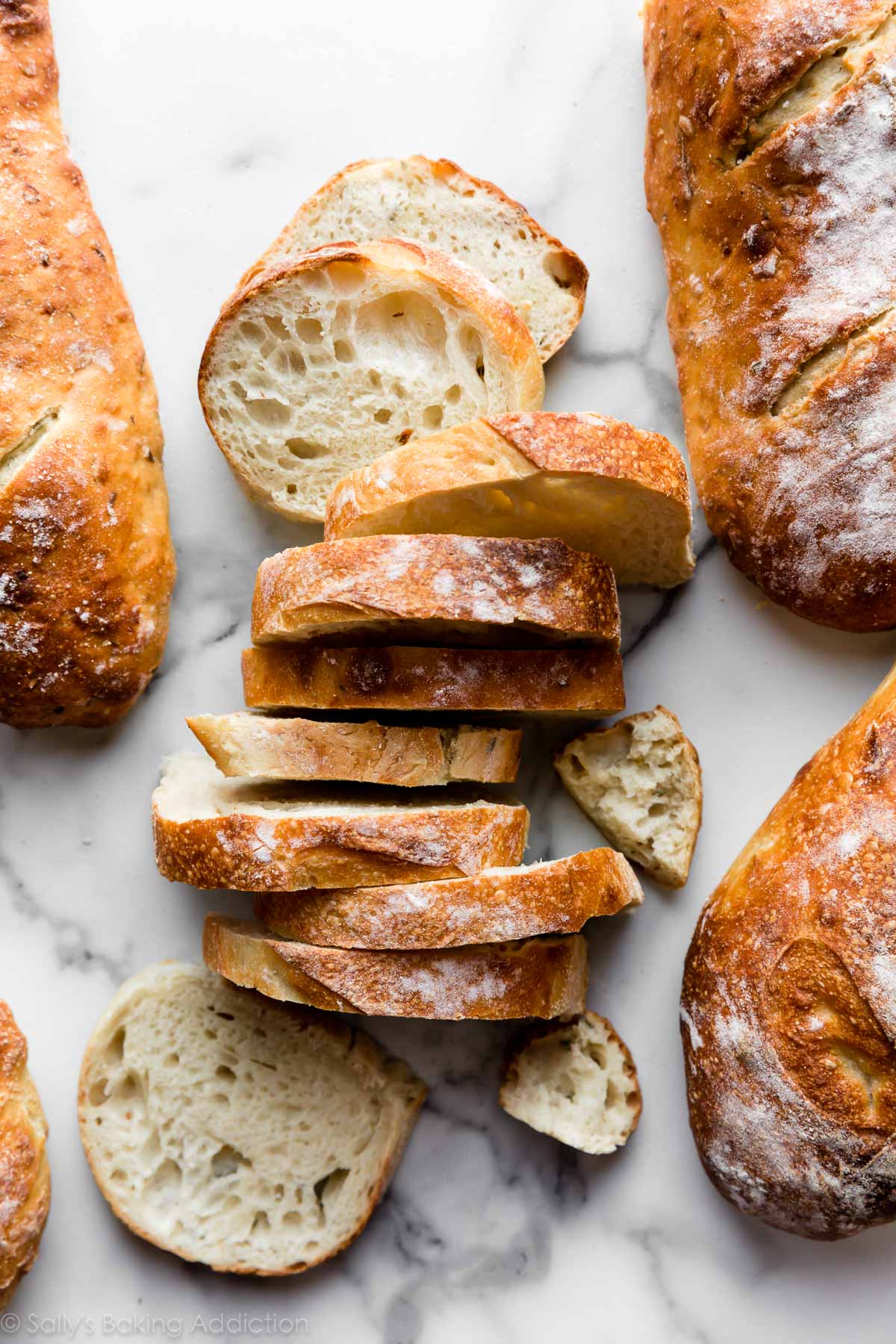
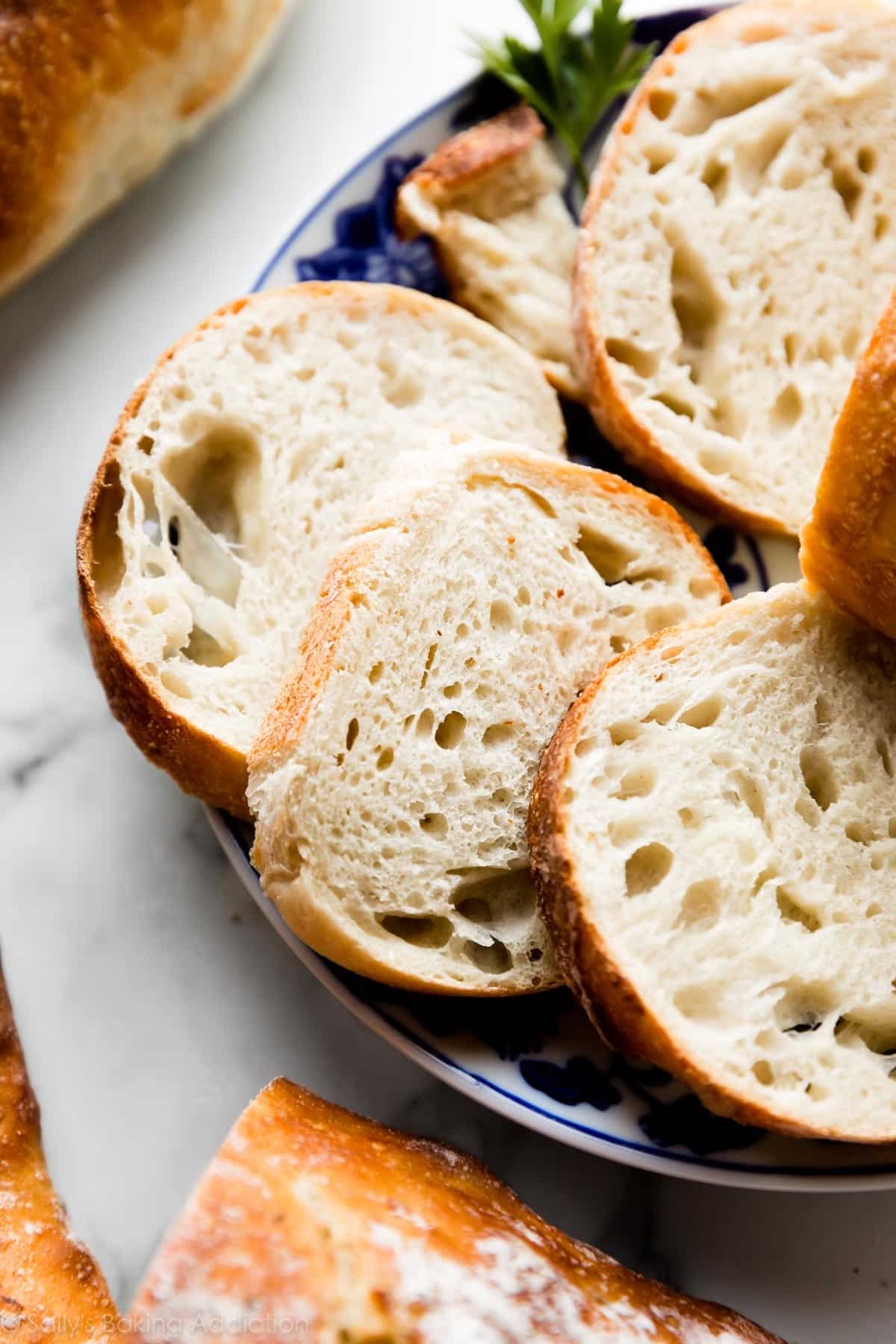
Look at those deliciously soft holes inside! Reminds me of ciabatta or a French baguette, both of which can be a little more complicated to make.
Serve Artisan Bread With
- Slather with homemade honey butter or cinnamon butter
- Slice and dunk in crab dip, beer cheese dip, garlic & bacon spinach dip, or even homemade Italian dressing
- Serve alongside slow cooker chicken chili or pumpkin chili
- As a dunker for homemade tomato soup, creamy cauliflower potato soup, minestrone soup, creamy chicken noodle soup, crab soup, or slow cooker creamy chicken & corn soup
- With a big bowl of mac & cheese or spaghetti with slow cooker turkey meatballs
- Use for my goat cheese & honey crostini
- It’s the perfect starch in breakfast casserole or baked apple cider French toast
- Use it to make homemade garlic bread or homemade croutons
- With anything because homemade bread is everything’s best friend

Homemade Artisan Bread Recipe
- Prep Time: 4 hours
- Cook Time: 25 minutes
- Total Time: 4 hours, 25 minutes
- Yield: 2 8-inch loaves
- Category: Bread
- Method: Baking
- Cuisine: American
Description
Even if you’ve never made homemade bread or worked with yeast before, this homemade artisan bread is for you. Watch the video tutorial below and review the recipe instructions and recipe notes prior to beginning. If you’re new to working with yeast, reference my Baking with Yeast Guide for answers to common yeast FAQs.
Ingredients
- 3 and 1/4 cups (about 430g) bread flour (spooned & leveled), plus more for hands and pan
- 2 teaspoons (about 6g) instant yeast
- 2 teaspoons (about 9g) coarse salt (see note)
- 1 and 1/2 cups (360ml) water, close to room temperature at about 70°F (21°C)
- optional: cornmeal for dusting pan
Instructions
- In a large ungreased mixing bowl, whisk the flour, yeast, and salt together. Pour in the water and gently mix together with a silicone spatula or wooden spoon. The dough will seem dry and shaggy, but keep working it until all the flour is moistened. If needed, use your hands (as I do in the video tutorial below) to work the dough ingredients together. The dough will be sticky. Shape into a ball in the bowl as best you can.
- Keeping the dough in the bowl, cover the dough tightly with plastic wrap or aluminum foil and set on the counter at room temperature (honestly any normal room temperature is fine!). Allow to rise for 2-3 hours. The dough will just about double in size, stick to the sides of the bowl, and have a lot of air bubbles.
- You can continue with step 4 immediately, but for absolute best flavor and texture, I strongly recommend letting this risen dough rest in the refrigerator for at least 12 hours and up to 3 days. Place covered dough in the refrigerator for 12 hours – 3 days. I usually let it rest in the refrigerator for about 18 hours. The dough will puff up during this time, but may begin to deflate after 2 days. That’s fine and normal—nothing to worry about.
- Lightly dust a large nonstick baking sheet (with or without rims and make sure it’s nonstick) with flour and/or cornmeal. Turn the cold dough out onto a floured work surface. Using a sharp knife or bench scraper, cut dough in half. Some air bubbles will deflate as you work with it. Place dough halves on prepared baking sheet. Using floured hands, shape into 2 long loaves about 9×3 inches each (doesn’t have to be exact) about 3 inches apart. Loosely cover and allow to rest for 45 minutes. You will bake the dough on this prepared baking sheet.
- During this 45 minutes, preheat the oven to 475°F (246°C).
- When ready to bake, using a very sharp knife or bread lame (some even use kitchen shears), score the bread loaves with 3 slashes, about 1/2 inch deep. (“Score” = shallow cut.) If the shaped loaves flattened out during the 45 minutes, use floured hands to narrow them out along the sides again.
- Optional for a slightly crispier crust: After the oven is preheated and bread is scored, place a shallow metal or cast iron baking pan or skillet (I usually use a metal 9×13-inch baking pan) on the bottom oven rack. Carefully and quickly pour 3-4 cups of boiling water into it. Place the scored dough/baking pan on a higher rack and quickly shut the oven, trapping the steam inside. The steam helps create a crispier crust.
- Place the shaped and scored dough (on the flour/cornmeal dusted pan) in the preheated oven on the center rack. Bake for 20-25 minutes or until the crust is golden brown. Gently tap the loaves—if they sound hollow, the bread is done. For a more accurate test of doneness, the bread is done when an instant read thermometer inserted in the center reads 195°F (90°C).
- Remove the bread from the oven and allow to cool for at least 20 minutes before slicing and serving. Store leftovers loosely covered at room temperature for up to 5 days or in the refrigerator for up to 1 week.
Notes
- Make Ahead & Freezing Instructions: The dough can sit in the refrigerator for up to 3 days, so this is a wonderful recipe to begin ahead of time. You can also bake the bread, allow it to cool, and freeze for up to 3 months. Thaw at room temperature before serving. You can also freeze the dough. Complete the recipe through step 3. Wrap in plastic wrap and place in a freezer-friendly container. To bake, allow dough to thaw overnight in the refrigerator, or for 2-3 hours at room temperature. Continue with step 4 and the rest of the recipe instructions.
- Special Tools (affiliate links): Glass Mixing Bowls | Silicone Spatula or Wooden Spoon | Baking Sheets | 2-cup Measuring Cup | Bread Lame | Instant Read Thermometer
- Flour: For absolute best flavor and chewy texture, I strongly recommend using bread flour. You can use a 1:1 substitution of all-purpose flour in a pinch with no other changes to the recipe. I recommend avoiding whole wheat flour in this dough. If necessary, use half bread flour and half whole wheat flour. The bread will taste dense.
- Yeast: You can use instant or active dry yeast, but I highly recommend an instant (aka “rapid rise” or “quick rise” yeast). The bread will rise faster. I usually use Platinum yeast by Red Star, which is an instant yeast. 2 teaspoons is a little less than 1 standard packet. If using active dry yeast, there are no changes needed to the recipe. The rise time in step 2 may take longer.
- Salt: Use a coarse salt, such as coarse sea salt, in this bread. I find the flavor slightly lacking when using regular table fine salt. If you only have fine salt, reduce to 1 and 1/2 teaspoons.
- Water: Use cool water. 70°F (21°C) is great, but the exact temperature doesn’t matter as long as it’s not hot or warm.
- Round Loaf: If you want to shape the dough into a boule (round loaf) simply shape into a round ball instead of 2 loaves in step 4. Baking instructions are the same, but the loaf will take a few extra minutes in the oven. If you want to bake the boule in a dutch oven, see next note.
- Using a Dutch Oven: Follow this dough recipe through step 3, then follow the simple shaping/baking instructions (steps 2-5) in my Cranberry Nut No Knead Bread recipe including using the parchment paper. If your parchment paper can’t withstand heat this high, you can either lower the oven temperature and bake the bread for longer or grease the Dutch oven instead.
- Using a pizza stone: If you want to bake your bread loaves on a pizza stone, place pizza stone in the preheating oven. In step 8, place the shaped and scored dough on your preheated pizza stone. If the bottom of the shaped dough is pretty sticky, dust the hot pizza stone with some extra cornmeal. Bake as directed.
- No Nonstick Pan: If you don’t have a nonstick baking sheet, line it with parchment paper instead. Coat with a dusting of flour and/or cornmeal before placing the dough on top. Parchment paper can burn, so it’s best to check the box to see how much heat yours can tolerate. Lower your oven heat if necessary and bake the bread for longer until golden brown and when gently tapped, sound hollow.
- Flavor ideas: Before pouring in the water in step 1, add any of the following ingredients/combination of ingredients to the dry ingredients in the bowl: 4 cloves minced garlic + 3 Tablespoons chopped rosemary, 3 Tablespoons your favorite fresh herb (chopped), 1 cup your favorite shredded cheese, a diced jalapeño, 3/4 – 1 cup dried cranberries and/or chopped nuts, 2 teaspoons garlic powder, etc.
- Reference my Baking with Yeast Guide for answers to common yeast FAQs.
- Recipe adapted from King Arthur Flour & Red Star Yeast, similar method originally from Jim Lahey.
Nutrition
- Serving Size: 2 slices
- Calories: 136
- Sugar: 0.1 g
- Sodium: 389.8 mg
- Fat: 0.7 g
- Carbohydrates: 27.2 g
- Protein: 4.7 g
- Cholesterol: 0 mg









Reader Comments and Reviews
This bread was so good. I was able to make it with what I already had in my house and I definitely should have made more because it went FAST. Definitely adding this one to the repeat menu
This recipe was so good and I added rosemary
I love this recipe! It always tastes delicious and bakes perfectly, but my bread never gets that beautiful golden brown color. The crust comes out pale. This has no effect on taste or texture, but I would love to get that color. Is there something I should be doing to accomplish that?
Thank you for sharing this recipe!
Hi Shirley, have you tried baking the loaves either in a Dutch oven or with a water/steam bath (optional step 7 in the recipe)? The steam helps create that crispier, golden brown crust.
I’ll give it a try!
Can you use “00” flour?
Hi Adam, we haven’t tested this recipe with 00 flour, but it should work–it just may change the texture a bit. If you give it a try, please report back how it turned out!
Im excited to make this! Can I add EVOO to this? Will it collapse the dough?
Hi Elira, adding more liquid to the dough would take some testing in order to guarantee results, but how about brushing some on top right before baking?
Such a great recipe. Can I add chia seeds and hemps seeds to make it healthier?
Hi Savannah, feel free to try adding seeds to this loaf, or you might enjoy this seeded oat bread instead.
How to make it less dry and less dense?
Hi Ann, we’re happy to help troubleshoot. How did you measure your flour? Be sure to spoon and level (or use a kitchen scale) so that the flour isn’t over measured. Too much flour can dry out the bread and make it seem a bit dense. And also make sure to handle the dough with extra care to prevent popping the air bubbles before baking.
If using a pizza stone, what keeps the bread from sticking to it?
Hi Debbie, the shaped loaves will sit on a flour/cornmeal dusted baking sheet before you transfer to the pizza stone. If they are too sticky on the bottoms, you can dust some cornmeal on the preheated pizza stone.
I love this recipe so much, that I make 3 loafs a week. So good and so healthy. The only changes I made was baking it for 30 minutes. Thank you so much for a healthy alternative to regular bread.
I can’t stop eating this bread! I made two loaves. One basic as instructed-yummy, and the other I added an egg wash, seat salt, dried garlic and rosemary sprinkled on the top- also yummy! The recipe was easy for a lazy baker like me and the results are like the artisan breads I buy for $5-7 a piece. My husband is already offering to help make this a regular staple and offering suggestions of flavourful add-ins.
10 out of 10, the only problem is i should’ve made more!.. they went away from the dinner table almost in an instant. family loved it, can’t recommend it enough. p.s.: it goes perfectly with some homemade moussaka.
Baking bread eludes me. I followed this recipe to the T! It tastes wonderful, huge air pockets, nice crust; however the the bottom of the bread stuck to the pan. My bread has no bottom:(
Hi Jodi, glad it turned out! Make sure to generously dust your baking sheet with flour or cornmeal (or a mix of both).
Tastless, flat bread.
All my other bread recipes call for butter or oil and sugar. Without either this bread has texture but lacks taste.
This recipe for Artisan Bread is really great. I baked it in a cast iron casserole dish heated prior to me putting the dough into the dish on parchment paper and the lid replaced. Congratulations Sally on this truly lovely bread.
I’ve made this 20ish times and 15 of them have been perfect! The other five seem to come out a little dense after proofing and sitting in the fridge for 24-48 hours. These loaves still taste great but don’t seem to be as soft in the middle and rise as much as the others. I weigh the dough and use the same amount of cold water each time. Any suggestions? Thank you!
Hi Matt, are the 15 good loaves/batches proofing/refrigerating for less time? Does your kitchen run warm/cold? Try using a little more yeast (2 and 1/4 teaspoons) and kneading the dough as best as you can (it’s sticky) for about 5 minutes at the end of step 1. Try not to add any more flour than you need. A sticky dough is OK. This will help the texture lighten up a bit.
This was fantastic! I’ve used some other recipes but this one, by far, is the best! Went right into the oven, didn’t refrigerate, and it was still so flavorful! I’m gonna mix up another batch and refrigerate this one. Can’t wait to see how it comes out.
It is quite a wet dough, is this okay?
Hi Michael, This is a very wet dough, but there are a lot of variables that go into the consistency of dough, even down to the weather and humidity in the air. There’s nothing wrong with adding just a little more flour to bring the dough into a slightly less sticky consistency if needed.
sally if in only have self rising flour on hand can I use for baking bread?
Hi Diane, we don’t recommend it. Best to stick with bread flour or all-purpose flour for best results!
I am going to make this for the first time and I am excited to finally find a recipe I can make over and over again. I have 2 questions if you don’t mind. 1. Can you use whole wheat bread flower? 2. Can you use quick rise yeast instead and still refrigerate for 1-2 days before baking? Thank you for your help.
Hi Bea, you can use quick rise yeast here, no problem. We don’t recommend using whole wheat flour or whole wheat bread flour because it will result in a very dense loaf. You may love our no knead seeded oat bread!
I went to your web site for your White Chocolate Macadamia Nut Cookies. I was also planning on baking a rustic loaf for dinner so I thought I’d check your recipes & found this one. I’ve been baking since the mid 80’s and have a couple I normally use but really appreciated the simplicity of yours. Since the bread was for a pasta dinner I only did a 2 hour 1st rise. The crust and texture were both excellent. I’ll try it again when I can leave it in the fridge overnight. Definitely a keeper. Looks like it would make a good bread pudding as well……
Tried this last night. I just did it plain since I was trying it for the first time. It’s so easy and really tasty. Next time I’ll try a garlic Italian style. I look forward to trying some more of your recipes. 🙂
When I tried this recipe yesterday the inside of the bread was very heavy & thick. The inside was not light or fluffy like bread. I followed directions exactly.
Hi Ann, a doughy, heavy bread may mean that the yeast was either expired or perhaps the bread was under-baked. A few additional minutes in the oven should help if you decide to try this recipe again in the future. Thank you for giving it a go!
I made it once and it was so-so. I am going to try again. Can I add olives to the dough?
Hi Michelle, here is our olive bread recipe that uses the same no-knead method. Hope you enjoy it!
Only bread I make now.
I have been making bread for 40 years and this recipe is the best. It’s simple, fool proof and makes delicious chewy bread with a wonderful crust. My husband who is not a baker made bread for 2 weeks while I recovered from surgery. He was really proud he made bread. I make the dough, leave it on the counter all day, then put it in the fridge. I take it out the next day and make one loaf. Let it rise about an hour and bake for 40 minutes. It turns out lovely every time. My son in law bakes delicious bread and uses this recipe too. Thank for this recipe.
I found this recipe a little too wet, I cut the water to 1 and a 1/4 cups and have gotten consistently good results. Love the difference coarse salt makes. I also add a little bit of sugar to feed the yeast, and check that my water is about 100 degrees F. I use it for baguettes, hand pies, pizza dough, and rolls.
Such an insanely lovely recipe! There’s no way both loaves will last, they will be devoured instantly! If looking to freeze, is it possible to allow to fully rest, then separate and freeze one loaf worth of dough each?
Hi Tris! You can freeze the dough – see recipe notes for detailed instructions!
Great, easy recipe! Thank you! I even substituted over a cup of GF flour & it was just fine.
I’m just making this right now and excited to see how it will turn out, but I’ve got a question. Say you only had 3-4 hours to leave it in the fridge, would doing so benefit the dough or should I just bake it straight after the rise if I can’t leave it in the fridge for the recommended time?
Hi Sandy, either works! If you’d like to put it in the refrigerator and wait to bake it until you’re ready to serve/eat, you can certainly do so. Hope you enjoy this bread!
Hi, I’m wondering whether this will work as a square loaf in a baking tin/silicon?
Trying my first batch today, its risen heaps and i’ve just put it in the fridge. hoping it works out, i love that this is so simplistic without all the oils or milk/eggs that i’ve seen with other recipes. Thanks
Hi James, you can certainly give it a try, although depending on the height of your pan, it may rise/bake above the edges and not hold its shape. Hope you enjoy the bread!
I made this bread today and my family and I loved it! I did let it sit in the fridge for 48 hours. Once you take it out, are you supposed to knead it before shaping it into loaves? I did not and was wondering if I was supposed to.
Hello! No, do not knead this dough. You want to keep all the air pockets in the dough!
Wonderful recipe and great detailed instructions. I conducted a taste test and made one loaf immediately and another after 24 hours. As you said the taste really improved after leaving in the fridge for a period.
You’re welcome to publish my comment.
I’ll be making it again tomorrow.
Any suggestions on how to make sesame seeds and Nigella seeds stick to the dough?
Hi Maggie, we’re so glad this bread was a hit! An egg wash, brush of milk, or brush of melted butter will do the trick to help the seeds stick. (And if you’re a fan of seeded breads, you may also enjoy this seeded oat bread that uses the same no-knead method!)