
These homemade garlic knots are extra soft and flavorful, and use a dough similar to this reader-favorite pizza dough. Top with garlic herb butter before AND after baking for the tastiest knots!
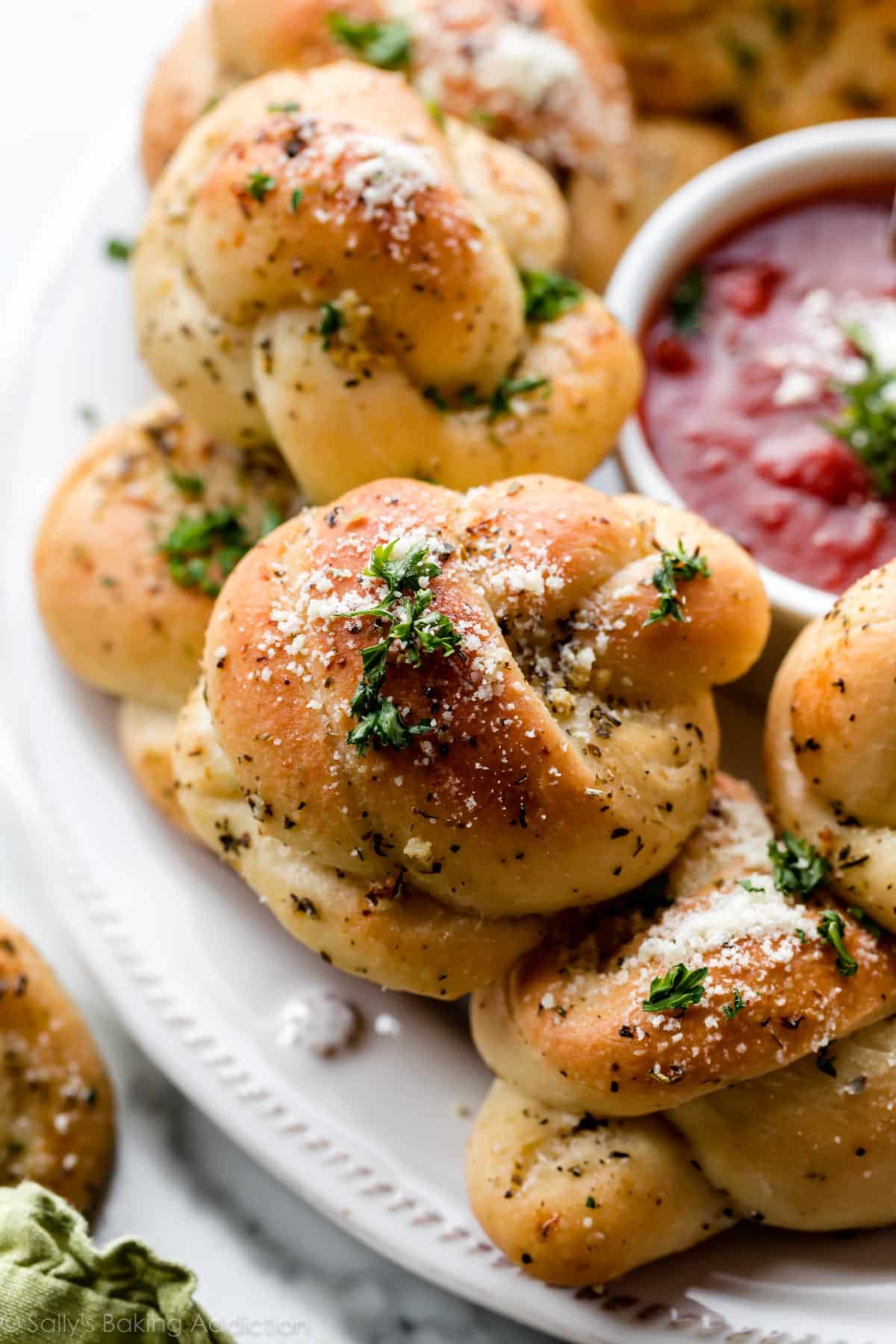
I originally published this recipe in 2020 and have since made a few changes to improve the texture and flavor of the dough, which are reflected in the recipe below. This recipe is brought to you in partnership with Red Star Yeast.
Tell Me About These Garlic Knots:
- Made from an easy homemade dough
- Leftovers freeze beautifully
- Super soft and fluffy
- Golden brown
- Extra garlic butter
And I know you’ll appreciate this too: You can use the entire batch of dough for 16 knots OR you can use half of the dough to make a pizza or stromboli, and then have 8 knots on the side. Perfect for pizza night—no delivery required.
One reader, Michelle, commented: “These were perfect! Brushing on the garlic butter before baking makes such a difference. These are near foolproof! So fluffy and delicious! ★★★★★“
One reader, Catie, commented: “My husband agrees—best garlic knots ever! This recipe works! ★★★★★“
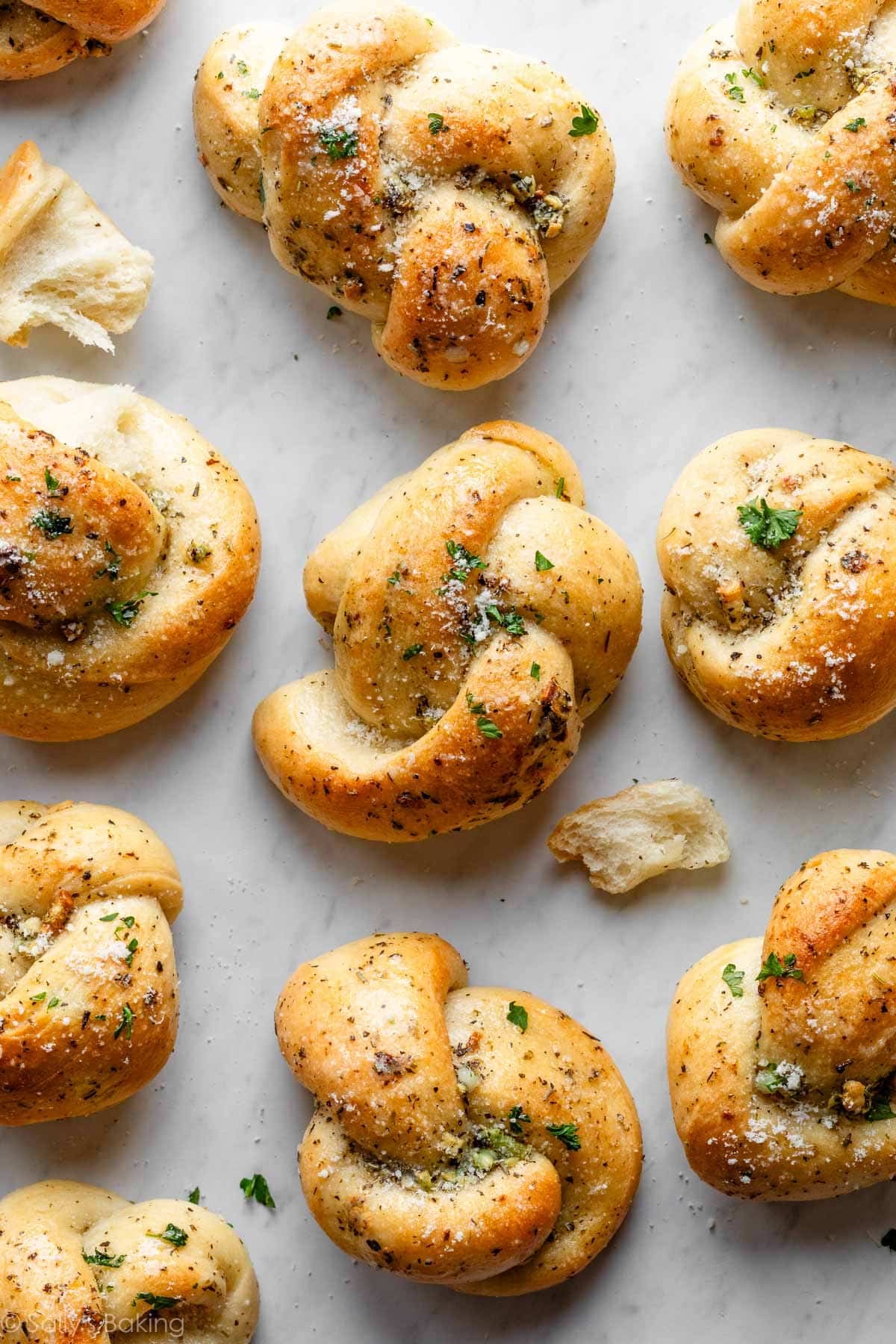
Garlic Knots From Pizza Dough
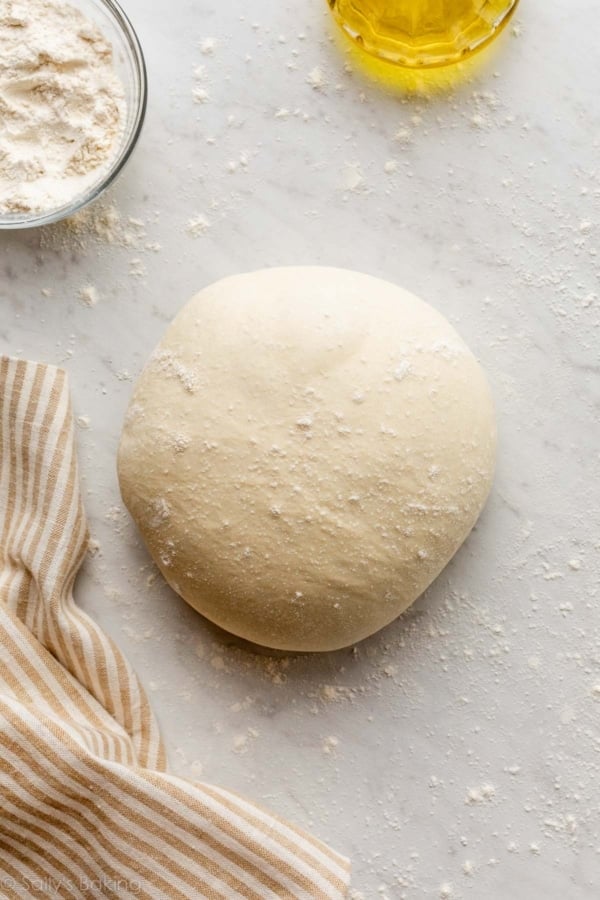
You can make these garlic knots with 1 or 2 pounds of store-bought or homemade pizza dough. Today’s dough is very similar to my homemade pizza dough, which yields about 2 pounds of dough. You can make 16 knots or 1 pizza + 8 knots. If you only need about 8 knots, freeze the other half of dough for another time. You will want to make these garlic knots again.
- Besides garlic knots and pizza, you can use this dough for cheesy breadsticks, pepperoni pizza rolls, and ham & cheese pockets too! So versatile.
Compared to my pizza dough, I reduced the water so the dough is easier to handle when shaping into knots. I add 1 extra Tablespoon of olive oil for a little extra flavor and richness, and include garlic powder too. Sometimes for extra flavor I use butter instead, similar to what I do when making homemade breadsticks. Either one works. (Melted butter in the dough is convenient because you also need melted butter for the topping.)
Even though store-bought dough is convenient, I encourage you to try homemade dough. The dough requires so few ingredients!
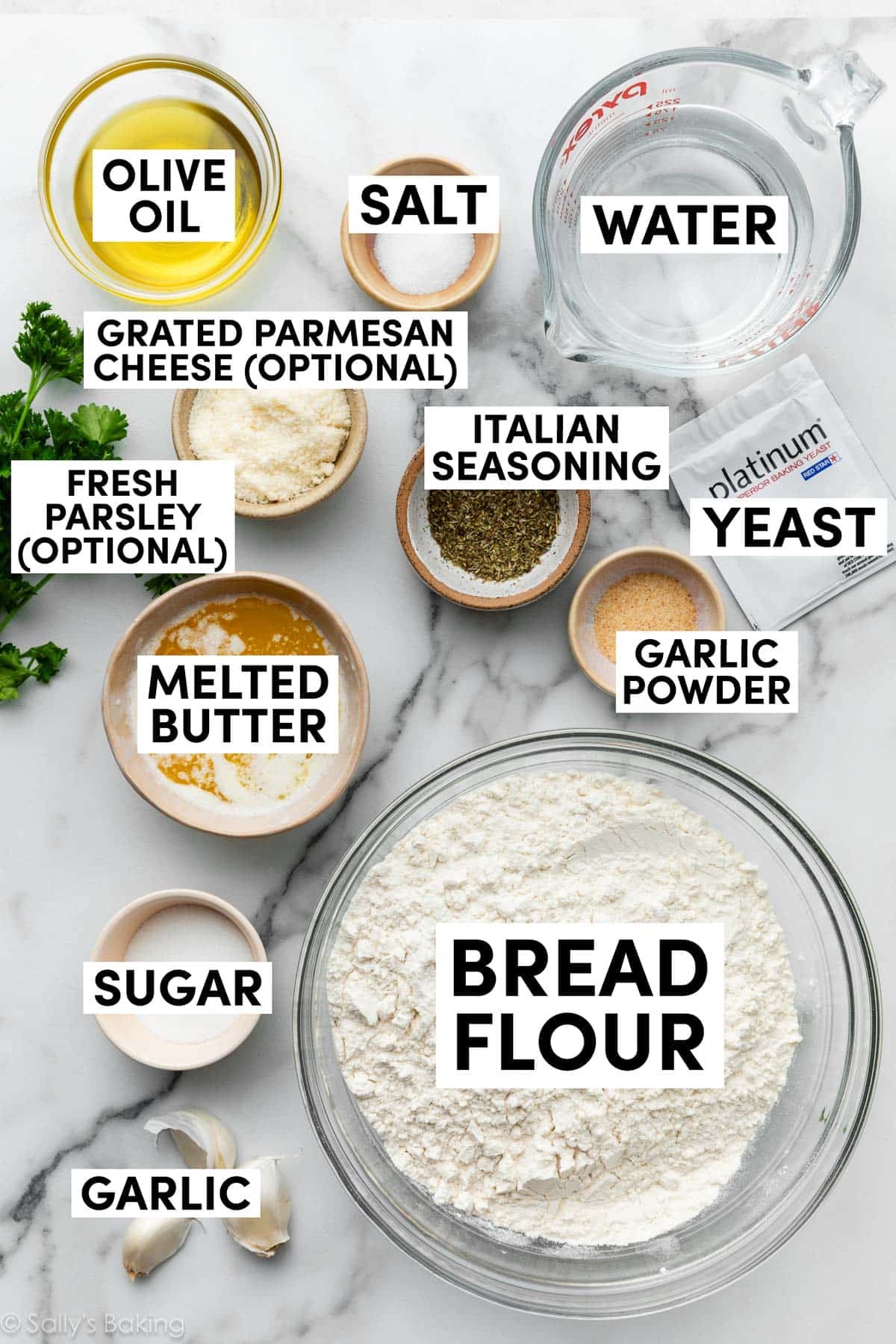
Ingredients You Need:
- Water: Use warm water here, to activate the yeast.
- Instant Yeast: I always use Platinum Yeast from Red Star. If you’ve been baking my yeast breads for a while, you know I swear by it! Its careful formula strengthens dough and makes working with yeast simple. You can use active-dry yeast instead; the rise time may be a bit longer.
- Sugar: To feed the yeast.
- Olive Oil: Or melted butter.
- Salt: Can’t make flavorful bread without salt!
- Garlic Powder: We’ll top the knots with fresh minced garlic, but you can use garlic powder in the dough.
- Bread Flour: The original recipe called for all-purpose flour, but we find that bread flour makes for a better texture. If you don’t have any, you can use all-purpose instead.
Let Me Show You How to Shape Garlic Knots
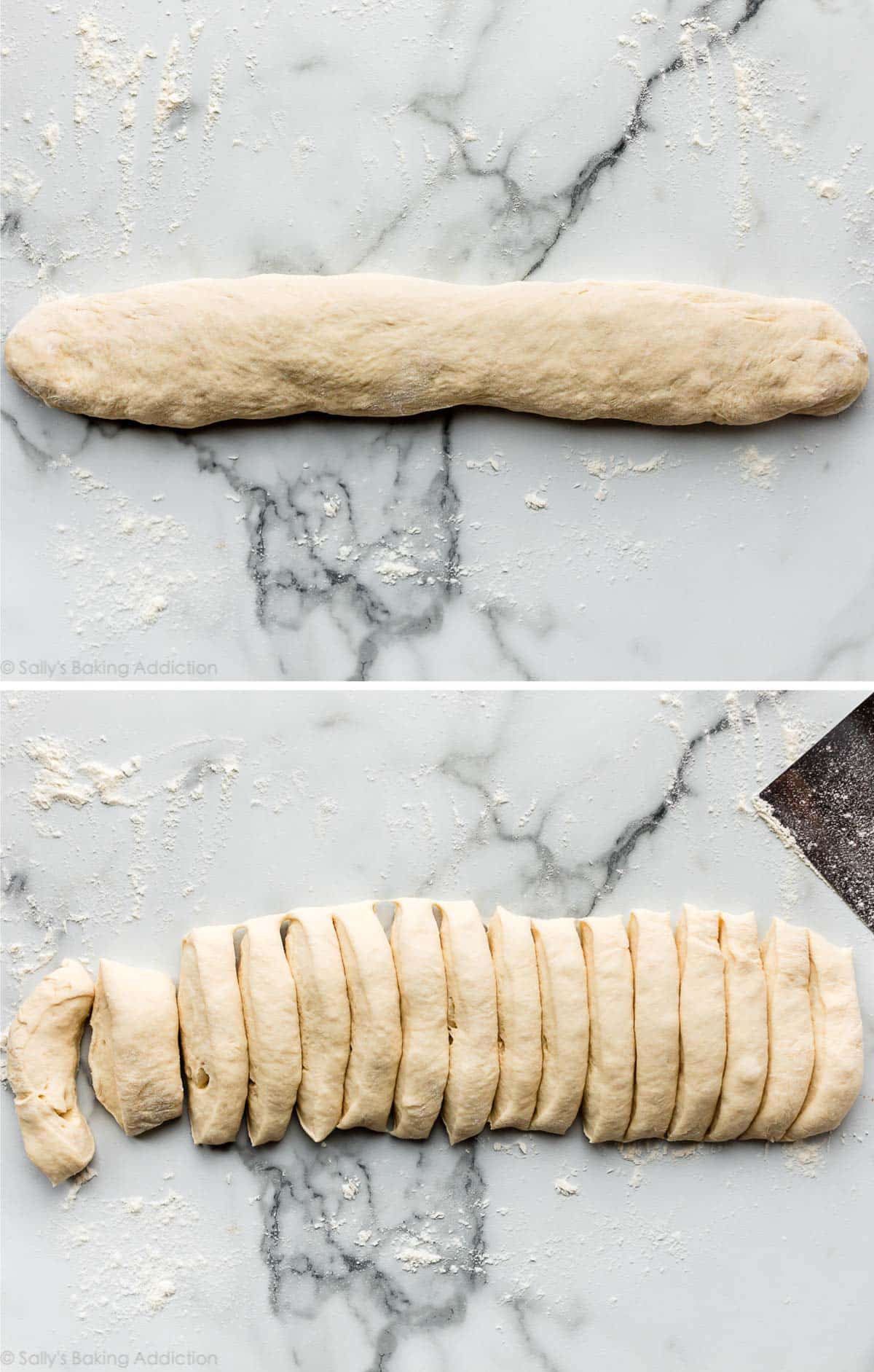
After the dough rises, punch it down to release the air. Then begin shaping the dough. If you know how to tie a knot, you can shape garlic knots.
- Shape into a 16-inch log: Using your hands, shape the dough into a 16-inch log. No need to use a rolling pin because this doesn’t need to be perfect.
- Cut into 16 pieces: Cut the log into 16 1-inch sections of dough.
- Roll each piece into an 8-inch rope.
- Tie the rope into a knot.
Here are step-by-step pictures of the shaping process. It’s a lot easier than it sounds, and you don’t need any special tools.
Shape each rope into a knot:
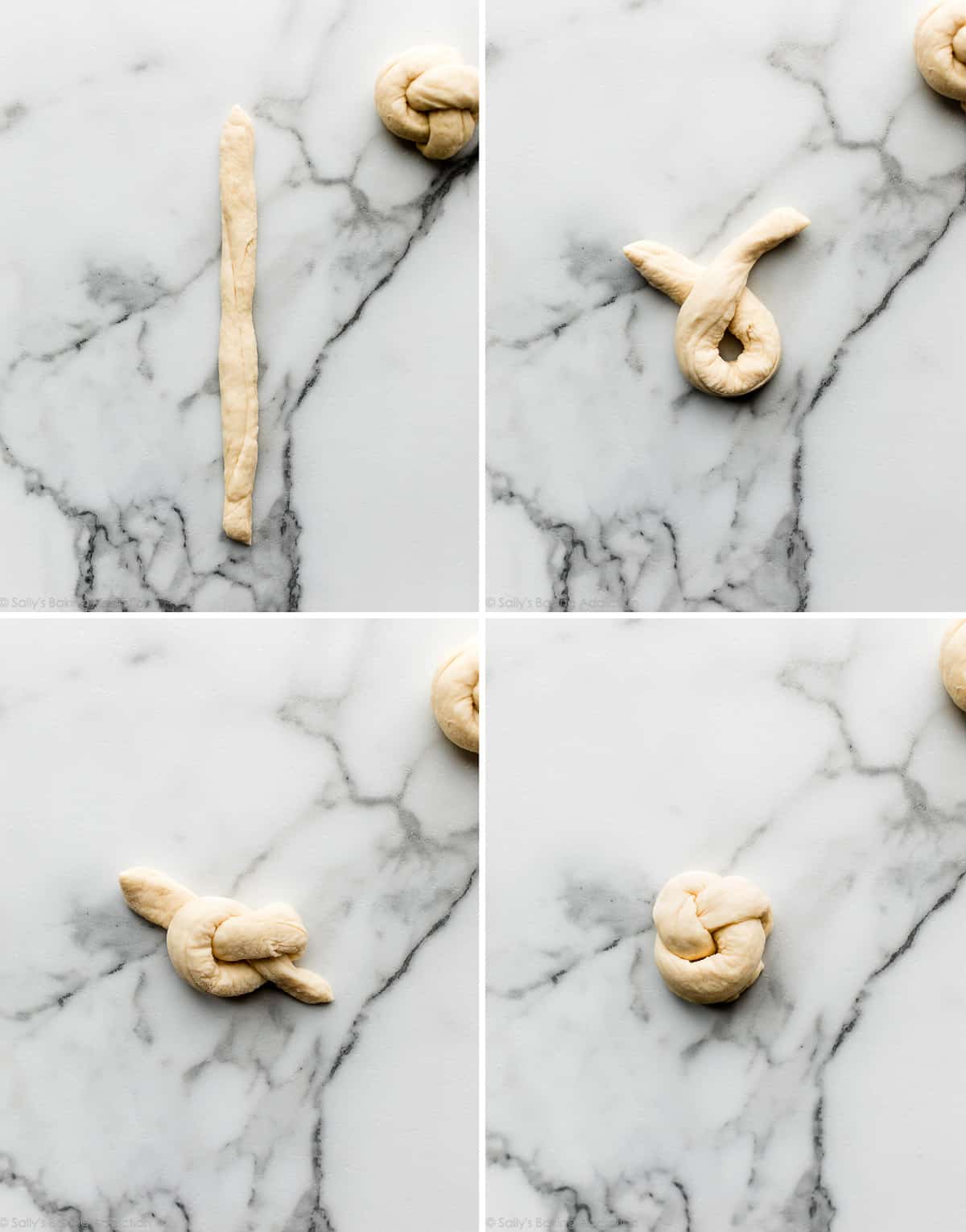
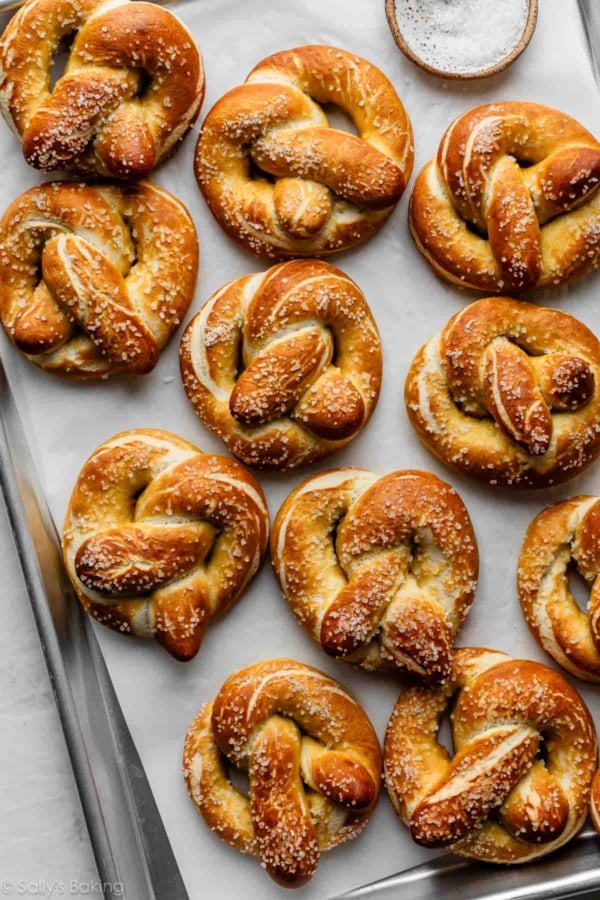
You can tuck the ends underneath the knot or leave them out—that’s totally up to you. The ropes are longer when making soft pretzel knots, but tying the knot is the same.
Let the shaped knots rest for about 30 minutes before brushing with garlic butter and baking.
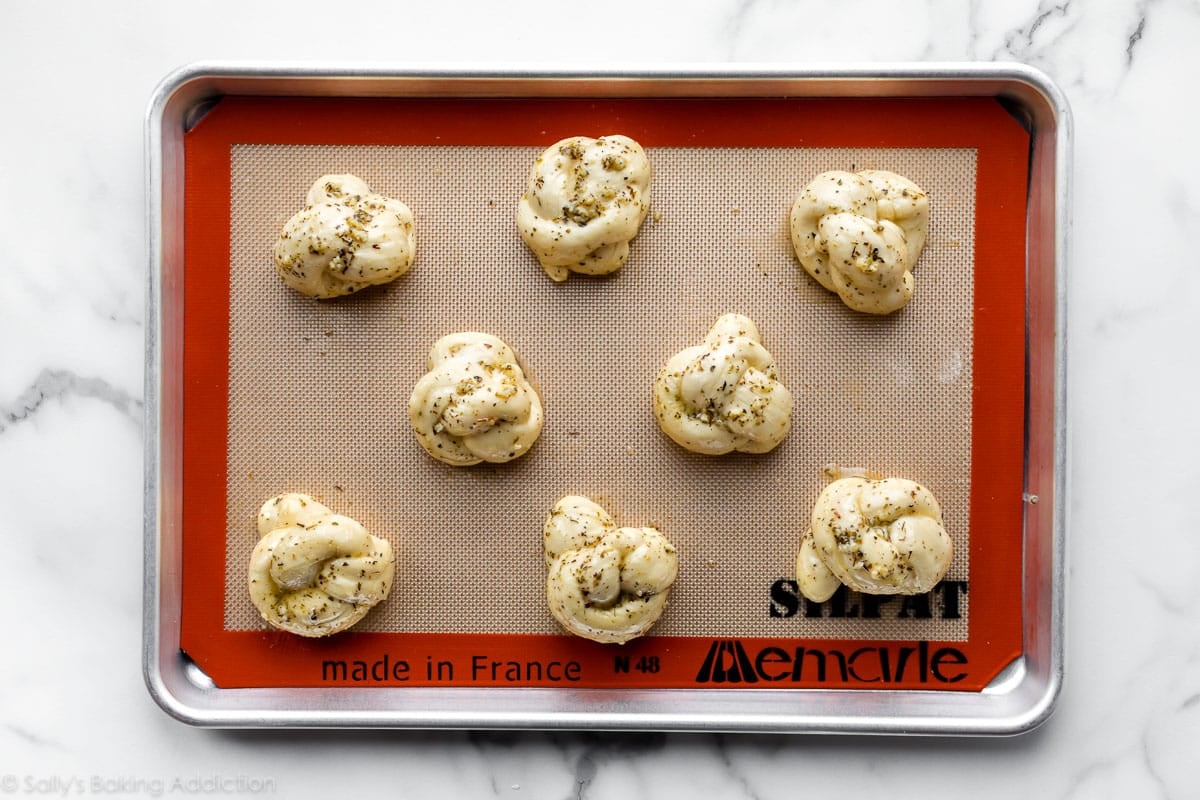
Garlic Herb Butter
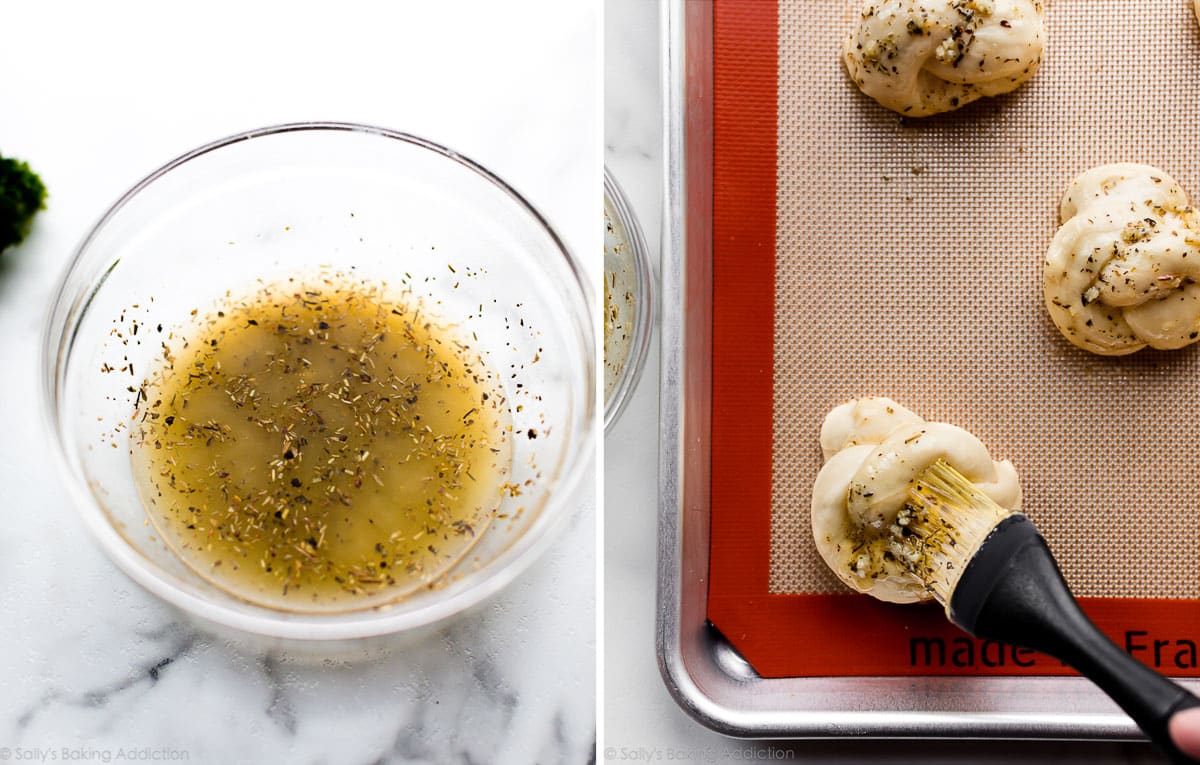
Right before baking, generously brush the knots with garlic herb butter. Simply combine melted butter, fresh minced garlic or garlic powder, Italian seasoning, and salt.
If you can’t find an herb mixture labeled “Italian Seasoning” in the spice aisle of the grocery store, use dried oregano, dried basil, and/or dried parsley instead.
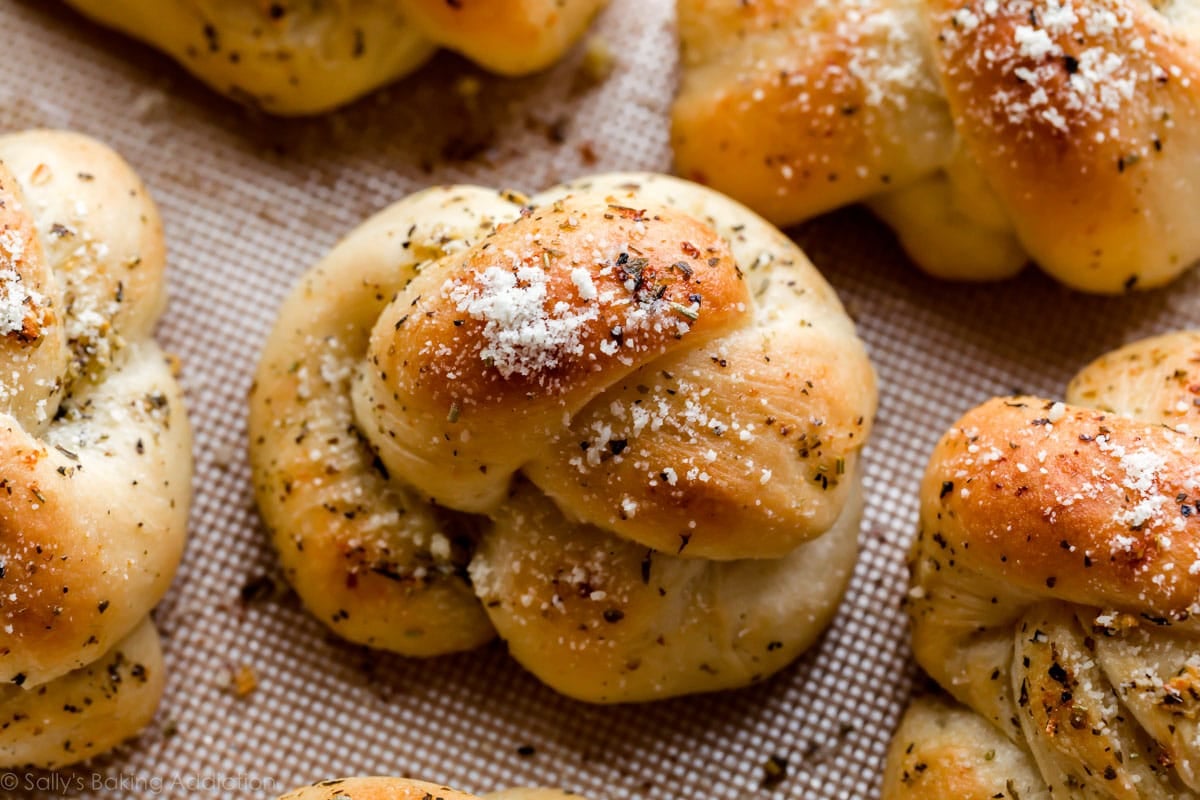
Bake the knots until golden brown and experience the lofty smell of garlic throughout the kitchen. Everyone (maybe even your neighbors) will know what’s on the menu tonight!
Flavor Tip: Save some of the garlic butter to brush onto the knots as they come out of the oven, then top each with fresh parmesan and chopped parsley. The parmesan and parsley are completely optional, but make a fabulous garnish.
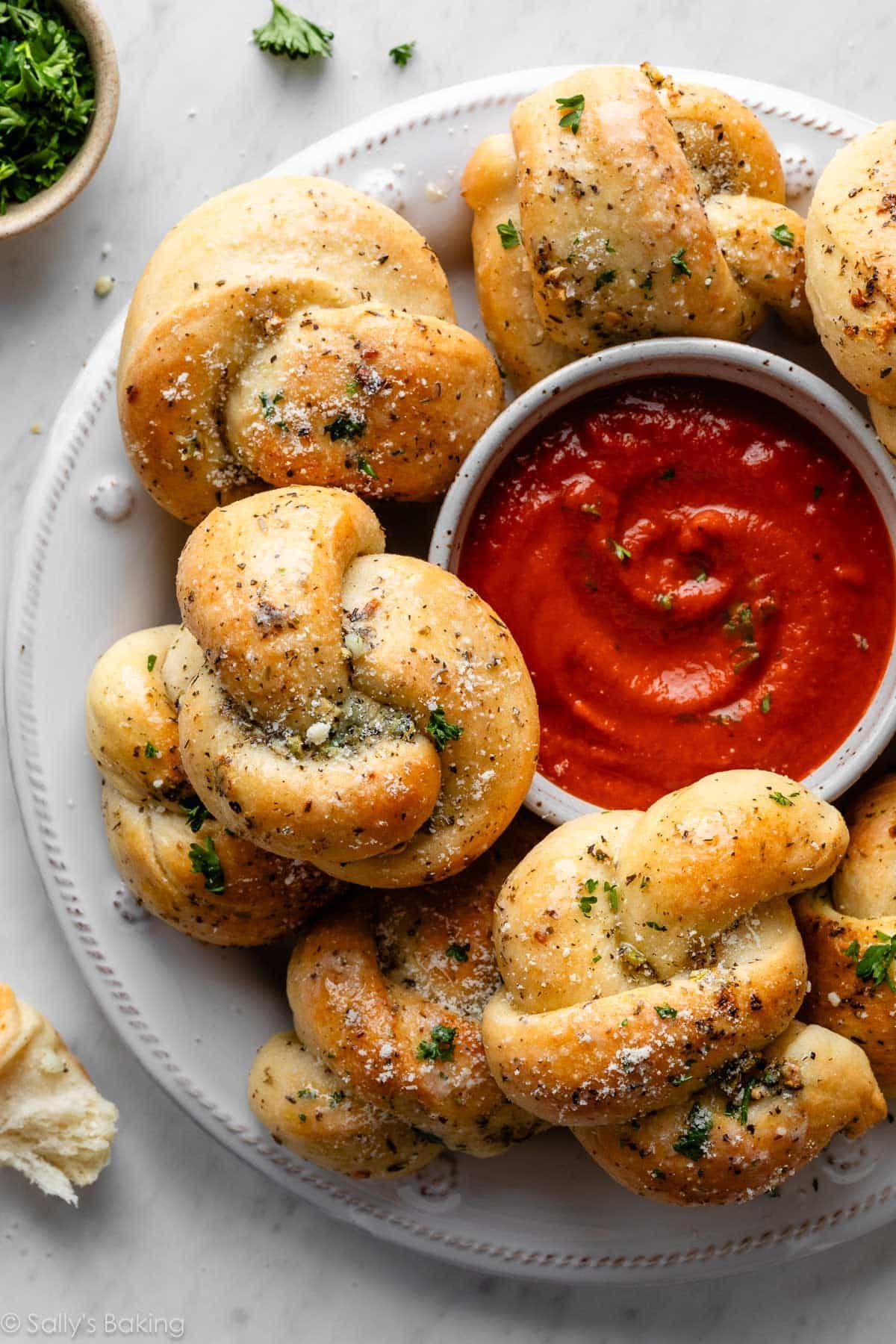
Serve the garlic knots warm, with a side of warm marinara sauce or homemade tomato soup for dipping. This is your happy place!*
*Unless you’re a vampire.


Homemade Garlic Knots
- Prep Time: 3 hours (includes rising)
- Cook Time: 20 minutes
- Total Time: 3 hours, 25 minutes
- Yield: 16 knots
- Category: Dinner
- Method: Baking
- Cuisine: Italian
Description
These homemade garlic knots are extra soft, fluffy, and packed with flavor thanks to a buttery garlic-herb topping brushed on before and after baking. Made from an easy homemade dough similar to my reader-favorite pizza dough, they freeze beautifully and are perfect for pizza night—no delivery required.
Ingredients
Homemade Dough
- 1 cup + 2 Tablespoons (270g/ml) warm water (between 100–110°F/38–43°C)
- 2 and 1/4 teaspoons (7g) Platinum Yeast from Red Star instant yeast (1 standard packet)*
- 1 Tablespoon (13g) granulated sugar
- 3 Tablespoons (43g/ml) olive oil or melted butter
- 1 teaspoon salt
- 1 teaspoon garlic powder
- 3 and 1/3 cups (433g) bread flour* (spooned & leveled), plus more for hands and work surface
Topping
- 5 Tablespoons (71g) unsalted butter, melted
- 3 garlic cloves, minced; or 1/2 teaspoon garlic powder
- 1 teaspoon Italian seasoning*
- 1/4 teaspoon salt
- optional after baking: 1/4 cup (25g) grated Parmesan cheese
- optional after baking: 2 Tablespoons chopped fresh parsley
Instructions
- Proof the yeast: Whisk the warm water, yeast, and sugar together in the bowl of your stand mixer fitted with a dough hook or paddle attachment. Cover and allow the mixture to sit for about 5 minutes, or until foamy on top. *If you do not own a stand mixer, you can do this in a large mixing bowl and, in the next step, mix the dough together with a large wooden spoon or silicone spatula. It will take a bit of arm muscle. A hand mixer works, but the sticky dough can repeatedly get stuck in the beaters. Mixing by hand is the better choice.
- Make the dough: Add the olive oil (or butter), salt, garlic powder, and about half of the bread flour. Beat on low speed for 30 seconds. Scrape down the sides of the bowl and add the remaining flour. Beat on low speed for 2 minutes, or until a soft dough forms and pulls away from the sides of the bowl. Dough will be very soft, but should not be overly sticky. If it seems too sticky and clings to the sides of the bowl instead of forming a rough mass around the dough hook, add more flour, 1 Tablespoon at a time, and continue to mix until the dough pulls away from the sides of the bowl but is still moist and tacky. If it feels dry and crumbly, add more water, 1 teaspoon at a time, mixing well after each addition.
- Knead the dough: Keep the dough in the mixer (and switch to the dough hook if using the paddle) and beat for an additional 5 full minutes, or knead by hand on a lightly floured surface for 5 full minutes. (If you’re new to bread-baking, my How to Knead Dough video tutorial can help here.) If the dough becomes too sticky during the kneading process, sprinkle 1 teaspoon of flour at a time on the dough or on the work surface/in the bowl to make a soft, slightly tacky dough. Do not add more flour than you need because you do not want a dry/tough dough. After kneading, the dough should still feel a little soft. Poke it with your finger—if it slowly bounces back, your dough is ready to rise. You can also do a “windowpane test” to see if your dough has been kneaded long enough: tear off a small (roughly golfball-size) piece of dough and gently stretch it out until it’s thin enough for light to pass through it. Hold it up to a window or light. Does light pass through the stretched dough without the dough tearing first? If so, your dough has been kneaded long enough and is ready to rise. If not, keep kneading until it passes the windowpane test.
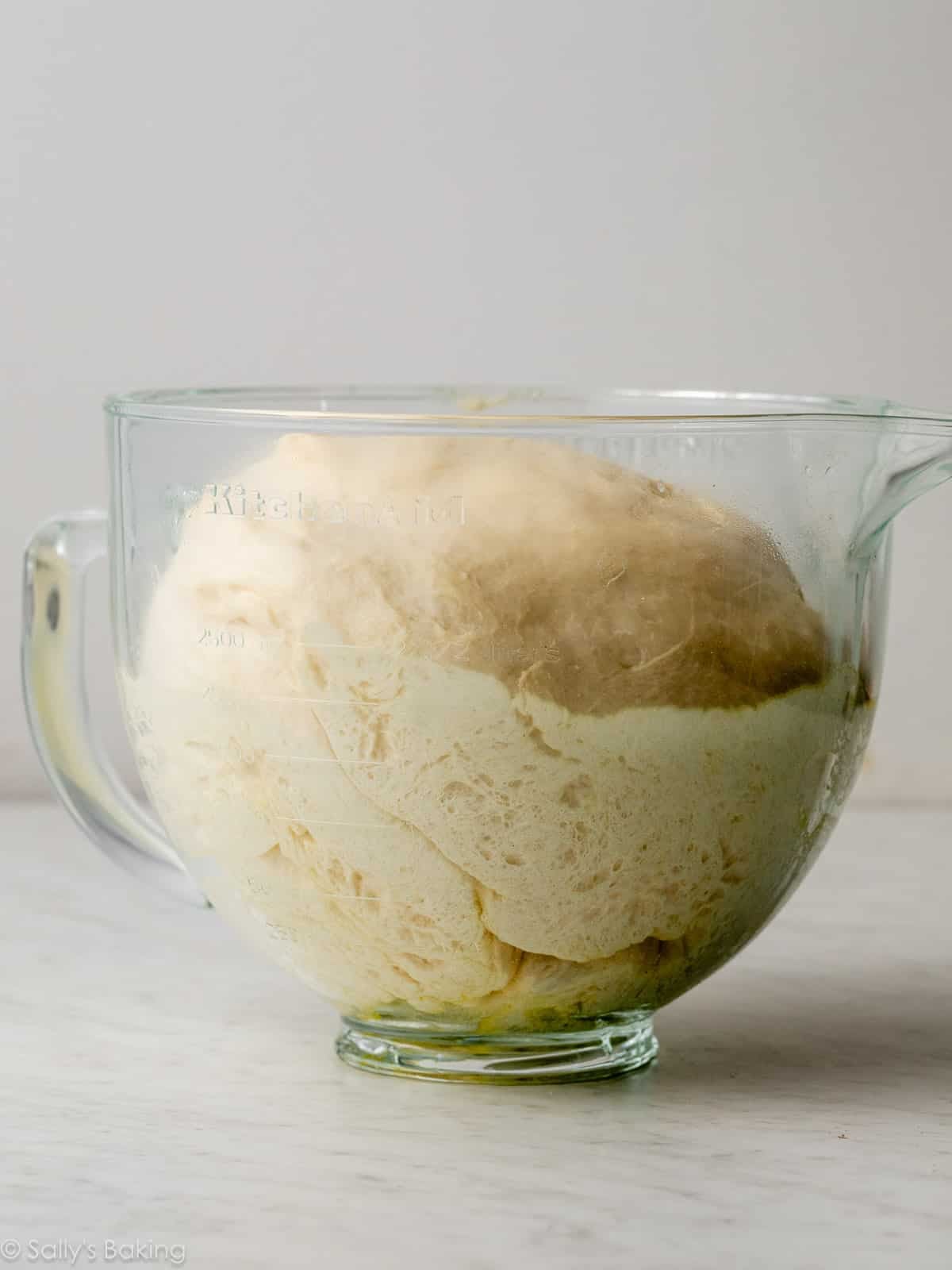
- 1st rise: Lightly grease a large bowl with oil or nonstick spray—just use the same bowl you used for the dough. Place the dough in the bowl, turning it to coat all sides in the oil. Cover the bowl with aluminum foil, plastic wrap, or a clean kitchen towel. Allow the dough to rise in a relatively warm environment for 2 hours or until double in size. (I always let it rise on the counter and it takes about 2 hours. For a tiny reduction in rise time, see my answer to Where Should Dough Rise? in my Baking with Yeast Guide.)
- Line two baking sheets with parchment paper or silicone baking mats.
- Shape the dough: Use the step-by-step photos in the blog post as your guide for this step. When the dough is ready, punch it down to release the air. Using floured hands on a lightly floured work surface, shape the dough into a 16-inch (41cm) log. Using a very sharp knife, pizza cutter, or bench scraper, slice the log into 16 1-inch sections. Roll each piece of dough into an 8-inch rope. Tie each rope into a knot. You can tuck the 2 ends of the knots underneath or leave them out. Arrange the knots on the prepared baking sheets.
- 2nd rise: Lightly cover the shaped knots and let them rest for 30–45 minutes. They will slightly puff up during this time, producing softer rolls.
- Towards the end of the rise time, preheat the oven to 400°F (204°).
- Make the topping: Stir the melted butter, garlic, Italian seasoning, and salt together. Brush on the knots. Reserve some of the topping for when the knots come out of the oven.
- Bake for about 20–23 minutes or until golden brown on top. Remove from the oven and brush the warm knots with remaining garlic butter. Sprinkle with parmesan cheese and/or parsley, if using.
- Serve warm, plain or with marinara sauce for dipping.
- Cover and store leftover knots at room temperature for up to 2 days or in the refrigerator for up to 1 week. Reheat as desired.
Notes
- Freezing Dough: After the dough has its 1st rise and you punch it down to release the air, lightly coat all sides of the dough ball with olive oil. Place the dough into a freezer zipped-top bag and seal tightly, squeezing out all the air. Freeze for up to 3 months. Thaw in the refrigerator overnight. Once thawed, remove the dough from the refrigerator and allow to rest for 1 hour on the counter, then continue with step 6.
- Freezing Unbaked Shaped Knots: Instead of freezing the dough as a whole, you can freeze the shaped knots before baking them. Shape the knots as directed in step 6. Arrange on a lined baking sheet. Freeze, uncovered, for 1–2 hours. Remove from the freezer. At this point, knots should be frozen and no longer sticky. Place them into a freezer-friendly container or zipped-top bag. Freeze for up to 3 months. Thaw in the refrigerator or on the counter. Bring to room temperature, arrange on 2 lined baking sheets, cover lightly, and allow to rest/rise for 1 hour before continuing with step 8.
- Special Tools (affiliate links): Electric Stand Mixer or Glass Mixing Bowl and Wooden Spoon or Silicone Spatula | Dough Scraper | Pizza Cutter | Baking Sheets | Silicone Baking Mats or Parchment Paper | Pastry Brush
- Halving the Recipe: This recipe yields about 2 pounds of dough, which is enough for 16 knots or 1 pizza + 8 knots. If you want to make just 8 knots, punch the dough down as directed in step 6. Cut in half. Use the other half of the dough however you’d like or freeze for later. Shape into an 8-inch log and cut into 8 1-inch strips. Continue with the recipe as directed.
- Yeast: Platinum Yeast from Red Star is an instant yeast. You can use active dry yeast instead. The 1st rise time may take a little longer. Reference my Baking With Yeast Guide for answers to common yeast FAQs.
- Italian Seasoning: If you can’t find Italian seasoning in the spices section of the grocery store, use a mix of dried oregano, dried basil, and/or dried parsley instead.
- Recipe Updates in 2026: Based on reader feedback, we retested and updated the dough recipe as written above. If you prefer the original version, increase the water to 1 and 1/3 cups (320ml), use all-purpose flour instead of bread flour, and reduce the garlic powder to 1/2 teaspoon.







Reader Comments and Reviews
I am looking forward to making these in the weekend to take to my sisters place.
Please can you tell me what that tomato dipping sauce is?
Hi Fleur, we just use store bought marinara sauce. We don’t have a recipe for homemade marinara but there are many great recipes online if you search for one. Hope the garlic knots are a hit!
This was an easy recipe to follow, but I agree with others that I had to add a significant amount of additional flour to be able to work with the dough at all even using a stand mixer with a bread hook. I was able to get it to come together though. And this probably has nothing to do w/ the recipe itself but my knots came out dry on the outside. I checked them frequently and the inside was nice but the outside was crunchier than I like garlic knots. The minced garlic also over cooked in the oven but it didn’t affect the taste in my opinion. I also had to add more Garlic powder and salt after spreading the remainder of the herb butter on the knots after baking. They lacked flavor. Could the dryness on the outside be from additional flour or over kneading in the mixer? Also, what part of the oven do you suggest these be baked in? I did the middle (rack level 3) and thought that might why the outside cooked so much more than wanted.
Hi Mack, all ovens are different. If you decide to try the recipe again, you may want to lower the oven rack a bit (if they were browning quickly on the exterior).
So easy and delish! Thank you for sharing such great baking ideas and methods. Do you have a book available for purchase?
Hi April, we’re so glad you enjoyed these garlic knots! Sally actually has three published cookbooks. And she’s working on her fourth now! You can read more about some of the recipe testing for the cookbook, if you’re interested. Thank you for making and trusting our recipes!
This is by far the best garlic knot dough recipe I’ve found!! The garlic cloves in the butter is the best add on!
The Garlic Knots are so delicious & easy to make!!! Many thanks! Can I use same recipe to make loaf bread? Also do you have cookbook to purchase? Patrice Kelly
Hi Patrice, so glad you enjoyed them! For a loaf, we would recommend our sandwich bread recipe. You can read more about Sally’s cookbooks on this page – she’s working on her 4th book now!
This recipe is fabulous…easy to prepare & very tasty!
I absolutely love this recipe. It’s so easy to make. I’m going to use bread flour in it next time while using it as a pizza crust. I don’t think I can go wrong no matter what. Thanks for sharing this recipe.
Love it when something turns out so good, that it tastes and plates like you put in way more work than you actually did. There are just 2 of us, so
I make a 1/2 batch.
My shortcut is to add ingredients to my Cuisinart food processor, fitted with the regular metal blade, give a few pulses to mix, then process until dough comes together in a ball.
Turn out on lightly floured counter, work by hand.
My Cuisinart is 13 cups and can handle 1/2 batch no problem.
It doesn’t do well with any recipe using over 2 cups of flour.
Can I warm them in the oven the next day? Can I still brush them with mixture and add parmesiano
Hi Zara, you can warm them in the oven the next day. You can definitely add parmesan too. Enjoy!
I’ve made this recipe three times now and each time the dough is incredibly sticky. I end up having to add a ton more flour to get it to resemble her dough and even be able to knead it without it totally sticking to me. When I take it out of the stand mixer to knead it never looks as formed as Sally’s does and I can’t for the life of me figure out why. I weigh all of my ingredients and don’t change anything aside from adding more flour when the dough is inevitably too sticky to work with. The garlic knots still end up tasting fine, but the recipe ends up being a frustration each time I’ve made it. Any advice would be great appreciated.
Hi Quinn There are a lot of variables that go into the consistency of dough, even down to the weather and humidity in the air. There’s nothing wrong with adding a little more flour to bring the dough into a less sticky and knead-able consistency. Glad you’ve enjoyed these garlic knots!
These are so good and so easy to make. Will be making these on repeat. Thank you!!!
I loved this recipe sooo much! My kids couldn`t stop eating them. Thank you!
Wow! Such a great recipe:) I found the ingredients and approach very straightforward. My dough did end up being a bit too sticky to handle so I had to add more flour, but they turned out great! I ate one to make sure they were good- I’m taking them to a dinner at friends tonight with lasagna<3
Made for the first time these are great any easy. Thanks for sharing this recipe is a keeper!
Bottoms look great but the tops didn’t brown at all. I added the butter wash before baking. Any ideas to fix for next time?
Hi Justen! You can try moving the knots to a higher position in your oven for more browning.
Sally’s recipies never fail. This recipie is true to picture and easy to follow. Another great find. Thank you!
Hi Sally, Thank you so much for sharing your recipes with us. I have a learned a lot about backing from your videos and website. I baked garlic knots for the first time today and placed them in the lowest shelf of my oven. When I pulled them out at 20 minutes the knots tasted great but bottoms were brownish/black and looked over done. Do you have any suggestions for me for the next time I make them. Thank you, Malathi
Hi Malathi, when baked goods burn easily on the bottom it can sometimes be the pan — do yours happen to be dark pans? For next time, you can try lowering the temperature a bit and moving it away from the heating element. This should help prevent the bottoms from burning too fast.
Can someone clarify if it’s instant yeast or active dry? Let me know!
Hi Lily, we use instant yeast, but you can use active dry yeast instead (same amount). The 1st rise time may take a little longer.
The first time I made this the knots came out fluffy and soft. The second time they were not as fluffy. I could not get the golden color on the outside and probably left them too long in the oven. Where should the rack be placed in the oven? Thank you so much for all of your wonderful recipes with the best and easy to follow directions.
Hi Cathy, if the knots were not as soft and fluffy, it’s possible the flour was over measured (be sure to spoon and level or use a food scale for the most accurate measurements) or that the dough was over kneaded. Both easy fixes for next time! We bake them on the middle rack, but if you find they’re browning too quickly, you can move them away from the heating element to prevent burning.
My family loves these rolls! Thanks for the easy and yummy recipe! I am going to use this dough recipe for cinnamon rolls, do you think I could left the rolls to rise in the refrigerator over night?
Hi Sarah! We’re so glad your family loves these garlic knots. This dough (like pizza crust, homemade bagels, artisan bread, and focaccia), is a lean dough. A lean dough doesn’t use eggs or butter. Without the extra fat to make the dough soft, you’re promised crusty bread-like garlic knots. Cinnamon rolls require fat to yield a “rich dough,” which creates a softer and more dessert-like bread, so your results will be different. We’d recommend using these easy cinnamon rolls instead — see recipe Notes there for an overnight option!
My very first attempt at making garlic knots .. And they came out so well! Lucky to have found this recipe. I have also tried your pizza ( dough) recipe . I tried various other recipes for pizza, but yours turned out to be best so far! Saving this recipe. Thank you !
Anytime I search for a recipe online I immediately select Sally’s first! Very helpful instructions and always delicious. Our one complaint with this recipe is that coating the dough with the butter mixture prior to baking gave the knots a crunchier exterior than we wanted (the inside was still super soft!). Do you think I should just use less butter or lower the baking temperature or something else to make them a bit softer on the outside? Thank you!
Hi Victoria! A lower baking temperature may help, or you could just brush them with butter after baking, not before. Glad you love them!
Welp, as I said in an earlier post this evening, I was in the process of making these delicious looking garlic knots. The time has come to try them out, fresh out of the oven and they look amazing and they do not disappoint! Super fluffy and tasty and the whole family loves them! They came out way better than I was even expecting, thank you for sharing this recipe!
This was a great recipe and very easy to follow. I used twice the butter and garlic and it made them extra delectable. This was my first time using dried yeast, and it made me feel much more confident moving forward.
My roommate and I are big fans of the dough for pizzas and knots. we probably end up using it every other month (and the rest of your recipes on a weekly basis) ! I do always end up with a problem where I can’t bake the knots all in one go. what should I do about the second proofing time?
Love this recipe so much! It’s been my staple bring along to any dinner parties we get invited to. So much so that I’ve been requested to bring them to two different thanksgiving dinners this weekend! Is there anything I can do to make and/or shape the dough tomorrow (Friday) to bake fresh on Saturday and Sunday? Not sure if I should just freeze shaped dough or can I refrigerate overnight?Thanks!
Hi Christine, we’re so happy these garlic knots are such a hit for you! See recipe notes for our recommended make-ahead instructions.
My dough is rising but I’m a bit concerned after watching your video haha. I added the entirety of flour listed, 3.5 cups, and my dough was significantly more soft and sticky than yours… hopefully they still turn out
Hi Sarah! There are a lot of variables that go into the consistency of dough, even down to the weather and humidity in the air. If your dough is ever too sticky to work with, there’s nothing wrong with adding just a little more flour to bring the dough into a less sticky and knead-able consistency.
I had a lot of trouble tying them into knots so I basically rolled each log in flour first to stop sticking and it ended up working out, they were yummy and soft, just not as tall or pillow like as yours! Next time I’ll add another 0.5-1 cups of flour and see what happens thanks!!
This is my first time to make garlic knots. The consistency of the flour was a bit lose than in your video and I thought I had screwed it up. But, it came our so beautifully and soft. Wish I could share the picture. My husband & son absolutely loved it. I experimented a couple of knots by slitting in the middle to fill some jalapenos, olives and parmesan. Thanks a trillion for this recipe. I love it and this is going to be my life-time favourite ❤️
I have a really hard time making recipes with dough and this came together so easily and turned out exactly like the photo! Perfectly fluffy on the inside and all I used was a silicone spatula and my hands – so so good!
Sally, your recipes never disappoint. They are well written and videos are great. These garlic knots are on spot. I thank you and my husband thanks you.
I’ve been eyeing this recipe for a while, I don’t make bread as much as I used to, but my daughter’s absolutely LOVE some good garlic knots. So I am making them tonight. I’ve already got the dough resting/rising for the first phase at the moment. Can’t wait to see how they turn out! I’ll certainly let you know