
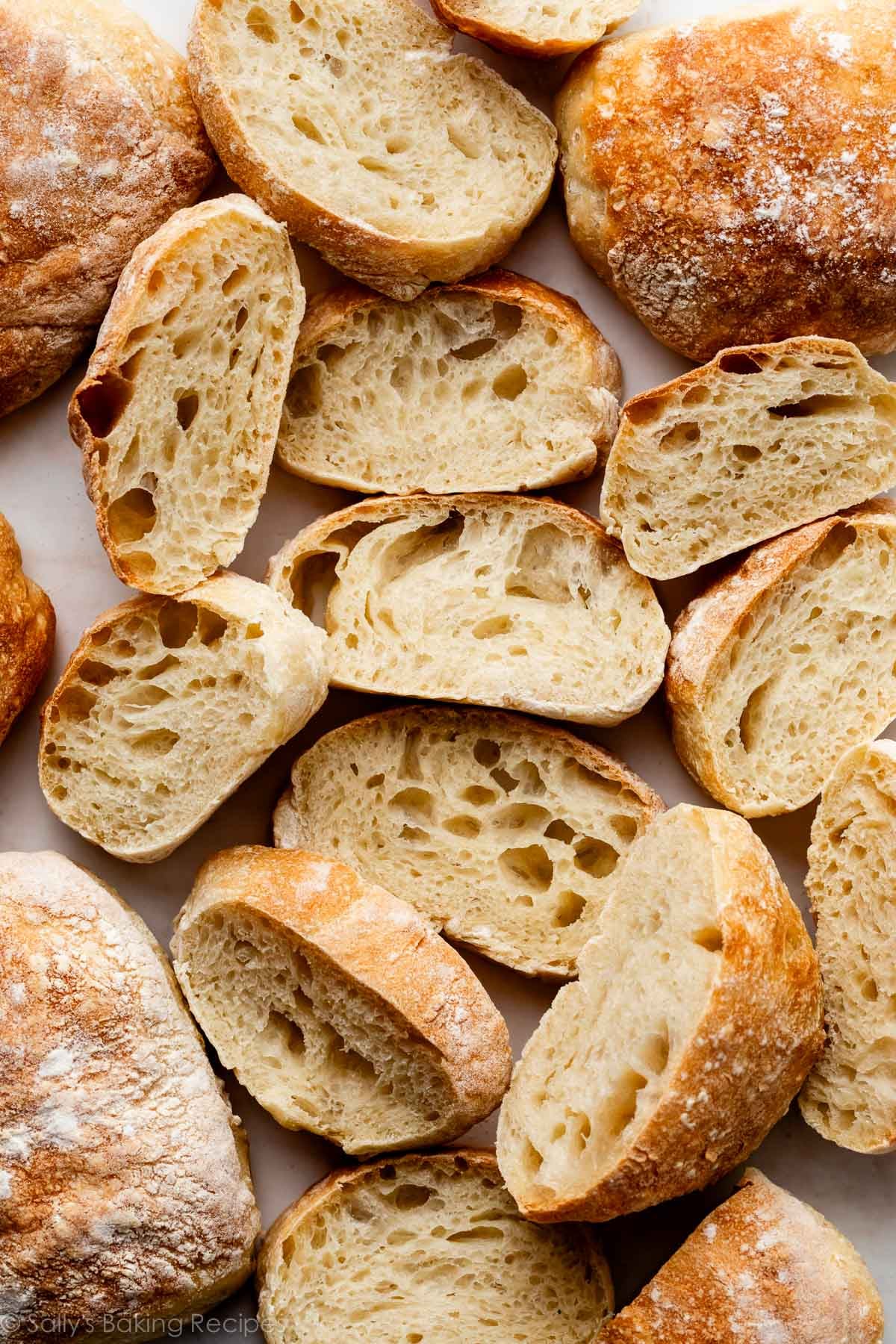
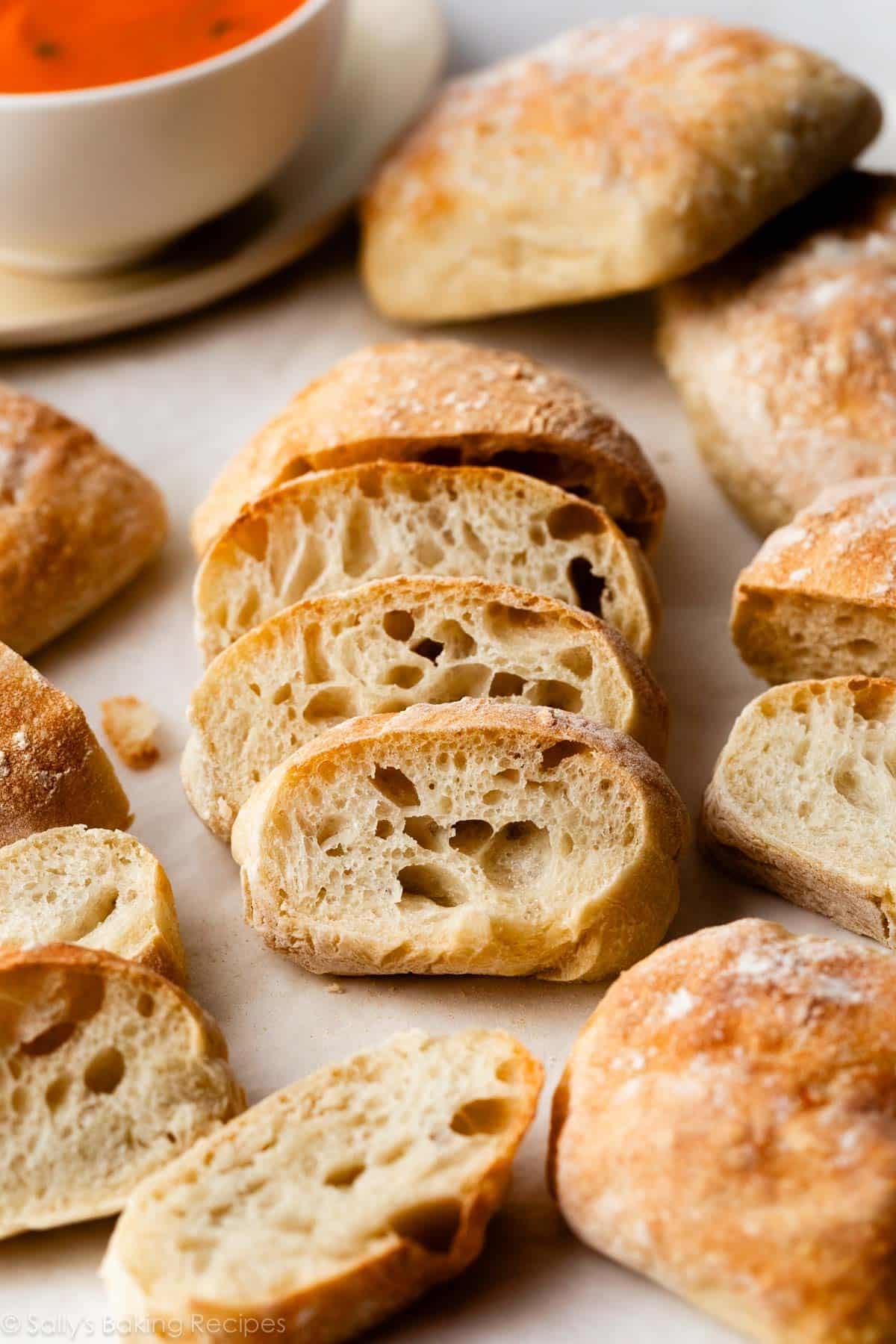
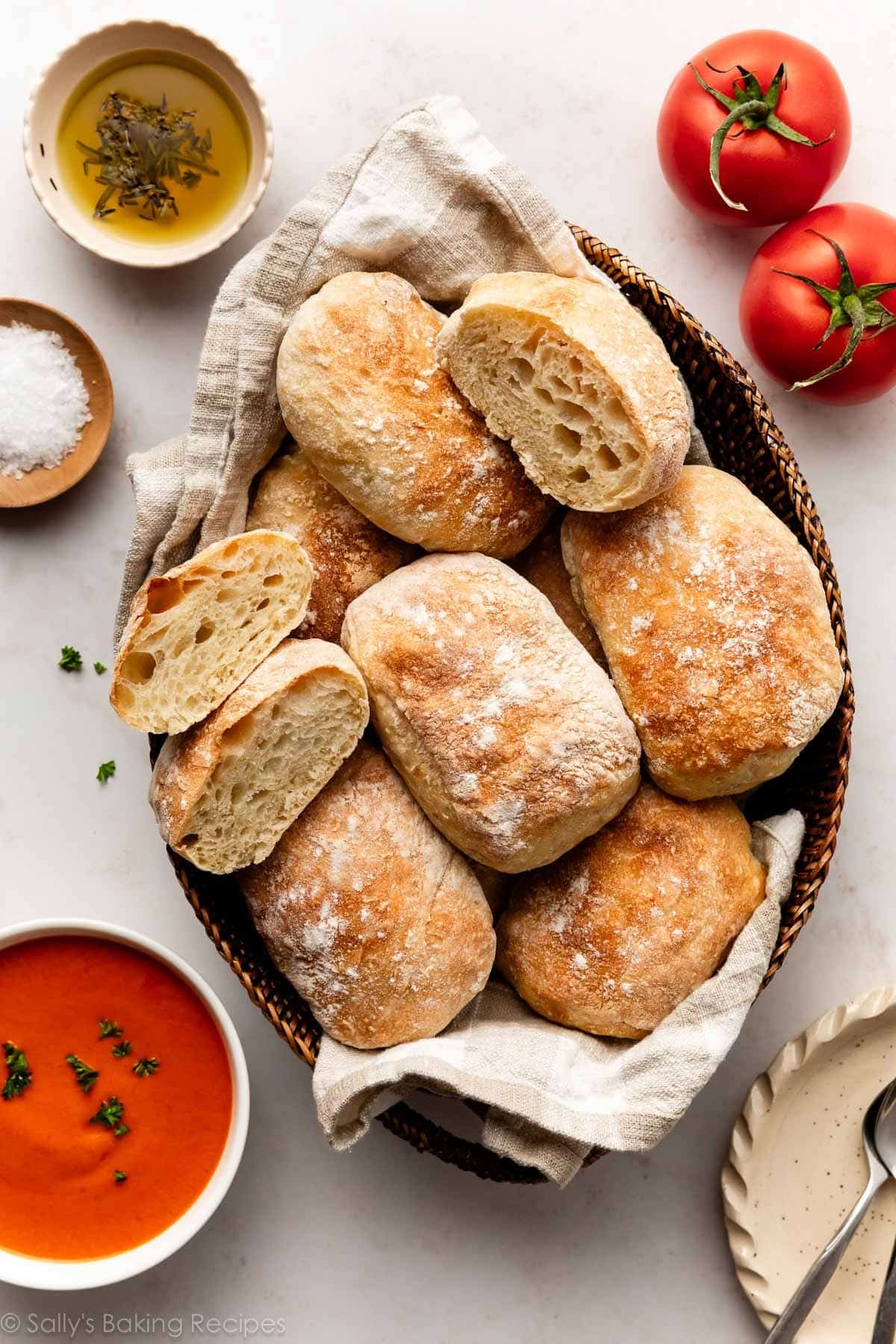
Learn how to make homemade ciabatta bread with this thorough step-by-step recipe as your guide. Rustic-looking and flavorful, with a flour-dusted crusty exterior and extra-chewy interior pockmarked by air bubbles, this classic Italian-style bread is made from just 4 ingredients: flour, yeast, water, and salt. Making this bread is a 2-day process, but the first step on day one takes just 5 minutes.
One reader, Joanne, commented: “I can’t believe I made ciabatta!! I don’t think I’ve made yeasted bread before and this came out great! As always, Sally, your excellent detailed instructions made it manageable and successful. My rolls came out crusty on the outside and soft but chewy on the inside with plenty of air pockets. The house smelled wonderful and the rolls were delicious! ★★★★★“
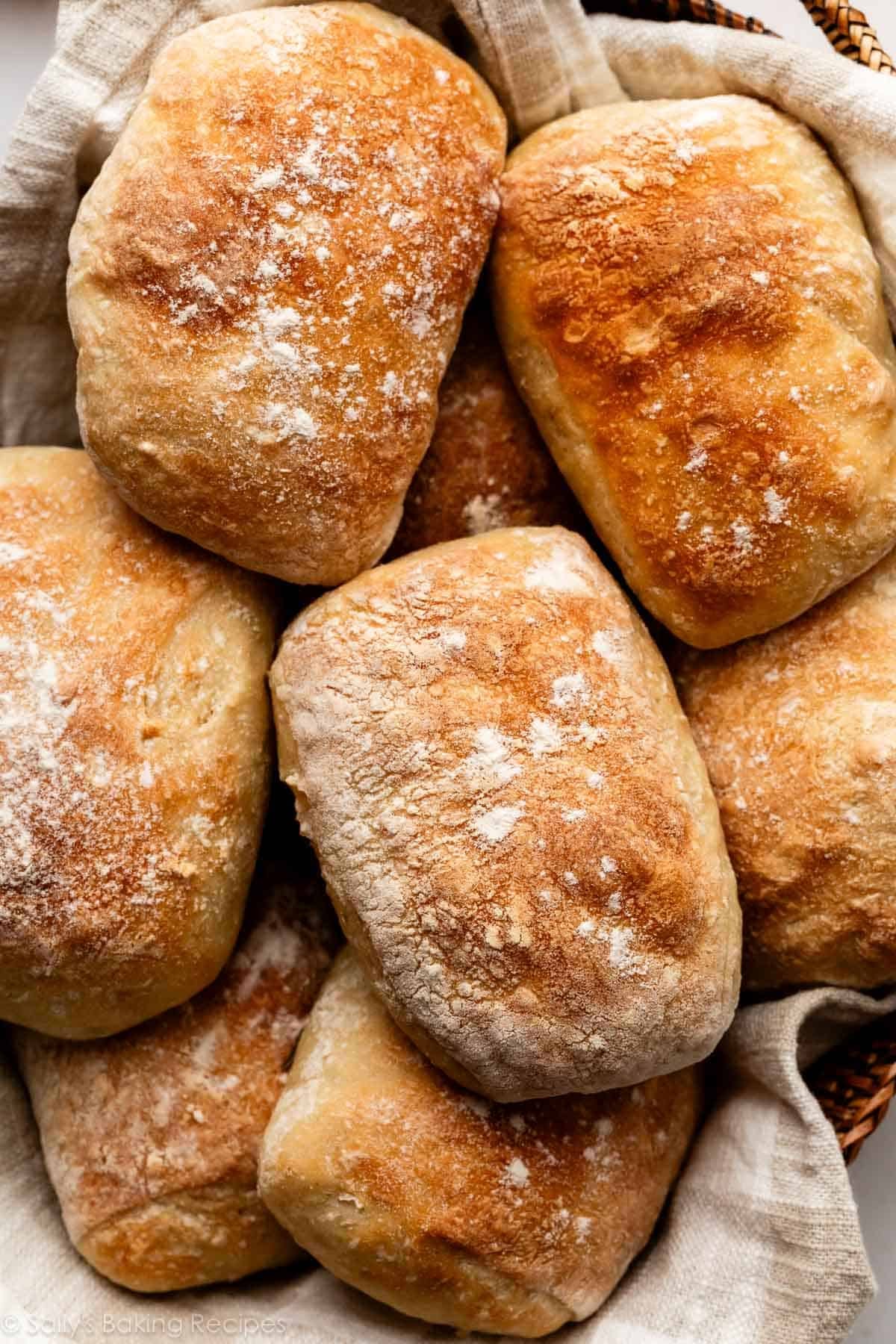
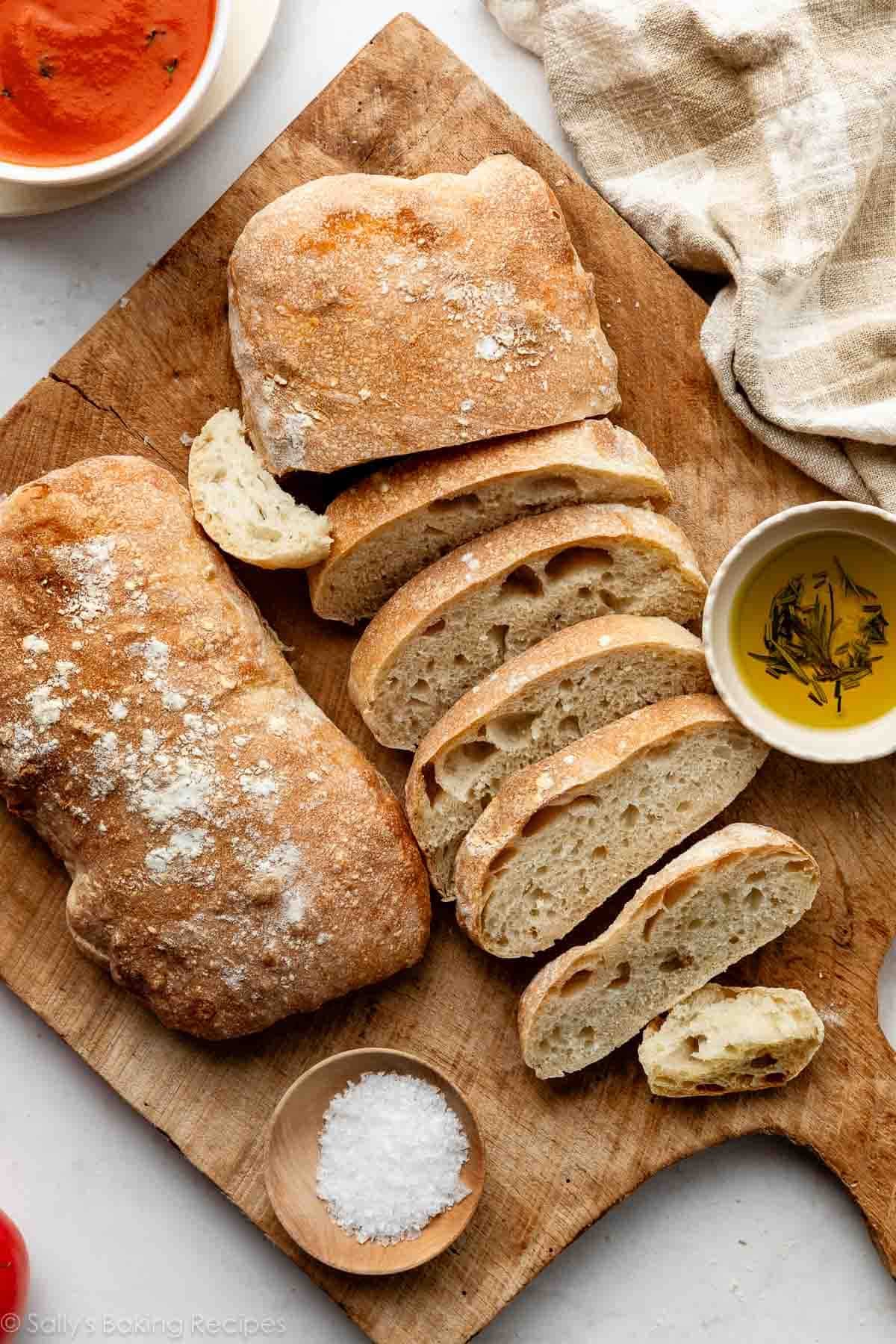
Ciabatta is a uniquely crusty, chewy bread that’s perfect for dipping in olive oil or homemade Italian dressing or soaking up soup or sauce. Today I’m showing you how to make both ciabatta bread AND ciabatta rolls, both from the same dough. The rolls, when sliced horizontally, make a perfect base for a hearty sandwich or panini. Tuna melt, BLT, caprese pesto chicken burger, eggs and avocado, you name it—it’s a sturdy sandwich roll that stands up to it all.
Bonus: As it stales, day-old ciabatta makes for delicious crostini, or a fantastic breakfast casserole or strata. (I used it in our Christmas brunch sausage & egg casserole!) Fresh or 1-day-old ciabatta bread is also perfect for making homemade garlic bread or homemade croutons.
What Is Ciabatta?
Ciabatta (pronounced chuh-bah-tuh) is the Italian word for slipper, and this type of bread was given its moniker in reference to its characteristic flat, broad, elongated shape. A rustic Italian white bread similar to my homemade artisan bread, ciabatta dough is made from the simplest of ingredients: flour, water, salt, and yeast.
The key difference between today’s recipe and my artisan bread lies in the ciabatta’s enhanced flavor, crispier crust, and irresistibly airy interior. These three standout qualities are achieved through extended fermentation and a precise series of dough-folding steps between rests.
If you’re looking for something easier, start with my artisan bread!
Ciabatta Bread Success Tips
Between developing, testing, and photographing this recipe, there have been at least 15 batches of ciabatta bread going through my kitchen the past few months. I’ve learned a lot through the process and I’m thrilled to share it all with you… both the wins and the fails.
This is not a true ciabatta recipe, meaning we aren’t making it using the *exact traditional method* you would learn in a bread class at an Italian culinary school. But this slightly simplified method yields results that are pretty darn close.
Overall, today’s recipe is a good introduction to making preferment breads, and a home baking project that you’ll feel proud to accomplish.
Before we get started, I want to call out two key aspects of making ciabatta bread from scratch:
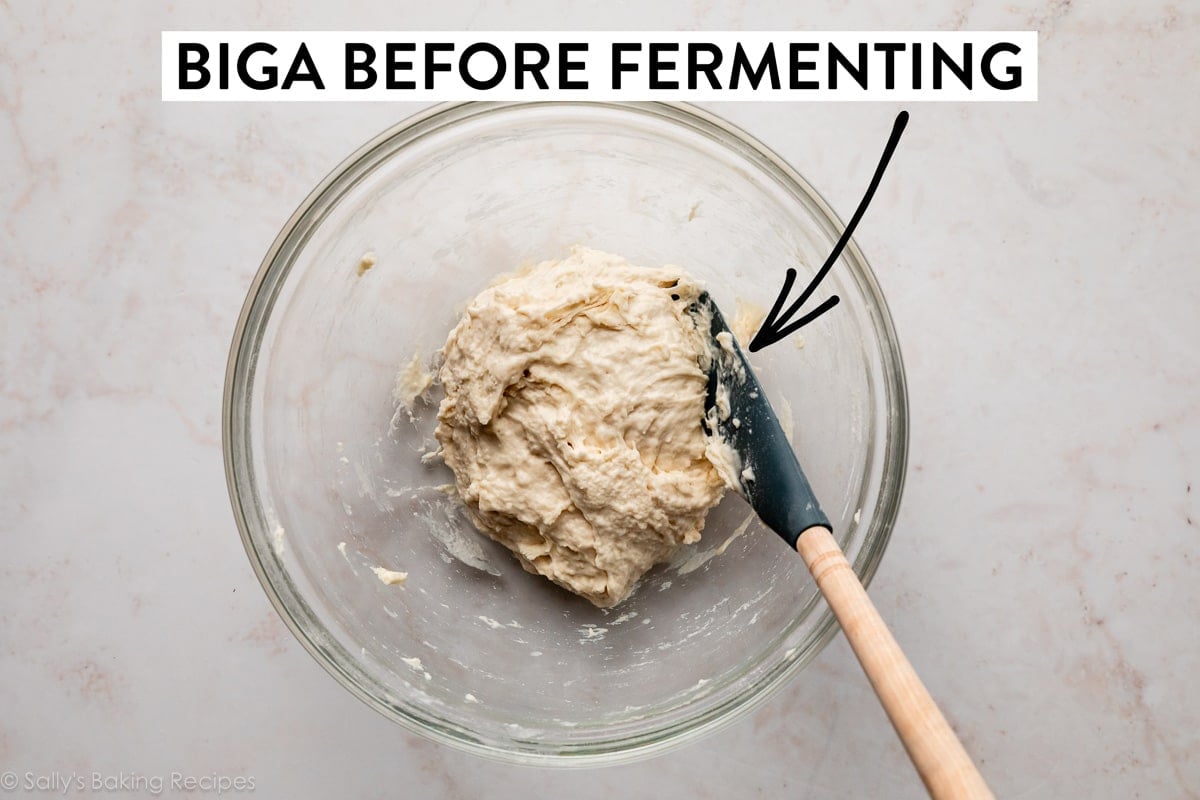
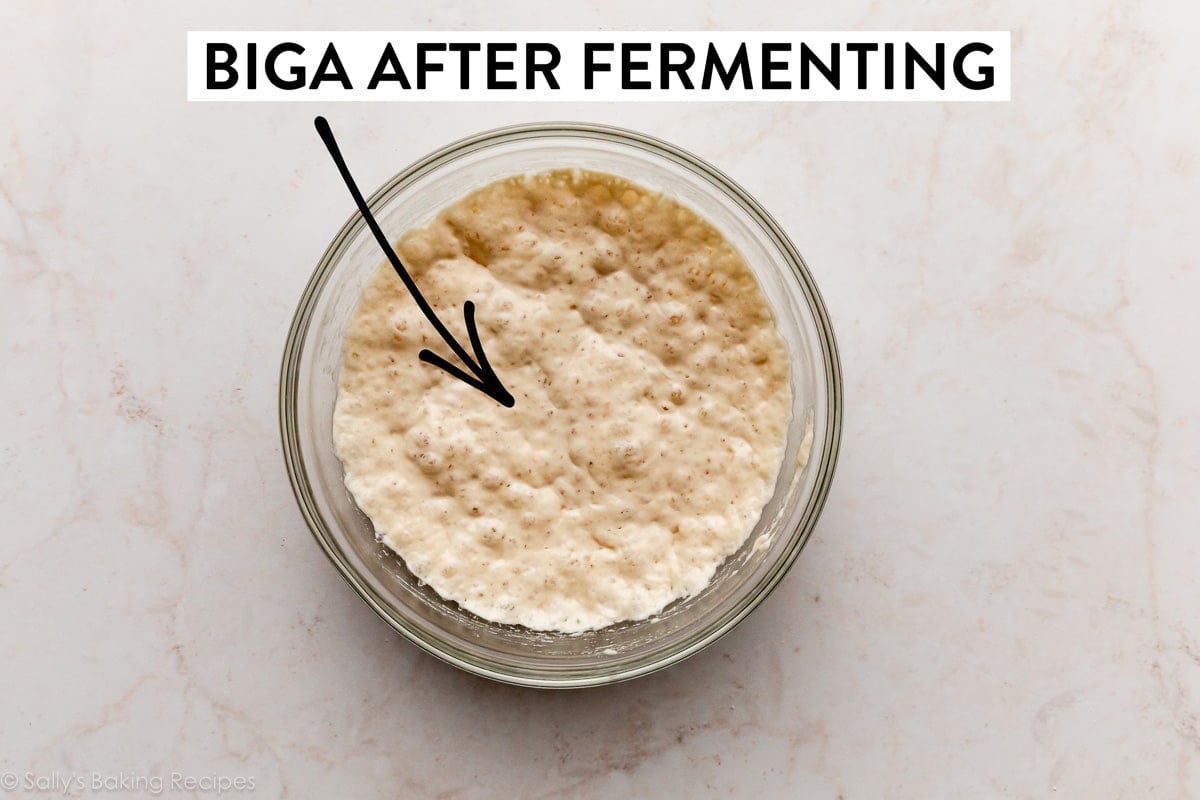
- Make a preferment the day before. The first step is to make a preferment (aka biga)—a simple mixture of flour, water, and a pinch of yeast, which needs to sit overnight before using in the ciabatta dough. The biga assists in both flavor and structure. It helps strengthen the gluten, making for a chewier texture, and provides a more complex flavor as well.
- Expect an extra-sticky dough. This type of bread uses a high hydration (aka very wet) dough, typically at least 80% hydration. The higher the hydration (and the longer you let the dough rest), the more flexible the gluten becomes, and the chewier the final bread will be. Because it’s so wet and sticky, this dough is impossible to knead by hand, and instead requires a gentle “stretch and fold” method for building strength in the dough. Pay attention to the wording in the instructions; at times I instruct you to handle the dough with oiled hands or tools, and at other times with generously floured hands or tools. These specific directions are there to help make this sticky, highly hydrated dough easier to work with.
Helpful Tools for Making Ciabatta Bread
- Kitchen Scale: If you have one, use a kitchen scale to measure your ingredients by weight (in grams). You want to avoid adding too much flour to this dough—the wetter and stickier it is, the better. Measuring by weight is most accurate, and will put you on the path to homemade ciabatta success. If you don’t have a scale, make sure to use the spoon & level method rather than scooping the flour out of the container with the measuring cup.
- Bench Scraper: With this sticky dough, a bench scraper is basically an extension of your hands. It helps you shape and neatly straighten the dough, without your fingers getting covered in slick, wet dough.
- Instant-Read Thermometer: An instant-read thermometer is also helpful to use here. Both for checking the water temperature before mixing it with the other ingredients, and to check the baked rolls for doneness. While not required, a thermometer simply takes away the guesswork.
And if you’re new to yeast, reference my Baking with Yeast Guide for answers to common yeast FAQs.
Only 4 Ingredients in the Dough
The crustier and chewier the bread, the less fat in the dough—also known as a “lean dough.” We’re using a lean dough for these ciabatta rolls today.
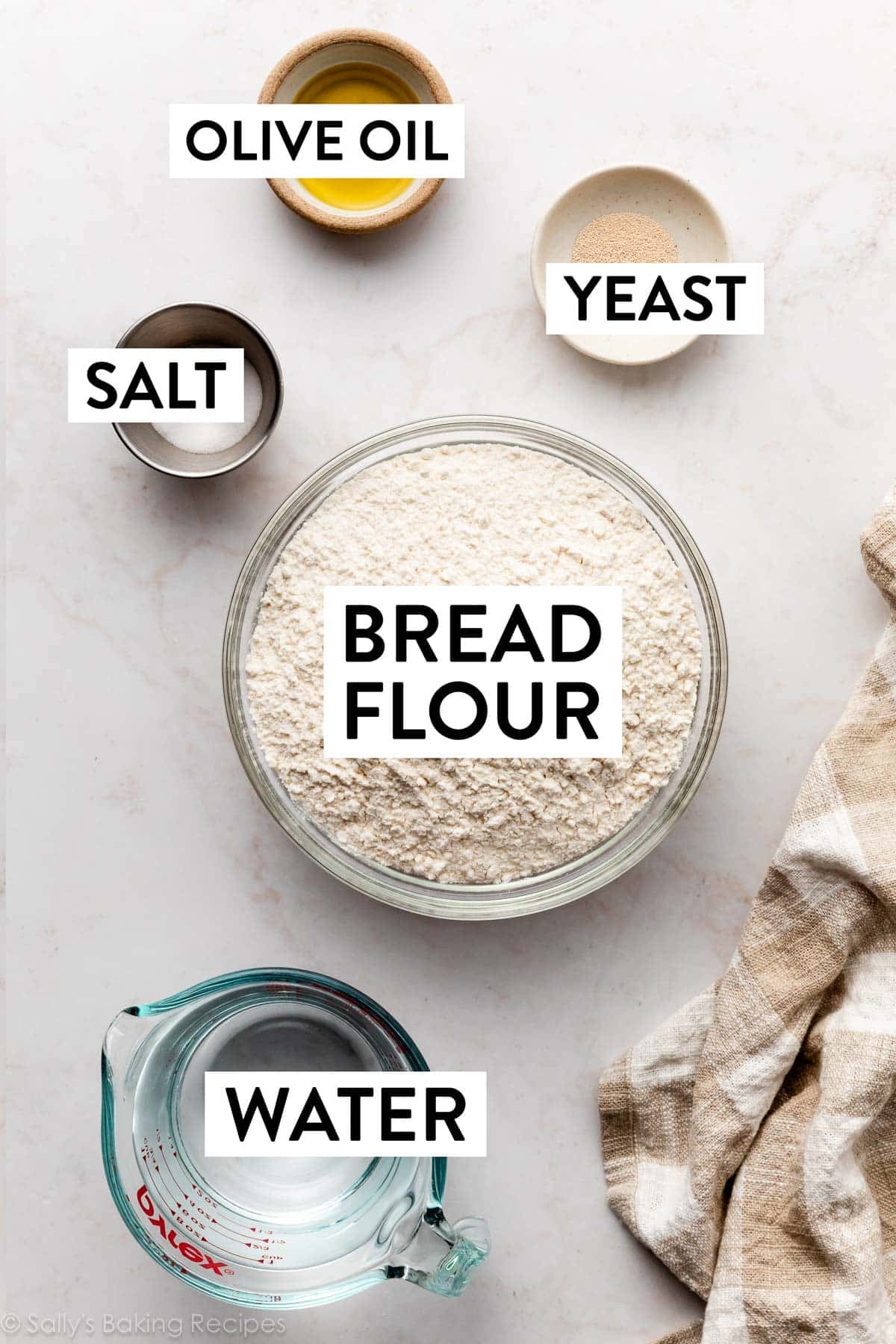
- Bread Flour: While you can use all-purpose flour in this recipe, I strongly recommend using bread flour. Just like when we make olive bread, pizza bread, and asiago-crusted skillet bread, bread flour produces a stronger, chewier crumb, and that makes a big difference in a recipe with only 3 other ingredients.
- Instant or Active-Dry Yeast: You can use either (see recipe Note below). Take note that you will not use an entire standard packet of yeast.
- Salt: You just can’t make good bread without salt—it’s essential for flavor. Regular table salt is what you need for this recipe.
- Water: Some yeasted bread recipes, like my soft dinner rolls, call for warm liquid because it helps the yeast work faster. On the other end of the spectrum, bread recipes with a long rest time, like this no-knead honey oat bread, call for cool or room-temperature water. The cooler the water, the longer the dough takes to rise and, usually, the better the bread’s flavor. (This is important because there are so few ingredients to add substantial flavor!) In this recipe, we’re using BOTH. You’ll use cool or room-temperature water in the biga, or preferment, on day 1; then you’ll use warm water in the dough on day 2, to increase and speed up the yeast’s activity.
- Olive Oil: While not in the dough itself, olive oil is helpful for coating your hands or spatula during the stretch-and-fold process, preventing sticking and making handling the dough much easier.
Plus, an invisible ingredient: time. Time is the superior flavor enhancer. The preferment, allowing the dough to rest between stretches and folds, and finally proofing the dough after shaping all work together to develop flavor.
Overview: How to Make Ciabatta Bread & Ciabatta Rolls
It may seem like a long process, but keep in mind that most of the time is hands-off, while the dough rests.
Day 1:
- Mix together the preferment. Cover and let sit at room temperature for 8–24 hours.
Day 2:
- Dissolve yeast in water. Add the preferment, flour, and salt. Mix to form a sticky, uniform dough. I usually do this by hand with a silicone spatula, but you can use a stand mixer and dough hook attachment. Do not use a handheld mixer—the sticky dough would get caught in the beaters.
- Cover and let the dough rest for 30 minutes.
- Stretch and fold the dough.
- Cover and let rest for 30 minutes.
- Stretch and fold the dough.
- Cover and let rest for 30 minutes.
- Stretch and fold the dough.
- Cover and let rest for 30 minutes.
- Stretch and fold the dough for the 4th and final time.
- Refrigerate the dough for 1 hour, and up to 24 hours.
- Shape the rolls.
- Cover and let rest for 1 hour. Meanwhile, preheat the oven.
- Bake.
How to Stretch & Fold Sticky Dough
After you make the dough with the preferment/biga, let it rest for 30 minutes to help relax the gluten.
Have a little bowl of olive oil on hand. Lightly grease your hand or a silicone spatula with the oil. Using your greased hand or spatula, lift up one side of the dough and gently stretch it up and pull it toward the opposite side of the bowl, folding it down over the dough. I like to visualize a clock on top of the dough for this. You’ll be folding it at the 12 o’clock mark and pulling it down over the 6 o’clock mark. Then, turn the bowl 90 degrees and repeat. Do this until you’ve gone around the bowl twice, for a total of 8 folds.
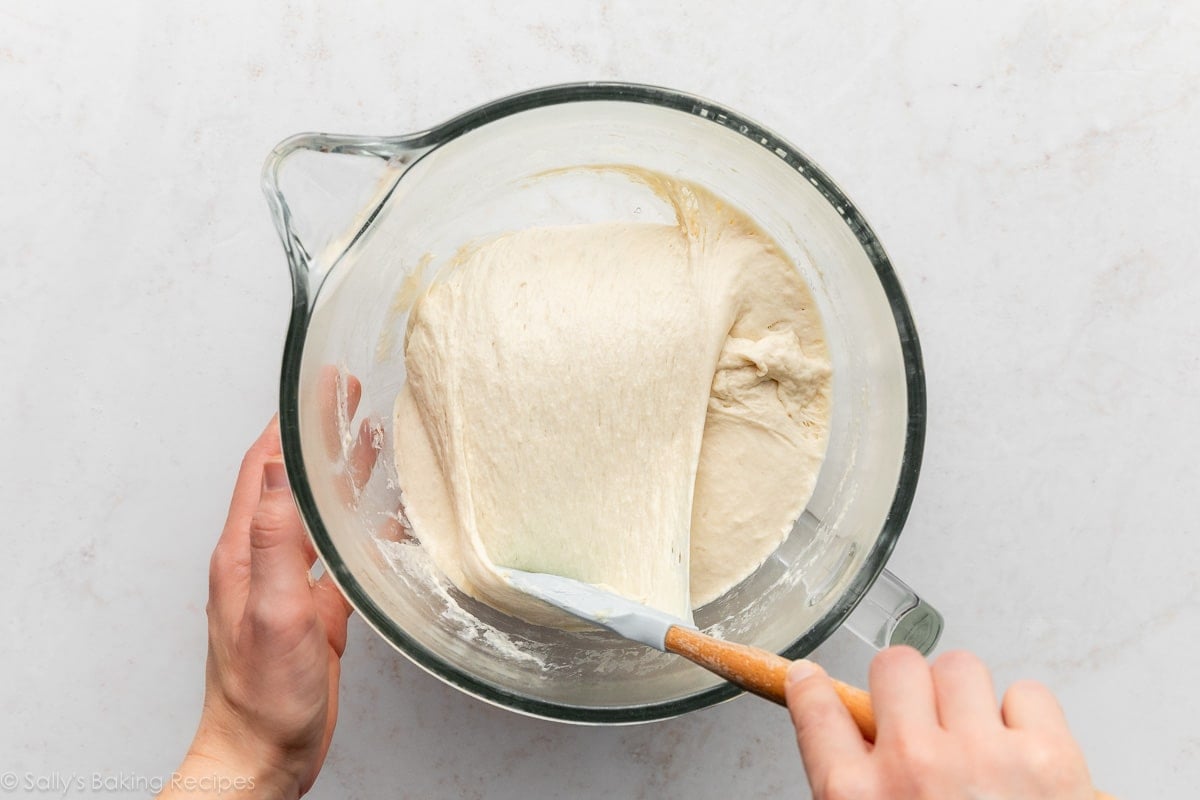
The stretch-and-fold method is similar to kneading dough but much gentler and more precise; it’s designed to handle the dough’s stickiness without overworking it.
After each stretch and fold, let the dough rest for 30 minutes. Repeat this process three more times, resting 30 minutes between each. With each round, you’re gradually building the dough’s strength and structure!
After the 4th round, refrigerate the dough for an hour and up to 1 day. Yes, you can stretch this process over 3 days if you want. I always appreciate a flexible baking recipe!
How to Shape Ciabatta Bread & Rolls
Generously flour your counter/work surface. Using lightly oiled hands or a lightly oiled spatula, gently scrape the dough out of the bowl and onto the floured surface. Sprinkle flour all over the top, then gently pat into a 10×7-inch rectangle, or anywhere close to that size.
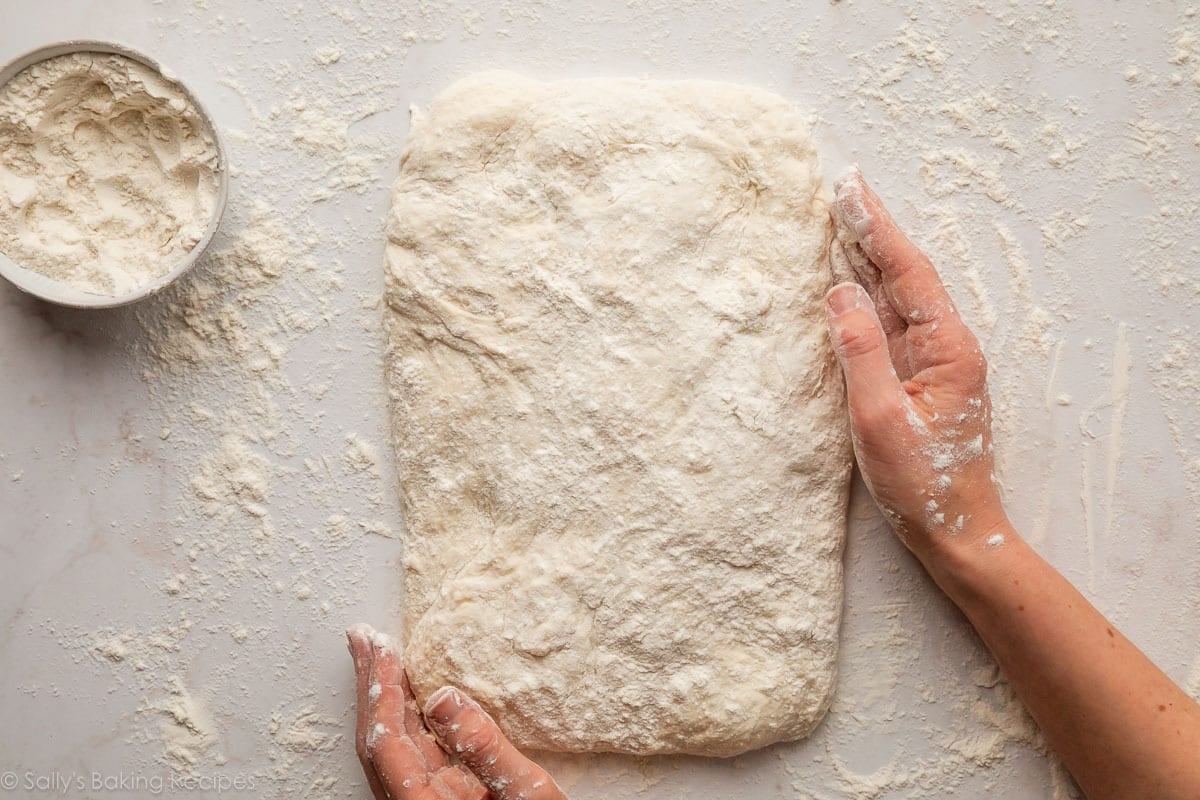
With a floured bench scraper, cut in half down the center, and then cut each into 4 rectangles.
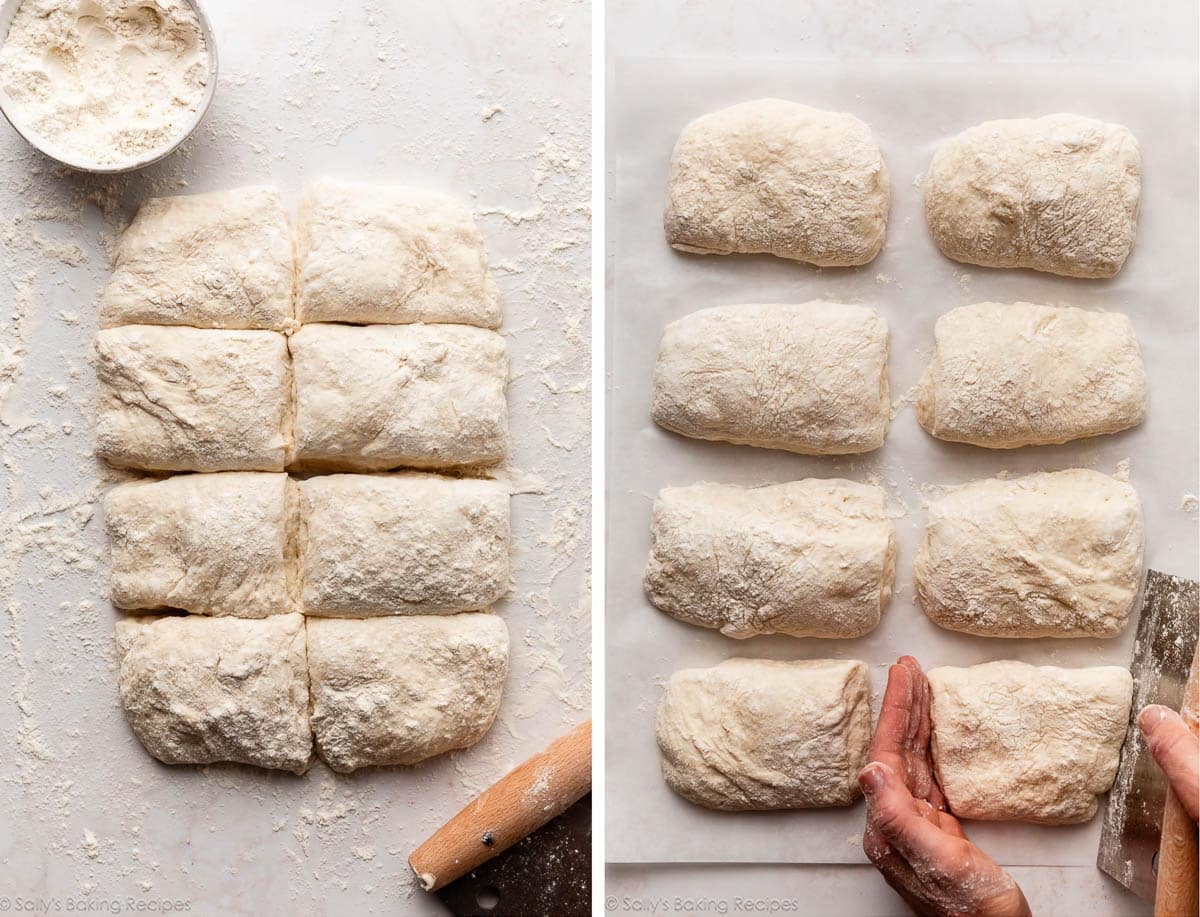
OR, for two loaves, cut in half once, horizontally, to make two 5×7-inch rectangles. (Or once vertically for two 10×3.5-inch loaves.)
With floured hands and using a floured bench scraper to assist, carefully transfer to parchment paper. Reshape the rolls/loaves as needed, but don’t go nuts over this. It’s totally fine if the shapes are all a little wonky and uneven—ciabatta bread is meant to look rustic!
Final nap before baking: Lightly flour the tops of the ciabatta rolls and then cover them with a clean kitchen towel. Let the rolls rest for 1 hour at room temperature.
For a Crispy Crust, Bake With Steam
Meanwhile, place a flat cookie sheet or a rimmed baking sheet on the center rack of your oven. Preheat to 450°F (232°C). You want your oven and baking surface to be heating for about an hour before the bread goes in.
When ready to bake, scatter several cups of ice cubes in a large shallow metal roasting pan, cast-iron skillet, or rimmed baking sheet. Why? You want to create steam in your oven. A humid, steamy environment is crucial for ciabatta to develop its signature golden-crisp crust. It also keeps the dough’s surface moist in the first few minutes of baking, which allows it to expand without cracking.
Uncover the rolls and lightly spray or flick them with a little water. Why? More steamy moisture. See above.
Working quickly, carefully pull out the oven rack with the preheated baking sheet and slide the parchment paper and proofed bread onto it. Slide the pan with the ice cubes onto the bottom oven rack and quickly close the oven door, trapping the steam from the melting ice inside.
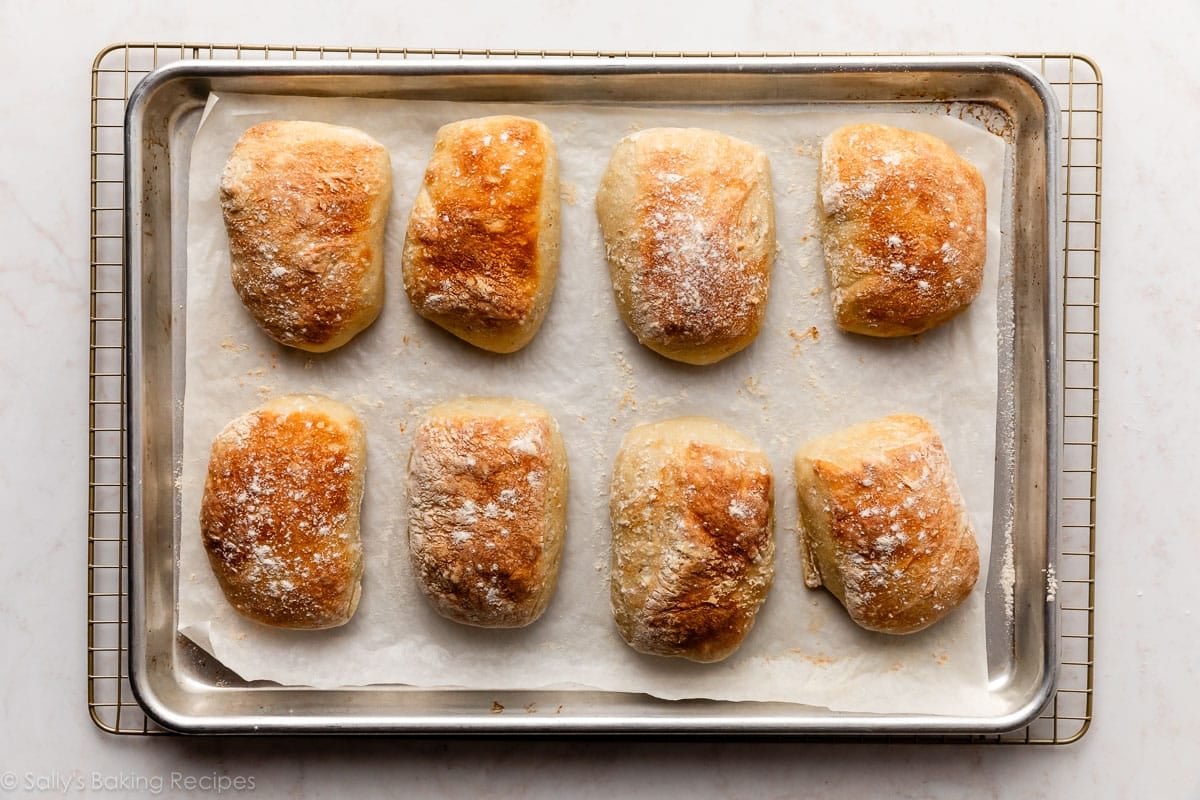
Finally, your bread is baking. It will take about 20 to 22 minutes, or up to 25 minutes for a deeper golden color. All ovens are different, so use an instant-read thermometer if you have one to check the internal temperature of the bread. You’re looking for around 205°F (96°C) to 210°F (99°C).
Final Success Tip
To ensure the interior sets properly, cool the bread or rolls for at least 45 minutes before slicing and serving. Cutting too early will leave you with a gummy texture.
Fresh or dried herbs are best for flavoring this ciabatta dough. My favorite is fresh or dried rosemary with a little garlic. When adding the salt in step 2 below, add 2 and 1/2 teaspoons fresh chopped rosemary or 1 teaspoon dried, plus 2 minced garlic cloves. Feel free to replace the rosemary with another herb.
If you want to bake your bread/rolls on a pizza stone, preheat the pizza stone in the oven. In step 10 below, place the shaped and scored dough on your preheated pizza stone. Bake as directed.
Yes. Generously grease a 9×13-inch baking pan with olive oil. After completing step 5 below, pour the dough into the greased pan. Flip to coat all sides in the oil. Stretch and flatten the dough to fit the pan. Don’t tear the dough. If it’s shrinking, cover it with a clean towel and let it rest for 5–10 minutes before continuing. This lets the gluten settle and it’s much easier to shape after that. Continue with step 7 in my focaccia recipe.
To rely only on a sourdough starter and not yeast, I recommend looking for a sourdough ciabatta bread recipe. To combine your active sourdough starter with yeast, however, you can simply replace some flour and water with sourdough starter. Prepare the biga below as instructed, then on day 2/in step 2 below, replace 50g each water and flour with 100g of sourdough starter. Proceed with the recipe.
Homemade Ciabatta Bread
- Prep Time: 13 hours (includes rests & rises)
- Cook Time: 25 minutes
- Total Time: 14 hours, 10 minutes (includes cooling)
- Yield: 8 rolls or 2 flat loaves
- Category: Bread
- Method: Baking
- Cuisine: Italian
Description
Rustic-looking and flavorful, with a flour-streaked crusty exterior and extra-chewy interior pockmarked by air bubbles, this classic Italian-style bread is made from just 4 ingredients. Making these ciabatta rolls is a 2-day process. For best success, I strongly recommend reading through the recipe before you get started. Do not be shy with the flour when flouring the work surface and your hands. Use as much as you need to handle the dough. If you have one, use a kitchen scale to measure your ingredients by weight (in grams). With this sticky dough, a bench scraper is basically an extension of your hands. It helps you shape and neatly straighten the dough.
Ingredients
Biga/Preferment
- 1 cup (130g) bread flour (I use this), spooned & leveled
- 1/8 teaspoon active-dry or instant yeast
- 1/2 cup (120g/ml) room-temperature water (about 70°F (21°C))
Ciabatta Rolls
- 1 teaspoon (3g) active-dry or instant yeast
- 1 cup (240g/ml) warm water (about 100–110°F (38°–43°C))
- 2 and 1/2 cups (325g) bread flour (spooned & leveled), plus more as needed
- 1 and 1/2 teaspoons (8g) table salt
- olive oil, as needed for coating hands and spatula
Instructions
- Day 1: Make the biga/preferment: In a large mixing bowl, whisk together the bread flour and yeast. Add the water and mix with a silicone spatula until combined. Cover the bowl tightly with plastic wrap and let rest at room temperature for 8–24 hours.

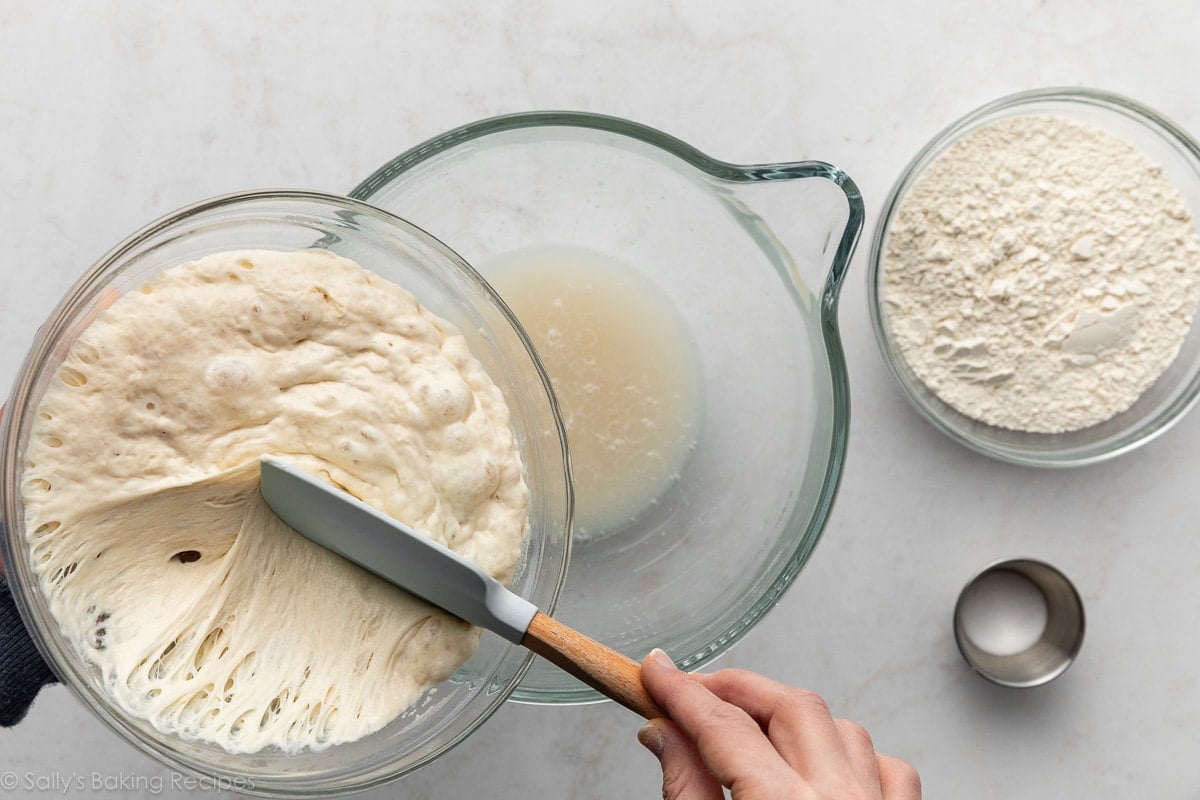
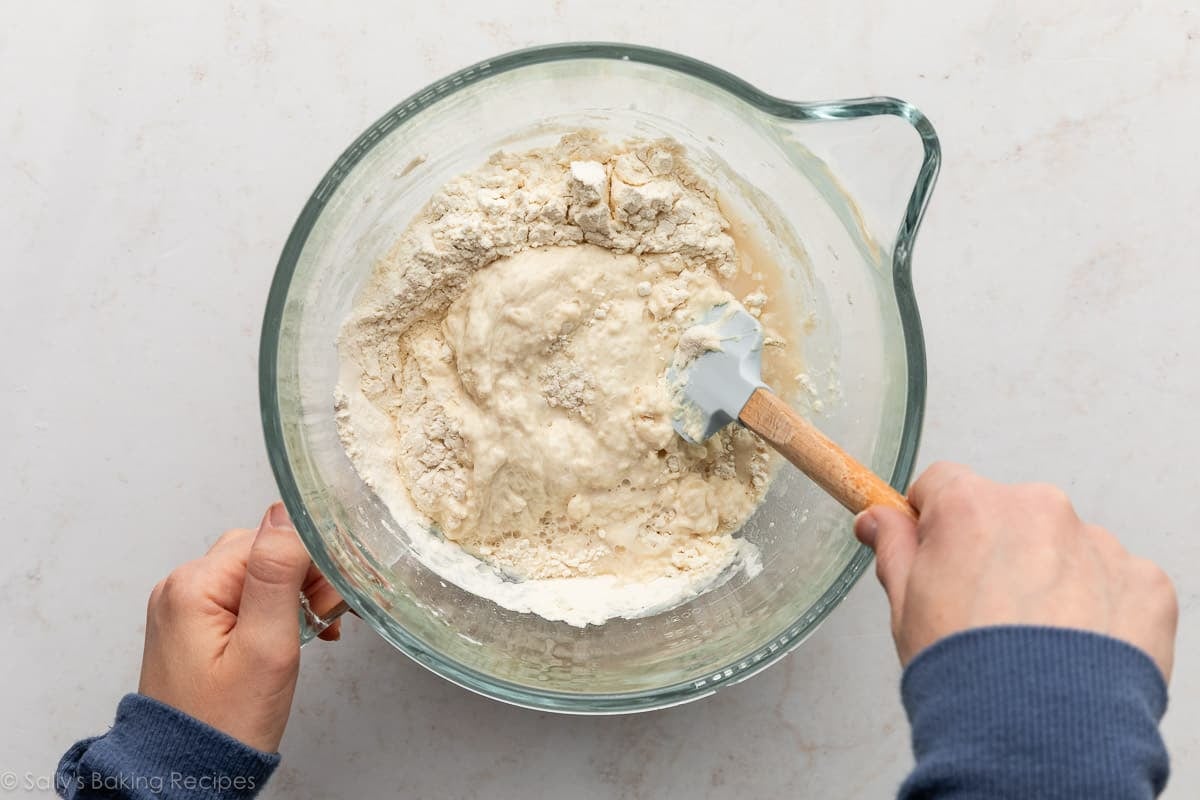
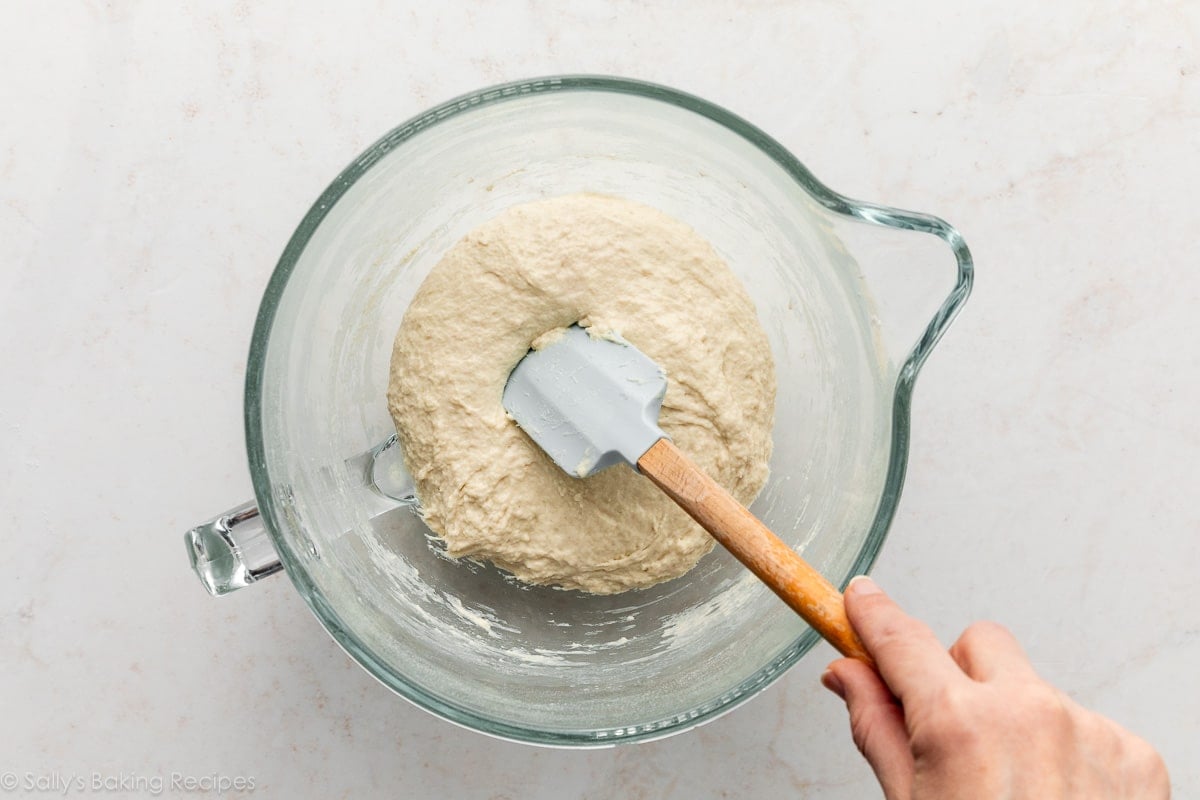
- Day 2: Make the dough: Uncover the bowl with the biga. In a separate large mixing bowl, or the bowl of your stand mixer fitted with a dough hook attachment (do not use a handheld mixer for this), whisk together the yeast and warm water. Cover and let sit for 5 to 10 minutes until the yeast has dissolved. Add the biga, flour, and salt. Gently mix together with a silicone spatula or wooden spoon, or using the dough hook on medium speed. The dough will seem dry and shaggy at first, but keep working it until all the flour is moistened and the dough is uniform in texture (no dry pockets). If needed, lightly grease your hands with olive oil and gently knead the ingredients together in the bowl. The dough will be wet and sticky; that’s normal, expected, and encouraged.
- 1st rest: Cover the bowl and let the dough rest for 30 minutes at room temperature.
- 1st stretch-and-fold: Visualize a clock on top of your dough. You’ll be folding it at the 12 o’clock mark. With an olive oil-greased spatula or lightly oiled hands, lift up the dough at 12 o’clock and gently stretch it up and pull it toward the opposite side of the bowl (6 o’clock), folding it down over the dough. Turn the bowl 90 degrees and repeat. Do this until you’ve gone around the bowl twice, for a total of 8 folds. Cover the bowl and let rest for 30 minutes at room temperature.
- Remaining stretch-and-folds: Repeat step 4 three more times, allowing the dough to rest for 30 minutes between each. After the 4th stretch-and-fold, cover the bowl and place it in the refrigerator for at least 1 hour and up to 24 hours.
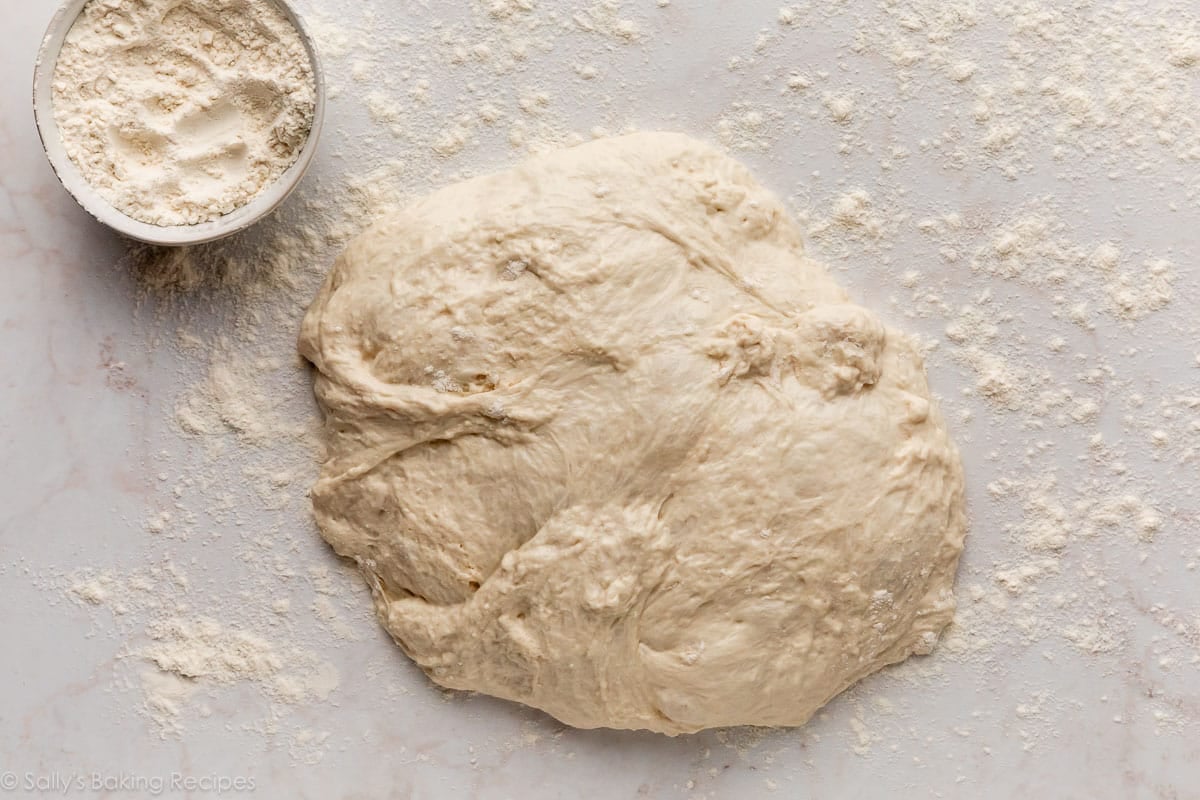
- Shape the rolls/bread: Very generously flour your counter or work surface. Using lightly oiled hands or a lightly oiled spatula, gently scrape the dough out of the bowl and onto the floured surface. Generously sprinkle flour on top of the dough. Using floured hands, gently stretch and shape the dough into a rough rectangle shape, about 10×7 inches in size. For 8 rolls: With a floured bench scraper, cut the dough into 8 pieces roughly equal in size, each around 2.5×3.5 inches (doesn’t need to be perfect). For 2 loaves: With a floured bench scraper, cut the dough in half to make two 5×7-inch (or 10×3.5-inch) rectangles.
- Lightly flour a piece of parchment paper. With floured hands, and using the floured bench scraper to help, lift the sticky dough pieces up and transfer them to the floured parchment, arranging them at least 2 inches apart to make room for expanding. Take care to be extra gentle because you don’t want to deflate the dough. If the pieces of dough lost shape during the transfer, gently reshape into rectangles. (It’s fine if they aren’t perfect—ciabatta bread is meant to look rustic!)

- Proof Before Baking: Lightly sprinkle flour over the rolls, and then gently cover them with a clean kitchen towel or piece of parchment paper. Let rest at room temperature for 1 hour.
- Meanwhile, position one oven rack in the very bottom position and another rack in the center/middle position. Place a flat cookie sheet or a rimmed baking sheet on the center rack. Preheat the oven to 450°F (232°C). You want your oven and baking surface to be heating for about an hour before the bread goes in.
- When ready to bake, scatter several cups of ice cubes in a large shallow metal roasting pan, cast-iron skillet, or rimmed baking sheet (do not use glass). Uncover the rolls and lightly spray or flick them with a little water. (This is optional, but it helps create even more steam, which promises a crispier crust.) Working quickly, carefully remove the preheated baking sheet from the oven and slide the parchment paper and proofed bread onto it. Place back in the oven. Slide the pan with the ice cubes onto the bottom oven rack and quickly close the oven door, trapping the steam from the melting ice inside.
- Bake for 20–22 minutes, or until the bread/rolls are golden brown. I usually extend this time to 25 minutes, for a deeper golden color. Gently tap the bread—if they sound hollow, they’re done. For a more accurate test of doneness, the bread is done when an instant-read thermometer inserted in the bread reads 205°F (96°C) to 210°F (99°C).
- Remove the rolls from the oven and allow to cool for at least 45 minutes before slicing and serving. If you cut into the bread too early, it will likely have a gummy texture.
- Store leftovers loosely covered at room temperature for up to 5 days or in the refrigerator for up to 1 week.
Notes
- Make Ahead & Freezing Instructions: There are many ways to make this dough ahead of time. First, in step 1, the biga can sit for up to 24 hours. Second, in step 5, after you have completed all of the stretch-and-folds, the dough can sit in the refrigerator for up to 24 hours. You can also bake the bread, allow it to cool, and freeze for up to 3 months. Thaw at room temperature before serving.
- Special Tools (affiliate links): Kitchen Scale | Glass Mixing Bowls | Stand Mixer | Silicone Spatula or Wooden Spoon | Bench Scraper | Baking Sheets | Instant-Read Thermometer | Cooling Rack
- Flour: For absolute best flavor and chewy texture, I strongly recommend using bread flour. You can use a 1:1 substitution of all-purpose flour in a pinch with no other changes to the recipe, however the dough may not be as strong, and may not hold shape very well. Do not use whole-wheat flour in this dough.
- Yeast: You can use instant or active dry yeast, but I highly recommend an instant (aka “rapid rise” or “quick rise” yeast). If using active dry yeast, there are no changes needed to the recipe.
- Adding Herbs/Flavors: Fresh or dried herbs are best for flavoring this dough. My favorite is fresh or dried rosemary with a little garlic. When adding the salt in step 2, add 2 and 1/2 teaspoons fresh chopped rosemary or 1 teaspoon dried, plus 2 minced garlic cloves. Feel free to replace the rosemary with another herb, and/or leave out the garlic.
- Can I Bake on a Pizza Stone? Yes. If you want to bake your bread/rolls on a pizza stone, place the pizza stone in the preheating oven for 1 hour. In step 10, place the shaped dough on your preheated pizza stone. Bake as directed.
- Can I Use This Dough for Focaccia? Yes. Generously grease a 9×13-inch baking pan with olive oil. After completing step 5, pour the dough into the greased pan. Flip to coat all sides in the oil. Stretch and flatten the dough to fit the pan, being careful to avoid tearing the dough. If it’s shrinking back as you try to stretch it out, cover with a clean towel and let it rest for 5–10 minutes before continuing. This lets the gluten settle and it’s much easier to shape after that. Continue with step 7 in my focaccia recipe.
- Can I Use a Sourdough Starter for This Recipe? To rely only on a sourdough starter and not yeast, I recommend looking for a specific sourdough ciabatta bread recipe. To combine your active sourdough starter with yeast, however, you can simply replace some flour and water with sourdough starter. Prepare the biga below as instructed, then on day 2/in step 2, replace 50g each water and flour with 100g of sourdough starter. Proceed with the recipe.
- Reference my Baking with Yeast Guide for answers to common yeast FAQs.
- Method and recipe adapted from King Arthur Baking.
Nutrition
- Serving Size: 1 roll
- Calories: 233
- Sugar: 0.2 g
- Sodium: 437.5 mg
- Fat: 2.8 g
- Carbohydrates: 43.7 g
- Protein: 7.4 g
- Cholesterol: 0 mg








Reader Comments and Reviews
Recipe worked out great and was delicious. I did the max timelines and used active dry yeast. Will be trying again with instant yeast to see the difference. Taste was amazing!
These taste AMAZING. That being said, despite a lot of it being passive, these are a ton of work. I’m looking forward to a sandwich tomorrow, for sure, though!
A new learning experience for me and I think they turned out really well. We haven’t eaten any yet, but the rolls smelled so very good when baking. I want to use this recipe for focaccia in the future.
The recipe was a more involved one with all of the folding – and I don’t think my dough rose as much as it should have (because I definitely did not have enough to make 8 rolls), but the final product was very yummy!
Although it had to be babysat, it was easy babysitting, and the results were well worth the time!
I’ve tried a few ciabatta recipes but this is the ONLY one that has turned out perfectly! So easy, and delicious results. Definitely let the preferment sit as long as you can, as well as let the dough rest in the fridge as long as possible – it yielded amazing results.
This was a great lesson in working with yeast, with wonderful results. It was a fascinating experience, and we enjoyed the crusty, chewy Ciabatta rolls!This was a great lesson in working with yeast, with wonderful results. It was a fascinating experience, and we enjoyed the crusty, chewy Ciabatta rolls!
The instructions were really easy to follow a d the results? Amazing!
It’s a time consuming but easy recipe. And tasty!
Yummy and easy to make!
This was so easy to make even though it took time, and the bread was delicious. I made it with your Creamy Cauliflower & Potato soup which is delicious as well. It was a great meal.
The instructions were clear and the bread turned out perfectly! Great crust with a fluffy texture inside.
While I am glad I got the experience of making a somewhat more advanced bread, I didn’t feel that all the time required to make the bread was necessarily worth it. The bread was tasty (although mine didn’t get any color on the top), but not so good that I noticed a difference with store bought bread.
The explanations in the recipe were wonderful and Sally did an incredible job of breaking it down and making it manageable.
This recipe turned out great. Such tasty bread !
The effort was definitely worth the result ts was was too good
First time making bread of any kind and it was great!
This recipe is so easy to follow. The rolls are delicious even though they didn’t get crusty the way they should have. I discovered my oven wasn’t working correctly. I took the time to proof the dough 24 hours instead of the minimum 8. It added such great flavor. My favorite part of making these rolls was handling the dough. It had such a great feel to it and was so easy to handle.
I’m ready to make more!
The bread turned out perfect! It was a fun weekend project, and I would definitely make it again. Excited to try some of your other breads. Thanks for another great recipe!
Fabulous! Crispy on the outside and soft on the inside. The only change I made was I used a cake pan with water instead of ice cubes as we were out of ice cubes! What a great trick!
I forgot to add that my four year old insists they’re called “Chewbacca”
I must say, the final result was very good. The actual recipe took a long time, but it was mostly idle time and none of the steps were difficult.
These ciabatta buns were delicious! The recipe was very easy to follow, the descriptions were clear and the photos helped guide me along the process. We enjoyed the most amazing sandwiches on fresh ciabatta buns!
This turned out so good, highly recommend!
Best bread I have ever made! Flavor and texture is perfect. Instructions were super easy to follow. It is a long process, but totally worth it!
Great recipe!
The bread was really good and steps were easy to follow. My bread turned out a lot more dense than I was expecting, didn’t have the air pockets like in the picture. The dough wasn’t very elastic when I tried to do the stretching. Maybe I didn’t knead/mix it enough after combining the ingredients, or maybe didn’t let the biga sit long enough (I waited about 13 hours). Anyways it was still tasty but if anyone has ideas please let me know.
Hi Kelly, if you find that your dough isn’t very elastic when you’re doing the stretch-and-folds, you can always add another stretch-and-fold to the process, to give the gluten a little more time to develop. You definitely gave the biga enough time, that shouldn’t be the cause here… It could be that you didn’t quite combine all the ingredients well enough when you made the dough–did you use a stand mixer with the dough hook, or do it by hand?
Easy – makes great sandwiches.
This recipe looks hard and complicated but it was super easy and is delicious! Another fantastic bread recipe from Sally
This was so much fun to make and was absolutely delicious! I only made a half recipe because I was afraid I’d make a disaster. Thank you Sally & team for such a great recipe that helped me be so successful. I’m excited to try more yeast bread recipes now.
I love bread, and this turned out so good! I paired it with Sally’s Creamy Cauliflower and Potato soup for an amazing lazy Sunday dinner.
Planing ahead is key for this recipe. They were delicious.