
Become a better baker by learning the similarities and differences between baking powder vs. baking soda. In this article and accompanying video tutorial, you’ll learn why and when to use one or the other (or both!), in easy-to-understand language—no chemistry degree required!
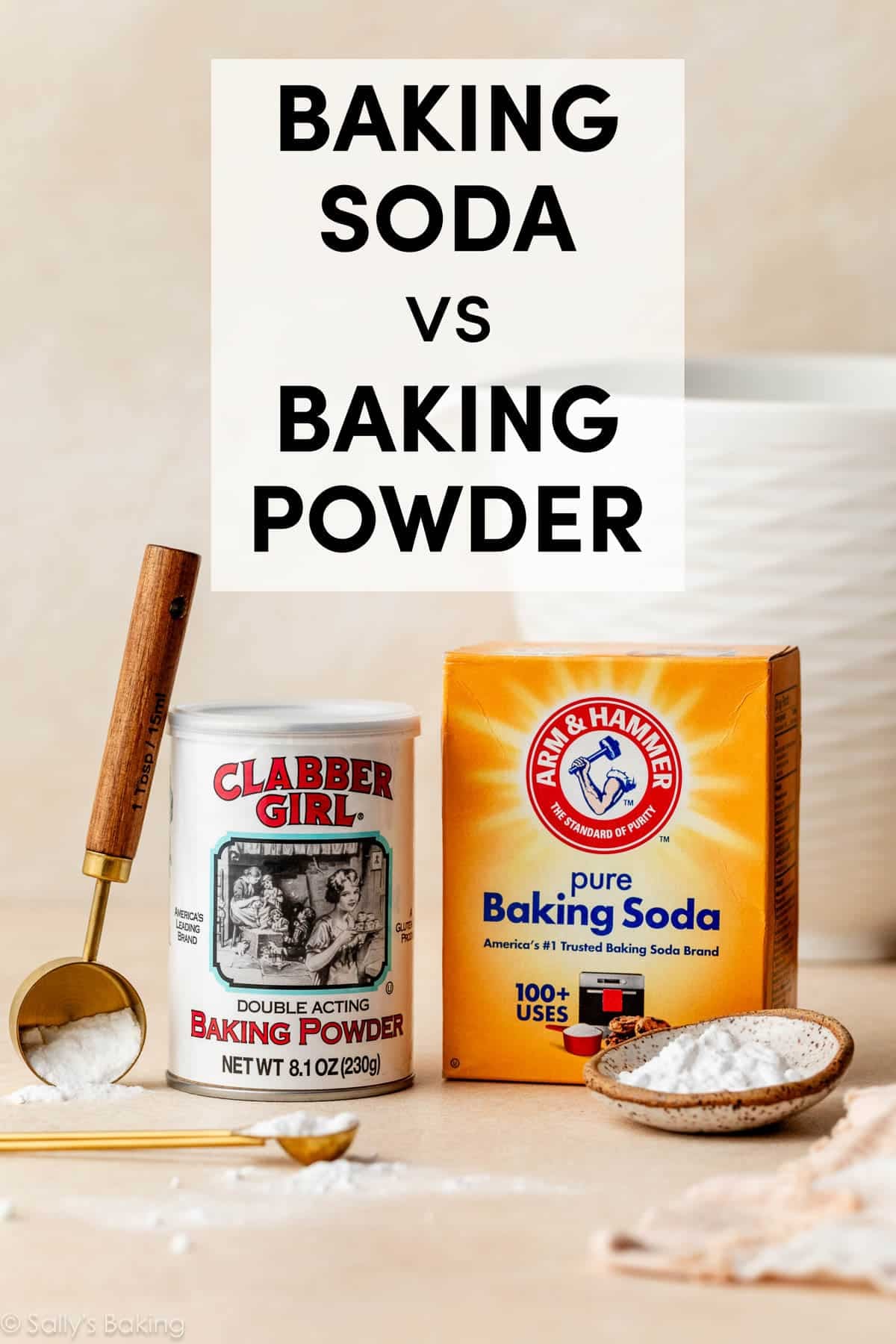
If you’ve ever wondered about the difference between baking powder and baking soda, and why some recipes call for one or both, you’ve come to the right place. Understanding the science behind this simple question is essential to your baking recipes turning out as expected.
Can I Substitute Baking Powder for Baking Soda (& Vice Versa)?
One of the most common baking questions I’m asked is whether you can substitute baking powder for baking soda. The simple answer is no. They’re both leaveners, whose primary function is to make baked goods rise in the oven, but they are chemically different.
If there is one thing that you take away from today’s lesson, let it be this: baking powder and baking soda are not the same, and you should not substitute one for the other in a recipe.
5 Min. Video: Baking Powder vs Baking Soda
What Are Leaveners?
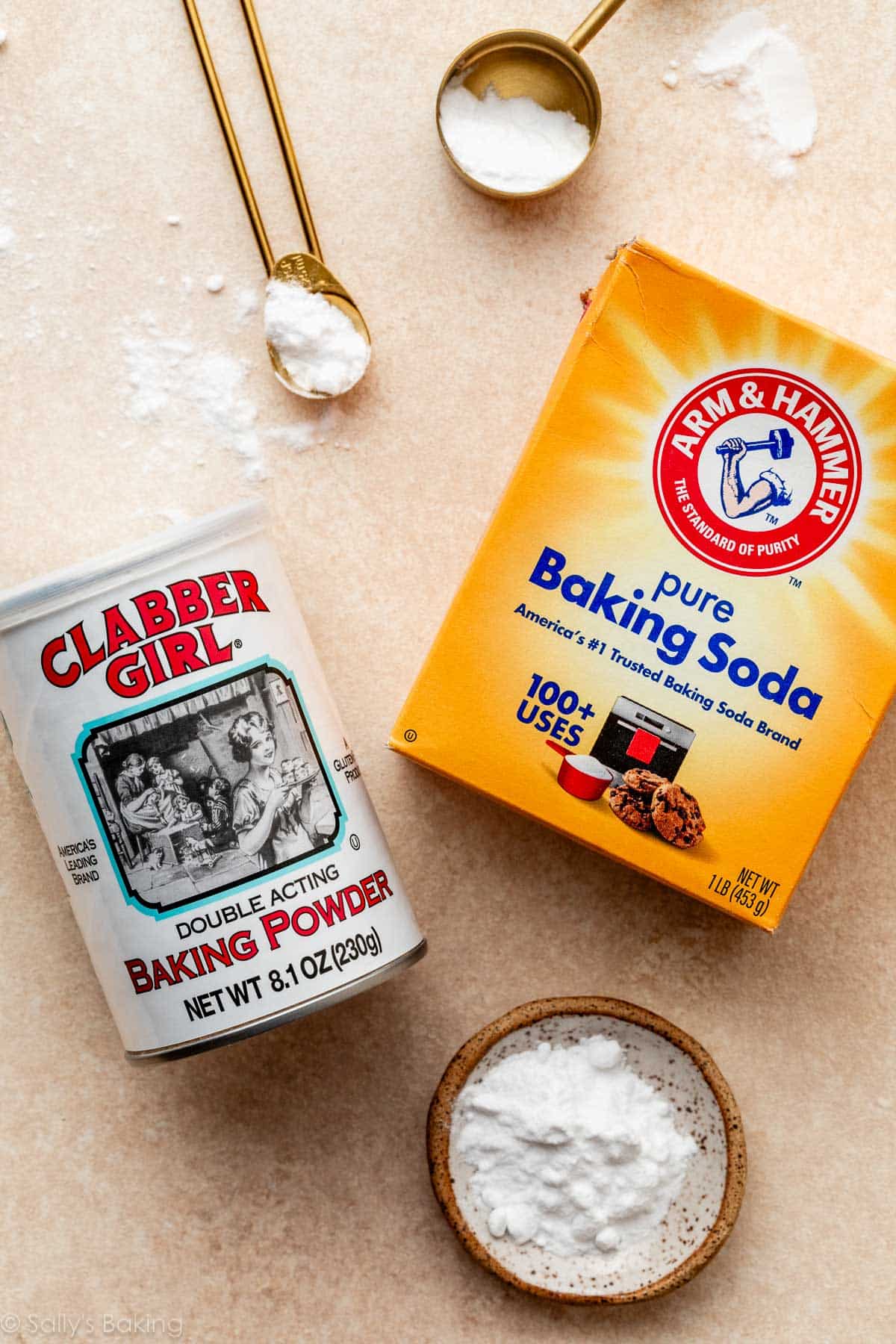
Baking powder and baking soda are both chemical leavening agents. You use leavening agents—or leaveners—in baking because they help the dough or batter to rise and expand. These two white powders are both made from the chemical sodium bicarbonate, which, when combined with an acid, produces carbon dioxide (CO2). That gas is what lifts up your baked goods in the oven.
(FYI: Some examples of natural leavening agents are yeast, eggs, sourdough starter, and steam.)
What Is Baking Soda?
Let’s start with baking soda, aka bicarbonate of soda.
Baking soda is pure sodium bicarbonate, with nothing else added.
Do you remember the model volcano experiment from grade school science class, where you mix baking soda with vinegar and get an eruption of bubbles? When you mix baking soda, a BASE (pH value above 7), with vinegar, an ACID (pH value below 7), you get a chemical reaction: an eruption of bubbles. A product of this reaction is carbon dioxide.
The same reaction happens in our cookies, cakes, and muffins. When a recipe calls for baking soda, it usually calls for some type of ACID. Common acidic ingredients include buttermilk, brown sugar, yogurt, vinegar, cream of tartar, molasses, applesauce, honey, natural cocoa powder (not Dutch-process cocoa), and lemon juice.
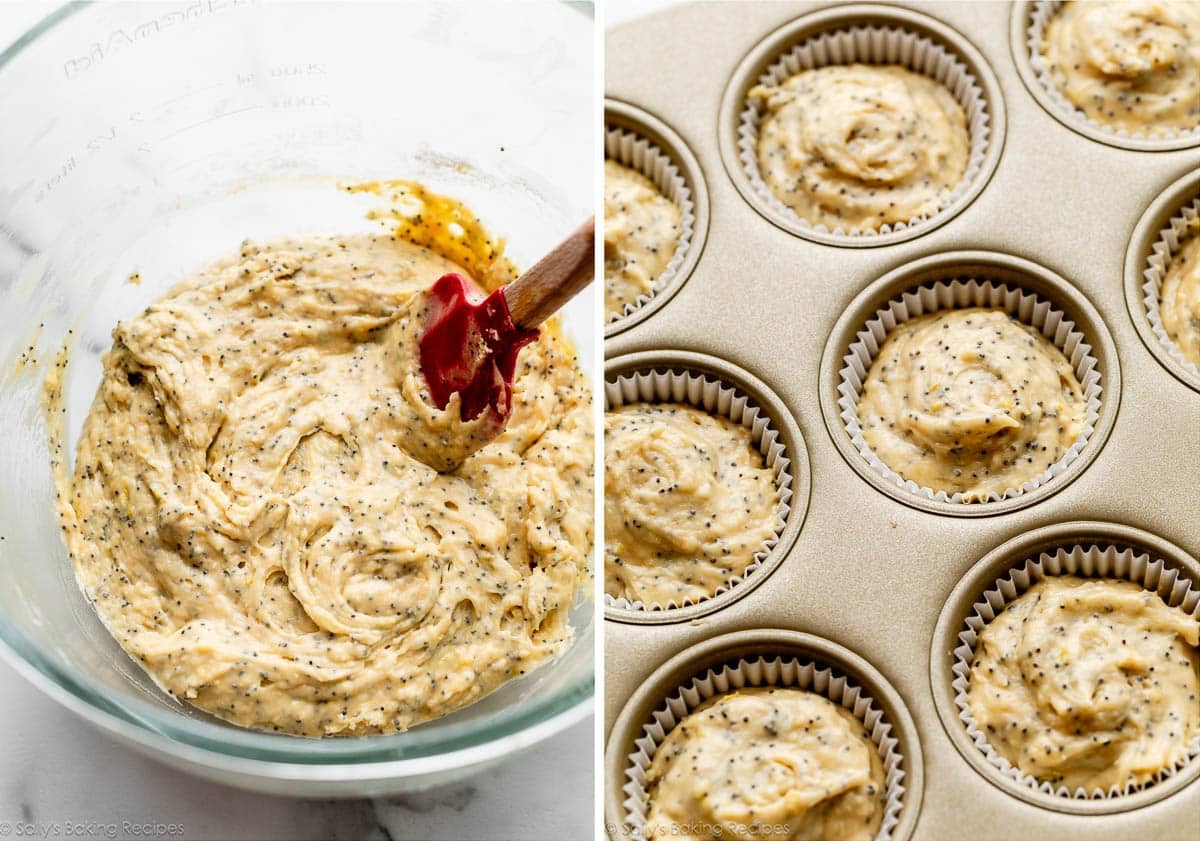
You need this ACID in the recipe to react with the baking soda, which creates carbon dioxide and allows your baked good to rise. Like this no-yeast bread (soda bread), which gets all its lift from the chemical reaction between baking soda and buttermilk.
Baking soda also helps baked goods brown better by raising the pH level of the batter. Creating a more alkaline environment speeds up the chemical reaction that happens between sugars and amino acids in the presence of heat, which causes browning and develops flavor. In fact, it’s part of the reason we boil homemade soft pretzels in a baking soda bath before baking. Pale pretzels aren’t nearly as appetizing!
Baking soda is about 3–4 times stronger than baking powder, so you don’t need as much. More baking soda in a recipe doesn’t necessarily mean more lift. You want to use *just enough* to react with the amount of acid in the recipe. Too much baking soda and not enough acid to neutralize it will give your baked goods a metallic, soapy aftertaste.
A good rule of thumb for baking is to use around 1/4 teaspoon of baking soda per 1 cup (125g) of flour.
What Is Baking Powder?
Now let’s talk about baking powder.
Baking powder is a mix that contains baking soda, as well as a dry acid to neutralize it—typically cream of tartar—and sometimes cornstarch (a drying agent).
Because baking powder already contains an acid to neutralize its sodium bicarbonate, it is most often used when a recipe does not call for an additional acidic ingredient, like sugar cookies or scones.
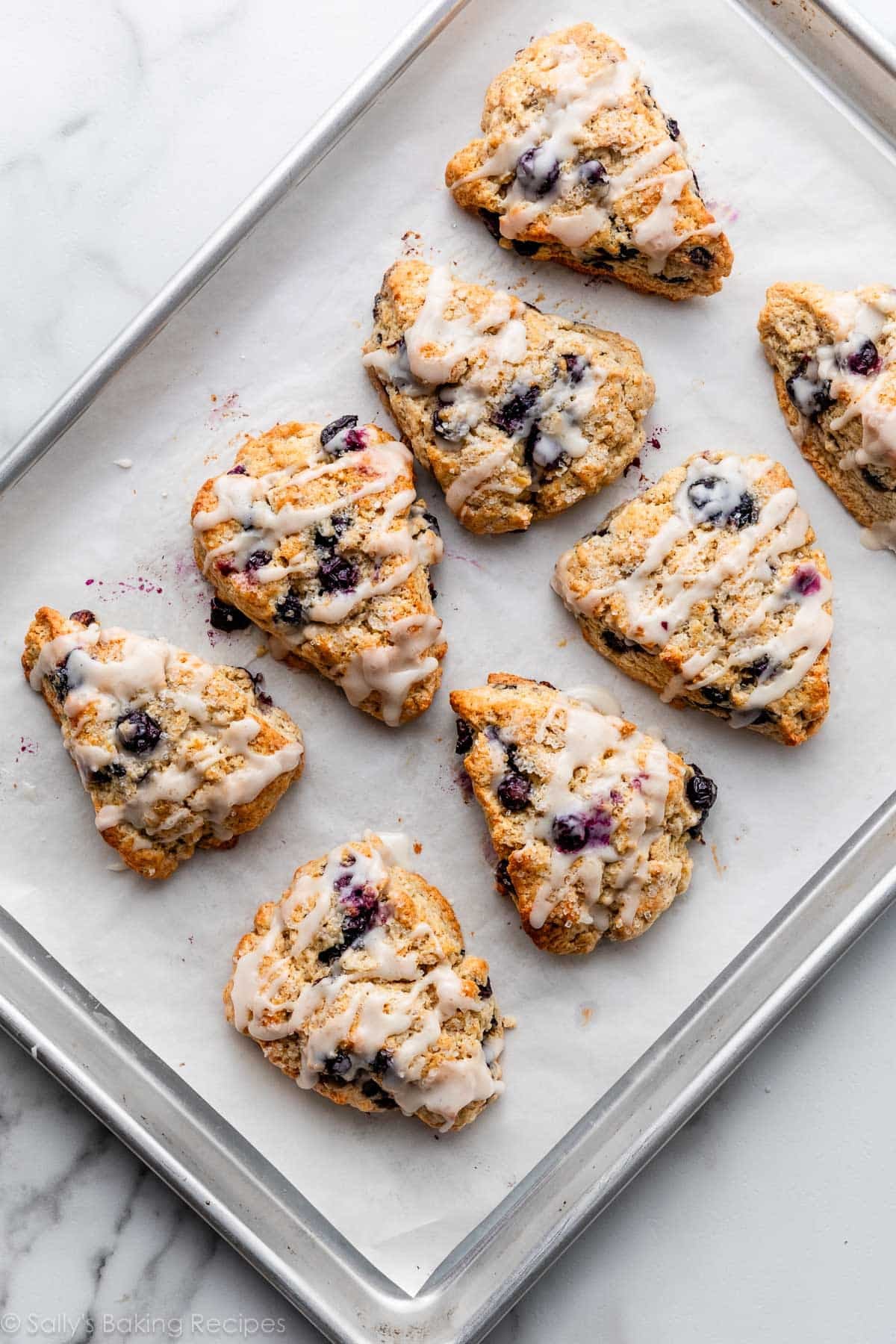
However, this isn’t always the case. You can still use baking powder as the leavening agent in recipes calling for an acidic ingredient, particularly when you want the flavor of the acidic ingredient to shine through, like in a lemon pound cake.
Because it’s a mix, baking powder isn’t as strong as baking soda. A good rule of thumb is to use around 1 teaspoon of baking powder per 1 cup (125g) of flour.
What Is Double-Acting Baking Powder?
Most baking powder sold today is “double acting.” This means that the first leavening occurs when baking powder gets wet—like when you combine the dry and wet ingredients in the recipe.
The second leavening occurs when the baking powder is exposed to heat. This is why it’s usually best to bake a batter right away—because the baking powder has already been activated.
An exception to this rule is pancakes, when I recommend letting the batter sit for a few minutes before cooking. You want to give the first activation a little time to start working before you add heat, to get those bubbles going so your pancakes rise up nice and fluffy in only a few minutes on the hot griddle.
Why Do Some Recipes Call for Both Baking Soda and Baking Powder?
The simplest answer is that sometimes you need more leavening than you have acid available.
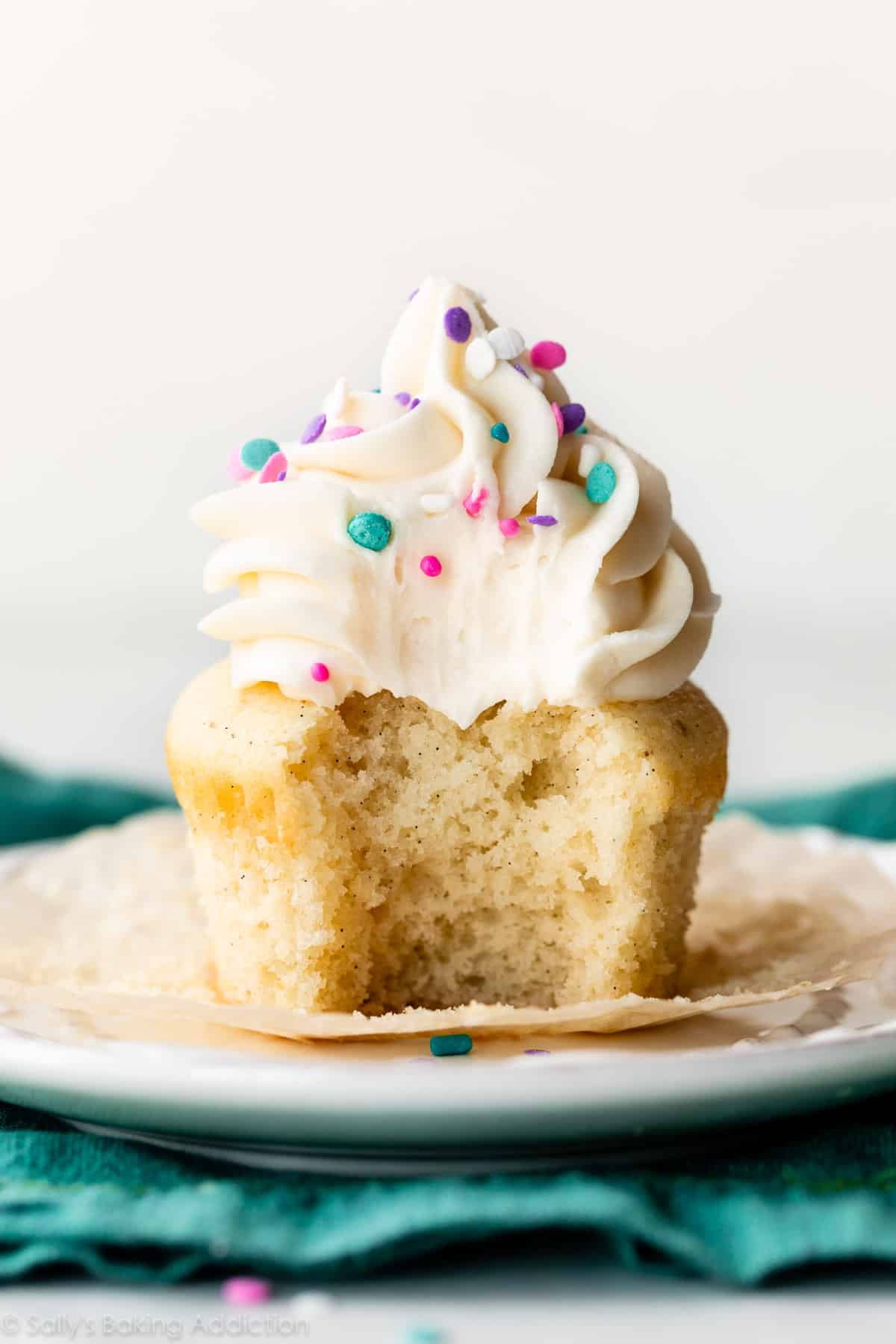
If a recipe contains an acid, like the sour cream in my vanilla cupcakes recipe, but the carbon dioxide created from the acid + baking soda is not enough to leaven the volume of batter, we need to add baking powder as well, for necessary lift.
Another example for using both is my buttermilk pancakes recipe. In this recipe, you use buttermilk partly for its tangy flavor. If we used only baking soda, it could neutralize all of the buttermilk’s acid and we’d lose that tanginess! However, by including baking powder as well (which has its own acid), some of the buttermilk’s flavor is left behind, and there is still enough leavening for fluffy pancakes.
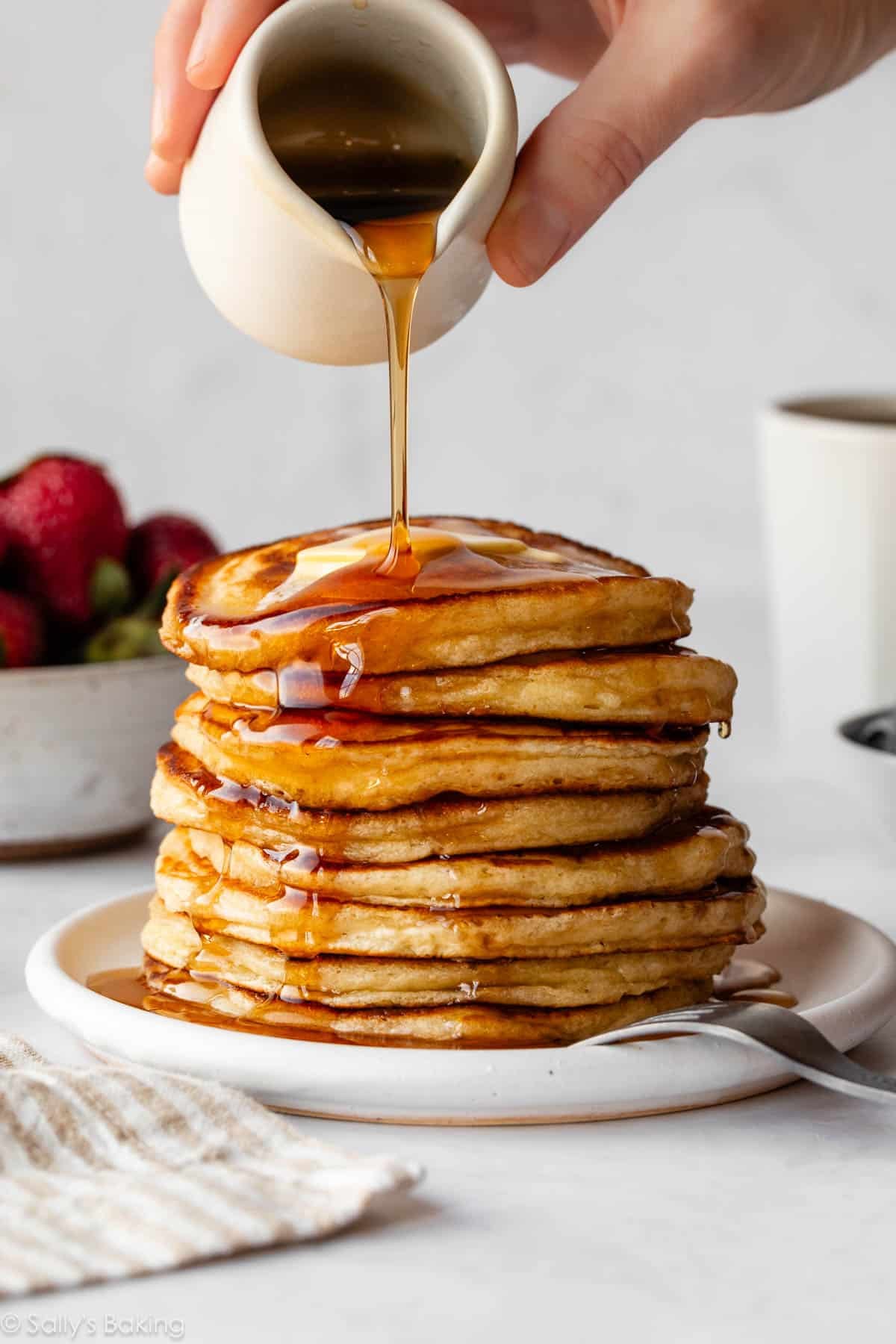
Another reason to use both baking powder and baking soda is because in addition to causing the baked good to rise and expand, they also affect both flavor and browning.
Let Me Show You the Difference
To demonstrate the importance of using the right amount and type of leavener in your baking recipes, I made 3 batches of vanilla cupcakes.
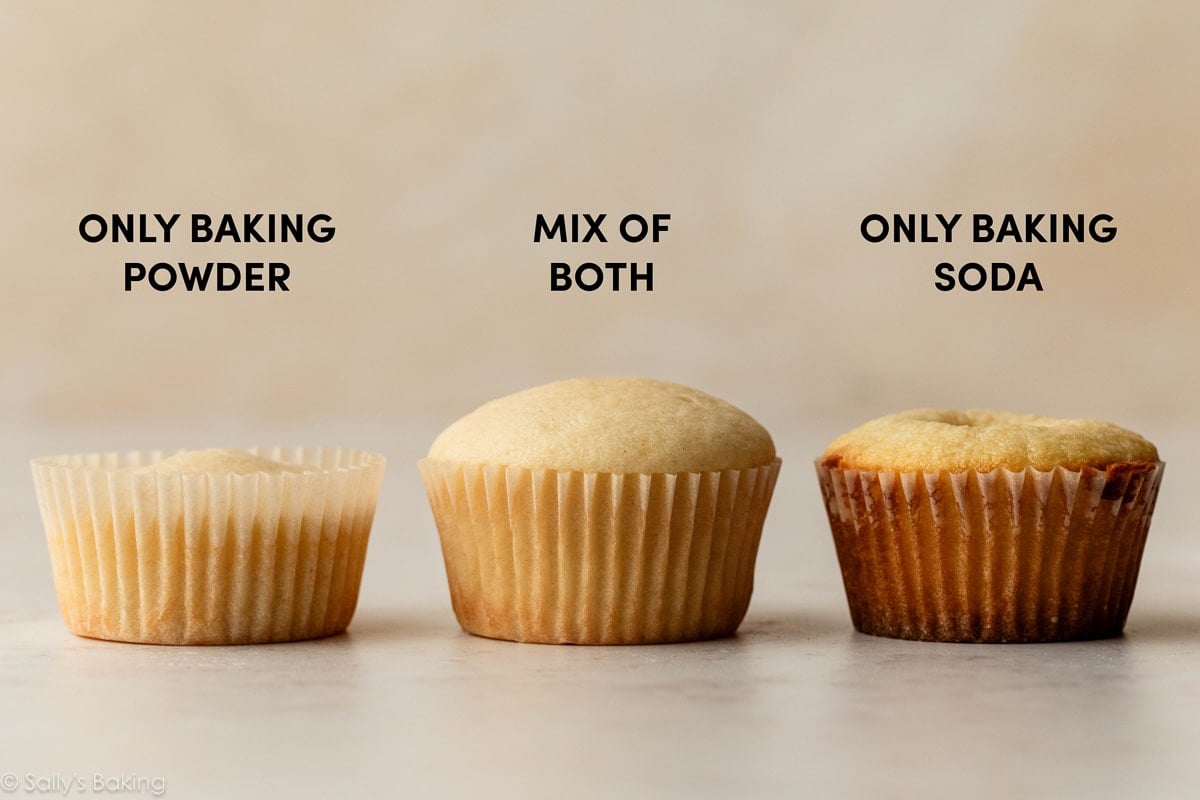
- I made the cupcakes as written, with 3/4 teaspoon of baking powder and 1/4 teaspoon of baking soda, which is the perfect balance for this batter.
- I made the cupcakes with 1 teaspoon of baking powder. It didn’t brown enough, and it baked up short and squat because it didn’t rise enough because baking powder isn’t as strong as baking soda. The texture was gummy and dense.
- I made the cupcakes with 1 teaspoon of baking soda. You can see that it browned too much, and also sank in the middle because the baking soda is too strong and there wasn’t enough acid in the batter to neutralize it. And—you’ll have to take my word for this—it tasted AWFUL!
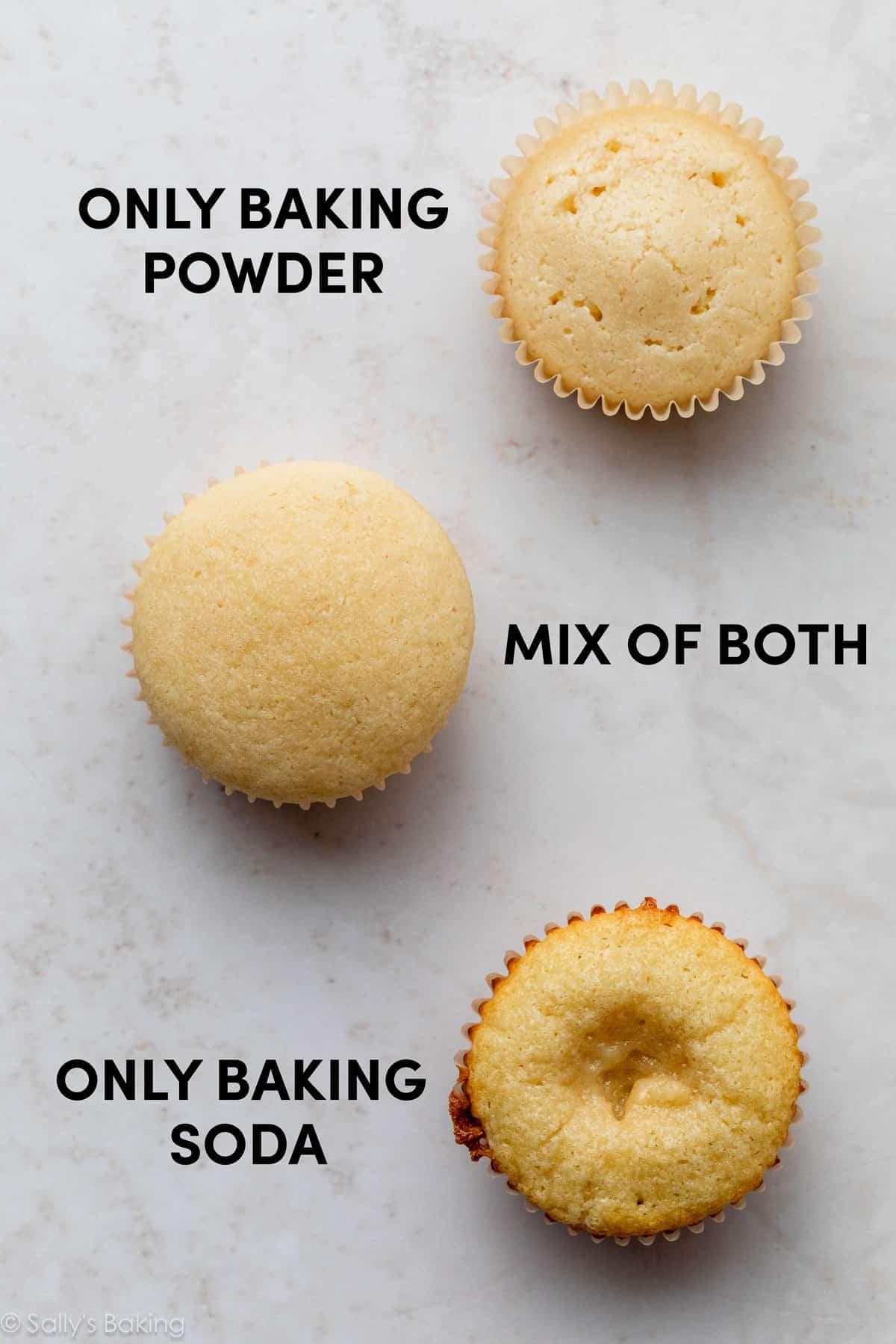
Follow the recipe as written with the combination of baking powder and baking soda for simply perfect vanilla cupcakes. 🙂
Make Sure They’re Fresh
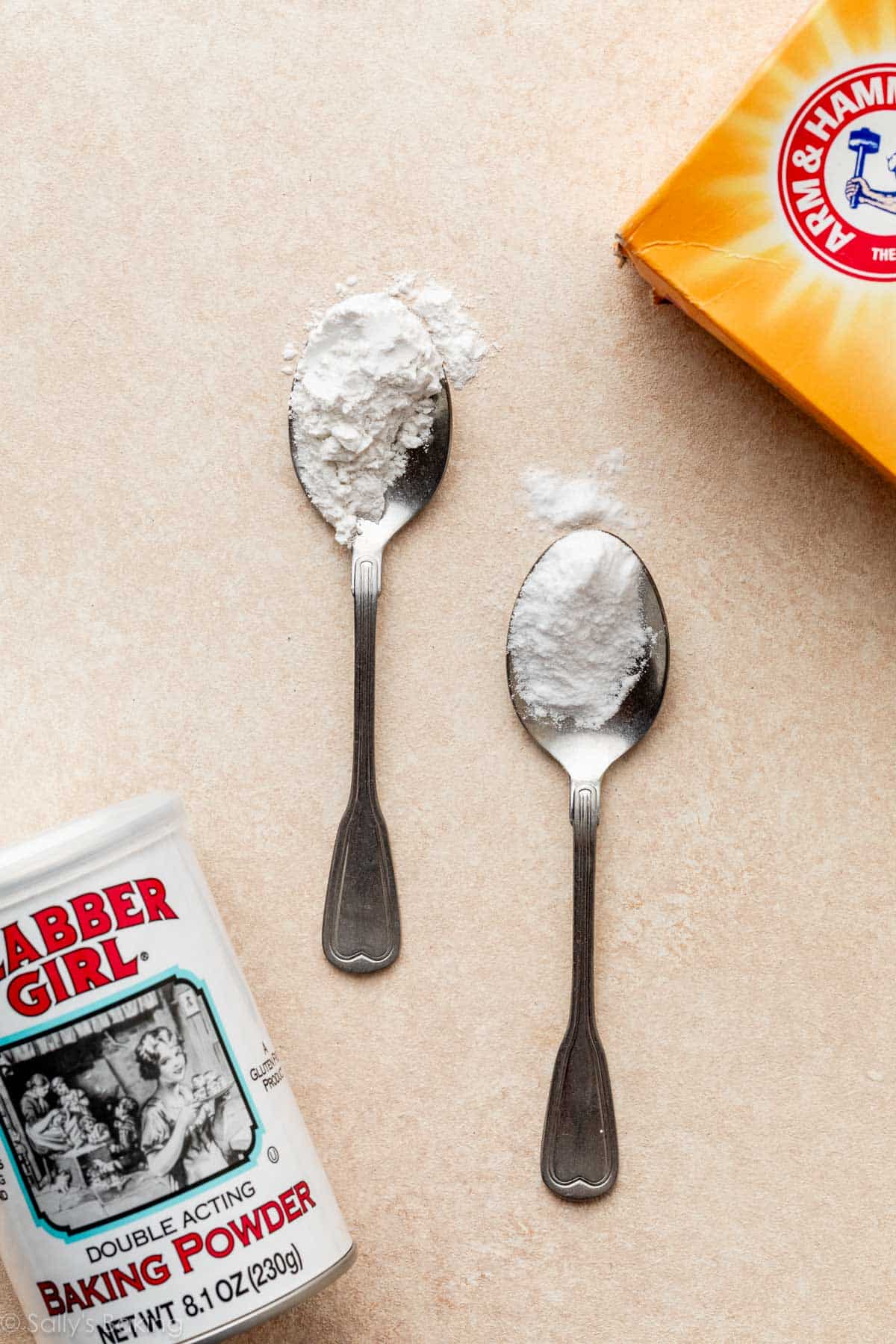
No matter which leavener you’re using in your baking recipe, I recommend replacing baking powder and soda every 3 months, to make sure they’re fresh.
If you don’t bake often, you may need to test your baking powder and soda for effectiveness before using.
How to Test Baking Powder for Freshness
To test baking powder, pour 3 Tablespoons of warm water into a small bowl. Add 1/2 teaspoon of baking powder. Give it a stir. The mixture should moderately fizz if the baking powder is effective.
How to Test Baking Soda for Freshness
To test baking soda, pour 3 Tablespoons of white distilled vinegar into a small bowl. Add 1/2 teaspoon of baking soda. Give it a light stir. The mixture should rapidly bubble if the baking soda is effective.
Key Takeaways:
- Baking soda is pure sodium bicarbonate. Use baking soda when the recipe calls for an acidic ingredient.
- Baking powder contains baking soda, plus other ingredients, including a dry acid. Use baking powder when there’s no additional acidic ingredient in the recipe.
- If your recipe calls for both baking soda and baking powder, there’s a reason for that, so be sure to follow the recipe.
- Both leaveners are initially activated when combined with wet ingredients, so bake right away, unless your recipe instructs otherwise.
- Keep it fresh: Replace your leaveners 3 months after opening.
Remember that baking is science and it takes practice, trial and error, and the willingness to learn in order to succeed. If you’re interested in learning more, head on over to the Baking Tips section of my website. Here are just a few of the many helpful articles and video tutorials you will find there:








Reader Comments and Reviews
Wow that was so helpful!! Thank you for sharing. (:
Finally. A concise and clear explanation! Never have had it told so we’ll!
Thank you !
This is very helpful. Easily written to understand. Thank you so much.
We’ll done! Love this breakdown of bs vs bp. And love your recipes!
This is the best article related to food I have ever read .Thank you so much for this detailed explanation and for this enthusiasm
Thank you so much for this simplified break-down. I have been using your recipes and I love your work. My favorite so far is your Scones.
Great article! Loved your writing as it has so much personality! I have always wondered about the difference between the two and now understand why some of my baked goods are fabulous or a flop!
Great post! Should be required reading. Just discovered the hard way when I (twice) grabbed the baking powder when it called for baking soda. Finally figured out what happened and the third time out the recipe was perfect. Did not understand the underlying chemistry and why some recipes call for one and not the other.
It is not intuitive. As always thanks for your help
Always wanted to know. Now I do. 🙂
This is very interesting I had a recipe one time for Scottish biscuits, they are really cookies and they were from the 1890s I think. I lost the recipe but it cool for 6 cups of flour And all three of the baking powder, baking soda, and cream of tartar they were the best cookies ever but I can’t remember the amounts of the baking powder baking soda and cream of tartar are used. I also used confectionery sugarMixed with a pound of butter.
Hey Sally, thanks for writing these articles. It makes a lot of sense and I appreciate you walking us through the science of baking in an easy to stomach manner. I have a question – you mention that you replace my baking powder and soda every 3 months. I don’t bake that often and given recipes call for such small amounts of both, is there a way to increase the shelf life of either/both soda and/or powder? Just curious. Thank you!
Hi Suchita, we’re so happy you enjoy these blog posts – thank you so much for reading! Storing baking powder and soda in an air tight container (away from moisture) can help extend the shelf life.
I Googled differences between these two for a recipe that calls for them both, but I only have the powder. I clicked on this article and it answered the questions I didn’t even know I had! This is so amazingly thorough, explains everything to bits. Thank you so much!
I have been baking ever since I was a little kid, but it’s always been other people’s recipes. Now, at 25 years old, I want to begin creating my own recipes, so thank you so much for all this advice! It is definitely helping me be successful with my new hobby!
That was very helpful. Thank you!
Hi Sally, I have read your articles on baking soda v baking powder, however, I just want to clarify, can I omit the soda from the moist chocolate cake recipe if I have used dutched cocoa. I have made them a couple of times now and they erupt – just like you said – like a volcano! I found reading your articles very useful and want to perfect these yummy cakes!
Looking forward to your response.
Gillian
Hi Gillian, Dutched cocoa will change how the cake bakes and tastes, and that switch would require additional testing. If you test anything out, please let us know. Or if you find a chocolate cake recipe you love that calls for dutched cocoa, let us know too! Natural cocoa really is best for this particular chocolate cake.
I’m becoming baking obsessed, and I love your posts like this one that give me the kind of basic understanding of technique and ingredients that I couldn’t learn otherwise. And I love the way you say things! Thank you!
This is the best explanation of the difference I’ve ever read! Simple, straightforward language with the science background so we really know what we’re doing, and the freshness tests too.
The explanation was so clear and was very helpful! Thanks for sharing 😀
Thank you so much for doing this article! VERY clear and simple language, which made it very appealing to follow the explanations to the very end, well done! Appreciated!
Sally, you explained it very well, l like your style. Thank you.
Oh Sally, love reading your posts and tecipes. It’s always very clear, simple and easy to understand.
Thank you! Definitely help a beginner homebaker like me a lot!
Sally, as a retired chemist, I can confirm that this is a great explanation of the differences between baking soda and baking powder. I agree that good baking is good science, which may explain why I’ve enjoyed learning about baking from you. And, in these experiments, it’s OK to taste the results!
Thanks for the clear and concise explanation. I have been comparing recipes for a particular bread-type dough and found that some call for powder and some for soda, now I have a clearer idea of how to choose my recipe ingredients (I like to tinker with and sometimes mix-match-combine recipes into one perfect [for me] recipe).
Thank you SO much for this valuable explanation. I have been scouring the internet to understand the difference and yours is by FAR the most comprehensive. I am not a baker but during this lockdown I attempted to make something that required baking powder. All I had was baking soda … and seriously, that’s ALL I tasted when it was done. Lol I know to lessen the amount of baking soda now or wait until I can find baking powder (which is next to impossible). Thank you!
Super great explanation! Exactly what I was looking for, and could not find ANYWHERE else. Thank you!
Hi I just found your blog and love the well thought out explanations on the science behind the baking. However I’m disappointed when you use the worlds nerd and geek. I know you’re trying to be funny but please don’t apologize / warn your readers about giving them intelligent information. I have a pre teen daughter who loves baking and I would love for her to use your blog as a resource. Please just give the information. You can still be funny and have personality in your blog. I want to encourage my children’s curiosity and point them to resources that explain why things happen. Your readers are already at your site because they want to find out the science. Don’t make them feel bad about the amount of knowledge you have or bad about the knowledge that they are receiving.
Thanks for your insight, Ann! Appreciated! This post could use an update. 😉
Hi,
I totally loved this scientific explanation!! I have always asked myself why one is used instead of the other! This is the first time I have read a convincing explanation! So, that being said, I will definitely follow your blog for delicious recipes since they are “scientifically” proven recipes….lol Thanks
Thanks so much! This post absolutely clears everything up. I knew you couldn’t substitute them, but now I know why and can explain it when my sons ask:)
Yes thanks for this bit of info.
I’m really excited about baking again! I just learned about your blog. I’ve been reading all your tidbits. I just went and tested my baking powder. Let me first say that just looking at the dates told me I needed to throw it out. The first can of baking powder had a 2016 date. It still fizzed. Then I found another can that had a date of 2014 (I’m a little embarrassed.) it did not fizz. My baking soda made lava. It is fine. Ok, now a question. Should baking soda stay sealed? What are your thoughts on using baking soda that has been in the fridge soaking up odors? I think that is all for now. I can’t hardly wait for January 1st to see what the challenge will be. I have a good reason to bake. Oh, I know my other question. What is your opinion on the sliding measuring spoons. I sold Pampered Chef about 20 years ago and still use a lot of it. Thanks, AA
Thank you for all your knowledge. I never had a desire for baking or cooking until lately, and I do love to know the “whys” of what I do, it is like Chemistry. I love knowing all the interactions between the ingredients, which can explain until now I have not been a very good cook. LOL